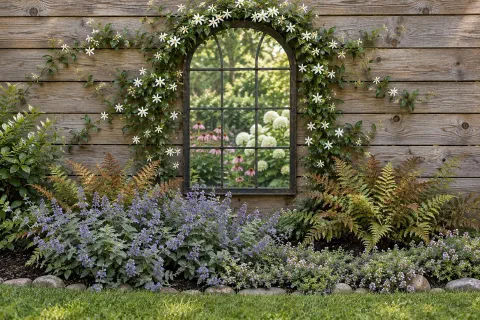
The secret to an outdoor fairy garden that still looks magical in August is keeping 80 percent of the space alive with tiny, slow-growing real plants and sticking to one consistent scale. One weathered arched door tucked against a mossy tree root, a curved path of flat river pebbles, and a living carpet of creeping thyme or Irish moss beat twenty plastic figurines crowded onto bare potting soil every single time.
Outdoor Fairy Garden Ideas for Tree Stumps, Clay Pots and Shady Corners

One weather-resistant arched door tucked into mossy bark with a river-pebble path and living thyme looks believable from twenty feet away.
Whether you have an old oak stump in the backyard, a cracked clay pot sitting behind the shed, or just a tiny rented patio table, you can put together a weather-tough miniature corner in a single Saturday afternoon.
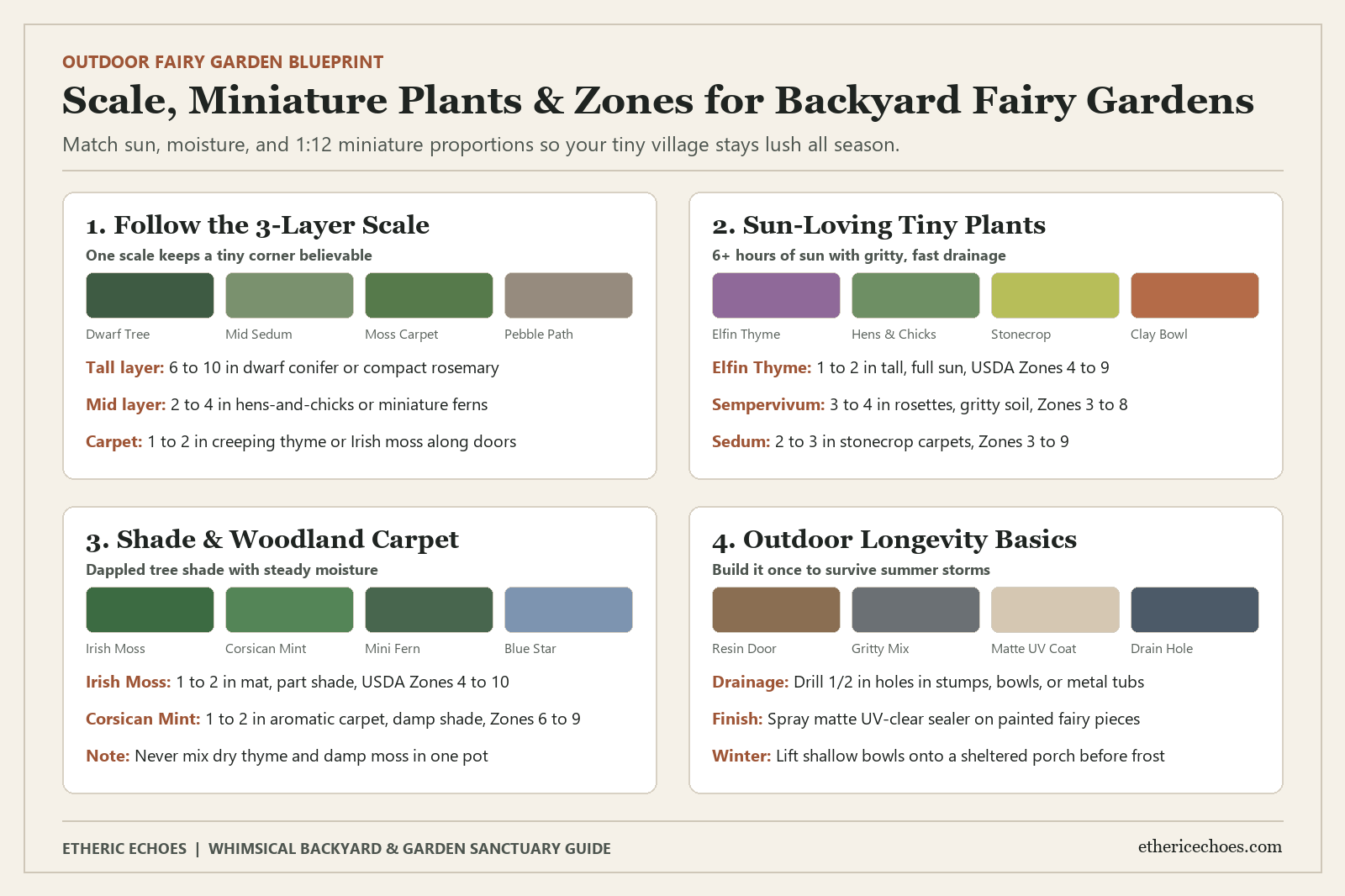
6 outdoor fairy garden ideas that survive real backyard weather
A charming miniature nook should feel like you stumbled upon it while weeding, not like a toy shelf got tipped over in the mulch. Each of these six setups works with real rain, sun, and wind, and pairs smoothly with our broader whimsical garden ideas for a small backyard.
1. The mossy tree-root fairy door (zero digging required)
If you have a mature oak, maple, or pine with flared surface roots, you already own the best backdrop in the yard. Set a 5 to 6 inch weathered wood or outdoor resin arched door snugly against the bark right between two roots using exterior mounting putty or a discreet picture hook that will not injure the tree. Lay six or seven flat thumb-sized river pebbles leading away from the doorstep, tuck two plugs of emerald Irish moss between the stones, and stop right there.
2. Shallow terracotta bowl fairy village (best for renters and cold winters)
No yard or tired of squatting in the dirt? Plant a wide, shallow 12 to 16 inch unglazed clay or resin bowl with drainage holes and set it on a patio table, porch steps, or a sturdy tree stump. Place one slow-growing dwarf evergreen conifer in the back third to act as a miniature forest tree, tuck a small stone-and-bark cottage beneath its boughs, snake a pale pea-gravel path to the rim, and fill the foreground with emerald moss or gritty-soil succulents. When hard frost approaches, you can lift the entire village onto a sheltered porch in ten seconds.

3. Broken terracotta pot tiered fairy garden
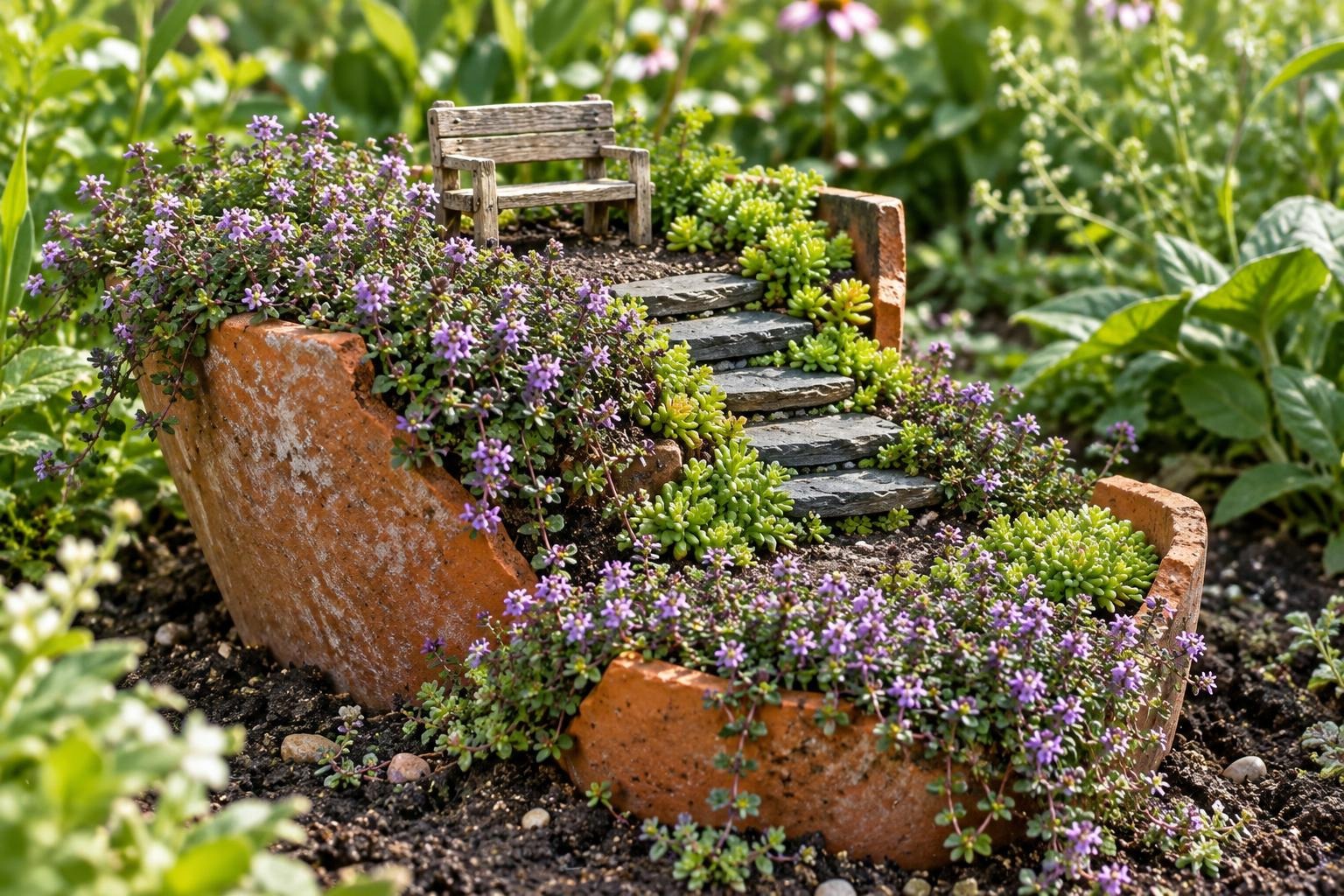
Never toss a cracked 10 or 12 inch clay pot. Nestle the intact back half of the pot into a sunny perennial border, pack it firmly with gritty potting mix, and wedge two curved broken shards horizontally into the soil to hold up stepped miniature terraces. Press flat bits of broken slate or river stone into the slope to make a staircase climbing from the lower garden to a tiny wooden bench on top, then edge every level with purple-blooming Elfin creeping thyme and lime stonecrop sedum.
4. Hollowed tree stump or fallen log planter
If an old backyard stump has naturally hollowed out in the center, scoop away loose, spongy sawdust until you hit firm wood. Before adding a single handful of soil, drill two or three half-inch drainage holes angled slightly downward through the lower rim of the stump so summer rain never turns the bowl into a soggy pond. Line the cavity with a scrap of breathable landscape fabric, fill with fresh potting mix, and build a two-tier woodland cottage tucked behind miniature ferns.
5. Shaded path-bend fairy grotto
Tuck a tiny pebble fork just off the curve of your main stepping-stone walkway where hostas and ferns arch overhead. Add one small weathered stone bridge over a dry “stream” made of smooth blue-gray river pebbles, plus a single colorful vertical accent like a piece from our stained glass garden stake ideas rising behind the ferns to catch afternoon light.
6. Porch-side herb fairy planter for kids and grandkids
If you are building a fairy garden with children, plant a wide 12 inch container with sturdy, touchable miniature herbs and groundcovers like woolly thyme, compact creeping rosemary, and hens-and-chicks. Leave a small bare gravel courtyard in front of the cottage so little hands can rearrange acorn-cap bowls, painted smooth pebbles, and twig ladders without trampling tender roots.
The scale rule that makes a fairy garden look believable
Nothing breaks the spell faster than putting a 3 inch resin doorway beside an 8 inch plastic chair and a giant hosta leaf the size of a dinner plate. Almost all outdoor miniature scenes look crispest when you stick to 1:12 dollhouse scale (one inch equals one foot in the real world):
- Doors and cottages: 4 to 6 inches tall.
- Benches, gates, and bridges: 2 to 3.5 inches tall.
- Tall “trees” (back layer): 6 to 10 inches tall (dwarf conifers or neatly trimmed upright herbs).
- Mid-height “shrubs” (middle layer): 2 to 4 inches tall (hens-and-chicks rosettes, miniature ferns, compact sedums).
- Living “lawns” (front carpet): 1 to 2 inches tall (Elfin thyme, Irish moss, or Corsican mint).
Build in that tall-medium-short sequence from back to front, leaving one clear winding gravel or pebble path so the eye lands right on the front door.
Best real miniature plants for outdoor fairy gardens (sun vs. shade)
The single biggest mistake beginners make is buying one dry-soil succulent and one damp-soil moss and jamming them into the same 12 inch bowl. Within three weeks, one rots or the other crisps. Pick your spot first, check how many hours of direct sun hit it, and choose plants from just one side of this chart.
| Miniature plant | Mature height | Light needed | Soil and moisture | USDA Zones | Best role in the scene |
|---|---|---|---|---|---|
| Elfin creeping thyme (Thymus praecox ‘Elfin’) | 1 to 2 in | Full sun (6+ hrs) | Gritty, fast-draining, dry between waterings | 4 to 9 | Aromatic sunny meadow and tiny pink summer blooms |
| Hens and chicks (Sempervivum tectorum) | 3 to 4 in | Full sun | Gritty cactus or sandy potting mix | 3 to 8 | Sculptural cottage rosettes beside rock walls |
| Stonecrop sedum (Sedum spp., e.g. ‘Little Missy’) | 2 to 3 in | Full sun | Well-drained, drought tolerant | 3 to 9 | Spilling groundcover over broken pot edges |
| Irish or Scotch moss (Sagina subulata) | 1 to 2 in | Part shade to morning sun | Consistently moist, rich potting mix | 4 to 10 | Velvety emerald lawn with tiny white spring stars |
| Corsican mint (Mentha requienii) | 1 to 2 in | Dappled shade | Moist, cool, well-drained soil | 6 to 9 | Tiny peppermint-scented carpet around stone paths |
| Dwarf Alberta spruce (Picea glauca ‘Conica’) | 8 to 14 in (young) | Sun to part sun | Evenly moist, well-drained | 2 to 6 | Slow-growing miniature woodland evergreen tree |
| Dwarf mondo grass (Ophiopogon japonicus ‘Nanus’) | 3 to 4 in | Part shade to shade | Moist, humus-rich soil | 6 to 10 | Tidy dark green miniature meadow tufts |
Note: Irish moss (Sagina subulata) is actually a tiny-leaved perennial rather than a true bryophyte moss, which is why it handles gentle patio breezes better than wild forest moss. Always verify cultivar height and winter hardiness on the nursery tag for your specific zone.
Free DIY details from your own yard (skip the plastic clutter)
You do not have to buy a whole carton of accessories to make a miniature corner sing. Ten minutes walking your yard after a breezy night gives you the most convincing materials of all:
- Twig fences and ladders: Snip straight pencil-thin fallen birch or oak twigs to 3 inch lengths and lash them with thin dark floral wire or hemp twine.
- Flat pebble stepping stones: Collect thumb-sized flat creek stones and press them halfway into damp soil so they sit level with the moss.
- Acorn-cap bowls and mushrooms: Flip clean, dry oak acorn caps upside down on a flat slice of birch branch to make a woodland picnic table.
- Pea-gravel streams: Pour a narrow half-inch ribbon of pale aquarium gravel or small smooth river stones under a twig footbridge instead of blue plastic water sheets that fade in sunlight.
Keeping your outdoor fairy garden tidy through storms and winter
Shallow bowls dry out fast in July heat, and summer thunderstorms can wash lightweight fairy benches halfway across the mulch if they are not anchored. Four quick habits keep the garden intact all year:
- Mix in grit for containers. Blend three parts quality potting mix with one part perlite or fine poultry grit so shallow roots never suffocate after heavy rain.
- Seal painted pieces before day one. Even outdoor-labeled resin doors and stone cottages hold their color much longer after two light coats of matte UV-clear exterior spray sealer (skip glossy spray, which makes stone look wet and artificial).
- Pin light accessories down. Dab a dot of exterior silicone onto the bottom of tiny benches or glue a 2 inch snippet of stiff green floral wire underneath so it stakes quietly into the soil against squirrels and heavy gusts.
- Refresh once a month. Pinch back any creeping thyme or sedum runners trying to swallow the doorstep, top up washed-out gravel pebbles, and tuck delicate painted cottages indoors before your first hard November freeze.
Helpful pieces to start an outdoor fairy garden
Start with a fallen log, a cracked clay pot, or a shady tree root you already have. If you want a proper wide shallow bowl with drainage for a portable patio village, narrow hand tools that will not crush 2 inch plant plugs, or gentle evening light tucked along the path, these verified staples make the build easy.
Affiliate note: Etheric Echoes earns a small commission if you buy through the Amazon links below, at no extra cost to you. Our generated garden photos above illustrate the finished look; linked products help you build a similar setup.
- Wide shallow bowl planter (
$): Gives miniature roots broad horizontal room for paths, a dwarf conifer, and a cottage while draining cleanly after rain. - 12-inch terracotta pot with saucer (
$): Breathable clay walls keep dry-loving Elfin thyme and hens-and-chicks happy in sunny patio spots. - Narrow 3-piece hand tool set (
$): A slim transplanter makes it easy to tuck tiny two-inch moss and thyme plugs right next to pebble steps without disturbing the layout. - Warm-white timer fairy lights (
$): Tuck the hidden battery box under a sheltered porch table edge and wind delicate warm micro-lights through the dwarf spruce for a soft glow after supper. Pair your miniature corner with a nearby moon garden that glows after dark or garden mirror ideas for a small backyard to multiply the magic.
Frequently Asked Questions
What are the best outdoor plants for a backyard fairy garden?
Match plants to sunlight and keep leaves tiny so everything stays in scale. For full sun, use Elfin creeping thyme (USDA Zones 4 to 9), hens-and-chicks Sempervivum (Zones 3 to 8), and low stonecrop sedum (Zones 3 to 9). For dappled shade, plant Irish moss Sagina subulata (Zones 4 to 10), Corsican mint (Zones 6 to 9), and miniature woodland ferns.
How do you keep an outdoor fairy garden from looking cluttered or plastic?
Stick to one consistent scale (usually 1:12 dollhouse scale, where a door stands 5 to 6 inches tall), limit yourself to one focal house or door plus a tiny bench or bridge, and let real moss, creeping thyme, flat pebbles, and weathered bark carry 80 percent of the scene.
Can you plant creeping thyme and Irish moss in the same fairy garden bowl?
It is usually better not to mix them in the same small container. Creeping thyme wants bright sun and fast-draining dry soil, while Irish moss prefers dappled shade and steady moisture. Group sun lovers together in one gritty bowl and shade lovers together under a tree.
How do you weatherproof fairy garden doors and miniature houses outside?
Choose outdoor-rated resin, stone, terracotta, or cedar pieces rather than indoor painted plaster, and mist painted surfaces with two light coats of matte UV-resistant clear outdoor sealer before setting them out. Anchor light accessories with floral wire pins so summer gusts and squirrels do not tip them over.
How do you make a tree stump fairy garden drain properly?
If you plant inside a hollowed tree stump cavity, drill two or three half-inch drainage holes angled slightly downward through the lower outer wall of the stump so rainwater escapes instead of rotting roots. For solid stumps, set a shallow wide terracotta bowl with drainage holes right on top.
What happens to an outdoor fairy garden in winter?
In-ground hardy perennials like creeping thyme, hens-and-chicks, and dwarf conifers survive winter outdoors in their listed USDA zones, though painted resin houses last much longer if you tuck them into a garage bin before hard freezes. Shallow portable bowls can simply be carried onto a covered porch or bright unheated mudroom.