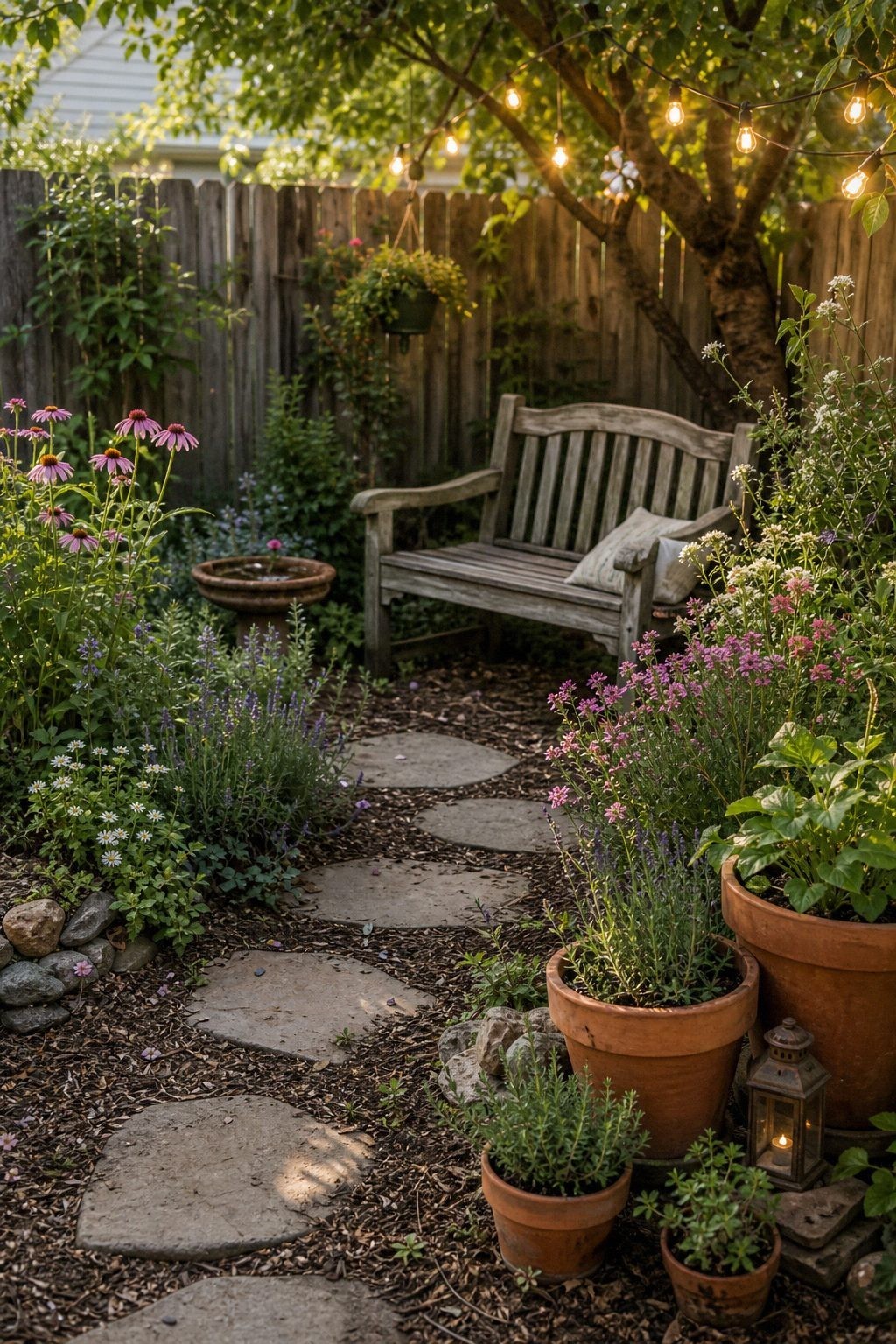
Whimsical gardens go wrong when every corner tries too hard. A fairy door here, a mushroom stake there, ten lanterns, three signs, plastic animals, a painted rock village. Suddenly the garden feels busy instead of charming.
The better version is quieter. Give the yard one path, one place to sit, a little glow after dark, and a few details that look collected over time. That is enough. A normal backyard can feel magical without looking like a theme park.
Start with a path, even a tiny one
A whimsical garden needs a little movement. That does not mean you need a full walkway from the patio to the back fence. Even six stepping stones curving through a bed can make the space feel like it has somewhere to go.
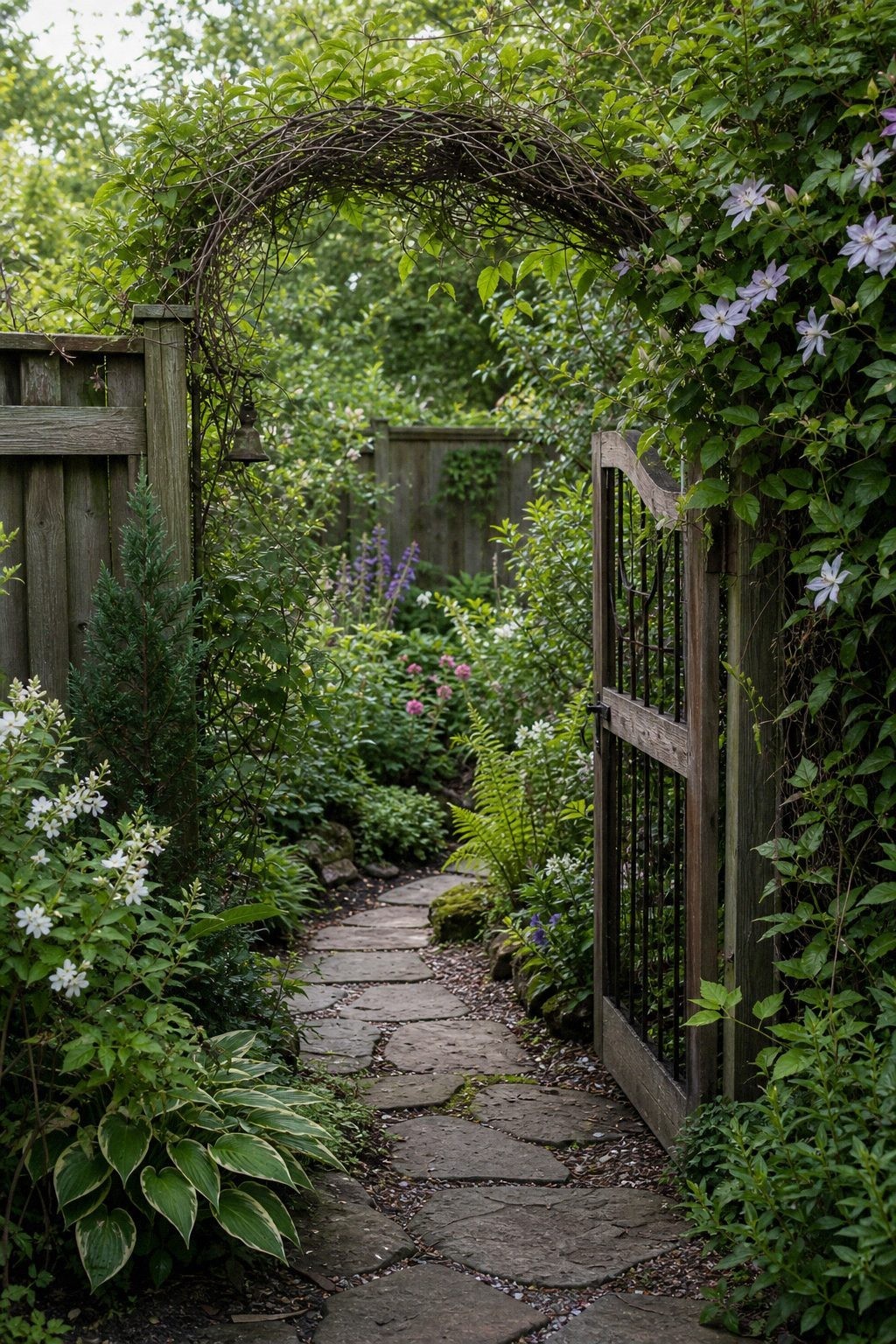
Straight paths feel efficient. Curved paths feel like they are hiding something around the bend. That is why they work so well for this style. Push the curve far enough to hide the seat completely and a charming path becomes a private corner. Use stepping stones, pea gravel, bark chips, or flat salvaged pavers. Keep the curve gentle, not wiggly. A path that snakes too much looks fake fast.
If the yard is small, let the path do one simple job: lead to a bench, a birdbath, a potting table, or a chair under a tree. The destination matters more than the length.
Give the path something to pass
A path through bare mulch does not feel whimsical. It feels unfinished. Plant the edges so the walkway brushes past something soft.
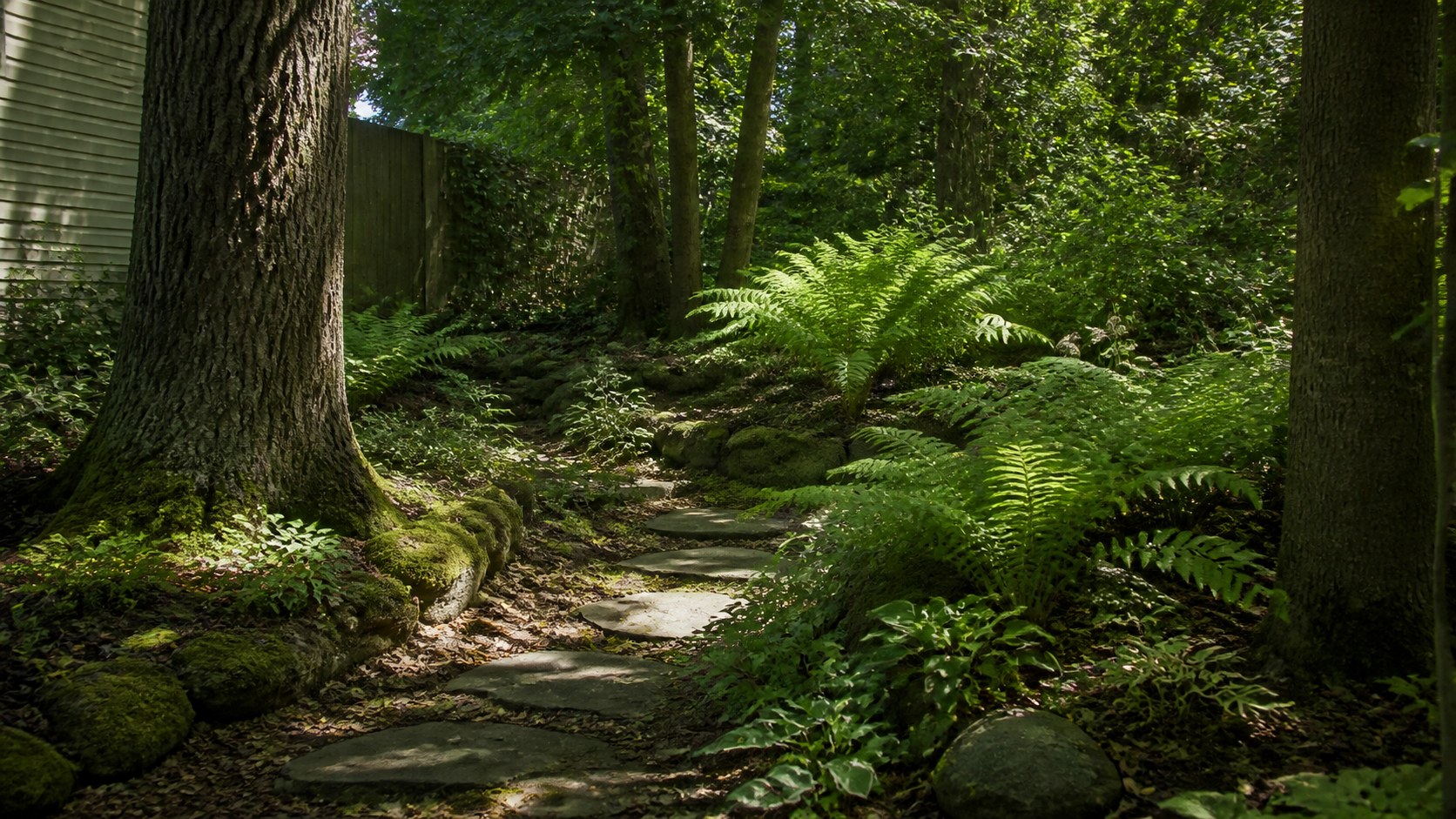
Good path-edge plants are the ones that spill a little without swallowing the stones. Try sweet alyssum, creeping thyme, catmint, violas, dwarf nepeta, pansies in spring, or trailing nasturtiums where summers do not scorch them. In shade, use ferns, heuchera, lamium, or low hostas.
The trick is not rare plants. It is closeness. Put flowers and leaves near the edge so the path feels tucked in. Leave enough open stone or gravel that you can still walk without stepping into wet foliage.
Add one seat that looks like it belongs
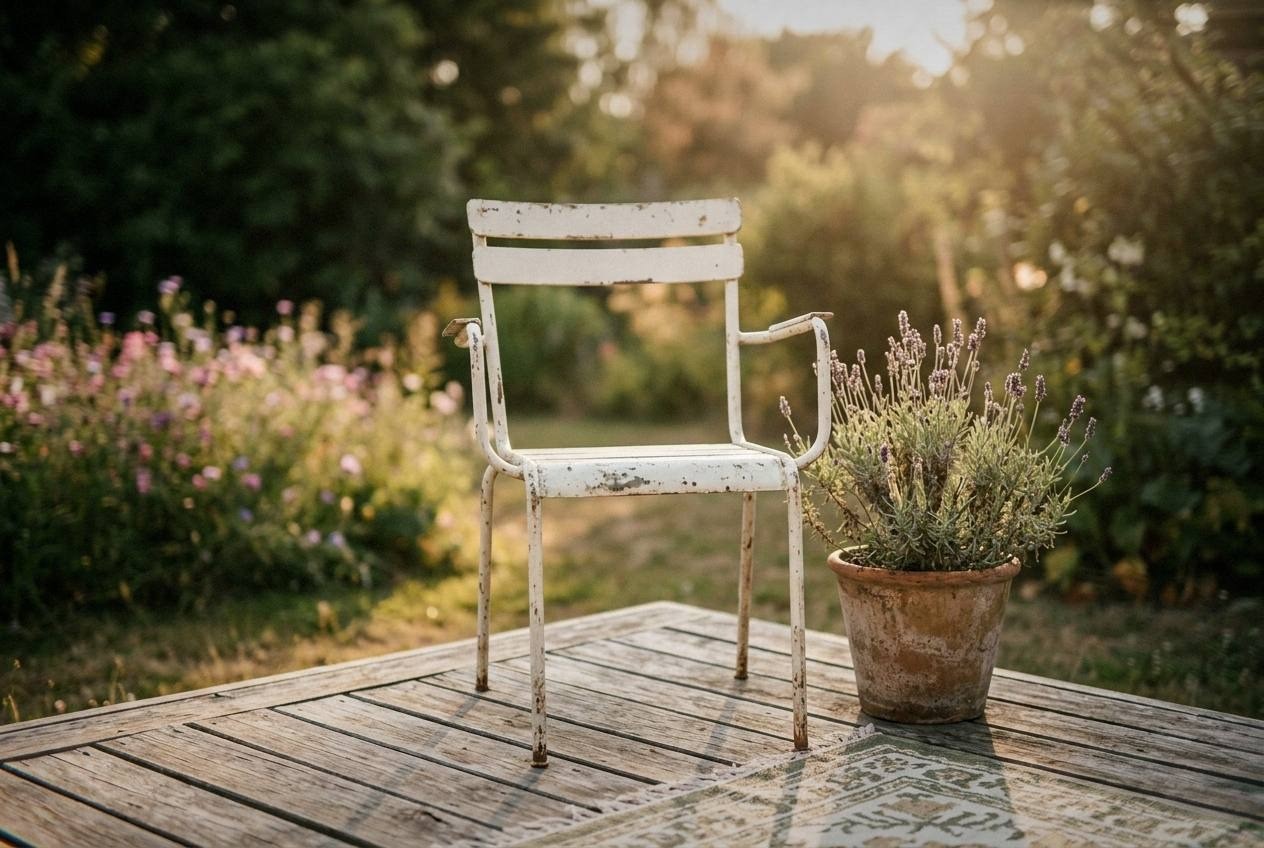
Whimsy needs a pause. A bench, a single bistro chair, or even a stool beside a container garden gives the eye somewhere to land.
Do not start with a full outdoor furniture set. One seat is easier to place and easier to make charming. Set it where you would actually sit for ten minutes: morning shade, a view of flowers, near a birdbath, or just far enough from the house that it feels like a small escape.
Weathered wood, black metal, pale green, and faded blue all work. Bright white can work too, but only if the rest of the garden is soft enough to keep it from shouting.
Use pots like collected objects, not matching decor
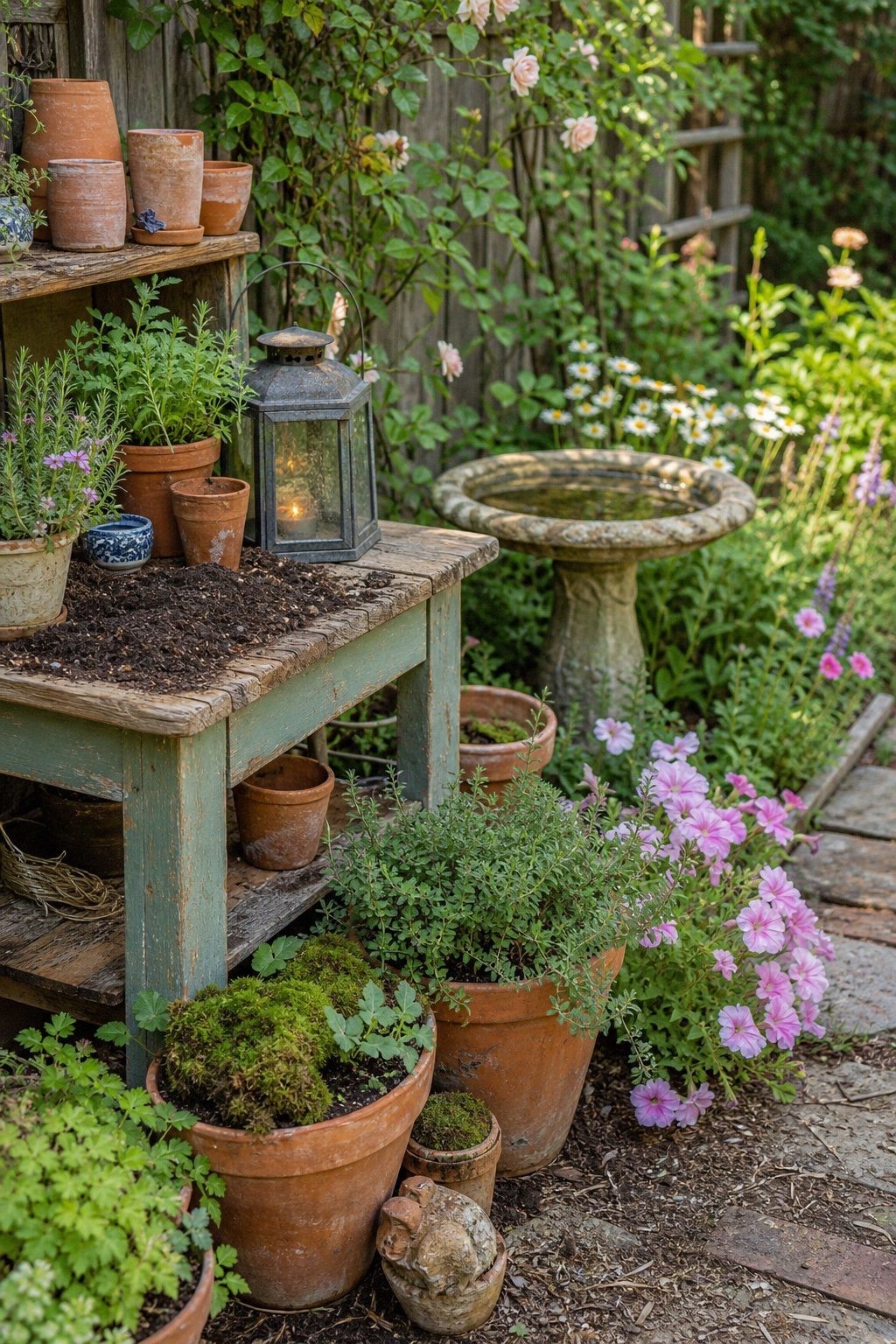
Terracotta pots are the shortcut. A cluster of three near a path or bench can make a new garden feel older in one afternoon. Mix heights and shapes, but keep the material family tight. Terracotta with terracotta. Galvanized with zinc. Glazed blue with one or two blue-gray pieces.
What makes it work is restraint. Five mismatched pots can look collected. Fifteen different colors can look like leftovers from a clearance aisle. That restraint is the difference between decor that looks collected and decor that looks crafty .
Good pot plants for a whimsical look:
- trailing thyme or oregano
- lavender in full sun
- violas or pansies for cool weather
- sweet potato vine in summer heat
- rosemary where winters are mild
- small ferns for shade
- calibrachoa or bacopa for soft trailing flowers
Put the tallest pot toward the back, let one trailing plant spill over the front, and tuck a small lantern or stone bird nearby if the corner still feels empty.
Keep fairy-garden details small
Miniature doors, tiny houses, and little bridges can be sweet. They also become clutter if they are scattered everywhere. Pick one spot for miniature details, preferably a container, stump, old bowl, or the base of a tree.
Treat it like a small discovery, not the whole point of the garden. A mossy pot with one tiny door and a low plant is charming. A whole bed filled with signs, figurines, and colored stones usually looks tired after one rain.
If you want a grown-up version, use natural objects instead: a small stone cairn, a shallow birdbath, a weathered lantern, a driftwood branch, or a broken terracotta pot with creeping thyme planted around it.
Make dusk do some of the work
Lighting is the fastest way to make a garden feel whimsical. It also fixes the most common backyard problem: the yard disappears after dinner.
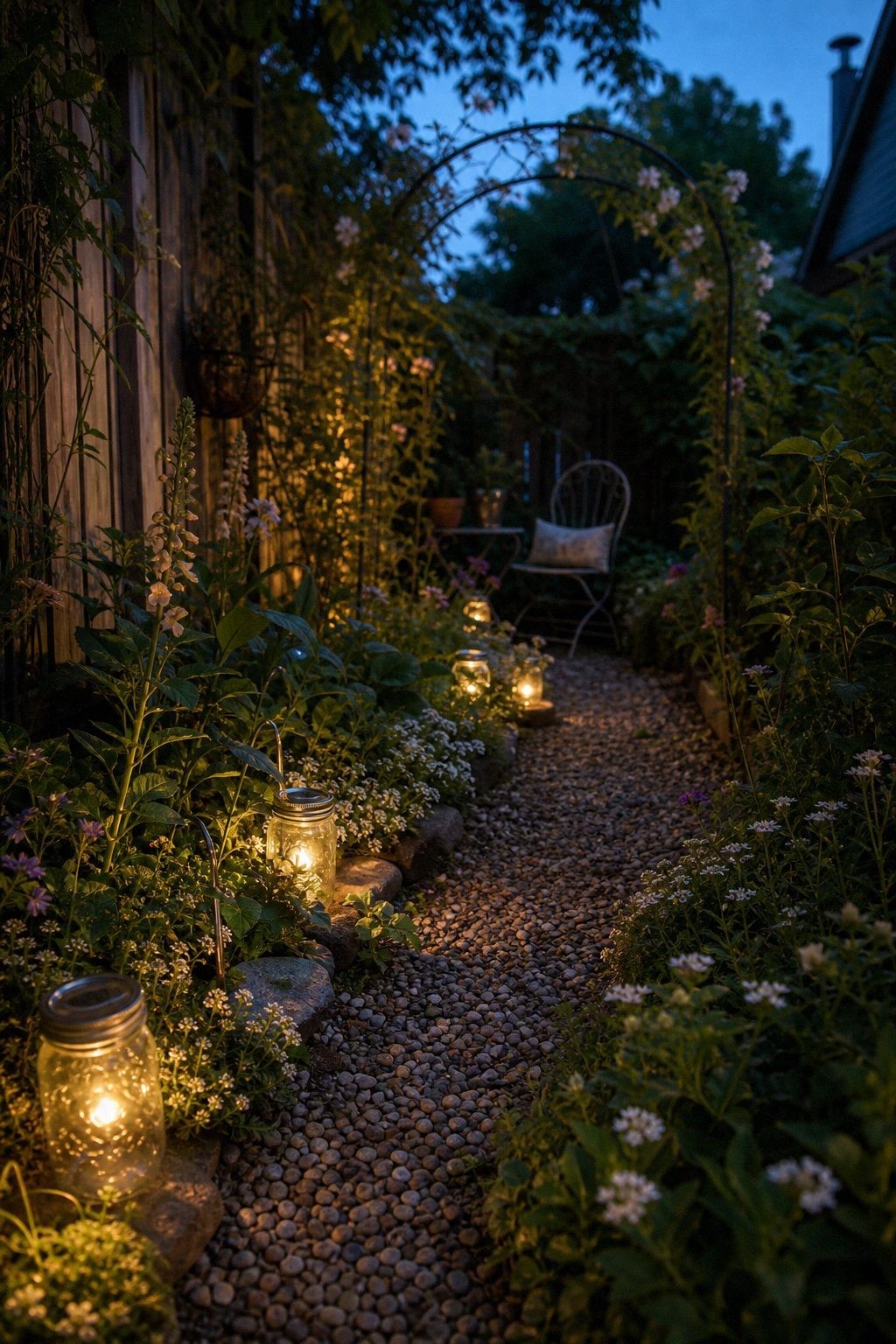
Use warm light, not cool white. Cool lights make plants look flat and blue. Warm white lights make leaves, flowers, gravel, and old wood look softer.
Three easy places to use lights:
- along a path, with low solar markers or jar lanterns
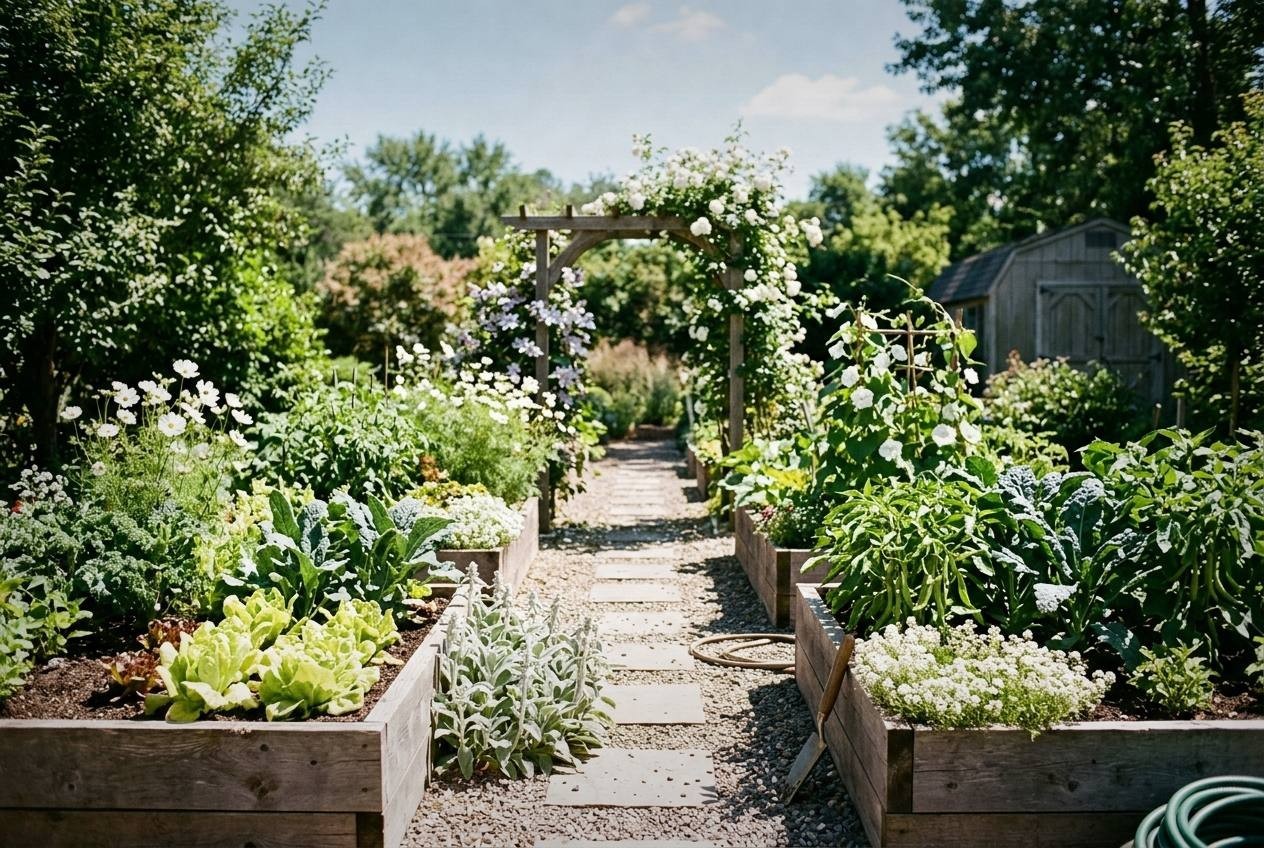
- around a trellis, arbor, or pergola
- above a small seating spot, with one strand of cafe lights
Skip blinking modes. They look festive for a party, but they are distracting every night. A steady warm glow feels calmer and ages better.
Add one thing that moves
Still gardens can feel staged. A little movement makes the space feel alive.
That can be water moving through a small bowl fountain, grasses shifting in the breeze, a hanging basket near the edge of a porch, or pollinator flowers that bring bees and hummingbirds. You do not need all of them. One moving element is enough.
If you use water, keep it small and practical. A bowl bubbler or birdbath with a solar fountain insert is more believable in a normal backyard than a faux-stone waterfall. Put it close enough to seating that you can hear it.
Choose flowers with a loose habit
Whimsical gardens do not need rare flowers. They need plants that soften edges.
Good choices include cosmos, foxglove where it grows well, hollyhocks, sweet alyssum, snapdragons, lavender, salvia, catmint, zinnias, nasturtiums, yarrow, and climbing sweet pea in cooler climates. For shade, lean on ferns, hellebores, astilbe, bleeding heart, and heuchera.
The main rule: repeat a few plants instead of buying one of everything. Three clumps of catmint look calmer than one catmint, one salvia, one random daisy, one marigold, and one plant you bought because the tag said cottage.
Avoid the fake-magical pileup
The garden should still look good when the decorations are removed. If the charm depends entirely on little objects, the planting is doing too little.
Before you buy another stake, sign, lantern, or miniature house, ask this:
Would this corner still look pretty with just the plants, path, and seat?
If the answer is no, spend the money on one more plant, a better pot, or a bag of gravel. Hardscape and planting carry the mood. Decor should be the last five percent.
A simple weekend plan
If you want the fast version, do this in order.
Day one: choose one garden corner and set a destination. A bench, bistro chair, birdbath, or potting table is enough. Lay a short curved path toward it with stepping stones or gravel. Do not worry about making the whole yard match.
Day two: plant the edges, cluster three pots, and add one warm light source. If you still want a whimsical detail, put it in one contained spot, not sprinkled across the whole bed.
That is the whole shift. Path, plants, seat, light, and one small surprise. A backyard does not need to be perfect to feel magical. In fact, it usually works better when it looks like someone has been slowly making it nicer, one corner at a time.