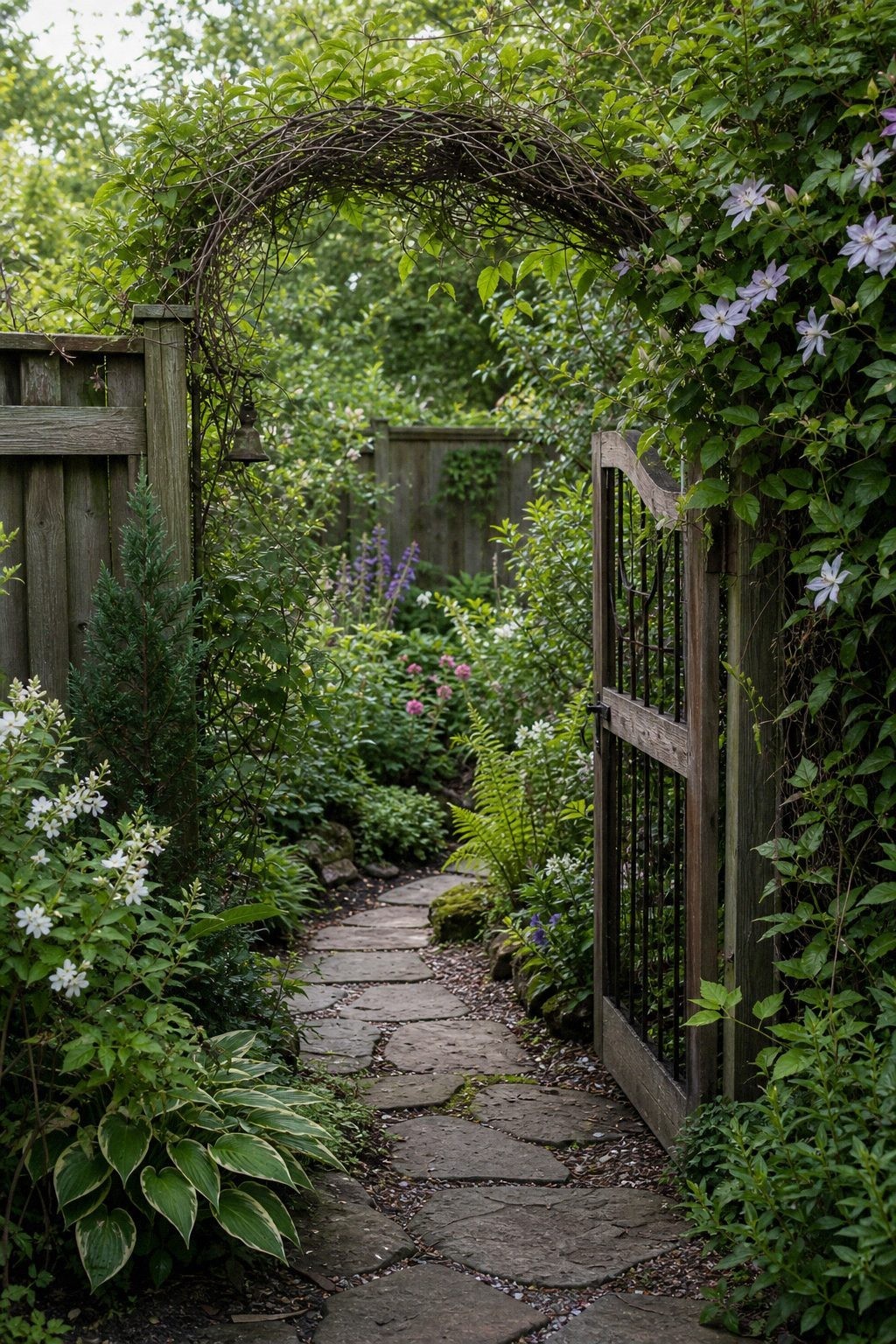
A secret garden does not have to be big. It does not need old brick walls, an iron gate, or a property line wrapped in mature hedges. Those are lovely, but they are not the part that makes a garden feel hidden.
The hidden feeling comes from three things: you cannot see the whole space at once, there is a clear threshold, and there is somewhere worth going. That can happen in a side yard, behind a garage, along a fence, or in one awkward corner that currently has a hose, two empty pots, and no reason for anyone to stop there.
Start with the entrance
The entrance is what separates a secret garden from a regular bed. It can be a gate, but it does not have to be.
Use whatever gives the body a little sense of crossing over:
- an arbor with a vine
- two tall planters flanking a path
- a narrow opening between shrubs
- a simple freestanding gate panel
- a trellis set slightly forward from the fence
- a curtain of climbing plants over a side-yard walkway
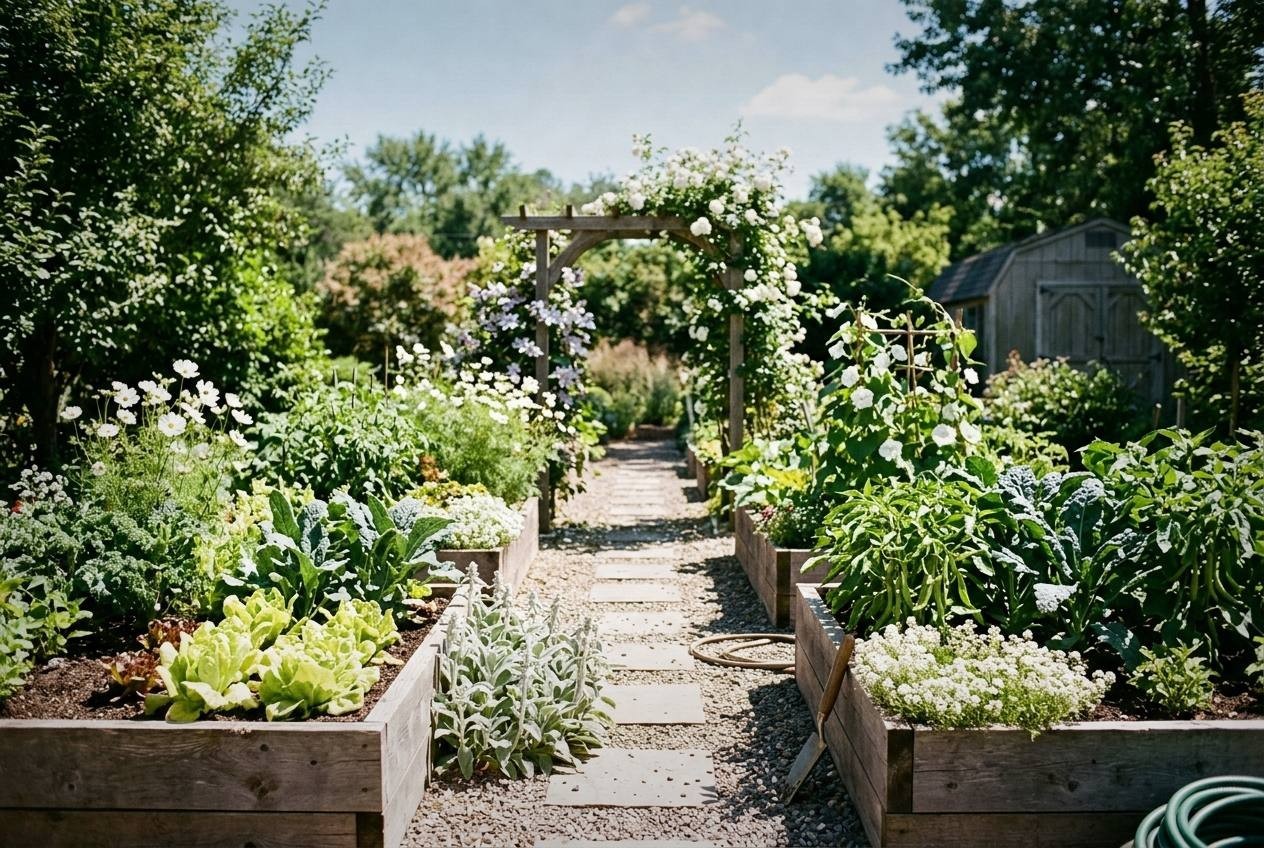
Keep it believable. A giant decorative gate in a tiny yard can look like a prop. A simple wood arbor with jasmine, clematis, climbing rose, or annual vines feels more natural. The same restraint applies to the whimsical touches you add later , where one arbor and one lantern read as charm and a dozen figurines read as clutter.
If you cannot build anything, use two large pots. Put one on each side of the path and plant them tall. Rosemary standards, boxwood, ferns, canna lilies, ornamental grasses, or climbing vines on obelisks can all make a threshold without carpentry.
Make the path curve out of sight
A straight path shows the whole story immediately. A curved path gives the garden privacy even before the plants fill in.
You do not need a dramatic bend. Shift the path just enough that the seat, fountain, or back corner is not visible from the entrance. That little delay is what makes people want to keep walking.
Good path materials for this look:
- pea gravel with metal or stone edging
- irregular flagstone with creeping thyme in the gaps
- brick laid in a simple running bond
- bark chips for a soft, low-cost side-yard path
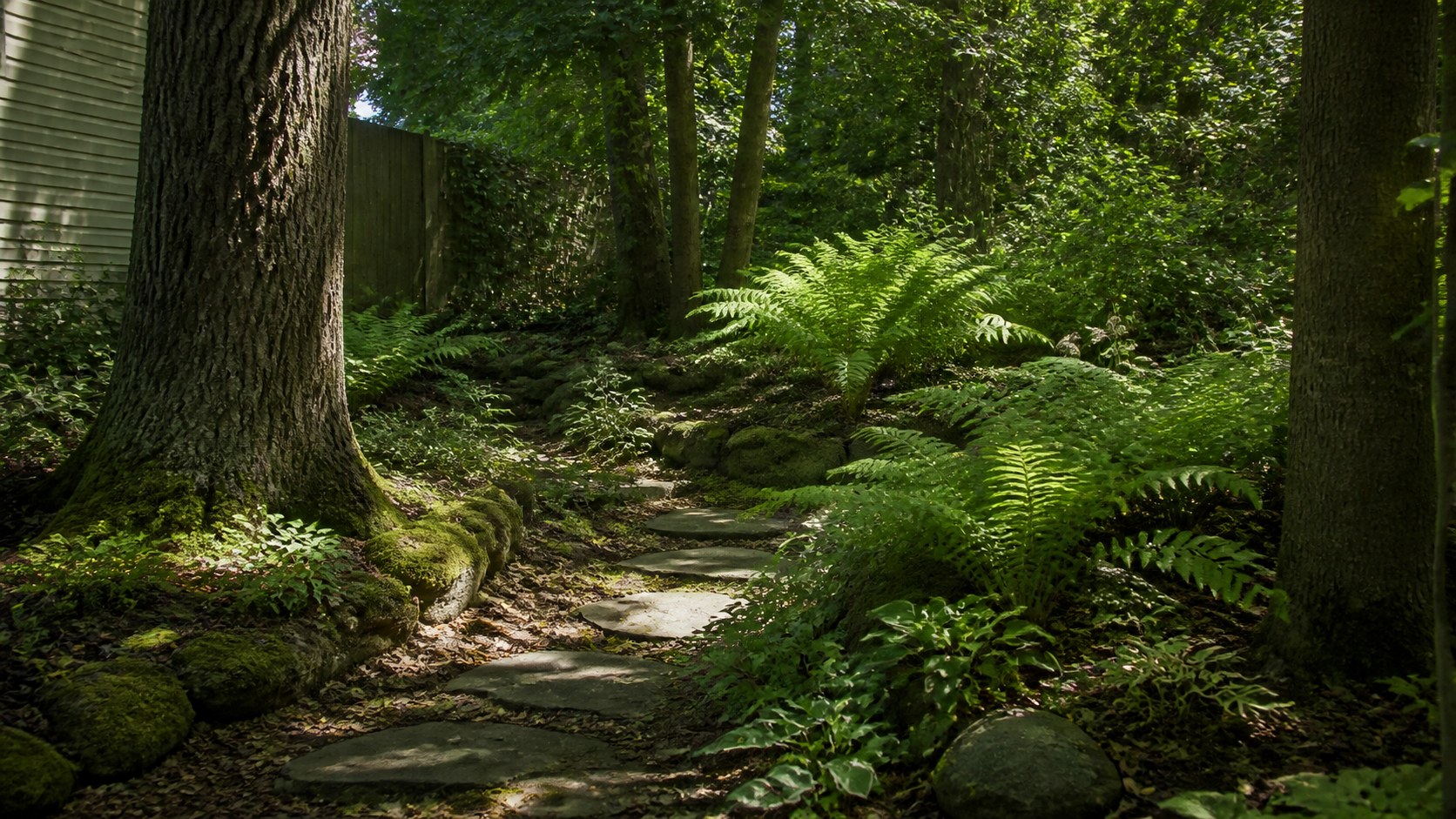
- flat stepping stones through groundcover
Avoid making the path too narrow. A secret garden can feel intimate without making people brush wet plants every time they walk through. Aim for 30 to 36 inches if you can. In a side yard, use the full practical width and soften the edges with planting.
Hide the fence with layers, not one wall of plants
Most backyard secret gardens are really fence-line makeovers. The mistake is planting one row of tall shrubs and calling it done. That gives privacy, but it can feel flat.
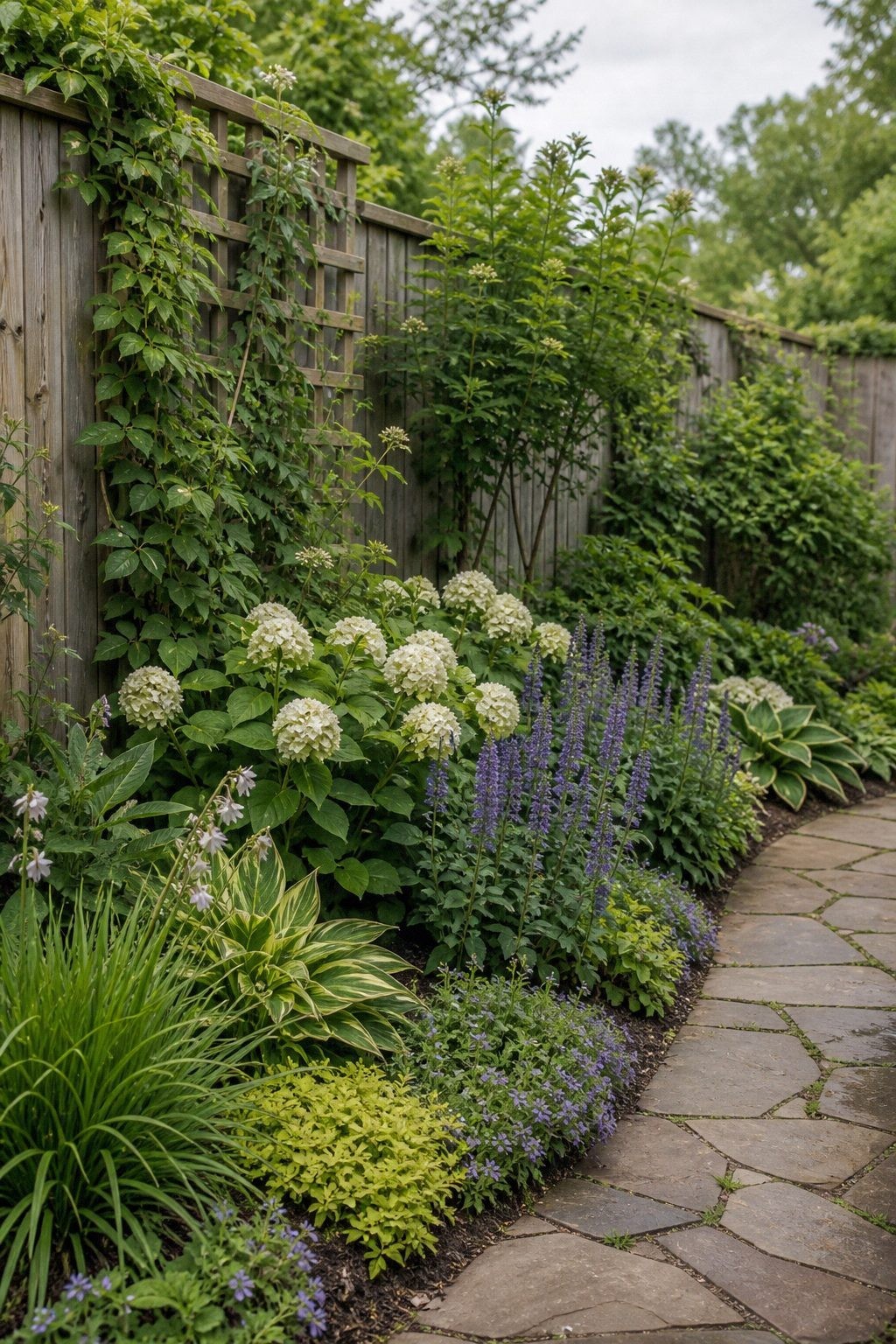
Layering works better. Put height at the back, softness in the middle, and low plants at the path edge.
A simple layer plan:
- back layer: evergreen shrubs, tall grasses, viburnum, holly, privet where appropriate, or a trellis with vine
- middle layer: hydrangea, salvia, foxglove, roses, astilbe, or ferns depending on sun
- front layer: creeping thyme, heuchera, sweet alyssum, lamb’s ear, violets, or low hostas
You are trying to blur the property line. If the eye stops at a plain fence, the garden feels like a decorated fence. If the eye moves through leaves at different heights, the yard feels deeper.
For the back layer, the plant does the whole job, so it is worth picking by the numbers rather than by what is on the clearance rack.
| Screening plant | Mature height | Spread | Evergreen or deciduous | Light | USDA zones |
|---|---|---|---|---|---|
| Emerald Green arborvitae (Thuja occidentalis ‘Smaragd’) | 12 to 15 ft | 3 to 4 ft | Evergreen | Full sun to part sun | 3 to 8 |
| Schip laurel (Prunus laurocerasus ‘Schipkaensis’) | 8 to 10 ft | 5 to 7 ft | Evergreen | Sun to part shade | 6 to 9 |
| Nellie Stevens holly (Ilex x ‘Nellie R. Stevens’) | 15 to 25 ft | 8 to 12 ft | Evergreen | Sun to part shade | 6 to 9 |
| Arrowwood viburnum (Viburnum dentatum) | 6 to 10 ft | 6 to 10 ft | Deciduous | Sun to part shade | 3 to 8 |
| Panicle hydrangea (Hydrangea paniculata) | 6 to 8 ft | 6 to 8 ft | Deciduous | Sun to part sun | 3 to 8 |
| Clumping bamboo (Fargesia robusta) | 8 to 16 ft | 4 to 6 ft | Evergreen | Part shade | 5 to 9 |
| Feather reed grass (Calamagrostis x acutiflora ‘Karl Foerster’) | 4 to 5 ft | 18 to 24 in | Deciduous | Full sun to part sun | 4 to 9 |
| Star jasmine on a trellis (Trachelospermum jasminoides) | 15 to 20 ft climbing | 3 to 6 ft | Evergreen | Sun to part shade | 8 to 10 |
| Clematis on a trellis (Clematis hybrids) | 6 to 12 ft climbing | 2 to 3 ft | Deciduous | Sun with shaded roots | 4 to 9 |
Two things to check before you buy. Plant to the mature spread, not to how the pot looks today, because a row of arborvitae planted three feet apart will be a bare-legged wall in eight years. And buy bamboo by its botanical name every time. Running types such as Phyllostachys will cross a lawn and a property line; clumping Fargesia stays where you put it.
A deciduous screen is not a failure, either. A yard used mostly between May and October does not need every plant to hold its leaves in January, and hydrangea or viburnum gives you flowers a hedge never will.
Add one destination seat
A secret garden needs a reason to exist. Most of the time, that reason is one seat.
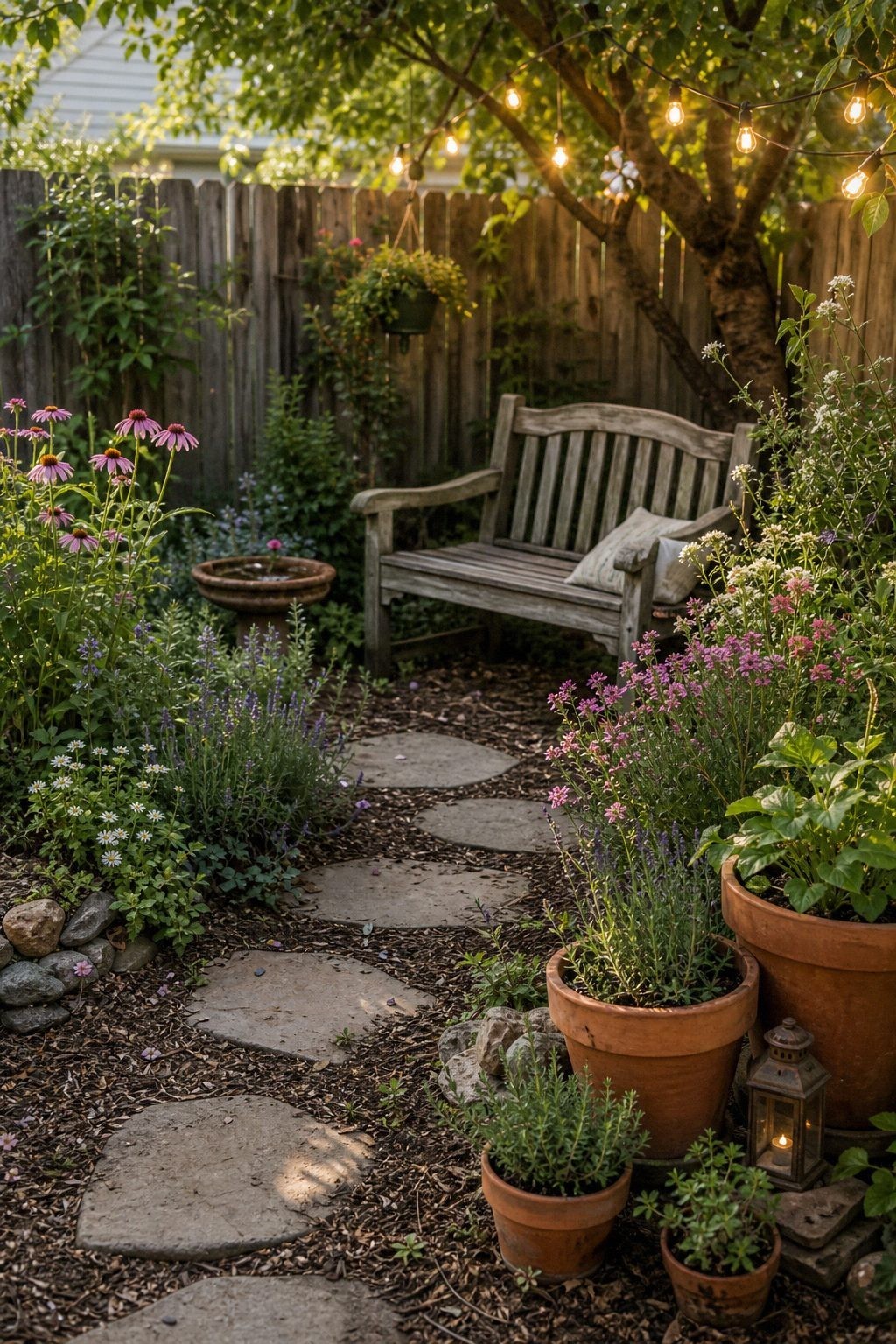
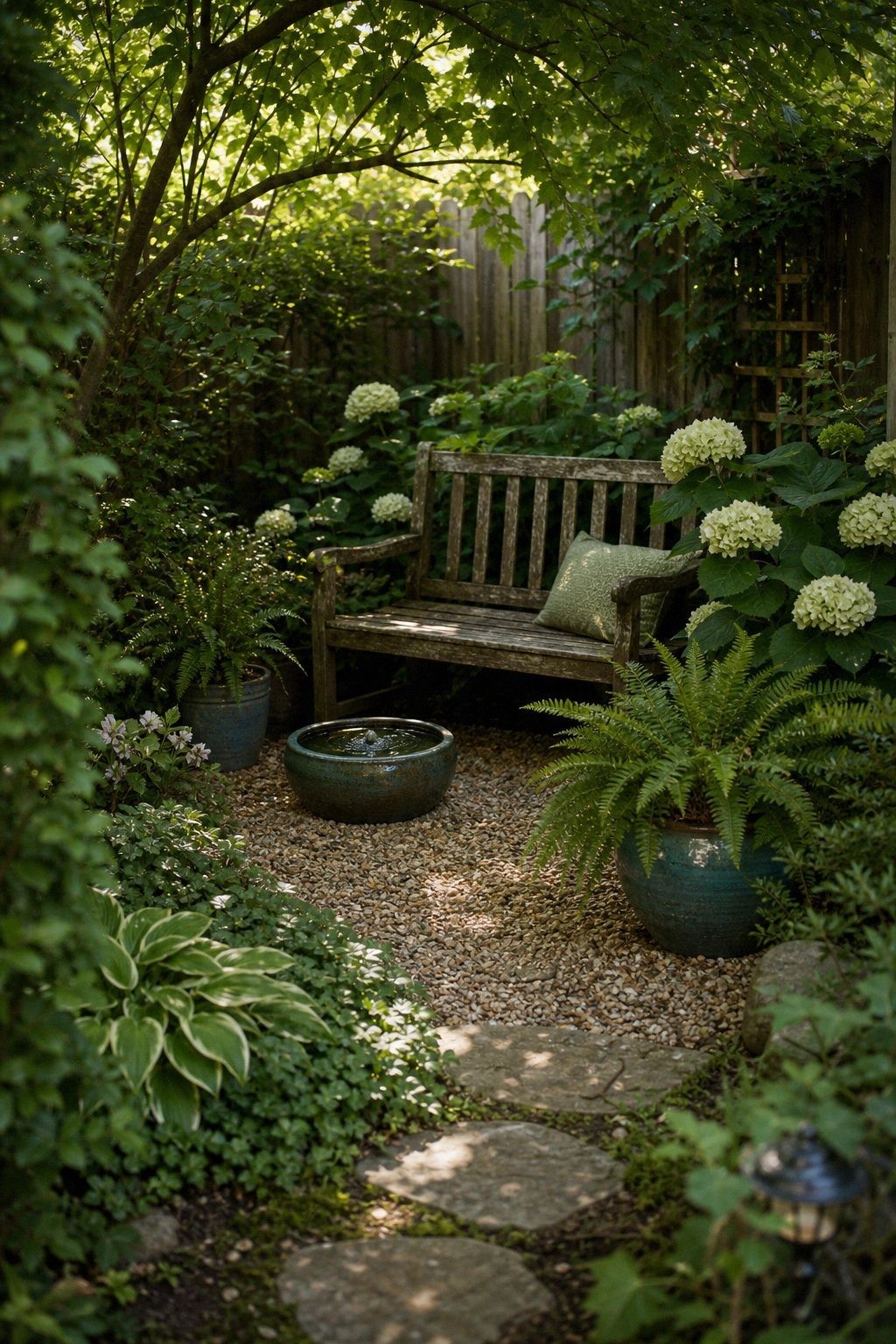
Do not overbuild it. A bench, chair, or small cafe table is enough. Put it where the path ends or bends, not floating in the center. Let plants frame it on two sides so the seat feels tucked in.
The best seat usually has one of these:
- morning sun and afternoon shade
- a view back through the path
- a little sound from water
- fragrance nearby
- enough room for a cup of coffee or a book
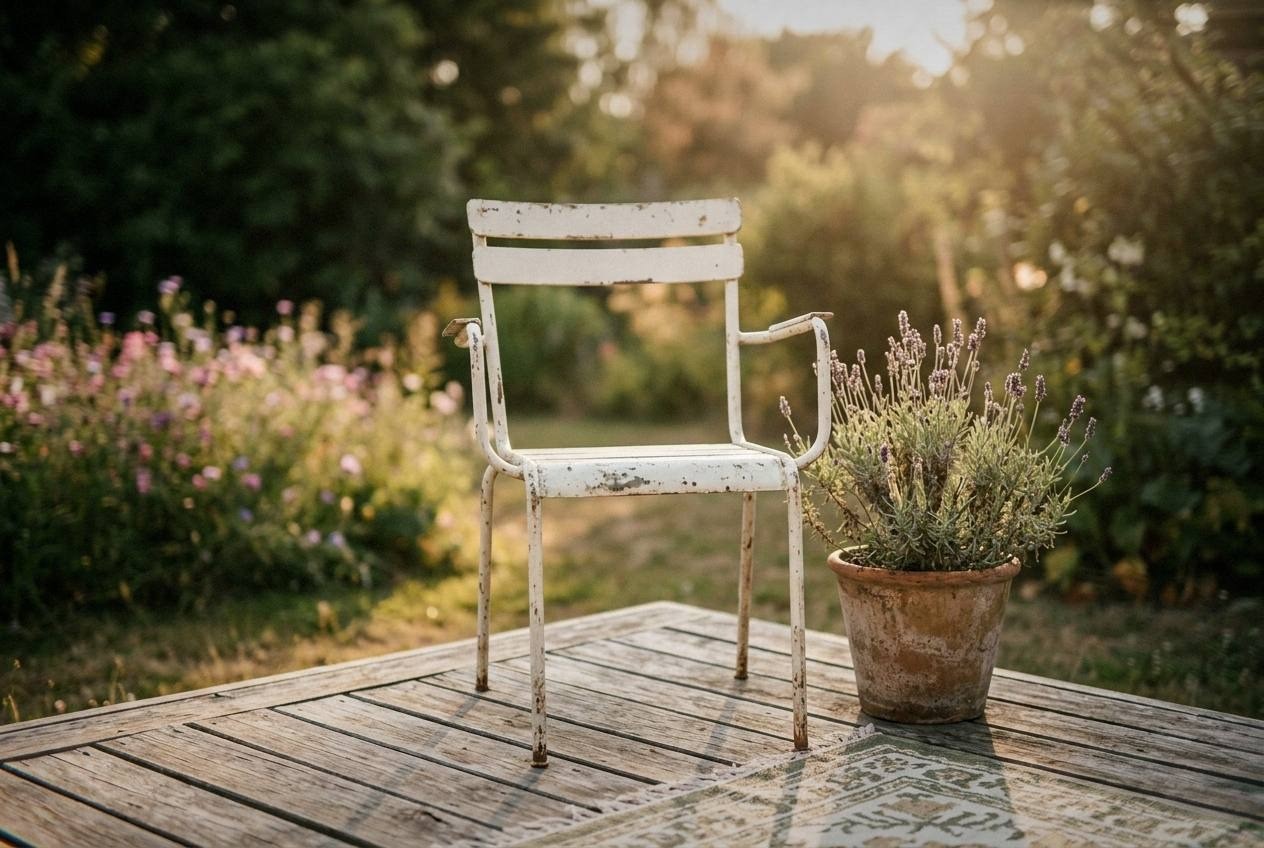
If the space is tiny, use a single chair and a small outdoor stool instead of a table. The garden will feel more private and less like a cramped dining area.
Block the sightlines, not just the fence line
A six-foot fence hides you from a neighbor standing on their lawn. It does nothing about a second-story window, a raised deck, or an upstairs bathroom across the way. This is the part people skip, and it is why a yard can be fully fenced and still feel watched.
Go sit in the seat. Actually sit down, because the sightlines from a chair are not the sightlines from standing. Then look slowly around and up, and note the two or three places you can see a window, a deck rail, or a road. Those are the only spots that need height. Everything else is already fine.
Then use the angle instead of buying more plant. Something close to you blocks far more than something the same size at the property line. A small tree ten feet tall planted eight feet from the bench covers more of a neighbor’s upstairs window than a fifteen-foot hedge forty feet away, and it costs less and needs less water. Serviceberry, redbud, crepe myrtle in warm zones, or a multi-stem birch all work, because you can limb them up and still walk underneath.
Overhead is the piece that finishes it. A pergola with a vine, a shade sail, a market umbrella left up, or the canopy of one limbed-up tree turns a screened corner into something that reads as a room rather than a fenced patch. Even a partial canopy changes the feeling, because a ceiling is what your eye reads as enclosure.
Check it once after dark too. A lit window or a motion light across the fence is invisible at noon and impossible to ignore at nine.
Do not try to block everything. A yard sealed on all sides stops feeling private and starts feeling like a bunker, and you lose the borrowed view of a neighbor’s mature tree that was doing you a favor. Two or three sightlines is usually the whole job.
Use fragrance close to the path
Fragrance makes a secret garden feel personal because you notice it only when you are inside the space.
Put scented plants where people pass or sit. Good options include lavender, rosemary, sweet pea, dianthus, garden phlox, nicotiana, star jasmine in warm zones, mock orange where there is room, and fragrant roses if you are willing to prune.
Do not hide fragrant plants at the back of the bed. Put them where a shoulder brushes them, where a breeze carries them across the bench, or beside the entrance so the garden announces itself quietly.
Put water where you can hear it
A fountain does not need to be large. A small bowl bubbler, wall fountain, or birdbath with a solar insert can make a hidden corner feel cooler and more alive.
Place it near the seat, not on the far side of the yard. The point is sound. If you cannot hear the water while sitting down, the fountain is mostly decor.
For a secret garden, softer water usually works better than dramatic water. A low gurgle fits the mood. A splashy fountain can make a small yard feel like a hotel courtyard.
Light the entrance and the seat, not everything
The fastest way to ruin a secret garden at night is to light every plant equally. It stops feeling hidden.
Light just enough:
- one warm lantern near the entrance
- a low path light at the bend
- one soft light near the seat
- a small strand of warm lights on an arbor or trellis
Keep the rest in shadow. Darkness is part of the design. It makes the lit pieces feel more special and keeps the garden from looking flat.
Make it feel old without buying fake old stuff
Secret gardens often look best when nothing feels too new. That does not mean you need expensive antiques. It means you should avoid a cart full of matching brand-new decor.
Use materials that age well:
- terracotta pots
- pea gravel
- weathered wood
- plain metal trellis panels
- stone or concrete planters
- aged brick
- simple lanterns
If you buy something decorative, buy one good thing. A small gate, a stone birdbath, or a weathered bench will do more than six little signs and three novelty stakes.
How to Make a Secret Garden, One Weekend at a Time
If you want to build the feeling over a few weekends, do it in this order.
First, create the threshold. Add an arbor, trellis, gate panel, or two tall pots. This gives the space an identity before the planting fills in.
Second, lay the path. Curve it just enough that the end is partly hidden. Use gravel, stepping stones, brick, or bark chips. The material matters less than the curve.
Third, plant the back layer. Soften the fence with shrubs or vines. You need height before you need accessories.
Fourth, add the seat. Put it at the end of the path or just around the bend. Sit there before you buy anything else. You will notice fast whether you need shade, fragrance, water, or better footing.
Fifth, add the details. One lantern. One water bowl. One fragrant plant by the bench. One small pot cluster. The garden should feel discovered, not decorated in one shopping trip.
That is the secret. Not a huge yard. Not a perfect hedge. Just a threshold, a path that keeps one thing hidden, plant layers that blur the edges, and a seat that makes the little journey worth it.