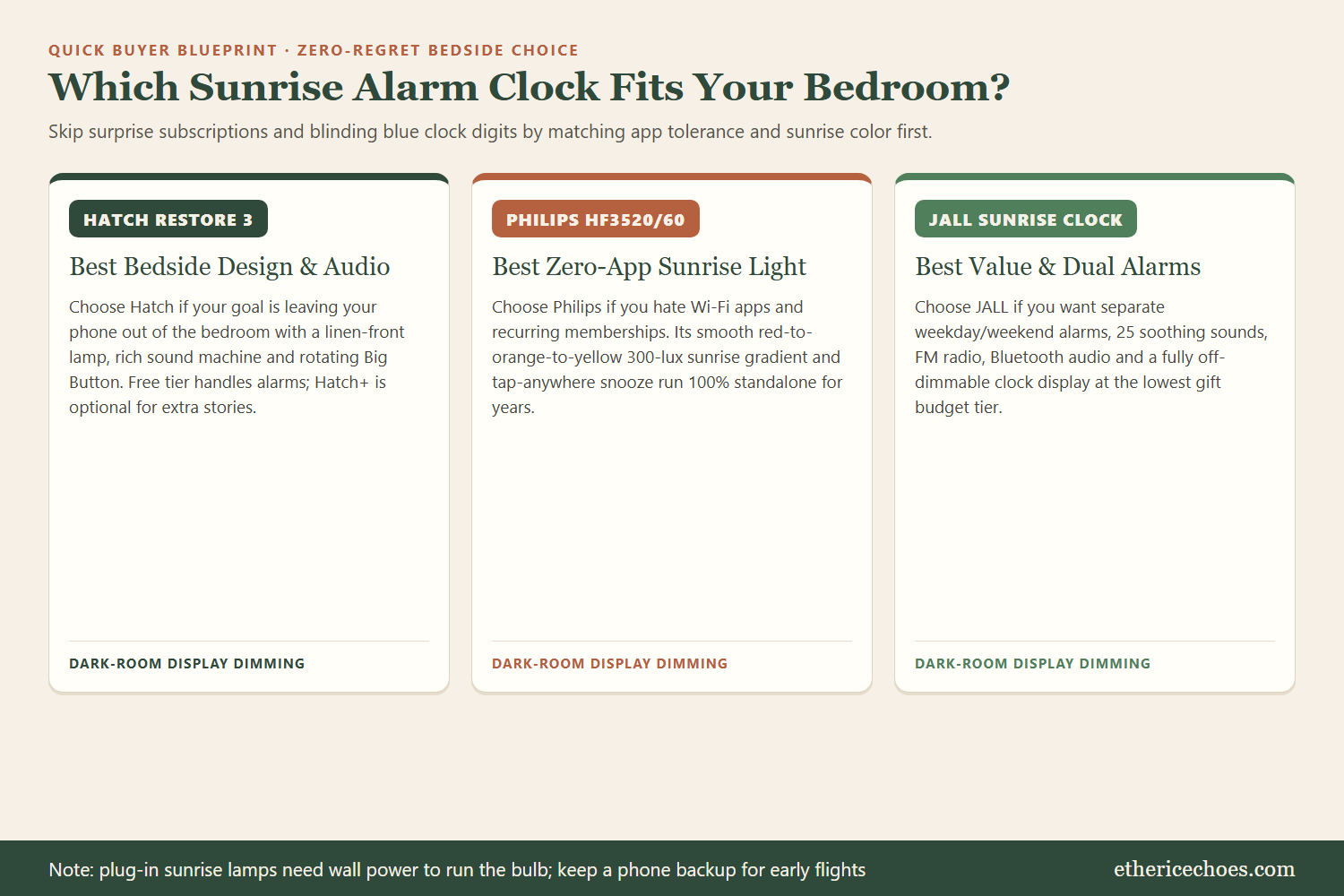
Choose the Hatch Restore 3 (Putty) if you want the prettiest nightstand aesthetic, rich bedside sound-machine acoustics and a tactile physical Big Button routine that helps you park your smartphone outside the bedroom (and you do not mind using an app for setup or skipping the optional paid Hatch+ audio library). Choose the Philips SmartSleep Wake-Up Light HF3520/60 if you want the most natural red-to-orange-to-yellow 300-lux sunrise gradient with zero Wi-Fi, zero app accounts and zero subscriptions forever. Choose the JALL Sunrise Alarm Clock if you want a full-featured winter wake-up light with 25 soothing sounds, dual weekday/weekend alarms, a fully off-dimmable clock face and a Bluetooth speaker at the lowest spend tier.
Hatch Restore 3 vs. Philips SmartSleep vs. JALL: Best Sunrise Alarm Clock

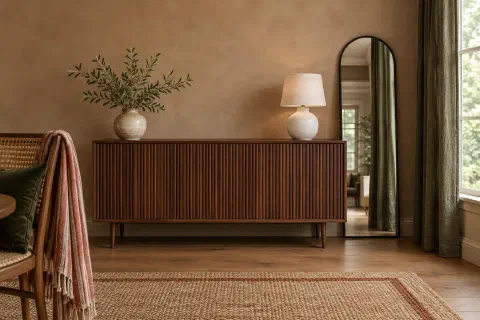
Styling inspiration for a calm, phone-free bedside nightstand, not a photograph of the exact linked alarm clocks.
Before buying, compare subscription reality, app dependency, true sunrise color transitions and dark-room display dimming below.
15-Second Picker
Match a sunrise alarm clock to your bedside routine
Choose your app preference and wake-up priority to get an instant match.
1. How do you feel about smartphone apps and Wi-Fi setup?
2. What matters most on dark winter mornings?
Best Nightstand Design & Audio$$$
Upgraded rotating Big Button lets you run bedtime soundscapes and morning sunrise cues without ever picking up your phone.
Keep in mind: Top spend tier, requires smartphone setup, and lacks an internal battery backup for outages.
Best App-Free Colored Sunrise$$$
Smooth red-to-orange-to-yellow sunrise transition, sunset dimming, 5 natural sounds, FM radio and tap-anywhere snooze work 100% standalone.
Keep in mind: Wider circular disc footprint on narrow nightstands and fewer sound choices than Hatch or JALL.
Best Value & Dual Alarms$
Packs 10 to 60 min sunrise simulation, 25 soothing sounds, dual alarms, FM radio, 5W Bluetooth speaker and full display blackout with zero subscription.
Keep in mind: Button menus feel less minimal than Hatch's single dial and plastic body looks more utilitarian.
Affiliate links: we may earn a commission if you purchase through Amazon at no extra cost to you. Cost tiers ($ to $$$) reflect relative spend; check Amazon for live pricing. Selections stay on your screen.
Hatch Restore 3 vs. Philips SmartSleep HF3520 vs. JALL at a glance
Compare Sunrise Quality, App & Subscription Needs, Sound Library and Nightstand Controls side by side before ordering.
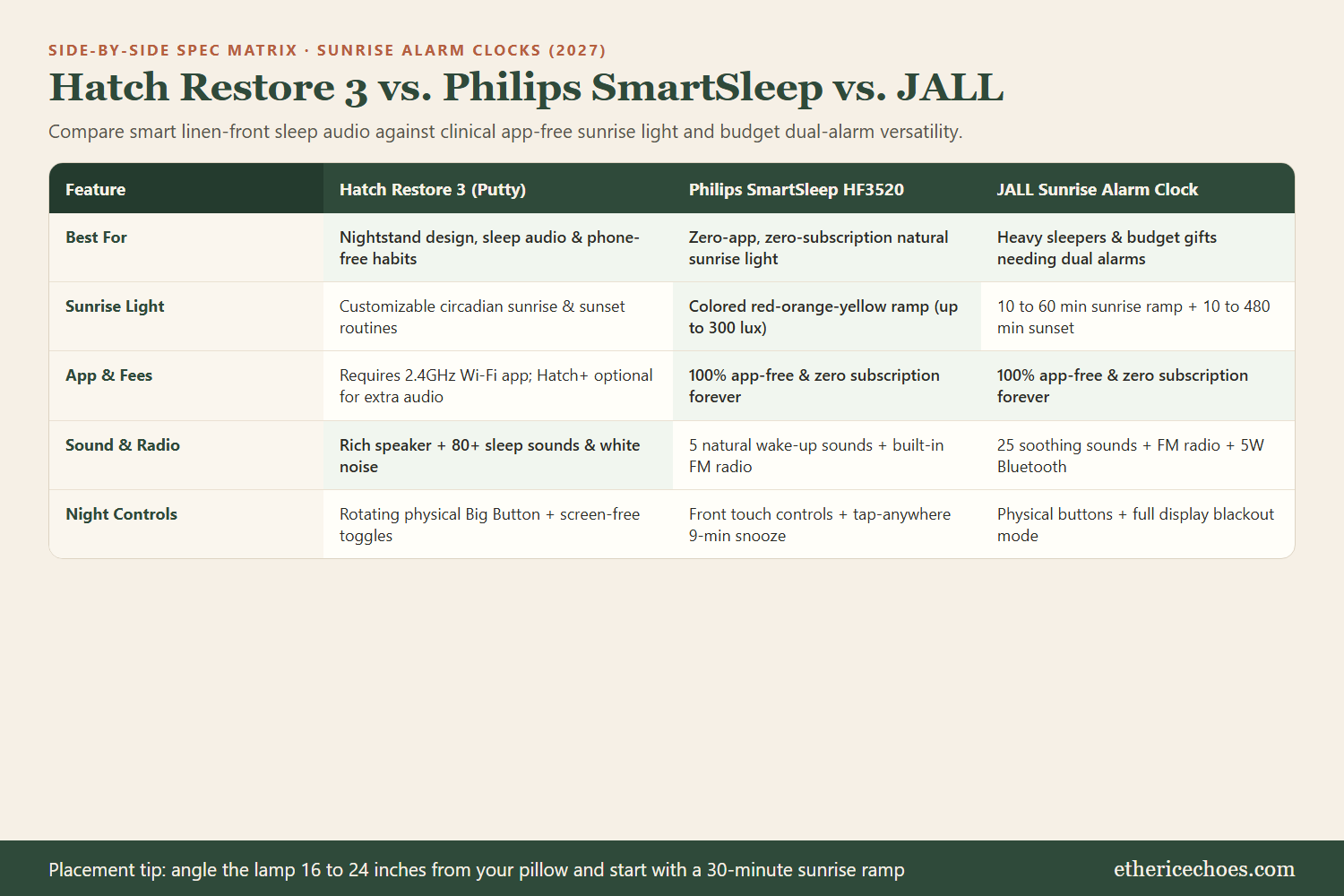
| Feature | Hatch Restore 3 | Philips SmartSleep HF3520/60 | JALL Sunrise Alarm Clock |
|---|---|---|---|
| Best for | Aesthetic nightstand, sound machine & screen-free habits | Zero-app, zero-subscription natural sunrise light | Heavy sleepers & budget gifts needing dual alarms |
| Sunrise & sunset | Customizable circadian sunrise & sunset light cues | Colored red-to-orange-to-yellow sunrise (up to 300 lux) + sunset | 10 to 60 min sunrise ramp + 10 to 480 min sunset timer |
| App & subscription | Requires 2.4GHz Wi-Fi & app; Hatch+ optional for extra audio | 100% app-free & zero subscription forever | 100% app-free & zero subscription forever |
| Sounds & radio | Rich bedside speaker + 80+ sounds (more with Hatch+) | 5 natural wake-up sounds + built-in FM radio | 25 soothing sounds + FM radio + 5W Bluetooth speaker |
| Physical controls | Tactile rotating Big Button + dedicated bedside toggles | Front touch controls + tap-anywhere 9-min snooze | Physical top/side buttons + full-screen dimmable display |
Featured Amazon sunrise alarm clocks (live product cards)
Affiliate disclosure: We earn a small commission if you buy through our Amazon links below, at no extra cost to you. Cost tiers ($ to $$$) reflect relative spend; check the live Amazon listing for current pricing and availability.
Best Nightstand Design & Audio$$$
Best for: Readers building a phone-free bedside wind-down routine who love soft linen design and rich sleep audio.
Honest catch: Top spend tier, requires smartphone setup, and lacks an internal battery backup for outages.
Best App-Free Colored Sunrise$$$
Best for: Anyone who wants a realistic 300-lux colored sunrise with zero apps, Wi-Fi accounts or subscriptions.
Honest catch: Wider circular disc footprint on narrow nightstands and fewer sound choices than Hatch or JALL.
Best Value & Dual Alarms$
Best for: Heavy sleepers, teens, students and holiday gift lists wanting maximum sunrise features at the entry tier.
Honest catch: Button menus feel less minimal than Hatch's single dial and plastic body looks more utilitarian.
Subscription reality, brightness and phone-free bedrooms
The biggest mistake buyers make with sunrise clocks is picking a Wi-Fi smart clock for someone who hates pairing apps, or buying a bright white bulb that snaps on abruptly instead of ramping gradually across 30 minutes. Match the mechanism to how you actually wake up on pitch-black January mornings.
Four placement habits that make a sunrise clock actually work
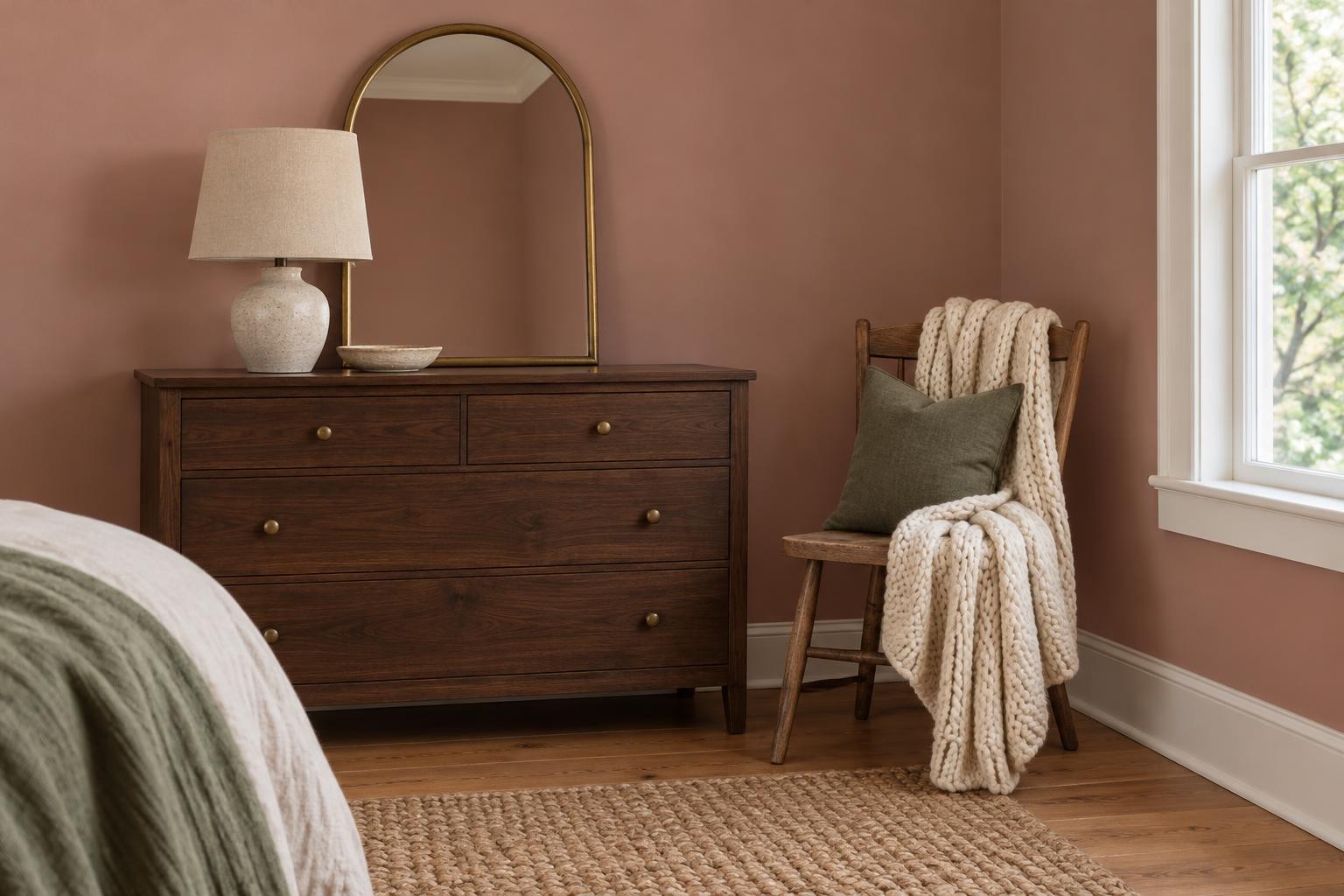
- Position 16 to 24 inches from your pillow: Sunrise light loses intensity rapidly with distance. Place the lamp unobstructed on your nightstand facing toward your pillow rather than tucked behind a tall stack of books.
- Start with a 30-minute sunrise ramp: A 10-minute jump feels startling, while a 30-minute gradual ramp signals your brain gently before the wake-up sound fades in.
- Set display brightness to auto-dim or completely off: Keep the clock numbers dark overnight so checking the time at 3:00 a.m. never jolts you wide awake.
- Keep a backup alarm for early flights: Because plug-in sunrise lamps cannot run their full bulb during a power outage, use your phone backup on critical travel mornings.