For hygge living room lighting, place the first lamp beside the seat you use most, then add a second light only where the room still feels dark. You want enough light to read or talk without making every corner equally bright. These three setups show where the lamps go. Move the lights you already own before shopping for more.
Hygge Living Room Lighting: 3 Lamp Setups That Work
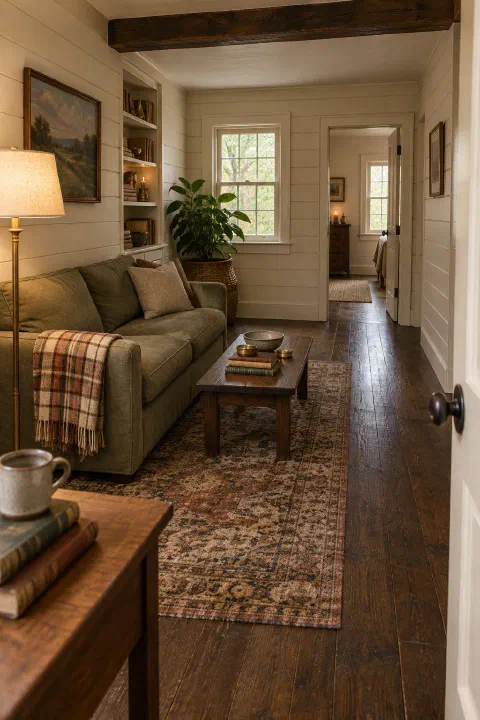
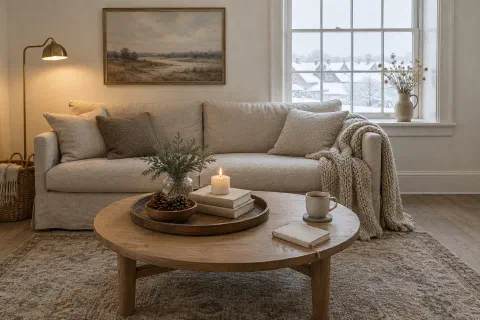
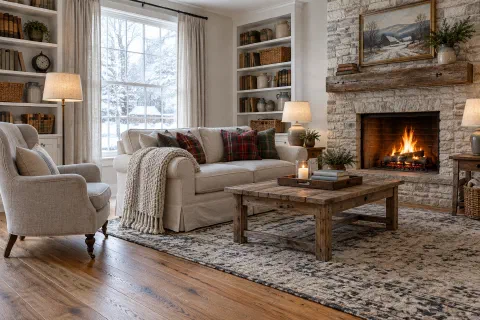
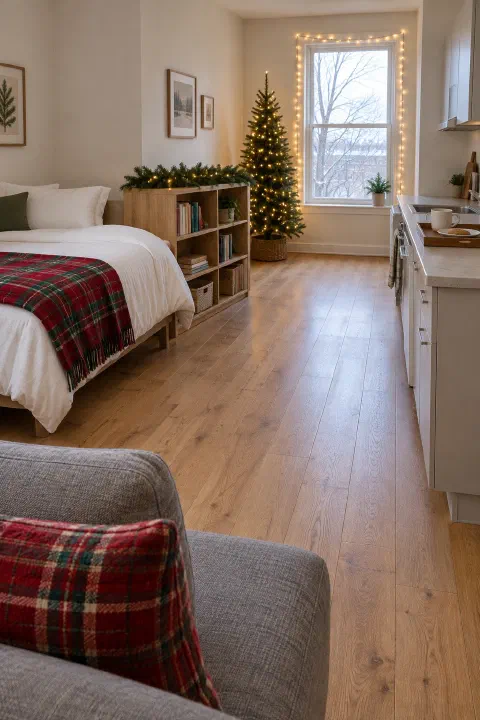
Room styling example; image is not a photograph of the linked products.
| Your room | First light | Second light, if needed |
|---|---|---|
| Sofa and reading chair | Beside the chair or sofa end you use | Across the room at the other seat |
| Long room | Beside the sofa in the near half | Near the chair or shelf at the far end |
| No useful overhead light | Floor or table lamp at the main seat | Plug-in lamp on a surface away from it |
Setup 1: Sofa and Reading Chair
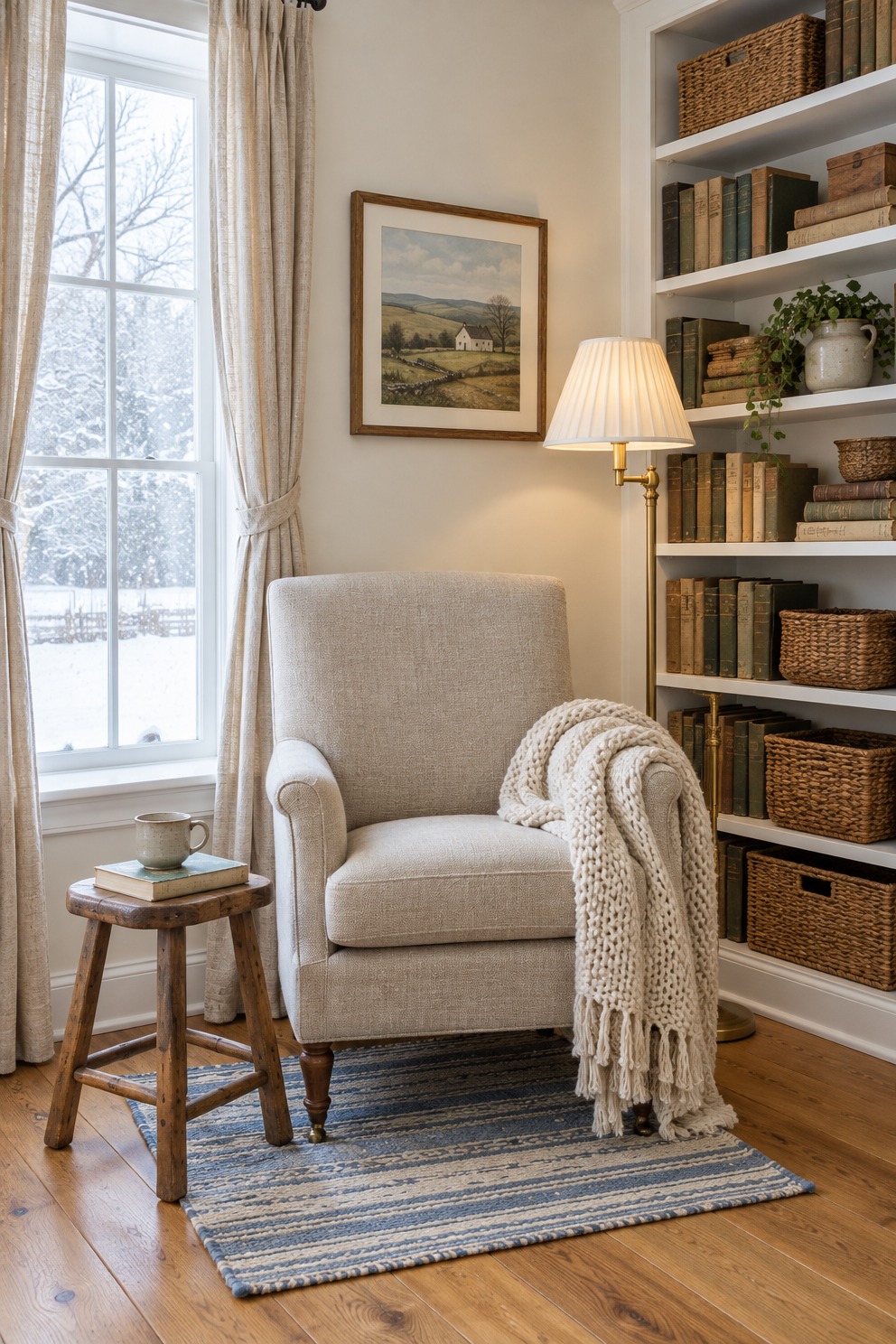
Start with two seats, not two matching lamps. If you read in the chair, put a floor lamp just behind one shoulder or a table lamp beside it. Sit down and make sure the shade hides the bare bulb from your eyes while light reaches the page. Put the other lamp beside the sofa end people use, where it can light a drink and a conversation.
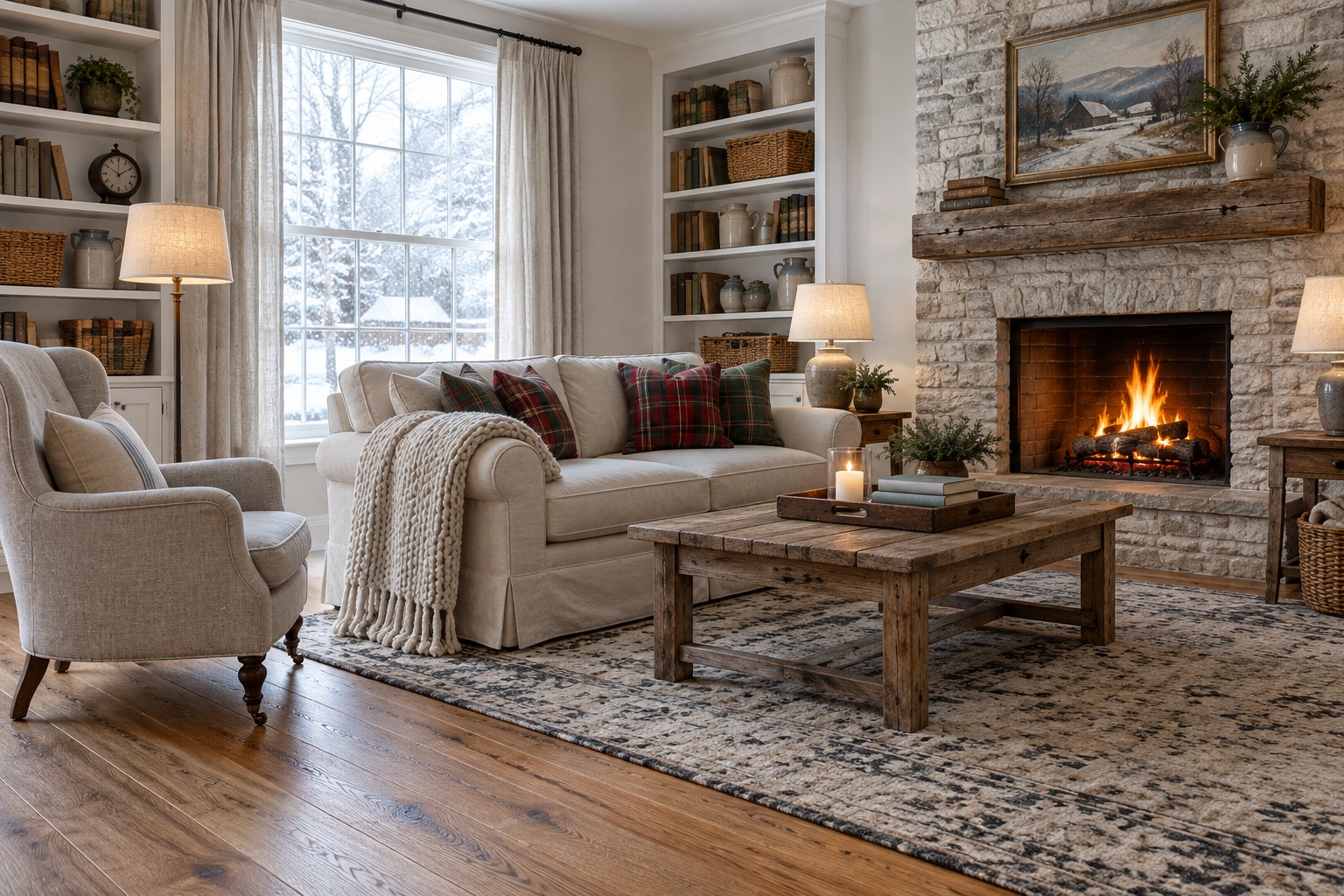
The coffee table does not need its own light. A lamp in the center of a small room often shines into your eyes while leaving the seats dim. Keep the lamps near the people. When you turn off the ceiling fixture, the two lighted seats make a calmer room with enough visibility to use it.
Check it tonight: Carry one lamp to the chair. Sit there for ten minutes with a book. If the bulb is visible through the shade, move the lamp a little behind you or change its height. Then decide whether the sofa needs a second lamp.
Setup 2: A Long Room with a Dark Far End
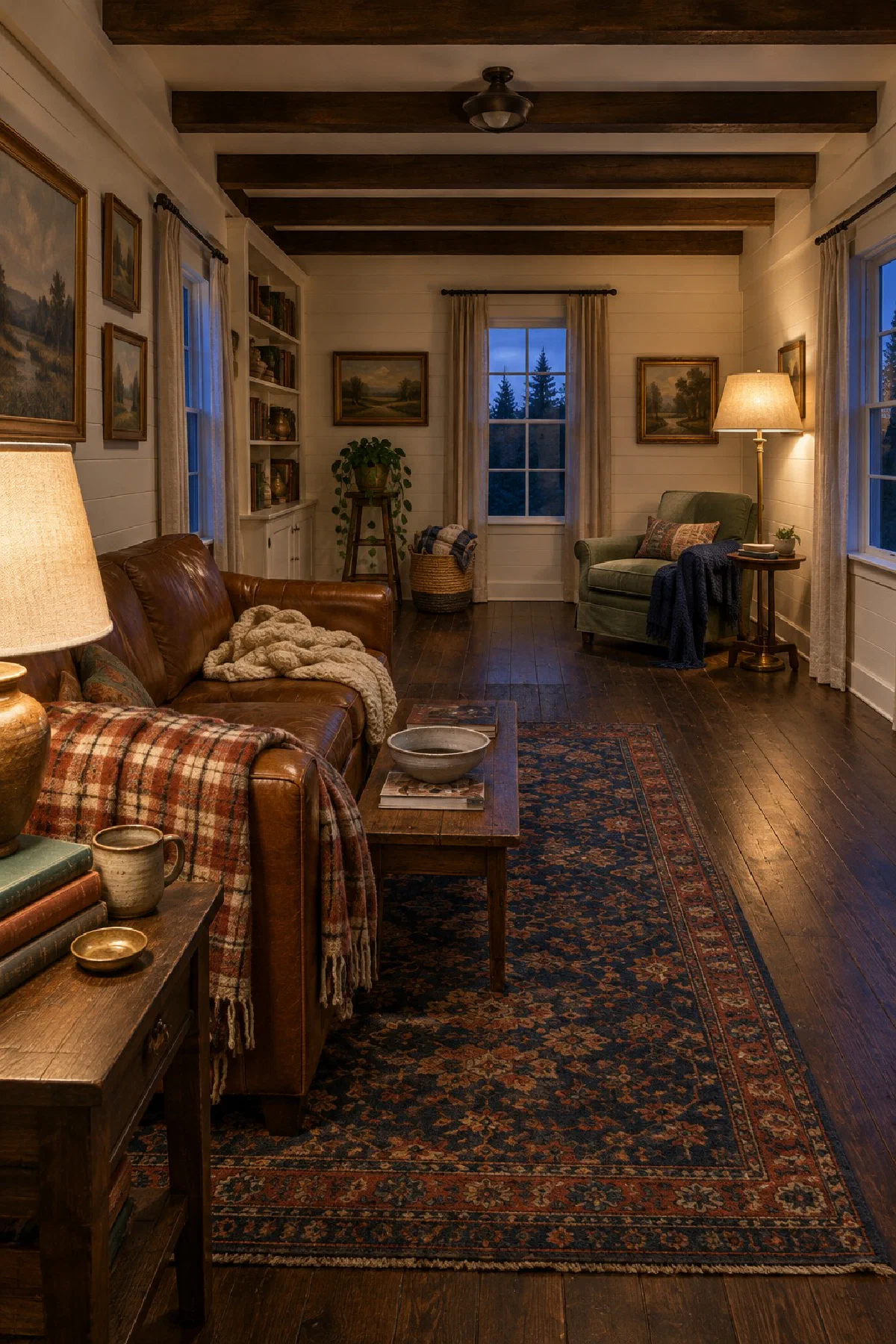
A long room can look like a lit sofa in front of a dark tunnel. Put one lamp beside the sofa, then place a second near the far-end chair, bookcase or side table. Each light should serve a real spot; a lamp stranded halfway down an empty wall does less for the room. Keep the walking route between the two areas open and run cords along the edge, away from feet.
Look at the room from the entrance with only the first lamp on. Can you see the far chair or find the doorway without turning on the ceiling light? If not, move an existing lamp to the far end and look again. In the long-room photo at the top of this page, the sofa and armchair each have their own pool of light. A small candle on a stable surface can add a flicker, but it is not a substitute for the lamp you need to read by.
Use the far end for one evening: Move the second lamp to the farthest place you actually sit. Leave it on for one evening. If it only lights an unused corner, move it back and keep the simpler setup.
Setup 3: No Useful Overhead Light
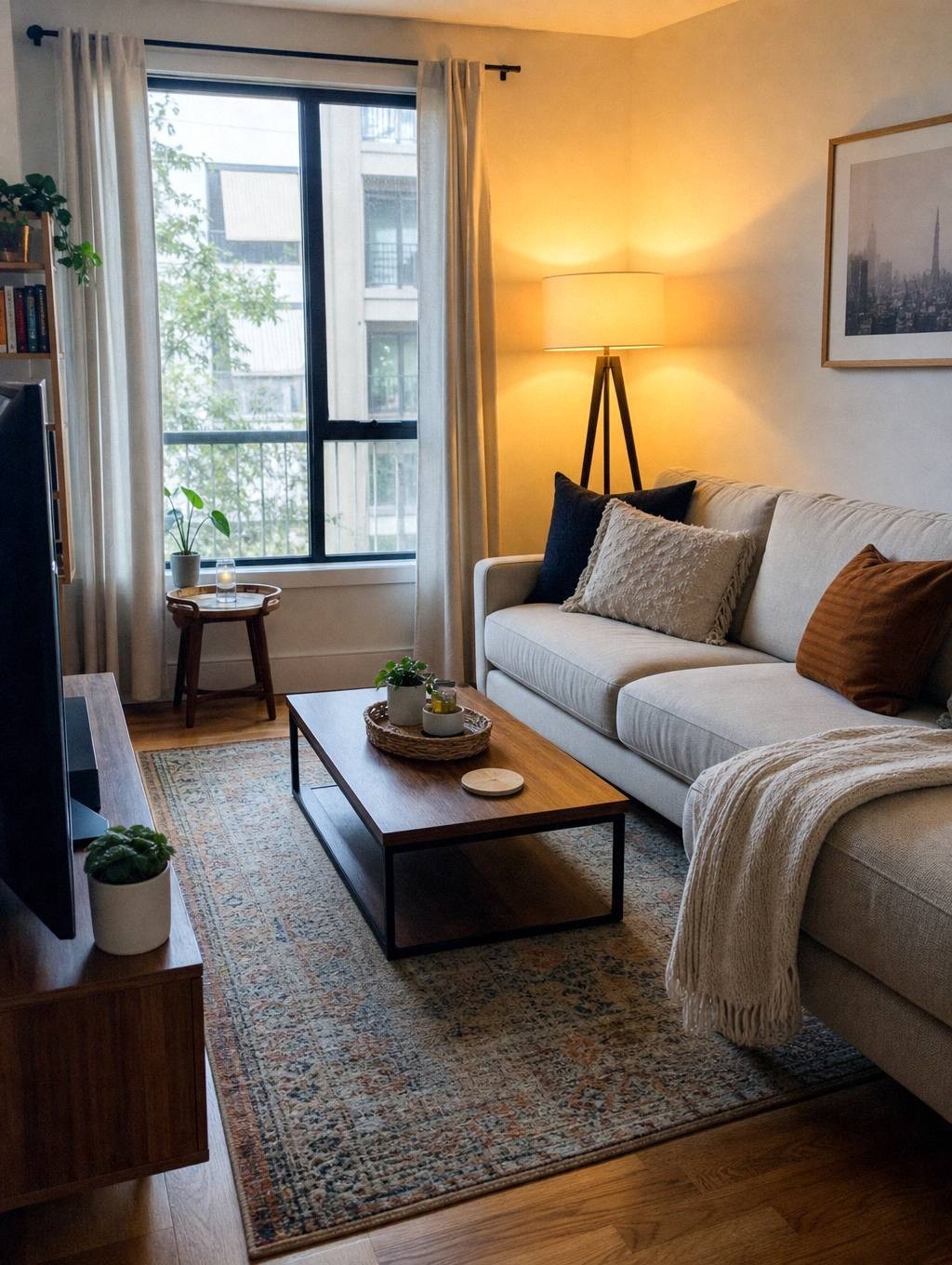
A rental may have a ceiling fixture that is too bright, badly placed or absent. You can still make the room work with a floor lamp by the main seat and a table lamp on a bookcase or side table across from it. Plug them into accessible outlets, keep cords out of the walking route, and switch on the lamp you need at the time. There is no reason to light the whole room when you are reading in one chair.
If your only switch controls the ceiling light, a plug-in dimmer can make an existing lamp easier to use, provided the bulb and lamp support dimming. You can put a small remote on the side table and leave the wall switch alone. The warm white living room bulb guide has the color temperature, brightness and dimmer details; this page is about where the light goes.
Start with one lamp: Turn off the ceiling light, put the floor lamp by your usual seat, then walk the room. Add the second lamp only where you cannot do what you need to do.
How to Make the Light Feel Softer
Shade position matters as much as the number of lamps. If an electric light looks glaring, sit down and check whether the bulb is in your direct view. Turn the lamp, lower it, or swap a clear shade for one that diffuses the bulb. A pale fabric shade can diffuse the bulb and spread light around the nearby wall. A dark or opaque shade directs more of it up and down. Check the effect in your own room after sunset before buying another lamp.
Keep the lamps in one warm color family so the sofa does not look yellow at one end and blue at the other. Our bulb guide explains color temperature in Kelvin and how to choose a dimmable bulb. You do not need to memorize the numbers to decide where a lamp belongs.
The Danish idea of hygge is often associated with shared comfort. Your lighting plan still has to serve what you do in the room. If you sew, read fine print or play a board game at the table, turn on the brighter light for that job. The quieter evening setup can wait until the activity ends.
What to Buy, If a Lamp Move Is Not Enough
Some links on this page are Amazon links. If you buy through one, Etheric Echoes earns a small commission at no extra cost to you. Check your existing lamps, bulb bases and outlet locations first.
- A warm bulb for a lamp you already like: The Philips dimmable A19 bulbs (opens Amazon in a new tab)As an Amazon Associate, we earn from qualifying purchases. Full disclosure. are one option. Check the lamp’s socket and wattage limit, and confirm the current listing before ordering.
- A plug-in control for a dimmable lamp: The Lutron lamp dimmer kit (opens Amazon in a new tab)As an Amazon Associate, we earn from qualifying purchases. Full disclosure. can put a remote by your chair. Use it only with a bulb marked dimmable.
- Another lamp only when a seat is still dark: Measure the space beside that seat and check the outlet before picking a shade or stand. A lamp that fits the room is more useful than a matching pair.
If the furniture arrangement itself is the problem, the three hygge small living room layouts show how to keep the walking route open. For a whole-home order of changes, start with the hygge home decor checklist.