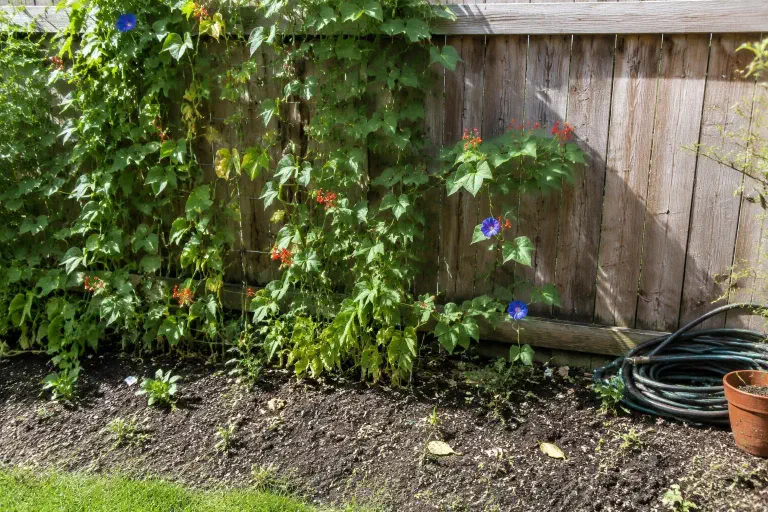
The best privacy vines for a fence come down to one calendar question: do you need green cover by July, or do you want a permanent year-round screen? When we want fast privacy this summer, we sow fast-growing annual climbing vines such as hyacinth bean or scarlet runner bean after our last spring frost; on a chain-link fence or a 12-to-14-gauge wire grid they climb 8 to 25 feet in one warm season before frost clears them out. When we want evergreen privacy for years to come, we plant a perennial vine matched to our USDA zone: star jasmine in zones 8 to 10, or native crossvine and coral honeysuckle farther north into zones 4 to 9. Because perennials need two or three seasons to knit shut, our favorite backyard trick is planting both together so quick annuals hide the neighbor’s driveway during summer one while the permanent vines build deep roots.
Privacy Vines for a Fence: Fast Annuals, Evergreens and Natives
Last updated:
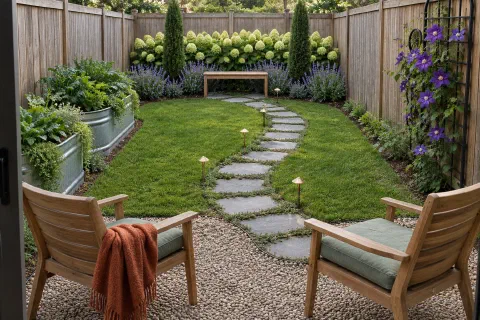
Illustrative scene, not a photograph of the linked products.
What is the fastest vine to cover a fence?
Annual flowering vines are the quickest path to a leafy screen because they pack their entire life cycle into a single summer. We sow big seeds like beans directly into warm soil after our last frost date (spaced 6 to 12 inches apart along the fence base), or start slower growers indoors 4 to 6 weeks ahead for an early start.
| Annual Vine | Height in One Summer | Sun Need | Best Fence Fit & Good to Know |
|---|---|---|---|
| Hyacinth bean (Lablab purpureus) | 10 to 25 ft | Full sun | Purple stems and glossy purple pods; thick foliage; mature dried seeds are toxic only if eaten in quantity |
| Cup-and-saucer vine (Cobaea scandens) | 15 to 25+ ft in long summers | Full sun | Bell-shaped blooms; start indoors early if your warm season is short |
| Scarlet runner bean (Phaseolus coccineus) | 8 to 12 ft | Full sun | Bright red blooms attract hummingbirds from midsummer to frost, plus edible young pods |
| Morning glory (Ipomoea tricolor) | 8 to 10 ft | Full sun | Classic blue or purple blooms from seed; self-sows heavily and is invasive in some regions; seeds are toxic |
| Climbing nasturtium (Tropaeolum majus) | 6 to 10 ft | Full sun | Check the packet for a vining/climbing cultivar, not a compact bush type |
| Black-eyed Susan vine (Thunbergia alata) | 5 to 8 ft | Full sun | Neat, lighter screen ideal for a short 4-to-5-foot fence or patio arbor |
For maximum leafy coverage per plant without invasive headaches, we reach for hyacinth bean and scarlet runner bean first. Morning glory covers chain link fast, yet we always snip faded flowers before seed pods ripen so it does not take over adjacent flower beds next spring.
Which vines stay green all year for privacy?
Here is the honest climate catch we share with every northern gardener: most cold-hardy perennial vines drop their leaves once winter freezes arrive. True four-season evergreen vines for privacy are easiest in USDA zones 7 through 10. In zones 4 through 6, pairing deciduous flowering vines with a narrow row of evergreen shrubs behind them gives far better winter screening than hunting for a cold-zone evergreen climber that browns out in January wind.
| Evergreen Vine | USDA Zones | Mature Size | How It Climbs | Winter Note |
|---|---|---|---|---|
| Star jasmine (Trachelospermum jasminoides) | 8 to 10 | 12 to 15 ft on support | Twining stems | Densest evergreen screen; fragrant white blooms with 4+ hours sun |
| Crossvine (Bignonia capreolata) | 5 to 9 | 30 to 50 ft | Tendrils | Hardiest native option; semi-evergreen to evergreen depending on winter lows |
| Carolina jessamine (Gelsemium sempervirens) | 6 to 10 | 10 to 20 ft | Twining stems | Glossy leaves and yellow late-winter blooms; highly poisonous if eaten |
| Coral honeysuckle (Lonicera sempervirens) | 4 to 9 | 10 to 20 ft | Twining stems | Stays evergreen in mild southern winters; deciduous in cold zones |
| Evergreen clematis (Clematis armandii) | 7 to 9 (mild winter) | 15 to 20 ft | Leaf stalks wrap thin wire | Early spring white flowers; can show winter wind burn on leaf edges |
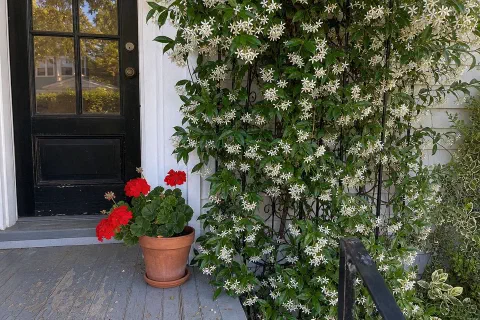
Star jasmine creates the tidiest, densest green wall in warm zones and usually knits a fence shut in two growing seasons; our guide to star jasmine by the door covers pruning and watering in detail.
Farther north, crossvine earns top marks. Extension horticulturists in Maryland note it as the only native vine there likely to stay reliably evergreen, shifting semi-evergreen only during severe freezes. Skip Carolina jessamine in yards where toddlers or curious dogs chew twigs, since every part of the plant is toxic. And never let anyone talk you into English ivy for evergreen fence cover; it is aggressively invasive across much of the country and damages wood and mortar over time.
Native vines for a privacy fence
When we want climbing vines that attract hummingbirds, support native butterfly caterpillars, and feed migrating songbirds without escaping into local woods, regional native species are hard to beat. Double-check that any plant is native to your specific state, since U.S. ecosystems vary widely from coast to coast:
- Coral honeysuckle (Lonicera sempervirens, zones 4 to 9): Red tubular flowers that hummingbirds visit daily from spring through fall, followed by red berries birds eat, with zero of the invasive sprawl of Japanese honeysuckle.
- Virgin’s bower (Clematis virginiana, zones 3 to 8): Vigorous North American native clematis reaching 12 to 20 feet with clouds of starry late-summer white flowers and feathery seed heads. Unlike invasive sweet autumn clematis, it has clearly toothed leaf edges and plays politely with local hedgerows.
- Crossvine (Bignonia capreolata, zones 5 to 9): Trumpet-shaped orange-red and gold spring blooms (cultivars like ‘Tangerine Beauty’ flower heavily) loved by hummingbirds and native bees.
- American wisteria (Wisteria frutescens, zones 5 to 9): Grows 15 to 40 feet with fragrant lilac flower clusters and far better manners than destructive Chinese or Japanese wisteria.
- Purple passionflower (Passiflora incarnata, zones 5 to 9): Fast tendril climber hosting Gulf fritillary butterfly larvae and forming egg-shaped maypop fruit; dies back to roots in cold winters and rebounds rapidly each spring.
- Trumpet vine (Campsis radicans, zones 4 to 9): Native hummingbird magnet reaching 30 to 40 feet, though heavy woody canes demand a tough fence and yearly pruning.
- Virginia creeper (Parthenocissus quinquefolia, zones 3 to 9): Fast deciduous climber with fiery scarlet autumn leaves that clings directly to brick or stone via adhesive disks; skip it on painted wooden fences where holdfasts peel finishes.
How fast will a vine cover a fence?
Timing expectations save plenty of frustration in year one. Fast annuals cover a 6-foot fence in 8 to 12 weeks of warm weather. Perennial vines follow the classic garden rule of first-year roots, second-year shoots: star jasmine, virgin’s bower, and most clematis fill out across two full growing seasons, climbing roses take two to three years, and crossvine settles in within two to three summers. Wisteria puts on vigorous green vines quickly, though seed-grown plants often wait five to seven years to bloom.
Mature height also tells only half the story. Left untrained, almost every fast vine shoots straight up to the sunny top rail and leaves bare woody legs along the bottom 3 feet, right where you sit on your patio. We prevent that bare-bottom look by pinching early tips and bending young runners sideways at 18 to 24 inches off the ground along the lower grid before letting side shoots climb upward.
For immediate privacy without waiting on perennials, plant your permanent vine every 6 to 8 feet along the fence, then tuck hyacinth bean or scarlet runner bean seeds between them during summers one and two. If you want day-one screening before leaves even sprout, fasten reed fencing or a cedar lattice panel behind the vines. For apartment railings or compact decks, our balcony privacy ideas walk through instant screens that work alongside container climbers.
How do vines climb a fence?
Matching the plant’s climbing mechanism to your fence hardware determines whether stems grab hold on their own or flop onto the lawn after every breeze.
| Climbing Habit | Examples | Support It Needs | Fence Caution |
|---|---|---|---|
| Twining stems | Hyacinth bean, scarlet runner bean, morning glory, star jasmine, coral honeysuckle, wisteria | Narrow bars or taut wire to wrap around (chain link, 12-to-14-gauge wire grid, thin lattice) | Cannot grip flat wood boards without added wire or trellis |
| Tendrils or wrapping leaf stalks | Virgin’s bower, clematis, crossvine, passionflower, sweet pea | Thin wire, welded mesh, or twine narrow enough for delicate tendrils to coil | Thick 2x4 rails are too wide for tendrils to clasp |
| Clinging rootlets or disks | Virginia creeper, climbing hydrangea, Boston ivy, English ivy | Grips flat brick, stone, or raw wood unassisted | Rootlets stain masonry and pull paint or siding loose when removed |
Climbing roses break all three rules: they produce stiff arching canes rather than tendrils or twining tips, so we tie every main cane horizontally onto fence wire or an arbor with soft garden twine.
How to grow vines up a fence
A chain-link fence already doubles as a ready-made climbing frame for twining and tendril vines. We simply weave flexible young stems through the diamond mesh every few days and tie stray shoots loosely with jute twine until they grip on their own.
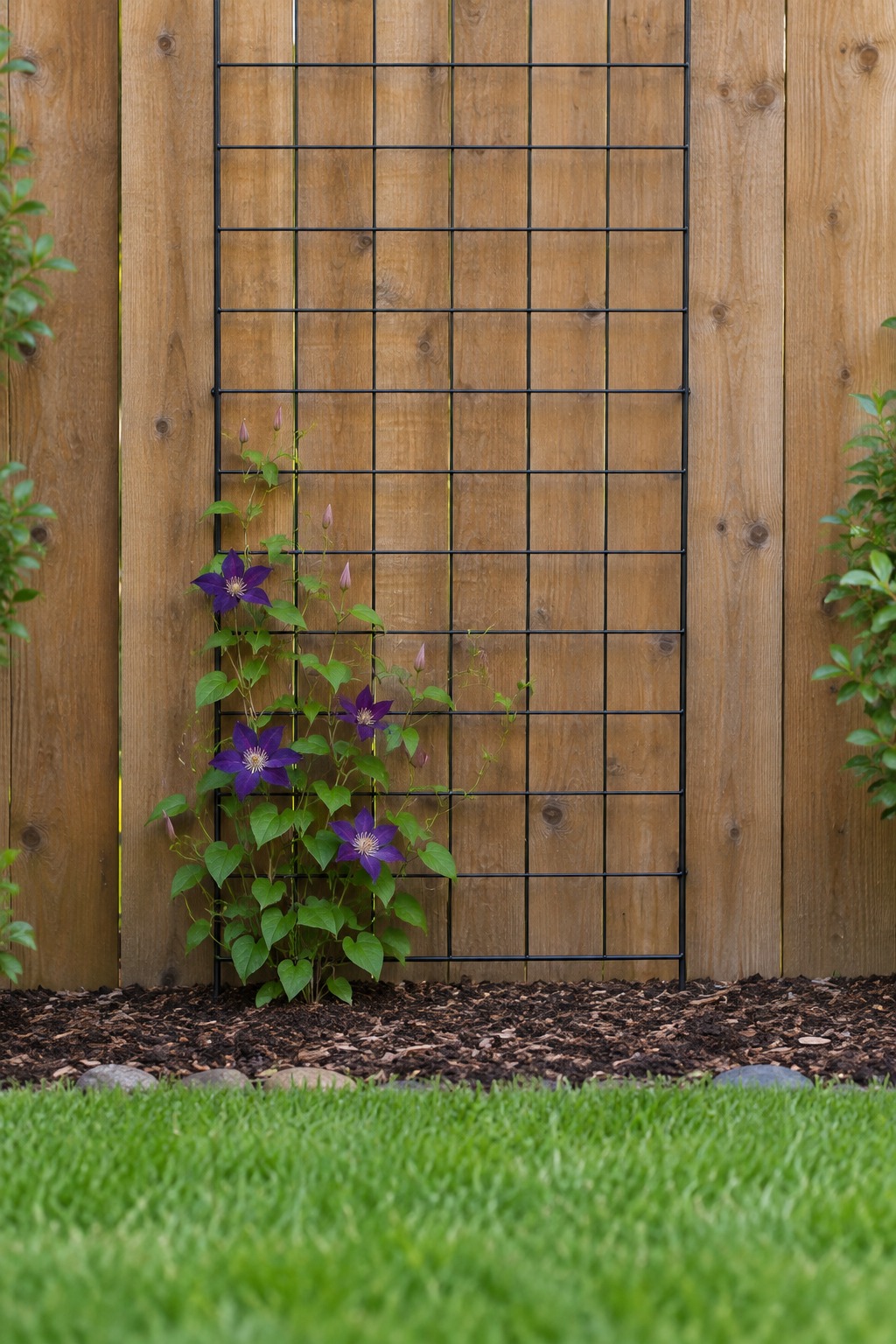
Flat wooden privacy fences give twining vines nothing to grab. Instead of nailing lattice flush against the pickets, we mount a welded wire panel, metal trellis, or tensioned 12-gauge to 14-gauge galvanized wire grid on 3-to-4-inch wooden cleats or stainless eye-bolt standoffs. That 3-to-4-inch air gap prevents damp leaves from rotting fence boards, curbs fungal leaf spot, and lets us swing panels forward slightly when staining the fence years later. Use sturdy 12-gauge wire for heavy woody perennial vines or spans over 8 feet, 14-gauge wire for annuals and medium trellises, and avoid flimsy wire thinner than 16-gauge, which stretches and snaps under rain-weighted foliage. Heavy woody climbers such as American wisteria and trumpet vine need their own stout 4x4 posts rather than leaning on thin cedar panels. Always check with your landlord or neighbor before screwing hardware into a shared or rented fence.
We follow this six-step launch checklist every spring for the fastest, fullest fence coverage:
- Install the wire or trellis before planting: Putting hardware up first keeps you from snapping brittle shoots later.
- Give roots full sun (6+ hours) and rich soil: Amend narrow fence-line strips with 2 to 3 inches of compost so roots do not fight compacted turf.
- Space plants for airflow: Set fast annual seeds 6 to 12 inches apart and woody perennials 5 to 8 feet apart depending on mature spread.
- Train horizontal bases early: Tie the first long stems sideways at 18 to 24 inches high to keep patio eye level thick and leafy.
- Water deeply and mulch 2 inches: Deep weekly soakings during the first summer build rapid vine growth far better than brief daily sprinkles; keep mulch 2 inches back from stems.
- Prune right after bloom and patrol edges: Trim spring bloomers like Carolina jessamine right after flowers fade, and snip any runaway tendrils reaching house gutters, gates, or a neighbor’s yard.
Supplies for a fence trellis
These are affiliate links; we may earn a commission at no extra cost to you.
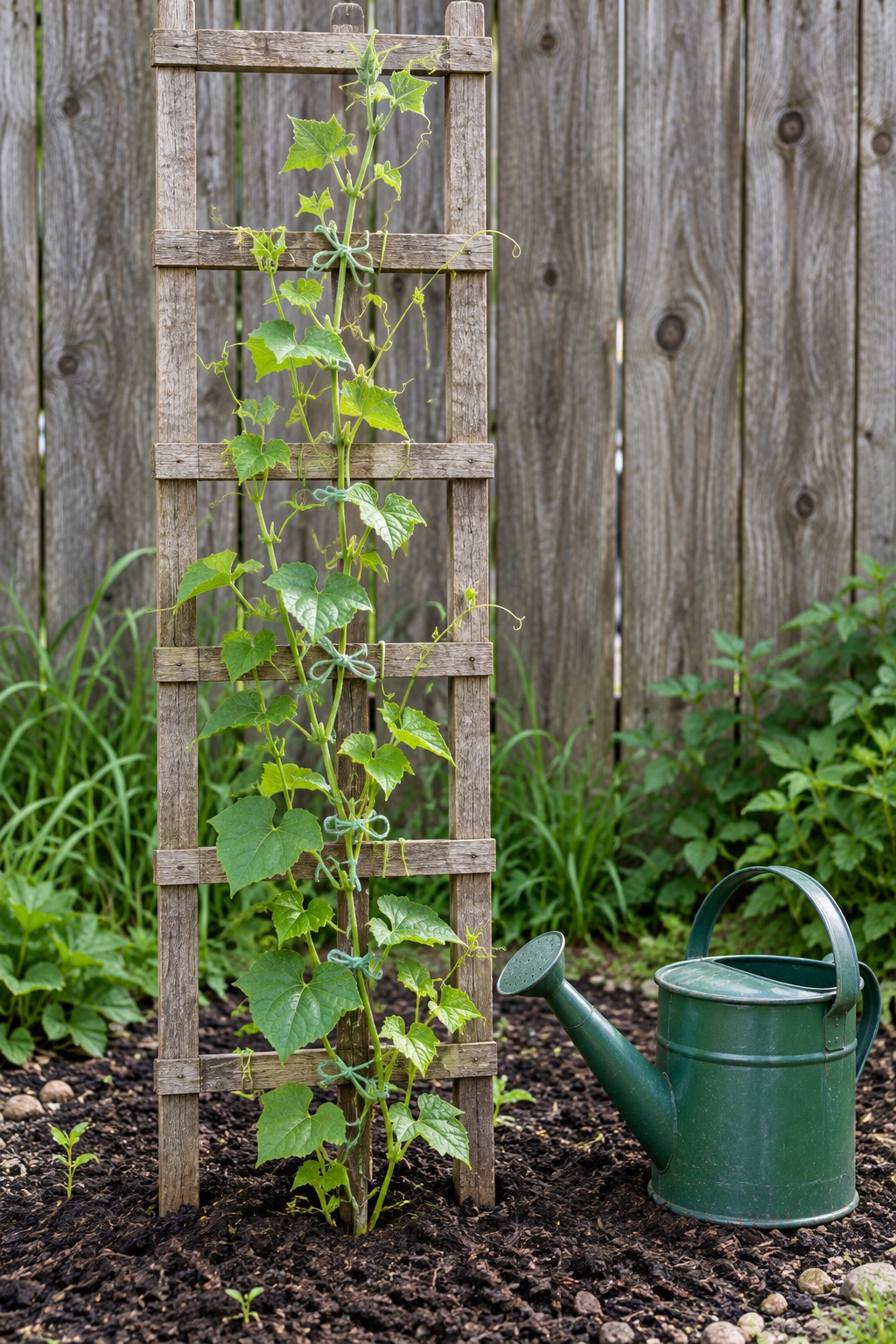
A narrow metal trellis suits one twining vine on a short stretch of fence; an expandable wood lattice covers more width for a tendril or twining screen. Check the installed size and how it mounts before choosing.
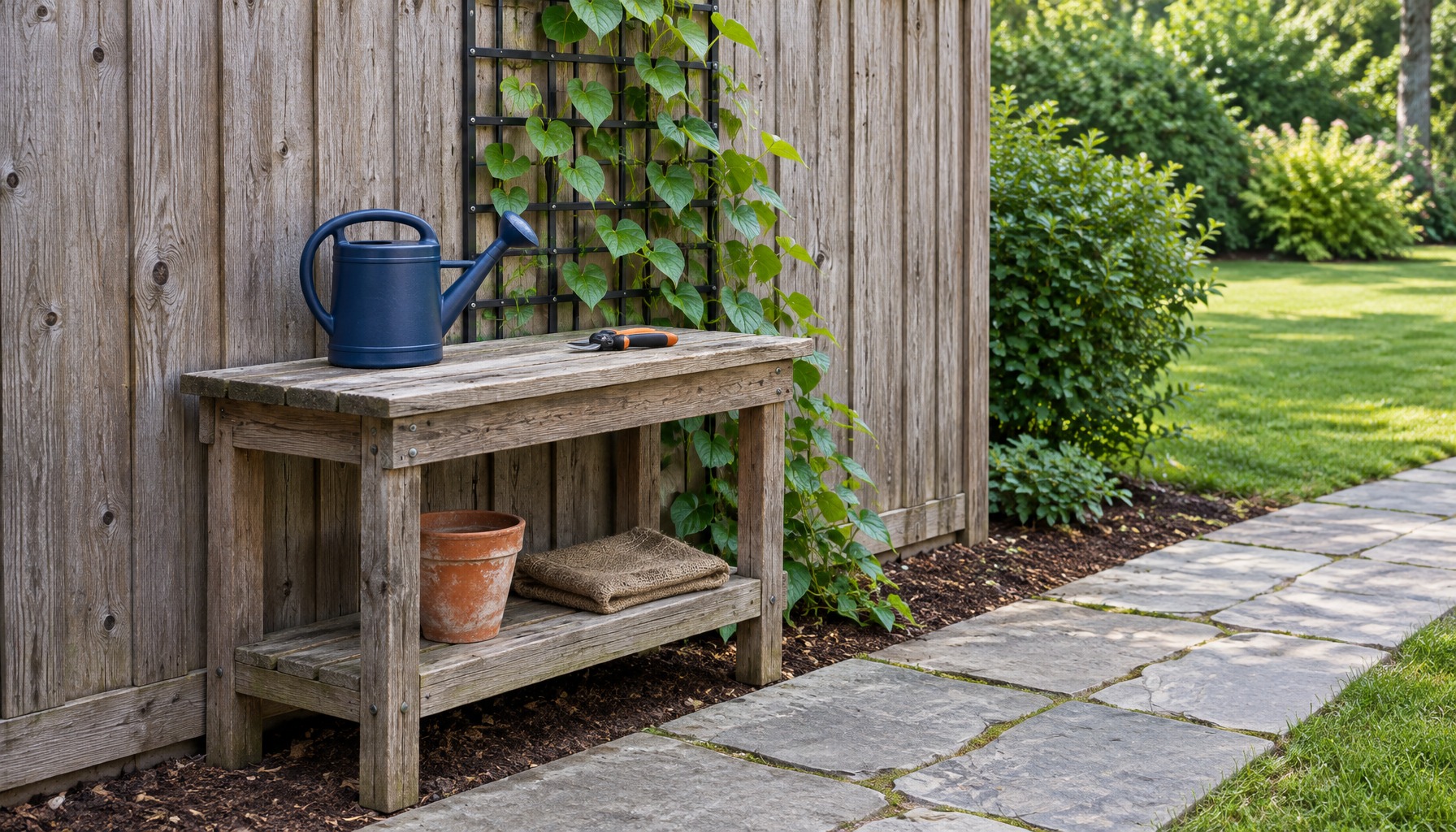
A watering can for new plants and a pair of bypass pruners for after-bloom trims cover most of the upkeep.
Which fence vines should you avoid?
Fast growth has a dark side when a vine refuses to stay in your yard. Several widely sold fence climbers are listed as invasive or restricted across many U.S. states because birds carry their seeds straight into nearby woodlands. Before buying, we always check the Latin botanical name against this quick swap guide:
| Invasive Vine to Skip | Why It Causes Trouble | Well-Behaved Native Swap | Easy Way to Tell Them Apart |
|---|---|---|---|
| Sweet autumn clematis (Clematis terniflora) | Aggressive self-seeder that blankets trees and hedgerows across the East and Midwest | Virgin’s bower (Clematis virginiana, zones 3 to 8) | Virgin’s bower has toothed leaf edges and light scent; sweet autumn has smooth leaves and heavy perfume |
| Japanese honeysuckle (Lonicera japonica) | Invasive or prohibited in many states; girdles saplings and crowds out native understory | Coral honeysuckle (Lonicera sempervirens, zones 4 to 9) | Coral honeysuckle has fused upper leaf pairs around red tubular blooms |
| Chinese or Japanese wisteria (Wisteria sinensis / floribunda) | Heavy woody trunks crush fences and spread rapidly into natural areas | American wisteria (Wisteria frutescens, zones 5 to 9) | American wisteria has smooth seed pods and blooms later on new growth |
| Oriental bittersweet (Celastrus orbiculatus) | Strangles mature trees and spreads fast via bird-dropped orange berries | American bittersweet (Celastrus scandens, zones 3 to 8) | American bittersweet holds berries strictly in terminal tip clusters |
| English ivy (Hedera helix) | Invasive across forests; clinging roots damage wood fences and trap rot | Crossvine (Bignonia capreolata) or star jasmine (zones 8 to 10) | Native climbers rely on tendrils or twining stems without destructive wood roots |
Morning glory (Ipomoea) also deserves a quick local check: it behaves cleanly as a frost-killed annual in colder zones, yet self-sows aggressively and appears on regional invasive lists in warmer states. Never assume a nursery tag means a vine is safe for your county; verify the scientific name against your state extension’s invasive species list before planting.
Are privacy vines safe around pets and children?
Several popular flowering vines pack real toxicity if leaves or pods are chewed. Morning glory seeds, wisteria seed pods, and mature dried seeds of hyacinth bean are toxic, and Carolina jessamine is highly poisonous in every part from flowers to roots. When dogs or toddlers share the backyard, we cross-check the exact Latin name on the ASPCA toxic and non-toxic plants database before ordering, consider non-toxic choices like star jasmine (Trachelospermum jasminoides, listed non-toxic to dogs and cats by the ASPCA), and pick dried pods off bean vines such as scarlet runner bean (whose raw mature seeds can upset stomachs) before they drop.
Frequently Asked Questions
What is the fastest non-invasive vine to cover a fence in one summer?
Hyacinth bean (10 to 25 feet) and scarlet runner bean (8 to 12 feet) are two of the fastest non-invasive annual climbers from seed. Sown outdoors after your last spring frost in full sun, both weave a dense leafy screen on chain link or wire mesh by midsummer and die back cleanly with autumn frost.
What is the difference between virgin’s bower and sweet autumn clematis?
Both produce clouds of small white late-summer flowers, yet sweet autumn clematis (Clematis terniflora) is an aggressive non-native invasive that escapes into woods and smothers shrubs. Native virgin’s bower (Clematis virginiana, USDA zones 3 to 8) feeds local pollinators without overtaking ecosystems; tell them apart by leaf edge, since virgin’s bower has toothed leaves while sweet autumn clematis has smooth leaf margins.
What wire gauge should I use to build a fence trellis for privacy vines?
Use 12-gauge to 14-gauge galvanized or stainless steel wire for fence trellises. Choose sturdy 12-gauge wire for heavy woody perennial vines or long spans, and 14-gauge for lighter annual vines. Skip thin wire above 16-gauge, which stretches, kinks, and snaps once wet summer foliage catches a storm gust.
Are there evergreen privacy vines that survive cold northern winters?
True year-round evergreen vines thrive mostly in USDA zones 7 to 10 (such as star jasmine in zones 8 to 10). Farther north into zones 5 and 6, native crossvine is the hardiest option that often holds semi-evergreen to evergreen foliage in mild winters, though pairing deciduous climbing vines with an evergreen shrub row gives far more dependable January privacy.
How do you stop privacy vines from leaving the bottom of a fence bare?
Young vines naturally race straight to the top rail where light is brightest. Pinch stem tips early and gently bend the first vigorous runners sideways at 18 to 24 inches off the ground, tying them loosely along the lower wire so side shoots fill in right at patio-chair eye level.