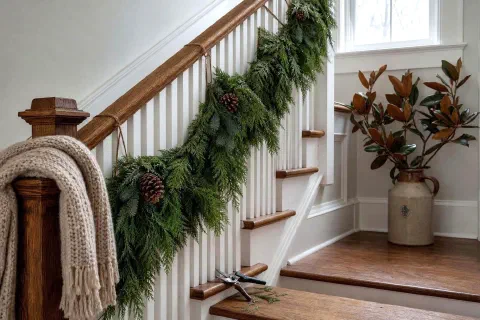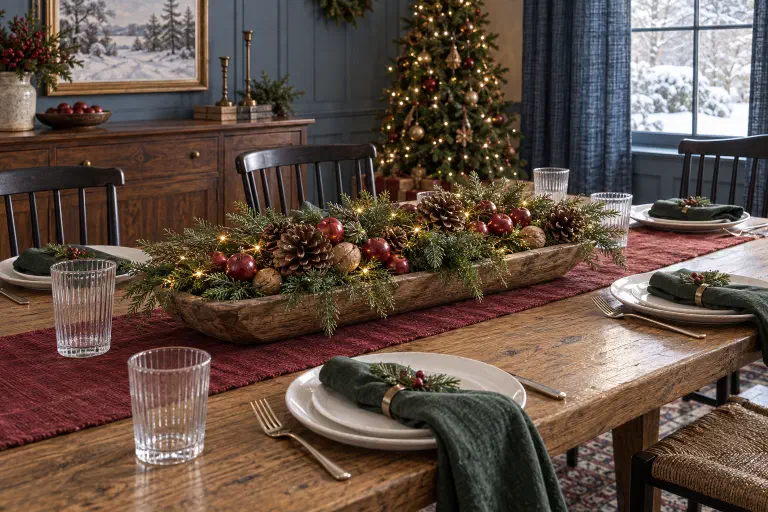
A usable Christmas centerpiece follows three simple spatial limits: keep solid dining-table greenery under 10 to 12 inches tall so nobody talks through pine needles, hold the center lane to 10 to 12 inches wide so dinner plates and passing bowls still fit, and put coffee-table decor on a single lift-off tray. Save tall branches and dramatic pitchers for a kitchen island, sideboard, or console where nobody sits across from them.
Most Christmas centerpiece ideas you see online are styled for tables nobody plans to eat on. Branches climb to shoulder height, flames sit inside dry cedar tips, and triple-stacked chargers leave nowhere to set the mashed potatoes. When we design holiday tables for real homes, our test is simple: the surface still has to do its everyday job once the last sprig goes down. Below are eight distinct designs matched to eight different spots in the house, each with exact proportions and a realistic setup sequence.
Pick the Centerpiece by Where It Will Live
Start with the exact table that needs help, check its working dimensions, and match the arrangement to how you actually use that surface:
| If you are decorating | Start with | Target height and width | Why it works there |
|---|---|---|---|
| A dining table used for meals | Low evergreen runner | Under 10 in tall, 10 to 12 in wide | Leaves sightlines open and narrows cleanly when serving platters arrive. |
| A family coffee table | Lift-off tray | Under 8 in tall, leaves 4+ in border | Moves to a shelf in one trip when drinks, games, or feet need the surface. |
| A kitchen island or buffet | Berry-branch pitcher | 18 to 24 in tall, heavy base | Uses open vertical height without sitting between two seated diners. |
| A long farmhouse table | Woodland dough bowl | Under 8 in tall, 18 to 24 in long | Corrals loose walnuts, fruit, and pinecones while echoing the table’s length. |
| A small square table | Pomegranate bowl | Under 6 in tall, 10 to 12 in wide | Delivers classic Christmas red without stealing room from place settings. |
| A two-person breakfast table | Rosemary pot | 10 to 14 in tall, 6 in pot base | One living kitchen herb is enough, and it stays useful past January. |
| A table that needs evening light | Brass flameless tapers | 12 to 18 in slender tapers | Adds warm height and holiday glow while keeping the middle visually open. |
| A console or quiet side table | White cyclamen bowl | 8 to 10 in tall, 12 to 14 in wide | Reads as calm winter living rather than one-night party decor. |
1. A Low Evergreen and Dried-Orange Runner
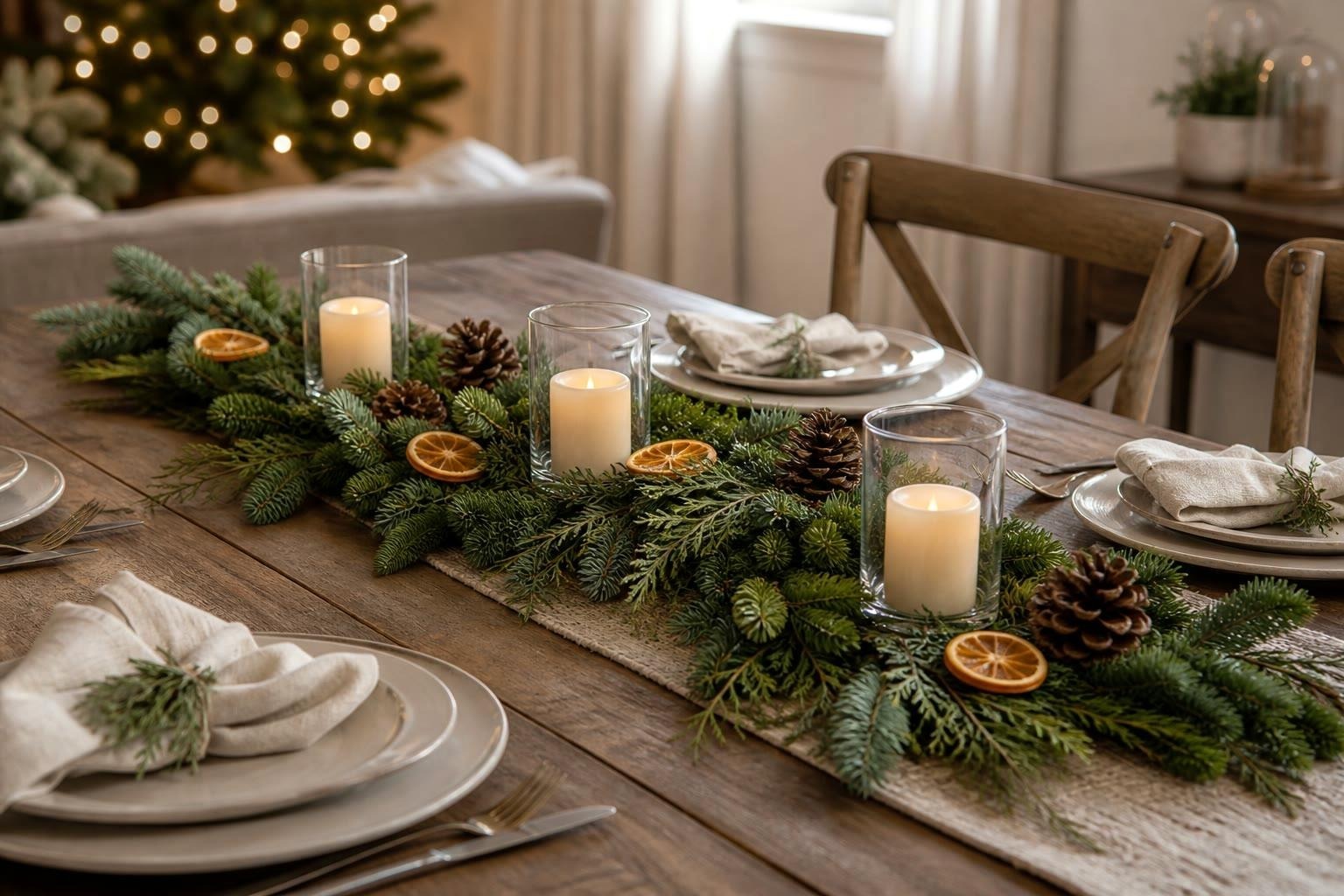
This is our go-to choice for Christmas Eve or Christmas Day dinner because it looks finished from every chair around the table and lets you nudge branches inward when hot serving bowls hit the linen.
What we gather: short fir or cedar clippings, five or six dried orange slices, a handful of unscented pinecones, and three flameless pillar candles seated inside clear glass hurricane sleeves.
We always lay the greenery loosely rather than wiring a thick, rigid garland. Angle a few branch tips toward each short end of the table, tucking every raw cut stem underneath the next evergreen frond. Set the glass sleeves directly onto the wood or linen before arranging pinecones and dried citrus around them. Doing the candles first prevents the classic frustration of finishing a lush runner only to discover your glass sleeves rock on uneven pine stems.
Keep the whole line narrow enough that a standard 10.5-inch dinner plate sits with at least a hand’s width of breathing room beside it. On a narrow 30-to-34-inch table, we stick to a single overlapping stem line rather than a doubled swag, then place two dinner plates opposite each other to verify clearance before adding the citrus.
Fresh pine and cedar hold their deep green color significantly longer indoors when their cut ends draw water and stay away from floor vents or radiators. The University of Minnesota Extension specifically recommends pine and cedar for tabletop arrangements paired with a hidden water source. If you prefer this loose, dry-laid runner without hidden floral tubes, we build it 24 hours before dinner and mist it lightly once that morning (University of Minnesota Extension).
2. A Coffee-Table Tray That Moves in One Trip
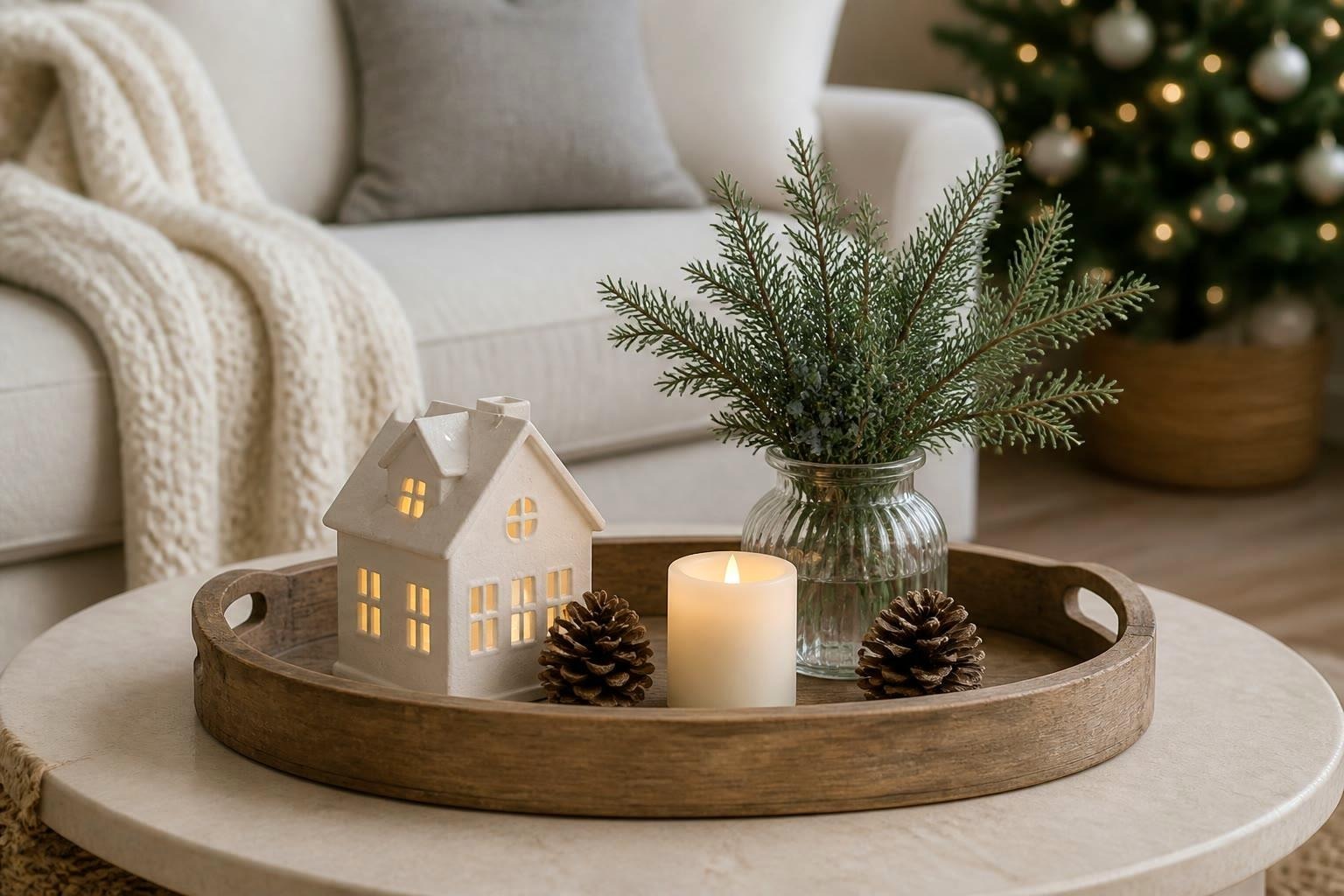
A family coffee table holds mugs, remotes, puzzle pieces, tired feet, and casual Friday pizza. We learned quickly that any coffee-table centerpiece requiring two trips to clear eventually ends up marooned on the sofa arm.
Choose a wooden or woven tray that leaves at least 4 to 6 inches of bare tabletop around its perimeter for coasters and mugs. Inside the rim, place four items and stop: one small lit ceramic house, one short glass jar holding fresh juniper sprigs in water, two natural pinecones, and one battery pillar candle. Open space inside the tray matters just as much as the objects themselves.
The little lit house gives an instant December cue, while the juniper jar and pinecones keep the tray feeling natural instead of staged like a store window. No ceramic house in your holiday box? Drop a micro strand of warm 2700K battery lights into a clean jam jar instead. You still get our exact three-part formula: one warm glow, one living green texture, and one grounded natural shape. When movie night starts, lift the tray by its handles straight onto a bookshelf without disturbing a single pinecone.
3. A Berry-Branch Pitcher for the Kitchen Island
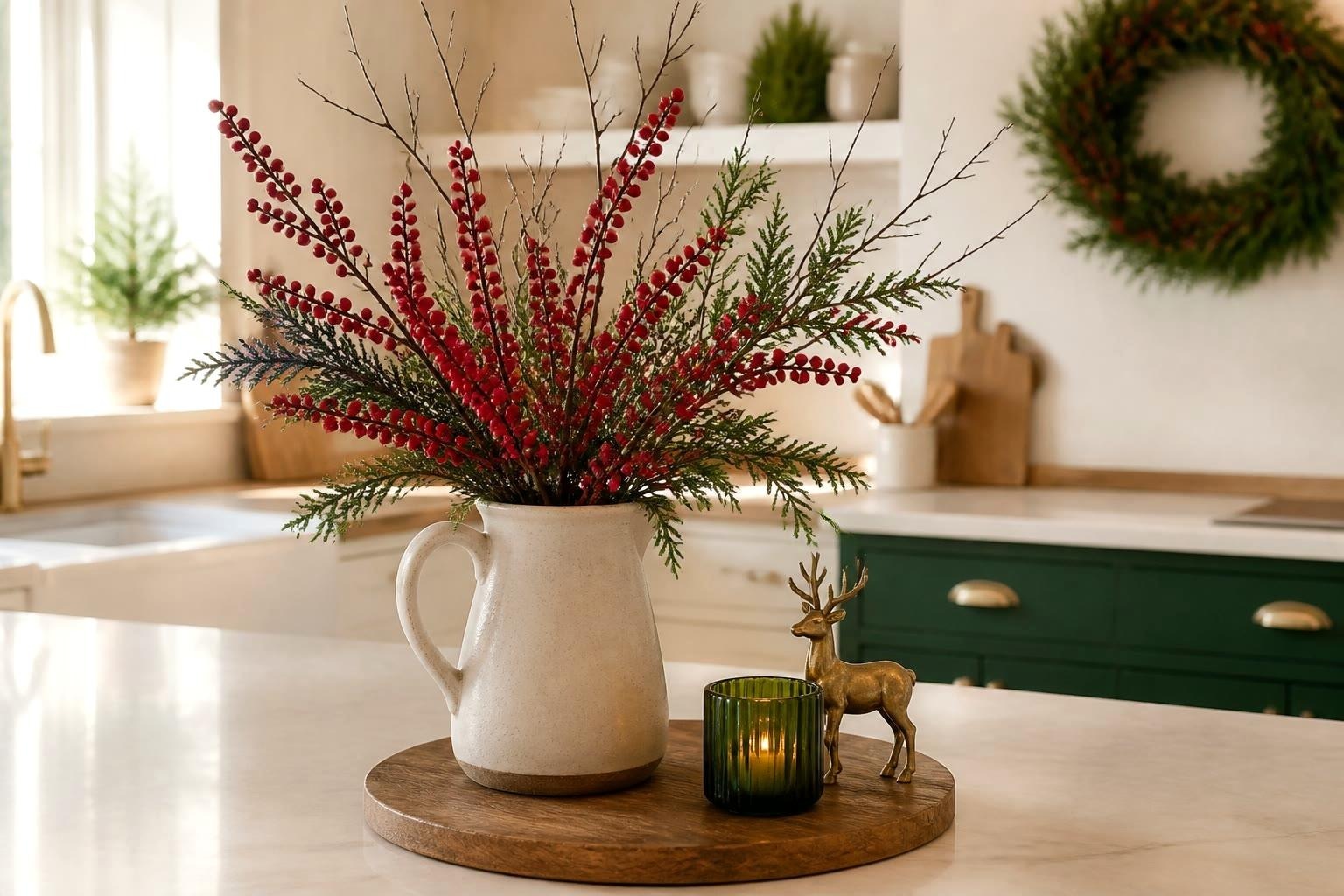
Tall seasonal stems earn their keep on surfaces where nobody is trying to hold eye contact across them. A kitchen island corner, buffet, or sideboard handles 18 to 24 inches of vertical sweep comfortably, turning a prep area into a warm focal point visible from across the room.
Start with a heavy stoneware or ceramic pitcher featuring a wide, tip-resistant bottom. Arrange bare winter twigs first to map out an asymmetrical outer frame, then weave red winterberry or faux berry branches unevenly through the center, and finish with two or three soft cedar tips tucked right along the rim. We intentionally let the silhouette lean slightly toward one side instead of fanning out like a rigid bouquet.
Resist stuffing every gap with red berries; the dark twigs and open air between stems are what make red berries look freshly cut from the yard. Anchor the pitcher base with one small brass figurine and a dark green glass battery candle, keeping both noticeably shorter than the pitcher neck so the branches remain the focus. If small children or curious pets can reach the counter, choose faux berry stems or confirm any cut plant material is household-safe before bringing it indoors.
4. A Woodland Dough Bowl With Tiny Lights
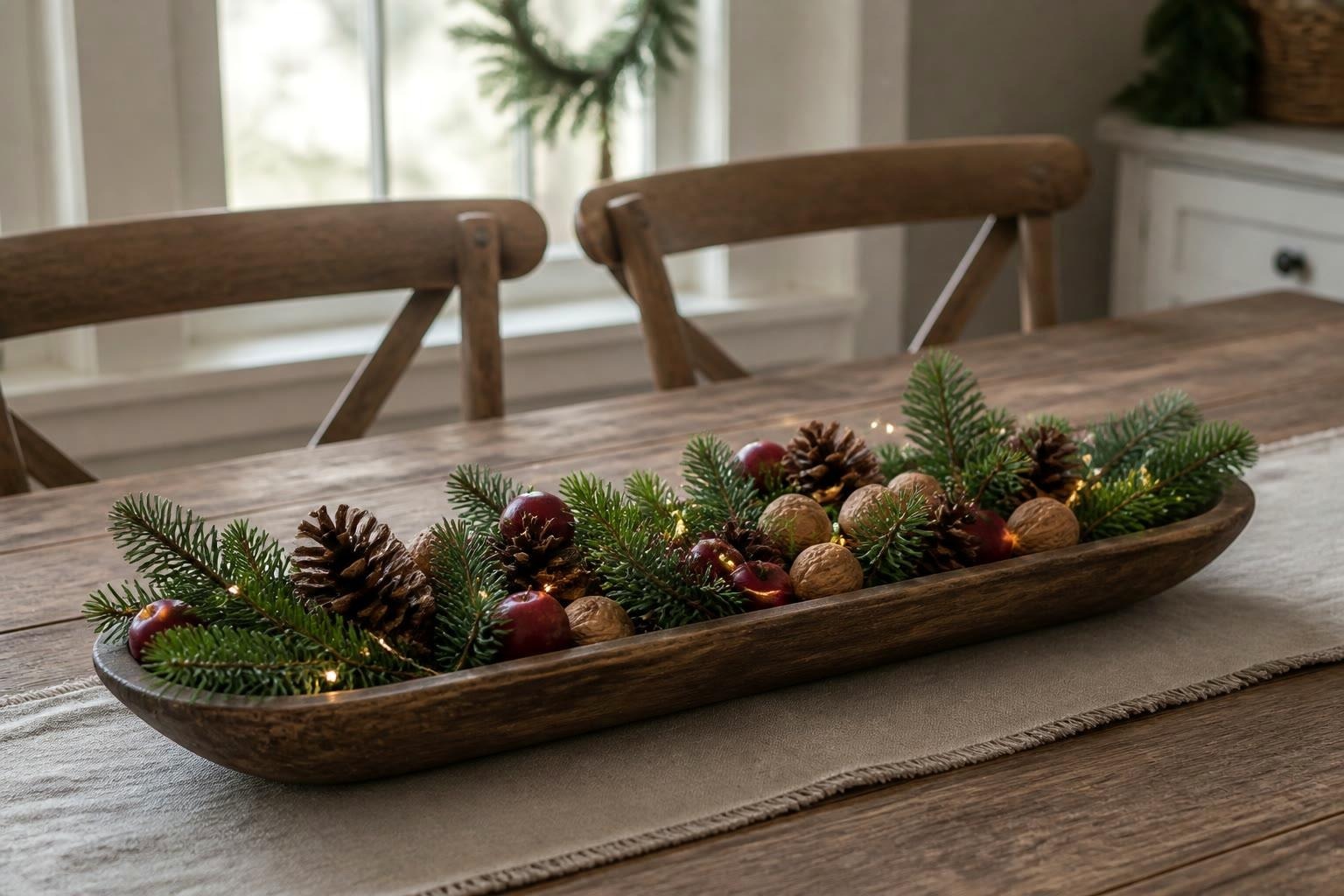
Long farmhouse and six-seat rectangular tables need horizontal proportion much more than height. A carved wooden dough bowl (typically 18 to 24 inches long and 6 to 8 inches wide) mirrors the length of the table while its curved walls keep walnuts and crabapples from rolling across the linen every time someone passes the rolls.
Our favorite time-saving trick for deep wooden bowls: fold a clean kitchen tea towel and press it flat along the bottom. That hidden lift brings your prettiest pieces right up to the rim using half as much greenery. Layer short fir clippings over the towel, nestle in pinecones, unshelled walnuts, and a handful of red crabapples or small lady apples, then weave a fine copper-wire battery light strand across the top and tuck the battery box cleanly beneath one fold of the towel.
Zero hot glue and zero floral foam means cleanup takes two minutes on December 27. The walnuts head back to the kitchen pantry, dried greenery goes straight into yard waste, bruised fruit goes to the compost bin, and your dough bowl returns to everyday fruit or bread duty. If warm pendant lights already hang low over your table, skip the string lights completely; natural wood, green fir, and red apples hold their own beautifully in morning daylight.
5. Pomegranates and Boxwood in a Shallow Bowl
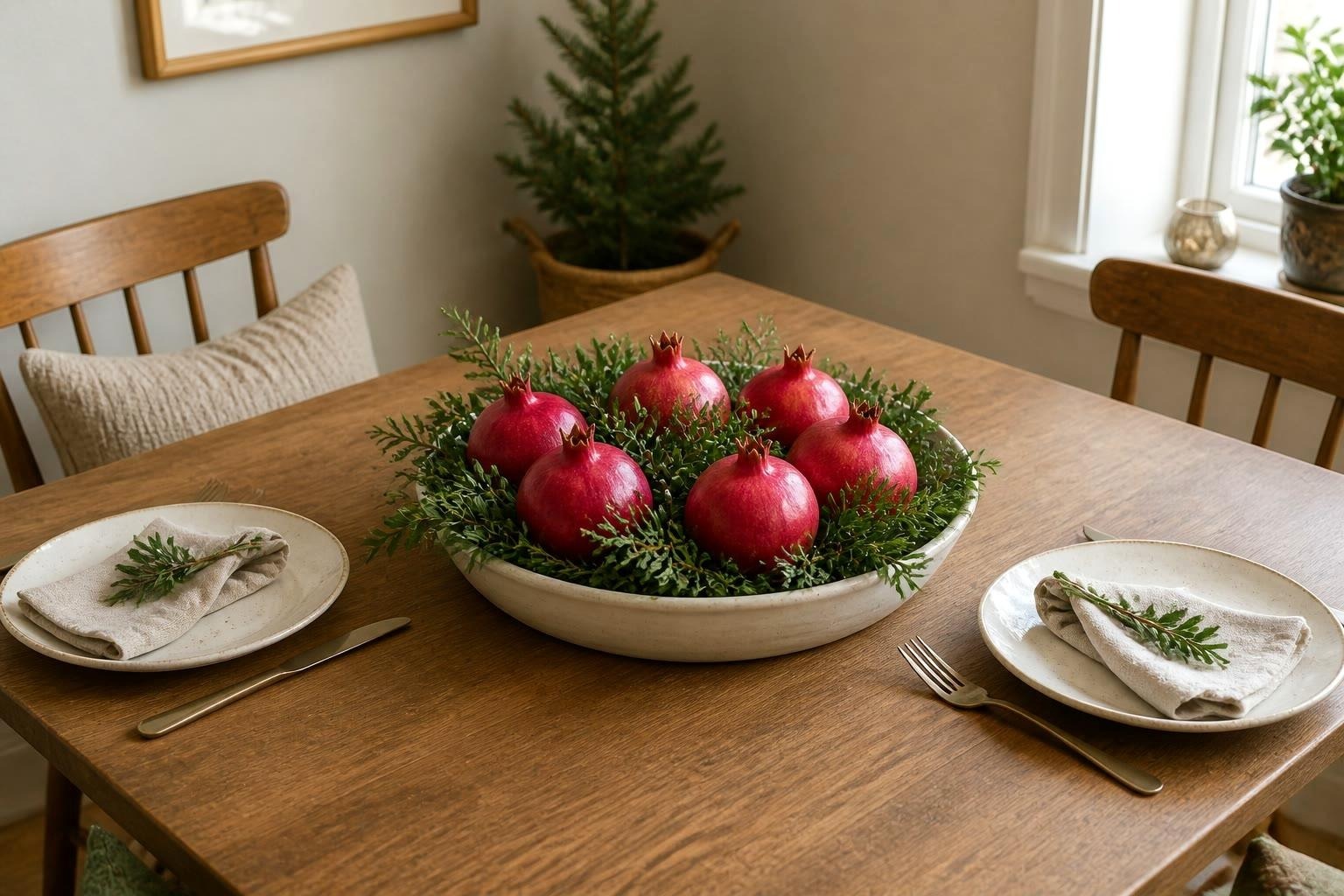
When space is tight on a small square or round four-top table, our rule is one broad, low bowl with nothing spilling outside its rim. Six deep-red pomegranates deliver rich Christmas color on their own, while short boxwood or cedar snippets bridge the spaces between them. No candlesticks, ribbons, or figurines steal precious elbow room.
Place the fruit into the bowl first, clustering three gently toward the center and angling the remaining three slightly off-kilter around the rim so the circle feels relaxed. Tuck short boxwood sprigs down between the fruit so only glossy leaves show, keeping every woody cut stem hidden. Never bury the pomegranates beneath greenery; their smooth crimson skin and crown-shaped calyxes are the entire visual hook.
We love this design for busy weeks because it takes five minutes before company arrives and leaves zero glitter or faux snow trapped in table leaf seams. If pomegranates are pricey or hard to track down in your local market, swap in six crisp red apples of mixed sizes and tilt two stems sideways so the bowl feels natural rather than stacked like a produce display.
6. A Living Rosemary Centerpiece for Two
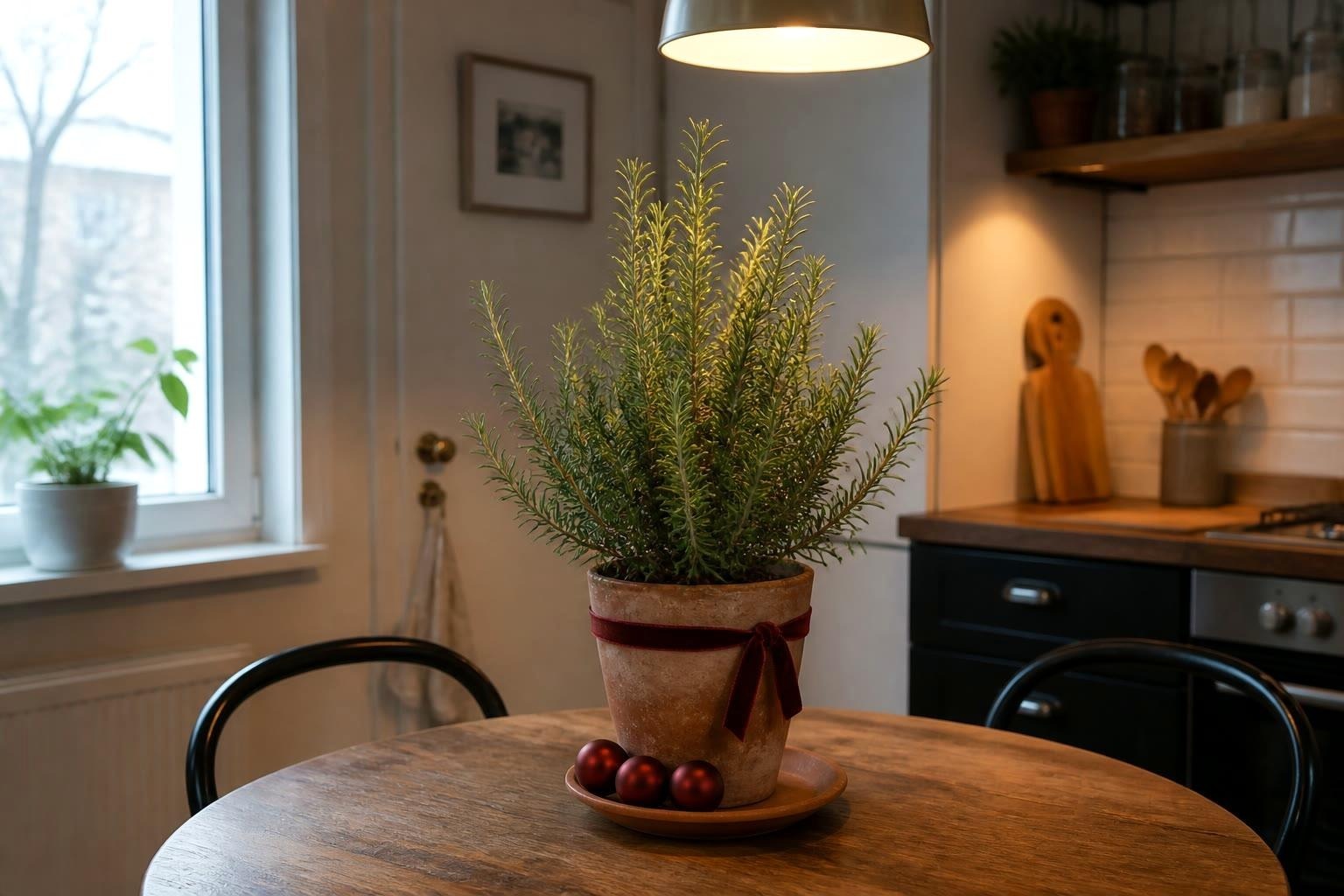
A 30-inch breakfast nook or bistro table for two looks instantly cramped when you try to shrink a six-person tablescape down onto it. Instead of five miniature props, give the table one confident living focal point.
Pick a full, healthy rosemary bush in a 6-inch terracotta pot and set it onto a glazed, waterproof saucer. Knot a single narrow burgundy velvet ribbon around the pot belly and rest three small matte red ornaments right on the saucer rim. You do not need a sheared cone-shaped rosemary topiary; a slightly wild, natural herb bush feels warmer and smells crisp every time you brush past it with morning coffee.
Better still, this centerpiece creates zero January storage clutter. Untie the ribbon, tuck the three ornaments back into the tree box, and slide the rosemary pot onto your sunniest south-facing windowsill to clip for winter roast potatoes. Just tip away any standing water in the saucer after watering so damp terracotta never leaves a pale moisture ring on wood.
7. Three Brass Candlesticks With Flameless Tapers
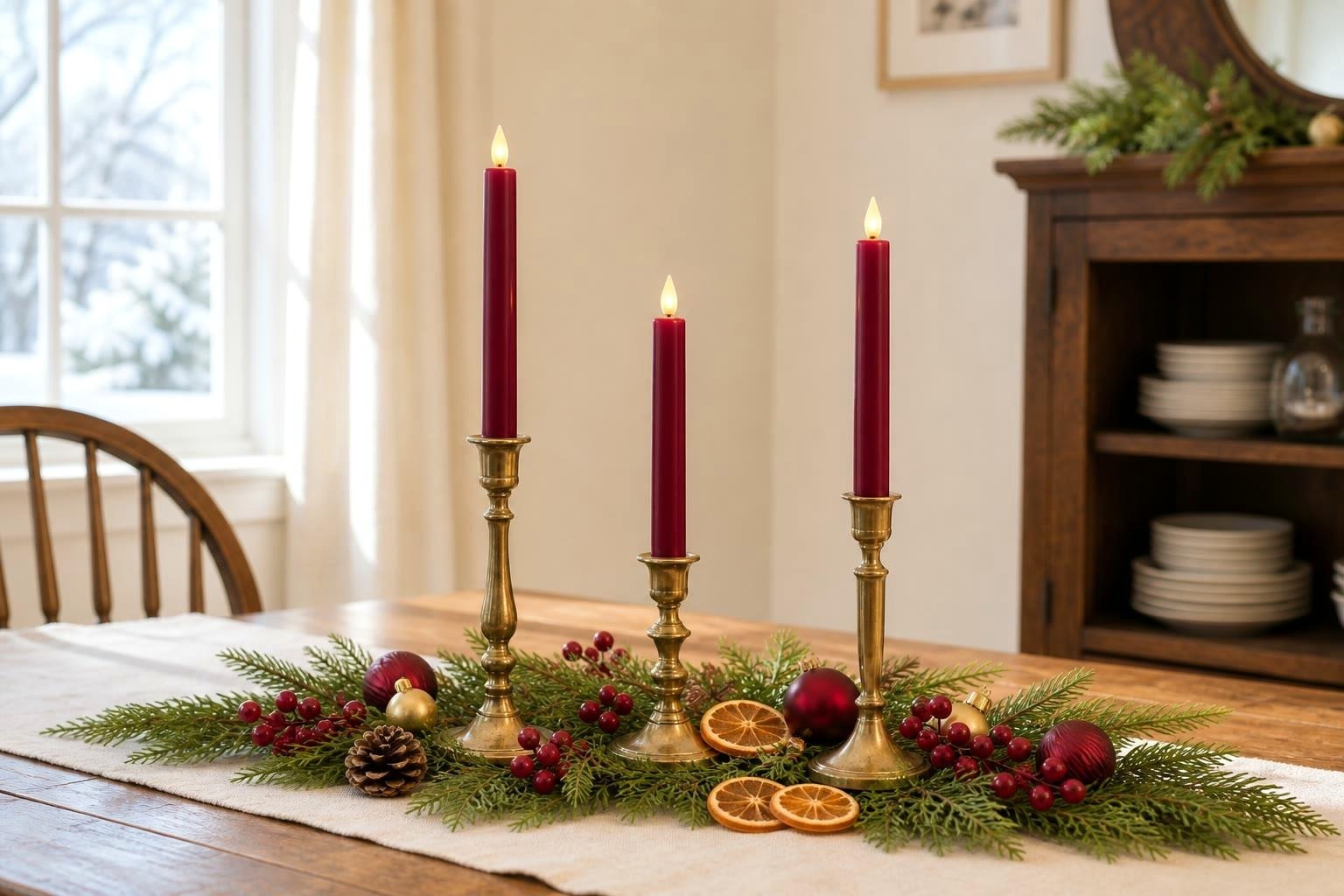
When your dining table feels flat in daylight yet cannot spare room for another wide vessel, vertical glow is the cleanest fix. Set three mismatched antique-brass candlesticks down the center lane at clearly staggered heights (a 2-inch step between each holder keeps the eye moving). Deep burgundy tapers draw festive red upward into the room without creating a solid visual barrier, while a cream linen runner keeps the darker tones bright at noon.
Any time greenery rests around candlestick bases, we switch exclusively to flameless LED tapers. Build a relaxed low bed of cedar and fir tips weaving around the brass feet, then dot in a few red berry sprigs, three dried orange slices, two small pinecones, and four or five matte burgundy or antique-gold shatterproof ornaments. Leave occasional peeks of cream linen showing through the greenery so the center feels airy instead of overstuffed. Setting the tapers on a dusk timer gives the whole dining room an inviting evening glow from every angle.
8. A White Cyclamen Bowl for the Console
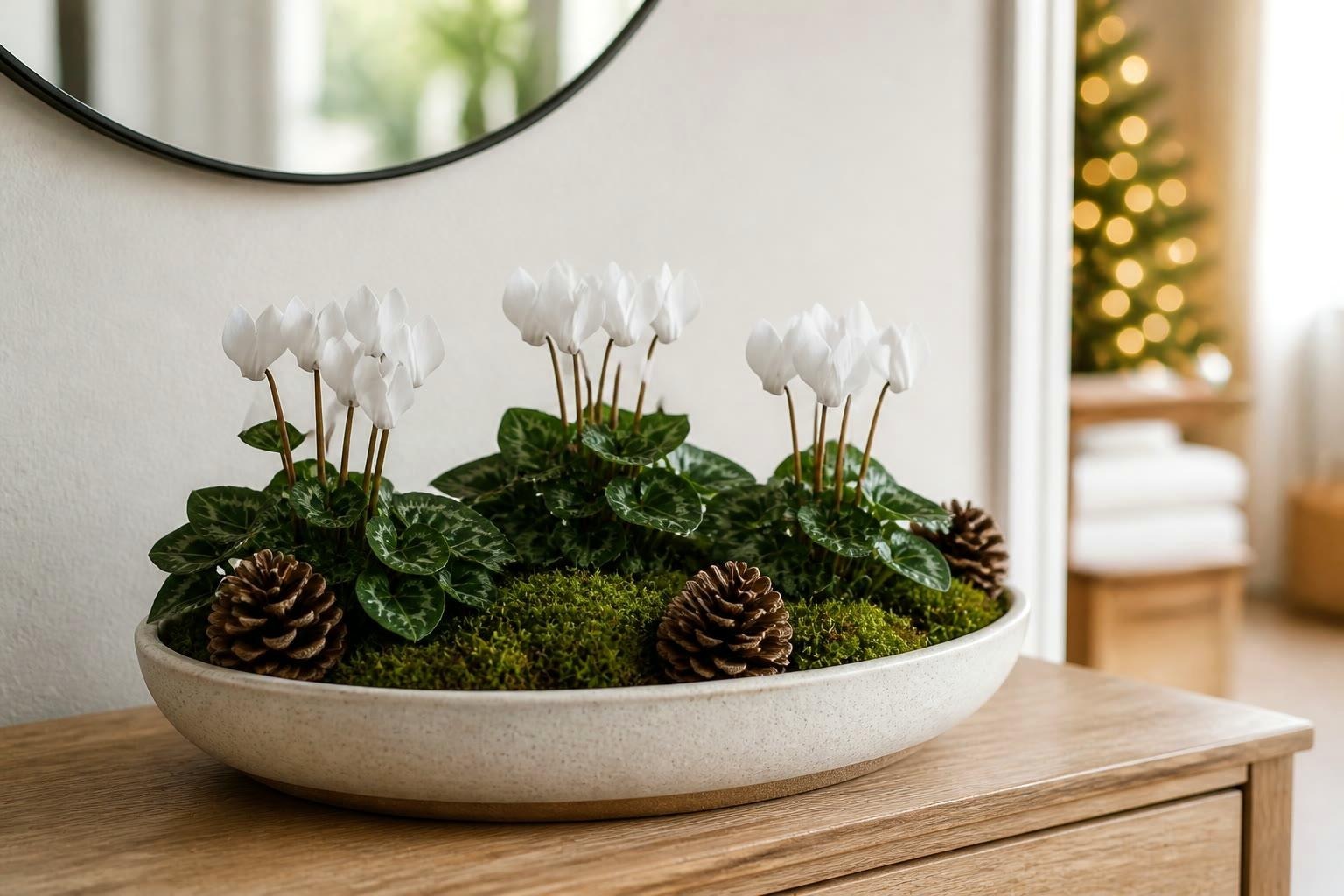
Not every centerpiece sits where dinner plates land. Entry consoles, dining buffets, and wide sunny windowsills are ideal homes for a living winter planter that greets guests at the door and transitions straight into January without a single swap.
Arrange three compact white cyclamen plants together inside a low, waterproof ceramic bowl (roughly 12 to 14 inches across). Leave each plant right inside its plastic nursery pot whenever your decorative bowl lacks drainage holes. Tuck soft sheet moss loosely over the plastic rims to blend them together, then rest four small pinecones evenly around the outer edge.
Crisp white cyclamen blooms bring the frosty winter lightness people usually chase with messy artificial snow, while their dark, silver-marbled leaves keep the bowl looking grounded against pale walls. Water each nursery pot individually from below or right at the root ball rather than drenching the moss layer, since standing water in a solid bowl quickly rots cyclamen tubers. If your entryway gets dim light, carry the bowl to a bright cool windowsill between holiday gatherings so blooms stay fresh for weeks.
How Tall and How Wide a Dining Table Centerpiece Can Be
Tables, dinner plates, and serving styles vary so much that we always check our centerpiece directly against real place settings before trimming the last branch. Lay out two opposite dinner plates (usually 10 to 10.5 inches wide), water glasses, and your largest serving bowl first, then build inside the open space left over:
- Sightline height: Sit in the chairs your guests will actually use and look straight across. Keep solid bowls, greenery beds, and fruit arrangements under 10 to 12 inches tall so faces stay completely clear. Let slender taper candles or airy twigs rise higher only because guests can see around them.
- Center lane width: On a standard 36-to-42-inch-wide dining table, cap the centerpiece footprint at 10 to 12 inches wide so at least a hand’s width (4 to 5 inches) of bare surface cushions every dinner plate. On a narrow 30-to-34-inch apartment table, trim greenery down to a single 6-to-8-inch strip.
- Serving clearance: Set one large platter or salad bowl on the table before finishing the decor. If the platter crowds a wineglass, shorten the greenery ends by 6 inches or shift to a single lift-off bowl.
Fresh Evergreen Longevity & Prep Timing
One question we get every December is how early you can assemble a fresh centerpiece without waking up to crisp, shedding needles on Christmas morning. Lifespan depends heavily on the evergreen variety and how warm your dining room runs:
| Greenery or living material | Typical indoor lifespan | Best assembly window | Care trick that adds days |
|---|---|---|---|
| Cedar, juniper, or boxwood | 2 to 3 weeks | 2 to 3 days before dinner | Keep away from heat vents and mist lightly every 2 days |
| Cut noble or Fraser fir | 10 to 14 days | 1 to 2 days before dinner | Tuck cut stems into hidden water vials or damp floral foam |
| Cut white pine or spruce | 7 to 10 days | 24 hours before dinner | Expect faster needle drop in dry air; keep off sunlit tables |
| Pomegranates or apples | 1 to 2 weeks whole | 2 to 3 days before dinner | Wipe dry and inspect bottoms for soft spots before setting on linen |
| Potted rosemary or cyclamen | All winter (4+ weeks) | Any time in early December | Water nursery pot only; move to bright cool light between parties |
Our 48-Hour Christmas Centerpiece Prep Checklist
- 2 days before: Press and lay your table runner, polish brass candlesticks, test fresh batteries in flameless tapers or fairy lights, and stage dry foundations (dough bowl, glass sleeves, pinecones, walnuts).
- 1 day before: Trim fresh cedar, fir, or boxwood stems cleanly on an angle, soak cut ends in a bucket of cool water for 2 to 4 hours, pat dry with a towel, and weave them into your centerpiece.
- 1 hour before guests arrive: Place fresh fruit or living herbs if you moved them for daylight, double-check that serving platters have clear landing zones, and switch on battery timers so warm glow greets everyone at the door.
Three Rules That Keep a Christmas Centerpiece Usable
- Put height where nobody needs a sightline. Tall berry branches shine on a kitchen island or buffet, yet turn into a barrier on a dining table.
- Give loose pieces an edge. One wooden dough bowl, ceramic tray, or terracotta saucer converts six scattered pieces into a single arrangement that lifts away in two seconds.
- Repeat one anchor color. Echoing one shade across your greenery, flameless candles, and cloth napkins pulls the table together without adding more clutter.
Which One to Make First
If you eat at your dining table every single night, start with the pomegranate and boxwood bowl. It assembles in five minutes, stays well under eye level, and adds zero extra pieces to pack into January storage.
If you are hosting a sit-down Christmas dinner, make the low evergreen and dried-orange runner one day ahead. It fills the room with real cedar and citrus scent while preserving every conversation across the table.
If your living room needs the fastest holiday lift, put together the coffee-table lift-off tray. Real life lands on coffee tables daily, and a centerpiece that moves in one clean grab is the only one that still looks calm by Christmas Eve.
Keep dining surfaces glowing past New Year’s with our winter tablescape ideas for a small table and easy DIY Christmas decorations.
Frequently Asked Questions
What is the ideal height for a Christmas dining table centerpiece?
Keep solid arrangements like wooden bowls, floral mounds, and evergreen runners under 10 to 12 inches tall so diners can talk easily across the table without leaning to one side. Slender taper candles or airy bare branches can sit slightly taller because guests can look straight past them.
How far in advance can you make a Christmas centerpiece?
Stage every dry base piece (linens, wooden bowls, glass sleeves, pinecones, and battery candles) up to 2 days before your event. Wait until 1 day ahead or the morning of dinner to tuck in fresh cut evergreens or perishable fruit so needles stay deep green and crisp.
How long do fresh evergreen centerpieces last indoors?
In a heated home, fresh evergreen clippings typically hold up for 1 to 3 weeks depending on the plant and room humidity. Hardy cedar, boxwood, and juniper stay fresh for 2 to 3 weeks away from vents and fireplaces, whereas dry-laid pine or spruce generally begins dropping needles after 7 to 10 days.
How do you leave room for family-style serving dishes around a Christmas centerpiece?
Keep dining-table greenery confined to a 10-to-12-inch strip down the middle of a 36-to-42-inch table so roughly 4 to 5 inches of open surface separates decor from dinner plates. Using one dough bowl or lift-off tray also lets you move the entire centerpiece onto a buffet in one trip when hot platters arrive.
What is the easiest Christmas centerpiece for a small or narrow table?
A shallow ceramic bowl arranged with six red pomegranates (or crisp red apples) and tucked boxwood sprigs takes five minutes, sits under 6 inches high, fits inside a 10-inch footprint, and leaves nothing extra to store after December.