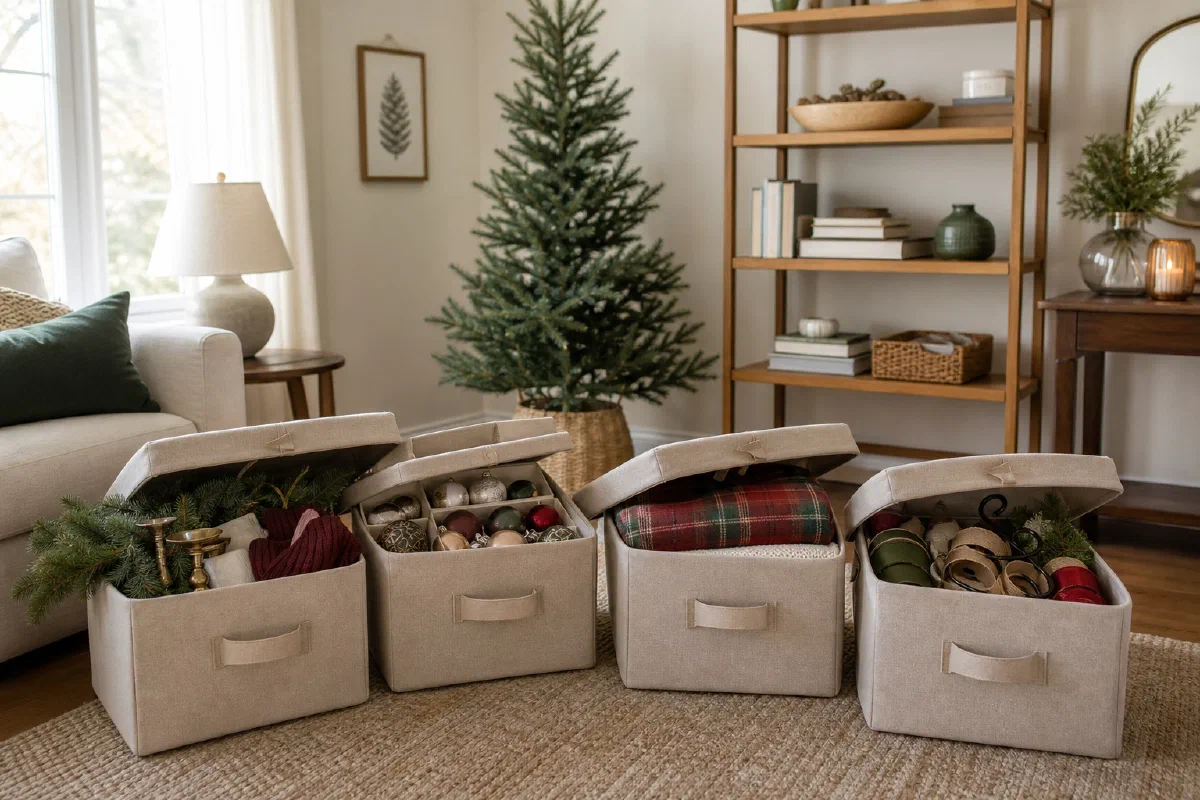
Christmas storage gets difficult in a small home because the decorations are only part of the problem. There are half-used hooks, loose batteries, empty gift bags, three kinds of garland, and a light strand nobody remembers testing. By January, the fastest option is often to push everything into a bin and promise to sort it next year.
A better system starts before decorating. Decide how much space the holiday collection may use, group it by where it belongs, and pack it in the order you will need it next time.
That is easier if you know what you are actually buying before it arrives. The room kits below map onto the four places most of it ends up: the mantel, the front door, the porch, and, if you rent, the whole apartment worked around a lease.
1. Choose the Storage Limit First
Measure the actual shelf, closet floor, under-bed area, or basement zone available. The limit should include containers, not simply the decor inside them.
| Storage area | Good for | Watch for |
|---|---|---|
| High closet shelf | Lightweight linens, unbreakable garland, empty stockings | Containers too deep to lift safely |
| Under the bed | Flat wreath boxes, table linens, shallow ornament trays | Dust, moisture, and forgotten items |
| Climate-controlled closet | Fragile ornaments, paper decor, batteries stored separately | Crowding everyday clothes and access |
| Garage or shed | Durable outdoor figures and weatherproof stakes | Heat, cold, moisture, pests, and manufacturer limits |
If the collection does not fit the chosen boundary, edit before buying larger bins. More containers only hide the decision.
This limit also gives shopping a useful stop sign. If a new wreath needs a fifth container, it is not a small purchase anymore. It is a storage decision. Compare the new piece with what is already in the kit, choose which one earns the space, and let the measured shelf make the final call.
2. Build Room Kits Instead of Object Piles
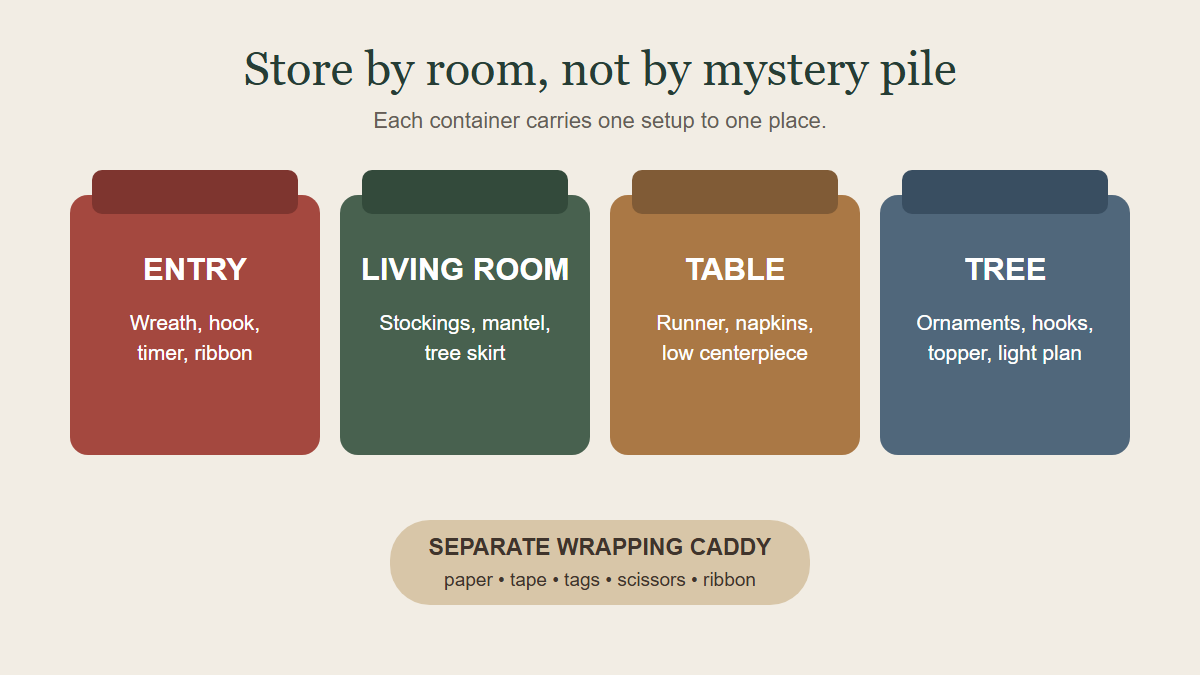
A “living room” bin is usually easier than one giant ornament bin and another giant greenery bin. Next year you can carry one kit to one room and finish the space without opening every container.
Before packing a room kit, use the Thanksgiving-to-Christmas keep-and-swap plan to decide which pieces can stay in use through the next holiday.
Try these room kits:
- Entry: wreath, door hook, outdoor-rated timer, porch ribbon
- Living room: mantel greenery, stockings, stocking hooks, tree skirt
- Dining area: table runner, napkins, low centerpiece pieces
- Tree: ornaments, hooks, topper, tested light plan
- Wrapping: paper, tape, tags, ribbon, scissors, gift bags
3. Check Holiday Lights Before Storage
The U.S. Fire Administration recommends inspecting holiday lights each year and discarding strands with frayed or pinched wires. It also advises following the manufacturer’s connection limits and unplugging tree lights before bed or leaving home. See the agency’s holiday fire safety guidance.
The CPSC explains that seasonal lighting needs minimum wire size, strain relief, and overcurrent protection in its seasonal-lighting guidance. Storage cannot repair a damaged cord. If a strand is worn, broken, or unreliable, dispose of it according to local guidance instead of labeling it “check next year.”
For the strands you keep:
- Unplug and let them cool.
- Wipe away dust and check every section of cord.
- Wrap each strand loosely around a cord reel or sturdy piece of cardboard.
- Label indoor or outdoor use and the room where it belongs.
- Store plugs where they cannot crush bulbs or decorations.
How far should a Christmas tree stay from a heat source?
At least three feet. The U.S. Fire Administration puts the clearance at three feet from heat sources such as fireplaces, radiators, space heaters, candles, and heat vents, because heated rooms dry a tree out fast and a dry tree burns hot.
Store the decorations with that distance in mind, since a tree you bring in too close next December is a placement problem rather than a storage problem. Check that the tree is not blocking an exit, and bring outdoor electrical lights inside after the holidays, which the USFA holiday fire safety guidance says prevents hazards and makes the strands last longer. That last part matters for step three above. A strand that spent the winter on a porch railing takes more weather than one that came indoors, so check those first next December.
4. Pack Fragile Pieces So the Box Can Move
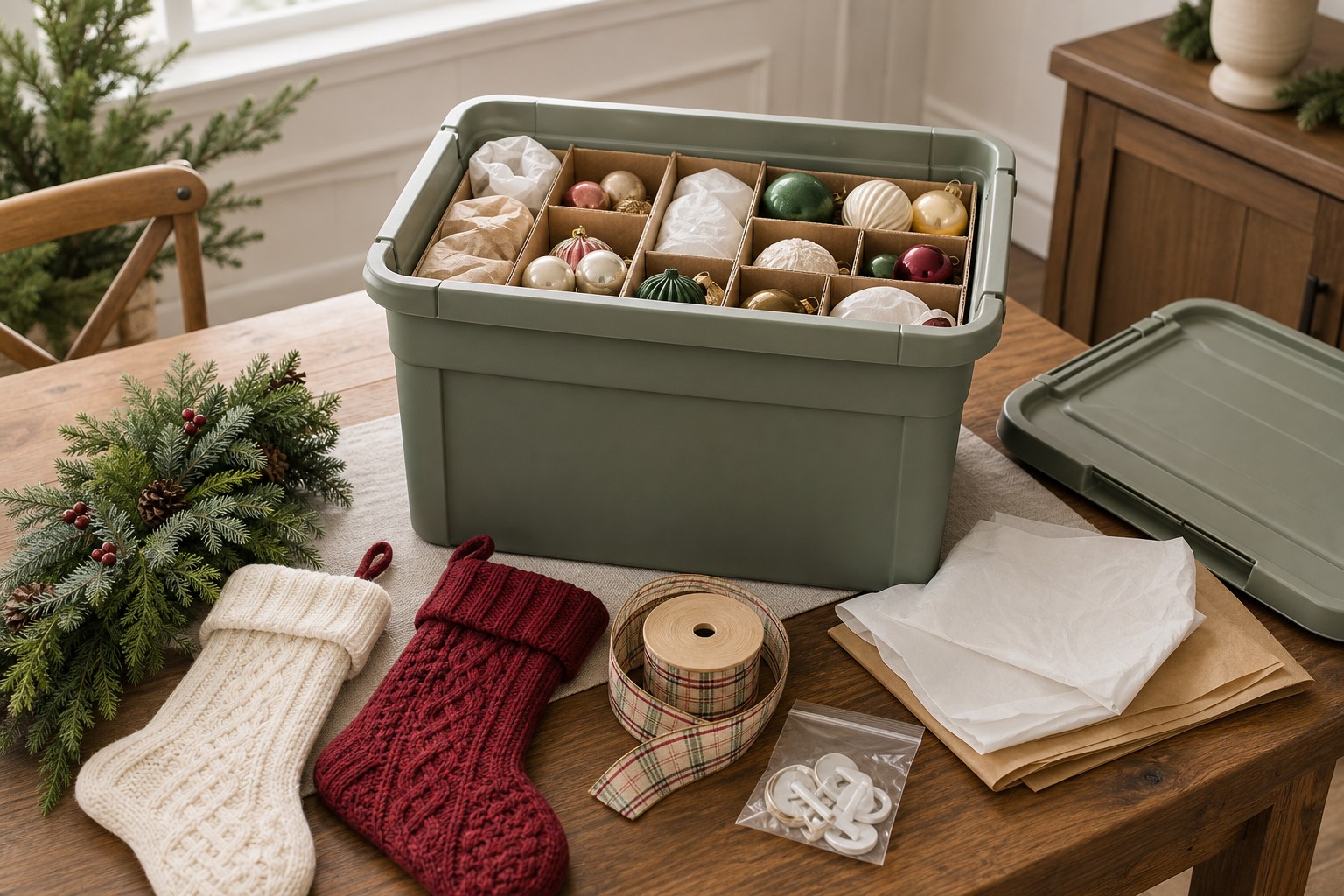
Use dividers for ornaments and soft wrapping for glass or sentimental pieces. Put the heaviest pieces at the bottom. Fill empty movement space without packing so tightly that pressure reaches fragile edges.
- Every fragile item has its own pocket or wrap.
- The container can be lifted by one adult without straining.
- Nothing rattles when the closed bin moves gently.
- The label names the room and the fragile contents.
- Batteries are removed when the manufacturer recommends it.
- A simple inventory photo is saved in the phone album for that room.
5. Handle the Tree and Greenery Before They Become a Problem
For a live tree, the National Fire Protection Association says to remove it after Christmas or when it is dry and not leave a dried tree in the home, garage, or against the house. Its Christmas tree safety sheet recommends checking local recycling options.
Artificial greenery should be fully dry before storage. Shake or vacuum loose dust, remove hooks that could snag another piece, and avoid crushing wreaths under heavy bins. A wreath that cannot keep its shape may be better stored flat under a bed or upright in a shallow case.
6. Pack in the Order You Will Decorate Next Year
Put late-stage pieces lower in the bin and first-stage pieces on top. For the entry kit, the outdoor timer and door hook belong above the ribbon. For the tree bin, the stand instructions, light plan, and tree skirt should be easier to reach than the topper.
Add one note before closing each container: what was missing, what went unused, and what should not be bought again. That short record is more useful than a January promise to remember.
7. Finish With the January Closing Checklist
Take down one room at a time instead of carrying loose decorations from every corner to one central pile. Finish the entry kit, close it, and return it to the storage boundary before moving to the mantel or table. That sequence keeps a small room usable during the reset and makes missing hooks or broken pieces easier to notice. It also prevents the final bin from becoming a mixture of everything that was left over.
- Photograph each decorated room before taking it apart.
- Remove and inspect lights.
- Edit broken, disliked, or unused pieces.
- Pack one room kit at a time.
- Label the top and one short side of every bin.
- Return the bins to their measured storage boundary.
- Save one short shopping note and delete impulse ideas that no longer fit.
Autumn has a smaller version of the same reset. A fall cleaning checklist that starts with less puts the alarms, the filter, and the dryer vent ahead of anything decorative.
Related small-home organization ideas
- Tiny balcony storage ideas for cushions, soil, and plant stuff uses the same container-limit thinking for outdoor gear.
- Three ways to turn empty kitchen space into a real pantry corner helps build a room kit for holiday baking and serving pieces.
- Ten things to declutter when your home feels too full gives you a manageable edit before the holiday collection returns to storage.
- Five Walmart entryway finds that give everything a landing spot helps keep everyday shoes and bags from competing with seasonal bins.