
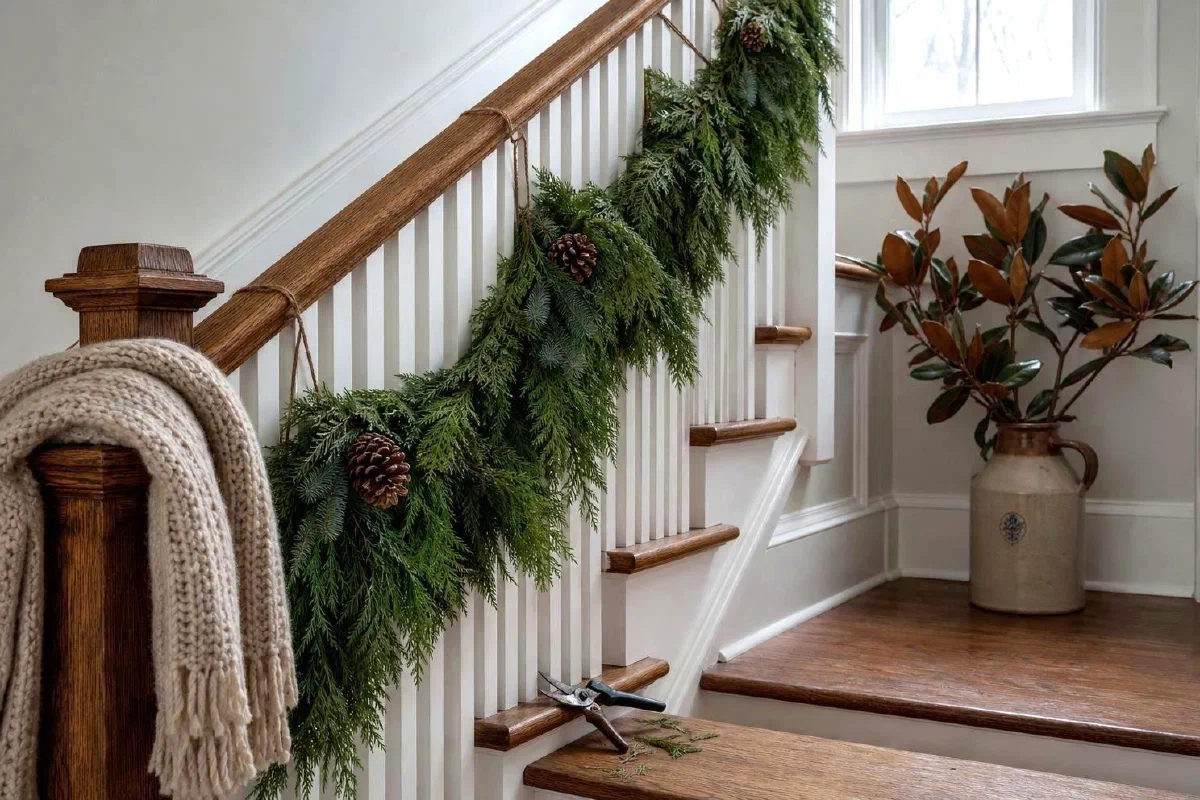
Fresh garland can look perfect on the first weekend in December and leave a line of needles on the mantel ten days later. The problem is not always bad greenery. A heated room pulls moisture from cut stems, and some species hold their needles much longer than others.
The practical answer is to build with greenery that dries well, use fragrant fir or cedar in smaller replaceable amounts, and keep every fresh piece away from fireplaces, vents, radiators, and hot windows. The seven arrangements below use that rule in different parts of the house.
Which Christmas greens last best indoors?
Several weeks, rather than a fixed number of days, is the honest answer. Clemson Cooperative Extension puts properly conditioned pines, firs, and cedars at several weeks indoors, because they dry out slowly and hold their needles at warm interior temperatures, while hemlock, spruce, and most broadleaf evergreens last longer outdoors. Species, room temperature, humidity, harvest timing, and the individual plant all move that number, which is why a fixed promise such as “lasts six weeks” should make you cautious.
Use this ranking to choose the right job for each material:
| Greenery | Best indoor use | What to expect |
|---|---|---|
| Magnolia | Branches, table runners, stair rails | Thick leaves dry in place and keep their shape |
| Boxwood | Wreaths and compact swags | Small leaves hold well but the scent is not for everyone |
| Eucalyptus | Tables, shelves, mixed garlands | Dries gracefully with little shedding |
| Noble or Fraser fir | Wreaths and short garland sections | Better needle retention than spruce |
| Pine | Swags and mixed arrangements | Holds needles but can become dry and brittle |
| Cedar or balsam | Small fragrant accents | Wonderful scent, shorter useful life |
| Spruce or hemlock | Outdoor decor | More likely to shed quickly indoors |
The same Clemson factsheet recommends conditioning cut greenery in water and keeping it away from heat sources. Purdue Extension also warns that spruce and hemlock drop needles readily indoors. Research in Frontiers in Plant Science explains why balsam fir retention varies so much from one plant to another.
Prep fresh greenery before it comes inside
Do the wet work before the garland reaches a finished wall or wood surface:
- Unwrap the greenery somewhere cool.
- Rinse away dirt and check for insects.
- Recut woody stems with clean pruners.
- Soak cut material for at least eight hours.
- Let it drip dry over the tub or outdoors.
- Add a protective runner under greenery that will touch wood.
- Hang it only after the room and hardware are ready.
The New York Botanical Garden holiday-evergreen guide recommends keeping cut material cool until use and conditioning it with water. A room hygrometer is more useful than guessing. The EPA recommends keeping indoor relative humidity below 60 percent and ideally between 30 and 50 percent.
1. Soak a short fir garland for the stair rail
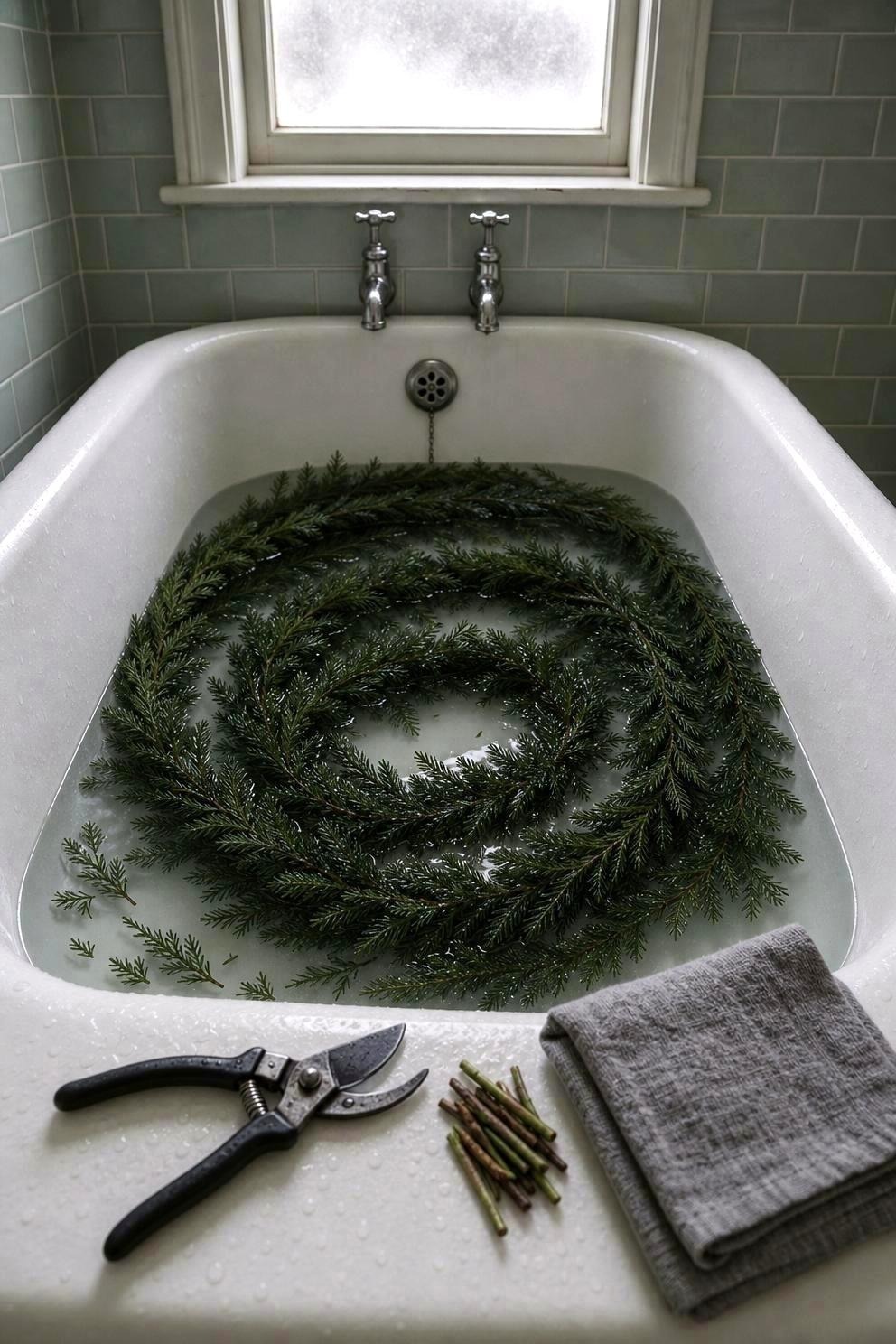
A stair rail is cooler than the mantel in many homes, and a short swag every few balusters uses less greenery than a tightly wrapped run. Build the structure with noble fir or pine. Add small cedar tips for scent where they can be swapped out after they dry.
Fasten the garland to the rail, not to the walking side of the balusters. Keep the handrail usable if anyone in the house depends on it for balance.
Working out how much garland the rail actually takes is the step that decides whether this looks generous or thin, and christmas garland by the foot has the multiplier for a stair run. If you would rather not replace the greenery every year, the fluffing and shaping steps for faux garland make the cheap stuff read as real.
2. Lay magnolia and eucalyptus loosely on the table
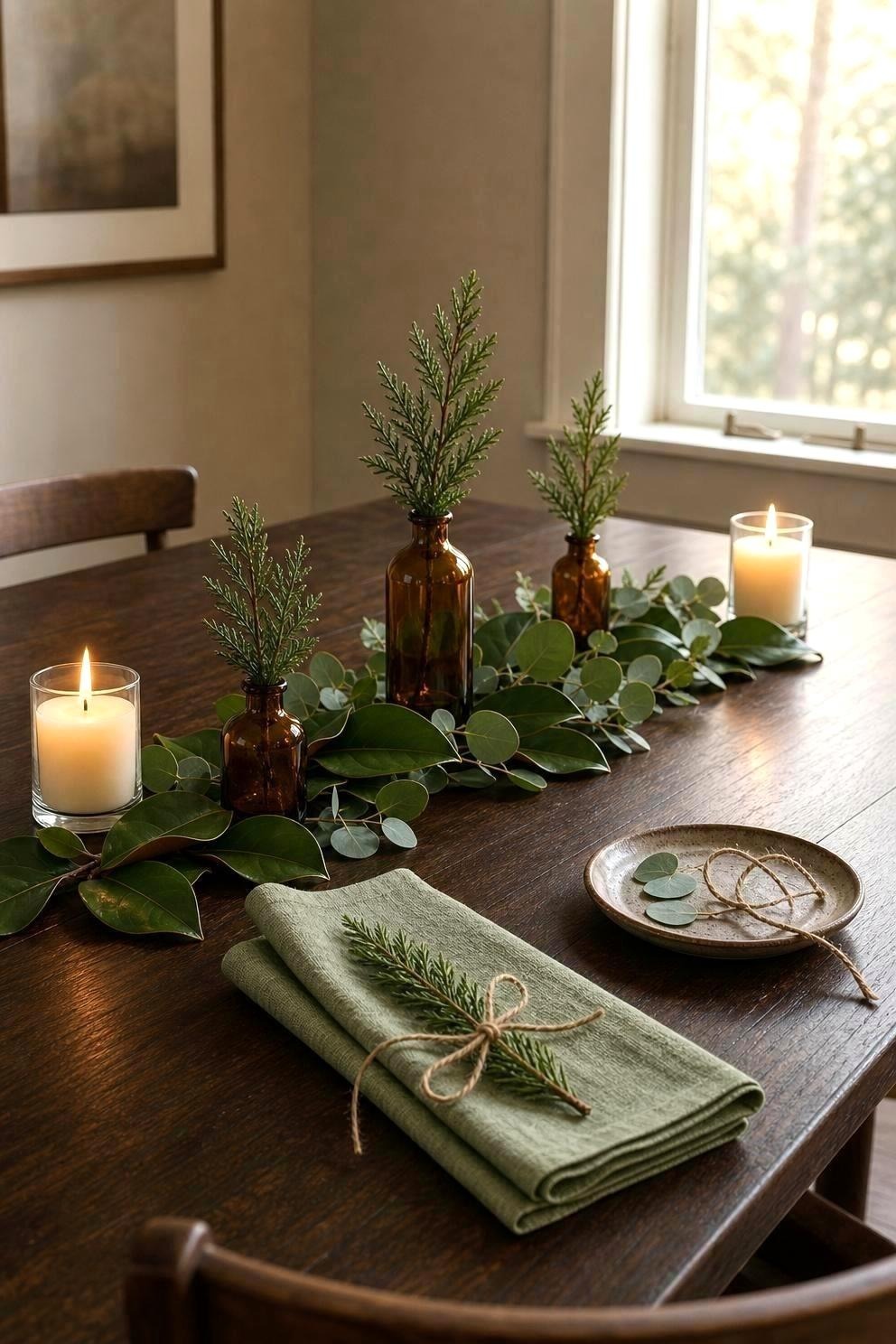
A low table runner made from magnolia and eucalyptus does not need floral foam. Overlap the stems down the center, turn a few magnolia leaves brown-side up, and use bud vases for the fragrant pieces that still need water.
Keep foliage, ribbons, and candles separate. The U.S. Fire Administration advises keeping decorations away from heat sources and checking lights for damage before use.
3. Use a living rosemary plant in the entry
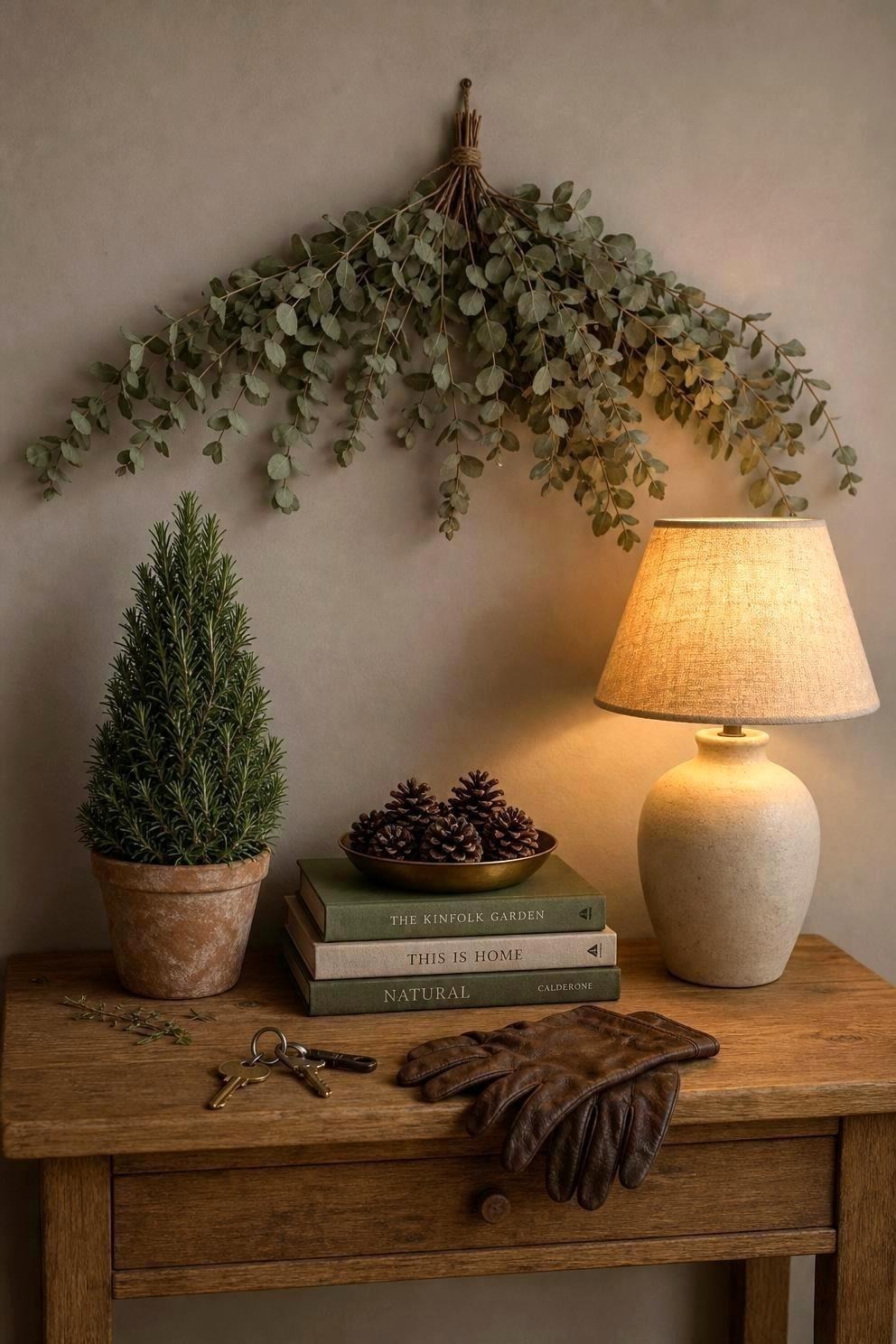
A clipped rosemary plant works where a full tree or long garland would crowd the path. A live rosemary plant (opens Amazon in a new tab)As an Amazon Associate, we earn from qualifying purchases. Full disclosure. arrives small and unshaped, so the cone is yours to clip, and it can arrive a little rough, which is normal for a plant that travels in a box. Give it the brightest cool window available, turn the pot every few days, and water when the surface begins to dry rather than on a fixed calendar.
Rosemary is listed as non-toxic to dogs, cats, and horses by the ASPCA. Even so, keep wire, ribbon, and small ornaments away from pets.
4. Hang a compact boxwood wreath inside
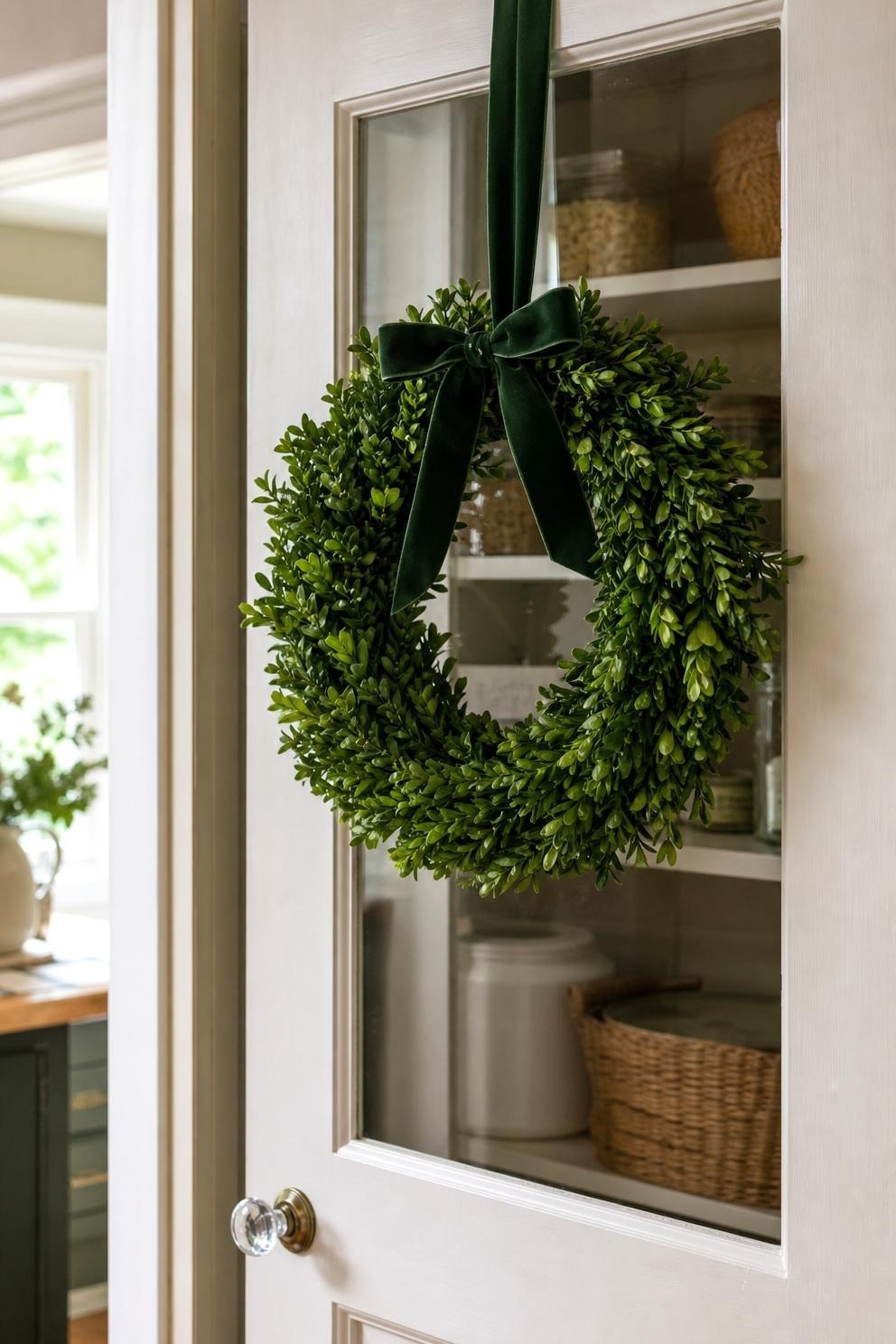
An interior pantry or bedroom door is kinder to fresh greenery than a glass storm door in direct sun. A 16 to 20 inch boxwood wreath is enough for a standard door and stays clear of the handle.
Boxwood is toxic to pets according to the ASPCA, so choose a high door and collect any fallen pieces promptly if a cat or dog chews plants.
5. Put magnolia branches in one heavy floor jug
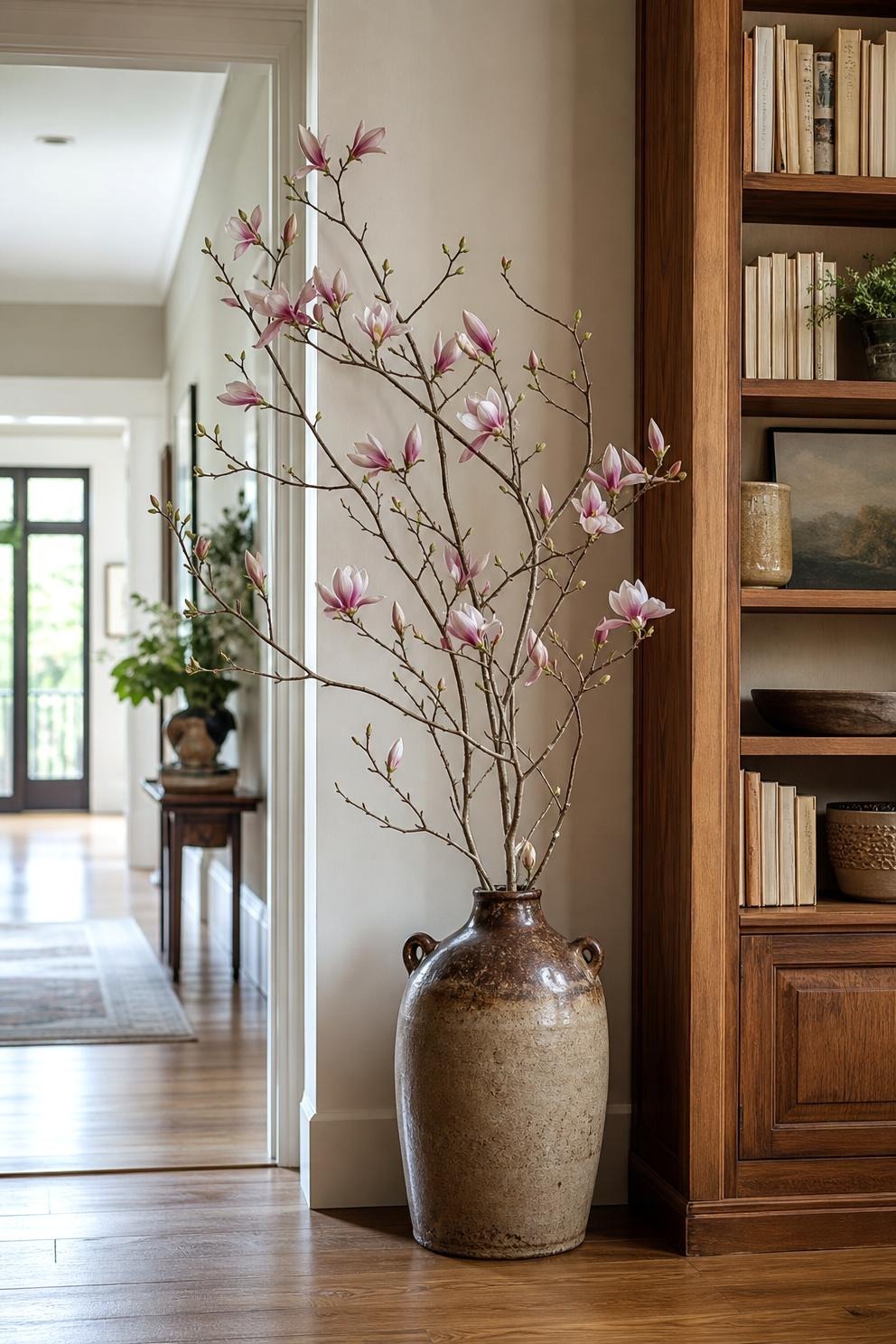
Three to five magnolia branches in a weighted jug fill an empty corner with less daily care than a mantel garland. Recut the stems and keep them in water if you want the glossy finish to last. Let them dry without water if the brown and green look suits the room.
Set the vessel outside the normal walking line. A wide, heavy base matters more than a tall narrow shape once the branches are in place.
6. Build a window swag with water tubes
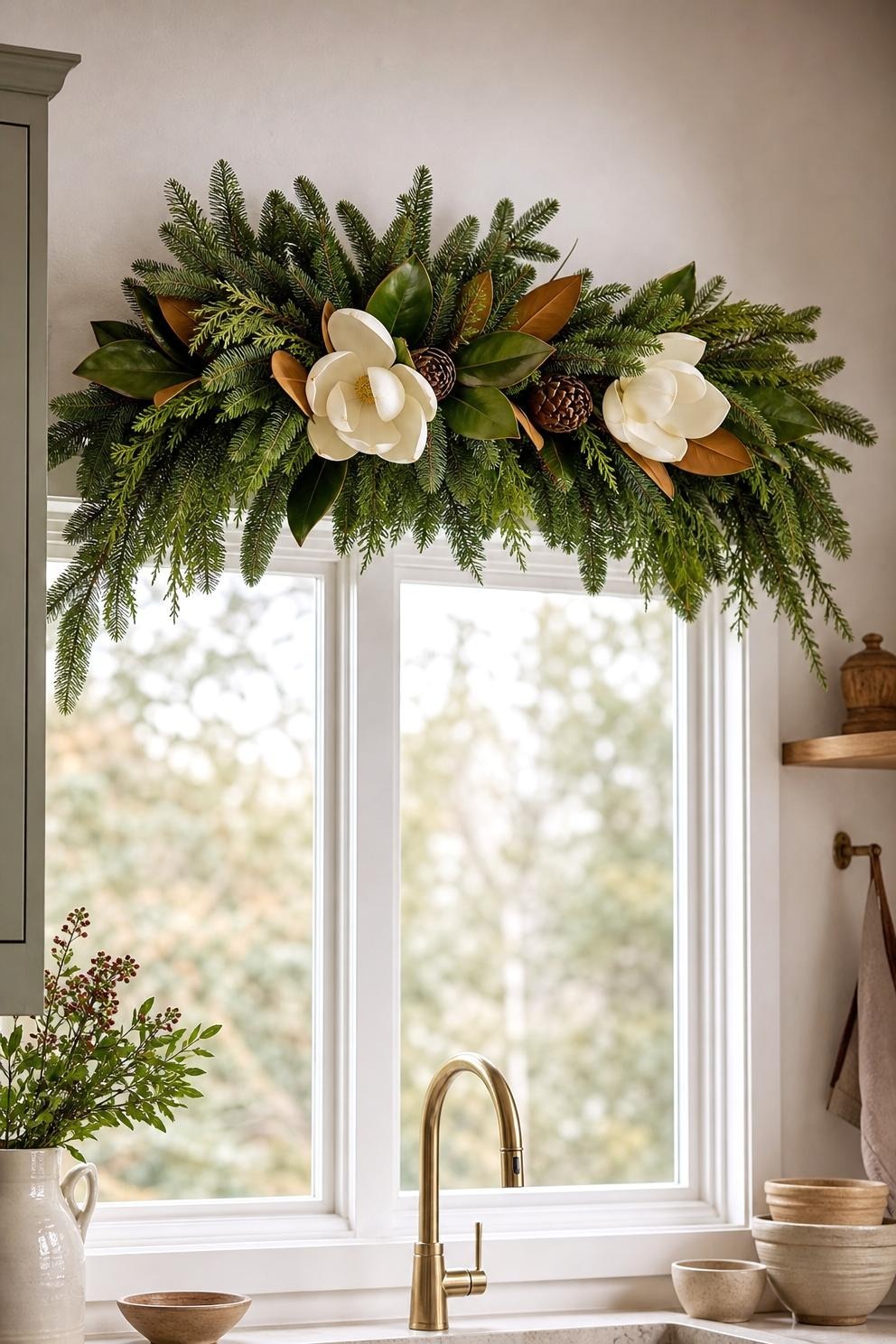
Use florist water tubes for the fir or cedar tips that matter most, then hide them behind magnolia or eucalyptus. Faux eucalyptus stems (opens Amazon in a new tab)As an Amazon Associate, we earn from qualifying purchases. Full disclosure., do that hiding job well, since nothing behind the focal stems needs water. This lets you top up a few stems without taking the swag down.
Before hanging it, run the heat and hold your hand where the greenery will sit. If warm air from a vent reaches the window, move the swag to a cooler opening.
7. Keep fresh greenery off a working fireplace

A working fireplace is the wrong place to test how long fresh garland will last. Heat rises directly through the greenery, and dry stems can remain green-looking after they become brittle.
Use faux greenery on an active mantel. A real touch faux cedar garland (opens Amazon in a new tab)As an Amazon Associate, we earn from qualifying purchases. Full disclosure. covers a standard mantel run, a two pack of 9 foot cedar lengths (opens Amazon in a new tab)As an Amazon Associate, we earn from qualifying purchases. Full disclosure. covers a longer one, and a faux eucalyptus garland (opens Amazon in a new tab)As an Amazon Associate, we earn from qualifying purchases. Full disclosure. gives the same soft green with nothing to drop. Put fresh branches in the entry, on a stair landing, or in a cool dining room instead. The University of Georgia Extension warns that dry, brittle greenery needs only a spark to ignite.
A quick twice-weekly care check
- Bend one needle. It should flex instead of snapping.
- Look underneath for fallen needles and dry stem ends.
- Top up water tubes and vases.
- Remove any section near a candle, vent, radiator, or hot window.
- Replace short fragrant accents instead of trying to rescue them with heavy misting.
Once needles snap or fall when touched, that section is finished. Remove it rather than wetting dry material and hoping it recovers.
What I’d Actually Buy
Product details can change; check the listing before you buy.
- Real touch faux cedar garland, 9 feet (opens Amazon in a new tab)As an Amazon Associate, we earn from qualifying purchases. Full disclosure.. One length covers a standard mantel, which is the one place fresh greenery should not be.
- Faux cedar garland, two 9 foot lengths (opens Amazon in a new tab)As an Amazon Associate, we earn from qualifying purchases. Full disclosure.. Two lengths cover a long mantel or a stair rail you would rather not soak and rebuild in January.
- DearHouse faux eucalyptus garland, two 6 foot vines (opens Amazon in a new tab)As an Amazon Associate, we earn from qualifying purchases. Full disclosure.. Eucalyptus reads softer than cedar and mixes into real leaves without announcing itself.
- Mixed faux eucalyptus stems (opens Amazon in a new tab)As an Amazon Associate, we earn from qualifying purchases. Full disclosure.. Loose stems are the filler for a swag, sitting behind the few fresh tips that get water tubes.
- Bonnie Plants live rosemary (opens Amazon in a new tab)As an Amazon Associate, we earn from qualifying purchases. Full disclosure.. Live rosemary plants can ship badly, so order early enough that a rough arrival still leaves time to replace it.
- Live rosemary in pint pots (opens Amazon in a new tab)As an Amazon Associate, we earn from qualifying purchases. Full disclosure.. Bigger pots than most, which helps a plant that has to hold its shape through December.
Several things in this article have no Amazon answer worth linking. Fresh fir, cedar, magnolia and a boxwood wreath come from a florist, a tree lot, or your own yard, and they should. Florist water tubes and a heavy floor jug are plain hardware, and this search turned up nothing worth naming, so buy those wherever you already shop.
What to Read Next
- Nine Christmas planter ideas for indoors and outside turns cut greens and living plants into porch, window, balcony, and table arrangements.
- Christmas mantel decor that fits the mantel you have explains garland length, attachment, and fireplace clearance.
- Eight Christmas centerpieces for tables you use keeps serving space and sight lines in the plan.
- Renter friendly Christmas decor with no nails covers adhesive limits, tree placement, and common lease constraints.
- Winter home decor after the tree comes down carries the greenery, texture, and lighting into January.