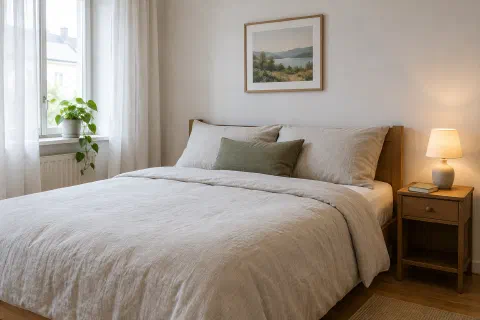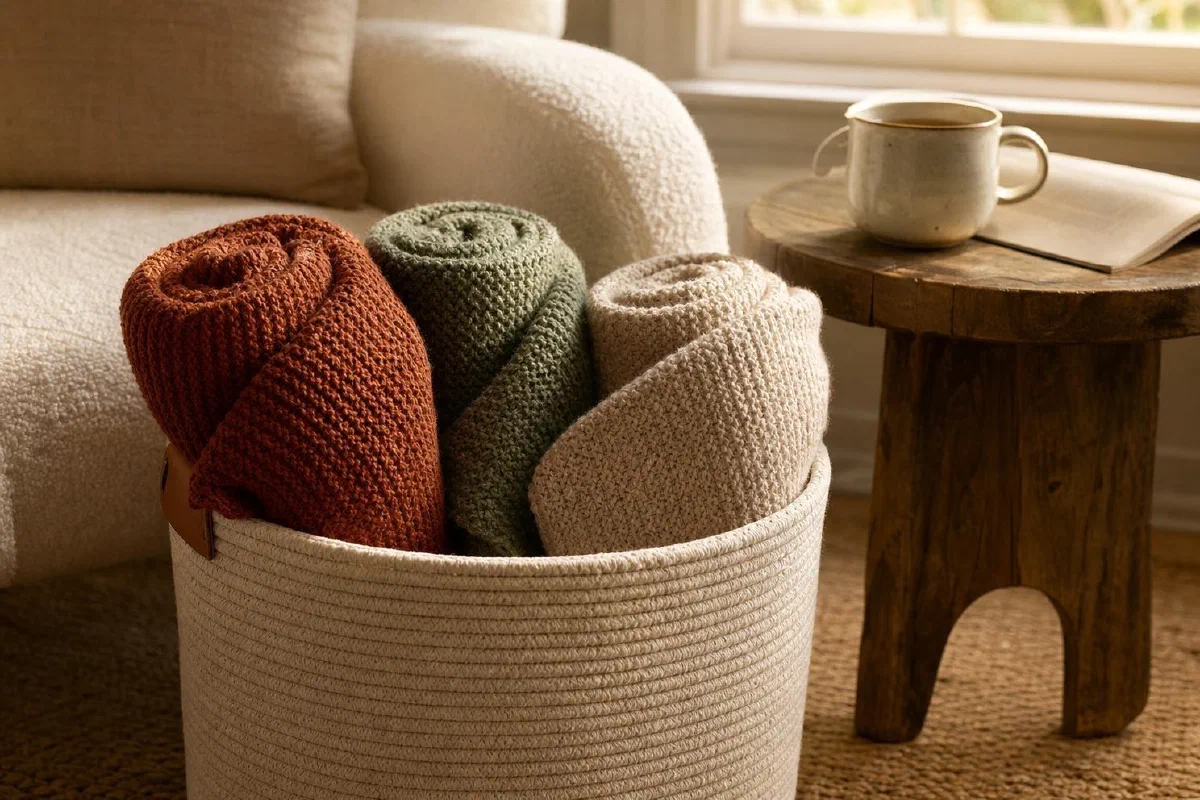
A blanket basket that flops sideways is not a basket problem. It is a fill problem, and it has a fix that costs nothing.
Most blanket storage advice stops at “get a basket.” Then the basket arrives, you put two throws in it, and within a week it has slumped into a shape that reads as laundry. The blankets end up back on the sofa arm, which is where they were in the first place.
The fix is understanding why soft-sided storage collapses, then matching the storage to how often you actually reach for the blanket. Those two things solve almost every version of this problem.
| Storage | Best for | Floor space it costs | How it opens |
|---|---|---|---|
| Soft basket beside the seat | The blanket someone uses daily | Small patch beside a chair | Reach in, one motion |
| Lift-lid ottoman or bench | Weekly spares and guest blankets | Takes the place of a seat | One motion, then closed |
| Ladder against a wall | A wall that has nothing else on it | Almost none | One throw at grab height, the rest folded |
| Lidded bin under the bed | Seasonal wool and down | None in the room | Twice a year, on your knees |
Why blanket baskets collapse
A cotton rope or woven basket has no rigid frame. Its walls stay up because of what is pressing against them from the inside. Fold blankets flat, stack them, and all the weight sits at the bottom while the upper walls have nothing to lean on. The sides fall inward and the basket looks half dead.
Three things cause the slump:
- Flat-folded blankets. A flat stack presses down, not out. The basket needs outward pressure to hold its walls.
- Too much basket. A 90L basket holding two throws will always look sad. Volume has to roughly match what you own.
- Fabric that has no body. Fleece and thin microfiber compress to nothing. Wool, cotton waffle and chunky knit hold their own volume and do most of the work for you.
The fold that keeps a soft basket open
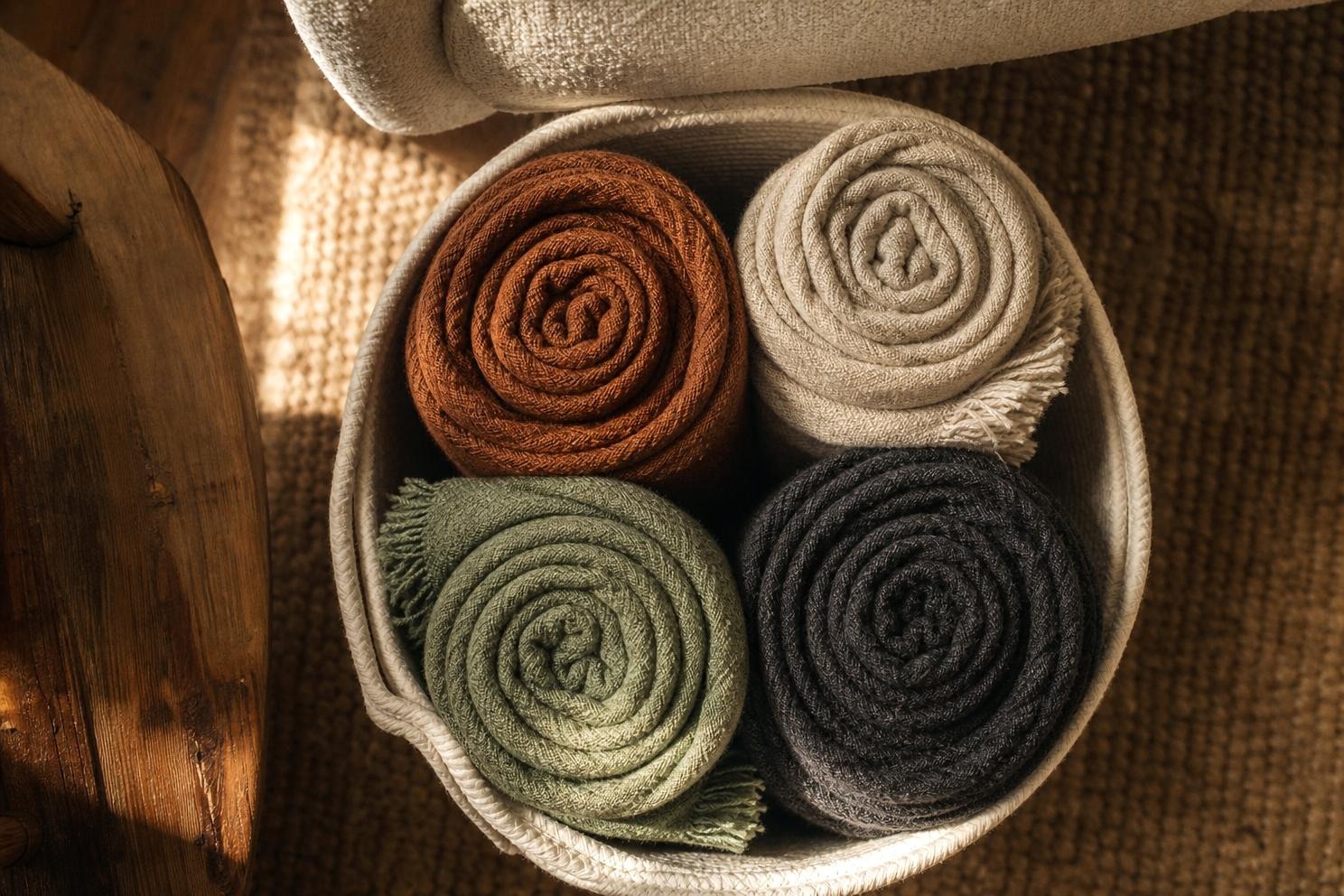
Roll, then stand upright. That is the whole trick.
- Fold the blanket in thirds lengthwise so it becomes a long strip roughly as wide as your basket is deep.
- Roll it firmly from one short end.
- Stand the roll on its end in the basket.
- Repeat until the rolls press gently against each other and against the walls.
Three or four rolls will hold a medium basket open with no help. The rolls also let you pull one blanket out without unstacking everything above it, which is why folded stacks fail over time. Nobody rebuilds a stack at ten at night.
If you have only two blankets and a basket that is too big, roll a spare pillow or a folded quilt and stand it at the back. It fills volume, and it disappears behind the throws you actually use.
Store by how often you reach for it
This is the part most advice skips, and it decides everything else.
Daily, the blanket someone pulls over their legs most evenings. It needs to be reachable without standing up. A basket beside the sofa, a ladder rung at arm height, or draped over the chair arm. Do not put a daily blanket inside a lidded box; it will live on the floor instead.
Weekly, the spare for guests or the second one someone grabs when the first is taken. A storage ottoman, a bench with a lift lid, or the lower shelf of a side table. Out of sight is fine here as long as it opens in one motion.
Seasonal, the heavy winter throws in July. These go in real storage: under the bed, on a closet shelf, in a lidded bin. See the seasonal section below, because how you store these decides whether they still smell right in October.
Room by room
Living room. One basket beside the seat that gets used most, holding the two or three throws in rotation. A ladder works if the wall is otherwise empty, but a ladder in a busy room reads as clutter, not storage. If your sofa has an arm wide enough to drape one blanket cleanly, use it. A single draped throw looks intentional; three do not.
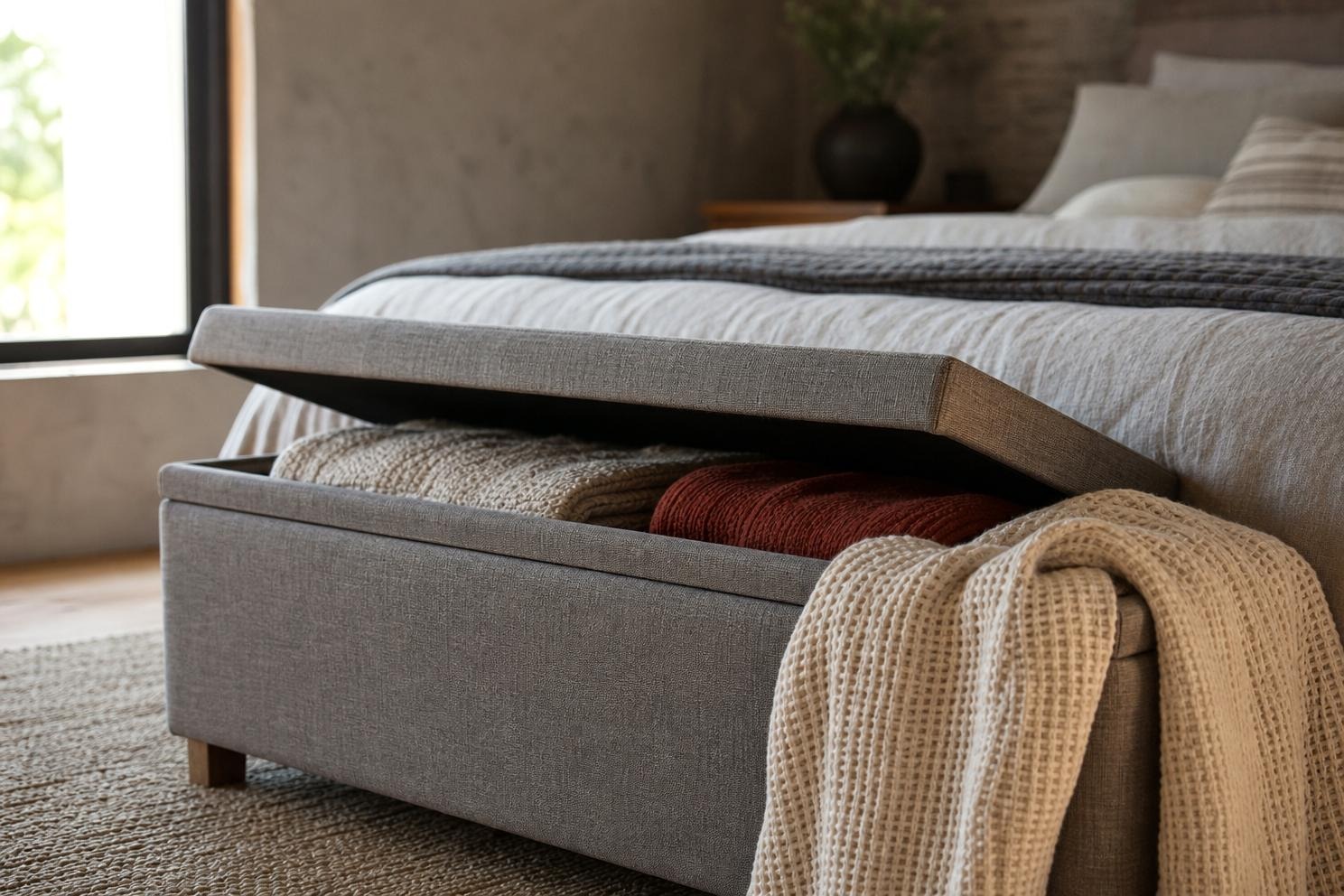
Bedroom. The foot of the bed is the natural spot, and a bench or ottoman there earns its footprint twice, as storage and as somewhere to sit while you put shoes on. Under-bed drawers handle the seasonal load without touching the closet.
Small apartment. Choose storage that already had to exist. A coffee table with a lower shelf, an ottoman you also put your feet on, a bench in the entry. Adding a piece of furniture whose only job is holding blankets is the fastest way to make a small room feel smaller.
Nursery or kids’ room. Open baskets, low enough that a child can put a blanket back without help. Lids get left open and become a hazard in a room where someone is climbing.
Seasonal storage without the musty smell
Wash and fully dry before storing. This matters more than the container. Clemson Cooperative Extension’s fabric pest guide is direct about it: soiled fabric is what draws the larvae of clothes moths and carpet beetles, the insects that feed on wool, silk, fur, and feathers, and cleaning is the best prevention there is. Body oils left in the fibres are also what turn into a stale smell over four months in the dark.
Then:
- Breathable over airtight for wool and cotton. A cotton storage bag or a bin with the lid resting rather than sealed lets moisture move. Sealed plastic traps humidity against fibre and that is where mildew starts.
- Vacuum bags are fine for synthetics, and bad for wool and down. Compression crushes the loft in down and breaks wool fibres over time. A down throw that comes out of a vacuum bag flat may never fully recover.
- Cedar and lavender are not the protection they are sold as. The same Clemson guide calls cedar chests and plant oils such as lavender, rosemary, and mint only marginally effective against fabric pests, and notes that their repellent benefit fades over time. Keep them for the scent if you like it, but the cleaning and the sealed container are what actually do the work.
- Off the floor and out of direct light. A closet shelf beats a basement corner. The EPA’s mold guidance is blunt about why a damp basement is the worst of the options, and it suggests keeping indoor humidity under 60 percent, ideally between 30 and 50, if you want to store anything soft down there. Sun fades folded edges into visible lines.
Common mistakes
- Buying the basket first. Count your blankets, then buy for that volume. A basket you have to overfill looks as bad as one you cannot fill.
- Storing the daily blanket out of reach. It will not stay there.
- Stacking flat and hoping. Rolls hold shape; stacks slump and get dismantled.
- One giant basket for everything. Two smaller ones, split by how often you reach for them, work better than one that holds all six.
- Putting a lidded bin where a child plays. Open storage in kids’ rooms, every time.
What I’d Actually Buy
Four things cover almost every version of this, and you probably need one of them rather than all four.
- SONGMICS 43-inch folding storage ottoman bench (opens Amazon in a new tab)As an Amazon Associate, we earn from qualifying purchases. Full disclosure.. The one to get if you want blankets hidden but reachable. It doubles as seating at the foot of a bed, and folding construction means it stores flat if you move.
- 65L cotton rope blanket basket (opens Amazon in a new tab)As an Amazon Associate, we earn from qualifying purchases. Full disclosure.. Machine washable, which matters more than it sounds if you have a dog. 65L is the sweet spot for three or four rolled throws.
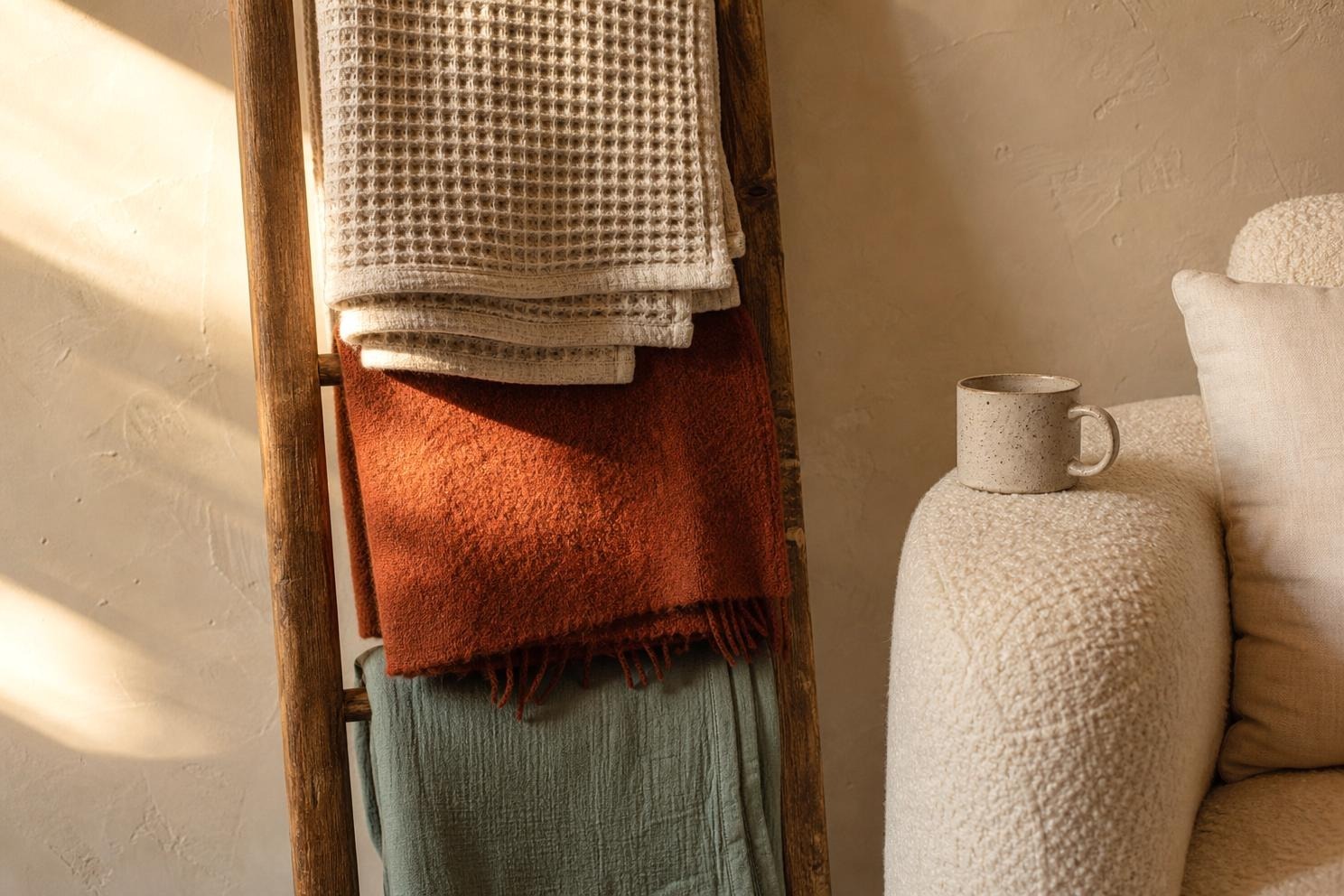
- HOOBRO 5-tier blanket ladder (opens Amazon in a new tab)As an Amazon Associate, we earn from qualifying purchases. Full disclosure.. For a blank wall beside a chair. Removable hooks let you hang one throw at grab height and fold the rest.
- Sherpa storage ottoman (opens Amazon in a new tab)As an Amazon Associate, we earn from qualifying purchases. Full disclosure.. Smaller footprint than the bench, soft top, good in an apartment where it also works as a footrest.
Buy for the volume you own, not the volume you might one day own. That single decision fixes the slumping basket before it starts.
FAQ
How many blankets should go in one basket?
Three or four rolled throws in a 60 to 70 litre basket. Enough that they press against each other and hold the walls, not so many that you have to force the last one in.
Should blankets be rolled or folded?
Rolled and stood upright for anything in open storage. Rolls hold their shape, hold the basket open, and let you take one out without disturbing the rest. Flat folding is fine inside a closed ottoman or bin where nothing has to stay standing.
Can I store wool blankets in vacuum bags?
Better not to. Compression crushes wool fibres and down loft, and neither fully recovers. Use a breathable cotton bag or a bin with the lid resting on top instead.
What is the best blanket storage for a small apartment?
Storage that was already going to be in the room. An ottoman you use as a footrest, a coffee table with a lower shelf, or a bench in the entry. Furniture that only holds blankets costs floor space you notice every day.
What to Read Next
- Cozy Fall Living Room: 9 Amazon Finds is where the throws in this basket spend October, and it shows what to reach for first.
- Cozy Reading Nook for a Small Space covers the chair these blankets end up next to, and how to fit one into a corner.
- Warm a Living Room for Fall Without a New Sofa is the cheap, no-new-furniture version of the same room, texture included.
- 10 Things to Declutter This Week helps when the blanket pile is a symptom rather than the whole problem.