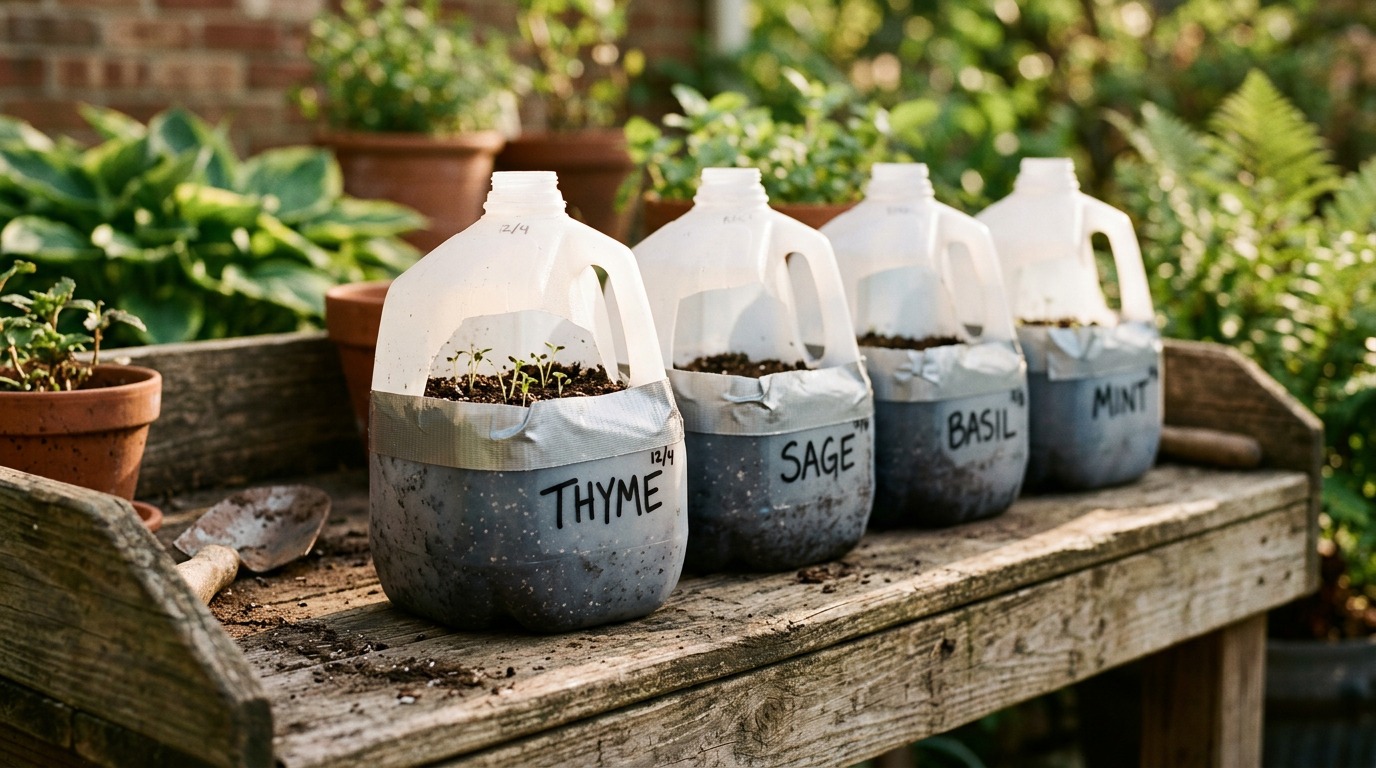
Winter sowing lets you start seeds outdoors in January or February using recycled milk jugs as mini greenhouses. You set them outside, let freeze-thaw cycles naturally cold stratify the seeds, and skip indoor grow lights entirely. It works best for hardy perennials and self-sowing annuals in USDA Zones 3-8. A gallon milk jug holds 15-20 seedlings and costs nothing if you save your own containers.
What You Need
| Item | Cost | Notes |
|---|---|---|
| Gallon milk jugs (cleaned) | $0 | Translucent jugs work better than opaque |
| Seed starting mix | $8/16 quarts | Avoid garden soil, it compacts |
| Seeds (hardy varieties) | $2-4/packet | See flower list below |
| Duct tape or packing tape | $3/roll | For resealing jugs |
| Permanent marker | $2 | Label each jug with variety and date |
| Utility knife or scissors | Already owned | For cutting jugs |
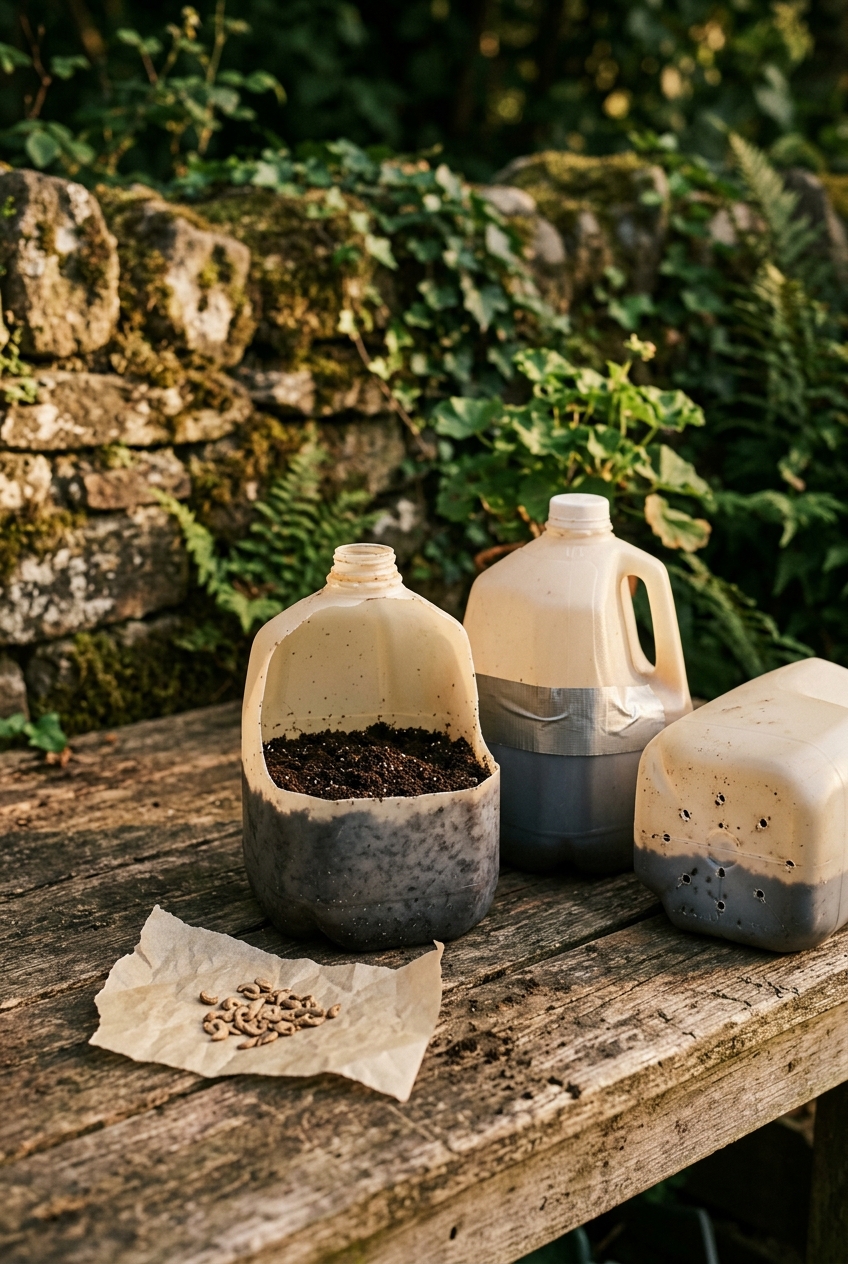
You need jugs with the original caps. Translucent HDPE plastic (recycling code 2) works better than completely opaque jugs because seedlings need light. One jug costs $3-4 new if you buy milk specifically for this, but most gardeners save empties from January through March.
How to Do It
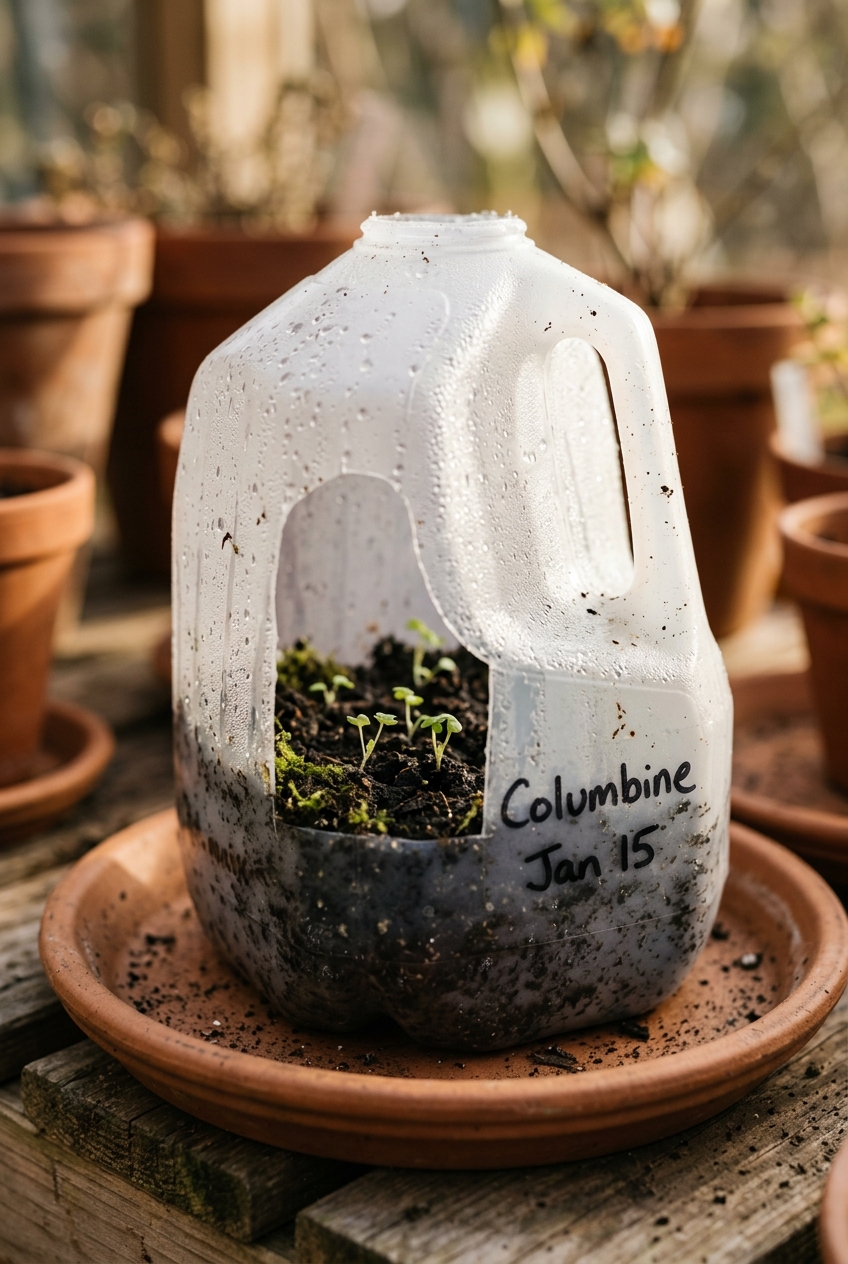
Cut the jug. Use a utility knife to cut around the jug about 3 inches from the bottom. Leave a 1-inch “hinge” on one side so the top stays attached. The cut doesn’t need to be perfect.
Punch drainage holes. Use a nail or knife tip to poke 6-8 holes in the bottom. Without drainage, seeds rot.
Add 3-4 inches of seed starting mix. Moisten it before filling the jug. The mix should feel like a wrung-out sponge, not dripping wet.
Sow seeds at normal depth. Most perennials need light to germinate, so barely cover them. Press them into the soil surface. For seeds that need darkness (like calendula), cover with 1/8 inch of mix.
Label with permanent marker. Write the plant name and date directly on the jug. Paper labels fall off or fade.
Tape the jug closed. Use duct tape to seal the cut edge. Leave the cap OFF for ventilation. If you seal the cap on, condensation drowns the seeds.
Set jugs outside immediately. Place them in a spot that gets morning sun but afternoon shade. Full sun overheats the jugs in late winter. Against a south-facing wall works well in Zones 5-7.
Quick Tip: Start winter sowing 6-8 weeks before your last frost date. In Zone 5, that’s mid-January for an early May frost date. In Zone 7, start in early February.
12 Flowers That Winter Sow Successfully
| Flower | Germination Temp | Days to Sprout | Zone Hardiness | Notes |
|---|---|---|---|---|
| Calendula (Calendula officinalis) | 60-70°F | 7-14 | Annual | Cover seeds, needs darkness |
| Foxglove (Digitalis purpurea) | 60-65°F | 14-21 | 4-9 | Biennial, blooms year two |
| Columbine (Aquilegia canadensis) | 70°F | 21-28 | 3-8 | Needs cold period |
| Black-eyed Susan (Rudbeckia hirta) | 70-75°F | 10-21 | 3-9 | Self-sows aggressively |
| Coneflower (Echinacea purpurea) | 70°F | 10-20 | 3-9 | Slow first year |
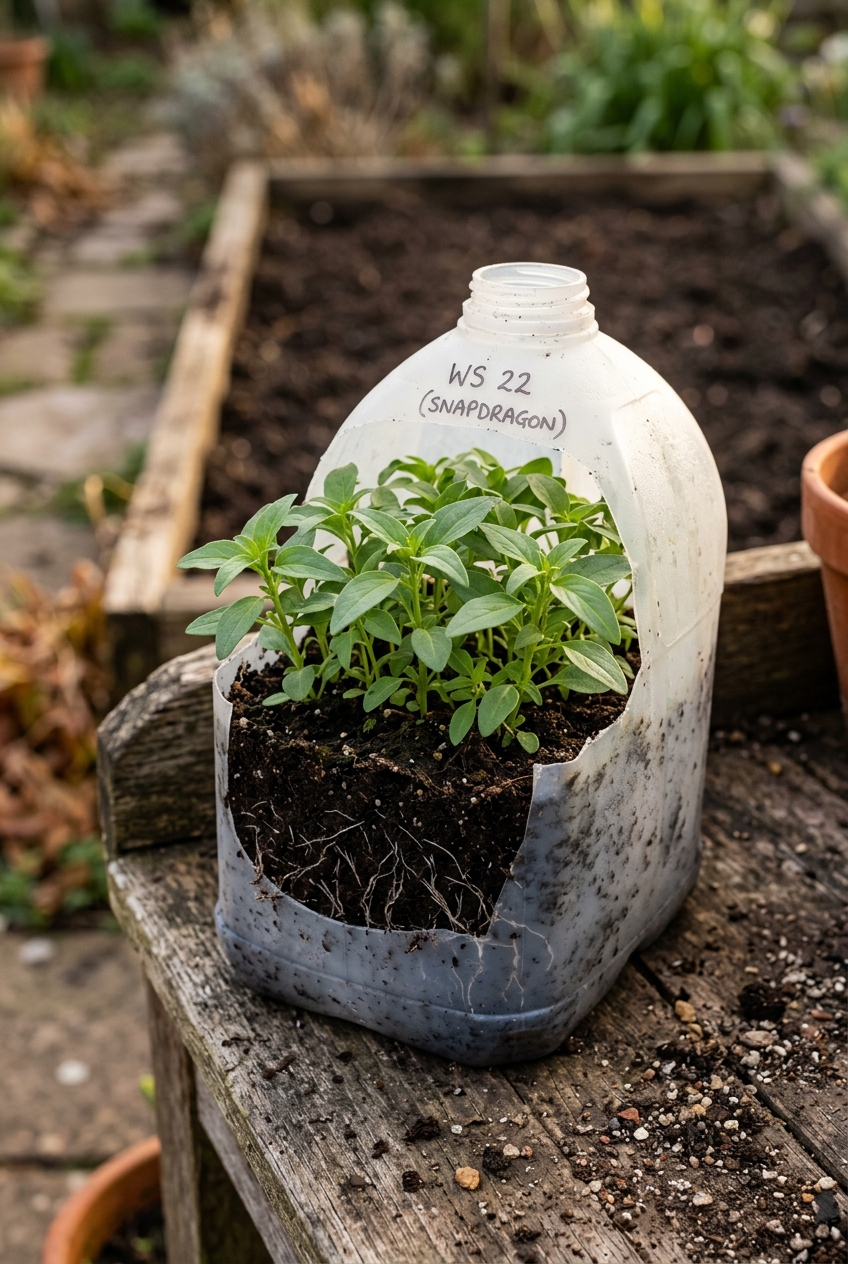
| Snapdragon (Antirrhinum majus) | 65-75°F | 10-14 | Annual (6-9 perennial) | Surface sow, needs light |
| Larkspur (Consolida ajacis) | 55-65°F | 14-21 | Annual | Toxic if eaten |
| Catchfly (Silene armeria) | 60-70°F | 14-21 | 5-8 | Reseeds freely |
| Shasta Daisy (Leucanthemum × superbum) | 70°F | 14-28 | 5-9 | Slow to establish |
| Butterfly Weed (Asclepias tuberosa) | 65-70°F | 21-30 | 3-9 | Deep taproot, don’t transplant late |
| Sweet William (Dianthus barbatus) | 65-70°F | 7-14 | 3-9 | Biennial |
| Blanket Flower (Gaillardia aristata) | 70°F | 14-21 | 3-10 | Drought-tolerant once established |
All of these need cold stratification or tolerate freezing temperatures during germination. They either won’t germinate indoors without refrigerator tricks, or they perform better when exposed to natural freeze-thaw cycles.
What to Watch For
Overheating in late March. Once daytime temps hit 70°F, crack the cap open during the day. By April, remove the cap entirely. If you see seedlings stretched and pale, they’re getting too hot.
No germination by 6 weeks. Some seeds (like butterfly weed and columbine) take 4-6 weeks. If nothing sprouts by 8 weeks, the seeds were either old or you didn’t water enough initially. The soil should stay moist but not soggy.
Damping off (seedlings fall over). This fungal issue happens when jugs stay too wet with no air circulation. Always leave the cap off. If you see white mold on the soil surface, you overwatered.
From my experience: I lost an entire jug of snapdragons in year one because I left the cap on. The condensation was so heavy I couldn’t see through the plastic. Now I only use the cap to cover the opening during heavy rain, then remove it immediately after.
When to Transplant
Wait until seedlings have 2-3 sets of true leaves (not the first round “baby” leaves). In Zone 5, that’s usually late April to early May. In Zone 7, late March to early April.
Harden off by opening the jug top for a week before transplanting. This acclimates them to full outdoor conditions. Then cut the jug apart and transplant directly into garden beds.
Space according to the seed packet. Most perennials need 12-18 inches between plants. Annuals like calendula can go 8-10 inches apart.
Make It Your Own
Zone 3-4 gardeners: Start jugs in late February instead of January. The ground is frozen solid until late April, so earlier sowing doesn’t help. Focus on the hardiest perennials: columbine, black-eyed Susan, coneflower.
Zone 8 gardeners: Winter sowing works, but you have a shorter window. Start in early January. By March, it’s too warm and seeds cook in the jugs. Skip heat-lovers like zinnias. Stick to the cool-season flowers: snapdragons, larkspur, calendula.
No south-facing wall? Place jugs on the north side of your house. They’ll still get ambient light and temperature swings. Germination takes 1-2 weeks longer, but it works.
Want more seedlings per jug? Use 2-gallon juice jugs or cut the bottoms off 2-liter soda bottles. Soda bottles hold 6-8 seedlings. Juice jugs hold 30-40.
Before You Start
Budget $15-20 for your first season. That covers seed starting mix, seeds for 3-4 varieties, and tape. After year one, you’ll reuse jugs and only buy seeds.
Time commitment is 2-3 hours total. 1 hour to prep and sow jugs in January, 30 minutes to check them weekly, 1 hour to transplant in spring. This is faster than indoor seed starting under lights.
Best results in Zones 4-7. Colder zones (3) have a shorter transplant window. Warmer zones (8-9) risk overheating the jugs by early March. If you’re in Zone 9 or warmer, skip winter sowing and direct sow in fall instead.
FAQ
Do I need to water the jugs after I set them outside?
Water once when you sow the seeds, then let snow and rain handle it. Check weekly. If the soil looks dry and cracked, add 1/4 cup of water. In a typical winter, you’ll water 2-3 times total before spring.
Can I reuse the same jugs next year?
Yes. Wash them with dish soap, rinse, and store them dry. I’ve used the same jugs for three seasons. They get brittle after year three and crack when you cut them.
What if we get a late hard freeze after seeds sprout?
The jugs protect seedlings down to about 20°F. Below that, cover jugs with a blanket overnight. I’ve had columbine seedlings survive 15°F with a blanket over the jugs. Snapdragons and calendula tolerate 25°F without extra protection.