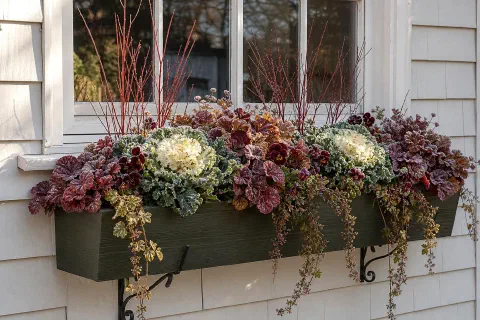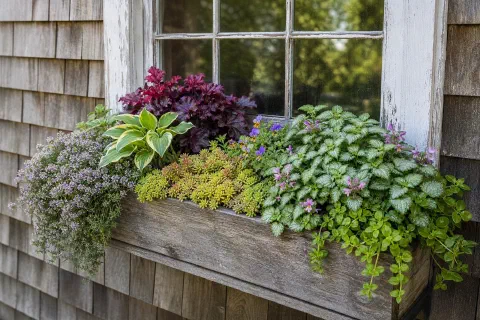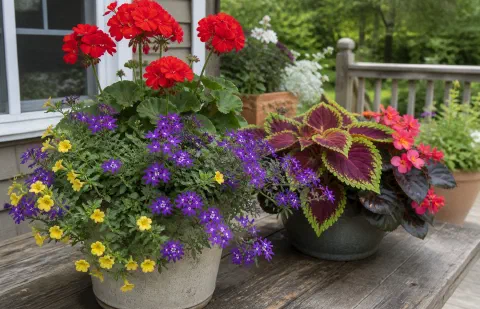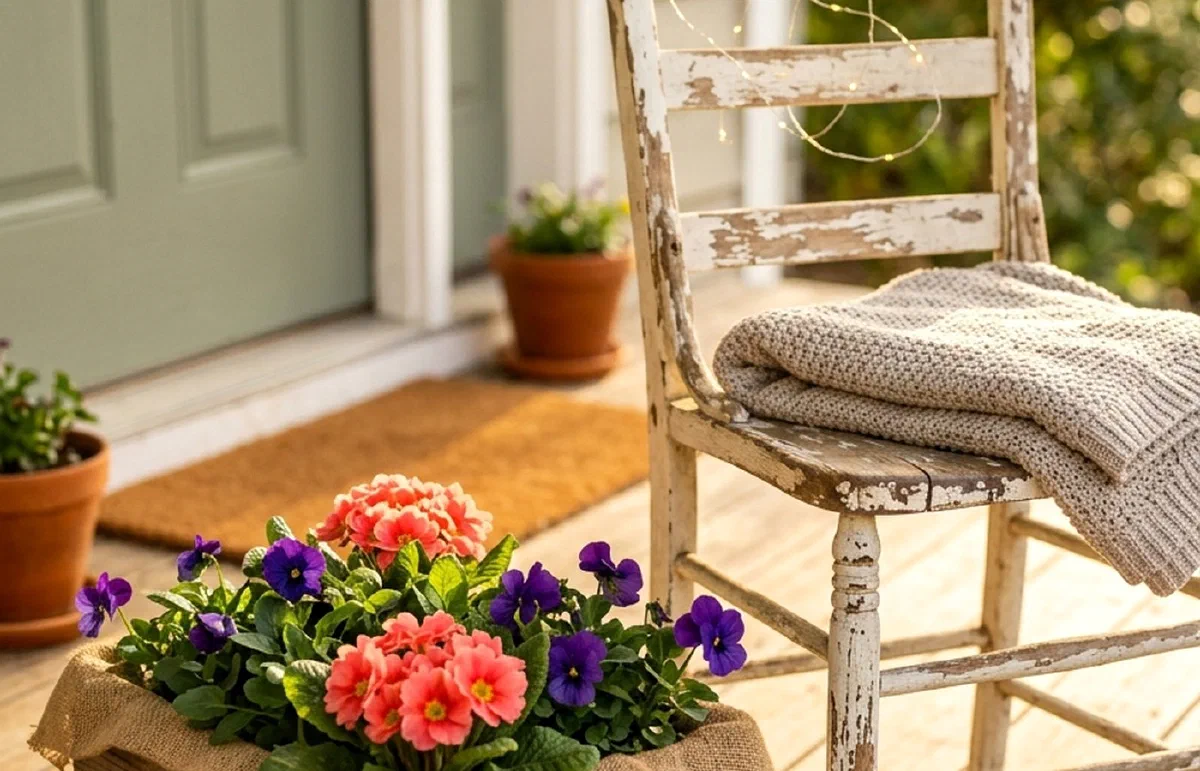
A window box is one of the fastest ways to make a plain house look finished.
I do not mean fancy. I mean the kind of house that looks fine, but a little flat. The siding is one color. The windows disappear from the street. The front door might be nice, but nothing around it pulls your eye.
Then you add flowers under a window, and suddenly the house looks like someone meant for it to be noticed.
Window boxes work because they put color right where people already look. You don’t have to landscape the whole front yard or redo the porch. A few boxes under the right windows can make the house look more lived in within a weekend.
Pick the Windows People Actually See
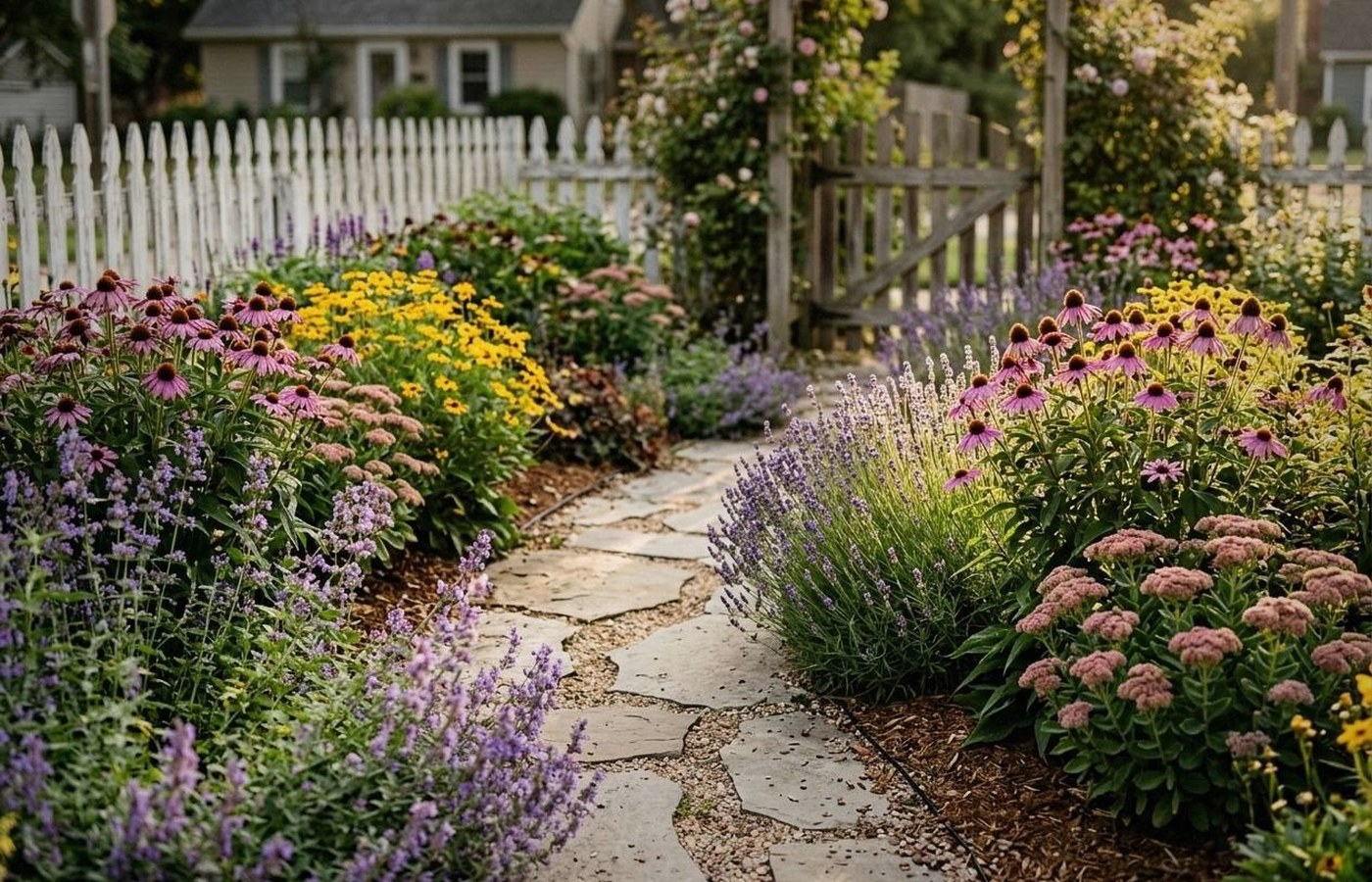
Not every window needs a box.
Start with the windows that face the street, the driveway, or the place where you walk up to the door. One good window box under a front window is better than four boxes you cannot keep watered.
If the house has a small porch, the window nearest the porch is usually the best place to start. If the front of the house is flat, choose the window closest to the door so the flowers feel connected to the entry.
Window boxes look best when they make sense from far away. Stand at the curb and look before deciding.
The two-minute check before you buy: measure the window trim, not the wall, and write the width down. Then walk to the curb and look at how that trim lines up with the rest of the front. Boxes get bought one size too big far more often than one size too small.
Keep the Color Simple
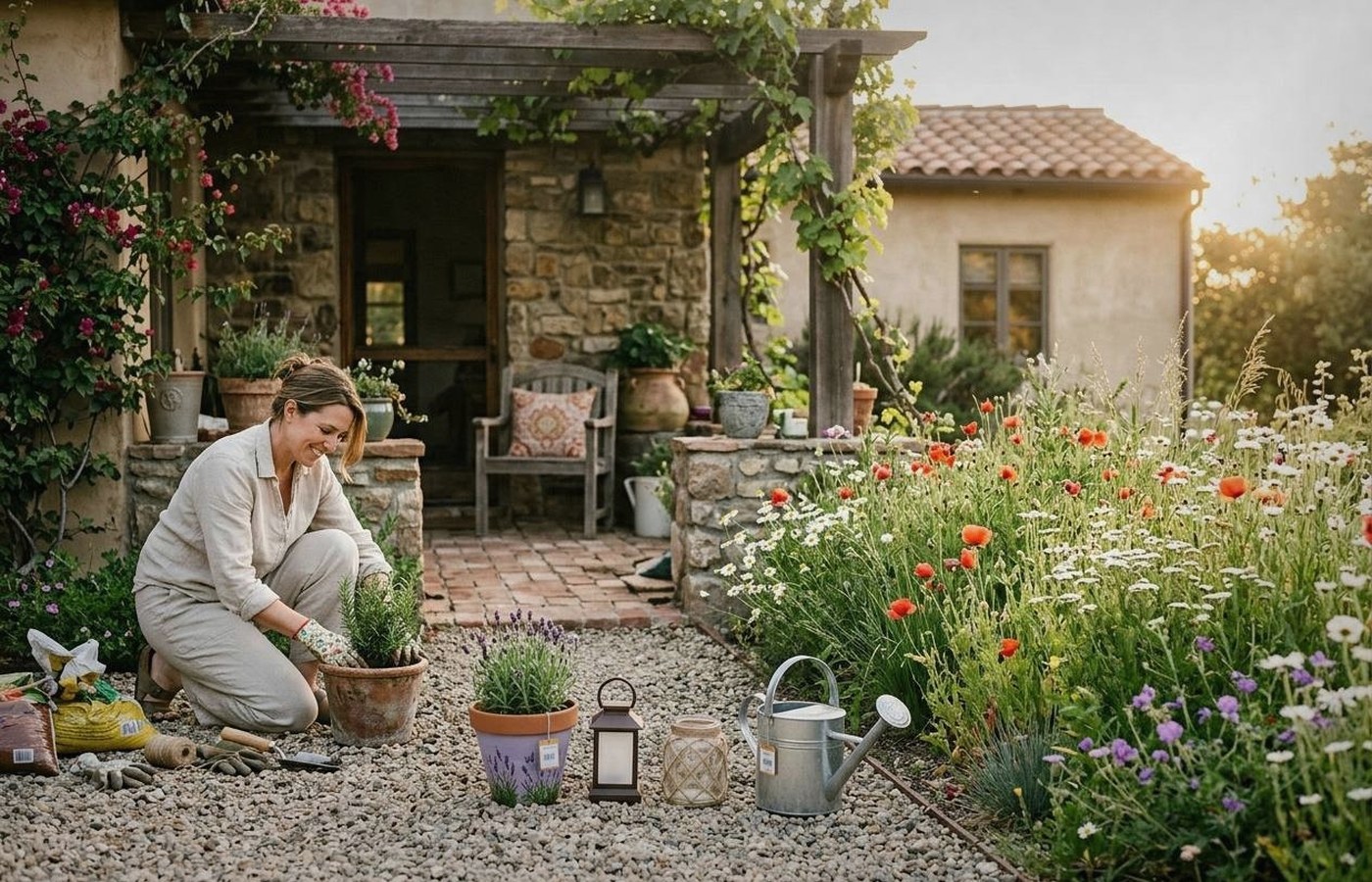
The easiest mistake with window boxes is using too many colors.
Red, pink, purple, yellow, orange, white, and lime green can all look great separately. Together, they can look like the clearance rack at the garden center.
Pick one main color and one supporting color. Then use green to fill in.
Some easy combinations:
- White flowers with trailing green
- Pink geraniums with silver foliage
- Red geraniums with white alyssum
- Purple petunias with chartreuse sweet potato vine
- Coral begonias with dark coleus
- Yellow calibrachoa with thyme or oregano
If your house is already colorful, keep the flowers simpler. If your house is white, gray, tan, brick, or beige, you can use stronger flower color without it feeling too much.
Use Plants That Spill a Little
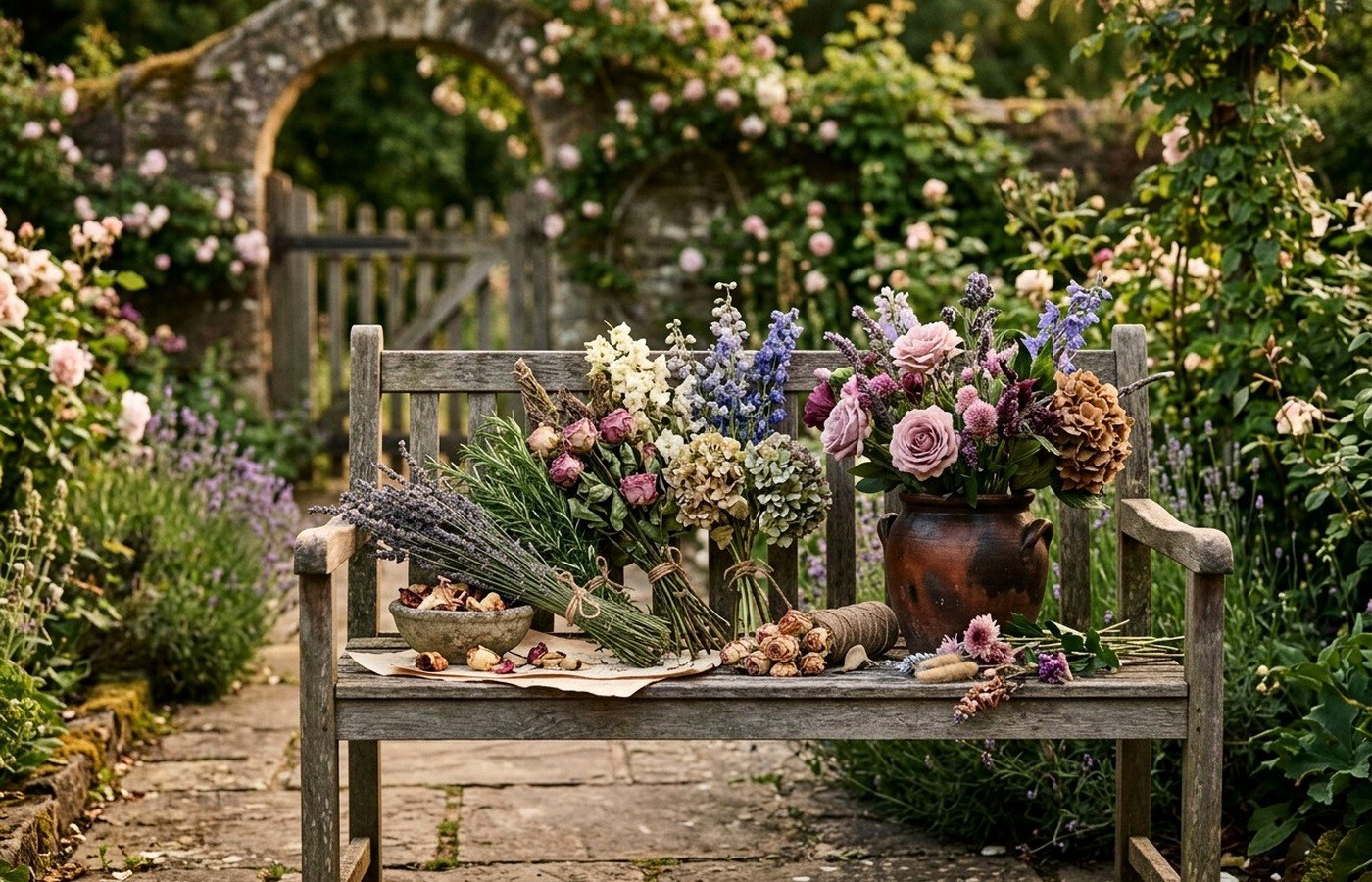
Window boxes look better when something trails over the edge.
The trailing plant doesn’t need to take over. It just breaks up the hard line of the box. Creeping Jenny, ivy, sweet potato vine, trailing lobelia, calibrachoa, alyssum, thyme, and nasturtiums can all do this.
Put upright plants in the back and trailing plants near the front. If the box is visible from below, let the trailers hang enough to soften the edge, but not so much that they cover the whole box.
I like window boxes best when they look a little loose. Too perfect can feel stiff.
Match the Plants to the Light
Window boxes are small, so stressed plants show quickly.
The light labels on plant tags are looser than most people think. Penn State Extension’s guide to tough planting sites puts full sun at six or more hours of direct light, part sun at four to six, part shade at two to four, and shade at less than two. Watch your window for a full day before you buy, because a wall that reads bright at noon can still be a part-shade window across the season.
For sunny windows, try geraniums, petunias, calibrachoa, lantana, verbena, zinnias, marigolds, lavender, thyme, or trailing rosemary.
For shaded windows, try begonias, impatiens, coleus, ferns, ivy, torenia, or heuchera.
For part sun, you have more room to play. Begonias, coleus, sweet potato vine, alyssum, and some petunias can all work if the box does not bake all day.
Everything on those lists is an annual, which means the box empties every November and you buy it all again in May. If you’d rather plant once, perennials for window boxes that actually come back covers which ones tolerate that shallow root run.
The biggest thing is water. Window boxes dry out fast, especially on brick walls or under roof overhangs. If you’re not going to water often, use fewer plants and choose tougher ones.
Which Box Size and Style to Buy
Most people get this backwards. They buy the box first and then find plants that fit it.
Length. Match the box to the window casing, not to the wall. A box that runs wider than the trim looks heavy from the curb, and a box that stops well short of the trim looks like a mistake.
Depth. This is the number that decides how much you water. A deep box holds more soil, so it dries slower and forgives a missed day. Shallow decorative boxes are the ones that need water twice a day in July.
Material. Cedar and cypress weather to gray and last. Composite and PVC hold paint and never rot. Metal and resin are the lightest, which matters if you’re hanging a box on an older wall.
Liner. Coconut coir looks better and dries faster. A thin plastic liner holds moisture longer but shows if the box is above eye level. Self-watering boxes with a reservoir are worth the money for a sunny, hard-to-reach window.
Mounting. Brackets have to reach framing, not just siding. A box full of soaked soil weighs far more than the empty box did in the aisle, and a box that pulls loose takes the trim with it.
Planting a Window Box in Five Steps
- Soak the liner and the plants an hour before you start, so nothing goes into the box dry.
- Add fresh potting mix with slow-release fertilizer and leave two inches of headroom below the rim. Garden soil is too heavy for a box.
- Set the tallest plants in the back, spacing them a little further apart than looks right on day one.
- Add the fillers in the middle and firm the mix around the roots with your fingers.
- Plant the trailers last, right at the front edge, then water until it runs out of the drainage holes.
Let Herbs Count as Pretty
Herbs make great window box plants, and they look less fussy than flowers.
Thyme, oregano, parsley, basil, rosemary, chives, and mint can all work, depending on the light. Mint needs its own space because it takes over, but in a box by itself it can look full and smell good every time you open the window.
Herbs are especially nice on kitchen windows or porch windows. They make the house feel used in the best way. Not decorated for a picture. Used.
If you want flowers too, tuck in a few nasturtiums, calendula, or alyssum with the herbs.
Do Not Overstuff the Box
Garden centers sell window boxes like they should be full on day one.
That is not always the best idea.
Small plants grow. If you pack them too tightly, the box may look great for two weeks and then turn into a thirsty mess. Leave a little room between plants. The box can look slightly open at first. That is better than fighting crowded roots in July.
A basic rule that works: one taller plant, two or three fillers, and one or two trailers for an average window box. Adjust based on length.
A Good Starter Window Box
If I wanted a simple box that looks good on most houses, I would plant:
- Geraniums or begonias for the main color
- Alyssum or coleus to fill in
- Creeping Jenny, ivy, or thyme to trail
That gives you color, texture, and movement without making the box complicated.
If a cat watches that window from inside, it’s worth knowing what she can reach. The ASPCA lists geranium as toxic to cats, dogs, and horses , with vomiting, appetite loss, and skin irritation as the usual signs, and begonia carries soluble calcium oxalates that cause vomiting and drooling in cats and dogs.
Window boxes are not magic, but they do something useful. They make a house look like someone is paying attention. Sometimes that is the whole difference between a front wall that feels blank and one that feels welcoming when you pull into the driveway.
What to Read Next
- Container vegetable garden ideas for small spaces if you’d rather fill the same boxes with something you can eat.
- Container vegetable garden layout for spacing rules that translate straight to a narrow box.
- What to do when container soil keeps drying out too fast because a window box is the fastest-drying container on the property.
- Container garden ideas for small patios that still feel full when one window box turns into a whole front-step planting.
- Flower container combinations that bloom all season for color plans that hold up past the first flush.