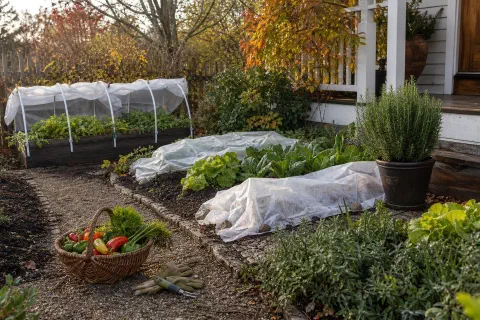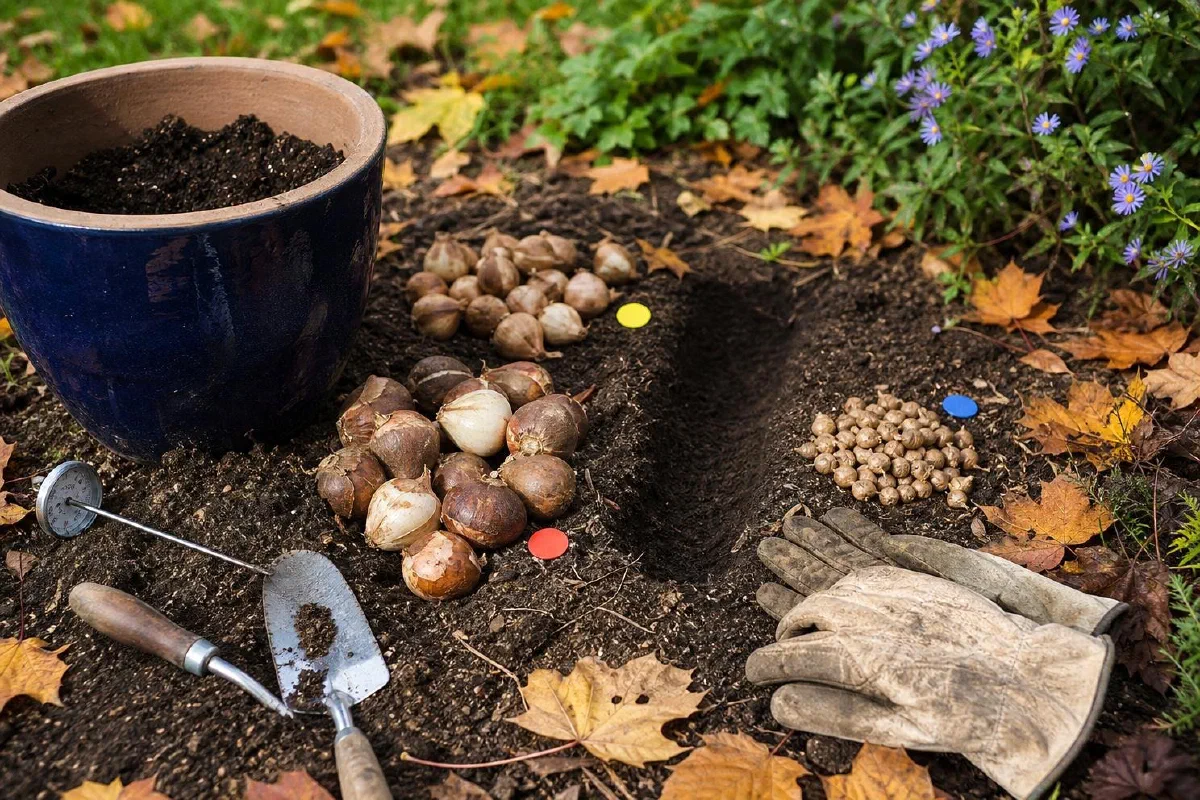
Plant hardy spring-flowering bulbs in fall while the soil is cool, draining, and still easy to dig. Try to give daffodils, crocuses, hyacinths, and other early-rooting bulbs several weeks before the ground freezes. Tulips can usually go in later. If the soil is not frozen, late planting is generally better than storing the bulbs until spring.
That answer shifts by region because a USDA zone is not a planting date. The better test combines the bulb type, your local freeze pattern, the actual soil temperature and texture, and whether the bulbs will spend winter in the ground or in a pot.
Use this timing table before choosing a weekend
| Bulb group | Useful fall window | Why the timing differs | Small-space note |
|---|---|---|---|
| Daffodils and narcissus | Earlier in the fall, with time to root before frozen soil | They establish roots in cool soil and are best planted rather than held for months | A small drift in a bed returns more reliably than a shallow exposed pot |
| Crocus, muscari, snowdrops, and small bulbs | Early to mid-fall | Small bulbs can dry in storage and are easy to tuck between perennials | Mark the spot so spring cleanup does not disturb them |
| Hyacinths and ornamental alliums | Mid-fall while soil is workable | They need cold and drainage, but package depth varies by size | Use a deep draining container if the bed stays wet |
| Tulips | Mid to late fall, often after the first light frosts but before frozen soil | Later planting suits their normal dormant cycle and reduces time sitting in warm wet soil | A container needs enough depth, drainage, and winter cold protection |
| Dahlias, cannas, gladiolus, and other tender summer bulbs | Not this guide | These are generally planted after spring frost or lifted and stored for winter | Do not leave them outside because the bag says “bulb” |
Penn State’s fall bulb guide places spring-flowering bulbs in the fall so they can root before the ground freezes. Iowa State adds an important late-season rescue: if soil is still unfrozen, planting late is usually better than waiting until spring.
1. Confirm That You Have Tulip Bulbs, Daffodil Bulbs, or Other Hardy Types
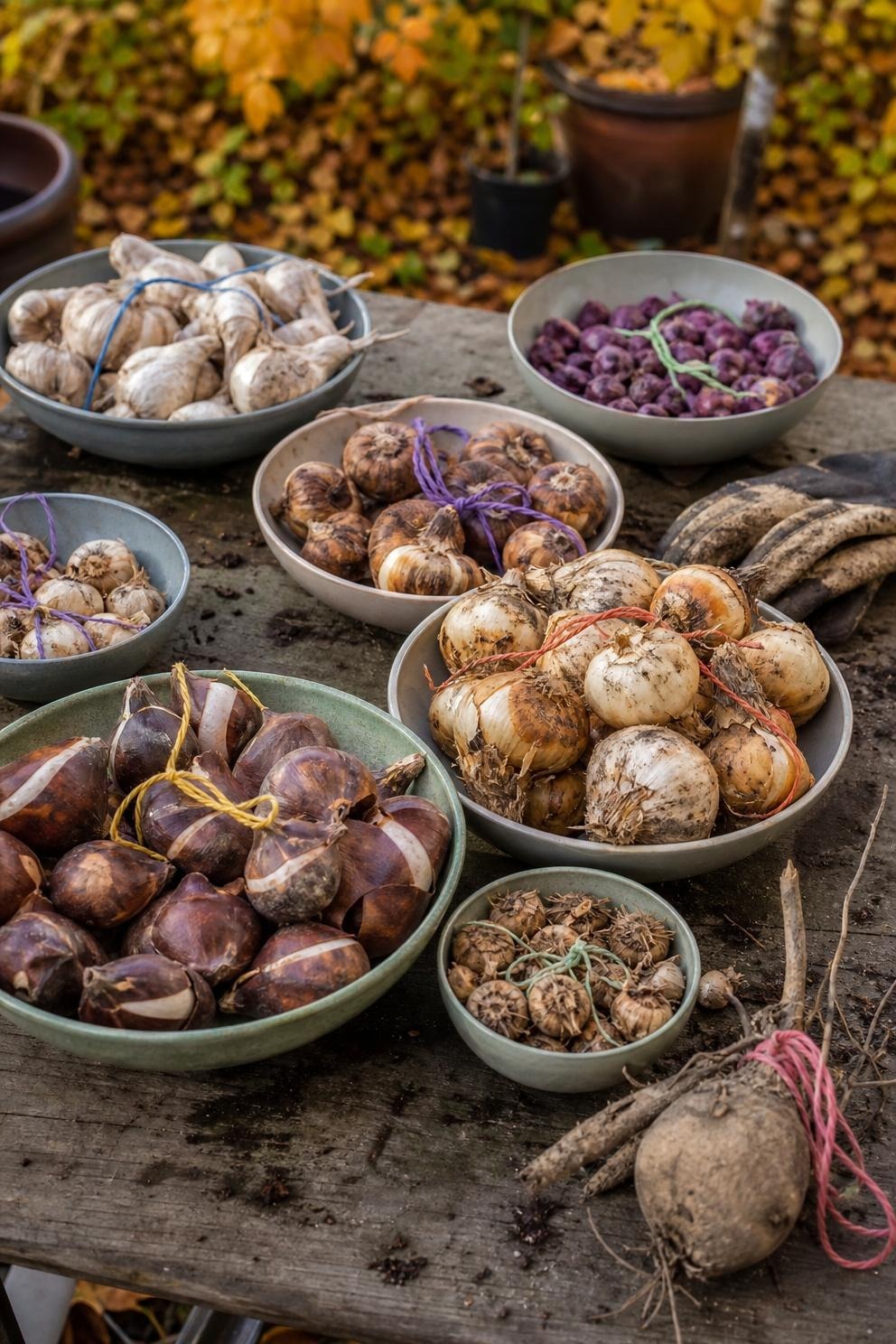
The word bulb gets used for true bulbs, corms, rhizomes, and tubers. The shared store display does not mean they all get planted in fall.
This guide covers hardy spring-flowering types such as:
- Tulips
- Daffodils and narcissus
- Hyacinths
- Crocuses
- Muscari or grape hyacinths
- Snowdrops
- Many ornamental alliums
Check the package for the botanical name, hardiness range, mature height, bloom time, and planting depth. A freesia corm, dahlia tuber, or canna rhizome may need a different season or winter-storage plan. Our freesia planting guide shows why a familiar “bulb” can follow a warmer-climate or spring container schedule instead.
2. Use local freeze timing, not the zone number
The USDA Plant Hardiness Zone Map describes average annual extreme minimum winter temperature. It helps you choose perennials that can survive winter, but it does not tell you when the ground usually freezes or when autumn soil reaches a good planting temperature.
Use three local checks together:
- Look up your area’s median first freeze through NOAA or a local Extension office.
- Watch the next two weeks of weather instead of one cold night.
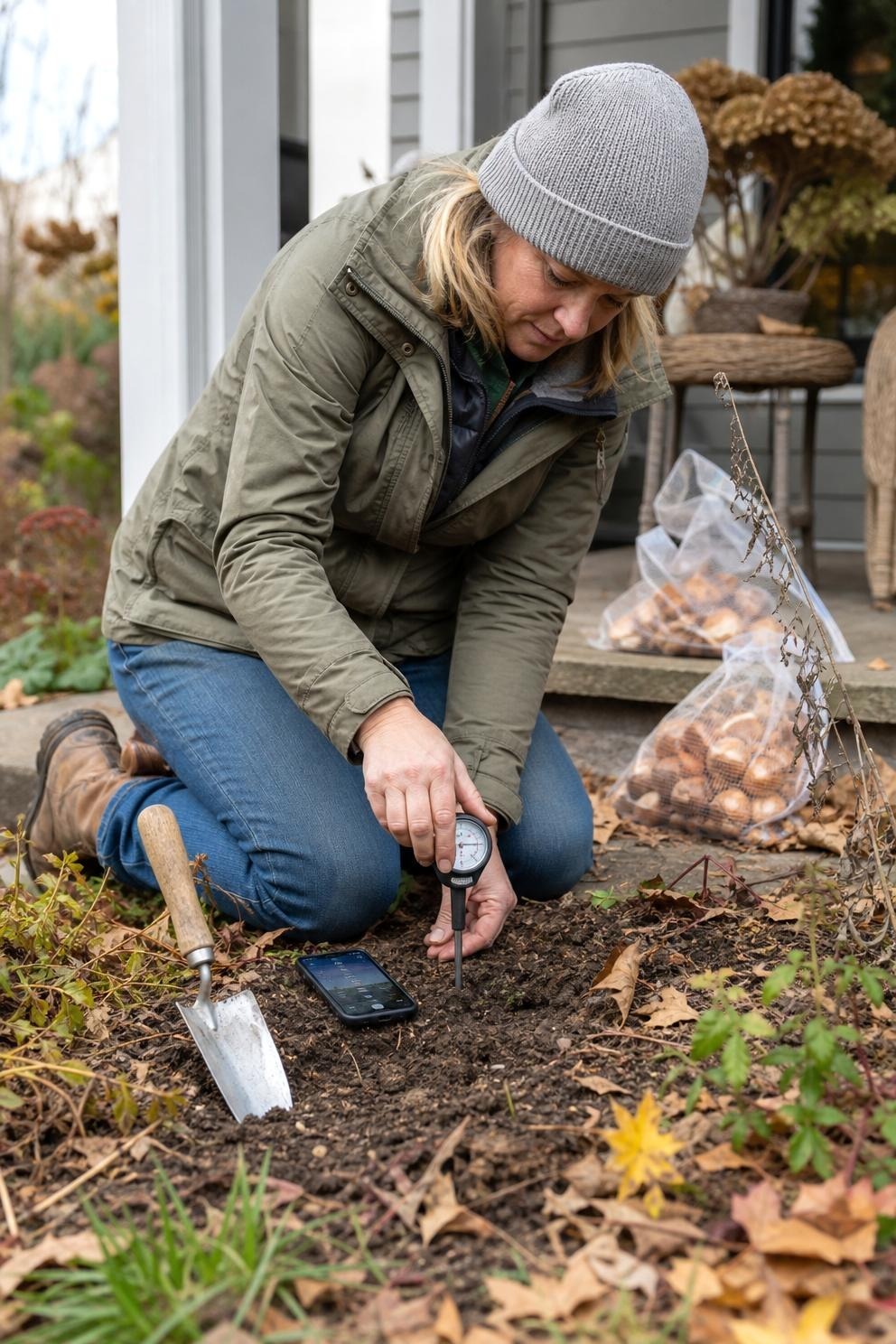
- Push a trowel into the intended bed and check the soil temperature a few inches down.
Roots can keep growing in cool soil after a light frost. A Purdue Extension article republished by Iowa State notes that bulb root formation needs soil above about 40°F. You do not need to chase one exact national temperature, but soil that is cooling through the 40s and still workable is more useful than warm summer soil or frozen ground.
3. Plant firm bulbs instead of storing them for months
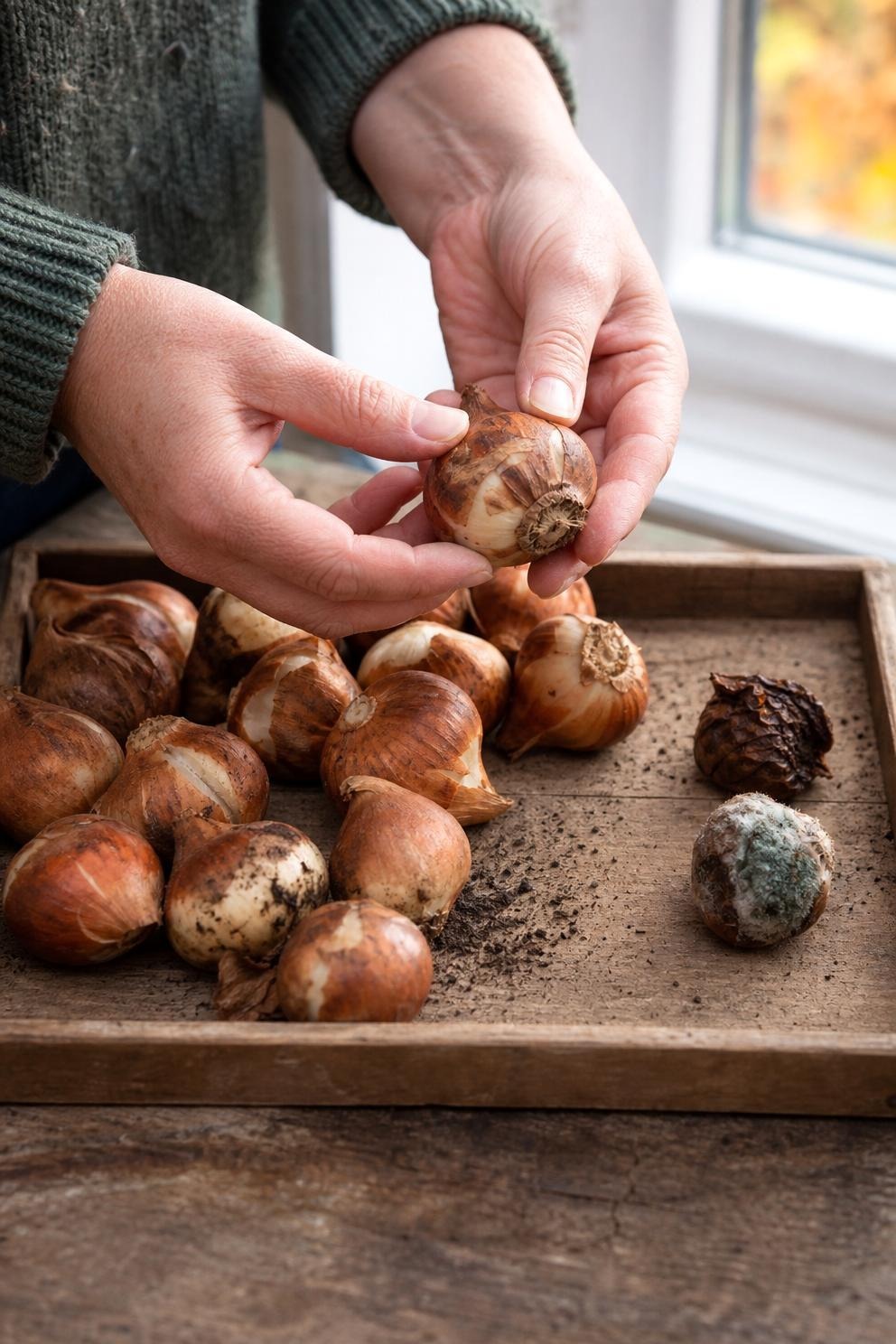
Open the bags before planting day. Keep bulbs that feel firm for their type and have no deep cuts, soft spots, or spreading mold. A loose papery skin on tulips or daffodils is normal; a collapsing base is not.
Store sound bulbs only for a short time in a cool, dry, ventilated place away from fruit and rodents. Do not seal damp bulbs in plastic. If you are choosing between a late planting in unfrozen soil and months of home storage, planting usually gives hardy spring bulbs the better chance.
Iowa State Extension advises planting late tulips as soon as possible while the ground remains unfrozen. Unplanted spring bulbs commonly dry out before spring.
4. Choose Soil Drainage Before Color Combinations
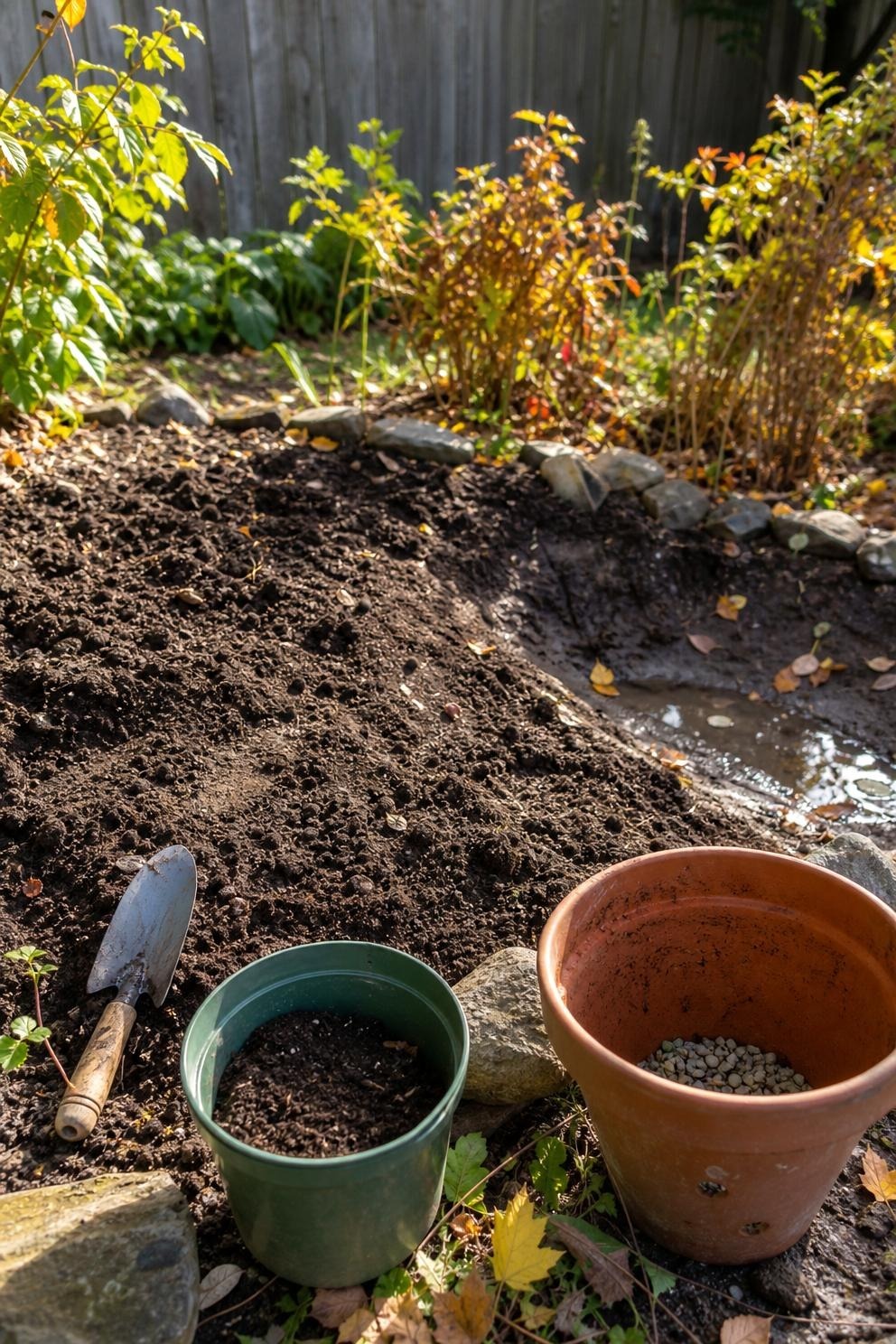
Most common spring bulbs perform best in soil that drains freely. A sunny bed is useful, though bulbs under a deciduous tree can receive plenty of light before the tree leafs out in spring.
Dig one test hole and fill it with water if drainage is uncertain. If water lingers in a slick clay pocket, choose a raised area or a container with drainage rather than burying the bulbs in a sump. Do not add a handful of gravel to one small hole in heavy soil and assume the problem is solved; improve the wider bed or move the planting.
The RHS tulip guide emphasizes well-drained soil and warns that wet conditions raise the risk of bulb rot. That matters in containers too. A decorative pot without a clear drainage hole is not a safe winter home.
5. Follow the package depth and face the base down
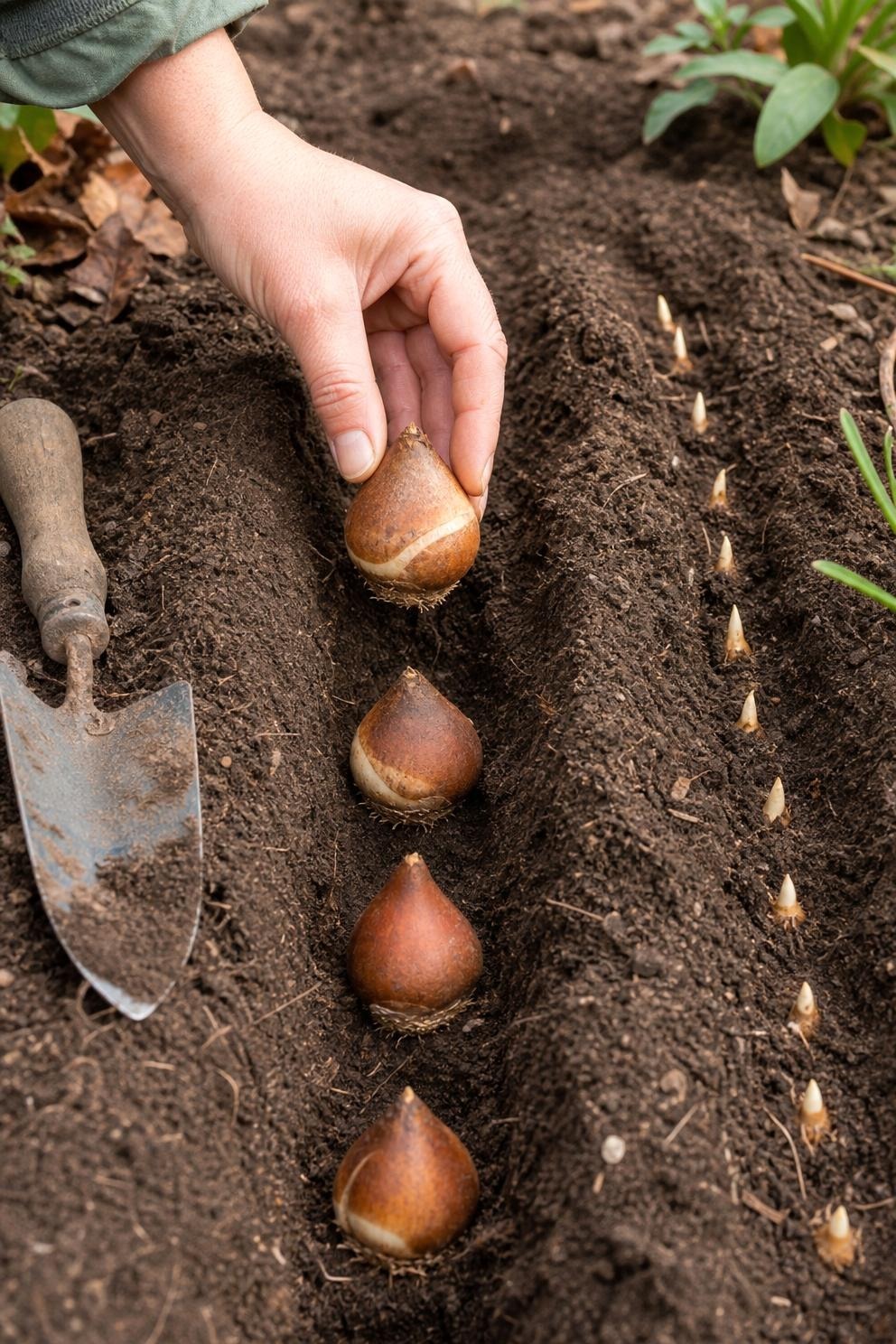
The general rule is to plant a bulb two to three times as deep as it is tall, measured from the base. Penn State gives a similar two-and-one-half to three-times-height rule for common spring bulbs. Small bulbs sit shallower than large tulips or daffodils.
Set the broad root plate down and the pointed end up. If a small bulb has no obvious top, place it on its side; new growth will turn upward. Space bulbs according to the package and the effect you want. A close group can look fuller in spring, but bulbs should not be pressed into one solid wet clump.
For a small bed, a shallow trench is often easier than seven separate holes. You can loosen the full planting area, set every bulb at once, check the spacing, and backfill without compacting each hole.
6. Treat Bulb Containers Like a Colder Garden
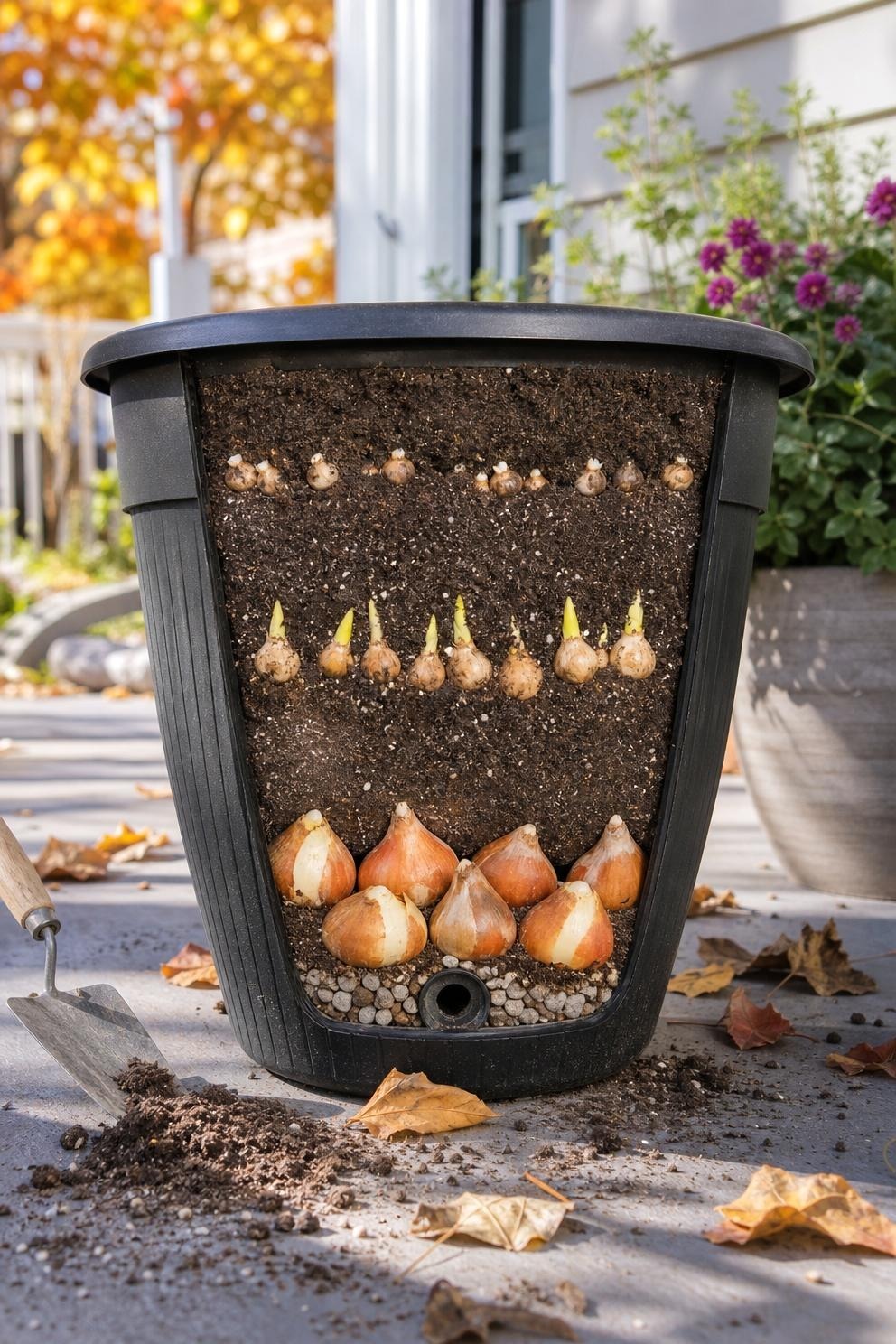
Containers are useful when a small bed stays wet or when the only sunny place is a step or balcony. They also cool faster than the ground, so a hardy bulb can face harsher root temperatures in a pot.
Choose a container with open drainage holes and enough depth below and above the bulbs. The RHS bulb-pot guide recommends a large pot at least 30 cm, about 12 inches, wide and deep for layered spring bulbs.
For a layered pot, place larger, later-flowering bulbs such as tulips at the bottom. Add soil, then set smaller, earlier bulbs such as miniature daffodils or crocuses above without placing one bulb directly on another. Finish with soil, water once to settle the mix, and keep the pot outdoors where it receives the cold period the bulbs need.
Protect the container from standing winter water and repeated hard freezes. In cold regions, group pots, insulate them, or place them in a protected cold space appropriate for the bulb type. A warm living room is not a substitute for winter chilling unless you are deliberately following an indoor forcing schedule.
7. Water once, label the spot, and mulch at the right time
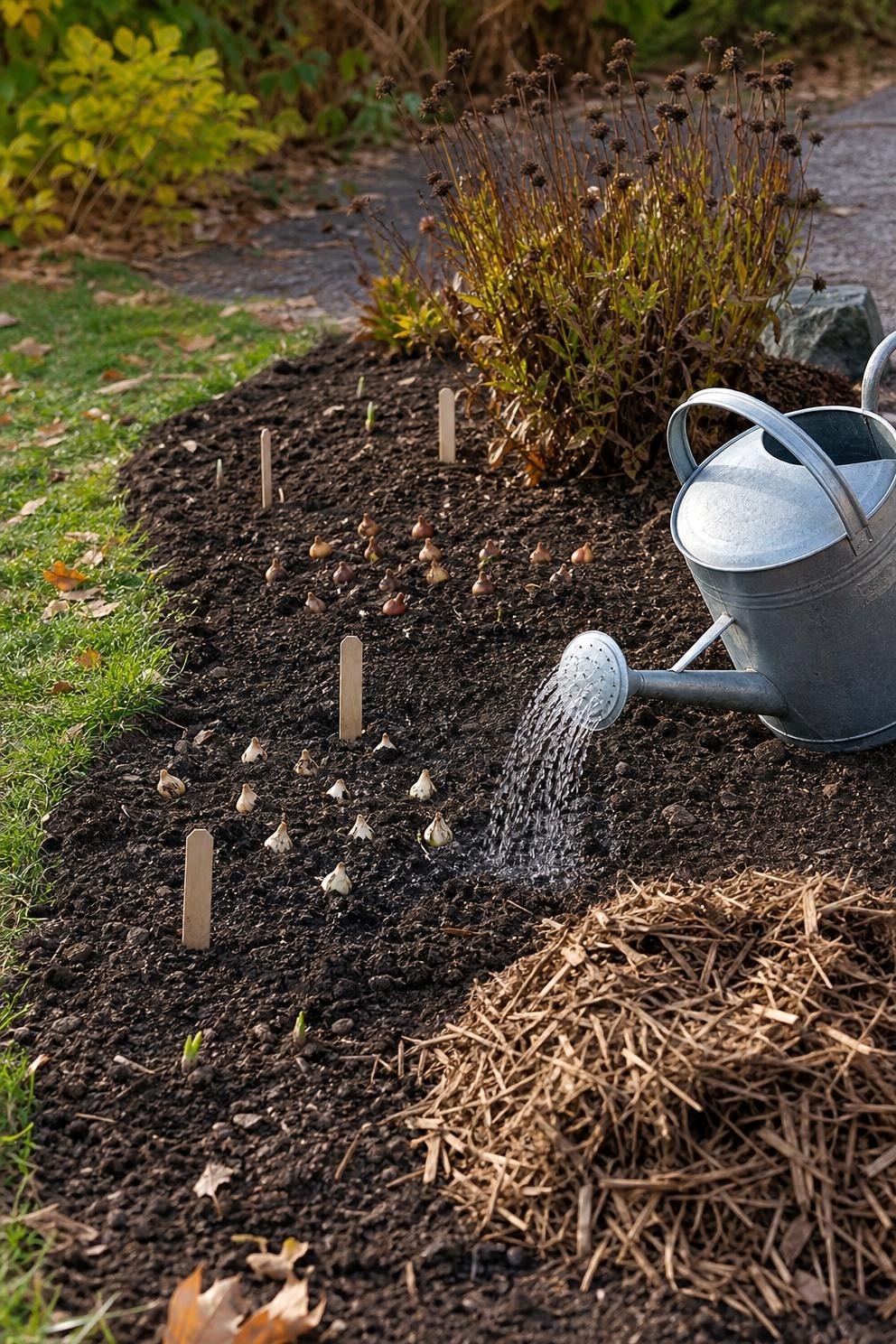
Water after planting so soil settles around the bulbs. After that, let normal autumn rain do the work unless the season stays unusually dry. Bulbs need moisture to root, but they should not sit in saturated soil.
Label each group with the bulb type and planting date. A simple sketch on your phone also works. The marker is not just for remembering colors. It keeps you from driving a shovel through the bed during spring cleanup.
Apply winter mulch after the soil has cooled or frozen, especially where freeze-thaw cycles heave shallow bulbs. Mulch is insulation, not a blanket meant to keep autumn soil warm forever. Remove or thin it as growth begins in spring if it is heavy enough to block shoots.
When flowers fade, cut the flower stalk if you do not want seed, but leave the green foliage until it yellows naturally. Those leaves rebuild the bulb’s reserves for the next year.
How to Plant Spring Bulbs in One Small Bed
Use this order when everything is ready:
- Lay the unopened bags where each variety will grow and check mature height and bloom time.
- Loosen the whole planting area and correct drainage before making individual holes.
- Dig one trench to the depth required by the largest bulbs.
- Set the bulbs base-down, check spacing, and take a quick photo.
- Backfill gently, water once, and add labels.
- Store the empty packages until spring so you still have the cultivar names and care notes.
The photo is especially helpful in a small bed where summer perennials may hide the exact planting line by the time you are ready to divide or add plants.
If the ground is already frozen
Do not force a shovel through frozen soil or pour hot water onto the bed. Move sound bulbs to a cool, dry, ventilated place while you watch for a thaw. If the ground softens enough to dig and drain, plant them then.
If the soil stays frozen, indoor forcing may be the remaining useful option for certain tulips, daffodils, hyacinths, and crocuses. It requires a planned cold period, not a pot placed directly on a warm windowsill. Iowa State’s forcing guide gives species-specific chilling and bloom timing.
Do not count on storing ordinary spring bulbs until outdoor planting time next spring. Their root growth and cold cycle happen in fall and winter, and a bag in a closet rarely supplies either one.
Related reading for next season’s flowers
- Flower Container Combinations That Bloom All Season helps you plan what will share the porch after a bulb pot finishes flowering.
- 12 Easy Cottage Garden Perennials gives longer-lived plants that can hide fading bulb foliage without crowding a small bed.
- Drought-Tolerant Flowers That Still Bring Color is useful when the bulb bed gets dry and sunny after the tree canopy fills in.
- Start a Wildflower Garden From Seed in 5 Steps covers a different planting method for the gaps beyond the bulb drift, with its own timing and site limits.