
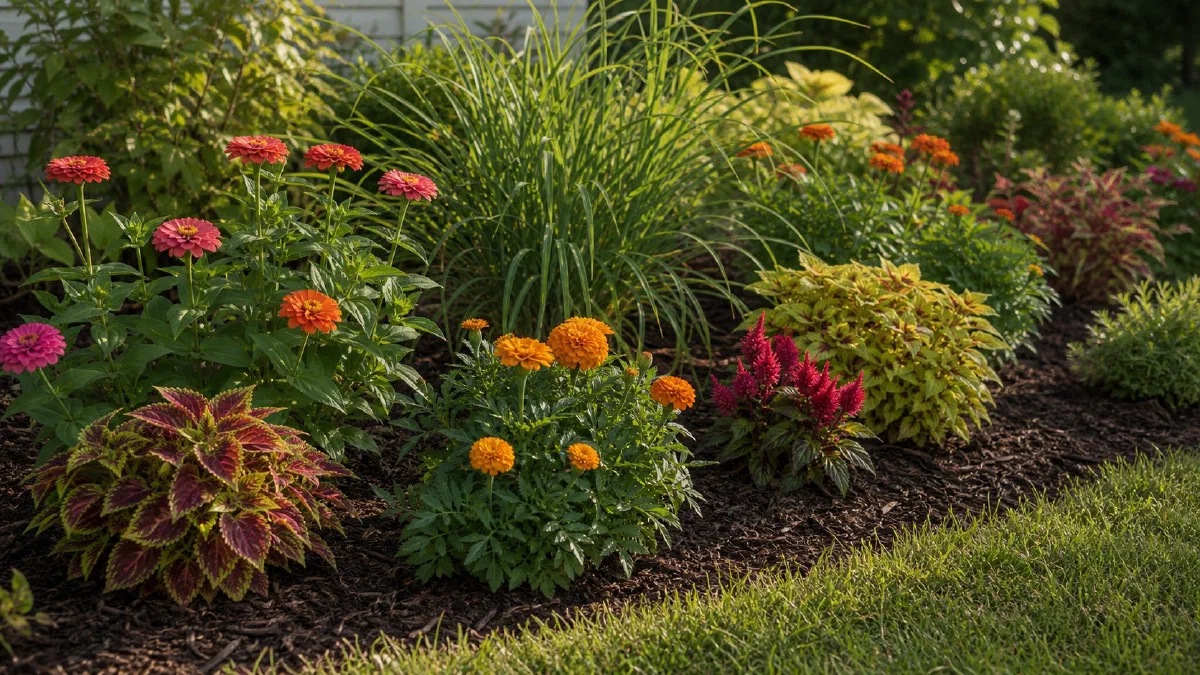
Late June is the moment when the garden starts telling the truth.
Some spring plants are tired. Containers are drying out faster. Empty spots are easier to see. And if you wait until September to think about fall color, the prettiest options may be gone or too late to settle in.
The good news is that late June still gives you time. You just need to plant for the months ahead, not for the photo you wanted in May.
Start with the gaps you can see now
Walk the garden in the morning or evening and mark the weak spots.
Look for bare soil, fading spring annuals, leggy containers, empty edges, and places where one plant is doing all the work. Those are the spots that need late June planting.
Do not fill every gap with the same thing. Match the fix to the problem:
| What looks tired now | Better late June fix |
|---|---|
| Bare sunny patch | Zinnias, marigolds, cosmos, celosia |
| Container losing color | Coleus, sweet potato vine, lantana, ornamental pepper |
| Border needs height | Salvia, ornamental grass, dahlia, tall zinnias |
| Shade bed looks flat | Heuchera, coleus, begonias, Japanese forest grass |
| Front edge feels empty | Alyssum, calibrachoa, dwarf marigold, trailing foliage |
If your summers are very hot, plant in the evening and water deeply for the first week. Late June planting succeeds or fails on establishment.
Choose annuals that bloom fast
For reliable fall color from a late June start, annuals are the workhorses.
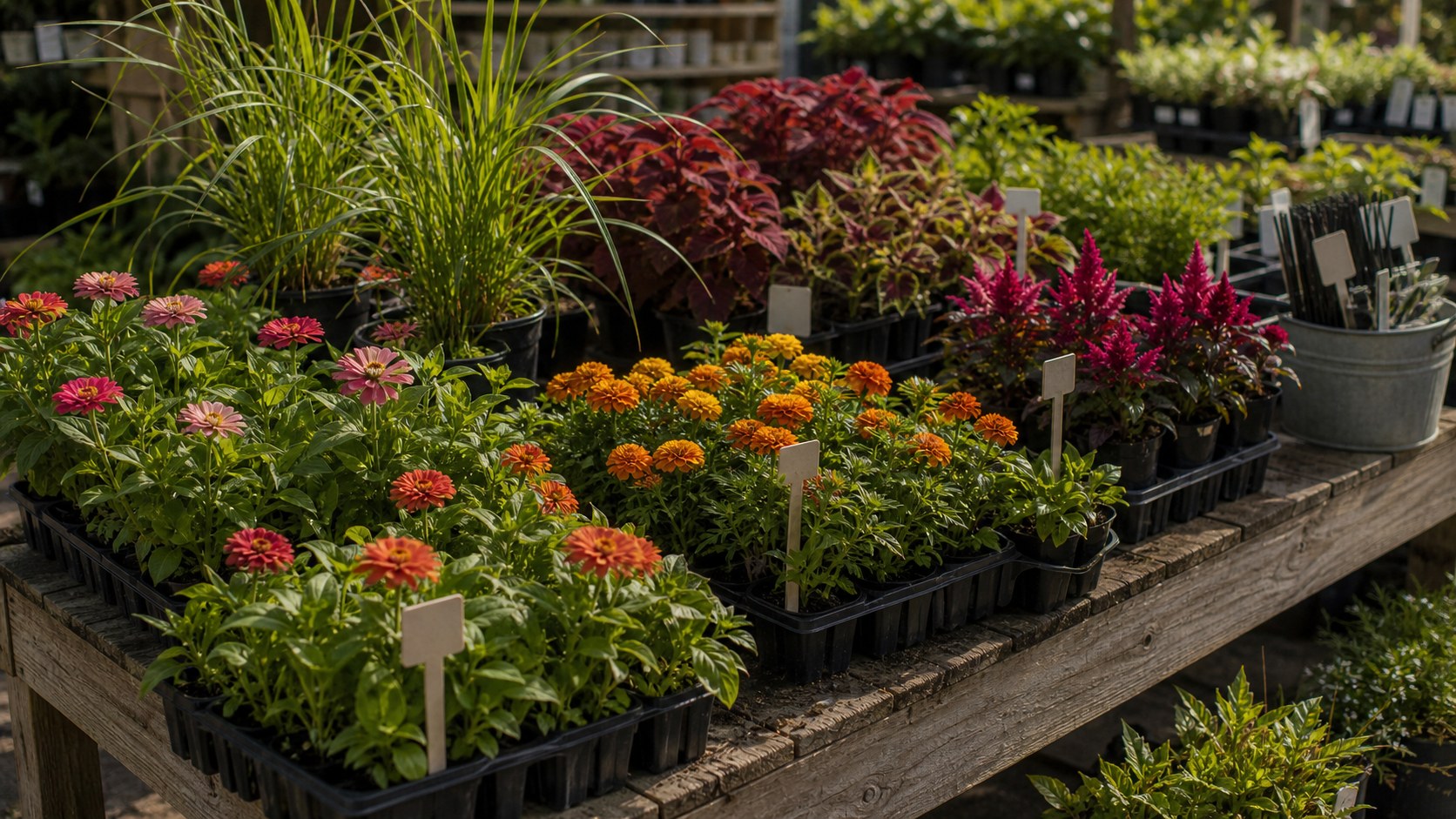
Look for healthy transplants if you want the fastest result. Direct sowing can still work for some flowers in warm climates, but transplants give you a head start.
Strong late June choices include:
- Zinnias for bright, fast summer-to-fall color
- Marigolds for heat and a tidy edge
- Celosia for bold texture and saturated color
- Cosmos for airy height if your season is long enough
- Lantana for hot, sunny containers
- Salvia for pollinators and upright color
- Sunflowers for a quick late-season statement where space allows
Check your local frost date before buying too many slow starters. The shorter your fall, the more you should lean on transplants and foliage.
Use foliage so color does not depend on blooms
Flowers are wonderful, but foliage is what keeps late-season planting from looking bare between bloom cycles.
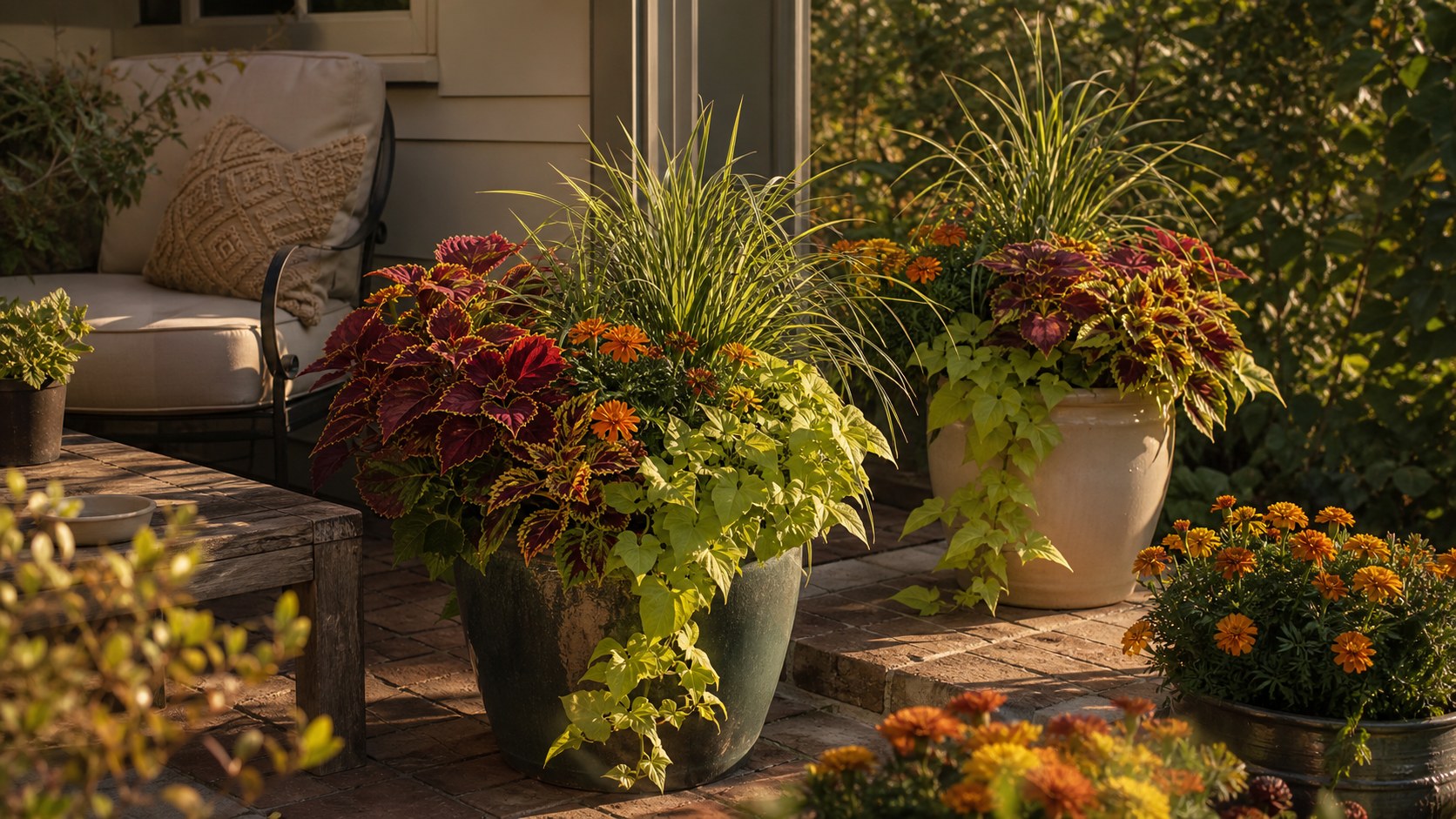
Coleus, heuchera, ornamental grasses, sweet potato vine, caladiums, and dark-leaf dahlias can carry color even before flowers peak. This is especially helpful in containers, where one tired plant can make the whole pot look finished for the wrong reason.
Try one of these combinations:
| Light | Late June container mix |
|---|---|
| Full sun | Lantana, purple fountain grass, sweet potato vine |
| Part sun | Coleus, begonia, trailing ivy or lysimachia |
| Shade | Caladium, heuchera, fern |
| Hot entry | Ornamental pepper, marigold, carex |
Foliage also buys time. If flowers slow down in heat, the container still looks intentional.
Add perennials only where they can settle in
You can plant perennials in late June, but be honest about your weather and watering habits.
If your summers are mild or you can water consistently, late June can work for perennials with strong roots. If your garden is heading into extreme heat, wait for early fall or choose tough container-grown plants and baby them through the first month.
Good candidates for late-season color include:
- Coneflower
- Black-eyed Susan
- Sedum
- Aster
- Russian sage
- Coreopsis
- Switchgrass or little bluestem
Check your zone before you buy. The USDA Plant Hardiness Zone Map maps the average annual minimum winter temperature where you garden, and that is the number that decides whether a perennial comes back next spring. It says nothing about how the plant handles a late-June start, and that is the risk you are taking.
Mulch after planting, but keep mulch off the crown. Water deeply instead of sprinkling the surface every day.
Care for the First Two Weeks
Late June planting lives or dies on establishment, and the first two weeks settle it.
- Water deeply, then let the surface dry. A long soak sends roots down. A daily sprinkle keeps them at the surface, where July heat finds them first.
- Water in the morning. Foliage that stays wet overnight is where leaf spot and mildew get their start.
- Mulch, but keep it off the stem. Clemson HGIC’s mulch guide asks for 2 to 3 inches of depth and a 2 to 3 inch gap between the mulch and the stems of woody plants, because wet mulch held against a stem causes decay.
- Hold the fertilizer until you see new growth. Roots that are still settling in burn easily, and a plant that has not started growing does not need pushing.
- Shade the transplants for two or three days if the forecast is brutal. A lawn chair or an upturned box does the job.
Refresh containers instead of starting over
You do not have to rebuild every pot.
Pull the plants that are finished, trim back anything leggy, top off with fresh potting mix, and plug in one or two strong replacements. This is usually cheaper and faster than dumping the whole container.
Late June container refresh ideas:
- Replace spent pansies with coleus or begonias
- Add marigolds around a tired grass
- Tuck trailing sweet potato vine over the edge
- Use celosia where the pot needs height
- Add one dark foliage plant to make existing flowers look richer
Plant for the color you want in September
Late June planting works best when you stop chasing instant fullness.
Think in layers: one plant for height, one for steady color, one for foliage, and one for the edge. Give everything room to grow into the next eight to ten weeks.
For fall color, the most useful late June palette is usually warm and grounded: gold, rust, deep pink, burgundy, plum, orange, and chartreuse. Add white only if the garden needs brightness in shade.
When the season finally turns, resist the urge to cut all of it down at once. Which stems to leave standing for the birds matters more in November than how tidy the bed looks.
The garden does not have to peak all at once. It just needs a second act.
What to Read Next
- Fall Flower Beds With Color After Summer is the September version of this same bed, once the late plantings have filled in.
- Fall Flowers for Pots covers the container side in more depth than the refresh section here.
- Full Sun Perennials That Bloom Without Asking Much helps you pick the perennials that come back on their own next year.
- Bird-Friendly Fall Garden: What to Cut and Leave is the November decision about which stems stay standing.