
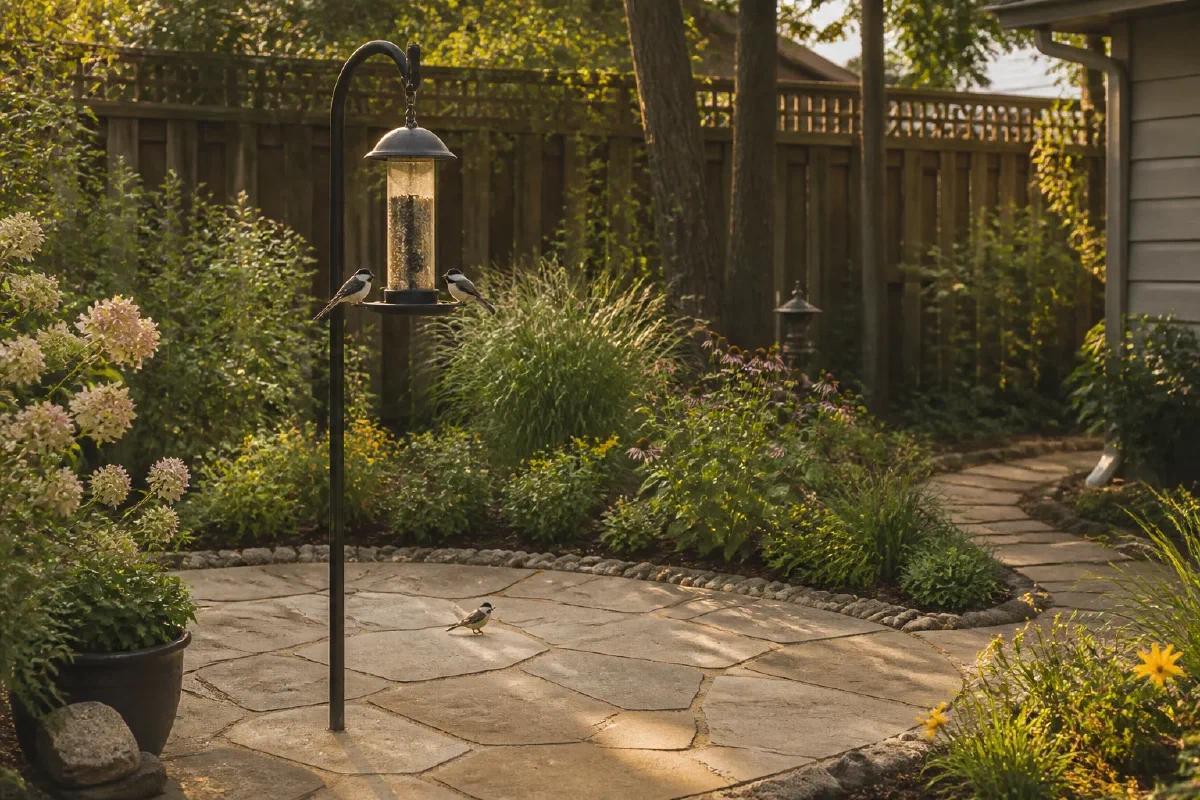
The ground under your feeder turns into a patchy mess of sprouted hulls, mud, and weeds that spread faster than you can pull them. You want birds without the cleanup project. The answer is choosing ground cover that handles dropped seed, stays low, and doesn’t invite more work. Plan for spilled seed and cleanup access before choosing a plant.
Three approaches work: hardscape that sheds debris, mulch thick enough to smother sprouts, or tough plants that tolerate disturbance. Each one suits a different space and maintenance style. The right choice depends on how much sun hits the area, whether you rent or own, and how often you’re willing to refresh the surface.
Bird feeder landscaping ideas: leave the landing zone open
The planting plan belongs around the station, not directly under every feeder. Keep a firm, sweepable or rakeable landing area beneath the highest-spill point, then soften the edges with low, regionally appropriate plants. Leave the refill and cleaning path open so you can reach the feeders without stepping through the bed.
That layout also gives the placement page and the squirrel-resistant page a clear handoff: bird feeder placement covers windows, cover, and service access, while squirrel-resistant feeder setup covers the pole, baffle, and launch-point problem. Choose plants only after checking local spread, light, drainage, and foot traffic.
How to Build a Low-Mess Bird Feeding Station Landing
- Mark the highest-spill point below the feeder and keep that patch open.
- Choose pavers, shallow mulch, gravel, or a low regional ground cover based on drainage and cleanup access.
- Leave a firm refill path so you can carry seed and remove the feeder without stepping into the planting.
- Rake or sweep the landing area whenever hulls and uneaten seed begin to collect.
This sequence keeps the plant decision tied to the actual feeding station instead of treating the ground as a separate decorative bed.
Why Bird Feeding Areas Turn Into Weed Patches
Birds crack open shells and drop the hulls. Sunflower, millet, and other seeds hit the ground whole and can sprout under the right conditions, creating dense stands that choke out grass. Rain turns bare soil into mud, and foot traffic from both you and ground-feeding birds keeps it churned up.
The mess compounds because discarded seeds can germinate readily. Add moisture, and you’ve created conditions for fast-growing plants that spread before you notice them. Regular cleaning helps, and Project FeederWatch recommends cleaning feeders themselves to reduce disease risk among visiting birds.
Hardscape, Mulch, or Plants: Choosing Your Approach
Each solution trades off cost, effort, and how permanent you want the setup to be. Hardscape costs more up front but needs almost no maintenance. Mulch is quick but requires topping off. Plants take longer to establish but handle themselves once they’re in.
| Approach | Best For | Maintenance | Renter Friendly |
|---|---|---|---|
| Pavers or stone | High-traffic areas, permanent setups | Sweep debris weekly | No |
| Wood chip mulch | Shady spots, quick fixes | Add mulch yearly as needed | Yes |
| Ground cover plants | Sunny beds, naturalized look | Weed first season, then minimal | Depends on lease terms |
| Gravel or pea stone | Dry climates, modern yards | Rake and hose monthly | Somewhat |
Pavers and Stone for Zero Sprouting
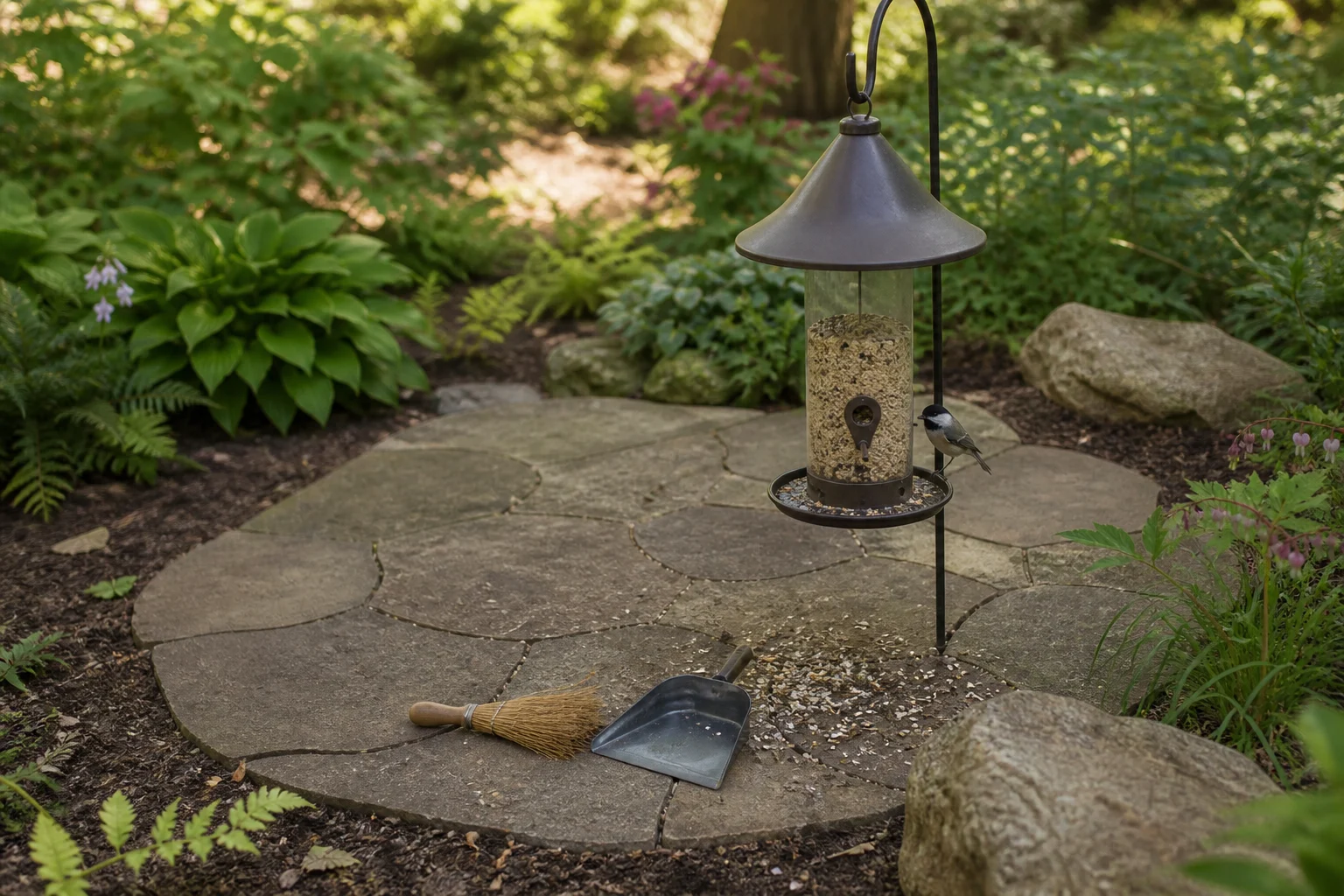
A paved area under the feeder gives you a surface you can sweep clean in seconds. Hulls and seed sit on top instead of working into soil. Rain washes debris to the edges, where you rake it up or let it decompose in the surrounding bed.
Set pavers on sand so they stay level and drain well. Leave narrow gaps between stones rather than mortaring them tight. Those gaps let water through and give you flexibility if you need to lift a paver later.
This approach works best if you own the property and plan to keep the feeder in one spot for years. Installation takes more effort than mulch, but routine sweeping is simpler afterward. Settled or uneven stones may still need adjustment.
Mulch Depth for Weed Suppression
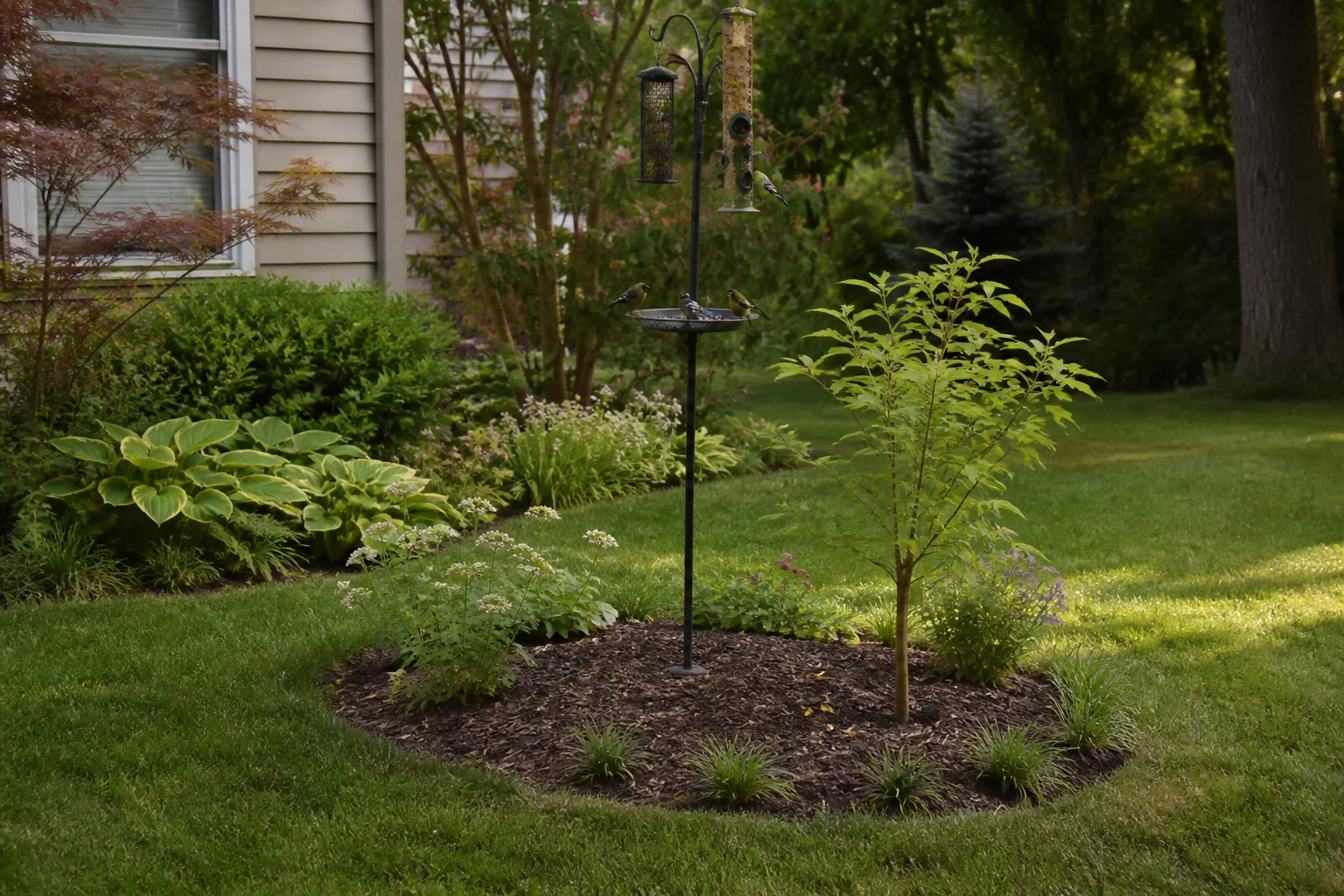
University of Minnesota Extension recommends two to four inches of mulch for weed suppression and soil health. Shredded hardwood bark or wood chips at that depth will smother most sprouting seed. The mulch blocks light, and hulls that do germinate send roots into loose material that dries out before they establish.
Refresh the layer as needed when it compresses or washes thin. Mulch breaks down over time, which improves soil but reduces weed suppression. Monitor depth and add more when necessary.
Use a mulch product suited to garden beds and follow the supplier’s guidance. Keep it away from plant crowns and tree trunks, and make the ring wide enough to catch the spill pattern you actually see rather than relying on one fixed diameter.
Ground Covers That Tolerate Bird Traffic
Low, dense plants that spread by runners will fill in around a feeder and crowd out many weeds. They won’t stop every hull from sprouting, but they compete enough that you’ll pull fewer stragglers. The key is choosing species that stay low and tolerate disturbance.
Choose a ground cover only after checking light, drainage, foot traffic, and whether the plant spreads aggressively in your region. A locally appropriate sedge or low native ground cover is often easier to manage than a generic recommendation. Audubon’s native plant finder can point you toward regional resources.
New ground covers take time to fill in. Leave stepping access for refilling and use mulch between young plants while you watch how much seed lands outside the central cleanup zone.
Native Grasses for Naturalized Feeding Stations
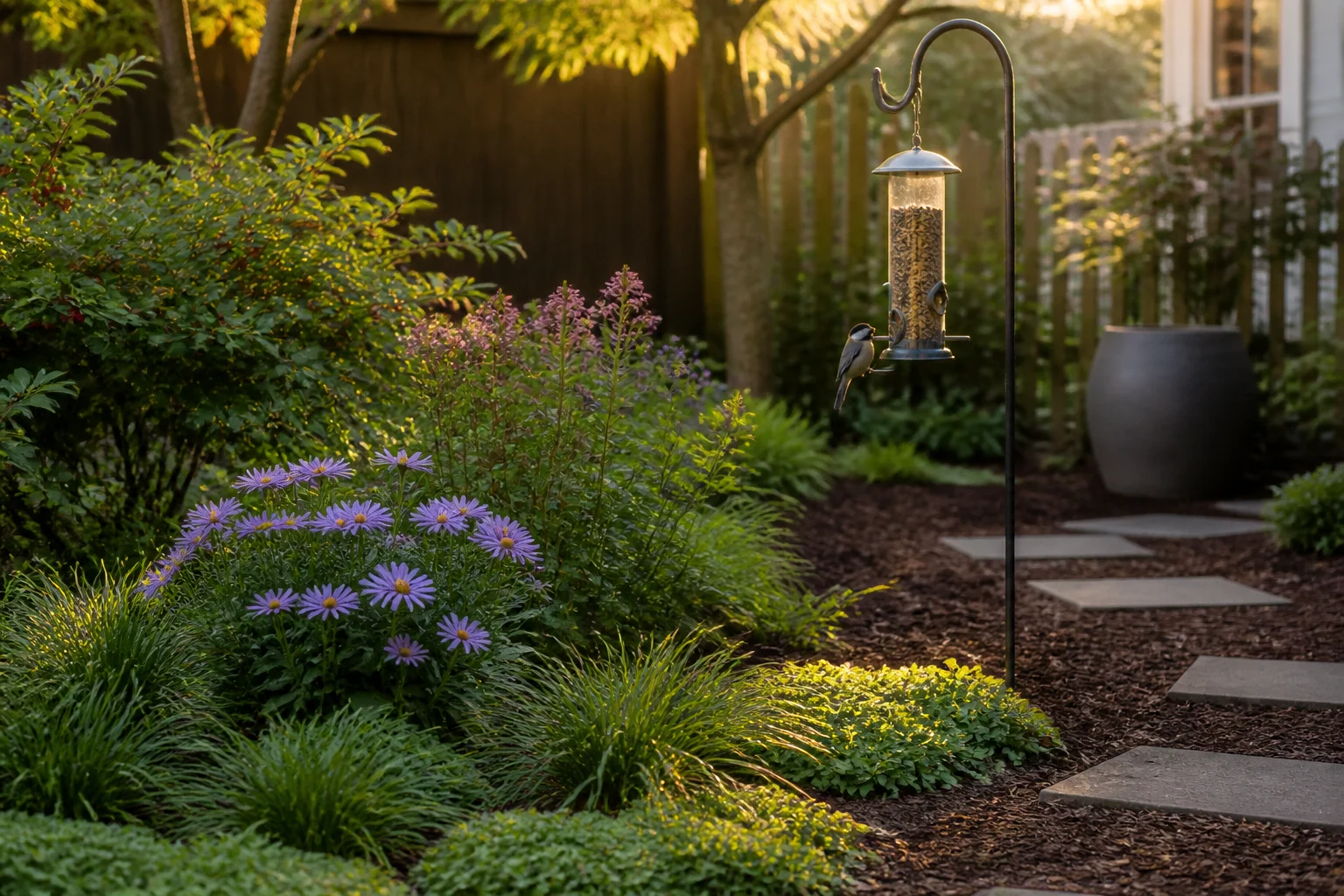
Prairie dropseed is a clump-forming bunchgrass, not a spreader, and little bluestem grows the same way, so you can space them around a feeder and mulch the gaps. They tolerate dropped seed, don’t get weedy themselves, and offer cover for ground-feeding birds. The dried stems stand through winter and catch snow. Keep the clumps back from the pole itself if you run a baffled squirrel-resistant station, since anything tall enough to climb becomes a ladder.
Plant them in spring and water regularly until established. After that, many native grasses are drought-tolerant and need no fertilizer. They’ll reach varying heights by late summer depending on species, so site the feeder where the grasses won’t block your view of visiting birds. Height is only part of it, because where the feeder sits relative to cover and windows decides how many birds you see at all.
Check which grasses are native to your region and suited to your hardiness zone. They perform best in full sun. If your feeder area stays damp, choose sedges instead.
Combining Materials for High-Use Areas
A center pad of pavers surrounded by mulch or low plants gives you benefits of both approaches. You get a clean surface directly under the feeder where most debris falls, and a softer edge that handles overflow and looks less industrial.
Lay pavers in the middle, then ring them with mulch extending outward. Or plant ground cover in that outer zone if you have the patience. The stone takes the beating, the mulch or plants catch what bounces, and you’ve created a defined feeding area.
This setup also gives you a dry path to the feeder after rain. You can refill seed without stepping in mud, and birds that prefer feeding on a hard surface will use the pavers while ground feeders work the edges.
Managing Drainage Before You Plant or Pave
If water pools under the feeder, diagnose the source before planting or paving. A clogged edge, compacted footpath, roof runoff, or a low spot may each need a different fix.
Small surface problems may improve when the walking route and mulch edge are adjusted. For persistent ponding or runoff near a foundation, ask a qualified local professional or extension office before digging channels or changing the grade.
Test drainage by soaking the area with a hose and watching where water sits an hour later. If it’s still puddled, you need more slope or better soil.
What to Do With an Existing Mess
Pull or hoe out everything green, rake up the hulls and loose seed, then cover the bare ground immediately. Waiting even a few days lets the next round of weeds germinate. If the soil is compacted, rough it up with a garden fork before you mulch or plant.
For heavy weed infestations, lay down cardboard, wet it thoroughly, and cover it with mulch. The cardboard smothers existing roots and breaks down over time. You can plant ground cover right through it by cutting X-shaped slits.
Don’t try to improve the soil under a feeder. You want it lean and fast-draining, not rich and fluffy. Fertile soil grows weeds faster than it grows the plants you want.
Frequently Asked Questions
How thick does mulch need to be to stop seed from sprouting?
University of Minnesota Extension recommends two to four inches of mulch for effective weed suppression. This depth blocks light and creates conditions that discourage sprouting. Check depth periodically and add more if it compresses significantly.
Do pavers work better than plants under a feeder?
Pavers need less maintenance and give you a surface you can sweep clean in seconds. Plants look softer and support ground-feeding birds, but they take time to establish and won’t stop every weed. Choose pavers if you want the lowest ongoing effort.
Which ground covers can work under active feeders?
Start with a low plant recommended for your region, light, soil, and expected foot traffic. Check whether it spreads aggressively locally, and keep an open landing directly under the feeder so the plant is not asked to absorb every hull and every step.
Can I use gravel instead of mulch?
Pea gravel or small river rock works, especially in dry climates. It drains instantly and doesn’t need topping off. Rake it smooth monthly and hose off accumulated hulls. University of Minnesota Extension notes that stone and gravel don’t improve soil like organic mulches do, and they can be harder to remove later if you change your mind.
How do I stop mud from forming under the feeder?
Find out whether the water comes from runoff, compacted traffic, or a low spot before changing the grade. Adjusting the access path or surface may solve a small problem; persistent ponding near a building needs local drainage advice.
Should I pull weeds before mulching?
Remove existing weeds before mulching so they are not simply hidden. Pull or hoe them as appropriate for the site, smooth the surface, and follow local extension guidance before adding any sheet-mulch layer around established plants.
Keeping the Area Clean Long Term
Sweep or rake whenever hulls and uneaten seed begin to collect, checking more often during heavy use. A stiff push broom works on pavers, while a leaf rake can skim a mulch or gravel surface. Project FeederWatch also recommends regular feeder cleaning to protect bird health.
Top off mulch as needed when the existing layer has compressed or washed thin. For ground cover plants, pull any weeds that appear in early summer before they set seed. Once the plants fill in, weeding drops significantly.
If you’re using pavers with planted edges, edge the bed once a year to keep grass from creeping in. A sharp spade and ten minutes in spring will hold the line. The goal is a feeding area that looks intentional and takes less time than mowing the same patch of lawn.
What to Read Next
- Bird Bath Placement Mistakes That Keep Songbirds From Landing: solve the nearby water placement problem after the feeder ground is under control.
- Cottage Garden Front Yard Layout: borrow a layered edge idea when the station sits inside a larger front bed.
- Container Garden Ideas for Small Patios: adapt the same drainage and footprint thinking to a small container grouping.