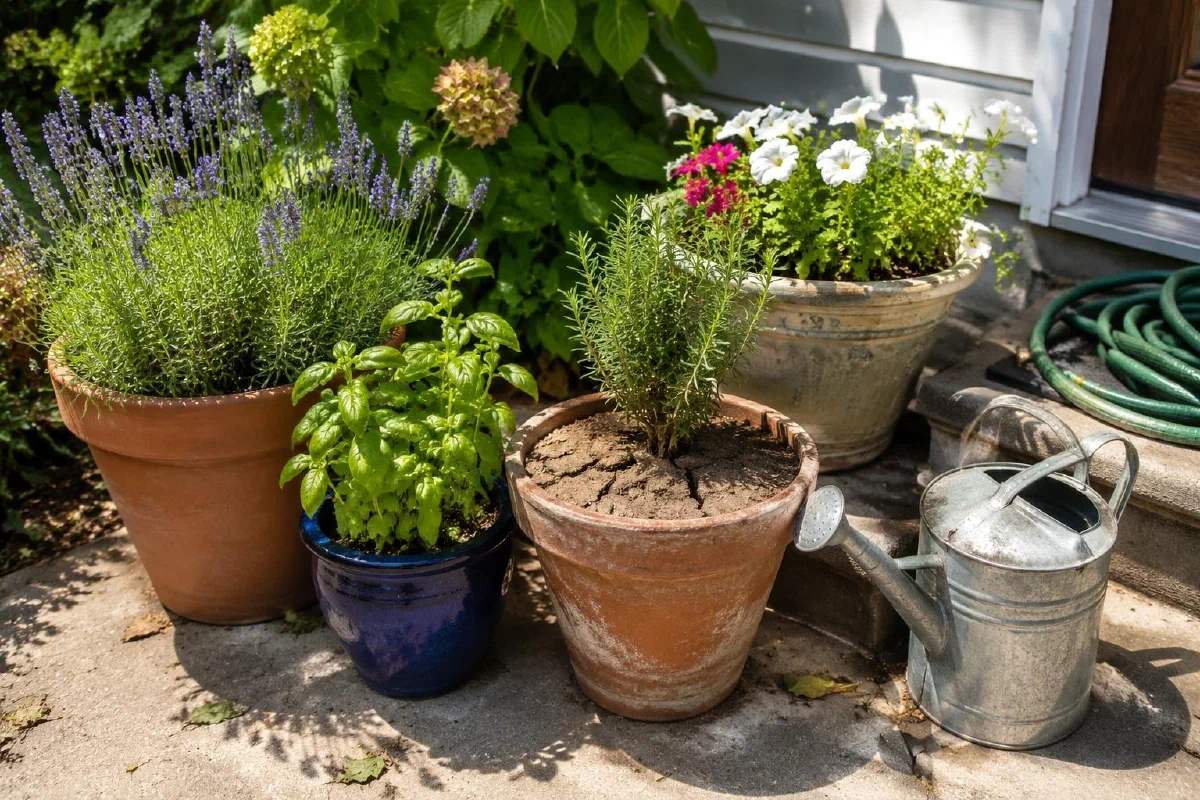
Container soil can go from damp to dusty in a way that feels personal.
You water in the morning. By late afternoon, the pot looks tired again. The leaves droop, the top of the soil pulls away from the edge, and suddenly your porch garden feels like a second job.
Most of the time, the plant is not the problem. The setup is asking too much from too little soil.
When container soil dries out too fast, first check pot size, soil quality, mulch, and afternoon sun. A larger pot with fresh mix, mulch on top, and morning watering usually helps more than buying replacement plants.
| What you see | Most likely cause | Fix it in this order |
|---|---|---|
| Dry again by mid-afternoon | The pot is too small for the plant and the sun it gets | Go up one pot size with fresh mix |
| Water runs straight through | Roots have filled the pot, or the mix has gone hard | Repot, or rewet the mix with a soak |
| Surface bone dry, damp an inch down | Sun and wind on bare soil | Mulch the top of the pot |
| Fine in the morning, limp at 4 p.m. | Reflected heat from paving, brick, or a dark wall | Move it into afternoon shade |
| Third summer in the same pot, thirsty every year | Spent, compacted mix | Replace the top few inches or start over |
Start With Pot Size
Small pots dry out fast because there is not much soil holding moisture.
That tiny cute container may look good on the plant table, but on a sunny porch in June it can become a daily watering commitment. If a plant is drooping every afternoon even after a good soak, check whether the pot is big enough for the roots and the weather.
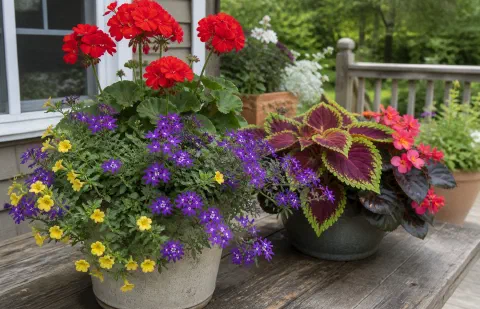
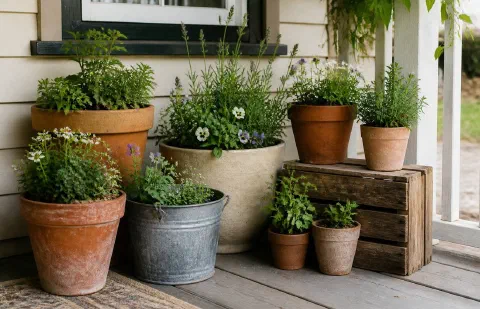
For summer porch pots, bigger is easier. A 14 to 18 inch pot usually gives annuals and herbs a better chance than a cluster of tiny containers. A window box is the hardest case of all, since the depth is fixed, which is why perennials for a shallow window box come down to root depth before anything else. One larger pot can also look more collected than five little ones, especially if you are working with a small patio.
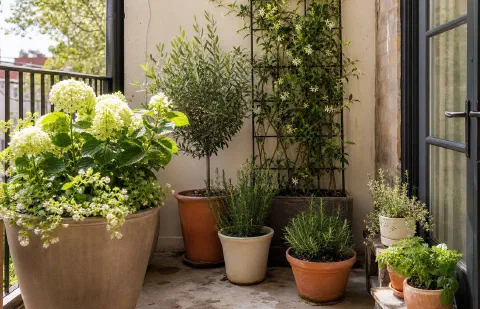
If you are trying to make a compact space feel full, the layout advice in container garden ideas for small patios still applies: fewer, stronger pots usually work better.
Check for Root Crowding
Sometimes soil dries fast because there is barely any soil left.
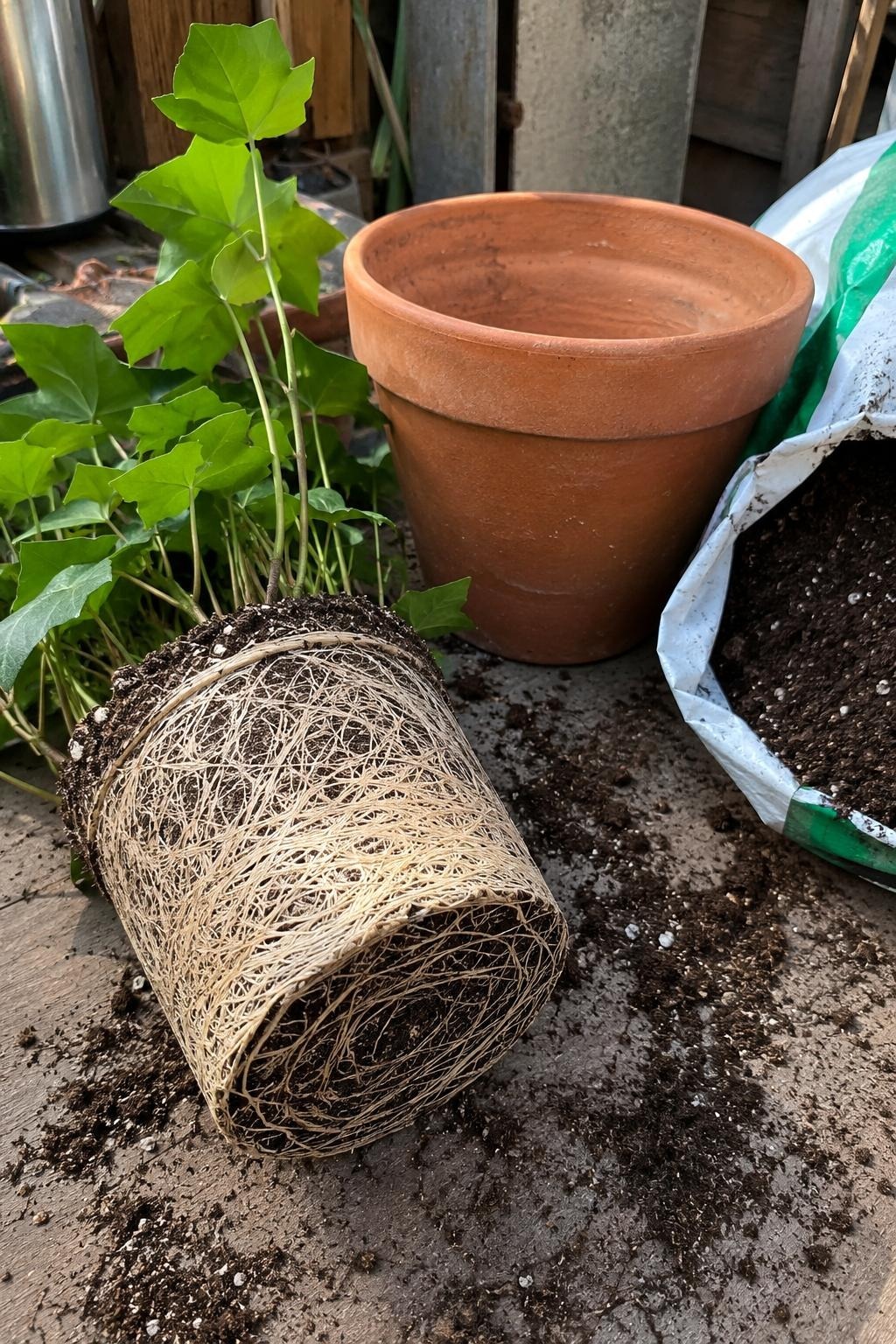
Slide the plant out of the pot if you can. If roots are circling tightly around the outside, packed at the bottom, or filling most of the container, water has nowhere to settle. It runs through quickly, and the plant is thirsty again almost immediately. Clemson HGIC’s container guidance makes the same point from the other direction: the pot should give the roots room, leave enough headroom to water properly, and drain freely.
Move the plant into a larger pot or trim and loosen the roots if the plant can handle it. Add fresh potting mix around the root ball. Do not use dense garden soil in containers. It compacts, drains badly, and can make the problem worse in a different way.
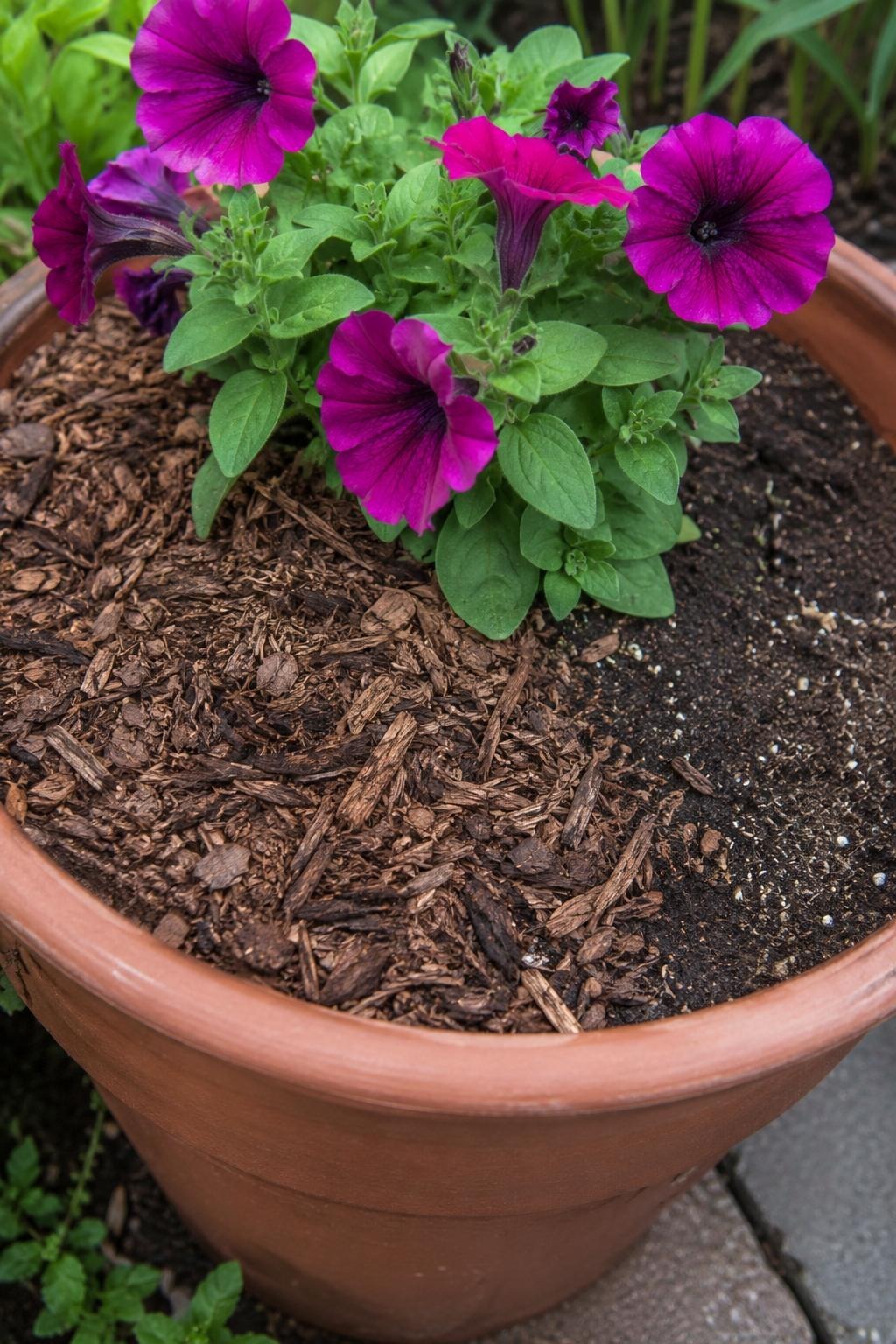
Mulch the Top of the Pot
Bare potting mix dries faster in sun and wind.
A thin mulch layer helps more than people expect. Use something light and tidy:
- fine bark
- pine fines
- shredded leaves
- straw cut into smaller pieces
- composted leaf mold
- small gravel for drought-loving herbs
Keep mulch slightly away from the plant stem. You are shading the soil, not burying the crown.
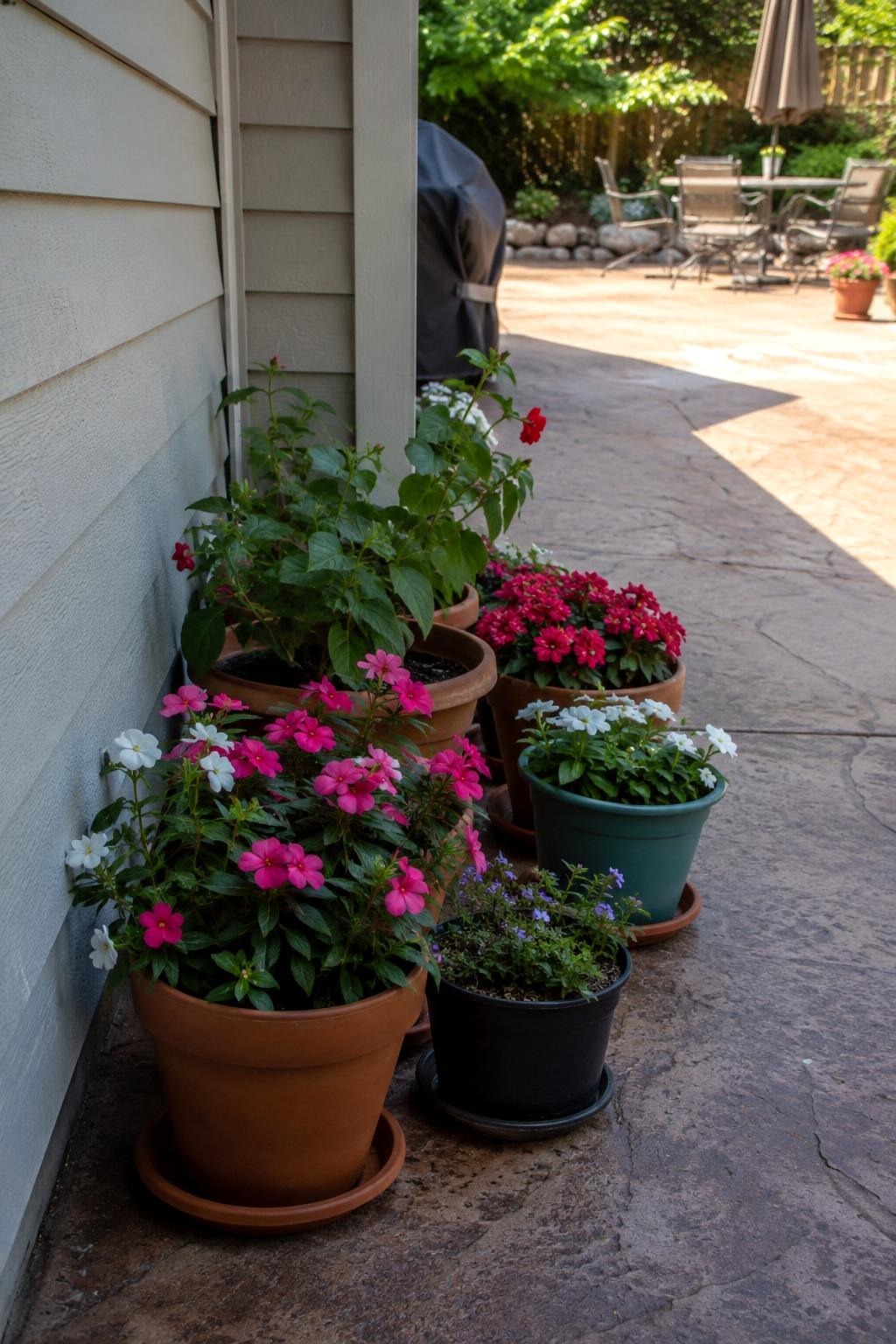
This is especially useful for containers near concrete, brick, or dark decking because hard surfaces hold heat and reflect it back into the pot.
Water Slower, Not Just More
Dry potting mix can shed water.
A mix that has gone completely dry shrinks away from the sides of the pot. Water runs down that gap and straight out the bottom while the middle of the root ball stays bone dry. Iowa State Extension’s container care guide describes that exact failure and gives three fixes: water until it flows from the drainage holes, check the mix 1 to 2 inches down instead of at the surface, and stand a completely dried-out pot in a tub of water for 20 to 30 minutes so the mix can take water back up.
That is the same order to follow at home. Water once, pause for a few minutes, then water again. The first pass wakes up the mix. The second pass actually soaks in.
For very dry pots, bottom watering can help. Set the container in a shallow tray or tub of water for 20 to 30 minutes, then let it drain. Do not leave most plants sitting in water all day, but a short soak can rehydrate a stubborn root ball.
The finger test is better than guessing from the surface. Push your finger about an inch down. If it is dry there, water. If it is still damp, wait.
Move Heat-Stressed Pots Before They Fail
Some containers are drying out because the location is too harsh.
Afternoon sun, wind, brick walls, black railings, and concrete steps can all make a pot work harder. If a plant looks fine in the morning and miserable at 4 p.m., the afternoon exposure may be the issue.
Try moving the pot where it gets morning sun and light afternoon shade. Even a foot or two can help if it gets the container away from reflected heat.
Good candidates for a slightly kinder spot:
- basil
- parsley
- mint
- begonias
- coleus
- hydrangeas
- many mixed annual baskets
Rosemary, thyme, lavender, and succulents tolerate drier conditions better, but they still need a potting mix that can take up water properly.
Refresh Old Potting Mix
Old potting mix can become tired, compacted, or strangely hard to rewet.
If the same container has been used for a few seasons, remove the top several inches and work in fresh potting mix and compost. If the whole pot feels dense, empty it and start over. Add slow-release fertilizer if the plants are heavy feeders.
Do not keep adding water to a mix that has collapsed into a hard block. That is not a watering routine. It is a rescue mission.
The Simple Fix Order
When a container keeps drying out too fast, try this order before buying anything complicated:
- Water slowly in two passes.
- Add a thin mulch layer.
- Move the pot out of the harshest afternoon heat.
- Check whether the roots have filled the container.
- Repot into a larger container with fresh potting mix.
Most porch pots do not need fancy products. They need enough soil, a little shade at the surface, and a watering routine that actually reaches the roots.
What I’d Buy First
- A larger pot if roots fill the current container.
- Fresh potting mix, not garden soil.
- Mulch, coir, or bark fines to slow surface drying.
- A moisture meter if you keep overcorrecting with water.
What to Read Next
- Drip irrigation for raised beds that wilt by dinner is the next step if the pots dry out while you are at work, since a timer removes the daily decision.
- Container garden ideas for small patios shows the same fix from the layout side: fewer, bigger pots hold moisture better than a row of small ones.
- Drought tolerant flowers that still bring color is what to plant if the pot sits in full sun and dries out no matter what you change.
- Shade sail ideas for a hot spot nobody uses is the structural fix when a pot bakes against a wall or on a paved patio all afternoon.