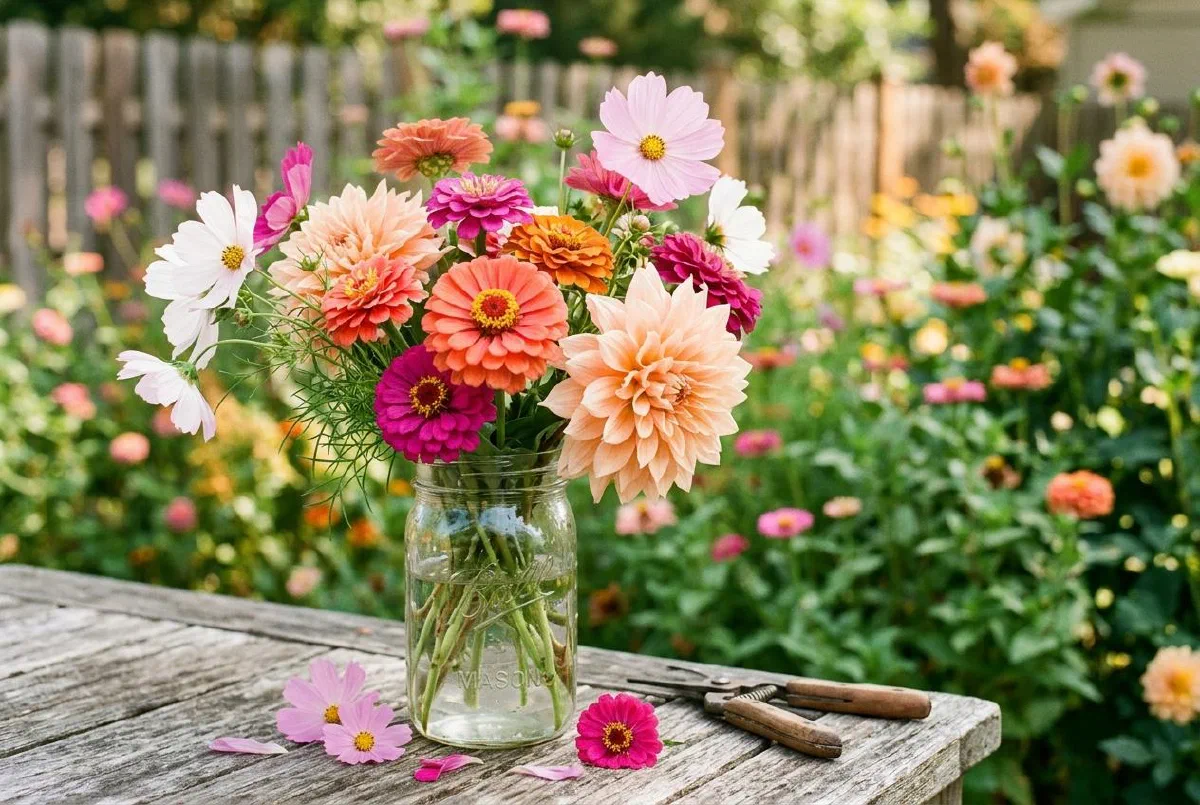
A small cutting garden can supply seasonal flowers for a kitchen jar without requiring a flower-farm layout. It will not replace every store bouquet: shade, weather, plant losses, and the winter gap still matter. Start with the flowers you like using and the space you can care for.
The cost comparison needs your own numbers. Count seeds or tubers, compost, supports, watering, and any equipment before calling homegrown bouquets free. A bed can be worth growing for the pleasure of cutting it, even when first-year savings are modest.
Choose the Site Before Buying Seeds
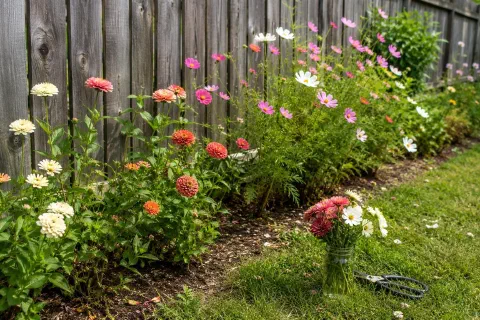
Look for a sunny, accessible spot where you can water and reach the plants without stepping through the bed. Leave room for mature plants and supports. A narrow bed with paths is easier to harvest than a large patch that can only be reached from one side.
Map the sunlight over a day rather than assuming the south side of a building is open all afternoon. Check drainage after rain. Resolve persistent standing water before planting sun-loving cutting flowers there.

Choose Zinnia, Cosmos and Sunflower Types
| Flower | Bouquet role | Decision before planting |
|---|---|---|
| Zinnia | Bright focal blooms | Choose a cutting cultivar and follow its frost and spacing instructions |
| Cosmos | Lighter, airy stems | Allow for the cultivar’s mature height and support needs |
| Snapdragon | Upright flower spikes | Plan its longer seed-starting lead time separately from warm-season annuals |
| Dahlia | Larger focal flowers | Budget for tubers, support, and winter storage where needed |
| Sunflower | Bold focal stems | Check whether the cultivar is single-stem or branching |
Utah State Extension’s sunflower production guide distinguishes single-stem and branching types. ProCut is a single-stem series: do not pinch it expecting repeated branching harvests. A packet that identifies a branching cultivar is a different planting choice. Successive sowings can extend harvest for single-stem crops, subject to your local growing season.
Put Each Flower on Its Own Calendar
Use the packet’s weeks-before-transplant instruction and a local frost estimate. Zinnias and snapdragons do not share one indoor start date. University of Minnesota’s seed-starting guidance explains the indoor setup and transition outdoors. For a worked calendar, see seed starting indoors.
Label varieties and sowing dates. Decide whether you will direct sow, raise seedlings, or buy starts. If your growing season is short, compare the cultivar’s time to bloom with the weeks available; a late sowing may grow leaves but miss useful flowering time.

Harvest Without Assuming Every Plant Responds Alike
Keep clean snips and a clean water container ready. Use the harvest stage recommended for that flower; a bloom that opens well after cutting is different from one that needs to be fully open. Remove leaves below the vase waterline and move the stems out of hot sun promptly.
Cut repeat-blooming plants above suitable growth points where the cultivar guidance recommends it. Do not apply that advice to a single-stem sunflower: once cut, that plant does not supply a second equivalent stem. Leave foliage and healthy growth for continued production on branching plants.
Inspect vase water, replenish it, and remove deteriorating stems. Vase life varies by flower, harvest stage, water cleanliness, and room conditions; ten days is not a promise for every homegrown bouquet.

Start Small and Keep a Useful Record
Begin with a manageable patch and two or three crops rather than a long shopping list. Record first bloom, useful stem length, plants lost, and what actually made it into a vase. That gives next year’s choices a stronger basis than a generic stems-per-plant claim.
Save suitable open-pollinated seed where practical, and plan flowers for drying if you want material after the fresh season. Keep the winter gap in the plan: dried stems, foliage, or an occasional purchased bouquet can fill it without requiring summer flowers to do every job.
What to Read Next
- Cut Flower Seeds That Give You the Most Bloom for a Small Bed picks the varieties worth the row space.
- Flowers to Grow for Drying and Winter Arrangements stretches the same bed past the first frost.
- Save Zinnia Seeds Next Year turns one packet into next spring’s whole planting.
- Seed Starting Indoors for Beginners covers the February and April head starts in more detail.