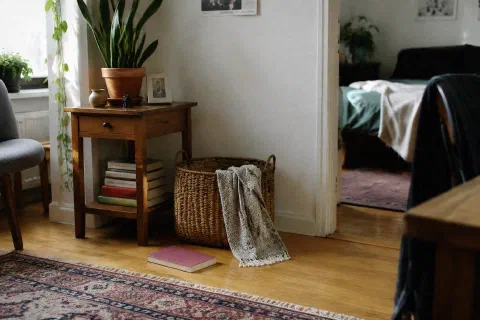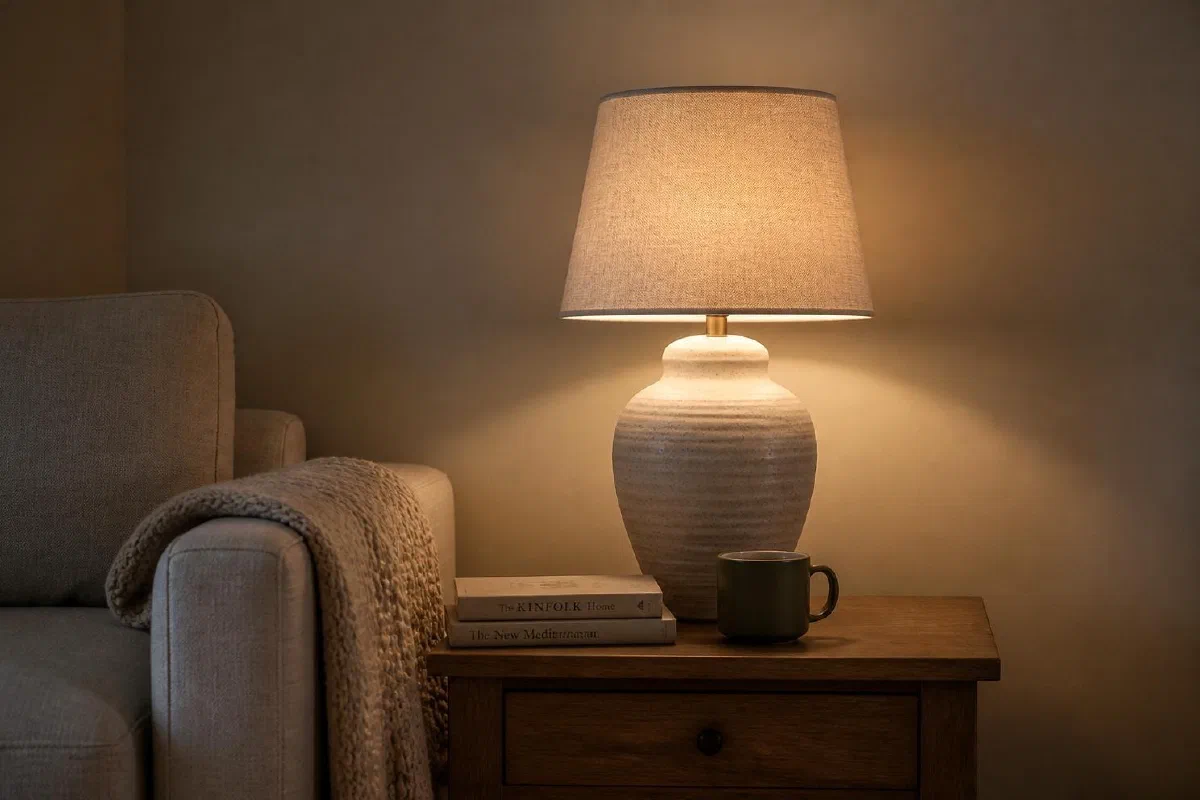
You can paint a room the warmest cream on the shelf and it will still feel like a waiting room at eight in the evening. The paint is almost never the problem. The bulb is.
There is one number on the box that decides this, and most people never look at it.
The Number Is 2700K
Color temperature is printed on every bulb box, measured in Kelvin. Lower numbers are warmer and yellower. Higher numbers are colder and bluer.
- 2700K is what you want in a living room. It matches the light an old incandescent bulb gave off, which is the light most people mean when they say a room feels warm.
- 3000K is the next step up. Slightly whiter, a little more clinical. It works in a kitchen or a bathroom. In a living room it reads as almost right, which is worse than obviously wrong, because you notice something is off and blame the sofa.
- 4000K is neutral or cool white. This is office light.
- 5000K is daylight. It is the single most common reason a living room feels cold at night, and it is what a lot of builder-grade fixtures ship with.
If you buy nothing else from this page, buy 2700K. It costs the same as 5000K.
Why the Room Turns Cold at Seven O’Clock
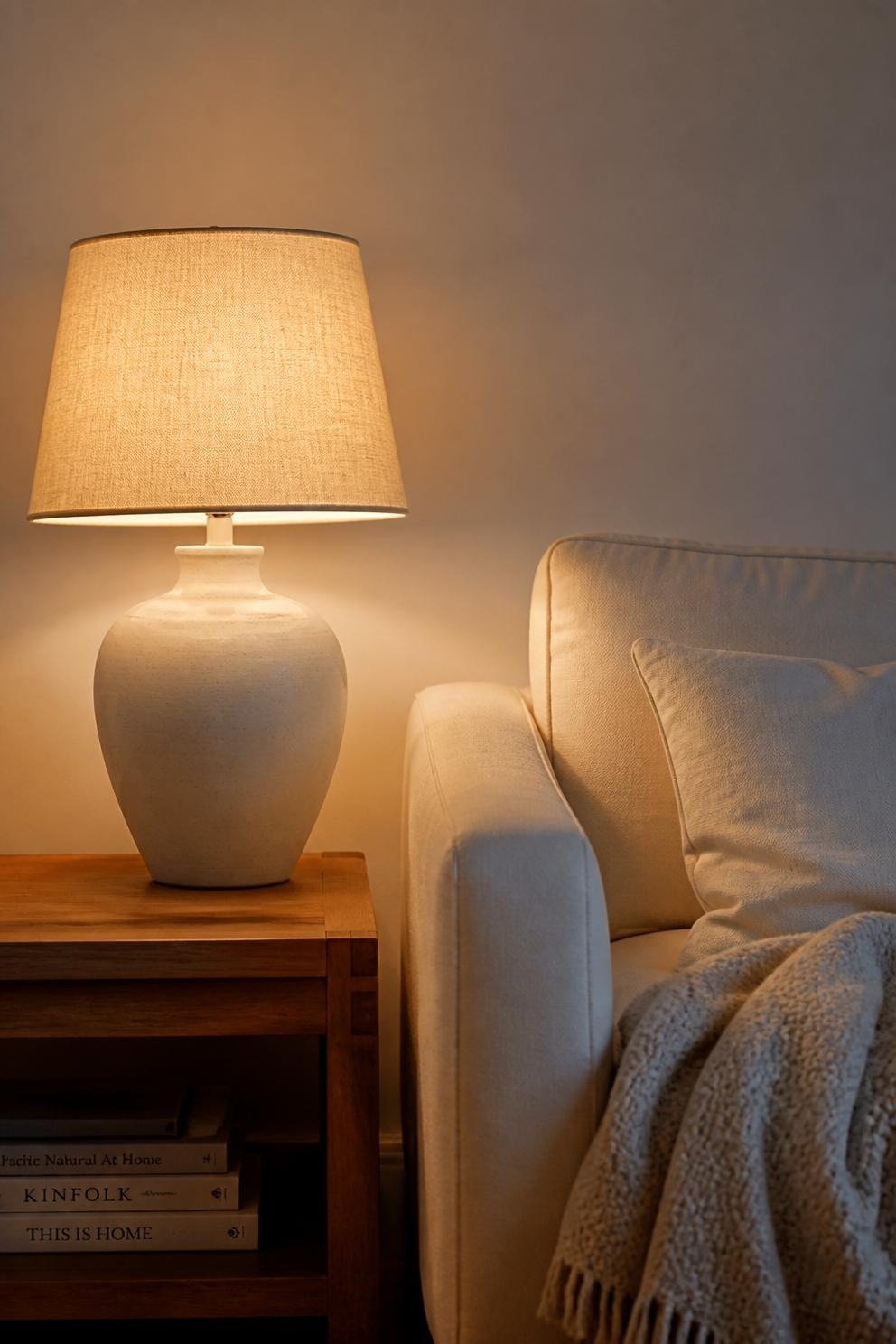
During the day, a living room borrows its warmth from the sun, and the sun handles the color for you. After dark the bulbs are the only light source in the room, and whatever they are is what the room becomes.
This is why a palette that looked right in the paint aisle can feel wrong at night. The wall color did not change. The light landing on it did. A cream wall under 5000K reads grey. The same cream under 2700K reads cream.
If you are working through a palette, the bulb is the last step, and it is the cheapest one. Our guide to warm color palettes for a living room walks through the six combinations and which one suits your floor. The bulb is what makes any of them show up after dark.
Brightness Is Lumens, Not Watts
Watts measure how much electricity a bulb draws. With incandescents that happened to track brightness, so people learned to shop by watts. LEDs broke that link. A 9 watt LED and a 60 watt incandescent put out the same light.
Shop by lumens instead:
| Old incandescent | Lumens | Where it belongs |
|---|---|---|
| 40W | about 450 | Small table lamp, accent lamp |
| 60W | about 800 | The default living room lamp |
| 75W | about 1100 | Floor lamp, reading corner |
| 100W | about 1600 | Overhead in a large or dark room |
800 lumens is the workhorse. If a lamp feels harsh, the answer is usually fewer lumens rather than a different color temperature.
Two Lamps Beat One Ceiling Fixture
The other half of warm lighting is where the light comes from, not what color it is.
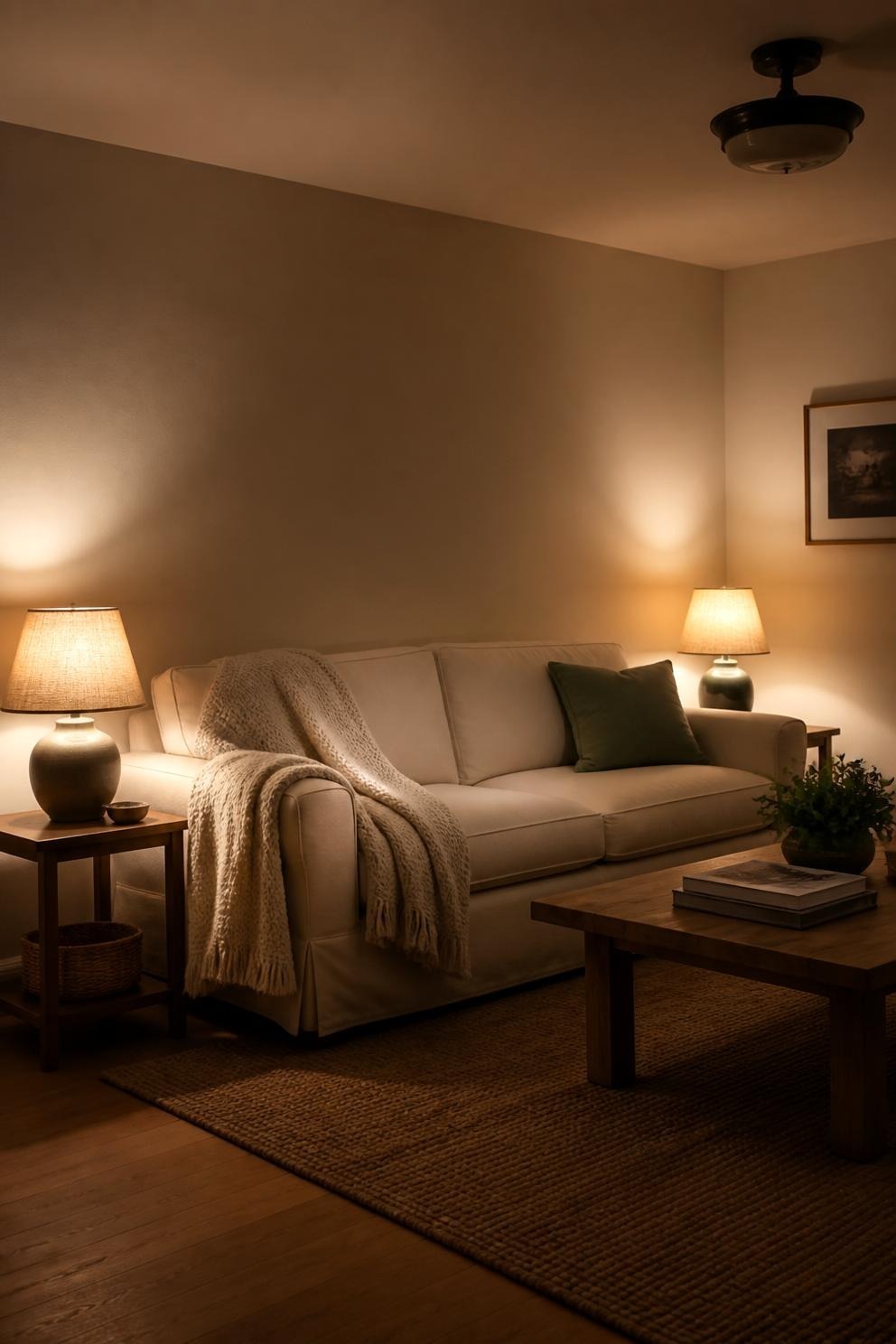
A single ceiling fixture lights a room from above, which flattens everything and puts shadows under people’s eyes. Two or three lamps at sitting height do the opposite. They pool light where you actually are and leave the corners softer.
The practical version, in a small living room:
- One lamp beside the seat you use most, at roughly shoulder height when seated
- One across the room on a diagonal, so the light is not all coming from one side
- The overhead off, or on a dimmer at the lowest setting that still works
This costs two bulbs and changes more than a new rug would.
Check the CRI if Colors Matter
CRI, the color rendering index, measures how honestly a bulb shows color, on a scale to 100. Sunlight is 100.
Cheap LEDs sit around 80. Colors look slightly muddy: a terracotta pillow goes brown, a sage throw goes grey. Anything at 90 or above renders close to true. It is usually printed on the box as CRI 90+ or Ra 90.
If you have spent money on a palette, spend the extra on CRI 90+. If the room is mostly neutral, 80 is fine and nobody will notice.
Dimmable or Not
Dimmable bulbs cost slightly more and only dim if the fixture or switch supports it. Putting a dimmable bulb in a normal lamp gains nothing.
Two things worth knowing:
- A non-dimmable bulb in a dimmer circuit will buzz, flicker, or fail early. This is the most common lighting complaint and it is always this.
- Cheap LEDs dim to about 20 percent and then cut out. Incandescents dimmed to a candle. If you want the very low warm glow, look for a bulb that advertises dim-to-warm, which drops toward 2200K as it dims the way a real filament did.
Where Edison Bulbs Actually Work
Exposed filament bulbs are genuinely lovely in the right fixture and genuinely bad in the wrong one.
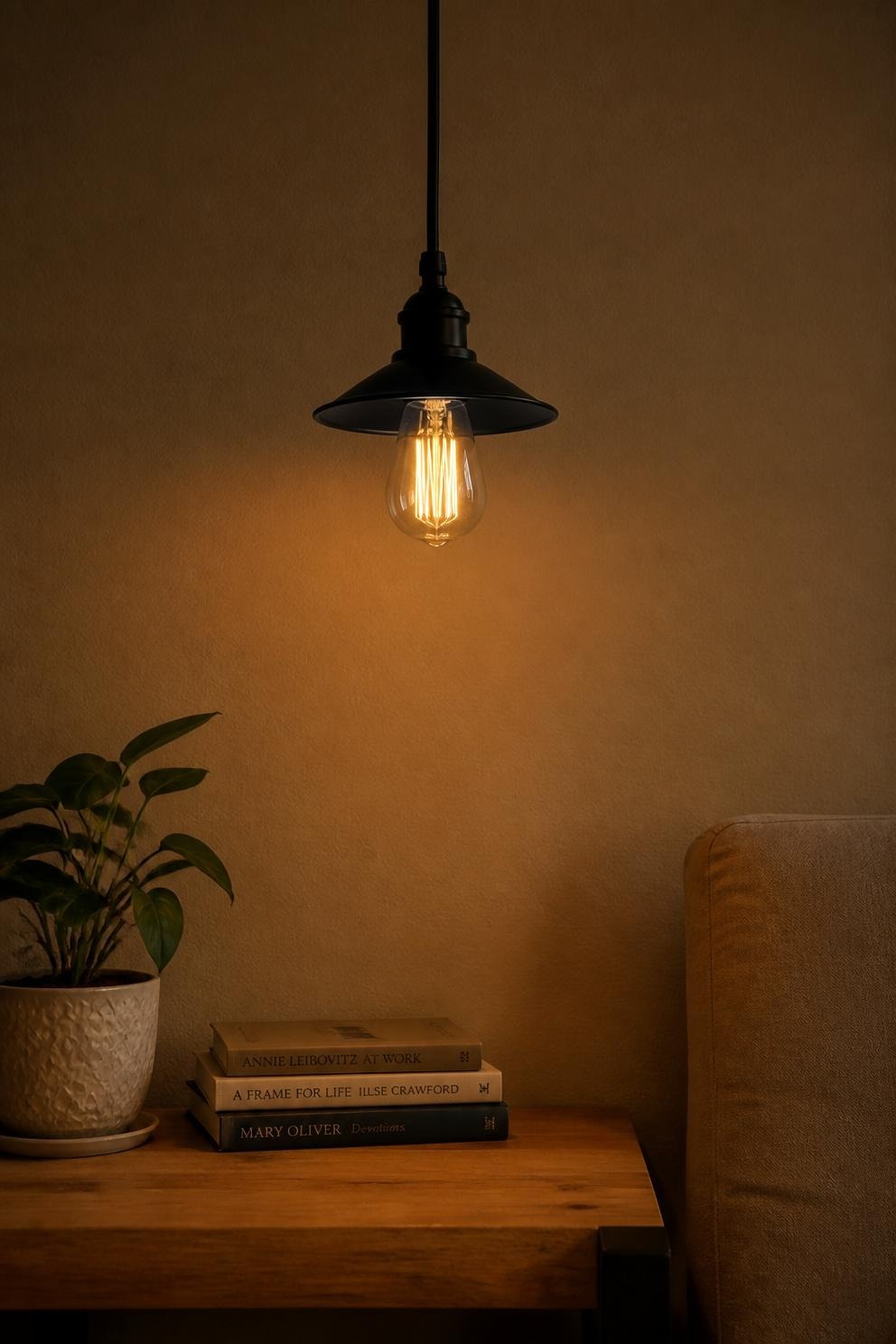
They work where the bulb is meant to be seen: an open pendant, a bare-socket sconce, a lamp with no shade or a very open one. They run around 2200K to 2700K, warmer than a standard bulb, and they put out much less light, usually 500 lumens or fewer.
They do not work as the only light in a room. Use them as the pretty light and keep a real 800 lumen lamp doing the work.
This article contains affiliate links. If you buy through them, Etheric Echoes may earn a commission at no extra cost to you. As an Amazon Associate I earn from qualifying purchases. Read the full disclosure.
What I’d Actually Buy
Ratings and review counts checked 2026-08-15. All of these are 2700K, which is the only thing that is not negotiable.
- Sylvania A19 60W equivalent, 2700K (opens Amazon in a new tab) (4.7 stars, 40,300 reviews). The default. 800 lumens, standard E26 base, fits almost every lamp in a normal house. If you want one line item from this page, this is it.
- Sylvania ECO A19 60W equivalent (opens Amazon in a new tab) (4.7 stars, 23,400 reviews). Cheaper per bulb and slightly more efficient. Thinner build, so it suits lamps rather than an outdoor fixture that gets knocked.
- TJOY 12 pack, 2700K (opens Amazon in a new tab) (4.7 stars, 1,700 reviews) or the 6 pack (opens Amazon in a new tab) (4.7 stars, 1,700 reviews). The sensible move if you are replacing every bulb in the house at once, which is genuinely the right way to do this. There is also a 24 pack (opens Amazon in a new tab) and a single (opens Amazon in a new tab) .
- Ascher vintage LED Edison bulbs (opens Amazon in a new tab) (4.7 stars, 9,100 reviews), also in another pack size (opens Amazon in a new tab) . Non-dimmable, so keep them out of dimmer circuits. For the open pendant, not for the room.
Buy a six pack of 2700K and change every bulb in the living room in one go. Doing it one lamp at a time means living with a room lit at two different temperatures, which looks worse than either one on its own.
How to Swap a Room to 2700K
Block out an hour and do the whole room, not one lamp at a time:
- Count the fixtures. Lamps, sconces, the overhead, the closet, anything you switch on in the evening.
- Note the base and the shape for each one. Most living room lamps take an E26 medium base, and sconces or tiny accent lamps sometimes do not.
- Buy one color temperature for all of them: 2700K, plus a spare or two.
- Change every bulb in a single pass, including the ones you think nobody notices.
- Walk the room after dark with the overhead off and the lamps on. Any corner that still reads cold usually has the bulb you missed.
If you want the numbers behind that, the DOE Energy Saver guide puts warm and soft light at 2700 to 3000K, cool and bright light at 3500 to 4100K, and blue-white light that mimics daylight at 5000 to 6500K. Same wattage, same lamp, completely different room.
Before You Buy Another Bulb
Three checks that save a wasted trip:
- Don’t mix temperatures in one room. A 3000K bulb beside a 2700K bulb makes both look wrong, even when either one alone would be fine.
- Don’t buy dimmable for a plain switch. It costs more and does nothing. The DOE’s bulb guidance is to confirm the bulb matches the dimming system you actually have, and it warns that a mismatched bulb in a dimmer circuit is where the buzzing and early failures come from.
- Don’t put an ordinary LED in a sealed glass dome. Fully enclosed fixtures trap heat, heat shortens LED life, and the fix is one line on the packaging: enclosed fixture rated.
FAQ
Is warm white the same as soft white?
Effectively yes. Soft white is the marketing name most American brands use for 2700K. If the box says soft white and 2700K, it is the bulb you want. Some brands use warm white for 3000K, which is why the Kelvin number matters more than the words.
Is 3000K too cold for a living room?
Not cold exactly, just less forgiving. 3000K suits a room with a lot of white and cool grey in it. In a room built around cream, oak, terracotta or brown, 2700K is noticeably better.
Do warm white bulbs make a small room look smaller?
No. Brightness and placement affect how large a room feels, color temperature does not. A small room lit by two warm lamps at seat height feels larger than the same room lit by one harsh ceiling fixture.
What about smart bulbs?
Fine, and useful if you want the room to shift through the day. Set the evening scene to 2700K and leave it. The common mistake is leaving a smart bulb on its default, which is usually a cool white around 4000K.
Will 2700K bulbs look yellow in photos?
Slightly, unless the camera’s white balance is set correctly. Phone cameras usually correct automatically. If you photograph the room a lot, CRI 90+ bulbs photograph noticeably better than CRI 80 ones.
How long do LED bulbs actually last?
The box number assumes about three hours a day. A bulb rated for 11,000 hours is roughly ten years at that rate. Real life is shorter in enclosed fixtures, because heat is what kills LEDs, so check the box says enclosed fixture rated before putting one in a sealed dome.
What to Read Next
- Warm color palettes for a cozy living room if the bulb is the last step of a repaint you are already planning.
- Cozy reading nook layouts that fit a small space for the lamp placement half of warm lighting.
- 10 cozy patio lighting ideas for tiny backyards because the same 2700K logic works outside after dark.
- Cozy apartment ideas for a rental that feels like home when you can change the bulbs but not the fixtures.