For pots on a patio, porch, or balcony, skip the full-size shovels and start with just three core container gardening tools: a narrow hand trowel (ideally a 3-piece set with a transplanter and cultivator), a pair of sharp bypass pruners rated for 1/2- to 3/4-inch cuts, and a watering can you can comfortably carry full (or a 16- to 30-inch hose watering wand if you have a patio spigot). Once you grow past five or six pots, add a folding kneeler, waterproof plant labels, and a seed sower. Put the rest of your budget into the supplies that actually keep potted plants alive: containers with 5/8-inch drainage holes, real soilless potting mix, and slow-release fertilizer.
Container Gardening Tools and Supplies: What to Buy First
Last updated:
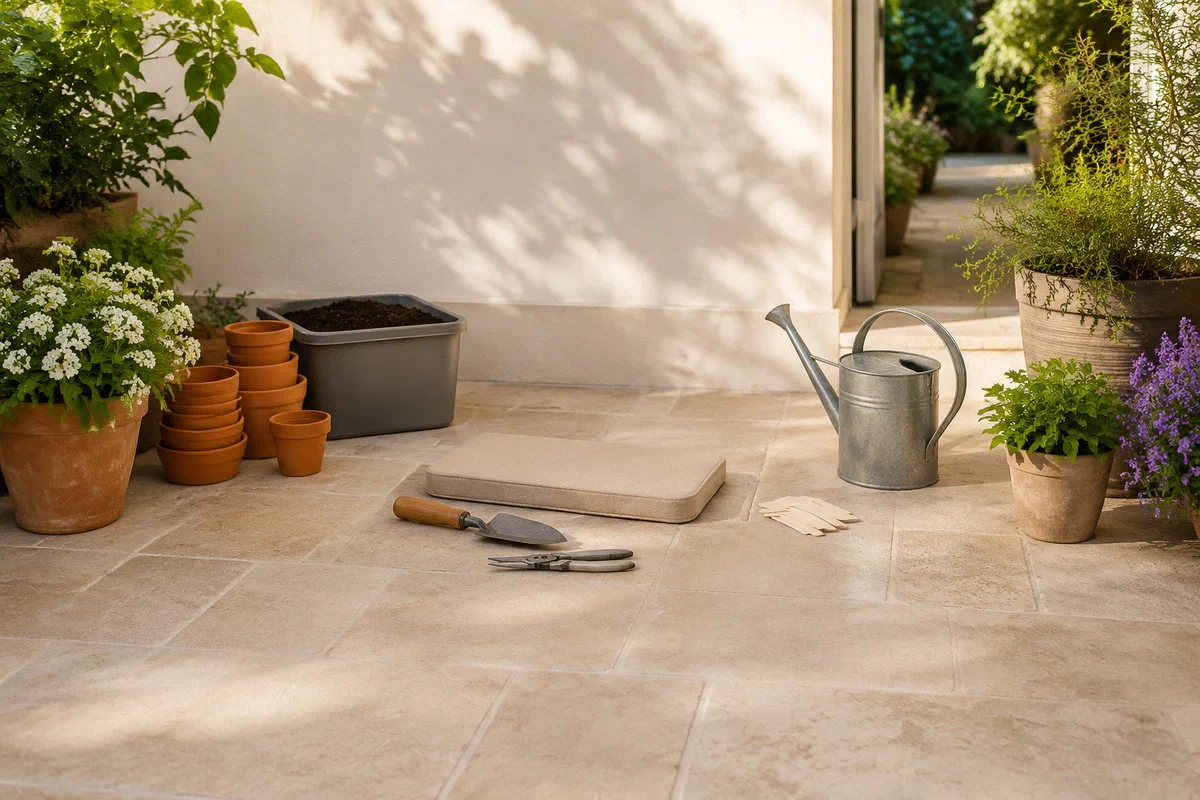
When we help beginners trim a bloated shopping cart for a small patio garden, we cut half the gadgets immediately. You do not need a garden spade, a bow rake, or decorative mini tools that snap on your second bag of potting mix; you need compact, rust-resistant gear built for tight pot rims and wrists that still feel good after repotting six planters.
What tools do you need for container gardening?
Six practical tools cover nearly every task a patio or balcony pot garden throws at you. Because there is no open lawn or yard bed to turn over, compact hand tools outperform bulky shed gear every single time.
Some links below are Amazon affiliate links. If you buy through them, Etheric Echoes earns a small commission at no extra cost to you.
| Tool | Example to Look At | The Patio Job It Handles |
|---|---|---|
| Hand tool set | Fiskars 3-Piece Garden Hand Tool Set (trowel, transplanter, cultivator) (opens Amazon in a new tab)As an Amazon Associate, we earn from qualifying purchases. Full disclosure. | Scooping potting mix, sliding seedlings between roots, and loosening crusted mix |
| Bypass pruners | Fiskars Bypass Pruning Shears, 5/8 inch cut (opens Amazon in a new tab)As an Amazon Associate, we earn from qualifying purchases. Full disclosure. | Cleanly deadheading flowers, snipping herbs, and trimming woody rosemary stems |
| Watering can | Chapin 2-Gallon Watering Can (opens Amazon in a new tab)As an Amazon Associate, we earn from qualifying purchases. Full disclosure. | Soaking soil at the root zone without splashing leaves or dragging a hose |
| Kneeler and seat | TomCare Folding Garden Kneeler and Seat (opens Amazon in a new tab)As an Amazon Associate, we earn from qualifying purchases. Full disclosure. | Keeping knees off hard concrete pavers while repotting and dividing clumps |
| Seed sower | Fiskars 4-in-1 Seed Planting Trowel and Seed Sower (opens Amazon in a new tab)As an Amazon Associate, we earn from qualifying purchases. Full disclosure. | Measuring exact seed depths in inches or centimeters on a windy patio table |
| Plant labels | Xgunion 4 Inch T-Type Plant Labels, 200 with a marking pen (opens Amazon in a new tab)As an Amazon Associate, we earn from qualifying purchases. Full disclosure. | Remembering which tomato or basil variety is in each pot three weeks later |
Pair those six tools with one set of lightweight, washable nitrile-dipped gardening gloves. Bulky leather work gloves make it clumsy to pinch seedlings or pluck faded petunias, whereas snug fabric gloves keep potting mix out of your nails while letting you feel every stem.
How do I choose tools for container gardening?
Choosing tools for containers comes down to blade width, neck strength, cutting style, and carry weight. We compare the key specs side by side before buying anything so cheap gear does not fail mid-May.
| Tool Choice | Option A | Option B | Our Take for Patio Pots |
|---|---|---|---|
| Hand trowel metal | One-piece forged stainless steel: heavier, ultra-strong, slices tough root balls, highly rust-resistant | Thick-necked cast aluminum: featherlight on wrists, completely rust-proof, easy to handle in tight pots | Pick thick cast aluminum for light everyday scooping or forged stainless steel if you divide dense perennial root balls; skip thin stamped sheet metal that bends at the neck |
| Pruning blade style | Bypass pruners (1/2 to 3/4 in cut): two curved blades glide past each other like scissors | Anvil pruners: single sharp blade presses onto a flat metal anvil | Always choose bypass pruners for live herbs, petunias, and potted shrubs; anvil blades crush green stems. Add micro-tip snips only if you harvest tons of fine kitchen herbs |
| Water delivery | 1- to 2-gallon watering can: long narrow spout + removable rose; around 17 lb full for 2 gallons | 16- to 30-inch watering wand on hose: reaches deep into dense pots and high hanging baskets with a soft shower | Use a 1- to 2-gallon can on balconies without a spigot (or a 1-gallon can if 17 lb strains your wrist); switch to a 16- to 30-inch wand once you have 10+ patio pots and a nearby faucet |
Four quick ergonomic checks we always make before committing:
- Narrow blade width: A 2- to 2.5-inch narrow transplanter blade with etched depth marks slides neatly between crowded root balls without scraping ceramic rims.
- Comfortable grip span: If a pruner handle forces your fingers wide open on every squeeze, your hand will cramp after three pots. Check the spring tension and lock latch with your dominant hand.
- Balanced spout length: A short stubby watering can forces you to dump water over foliage, inviting mildew. A long tapered spout tucks straight under leaves to wet the potting mix directly.
- Rust-resistant heads: Wet potting mix and soluble fertilizer corrode raw carbon steel fast. Stainless steel and cast aluminum shrug off damp patio corners with a quick rinse.
Container gardening supplies to buy with the tools
Even top-shelf tools cannot rescue plants stuck in heavy dirt or undrained pots. When we plan a fresh patio setup, we put a real slice of our budget into these six container essentials first:
- Pots with drainage holes: Every planter needs at least one 5/8-inch drainage hole (and three to four holes on wide 16- to 20-inch tubs). Without drainage, roots suffocate and develop root rot after one summer storm. If we fall for a solid cachepot, we either drill drainage holes with a masonry bit or slip a drilled nursery pot inside it.
- Soilless potting mix, never garden soil: Backyard topsoil compacts inside a pot, squeezing out oxygen. We look for a bag labeled for containers containing sphagnum peat moss or coconut coir lightened with perlite or vermiculite (and optionally compost). Read the ingredient panel, because bags labeled “potting soil” sometimes sneak in heavy real dirt.
- Slow-release plus liquid fertilizer: Daily summer watering flushes soluble nutrients right out the bottom hole. Blending controlled-release granules into fresh potting mix at planting and following up with a dilute water-soluble feed every 2 to 3 weeks keeps tomatoes, herbs, and annual flowers productive all summer.
- Waterproof saucers (used properly): Saucers shield wood decks and concrete patios from rust and tannin stains, just tip standing water out 15 minutes after watering so roots never sit submerged.
- A lidded storage bin for potting mix: An open soil bag left in the rain turns into a 40-pound soggy brick. Decanting mix into a lidded plastic tote keeps it dry, scoopable, and bug-free.
- Top mulch (optional for large tubs): We add a 1-inch cap of fine bark or moss on big patio containers to slow afternoon evaporation.
Which pots: terracotta, plastic or something else?
Every common pot material grows healthy plants if it drains well and fits the plant’s mature roots. What changes dramatically is how fast the potting mix dries out and how heavy the planter gets once watered.
| Pot Material | Dry-Out Speed | Weight When Planted | Best Match for Container Gardeners |
|---|---|---|---|
| Terracotta / unglazed clay | Fast (porous walls breathe moisture out) | Medium to heavy | Rosemary, lavender, succulents, and anyone who tends to overwater; expect daily summer watering |
| Plastic and fiberglass resin | Slow to moderate (non-porous walls) | Very light and easy to move | Balconies with weight limits, renters, and thirsty flowers; pick light colors so sun does not bake roots |
| Glazed ceramic pottery | Slow (glazed shell seals moisture in) | Very heavy | Permanent porch anchor pots that stay in one spot and resist strong wind |
| Fabric grow bags | Fast (air-prunes roots through walls) | Ultra-light; folds flat in winter | Tomatoes, peppers, potatoes, and summer vegetables that crave warm, aerated roots |
Container size matters even more than material. Tomatoes and deep-rooted vegetables need large 5-gallon or 16- to 20-inch containers, whereas annual plants, flowers, and culinary herbs thrive in 10- to 14-inch pots, and hanging baskets dry out fastest of all because wind hits them from every side. When we are caught between two pot widths, we size up one diameter so the root ball holds a larger moisture reserve.
Do you need rocks in the bottom of a pot?
No. Dropping two inches of gravel, pebbles, or broken pottery shards into the bottom of a planter is one of the oldest gardening myths, and it actually worsens drainage. Water resists moving from fine potting mix down into coarse air pockets between rocks until the soil layer directly above the gravel is completely saturated, which raises the soggy “perched water table” right up into your plant’s roots while shrinking usable root space.
We fill the entire container from top to bottom with airy potting mix instead. If a large drainage hole lets potting mix wash onto our patio, we lay a single square of fiberglass window screen, a coffee filter, or one curved pottery shard flat across the hole itself. Need to move a heavy 18-inch glazed tub? Set it on a rolling plant caddy before you add potting mix rather than trying to lighten it with foam peanuts or rocks.
The six tools, one at a time
1. A hand tool set
Buy a compact 3-piece hand set before you buy another decorative planter. The regular trowel scoops mix out of your storage bin, the narrow transplanter slips cleanly between root balls without snapping neighbors, and the 3-prong cultivator scratches crusted mix open so water soaks in instead of running down the inside pot wall. Cast aluminum or stainless steel heads stand up to wet, heavy potting mix season after season.
2. Pruners
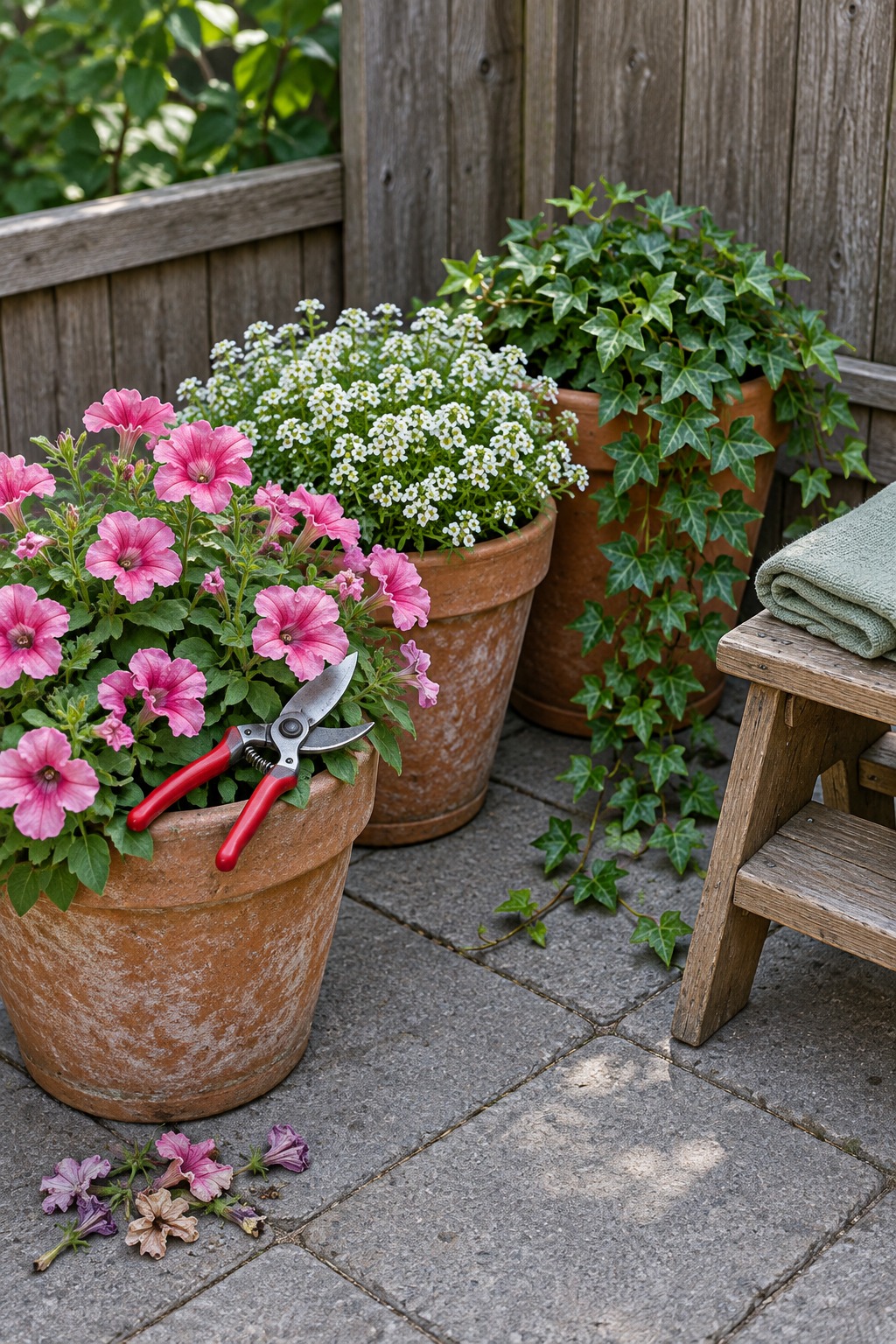
Sharp bypass pruners decide whether your patio pots look lush in August or leggy and tired. Deadheading petunias, pinching basil buds before they flower, and snipping browned foliage take 60 seconds when your pruners live right next to the planters instead of buried in a kitchen junk drawer.
3. A watering can
This is the tool your hand touches more than any other. Because containers hold a fraction of the moisture stored in open ground, small pots and hanging baskets often need daily water during hot, windy weeks. Skip rigid calendar rules and run our finger test instead: press a finger 1 inch down into the potting mix. If it feels dry at your knuckle, water slowly right onto the soil until liquid trickles out the drainage hole. Quick surface splashes wet only the top half-inch and starve deep roots.
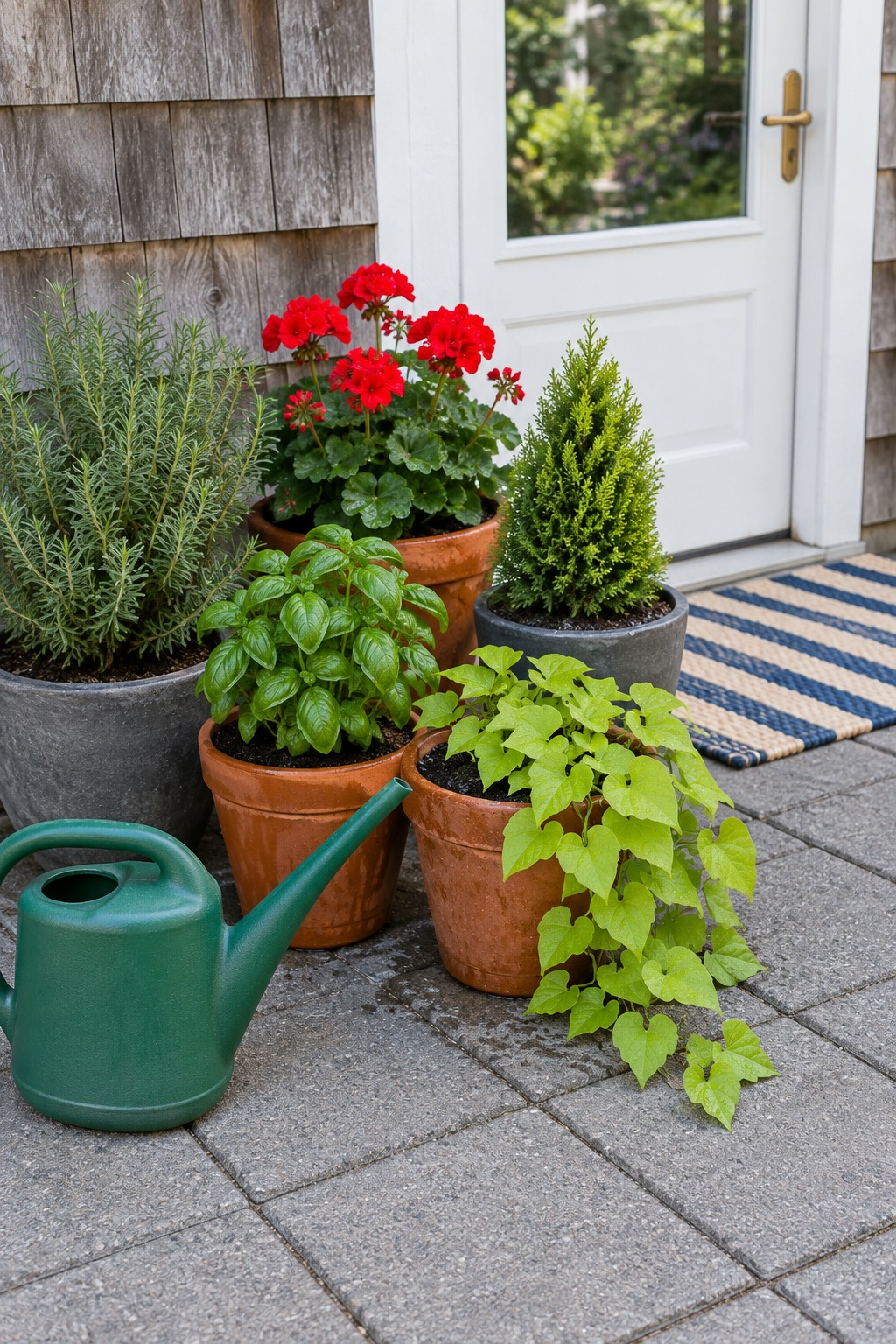
Remember basic carry ergonomics: water weighs about 8.3 pounds per gallon, putting a full 2-gallon can near 17 pounds. If lifting that across the patio bothers your shoulder or wrist, buy a 1-gallon can and make two calm trips, or attach a 16- to 30-inch watering wand to an outdoor spigot. And if a pot still wilts every single afternoon, the real fix is moving the plant up one pot size or refreshing compacted old mix, not buying a giant watering can.
4. A kneeler
Not flashy, yet a folding kneeler-bench is the piece that keeps us finishing a Saturday repotting session instead of quitting halfway through with sore knees on brick pavers. Flip it flat to kneel at low planter height, or flip it upright as a sturdy bench beside a potting bench.
5. A seed sower
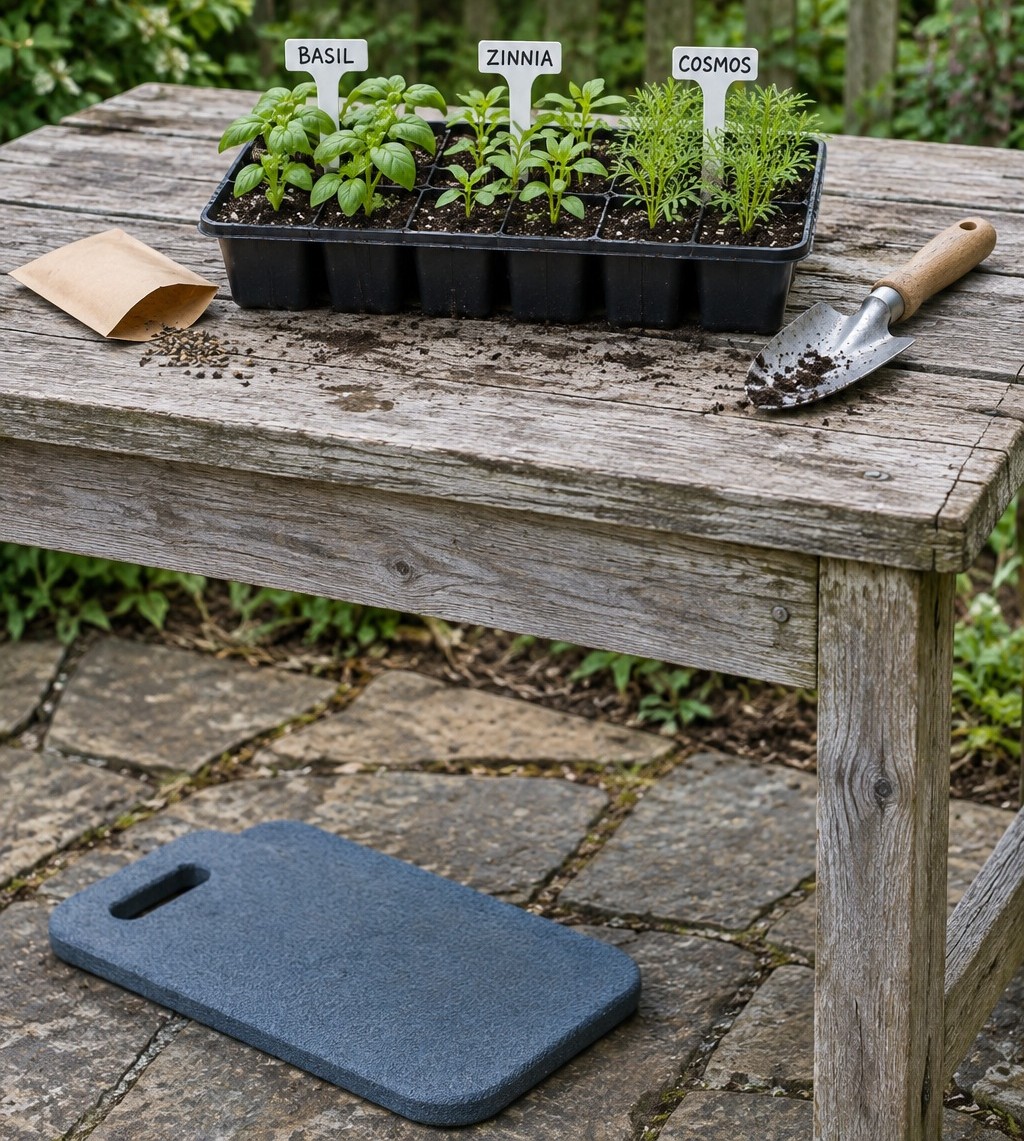
If you grow basil, dill, zinnias, or salad greens straight from seed packets in patio boxes, a combination trowel and depth-marked dibber keeps tiny seeds from blowing off a breezy deck table and takes the guesswork out of 1/4-inch vs 1-inch planting depths.
6. Plant labels
Every spring we convince ourselves we will remember which pot holds cherry tomatoes versus sweet peppers, and three weeks later every young green stem looks identical. T-shaped waterproof plastic tags let you jot the cultivar and planting date clearly above the soil line, and a 200-pack easily spans several seasons of herbs, seedlings, and winter-sown flats.
Common container gardening mistakes
- Filling pots with backyard garden soil. Even rich yard dirt turns into concrete inside a planter and drowns roots. Stick to airy soilless potting mix.
- Planting in containers without drainage holes. Trapped water kills more patio plants than summer heat ever does.
- Watering on a blind schedule. Cool cloudy weeks need far less water than 90 F breezy afternoons; always check the mix 1 inch down first.
- Cramming vegetables or perennials into tiny pots. Undersized pots dry out by noon and stunt root growth.
- Leaving planters standing in flooded saucers. Drain saucers 15 minutes after watering to prevent root rot and mosquito breeding.
- Forgetting mid-summer fertilizer. Every soak washes trace nutrients out the bottom hole, so containers need steady replenishment.
Set up a tool corner that stays tidy
Because most patios and balconies lack a garden shed, loose tools migrate onto outdoor dining tables fast. Our five-habit tool corner stays neat all summer:
- Stage tools nearest the back door, not at the far edge of the yard. Gear you grab on your way out for morning coffee actually gets used.
- Keep everything inside one sturdy carry-all bucket or crate. Trowels, gloves, labels, and twine move in one hand and tuck back away in ten seconds.
- Hook or rest pruners on top. They are the first tool you reach for and the easiest one to misplace in a mulch bag.
- Store your watering can upside down. Letting the spout drain stops green algae and keeps mosquitoes out.
- Drop loose plant labels and your marker into a small glass jar or tin. Nothing vanishes faster than loose white tags at the bottom of a potting bin.
At the end of the season, rinse wet soil off metal blades, dry them completely, wipe bypass pruner blades with a drop of light oil, and sharpen them once a year so cuts stay crisp instead of ragged.
The order to buy in
If you are building your patio kit one paycheck at a time, buy in this exact sequence so every dollar keeps plants healthier right away:
- Hand tool set (trowel, narrow transplanter, cultivator)
- Bypass pruners (1/2- to 3/4-inch capacity) and washable garden gloves
- Watering can (1 to 2 gallons) or 16- to 30-inch hose watering wand
- Potting mix, slow-release fertilizer, and pots with 5/8-inch drainage holes
- Folding kneeler and seat
- Seed sower and waterproof plant labels
Hold off on purely decorative extras until these core six are earning their spot beside your back door every week.
Frequently Asked Questions
What is the most important tool to buy first for container gardening?
Start with three essentials before buying anything else: a sturdy narrow hand trowel (or transplanter), a pair of sharp bypass pruners, and a watering can or hose watering wand you can lift comfortably. Those three tools handle planting, deadheading, harvesting, and daily watering on any patio or balcony.
Is stainless steel or cast aluminum better for a container gardening trowel?
Both resist rust far better than painted carbon steel. Thick one-piece stainless steel is slightly heavier and nearly impossible to snap when slicing dense root balls, while thick-necked cast aluminum is lighter on the wrist and easier to maneuver in small pots. Avoid thin stamped steel trowels that bend at the neck.
Should I buy a watering can or a watering wand for patio pots?
Use a 1- to 2-gallon long-spout watering can if you garden on a balcony, porch, or spot without an outdoor faucet (remember a full 2-gallon can weighs around 17 pounds). If you have an outdoor spigot and more than 8 to 10 containers or hanging baskets, a 16- to 30-inch watering wand with a gentle breaker head saves trips and protects foliage.
Do you need rocks or gravel in the bottom of a container garden pot?
No. Adding rocks or broken pottery to the bottom raises the saturated zone closer to plant roots instead of improving drainage, and it steals root volume. Fill the entire pot with soilless potting mix and place a small square of window screen or a coffee filter over the drainage hole so mix stays put.
Should you water container plants every day in summer?
Check the potting mix rather than watering on a rigid calendar. Push your finger 1 inch into the mix: if it feels dry, water slowly at the soil line until excess drains from the bottom hole. Small pots and hanging baskets often need daily watering in July heat, while large glazed or plastic tubs may go two to three days.
What to read next
- Summer porch herb pots that make dinner easier for what to plant once the tools are in place.
- Shade plants for containers if your pots sit out of the sun.
- Tiny balcony storage ideas for cushions, soil and plant stuff for where the tools and potting mix live when space is tight.