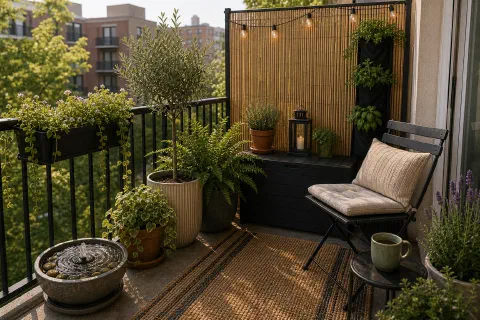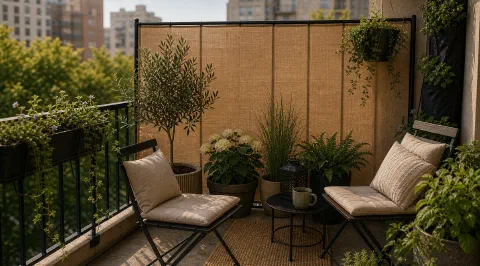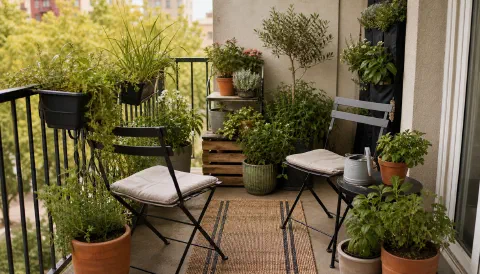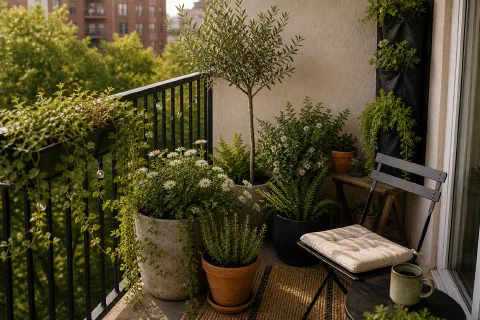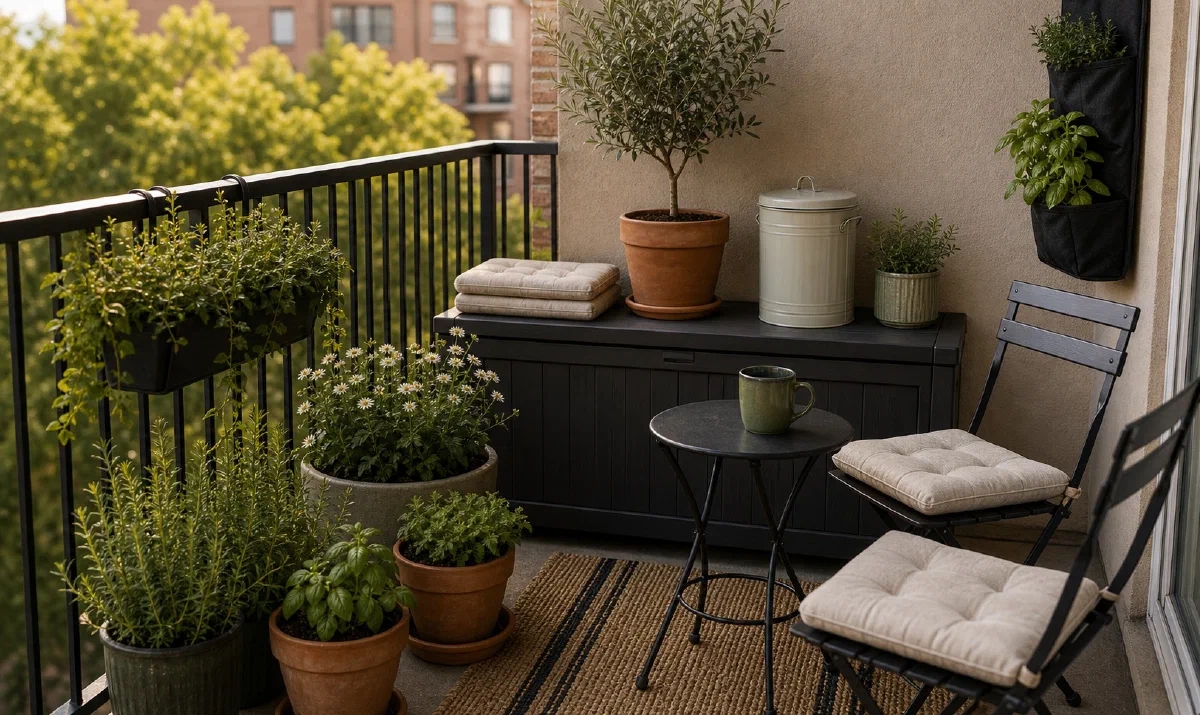
Balcony clutter has a way of taking the only good chair. A bag of soil sits by the door, cushions live on the seat, and the watering can ends up wherever it was last used. Storage matters more in a tiny outdoor space because every loose thing competes with the reason you wanted the balcony in the first place.
For a tiny balcony, use one narrow storage bench or small deck box, a sealed bin for soil and tools, and hooks or shelves only if they do not block the walking path. Store by task: cushions near chairs, plant supplies near pots, and anything damp only after it dries.
Stop Using the Chair as the Storage Plan
If the cushion pile has to move before anyone sits down, the balcony does not have storage. It has a delay. A low storage bench or narrow deck box can clear the chair without making the balcony feel like a shed.
What Can Actually Live Outside
Outdoor cushions, clean saucers, plant clips, hand tools, a small tarp, citronella candles, and empty nursery pots can usually live in balcony storage when the container is dry and weather-rated. Keep paper, delicate fabric, batteries, and anything that hates heat indoors. For a reality check on balcony containers, University of Maryland Extension’s container guidance recommends considering mature size, drainage, light, and the weight of moist containers before you place them outside.
Give Soil Its Own Sealed Bin
Open soil bags make a balcony look messy fast. Put potting mix in a sealed bin or lidded bucket, then tuck it under a bench or beside the plant cluster. If you only repot occasionally, keep most soil indoors and bring out what you need.
Storage Bench or Deck Box?
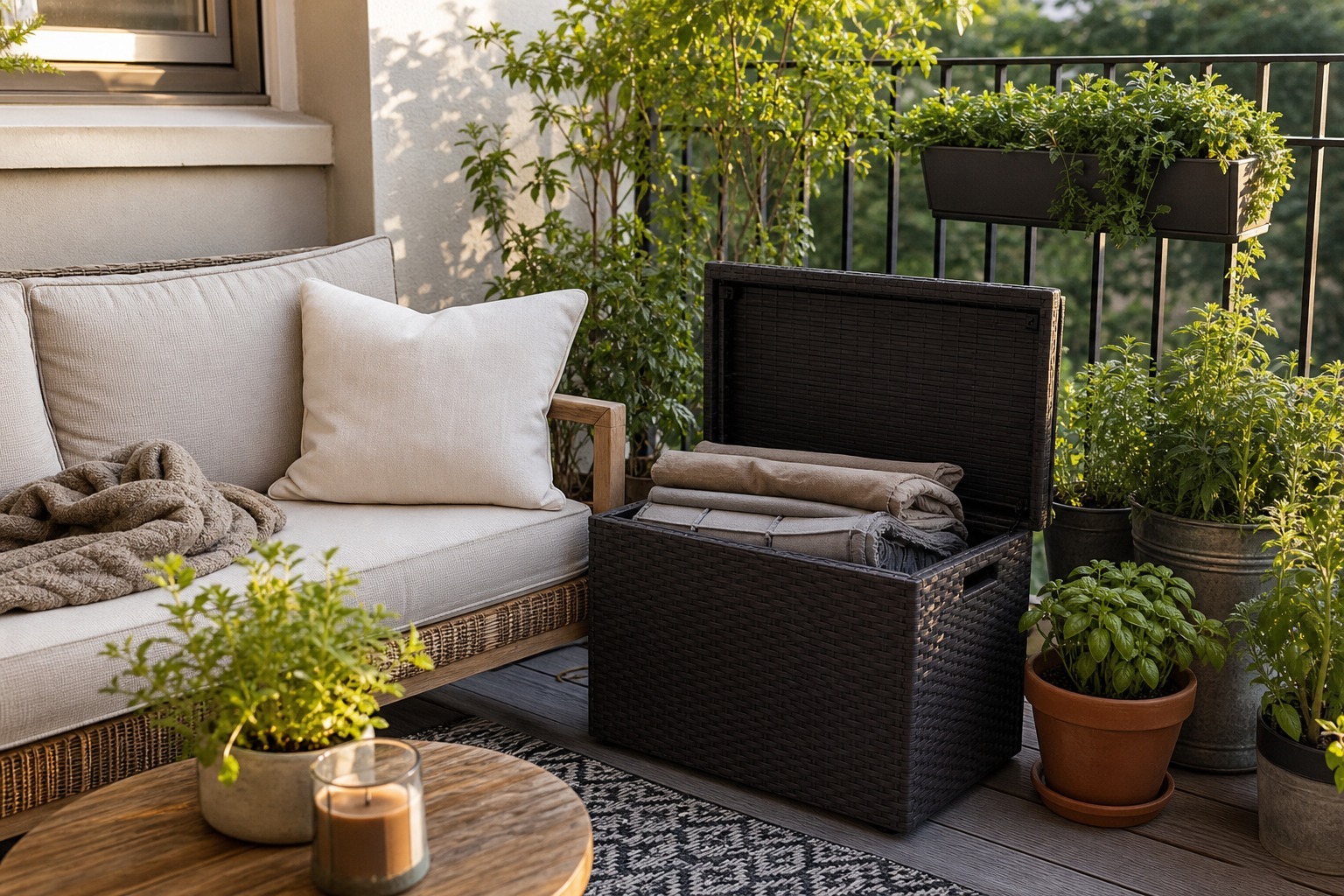
A storage bench helps if seating is also tight. A deck box helps if cushions are the main problem. On a narrow balcony, measure depth first. A box that is too deep steals more space than it saves.
Storage Bench or Deck Box: Compare the Footprint
| Storage piece | Best for | Check first | Keep out of it |
|---|---|---|---|
| Narrow storage bench | Cushions plus a seat | Seat height and door clearance | Wet fabric |
| Small deck box | Bulky cushions and covers | Depth, lid swing, and walking path | Loose soil bags |
| Sealed soil bin | Potting mix and hand tools | Lid seal and lift weight | Damp tools |
The best fit is the piece you can open without moving a chair. A storage bench may solve two problems at once, while a deck box can hold more but take more floor space. Keep the soil bin small enough to lift safely. NC State Extension’s container guidance also stresses matching container size to the plant and using drainage holes, so do not use a storage bin as a substitute for a properly draining pot.
Use Vertical Storage Carefully
Wall shelves, railing caddies, and hooks can help, but only if the lease allows them and they do not create visual clutter. One tidy rail basket beats five hanging gadgets.
Drainage and Walking Path Setup
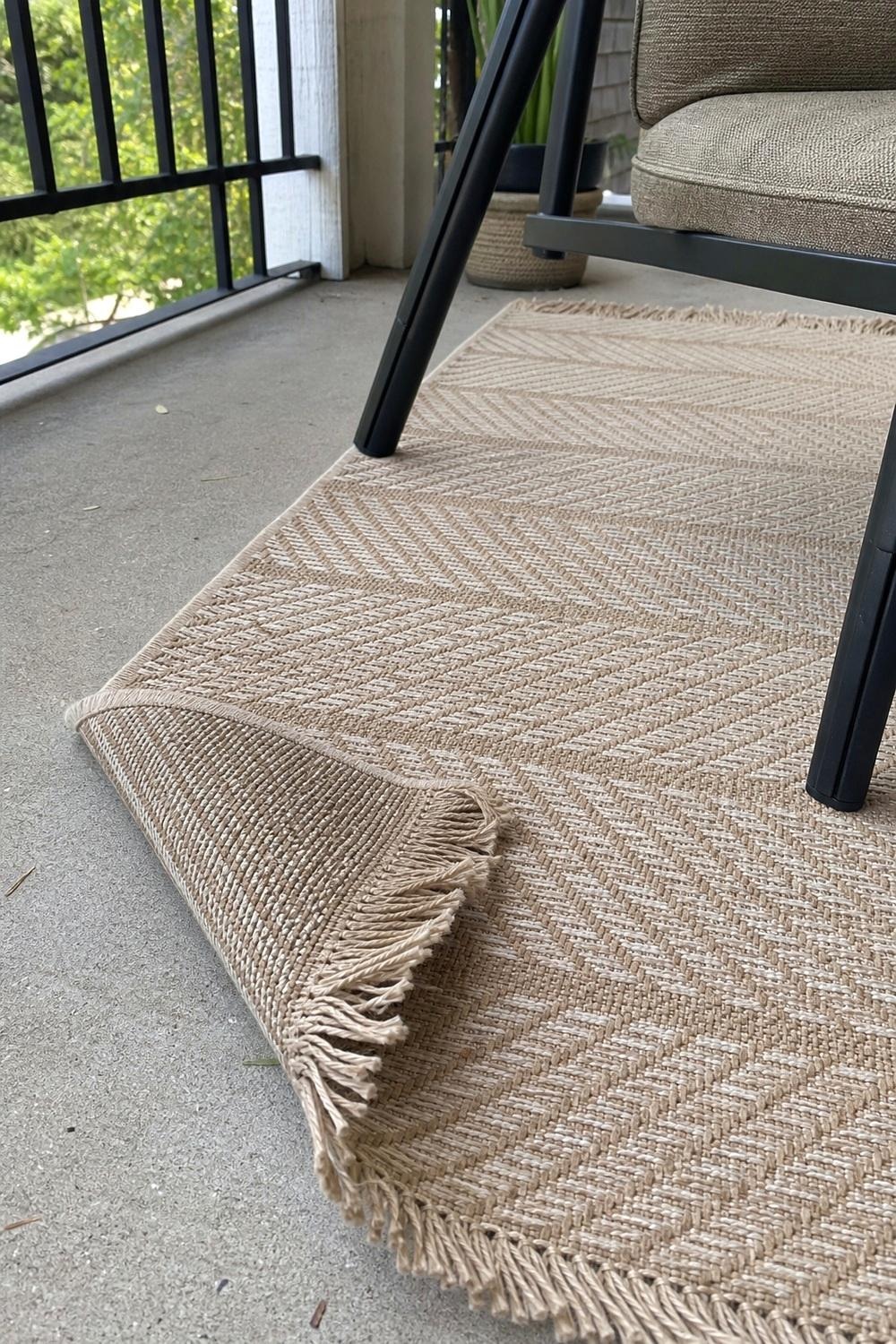
- Measure the narrowest walking path, the chair clearance, and the door swing.
- Choose one storage piece that stays inside those measurements, then test the lid or seat before filling it.
- Put dry cushions in the larger piece and plant tools in the sealed soil bin so each task has one home.
- Leave saucers and containers where you can spot drainage or standing water during the reset.
The University of Maryland Extension notes that balcony containers dry faster in sun and wind and need drainage. That makes a sealed bin useful for supplies, but it is not a substitute for draining a plant pot or saucer.
The Five-Minute Balcony Reset
Put cushions away, return tools to the small bin, empty standing water from saucers, sweep soil spills, and leave one chair ready. This is the same principle as the small patio deck box reset, scaled down for renters.
Mistakes That Cost You the Seating Area
- Buying a box deeper than the balcony floor. Measure the depth, the lid swing, and the door swing before you order, because a box that is too deep takes more usable space than it gives back.
- Storing cushions while they are still damp. Damp fabric goes musty inside a sealed box, so let cushions dry all the way before they go in.
- Using a sealed bin as a plant pot. A tote holds water instead of draining it, so soil lives in a bin and plants live in a pot with drainage holes.
- Blocking the drain. Bins, lids, and saucers left sitting over the drain keep rainwater on the balcony floor after a storm.
- Hanging a rail caddy or shelf before checking the lease. One tidy basket is worth having; a drilled bracket you have to fill and paint is not.
What I’d Buy First
- A low narrow deck box or storage bench.
- One sealed soil bin.
- Small inner bins for tools and plant ties.
- A rule that wet cushions dry before storage.
What to Read Next
- container garden ideas for small patios: use these when pots need a clear, workable grouping.
- two-chair tiny patio layout: pair storage with seating without blocking the door.
- small water features for apartment balconies: check the weight and spill questions before adding water.
- mosquito fixes for patios: use the standing-water checklist around saucers and bins.