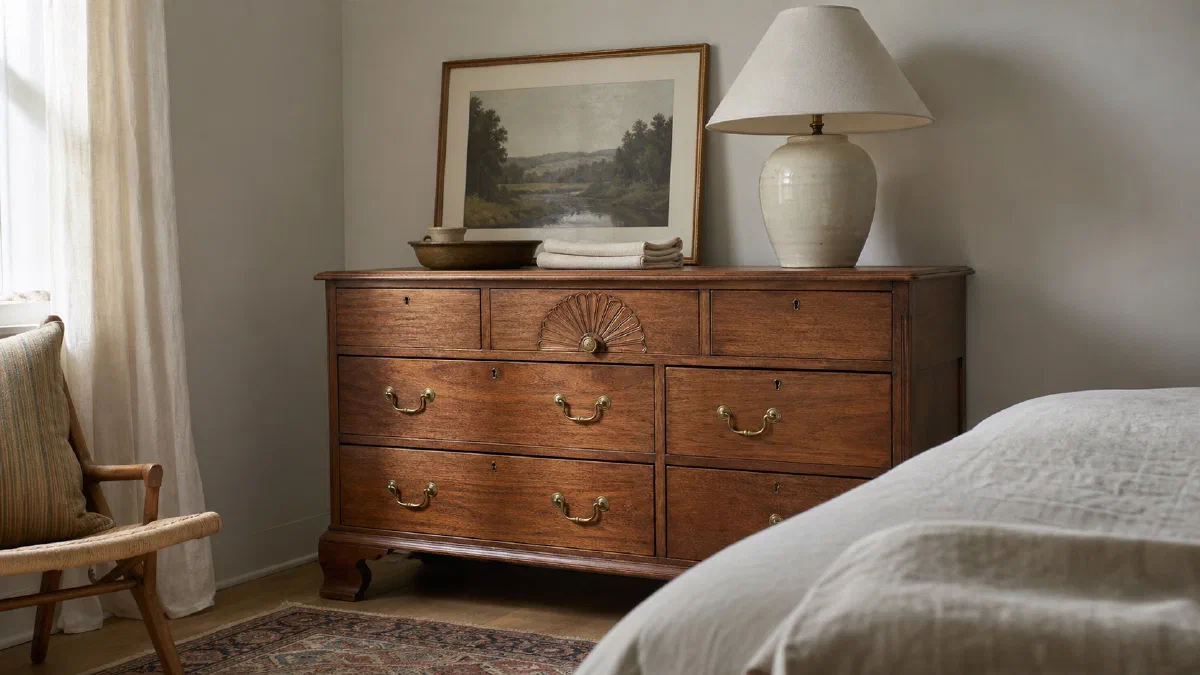
A thrifted dresser can make a room feel like it has a history. It can also make the room feel like the donation pile never left.
The difference is rarely the dresser itself. It is usually scale, placement, and what lands on top of it.
An older dresser already brings visual weight: wood grain, hardware, scratches, drawers, legs, maybe a mirror or a curved front. If every surface around it is also busy, the room starts to feel crowded. If the dresser gets a clear job and a little breathing room, it becomes the piece that makes the room look intentional.
Choose the dresser that fits before you buy
The best thrifted dresser is not always the prettiest one in the shop. It is the one that fits the wall, storage need, and walking path.
Before buying, measure the wall and leave at least a few inches on each side. A dresser jammed tight between trim, door swing, and bed frame almost always reads as cluttered. A slightly smaller dresser with space around it will look more expensive than a huge one that barely fits.
The walking space matters more than the gap on either side. Accessibility standards put the minimum clear width of a walking surface at 36 inches , and that is a sensible floor for the path beside a dresser in a bedroom or hallway. Below it, every trip past the piece feels tight, however good it looks.
Use this quick check:
| Room problem | Better dresser choice |
|---|---|
| Narrow bedroom walkway | Taller chest instead of a wide dresser |
| Empty wall under art | Low dresser with one lamp and framed piece |
| Guest room with no closet | Six-drawer dresser with simple hardware |
| Small entry or hallway | Shallow dresser or bachelor chest |
| Room already has dark wood | Painted dresser or lighter wood tone |
If the piece is gorgeous but blocks a door, crowds the bed, or makes every drawer hard to open, it is not the right piece for that room.
One more thing before you hand over the cash. A secondhand dresser arrives without the anti-tip kit the original box had, so if a small child uses the room, plan to anchor it to a stud. CPSC’s furniture tip-over guidance names dressers directly, notes that thousands of tip-over injuries happen every year, and says to anchor heavy furniture to the wall.
Give it one main job
A dresser looks cluttered when it is asked to do too many things at once.
It cannot be all of these at once:
- the linen cabinet
- the jewelry station
- the plant shelf
- the candle display
- the mail drop
- the book pile
- the place where yesterday’s clothes land
Pick one main job first.
In a bedroom, the job might be folded clothes plus a lamp. In a guest room, it might hold extra towels and a water carafe. In a living room , it can hide games, cords, linens, or seasonal decor. In an entry, it can catch keys and dog-walking supplies as long as the top stays edited.
Once the job is clear, the styling gets easier. Anything that does not support the job has to earn its place.
How to style the top in three zones
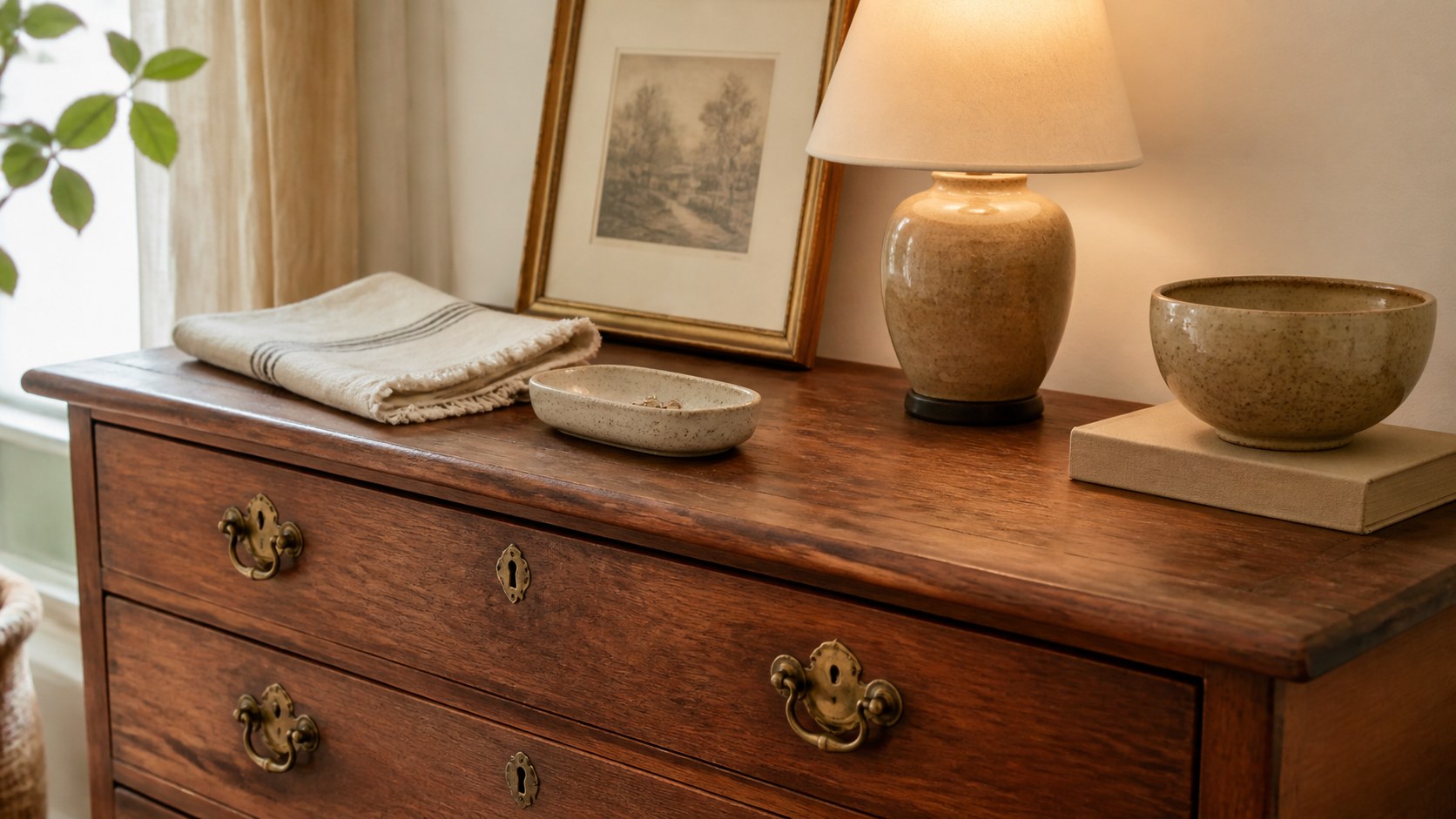
The easiest tabletop formula is simple: height, utility, and softness.
Start with one tall thing. A lamp is usually the most useful choice, especially in a bedroom or hallway. A vase with branches, a framed print, or a mirror can also work.
Then add one useful catch point. This might be a tray, bowl, small box, or folded cloth. It gives loose items a boundary so the surface does not turn into a scatter of jewelry, receipts, hair ties, and coins.
Finish with one soft or personal detail: a small stack of books, a linen runner, a framed photo, or a plant if the room has enough light.
That is enough. The dresser does not need five candles and three vases to prove it has been styled.
Let the old finish show, but edit around it
Scuffs, scratches, and uneven color can make a thrifted dresser feel soulful. They only become a problem when the room around the dresser is also visually noisy.
If the dresser has a worn finish, keep the bedding, rug, or nearby wall calmer. If it has ornate hardware, choose simpler art. If it is painted a bold color, let nearby pieces stay quieter.
Collected does not mean every object has to be old. It means the pieces feel chosen. A vintage dresser can look better beside a clean-lined lamp, fresh white shade, simple mirror, or plain linen than beside more vintage pieces competing for attention.
That restraint is the whole difference in a bedroom. A farmhouse bedroom that feels warm instead of staged usually has one honest old piece and quiet everything else.
Clean the hardware before you decide
Hardware can make a secondhand dresser look charming or cheap. But replacing pulls is not always the first move.
Clean the existing hardware before deciding. Warm water, mild soap, and a soft cloth can bring back enough shine. If the hardware still feels wrong, swap it for something that matches the age and weight of the dresser.
Good low-risk choices include unlacquered brass knobs, simple black pulls, wood knobs, or antique-style bin pulls. Avoid tiny modern knobs on a heavy dresser; they can make the scale feel off.
If the dresser already has original hardware that works, keep it. A little patina often does more for the room than a new set of trendy pulls.
Keep empty space on purpose
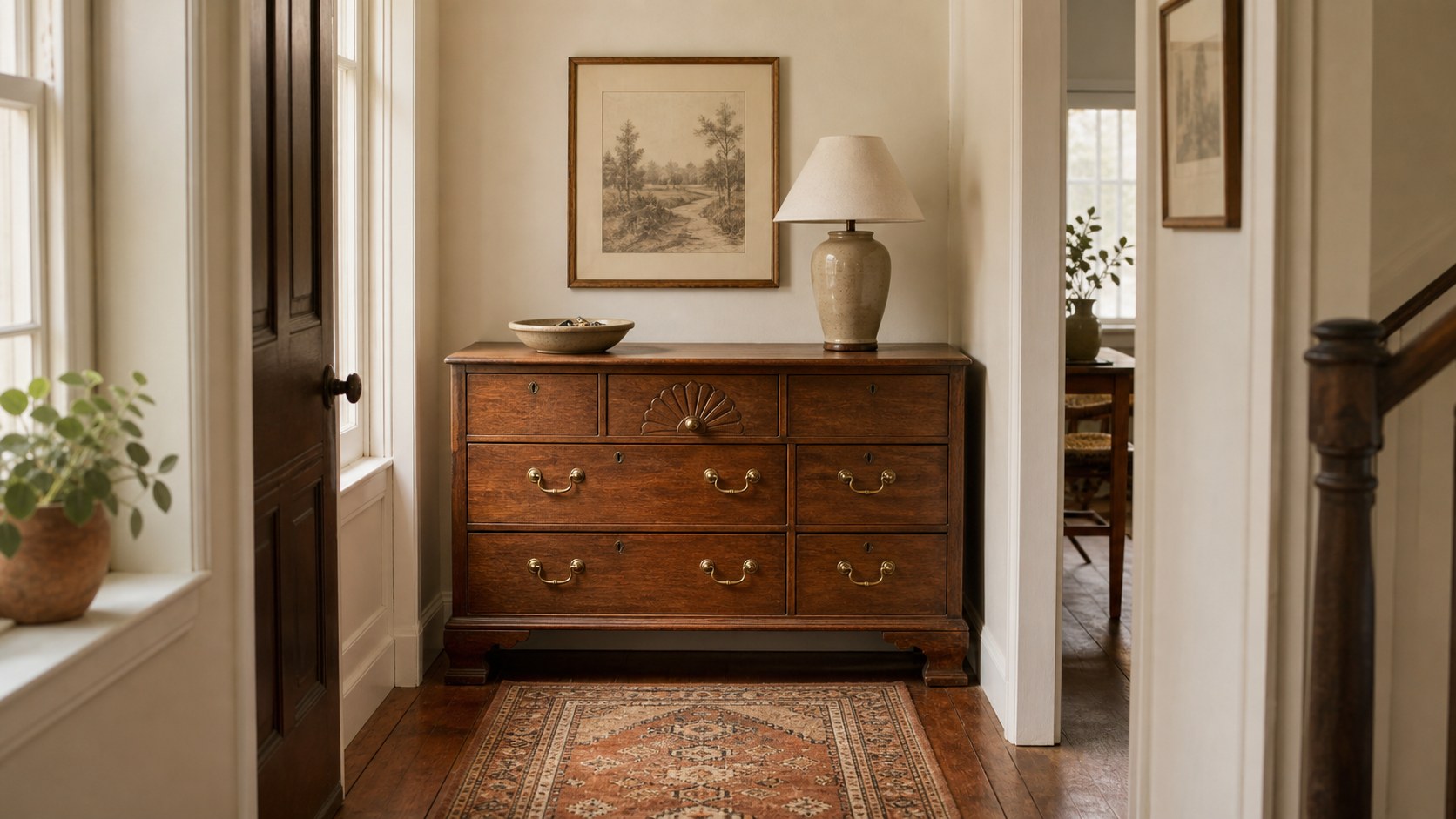
Empty space is what makes a thrifted dresser look expensive instead of crowded.
Leave part of the top bare. Let the wall show around the mirror or art. Do not fill the floor beside it just because there is room for a basket. If you need a basket, use one. If you do not, let the dresser breathe.
The final test is simple: step into the room and notice what your eye does first. If the dresser feels like an anchor, the styling is working. If your eye bounces between small objects, piles, frames, and baskets, take three things away.
A thrifted dresser does not need to look perfect. It needs to look like it belongs there.
What to Read Next
- Corner Shelf Styling That Actually Gets Used runs the same edit on a smaller surface.
- I Took 10 Things Out of My Living Room and It Finally Felt Calm is what subtraction looks like over a whole room.
- Make Your Bedroom Feel Like a Spa Without Buying All New Stuff keeps the calm going past the dresser.
- A Farmhouse Bedroom That Feels Warm Instead of Staged shows how one old piece and quiet everything else works together.