Most of us treat our gardens like a to-do list. Weeding, pruning, edging, mulching. The yard becomes another chore, and we never actually sit down and enjoy the space we built.
A backyard retreat flips that script. It is a dedicated area in your garden designed for rest, not work. A place where the seating is comfortable, the plants mostly take care of themselves, and you can hear birds instead of your own internal task manager.
This guide covers everything you need to create one, from choosing the right garden seating to planting ground covers that eliminate weeding, attracting wildlife, and building a meditation space. Most of these ideas cost under $200 and work in gardens of any size.
Why a Backyard Retreat Matters for Simple Living
The simple living lifestyle is about reducing noise and creating space for what matters. Your garden is one of the few places at home where you are surrounded by nature, fresh air, and natural light. Research from the University of Exeter found that spending just 120 minutes per week in nature significantly improves health and wellbeing.
But here is the problem: if every minute outside is spent working, you never get the restorative benefit. A backyard retreat gives you a specific spot to sit, breathe, and do nothing productive. That is the whole point.
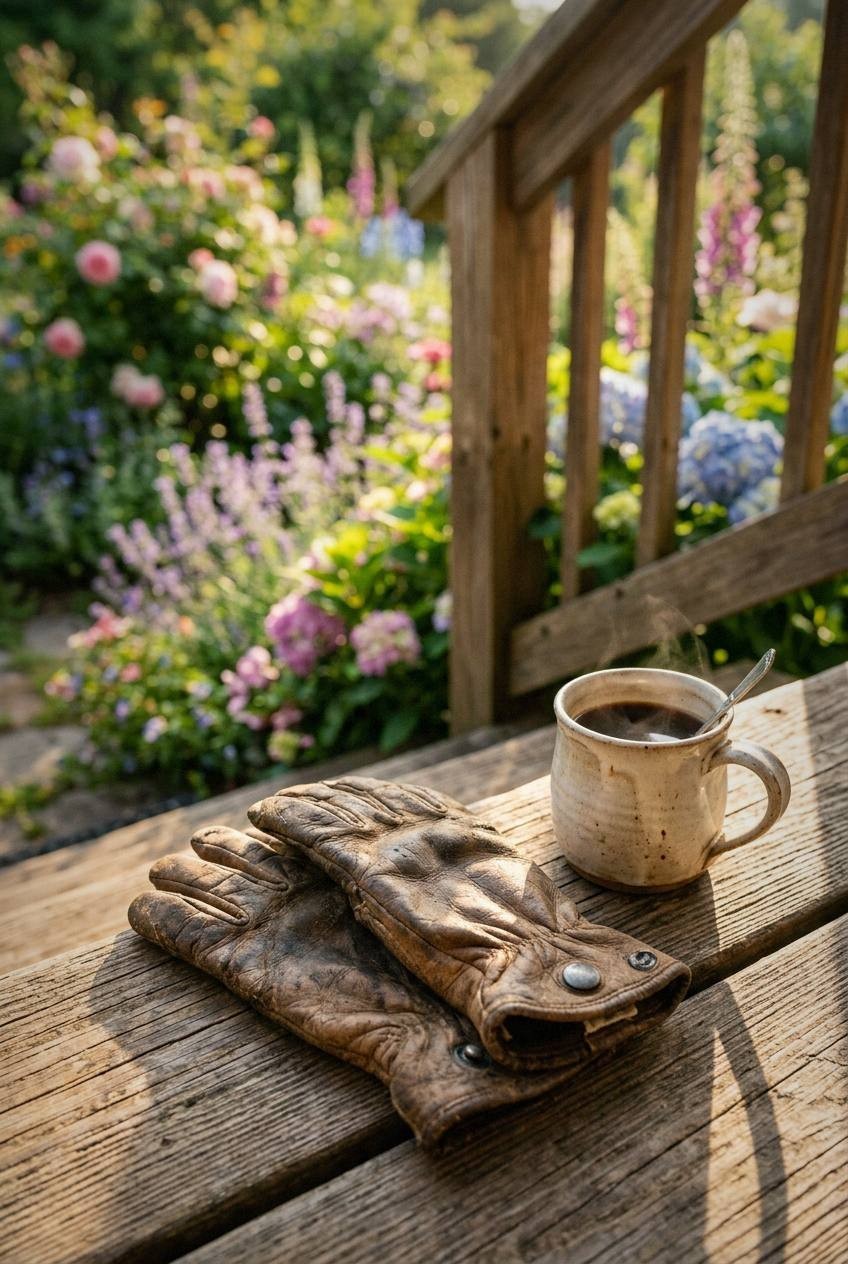
I spent years treating my garden like a weekend project. The week I finally stopped weeding and just sat on the porch step with my coffee, I noticed bees I had never seen before, birds I had been too busy to watch, and plants that were doing perfectly fine without my constant fussing.
How to Design a Backyard Retreat Area
Choose the Right Location
The best spot for a garden retreat has three qualities:
- Partial shade. Full sun gets uncomfortable fast. Look for areas under a tree canopy, beside a fence with afternoon shade, or near a north-facing wall.
- Some separation from the house. Even 15 feet of distance creates a mental shift. A corner of the yard, a spot behind raised beds, or the far end of a path all work.
- A good view. Face your seating toward the most interesting part of your garden. Flower beds, a bird bath, a mature tree. Avoid facing the shed or the neighbor’s fence.
Budget Planning
| Budget Tier | What You Get | Estimated Cost |
|---|---|---|
| Minimal | Repurposed chair + ground cover seeds + bird bath | $30-75 |
| Mid-range | Garden bench + stepping stones + 3-4 ground cover plants + wind chime | $100-250 |
| Full retreat | Hanging chair or hammock + gravel pad + native plantings + water feature | $300-600 |
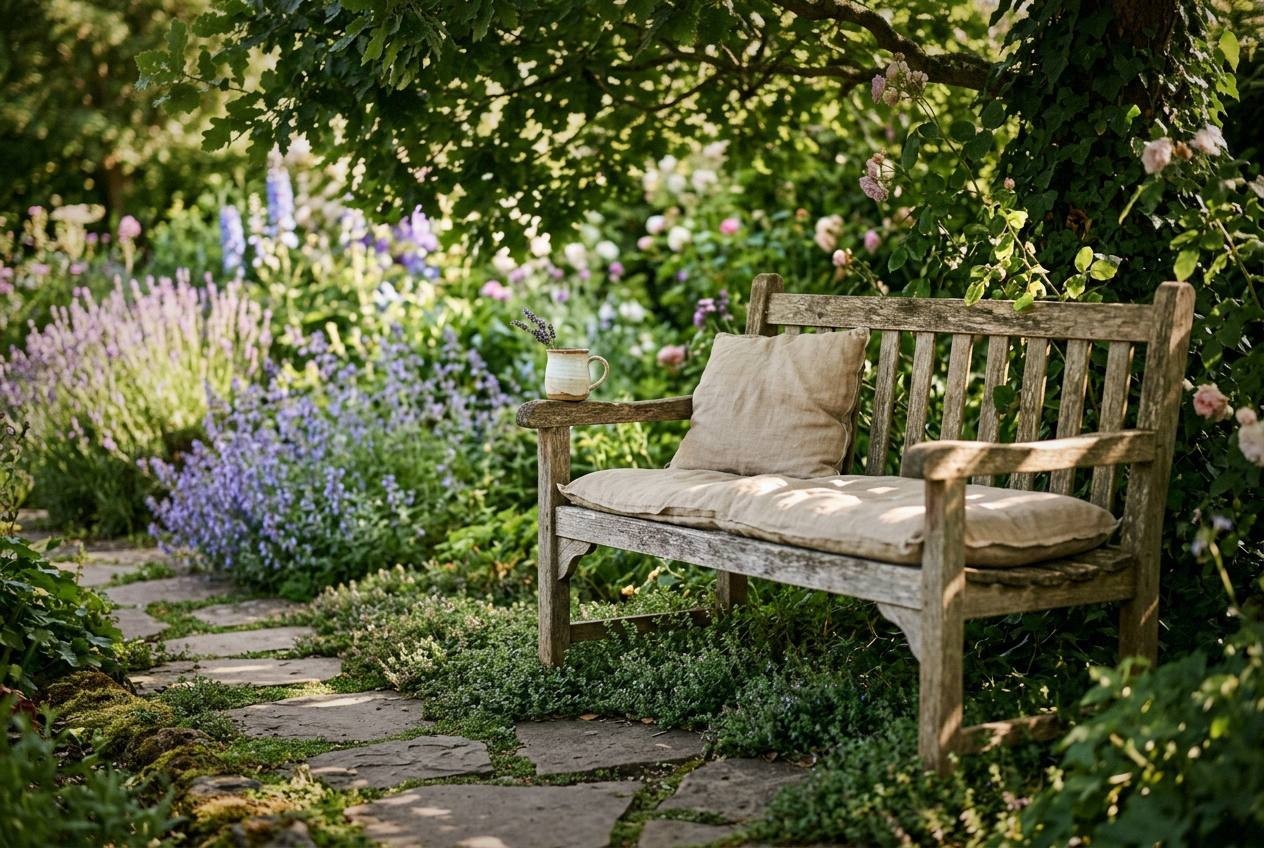
You do not need to spend a lot. A solid wooden bench and a packet of creeping thyme seeds will get you 80% of the way there.
Best Garden Seating Options for a Backyard Retreat
Seating is the single most important element. If the seat is uncomfortable or hard to get to, you will not use it. Here is a comparison of the most popular options for garden relaxation spaces.
Garden Seating Comparison Table
| Seating Type | Comfort Level | Durability | Price Range | Best For |
|---|---|---|---|---|
| Wooden garden bench | Medium | 10-20 years (hardwood) | $80-300 | Classic look, permanent placement |
| Adirondack chair | High | 10-15 years (cedar/poly) | $100-250 | Deep relaxation, reading |
| Hanging egg chair | Very High | 5-8 years | $150-400 | Statement piece, meditation |
| Cotton rope hammock | Very High | 3-5 years | $40-120 | Napping, total relaxation |
| Outdoor bean bag | High | 2-4 years | $50-150 | Casual, moveable |
| Stone bench | Low | Lifetime | $100-500 | Low maintenance, always ready |
Tips for Choosing Garden Seating
- Weatherproof materials matter. Teak, cedar, recycled poly lumber (HDPE), and powder-coated steel last longest outdoors without covers.
- Add a cushion. Even the best bench improves with a 2-inch outdoor cushion. Sunbrella fabric resists mold and UV fading.
- Keep it accessible. Place seating on a flat surface (flagstone, gravel pad, or mowed grass). Stepping stones from the main path make the route inviting.
- Two seats are better than one. A bench plus a single chair lets you sit alone or with someone. Shared quiet time in the garden is underrated.
Low-Maintenance Garden Ideas That Look Good Without Constant Weeding
The number one barrier to enjoying a garden is the guilt of seeing work that needs doing. Low-maintenance garden design removes that guilt entirely. The goal is a garden that looks intentional, even when you have not touched it in two weeks.
Ground Cover Plants That Suppress Weeds Naturally
Ground cover plants spread to fill bare soil, blocking sunlight from weed seeds and eliminating the need for constant weeding. These are the best options for a simple living garden.
| Plant | Sun Needs | Height | Walk-On Friendly | USDA Zones | Notes |
|---|---|---|---|---|---|
| Creeping thyme (Thymus serpyllum) | Full sun | 2-4 inches | Yes | 4-9 | Fragrant when stepped on, purple flowers in summer |
| White clover (Trifolium repens) | Full sun to part shade | 4-8 inches | Yes | 3-10 | Fixes nitrogen, feeds pollinators, free fertilizer |
| Sedum (Sedum spurium) | Full sun | 3-6 inches | Light traffic only | 3-9 | Drought tolerant, turns red in fall |
| Creeping jenny (Lysimachia nummularia) | Part shade to shade | 2-4 inches | Light traffic only | 3-9 | Golden variety brightens dark corners |
| Sweet woodruff (Galium odoratum) | Full shade | 6-8 inches | No | 4-8 | Vanilla scent, excellent under trees |
| Irish moss (Sagina subulata) | Part shade | 1-2 inches | Light traffic only | 4-8 | Tiny white flowers, looks like a green carpet |
Planting tip: For fastest coverage, plant ground covers on 8-12 inch centers in spring. Most will fill in completely within one growing season. Mulch between plants with 1-2 inches of fine bark until they spread.
Other Low-Maintenance Strategies
- Mulch heavily. Three inches of hardwood mulch around perennials cuts weeding by 90%.
- Plant in masses. Groups of the same plant look intentional and crowd out weeds. Five hostas together read as a design choice. One hosta surrounded by bare soil reads as neglect.
- Use native perennials. Plants adapted to your region need less water, less fertilizer, and less attention. Coneflower (Echinacea), black-eyed Susan (Rudbeckia), and bee balm (Monarda) are reliable across most of the US.
- Let edges go soft. Strict lawn edges need weekly maintenance. Letting ground covers spill over stone borders looks natural and saves time.
Garden Features That Attract Wildlife
A garden retreat feels alive when birds, bees, and butterflies show up. Wildlife turns a quiet corner into something worth watching for twenty minutes with your morning coffee. I once sat still long enough to notice dozens of tiny carpenter bees (Ceratina) nesting in my lavender stems. Six years of growing lavender, and I had never seen them before.
Wildlife Feature Checklist
- Bird bath. A shallow basin (1-2 inches deep) with a rough surface for grip. Change water every 2-3 days to prevent mosquitoes. Place it within 10 feet of shrubs so birds feel safe.
- Native plants. Native species support 10-50 times more caterpillar species than non-natives, which means more birds. Doug Tallamy’s research at the University of Delaware proved this across hundreds of plant genera.
- Pollinator garden. Plant at least three species that bloom in each season (spring, summer, fall) to provide continuous nectar. Lavender, coneflower, goldenrod, and aster cover the full range.
- Brush pile. A small pile of sticks and leaves in an out-of-the-way corner provides shelter for toads, ground-nesting bees, and overwintering beneficial insects.
- Leave seed heads standing. Do not deadhead everything in fall. Coneflower, rudbeckia, and ornamental grass seed heads feed birds through winter.
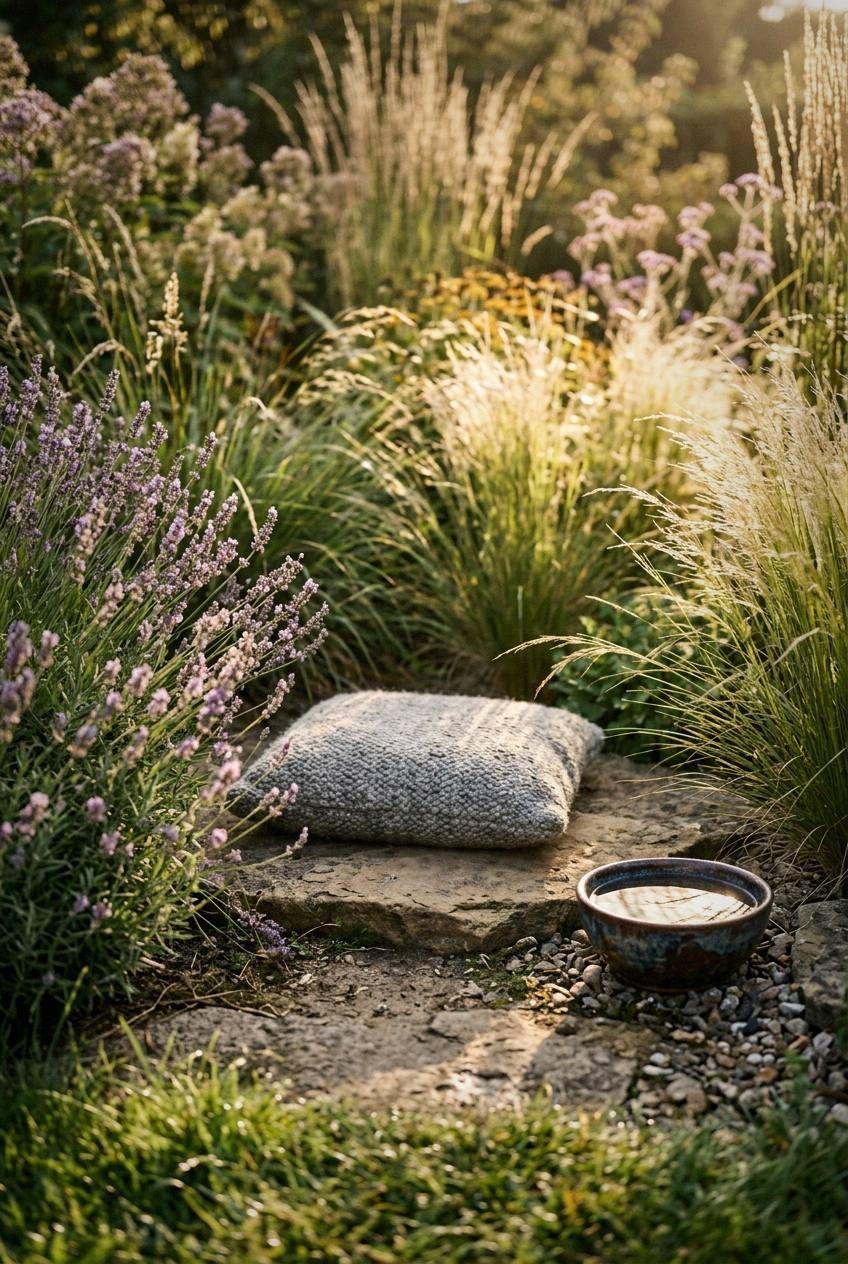
How to Create a Meditation or Quiet Space in Your Garden
Mindful gardening is not just about tending plants with intention. It also means creating a physical space designed for stillness. A garden meditation area does not require anything fancy.
Essential Elements
- A comfortable seat. A cushioned bench, a flat stone with a meditation cushion, or a hammock.
- Wind sound. A small wind chime, bamboo water fountain ($25-60 on Amazon), or simply a spot where you can hear leaves rustling.
- Visual focal point. One thing to rest your eyes on. A single large stone, a potted Japanese maple, a bird bath, or a mature ornamental grass.
- Enclosure on at least two sides. Tall grasses, a hedge, a fence with climbing vines, or raised planters. Partial enclosure creates a sense of shelter without feeling boxed in.
- No visible chores. Face away from the compost bin, the hose reel, and the shed. Your brain cannot rest when it sees work.
Budget Meditation Space Setup
- Flat area of gravel or stepping stones (2-3 bags of pea gravel, $15-25)
- Outdoor meditation cushion or repurposed indoor cushion in a waterproof cover ($20-40)
- One potted plant as focal point ($10-30)
- Small battery-powered tabletop fountain ($20-35)
Total: $65-130 for a dedicated quiet space.
Seasonal Garden Retreat Tips
Your backyard retreat should work from early spring through late fall. Each season needs small adjustments.
Spring (March through May)
- Move seating into the sunniest spot. Morning sun feels good when temperatures are still cool.
- Plant ground covers now for full coverage by summer.
- Set out the bird bath early. Migrating birds need water in April and May.
- Add a lightweight blanket to your retreat spot for cool mornings.
Summer (June through August)
- Shift seating to shade. Under a tree canopy, beneath a shade sail, or on the north side of a structure.
- Keep a pitcher of water at your retreat spot. You will stay longer if you are hydrated.
- Evening is the best time. Fireflies, cooler air, and golden hour light make summer evenings the peak garden retreat season.
- Let the garden get a little wild. Summer growth fills gaps and creates that lush, overgrown cottage garden look.
Fall (September through November)
- Move back to the sunny spot as temperatures drop.
- Leave ornamental grasses and seed heads standing. They look beautiful with morning frost and feed birds.
- Add a weatherproof throw or heated outdoor blanket to extend the season.
- Fall color from native trees and shrubs (dogwood, viburnum, serviceberry) adds free visual interest.
Quick-Start Checklist: Your Backyard Retreat This Weekend
- Pick a spot with partial shade and a good view
- Place a comfortable chair or bench there
- Clear a 4x4 foot area around the seat (mow, rake, or lay gravel)
- Add one natural sound element (wind chime, fountain, or just proximity to trees)
- Plant one ground cover to reduce future weeding (creeping thyme is the easiest)
- Place a bird bath within view of your seat
- Sit there tomorrow morning with your coffee. No gloves. No task list.
Frequently Asked Questions
How much does it cost to create a backyard retreat?
A basic backyard retreat costs $30-75 using a repurposed chair, ground cover seeds, and a simple bird bath. A mid-range setup with a proper garden bench, stepping stones, and a few plants runs $100-250. You can build a full retreat with a hammock, gravel pad, and water feature for $300-600. Most people find the mid-range option covers everything they need.
What are the best ground cover plants to reduce weeding?
Creeping thyme, white clover, and sedum are the top three ground covers for weed suppression. Creeping thyme works best in sunny areas and releases fragrance when walked on. White clover thrives in sun or partial shade and fixes nitrogen in the soil. Sedum handles drought and poor soil. All three spread quickly when planted on 8-12 inch centers in spring.
How do I attract birds and pollinators to my garden retreat?
Start with a shallow bird bath (1-2 inches deep) placed within 10 feet of shrubs. Plant native perennials like coneflower, bee balm, and goldenrod that bloom across spring, summer, and fall. Leave seed heads standing through winter instead of cutting everything back. A small brush pile in a corner provides shelter for beneficial insects and ground-nesting birds.
Can I create a garden retreat in a small yard?
Yes. A backyard retreat only needs a 4x6 foot area. A single comfortable chair, a potted plant, and a small fountain create a functional retreat on a patio, balcony, or tiny urban yard. The key is separation, even symbolic separation. A few potted grasses or a trellis with climbing vines screens your retreat from the rest of the space.
What is the difference between mindful gardening and regular gardening?
Regular gardening focuses on tasks: weeding, planting, pruning, and harvesting. Mindful gardening treats the garden as a space for presence and observation. You sit before you work. You notice insects, birds, and plant growth before reaching for tools. Both approaches are valuable, but mindful gardening is specifically designed to reduce stress and increase your connection to the outdoor space.
How do I maintain a garden retreat with minimal effort?
Use ground cover plants instead of mulch in areas around seating. Choose native perennials that do not need deadheading or dividing. Mulch beds with 3 inches of hardwood mulch once per year in spring. Skip strict lawn edges and let borders go soft. Clean the bird bath every few days. The entire maintenance routine takes about 15 minutes per week once plants are established.