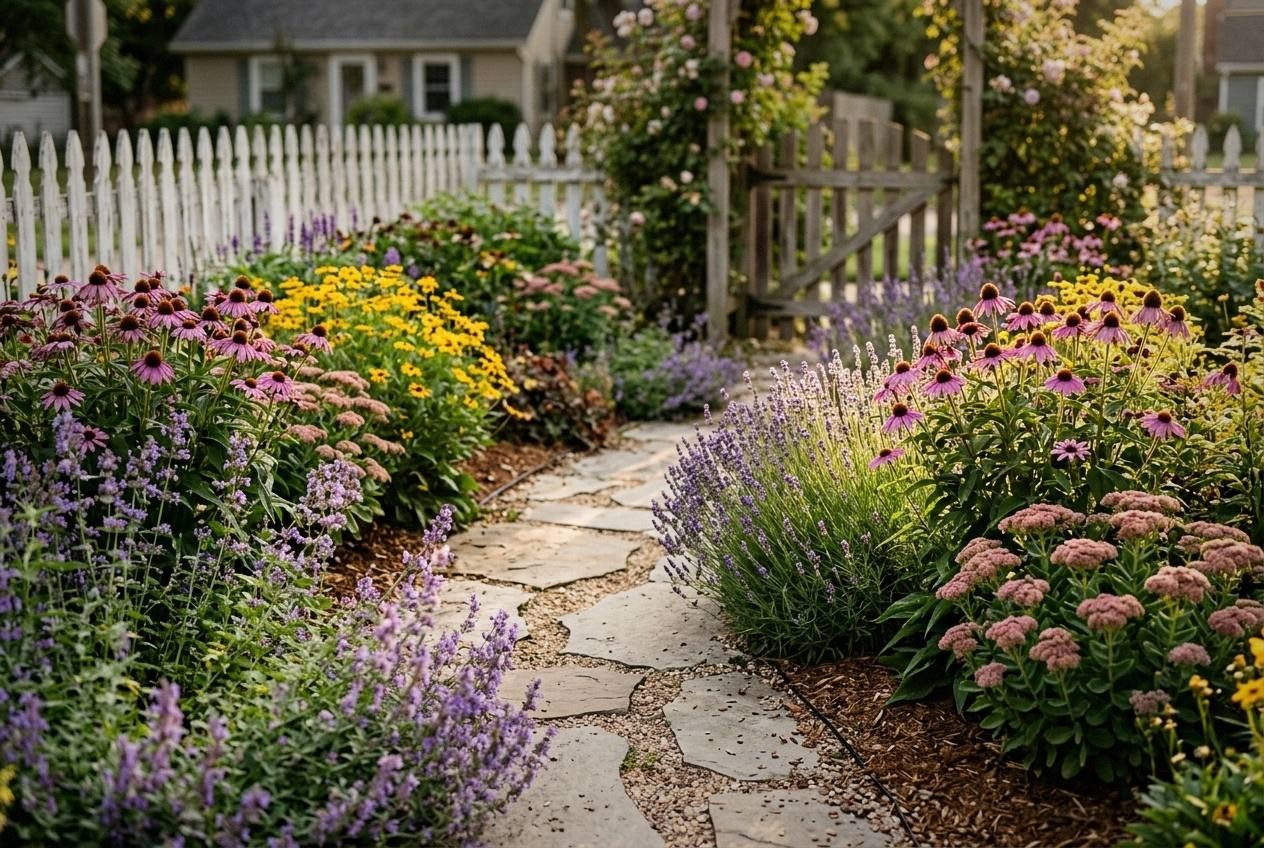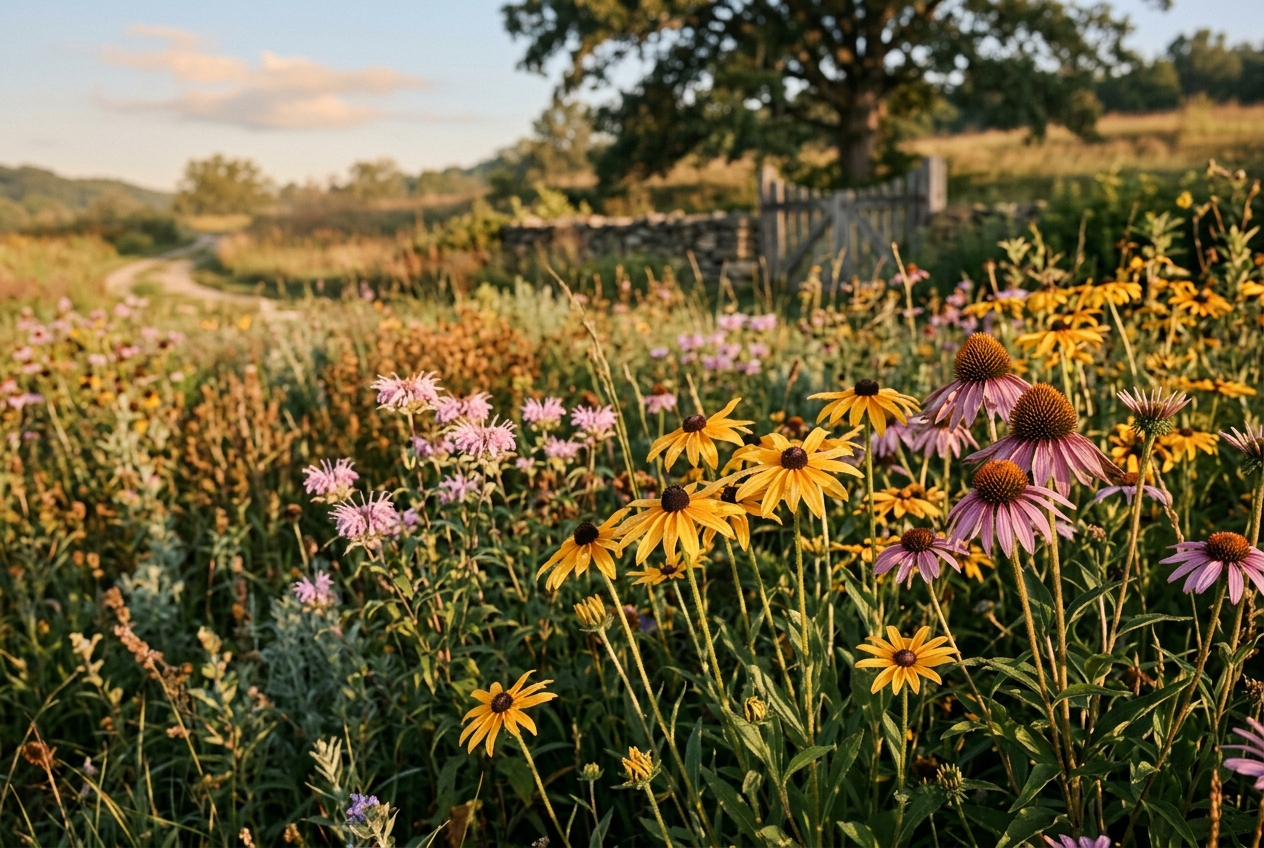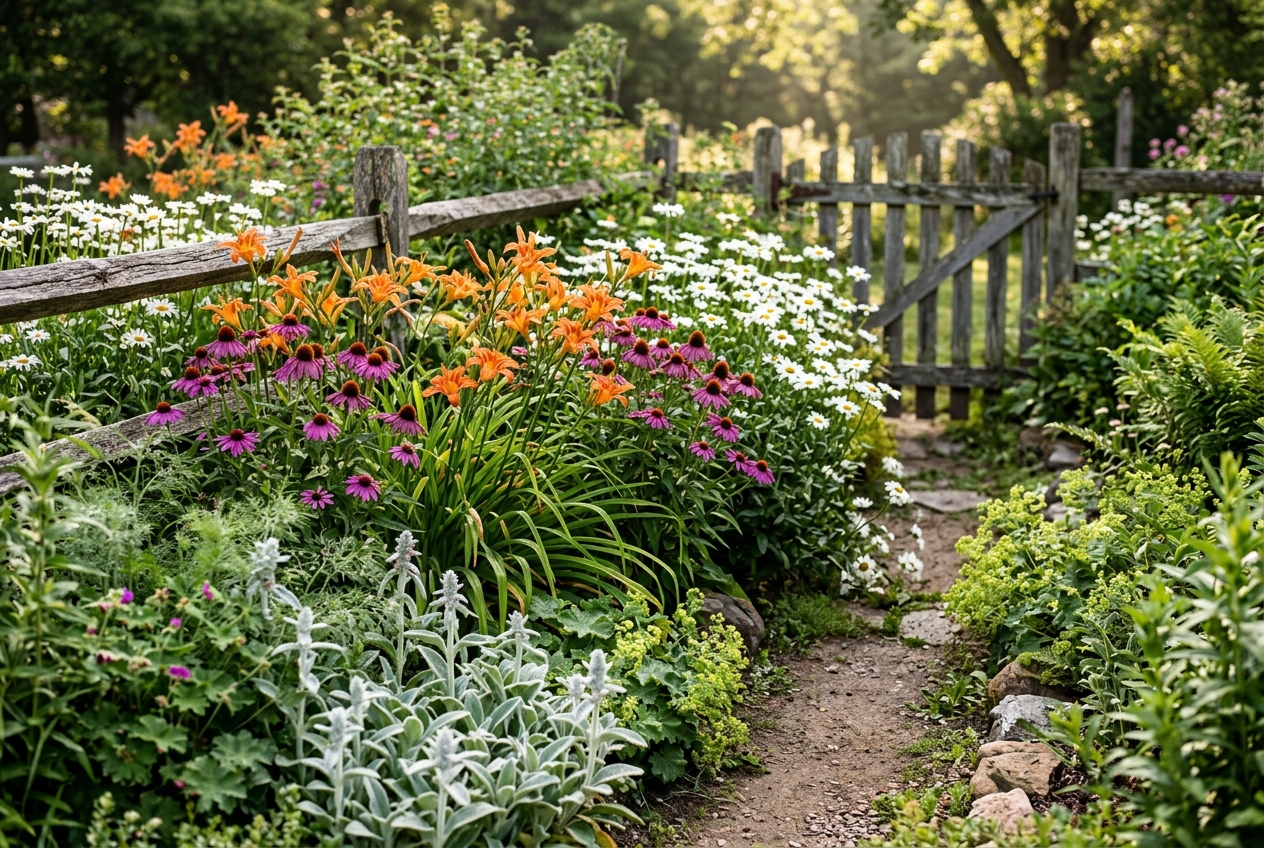
A cottage garden looks effortless, like it planted itself. In reality, the “effortless” part comes from choosing perennials that spread, self-seed, and fill gaps without you doing much of anything after year one.
This guide covers the 10 best cottage garden perennials for beginners, with a comparison table, a planting layout, spacing numbers, and a realistic timeline for what your garden will look like from the first season through year three. Whether you have a sunny front yard or a partially shaded side bed, there is a cottage garden plan here that works.
Best Cottage Garden Perennials: Comparison Table
The table below covers the 10 most reliable cottage garden plants ranked by ease and spread rate. Every plant listed is hardy, low-maintenance, and proven to fill in a border within two to three growing seasons.
| Plant | Botanical Name | Height | Bloom Time | Zones | Sun | Spread Rate |
|---|---|---|---|---|---|---|
| Purple Coneflower | Echinacea purpurea | 2-4 ft | Jun-Sep | 3-9 | Full sun | Self-seeds aggressively |
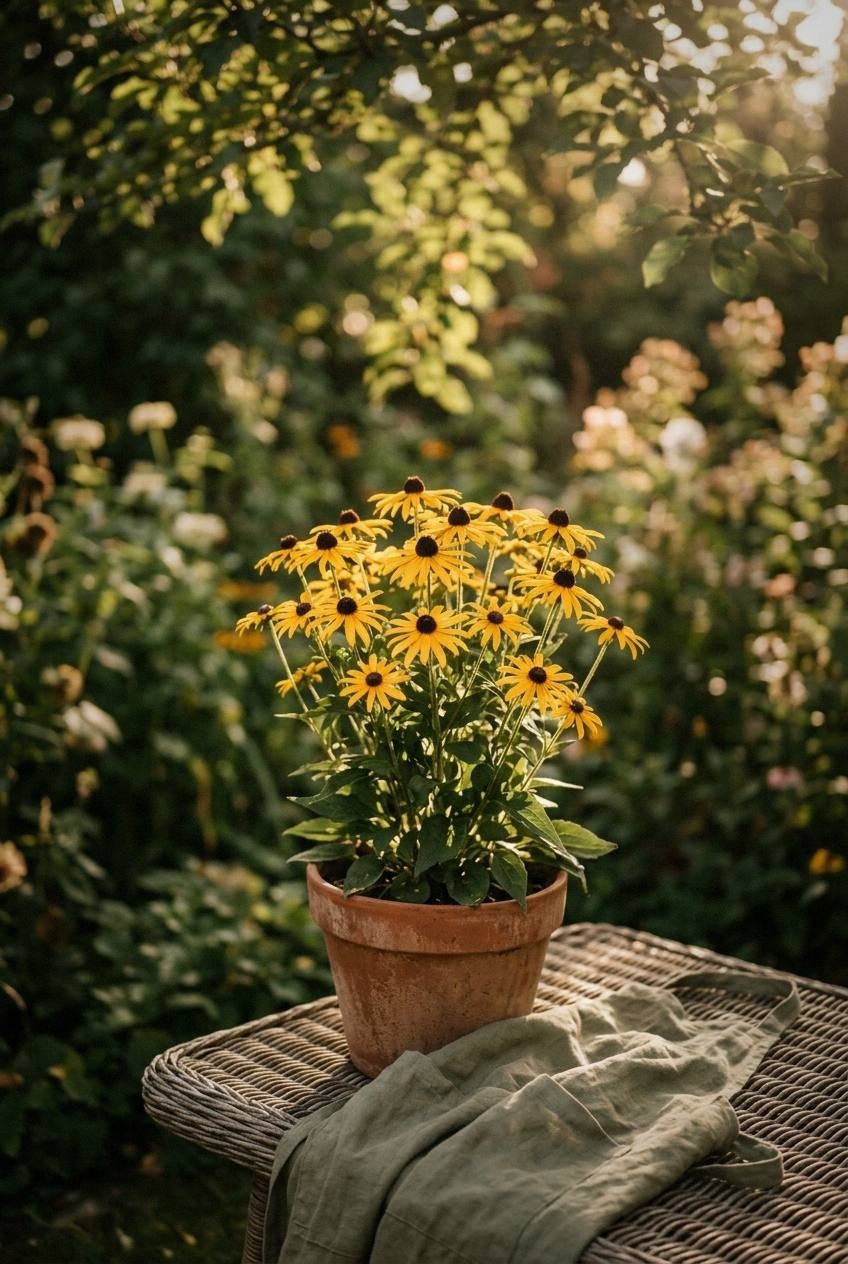
| Black-Eyed Susan | Rudbeckia fulgida ‘Goldsturm’ | 2-3 ft | Jul-Oct | 3-9 | Full sun | Seed + rhizome |
| Catmint | Nepeta ‘Walker’s Low’ | 2-3 ft | May-Sep | 3-8 | Full sun to part shade | Clump expansion |
| Garden Phlox | Phlox paniculata ‘David’ | 3-4 ft | Jul-Sep | 4-8 | Full sun | Crown division |
| Daylily | Hemerocallis ‘Stella de Oro’ | 12-18 in | May-Sep | 3-10 | Full sun to part shade | Clump expansion |
| English Lavender | Lavandula angustifolia ‘Hidcote’ | 12-18 in | Jun-Aug | 5-9 | Full sun | Slow mounding |
| Salvia | Salvia nemorosa ‘May Night’ | 18-24 in | May-Jul | 4-9 | Full sun | Moderate clump |
| Lady’s Mantle | Alchemilla mollis | 12-18 in | Jun-Jul | 3-8 | Part shade to full sun | Self-seeds freely |
| Astilbe | Astilbe ‘Visions in Pink’ | 18-24 in | Jun-Aug | 4-8 | Part shade to full shade | Slow clump |
| Hardy Geranium | Geranium ‘Rozanne’ | 12-20 in | Jun-Oct | 5-8 | Full sun to part shade | Spreading groundcover |
I planted my first cottage border with just four of these (coneflower, black-eyed susan, catmint, phlox) and the bed was packed by year three.
3-Tier Cottage Garden Layout (Beginner-Friendly)
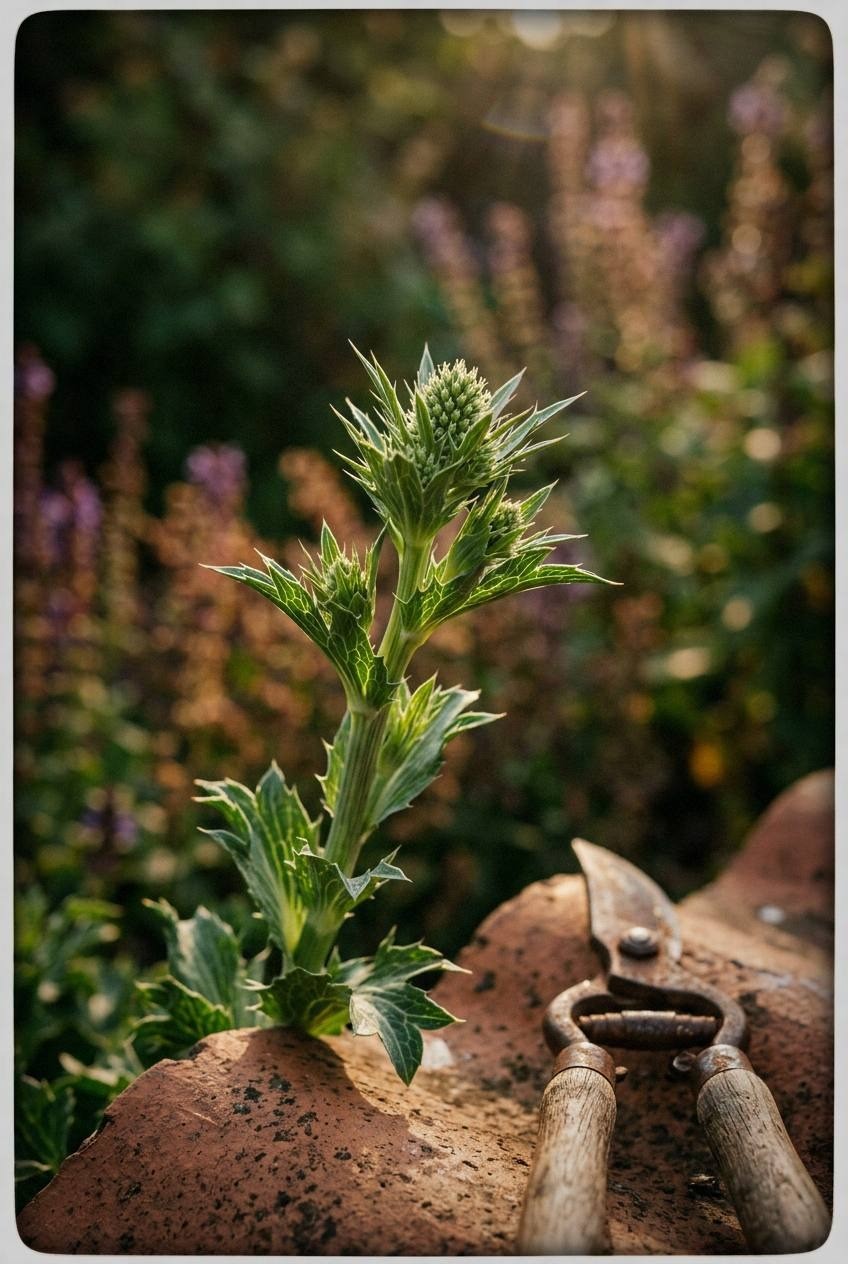
The easiest way to plan a cottage garden is the three-tier method: tall in the back, medium in the middle, short at the front. This works for borders along a fence, foundation beds, and island beds viewed from one side.
Back tier (3-4 feet):
- Phlox paniculata ‘David’ (white) or ‘Bright Eyes’ (pink)
- Echinacea purpurea (purple coneflower)
- Plant 18-24 inches apart
Middle tier (2-3 feet):
- Rudbeckia fulgida ‘Goldsturm’ (black-eyed susan)
- Nepeta ‘Walker’s Low’ (catmint)
- Salvia nemorosa ‘May Night’
- Plant 15-18 inches apart
Front tier (under 18 inches):
- Hemerocallis ‘Stella de Oro’ (daylily)
- Lavandula angustifolia ‘Hidcote’ (English lavender)
- Geranium ‘Rozanne’ (hardy geranium)
- Plant 12-15 inches apart
Plant-by-Number Layout for a 10-Foot Border
For a bed roughly 10 feet long by 4 feet deep:
- Back row: 3 phlox + 2 coneflowers (spaced 20 inches)
- Middle row: 3 black-eyed susans + 2 catmint (spaced 18 inches)
- Front row: 3 daylilies + 2 lavender (spaced 14 inches)
- Total: 15 plants
This gives you continuous bloom from May through October with no gaps in color.
Cottage Garden Spacing Guide
Spacing is where most beginners make mistakes. The empty mulch looks bad in year one, and the temptation to crowd plants together is strong. Resist it.
| Plant Type | First-Year Spacing | Mature Spread | Notes |
|---|---|---|---|
| Coneflower | 18 in | 24-30 in | Seedlings fill gaps by year 2 |
| Black-eyed susan | 18 in | 24-36 in | Spreads by root and seed |
| Catmint | 18 in | 30-36 in | ‘Walker’s Low’ gets bigger than the name suggests |
| Garden phlox | 24 in | 24-30 in | Needs air circulation to prevent powdery mildew |
| Daylily | 12 in | 18-24 in | Divide every 3-4 years |
| Lavender | 14 in | 18-24 in | Needs excellent drainage |
Tip: Plant in odd-numbered groups (3, 5, or 7) instead of rows. Stagger the groups so plants overlap slightly as they mature. This creates the “tumbling into each other” look that defines the cottage garden aesthetic.
What to Expect: Year 1 vs Year 3
The biggest reason people abandon cottage gardens is unrealistic expectations in the first season. Here is an honest timeline.
Year 1: Establishment
- Plants look small and lonely in a sea of mulch
- Coneflowers may produce a few blooms; black-eyed susans often skip blooming entirely
- Catmint gives wispy flower spikes
- Phlox puts out one or two bloom stalks
- Root systems are growing underground even if top growth looks underwhelming
- Your job: Water weekly (1 inch per week), mulch 2-3 inches deep, leave everything alone
Year 2: Filling In
- Each plant doubles in size
- Coneflowers produce 4-5 stems per clump instead of 1
- Black-eyed susans bloom aggressively (dozens of flowers per plant, July through October)
- Catmint spreads sideways and flops over bed edges
- Coneflower seedlings appear in gaps between established plants
- Mulch starts disappearing under foliage
- Your job: Almost nothing. Water only during extended dry spells.
Year 3: The Cottage Garden Look
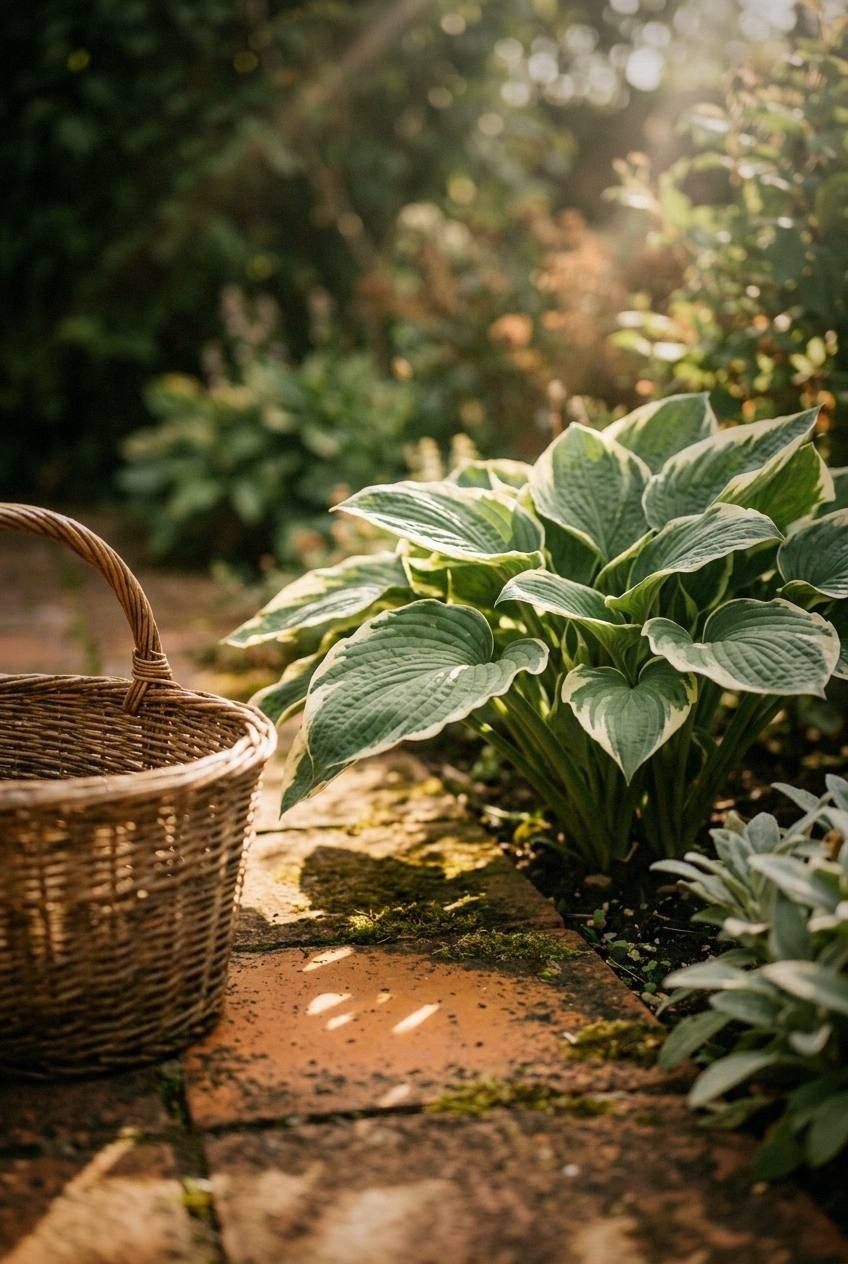
- Bed is full. Plants grow into and through each other.
- Self-seeded coneflowers are now blooming plants
- Catmint and phlox may need dividing
- No new purchases needed (the garden plants itself)
- Continuous bloom from late spring through first frost
- Your job: Divide overcrowded clumps, cut dead stems in early spring, enjoy.
That third-year morning when you walk outside and it finally looks like the photos is worth every month of staring at mulch.
Best Perennials for Shade Cottage Gardens
Not every cottage garden gets full sun. If your bed gets 3-6 hours of direct light (part shade) or less than 3 hours (full shade), these perennials work:
- Astilbe (Astilbe ‘Visions in Pink’, zones 4-8): Feathery plumes in pink, red, or white. Thrives in moist shade. 18-24 inches tall.
- Lady’s Mantle (Alchemilla mollis, zones 3-8): Chartreuse flowers, scalloped leaves that hold raindrops. Self-seeds freely. 12-18 inches.
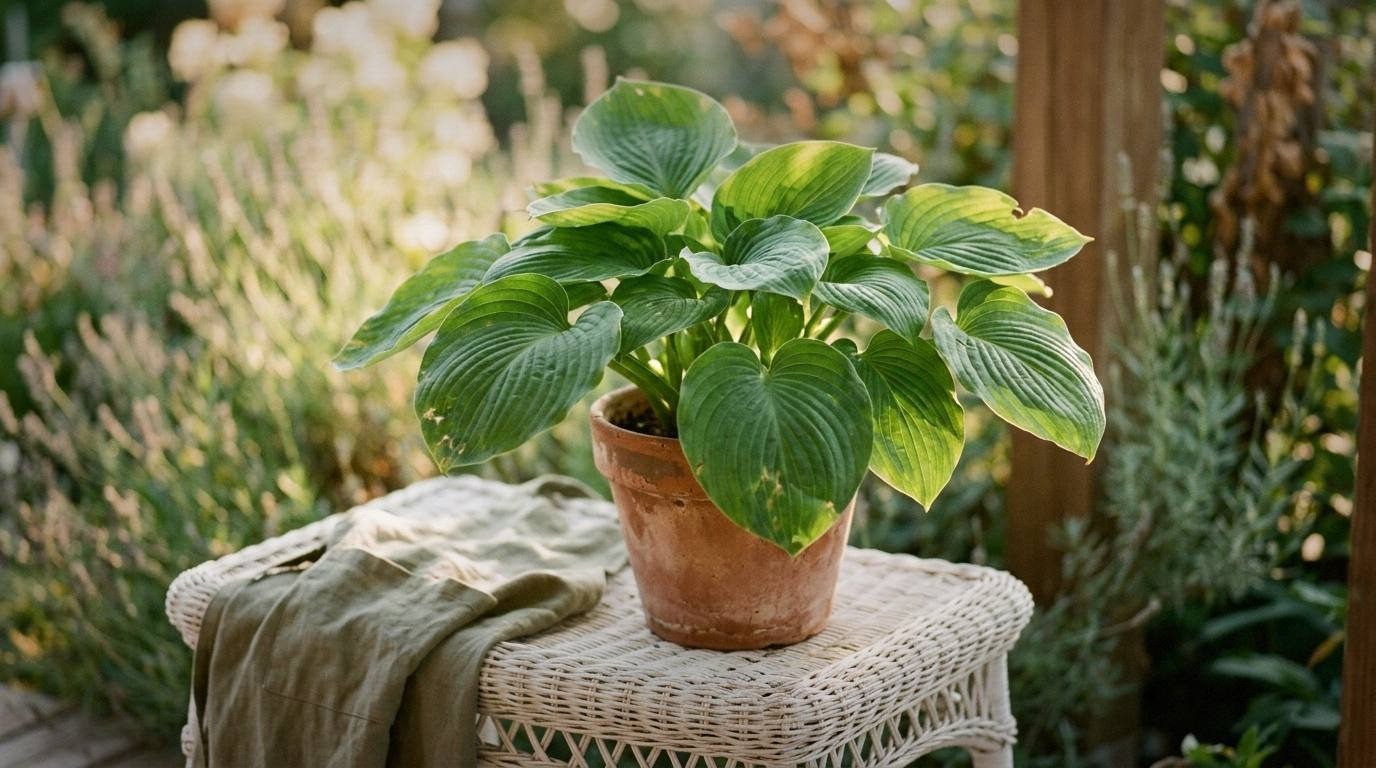
- Bleeding Heart (Lamprocapnos spectabilis, zones 3-9): Heart-shaped flowers in spring. Goes dormant in summer. Plant behind hostas to cover the gap.
- Foxglove (Digitalis purpurea, zones 4-8): Biennial, but self-seeds so reliably it acts as a perennial. 3-5 feet tall. Classic cottage garden vertical accent.
- Brunnera (Brunnera macrophylla ‘Jack Frost’, zones 3-8): Silver-veined leaves, forget-me-not-blue flowers. Excellent shade groundcover.
Tip: Shade cottage gardens lean more on foliage texture than flower color. Mix large leaves (hosta), fine leaves (astilbe), and silver accents (brunnera) for a full look even between bloom periods.
Front Yard Cottage Garden Ideas
A front yard cottage garden works best with a few structural rules to keep it from looking neglected.
- Edge it clearly. Stone edging, a low picket fence, or a crisp bed line separates “intentional cottage garden” from “overgrown yard.”
- Keep the tallest plants under 3 feet in front of windows. Use phlox and coneflower along fences or property lines, not next to the front door.
- Add one evergreen anchor per 8-10 feet of border. A boxwood globe, dwarf conifer, or rosemary bush (zones 7+) gives the bed winter structure.
- Use a repeating color scheme. Pick two to three colors and repeat them through the bed. Purple coneflower + yellow black-eyed susan + white phlox is the classic combination.
- Pathway perennials: Let catmint, hardy geranium, and daylilies spill slightly over walkway edges. This softening effect is the core of the cottage garden aesthetic.
Seasonal Maintenance Schedule
Cottage gardens are low-maintenance, not zero-maintenance. Here is the full year.
| Season | Task | Time Needed |
|---|---|---|
| Early Spring (Mar-Apr) | Cut back all dead stems to 4-6 inches. Remove old mulch. | 1-2 hours |
| Mid Spring (Apr-May) | Apply 2 inches fresh mulch. Divide overcrowded clumps (every 3-4 years). | 1-3 hours |
| Early Summer (Jun) | Deadhead first flush of catmint for a second bloom. Light weeding. | 30 min/week |
| Midsummer (Jul-Aug) | Water during dry spells only (1 inch/week if no rain for 10+ days). | As needed |
| Fall (Sep-Oct) | Leave seed heads standing for birds and winter texture. No cutting. | Nothing |
| Late Fall (Nov) | Optional: add 1 inch of compost around plant bases. | 1 hour |
Total annual time investment: Roughly 10-15 hours for a 50-square-foot bed. Most of that is the spring cleanup.
5 Mistakes That Kill Cottage Gardens
- Planting too close together. Year one looks full, year two everything is choking. Follow spacing guidelines and accept the bare mulch.
- Choosing plants that need staking. Tall dahlias, delphiniums, and hollyhocks are beautiful but require constant support. Start with self-supporting perennials like the 10 listed above.
- Deadheading everything in fall. Seed heads (especially coneflower and black-eyed susan) add winter interest, feed birds, and drop seeds that fill gaps naturally.
- Ignoring soil drainage. Lavender and catmint rot in wet clay. Amend heavy soil with coarse sand and compost before planting, or choose moisture-tolerant alternatives like astilbe and lady’s mantle.
- Giving up after year one. The first season is always ugly. Every cottage garden that looks “effortless” went through 12 months of looking like scattered mulch with garnish.
Common Questions
What are the easiest cottage garden perennials for complete beginners?
Rudbeckia fulgida ‘Goldsturm’ (black-eyed susan) and Nepeta ‘Walker’s Low’ (catmint) are nearly indestructible in zones 3-8. Both tolerate poor soil, drought once established, and light shade. Plant these two first and build around them.
Can I grow a cottage garden in containers?
Yes, but scale down. Use 14-inch or larger pots with drainage holes. Lavandula angustifolia, Hemerocallis ‘Stella de Oro’, and Geranium ‘Rozanne’ all perform well in containers. Group 5-7 pots of varying heights together for the massed effect. Expect to water daily in summer and repot every 2-3 years.
How do I get the “overflowing” cottage look faster?
Plant in odd-numbered groups (3, 5, 7) instead of rows. Let front-row plants spill over the bed edge onto the path or lawn. Leave seed heads standing in fall so plants self-sow into gaps. Do not stake anything. The slightly messy, leaning-into-each-other habit is what makes a cottage garden look alive rather than landscaped.
What if I am in a warmer climate (zone 9+)?
Swap Phlox paniculata for Salvia leucantha (Mexican bush sage) and catmint for Salvia ‘Mystic Spires Blue’. Coneflowers and black-eyed susans handle heat well through zone 9. Add Lantana camara as a front-tier filler. Bloom times shift 2-4 weeks earlier in warmer zones.
Do cottage garden perennials really need no maintenance?
Almost none after establishment. The full annual schedule is: cut back dead stems in early spring, divide overcrowded clumps every 3-4 years, water during extended dry spells in the first season only. After year one, established perennials in the right zone and soil conditions largely take care of themselves.
What is the best cottage garden layout for a small front yard?
Use the 3-tier method in a 4-foot-deep border along your fence or foundation. Keep the total bed length under 15 feet so it reads as intentional, not overwhelming. Stick to 3-4 plant varieties maximum and repeat them in groups of three. A 10-foot border needs only 15 plants to look full by year two.