Every yard has one: the soggy patch behind the garage, the shady strip under the maple, the corner where grass refuses to grow no matter how much seed you throw at it. Instead of fighting those conditions, you can turn that neglected space into a backyard sanctuary that becomes the best seat in your yard.
This guide covers exactly how to do it. Which plants thrive in shade and wet soil, how to lay a simple stepping stone path, where to put a seating area, and how to keep the entire project under $100.
Why Shady Wet Corners Make the Best Backyard Retreats
The spot where grass won’t grow is usually the spot where a shade garden will flourish. Shade and consistent moisture are not problems. They are ideal growing conditions for hostas (Hosta spp.), ferns (Athyrium, Dryopteris), astilbe (Astilbe spp.), and dozens of other perennials.
These corners also tend to be naturally sheltered, quieter, and cooler in summer. That makes them perfect for a backyard retreat or meditation corner where you actually want to spend time.
I had a corner like this behind my garage for two years. Bare mud, creeping charlie (Glechoma hederacea), and patchy grass. Four clearance hostas and a garage sale bench later, it became the only spot in my yard I use every morning.
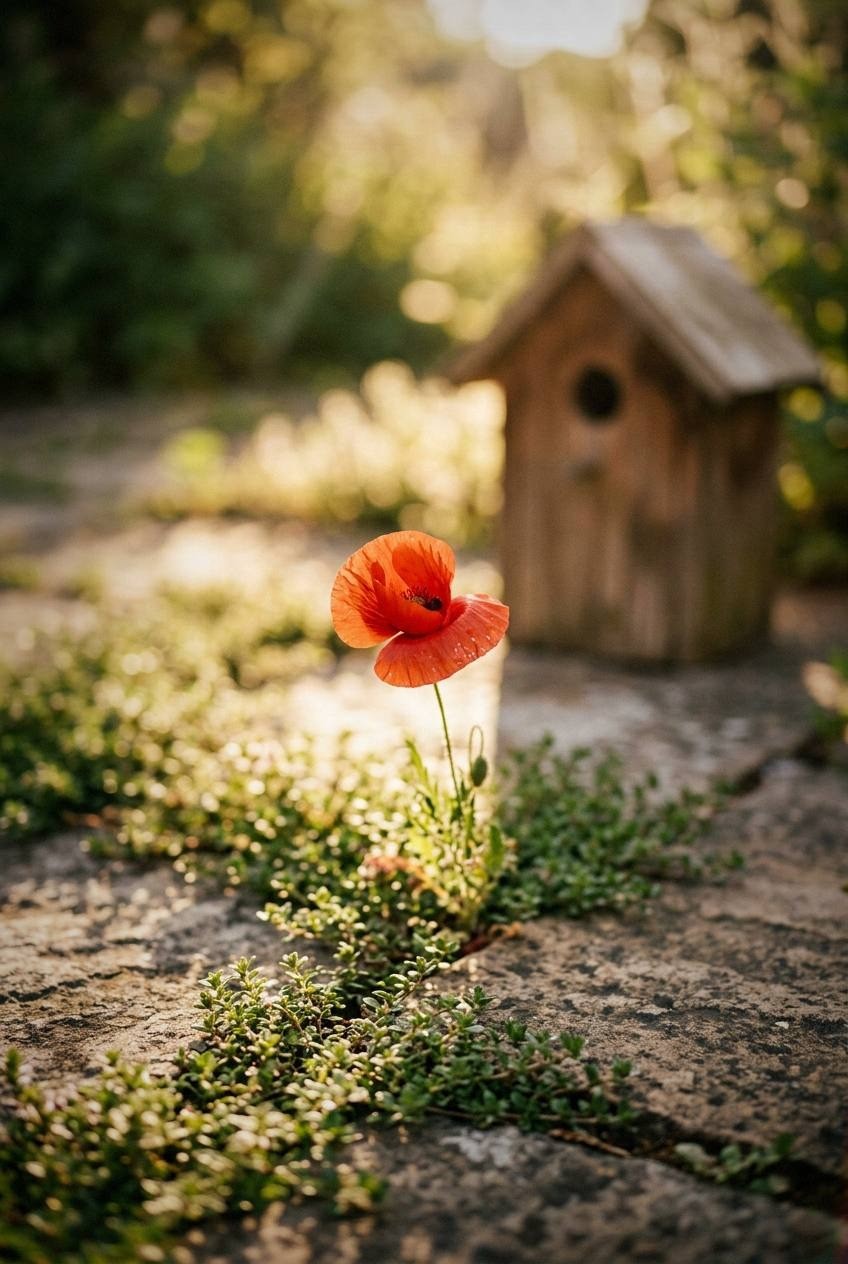
Best Plants for Shade and Wet Soil
Not every shade plant handles wet feet. Here are the ones that actively prefer moist to boggy soil, organized by size and function.
Groundcovers (Between Stepping Stones and Bare Spots)
- Creeping Jenny (Lysimachia nummularia) spreads fast and roots as it goes. Golden variety brightens dark areas. Plant 12 inches apart for full coverage in one season.
- Sweet Woodruff (Galium odoratum) stays under 8 inches, smells like fresh hay, and tolerates deep shade. Zones 4 to 8.
- Irish Moss (Sagina subulata) forms a dense green mat between pavers. Needs consistent moisture, which a wet corner provides naturally.
Mid-Height Plants (12 to 36 Inches)
- Astilbe (Astilbe spp.) blooms in pink, red, white, or purple from June through August. Varieties like ‘Visions in Red’ reach 18 inches. Plant in groups of three for visual impact.
- Japanese Painted Fern (Athyrium niponicum ‘Pictum’) has silver and burgundy fronds. Reaches 18 inches. One of the showiest shade ferns available.
- Brunnera (Brunnera macrophylla ‘Jack Frost’) has silver heart-shaped leaves and tiny blue flowers in spring. Tolerates heavy shade and wet soil. Zones 3 to 8.
Anchor Plants (36 Inches and Up)
- Hostas (Hosta spp.) are the backbone of any shade garden. Nearly impossible to kill in moist shade. I’ve had mine for two years and they tripled in size the first summer.
- Lady Fern (Athyrium filix-femina) reaches 2 to 3 feet and spreads via rhizomes. Thrives in consistently wet soil. Native to most of North America.
- Ligularia (Ligularia dentata ‘Othello’) has dramatic dark purple leaves and yellow daisy flowers in late summer. Needs moist soil or it wilts in afternoon heat. Reaches 3 to 4 feet.
Plants to Use With Caution
- Lily of the Valley (Convallaria majalis) spreads aggressively and is toxic to pets and children if ingested. Beautiful fragrance in May, but plant only along back fences or contained beds where nobody plays.
Shade Plant Comparison Table
| Plant | Height | Spread | Sun Needs | Soil Moisture | Hardiness Zone | Avg. Cost |
|---|---|---|---|---|---|---|
| Hosta ‘Sum and Substance’ | 30 in | 48 to 60 in | Part to full shade | Moist | 3-9 | $8-12 |
| Hosta ‘Patriot’ | 18 in | 36 in | Part to full shade | Moist | 3-9 | $6-10 |
| Lady Fern | 24-36 in | 24 in | Full shade | Wet to moist | 3-8 | $8-14 |
| Japanese Painted Fern | 18 in | 24 in | Part to full shade | Moist | 4-8 | $10-15 |
| Astilbe ‘Visions in Red’ | 18 in | 18 in | Part shade | Moist to wet | 4-8 | $8-12 |
| Brunnera ‘Jack Frost’ | 15 in | 24 in | Full shade | Moist | 3-8 | $12-18 |
| Ligularia ‘Othello’ | 36-48 in | 36 in | Part shade | Wet | 4-8 | $12-16 |
| Creeping Jenny | 2-4 in | Spreading | Part to full shade | Wet to moist | 3-9 | $4-6 |
| Sweet Woodruff | 6-8 in | Spreading | Full shade | Moist | 4-8 | $5-8 |
How to Build a Stepping Stone Path (No Experience Needed)
A path gives the space purpose. It tells your brain this is a destination, not a forgotten corner. You do not need a gravel base or landscape fabric for a simple shade garden path.
Materials
- 5 to 7 concrete stepping stones (12 to 16 inch rounds, $3 each at any hardware store)
- Optional: 1 bag of pea gravel ($5) for leveling
Steps
- Plan the curve. Lay the stones on the ground in a gentle S-curve from your lawn to the seating area. Space them 6 to 8 inches apart, roughly one comfortable stride.
- Set each stone. Press each stone into the soil and stomp it flat. In soft wet ground, they sink naturally. Check with a level if you want precision, but slight unevenness looks more natural.
- Fill gaps. Plant creeping jenny or Irish moss between stones. Within one growing season, the path will look established.
- Edge if needed. In very wet areas, a thin line of river rock (2 to 3 inches) along the path edges prevents mud from creeping onto the stones.
Total path cost: $15 to $25.
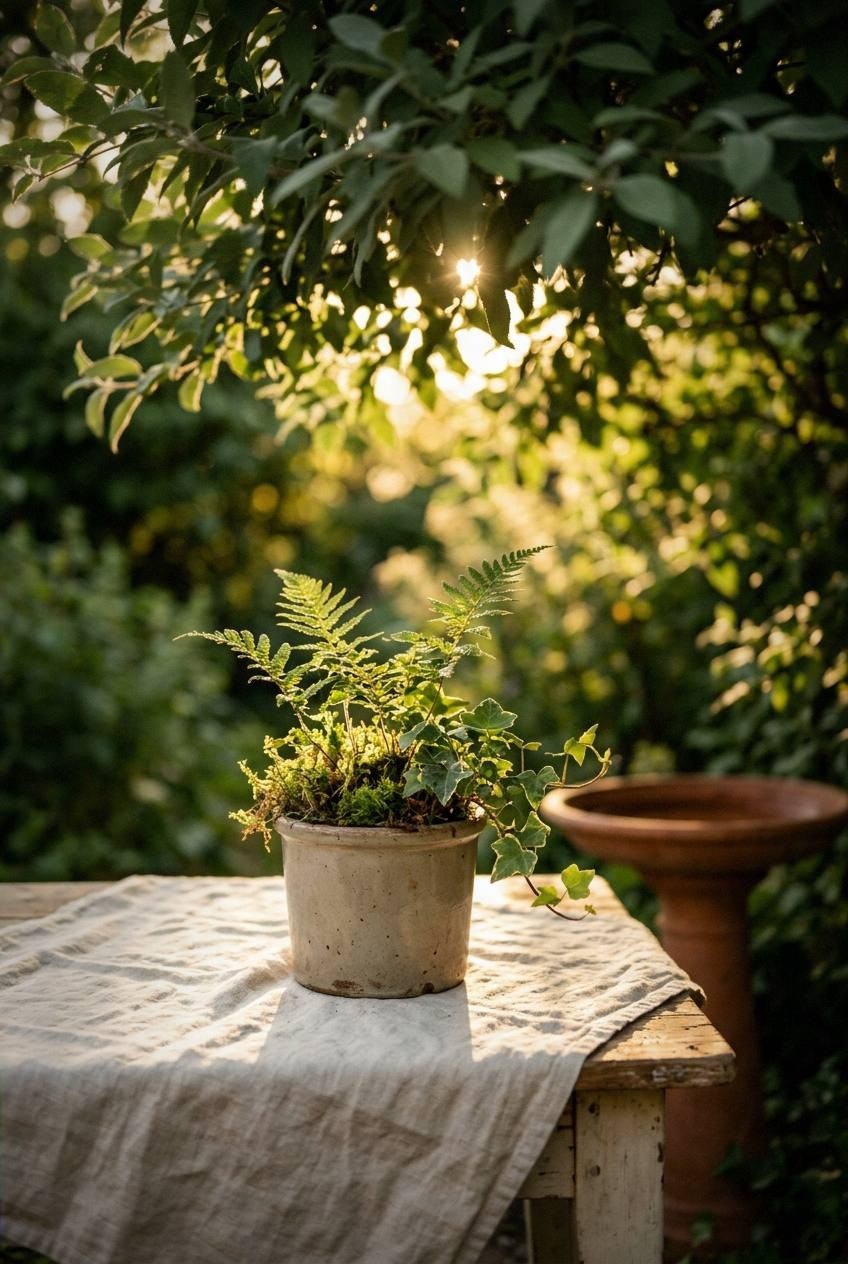
Creating a Seating Area on a Budget
A backyard oasis needs a place to sit. The seating area is what transforms a garden bed into a sanctuary you actually use.
Budget Seating Options
- Garage sale bench ($15 to $30): Solid wood benches with peeling paint have more character than anything from a catalog. Sand lightly and seal with exterior polyurethane if you want it to last longer.
- Two cinder blocks + a plank ($12): Stack two cinder blocks on each side, lay a 2x10 or 2x12 across them. Add an outdoor cushion if you want comfort.
- Tree stump seats (free): If you or a neighbor recently cut a tree, a 16 to 18 inch stump section makes a sturdy seat. Let it dry for a few months first.
- Adirondack chair ($30 to $50): Plastic Adirondack chairs from big box stores hold up in wet areas without rotting. Not glamorous, but functional.
Seating Area Tips
- Face the bench toward your yard, not the fence. You want to look at your garden, not your neighbor’s siding.
- Set a flat stone or paver (18 x 18 inches) under the bench legs to prevent sinking in soft soil.
- Add a small side table or upturned log for a coffee mug or book.
The Meditation Corner Angle: Making It Serene
If you want your backyard retreat to double as a meditation space or quiet reading corner, a few small additions make a big difference.
Sound
- A small solar-powered fountain ($15 to $25 on Amazon) provides gentle water sound that masks street noise. Place it near the seating area on a flat stone.
- Wind chimes hung from an overhead branch add soft, intermittent sound.
Privacy
- Plant tall ferns (lady fern, ostrich fern) or ligularia around the perimeter to create a natural screen.
- A simple bamboo roll-up screen ($20) attached to a fence section blocks sightlines from neighbors.
Scent
- Lily of the valley along the back fence (with the caution noted above) fills the space with fragrance in May.
- Sweet woodruff releases a fresh hay scent when stepped on.
- Plant a gardenia (Gardenia jasminoides, Zones 7-11) in a container nearby for summer fragrance.
Small Space Version (Under 50 Square Feet)
You do not need a large yard. A 5x8 foot shady patch is enough for a cozy backyard corner. Here is a minimal plan:
- 3 hostas (one ‘Sum and Substance’ in back, two ‘Patriot’ in front)
- 2 lady ferns flanking the seating area
- 3 stepping stones in a short line
- Creeping jenny between stones
- One chair or stump seat
- One solar fountain on a flat stone
Estimated cost: $45 to $65. Time to set up: one afternoon.
Maintenance Calendar
Shade gardens in wet soil need very little upkeep compared to lawns or sun gardens. Here is a seasonal schedule:
Spring (March to May)
- Clear dead foliage from hostas and ferns as new growth appears
- Divide overgrown hostas every 3 to 4 years and replant divisions in bare spots
- Top-dress with 1 inch of leaf compost (free if you compost your own leaves)
Summer (June to August)
- Water only during extended dry spells (7+ days without rain)
- Remove spent astilbe flower stalks or leave them for texture
- Watch for slug damage on hostas. Iron phosphate bait (Sluggo brand) is pet-safe
Fall (September to November)
- Let foliage die back naturally. It insulates roots over winter
- Add 2 inches of shredded leaf mulch over the entire bed
Winter
- Nothing. The garden sleeps. So do you.
Budget Breakdown: Full Backyard Sanctuary Under $100
| Item | Quantity | Cost |
|---|---|---|
| Hostas (clearance or divided) | 4-6 | $8-24 |
| Lady ferns | 2-3 | $16-24 |
| Astilbe | 2-3 | $16-24 |
| Creeping jenny | 3-4 pots | $12-18 |
| Stepping stones | 5-7 | $15-21 |
| Bench or seating | 1 | $0-30 |
| Solar fountain (optional) | 1 | $15-25 |
| Total | $82-$166 |
Shop clearance racks at garden centers in late spring and early fall for the best prices. Ask neighbors for hosta divisions. Most gardeners are happy to share because mature hostas need dividing anyway.
Common Questions
How do I know if a corner is too shady for anything to grow?
If you can read a book there at noon without squinting, shade-loving plants will grow. Full shade means less than 1 hour of direct sun per day. Most hostas and ferns handle full shade without issue. Astilbe produces fewer flowers in deep shade, but the foliage still fills in nicely.
What if the soil stays wet all the time?
Consistently moist soil is ideal for lady ferns, astilbe, ligularia, and Japanese iris (Iris ensata). If you have standing water that lasts more than 48 hours after rain, install a simple French drain (a gravel-filled trench that redirects water). Most “wet corners” are just poorly draining spots that shade plants handle easily.
Can I create a backyard sanctuary in a rental?
Yes. Plant hostas and ferns in large nursery pots (the black plastic ones, $3 each) and set them inside decorative containers or use them directly. Add portable stepping stone pavers and a folding chair. When you move, take everything with you. Clara here: my hostas have moved with me twice and they did not care at all.
How long until the space looks established?
Most shade perennials fill in noticeably within the first growing season. By year two, groundcovers between stepping stones will be dense, hostas will have doubled or tripled in size, and ferns will be spreading on their own. The space looks “mature” by year three.
Will a shade garden attract mosquitoes?
Standing water attracts mosquitoes, but moist soil does not. If your wet corner has actual puddles, a French drain solves the issue. Moving water features (like a solar fountain) also discourage mosquitoes, since they only breed in still water.
What about deer and rabbits?
Ferns are deer-resistant. Astilbe and brunnera are rarely bothered. Hostas, unfortunately, are deer candy. If deer are a problem in your area, substitute hostas with heuchera (Heuchera spp.) or Japanese painted fern, both of which deer tend to avoid.