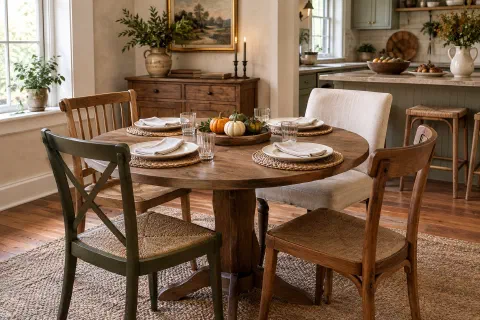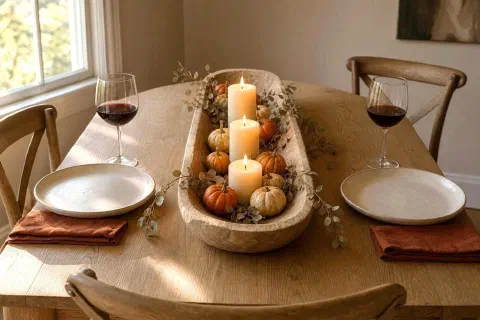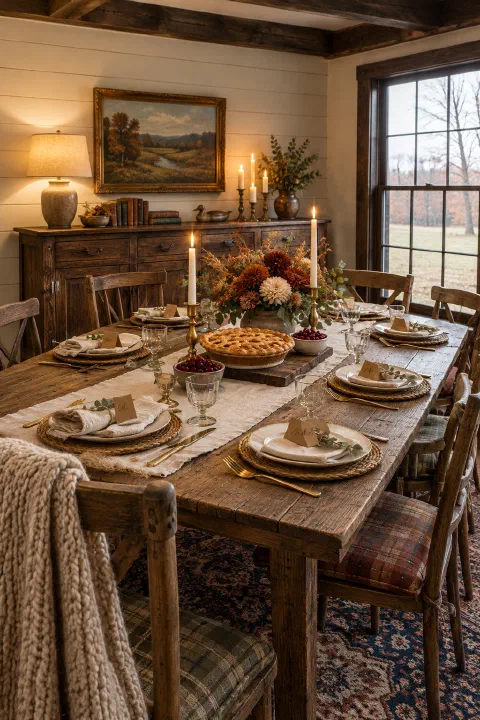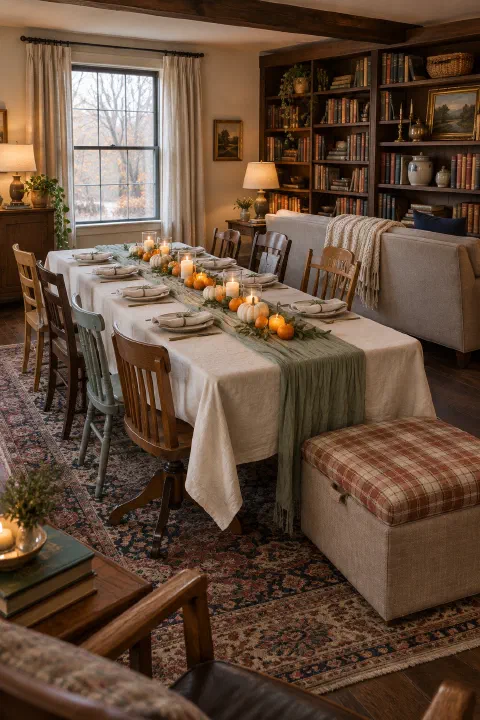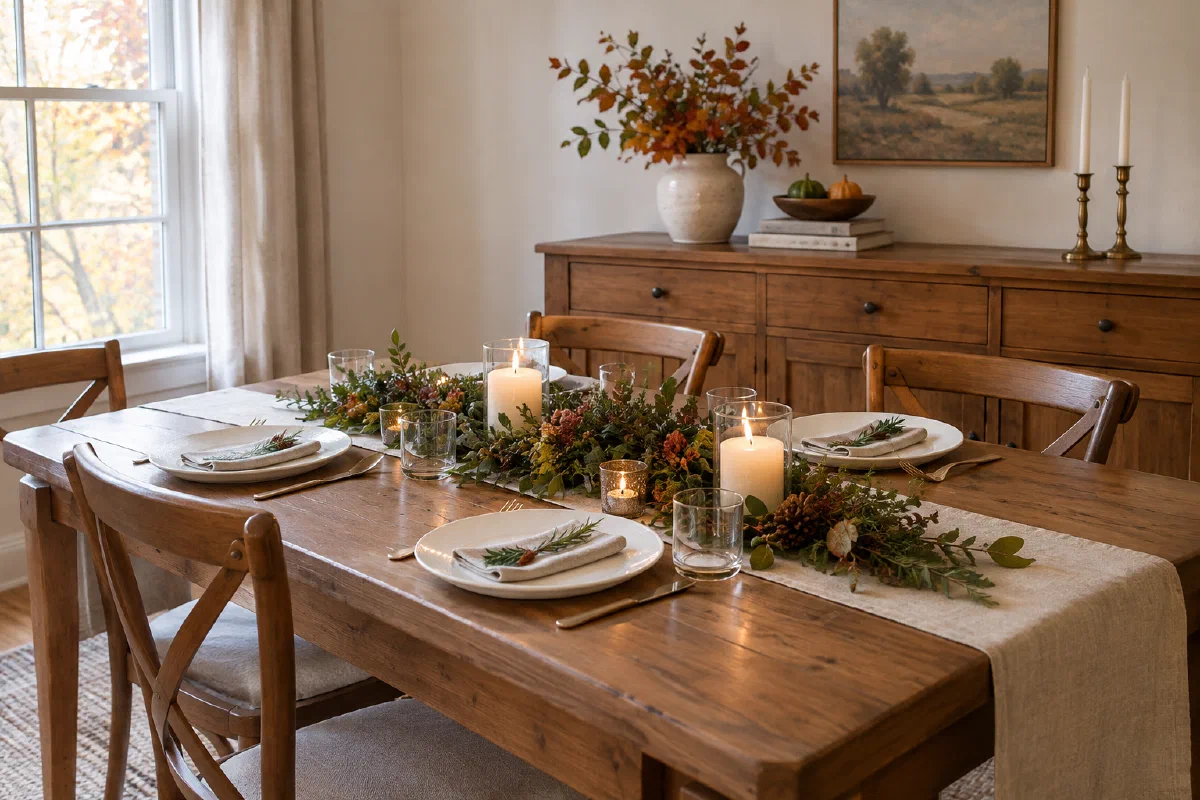
On a small dining table, the centerpiece and the serving dishes share the same space. A little planning lets the meal and the festive details sit comfortably together.
The small-space table guide already covered seating math and how to add surface. This page takes the next question: what thanksgiving table decor actually fits once the plates are down, and where the rest of it should live instead.
Narrow Table Math: The Decor Budget
Set out the plates, glasses and serving pieces you plan to use, then measure the actual open space. Place settings and serving dishes differ in shape and size, so the clear area on your own table is more useful than a universal square-inch estimate.
Dimensions.com illustrates one approach to setting dimensions; use it as a reference, then try your own pieces. If a platter leaves little room down the center, serve from a nearby sideboard or let a runner and a few stems be the decoration.
Which Centerpiece Fits a Narrow Table
Measure the space between the settings, then try an arrangement that fits without crowding plates or serving dishes.
- A little open space: a narrow runner, a few seasonal stems or a small bowl may be enough.
- Room for a centerpiece: try a bowl of fruit, a low arrangement or a tray sized to the space you measured.
- Food served on the table: place the platter first, then see whether there is room for a small accent or move the centerpiece to a sideboard.
The fall table centerpiece ideas piece has the interchangeable parts if you want a low arrangement with fruit and dried stems in it.
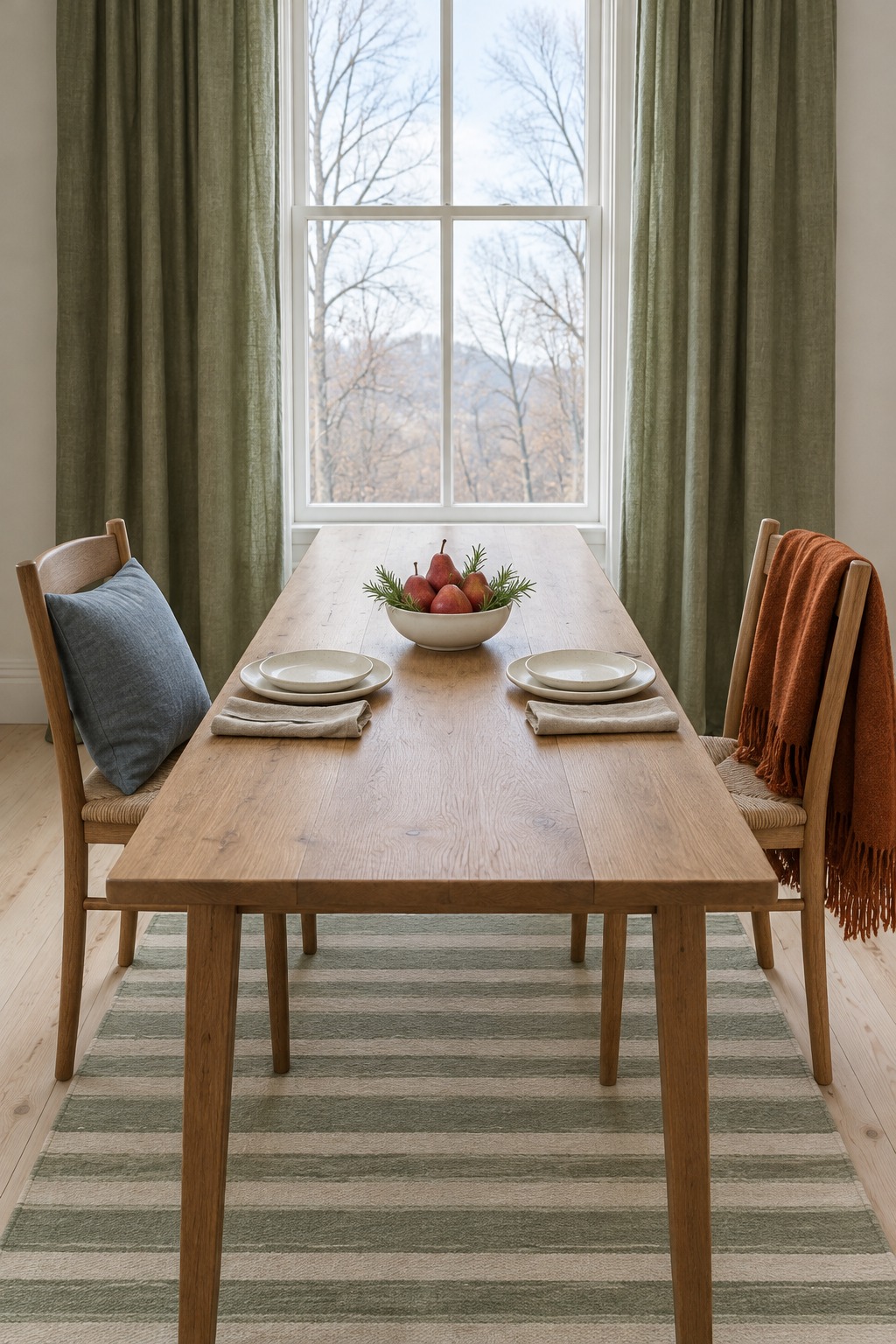
Centerpiece height depends on the arrangement, chairs and sightlines. Sit at the table and look across it; move or adjust anything that gets in the way of conversation.
A centerpiece that blocks the person across from you is worse than no centerpiece. If you cannot see the face opposite your chair from a seated position, take something off the table before the guests arrive.
On a crowded table, little battery candles give a soft glow alongside a runner and seasonal stems without taking much space.
What Should Not Go on the Table at All
Some decor fails on a small table because of geometry, not taste.
- Leaning plates. A plate propped on a stand looks good on a sideboard and terrible here. It is the first thing a chair back knocks over.
- A display that blocks conversation. Try it from a seated position; move taller pieces to a wall, shelf or sideboard if needed.
- A full cloth if you like the table. Cloth sizes and drops vary. A runner and placemats are an option when you want more of the tabletop visible.
- Decor you must reach across a place setting to fix. If you cannot adjust it from a seated position, it will get bumped.
If the table has to be pushed against a wall, that is the best decor opportunity in the room.
Move the Decor to the Wall
This is the answer for most small dining rooms, and it costs no table space.
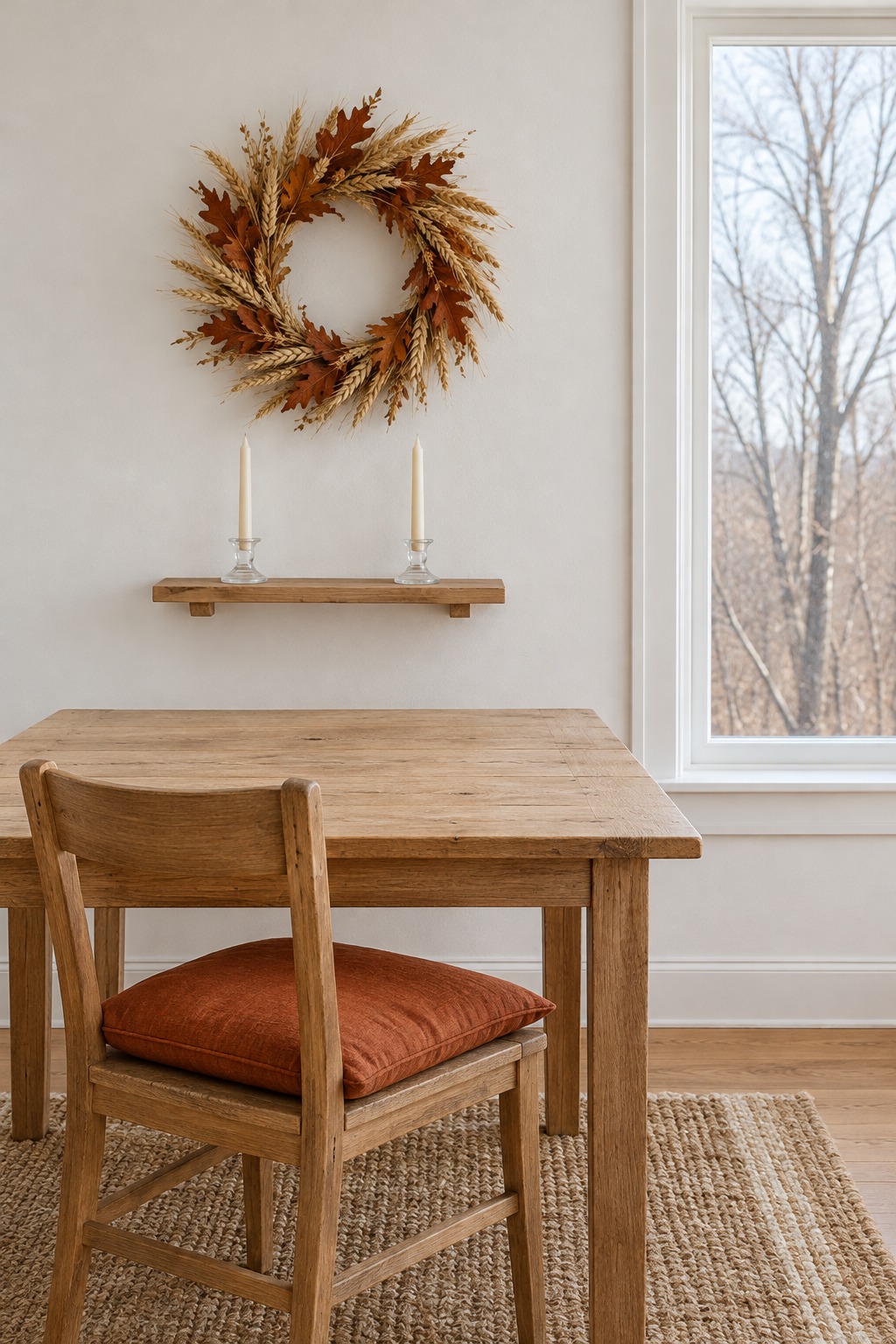
A wreath on a wall or a mirror costs zero square inches. A garland above the table adds a seasonal layer while leaving the surface free for serving.
A narrow picture ledge handles the rest: small gourds, pine cones, and dried stems in a jar no taller than a mug.
Use the Sideboard as the Second Decor Surface
A sideboard, a dresser, a console or the top of a low bookcase does two jobs. It holds the decor that came off the table, and the food.
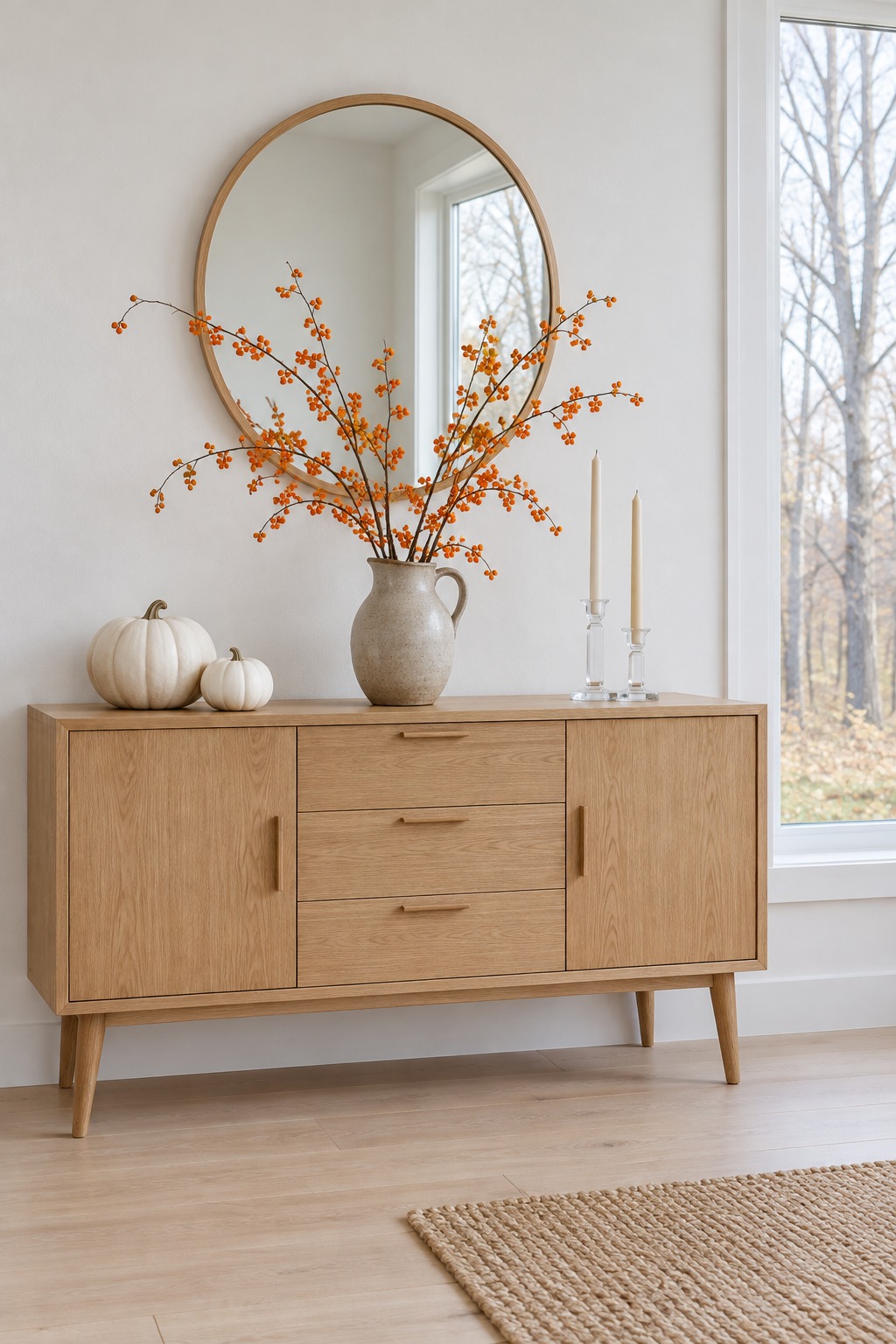
Build it in three layers and no more.
- Tallest at the back. A pitcher, a lantern or dried stems, at 18 to 24 inches, where nothing blocks it.
- Middle in the middle. A stack of plates, a bowl of pears, a small board.
- Lowest at the front. Two candles, the serving spoon.
Forks and napkins go at the end of the run, so nobody walks a plate through the queue hunting for one. Anything hot gets a trivet.
If there is no sideboard, a rolling cart parks beside the table for the meal and leaves before dessert.
How to Start the Whole Room in an Afternoon
Work in this order, so nothing gets undone.
- Measure the free depth. Write the number down.
- Decide the sideboard first. If you do not want to think about it, hang the decor instead.
- Pick one table decor element, low, and put it where the serving dish will not need to land.
- Hang the wall pieces. Wreath, hook, garland.
- Repeat one texture or color in both places, so the table and the sideboard read as one room.
- Set the table, then sit in a chair. If you cannot see the face opposite, take something off.
The fall to Thanksgiving decor transition is the piece to read if your fall decor is already up and you want to move it rather than replace it.
Keeping the Room Right Through Dessert
The plan has to survive the meal, and that is where a small dining room usually comes apart.
- Choose a cloth or runner you enjoy. Try it with the chairs and place settings so the drape feels comfortable for your guests.
- Clear the table in two passes. Plates first, then decor. Reaching over a bowl to stack plates knocks things over.
- Keep one tray empty on purpose. It lifts the candles and small objects off in a single movement.
- Store the room in a bin. Small dining rooms are storage rooms the other 364 days. If the decor does not fit a labeled bin, it ends up on the table.
Common Mistakes on a Small Dining Room Table
These come up again and again, and every one is about footprint.
- A centerpiece that blocks the view. Check sightlines from the chairs and adjust the arrangement if needed.
- Two layers of decor where one fits. More decor does not read as abundance on a narrow table. It reads as less room, because it is less room.
- A runner that crowds the settings. Measure your runner and set the plates out to see how the layers work together.
- Too many small accents. A few battery candles, stems or small objects can carry the look without filling every open spot.
- Covering a table you love. Choose a cloth, runner or placemats according to how much of the tabletop you want to show.
- A display shelf right behind the chairs. It looks like a magazine photograph until somebody needs to stand up, because you have spent the chair room.
The honest summary is the one most decor pages avoid. On a small dining table, the decor that matters is the decor you did not put on the table. Hang it, set the sideboard, leave the surface for the food, and check the sight line from a chair once before anybody arrives.
What to Read Next
- Thanksgiving table ideas for a small space has the seating math and the ways to add table surface, which comes before any decor decision on this page.
- Five fall table centerpiece ideas is where to go if you want one low arrangement and need to pick which pieces go in it.
- Simple Thanksgiving centerpiece ideas covers smaller, inexpensive arrangements for a compact table.
- Fall to Thanksgiving decor transition helps if the fall decor is already out and you want to shift it toward the holiday without re-shopping.
- Thanksgiving quotes and sayings give you words for the table.