A small Thanksgiving can still create a very full kitchen. Four side dishes need the same oven. Every serving spoon disappears. Guests gather in the doorway while the gravy needs attention. By the time dinner reaches the table, the host has not sat down once.
The calmer version begins with fewer last-minute decisions. Use this plan to choose what matters, give each part of the meal a place, and protect enough time to enjoy the people who came.
Thanksgiving hosting timeline at a glance
| When | The decisions that belong here | What can wait |
|---|---|---|
| 1 to 2 weeks before | Guest count, food restrictions, menu, serving style, borrowed chairs | Table styling and music |
| 3 to 4 days before | Grocery shopping, refrigerator space, thawing plan, serving dishes | Final garnish |
| The day before | Cold dishes, table setting, labeled serving pieces, leftover containers | Reheating and hot dishes |
| Thanksgiving morning | Turkey or main, oven schedule, drink station, cleared sink | Lighting candles and putting out rolls |
| 30 minutes before dinner | Temperature checks, hot holding, water, clear walking path | Any extra recipe that was not already planned |
| After dinner | Refrigerate perishables, label leftovers, run one dishwasher load | Making the whole kitchen look untouched |
Choose the Thanksgiving menu for the gathering you want
Start with the number of seats and the experience you want, then choose the menu. A small gathering does not need the full holiday catalog.
| Hosting style | Keep | Simplify | Best when |
|---|---|---|---|
| Traditional dinner | Turkey or main, potatoes, one green side, one favorite extra, dessert | Buy rolls or one dessert | The familiar meal matters most |
| Potluck | One anchor dish, drinks, serving plan | Assign categories instead of vague “bring something” requests | Guests enjoy contributing |
| Early supper | Main meal in midafternoon, coffee and dessert later | Skip a separate appetizer spread | Kitchen and dining space are tight |
| Cozy buffet | Food in one serving zone, table kept mostly clear | Use fewer serving vessels | The table cannot hold people and platters |
Write the final menu on one page. If two dishes need the same burner or oven temperature at the same time, change one now.
How to set up the serving zone
Keep the meal from collecting in one crowded kitchen corner:
- Entry: coats, bags, and wet umbrellas
- Kitchen: active cooking and hot-food holding only
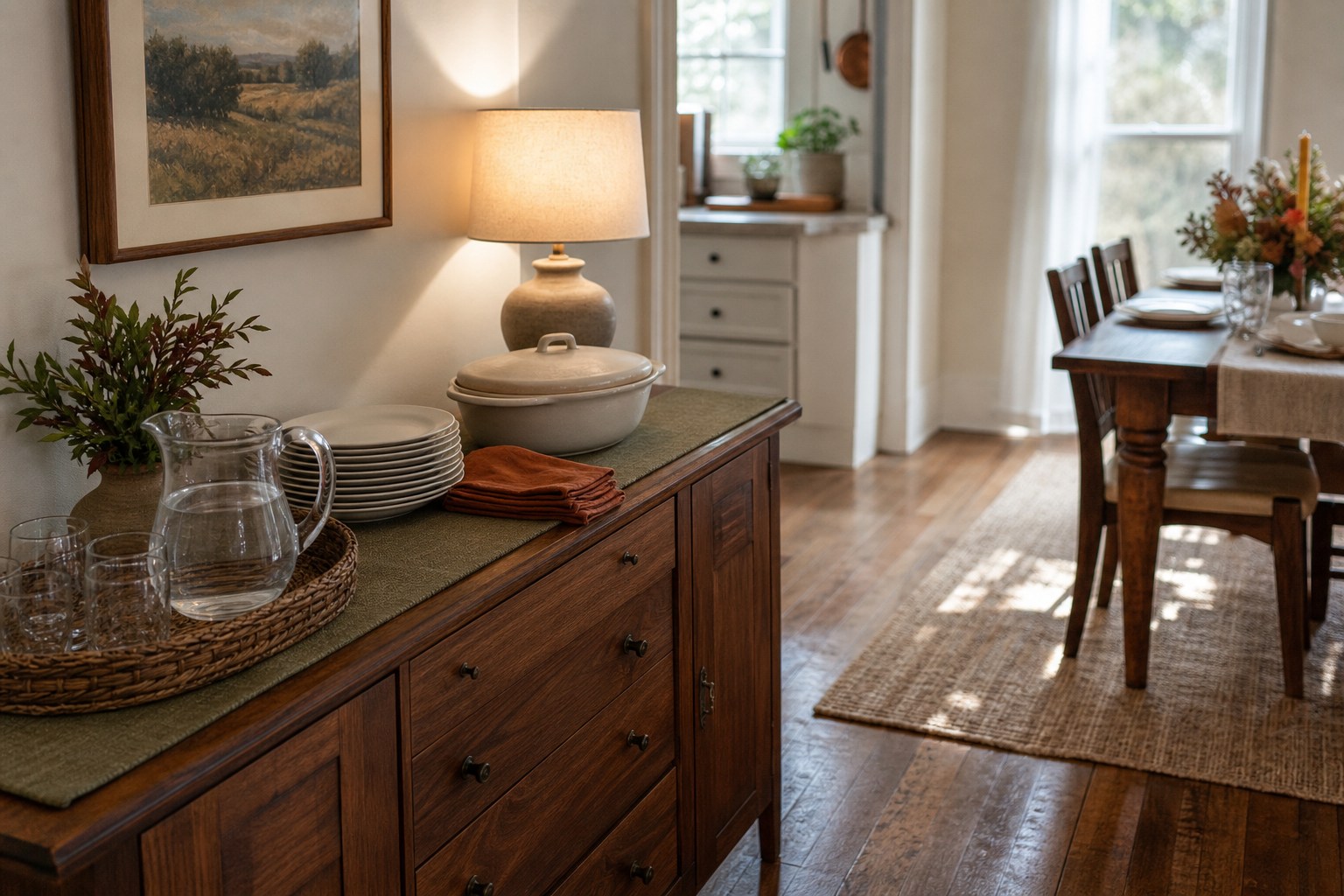
- Dining area: plates, napkins, water, and the meal
- Sideboard or console: drinks, desserts, or coffee, not all three
- Cleanup zone: empty sink, trash access, foil, and leftover containers
Food safety before the serving time
The USDA Food Safety and Inspection Service says turkey and the center of stuffing should reach 165°F, measured with a food thermometer. Its Thanksgiving guidance also advises refrigerating perishable food within two hours, keeping cold food below 40°F, and using shallow containers for leftovers.
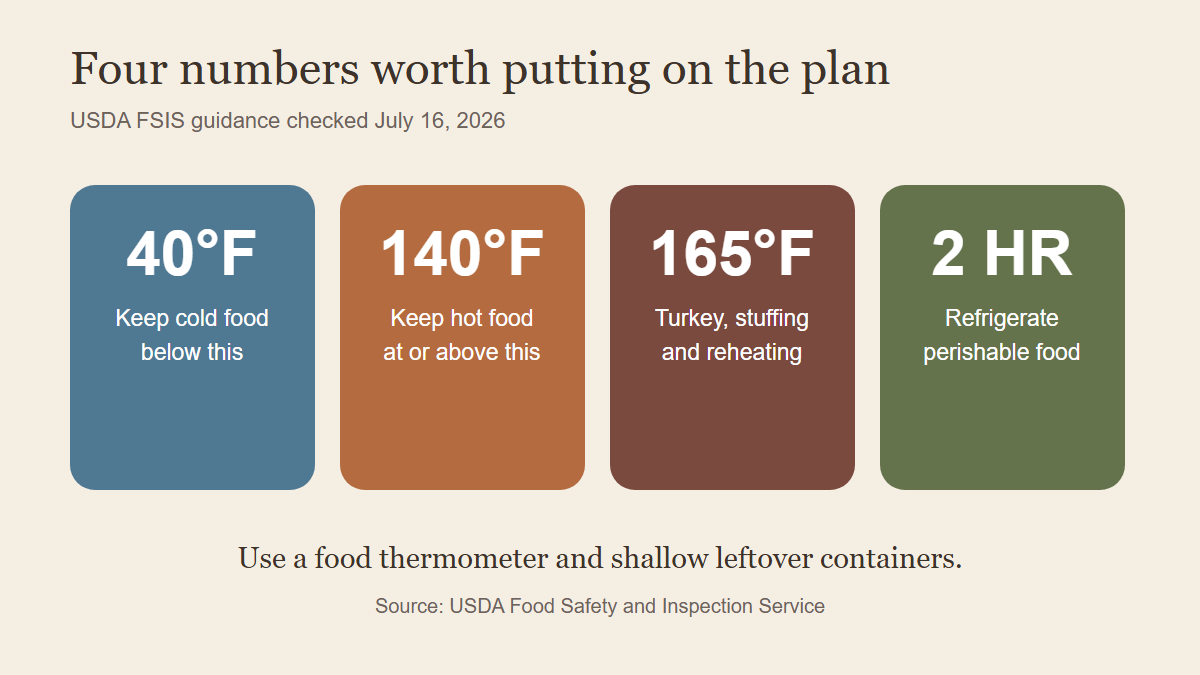
The USDA’s leftover guidance says refrigerated leftovers should be used within four days and reheated to 165°F. Set the containers and marker out before dinner so safe storage is part of the plan, not a tired decision at the end of the night.
How to work backward from the serving time
- Pick the exact time you want people seated.
- Put the turkey or main dish rest time on the schedule.
- Give each side dish its final heating window.
- Move cold dishes and drinks out of the active cooking zone.
- Set the table and serving pieces before the last cooking hour.
- Stop adding new recipes once the schedule is full.
- Leave fifteen quiet minutes for changing clothes, washing up, or simply sitting down.
That last margin is not wasted time. It is what keeps one late dish from making the whole evening frantic.
Printable Thanksgiving hosting checklist
Print this section or keep it open on your phone. The shorter list is deliberate: every item should prevent a real delay, crowding problem, or food-safety mistake.
One to two weeks before
- Confirm the guest count and any food restrictions.
- Choose the serving style: table, buffet, potluck, or early supper.
- Write the final menu and remove oven or burner conflicts.
- Assign specific potluck categories instead of asking guests to bring anything.
- Count chairs, place settings, glasses, serving dishes, and serving utensils.
The day before
- Clear refrigerator space for ingredients and leftovers.
- Label serving dishes with a slip of paper naming the food and utensil.
- Put water glasses, plates, napkins, and flatware in place.
- Prepare cold dishes that hold well overnight.
- Put shallow leftover containers, foil, labels, and a marker together.
- Empty the sink and dishwasher.
- Decide where coats and bags will go.
- Charge a speaker if music matters, then stop planning entertainment.
Thanksgiving morning
- Put the cooking and reheating times where everyone helping can see them.
- Set up drinks away from the active cooking area.
- Put the food thermometer, trivets, and oven mitts within reach.
- Clear the sink and one counter before the final cooking hour.
- Check the walking route from the kitchen to the table.
Thirty minutes before dinner
- Check turkey, stuffing, and reheated food with a food thermometer.
- Put water on the table and move extra bottles to the drink zone.
- Transfer food to the labeled serving dishes.
- Move hot pans and loose cords out of the guest path.
- Stop adding dishes and sit down for a few minutes if the meal is on schedule.
After dinner
- Refrigerate perishable food within the USDA two-hour limit.
- Divide leftovers into shallow containers and label them.
- Ask one person to help move the containers to the refrigerator.
- Soak only the pans that need it and run one dishwasher load.
- Leave the rest until after coffee or the next morning.
Keep the table comfortable
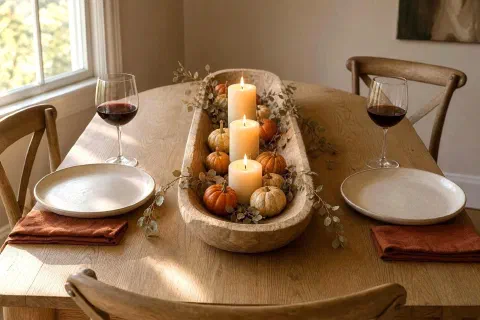
For a small gathering, a low bowl of fruit, clipped branches, or a few small bud vases leave better sightlines than a tall arrangement. Keep scented products away from the meal. Use the room’s lamps or flameless candles for warmth if open flame would sit close to napkins, greenery, sleeves, or children.
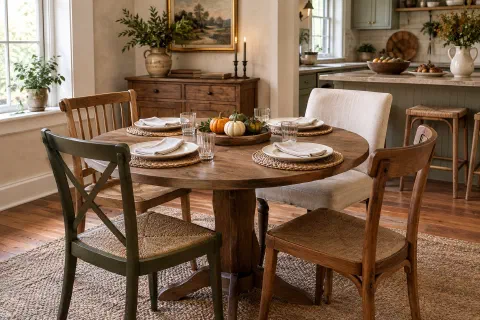
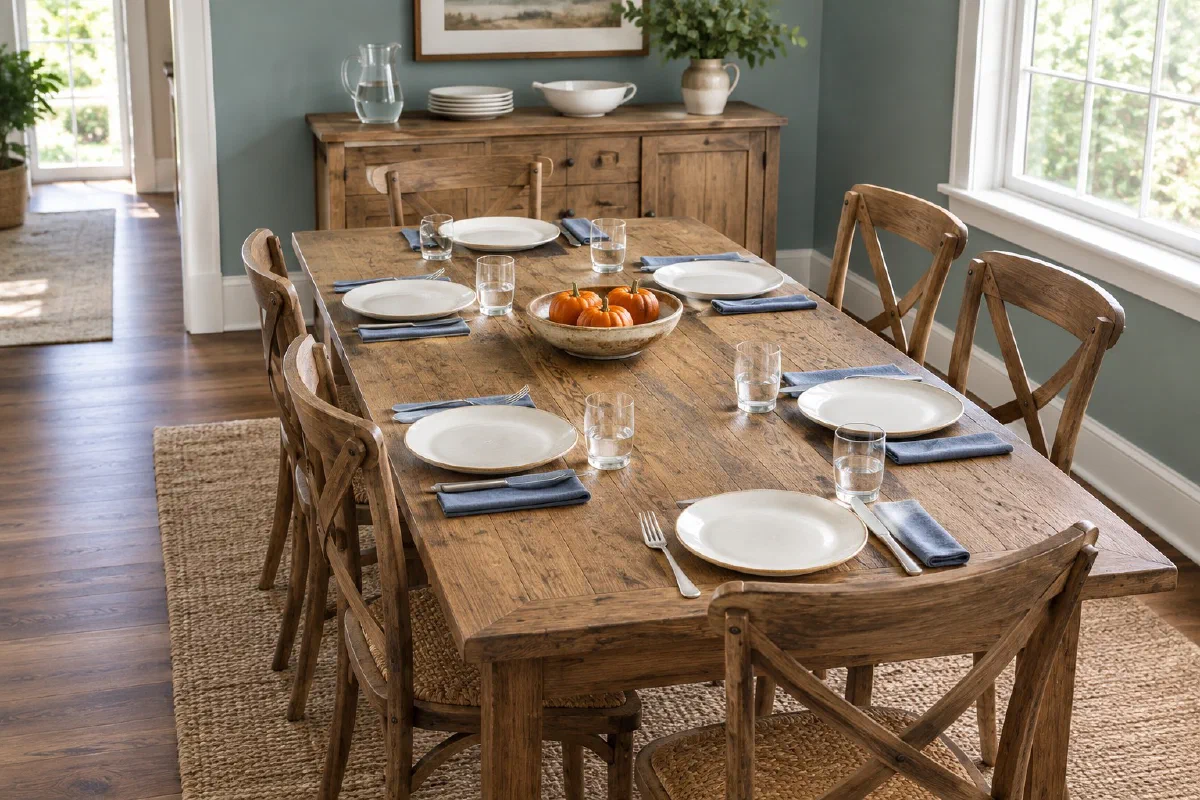
Place water on the table and everything else where people can reach it without passing hot dishes over one another. If the table is narrow, serve from a sideboard and let the table hold only the plates, drinks, and one or two shared dishes.
Keep cleanup from taking over the evening
After dinner, refrigerate perishable food on time, soak what truly needs soaking, and run one dishwasher load. The whole kitchen does not have to look untouched before dessert.
Ask for specific help: “Could you put these four containers in the refrigerator?” works better than “Does anyone want to help?” A small, clear job lets a guest step in without taking over the kitchen.
Related hosting and home ideas
- Backyard dinner party checklist for easy hosting offers a warmer-weather version of the same zone and timing approach.
- Three ways to turn empty kitchen space into a real pantry corner helps create room for holiday ingredients before the busy week begins.
- Six Walmart patio drink station picks for fewer kitchen trips has useful drink-zone lessons that work indoors too.
- Ten things to declutter when your home feels too full gives you a short pre-hosting reset without asking for a whole-house makeover.