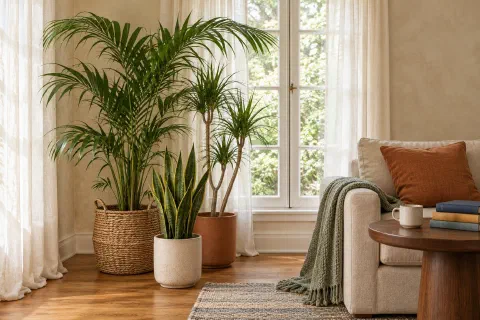
The best tall narrow indoor plants for tight spaces under 24 inches wide are an upright snake plant, a single-cane dragon tree, a corn plant (Dracaena fragrans), a pothos trained vertically on a moss pole, and a pruned single-stem rubber tree. If cats or dogs share your apartment, I always point readers straight to a young parlor palm or a slim braided money tree, since both stay narrow and carry an ASPCA non-toxic listing.
Tall Narrow Indoor Plants: 8 Slim Picks Under 24 Inches Wide
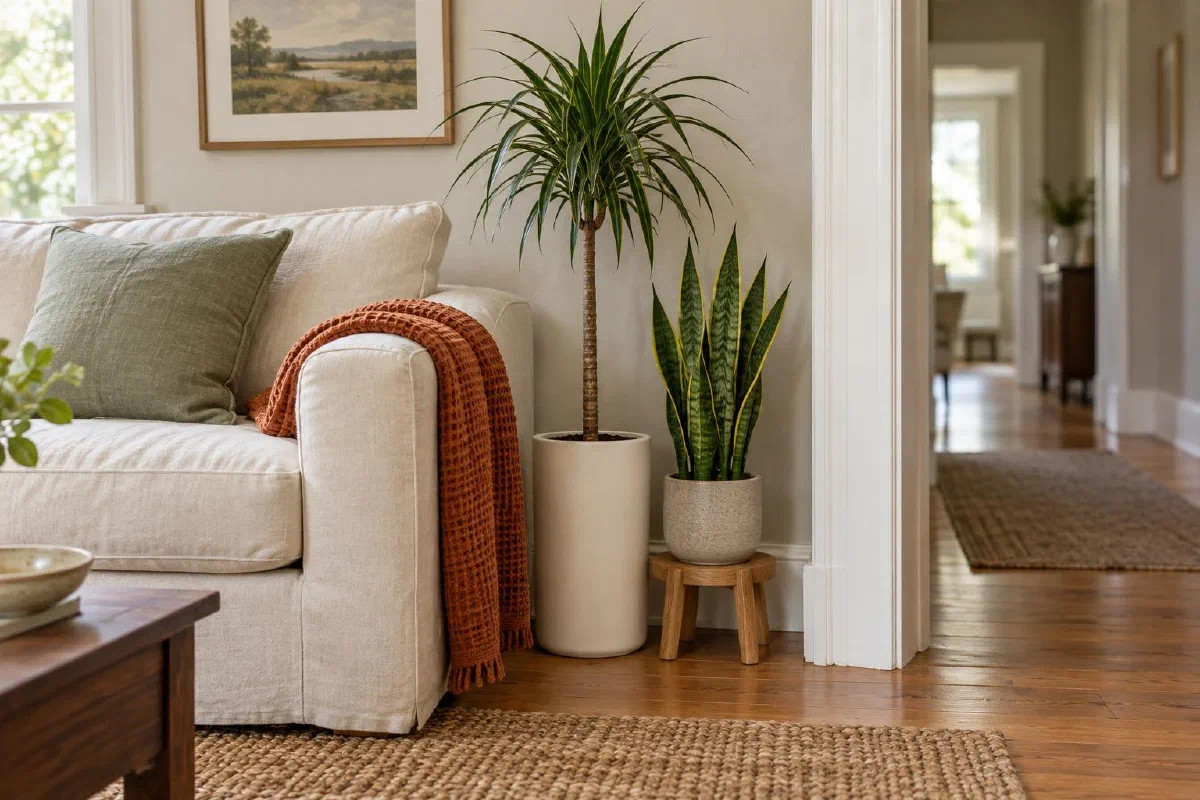
A bare lower stem or stiff upright foliage gives you 4 to 6 feet of vertical green without crowding the sofa arm or doorway.
When we help readers style small apartments and narrow hallways in our Indoor Plants Hub, the same problem shows up every single time: almost every popular “tall living room plant” (monstera, bird of paradise, wide fiddle leaf fig) spreads 4 to 6 feet sideways. Drop one into an 18-inch gap beside the couch and its leaves get torn every time someone walks past. Below we compare eight upright plants that grow up instead of out, with exact floor widths, light bands, and tight-spot placement math.
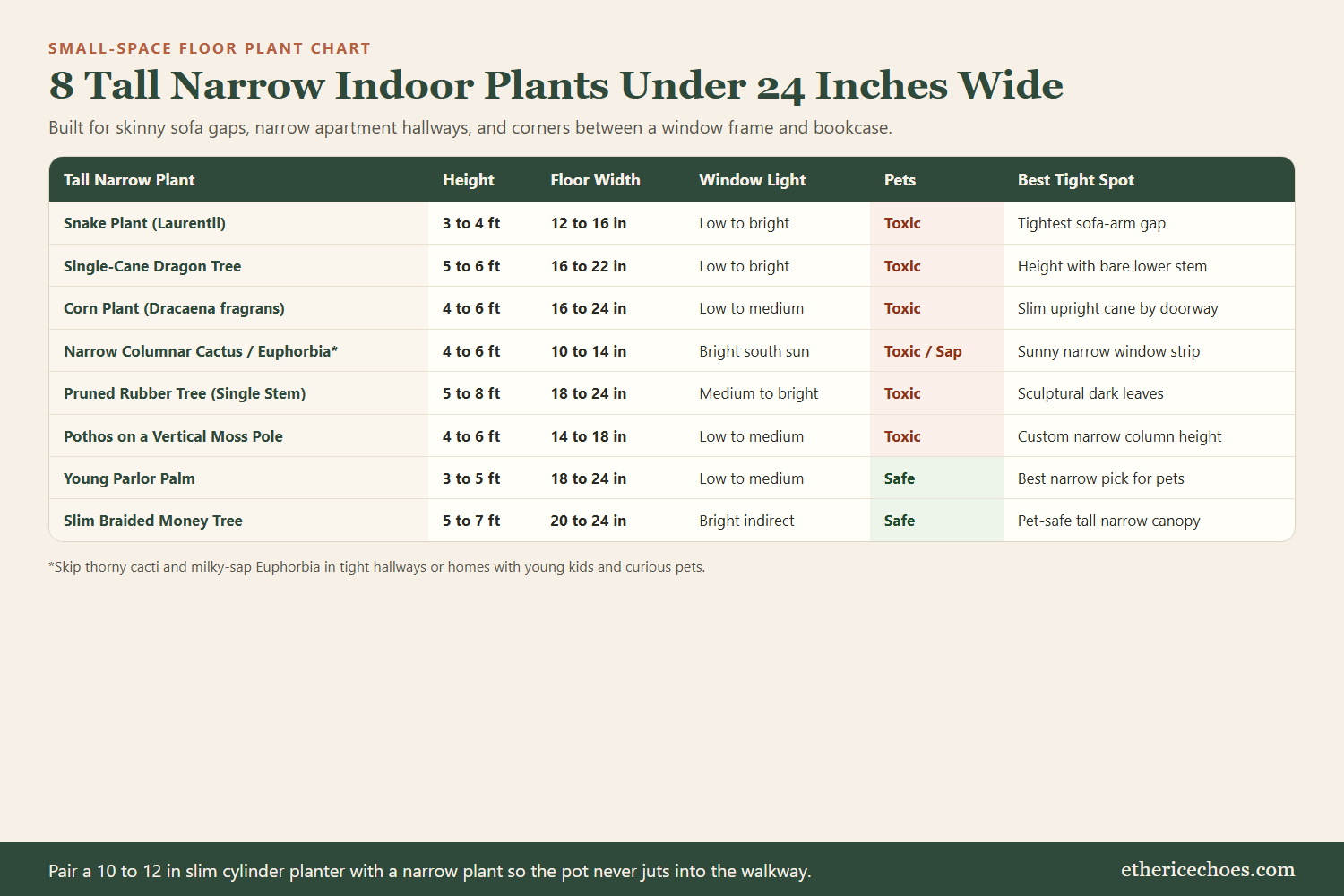
Quick Match: Pick by Your Exact Gap Width
Before you fall in love with a plant at the garden center, run a tape measure across the narrowest point of the spot. Remember that a door swing or walkway needs about 30 inches of clear space so nobody brushes foliage daily.
| Your tight spot | Best narrow plant | Width to plan for | Pet safety |
|---|---|---|---|
| 14 to 18 in gap beside a sofa arm | Snake plant or moss-pole pothos | 12 to 18 in | Toxic to pets |
| 18 to 24 in corner by a window | Single-cane dragon tree or corn plant | 16 to 24 in | Toxic to pets |
| Tight spot with cats or dogs | Parlor palm or slim braided money tree | 18 to 24 in | ASPCA non-toxic |
| Dim narrow hallway or entry | Snake plant or parlor palm | 12 to 24 in | Check species above |
| Bright narrow south window strip | Single-stem rubber tree or columnar cactus | 10 to 24 in | Toxic / sap warning |
The 8 Best Tall Narrow Indoor Plants
1. Snake Plant (Dracaena trifasciata)
If you only have 14 inches between a sofa arm and the wall, I reach for a tall Laurentii or Zeylanica snake plant every time. Its sword-shaped leaves shoot straight up like architectural sculpture instead of flopping outward into the room. NC State Extension notes it thrives in fast-draining soil when allowed to dry thoroughly between waterings.
- Height & width: 3 to 4 ft tall; 12 to 16 in wide.
- Light: Low to bright indirect light (handles dim hallways better than almost any tall plant).
- Pet safety: Toxic to cats and dogs.
- Tight-spot trick: Drop a 10-inch nursery pot inside a tall 18-inch ceramic cylinder planter or onto a low 12-inch oak stool. You gain instant eye-level height while keeping the floor footprint tiny.
2. Single-Cane Dragon Tree (Dracaena marginata)
When you need real 6-foot height in an 18-inch corner, look for a dragon tree with one slender woody trunk (or two tightly grouped canes) rather than a sprawling multi-branched bush. Because the lower 3 feet are clean bare cane, curtains hang freely behind it and sofa arms tuck right up next to the pot.
- Height & width: 5 to 6 ft tall indoors; 16 to 22 in crown width.
- Light: Low to bright indirect light.
- Watering cue: Let the top 2 inches of potting mix dry between waterings; filtered or rested water reduces brown tips if your tap water is high in fluoride.
- Pet safety: Toxic to cats and dogs.
3. Corn Plant (Dracaena fragrans)
Often sold as a “Mass Cane” with two or three staggered trunks in one narrow pot, the corn plant is built for tight vertical corners between a doorway and a bookcase. Its arched strap leaves stay close to the stem instead of reaching 3 feet across the room.
- Height & width: 4 to 6 ft tall; 16 to 24 in wide.
- Light: Low to medium indirect light; harsh midday sun scorches the striped leaves.
- Watering cue: Water thoroughly when the top 2 inches feel dry, and drain the saucer completely.
- Pet safety: Toxic to cats and dogs.
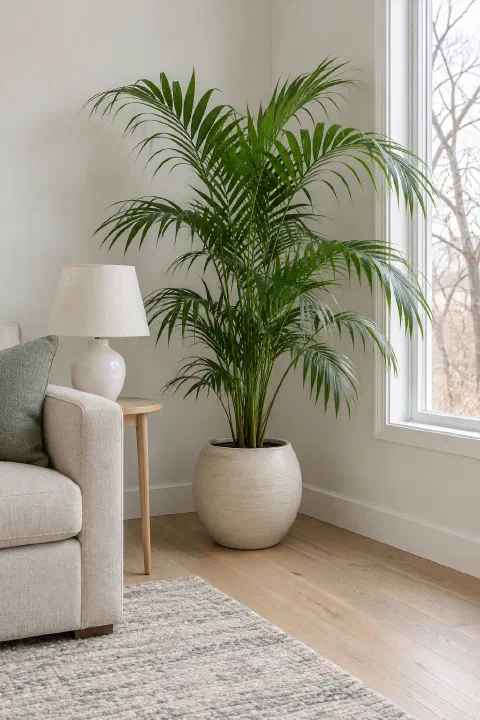
4. Young Parlor Palm (Chamaedorea elegans)
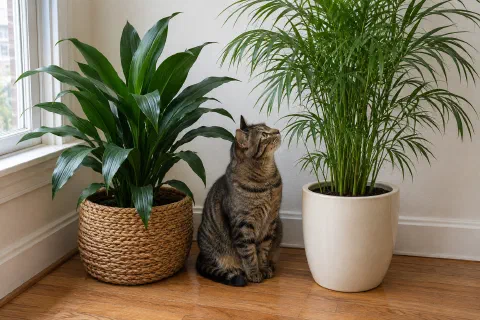
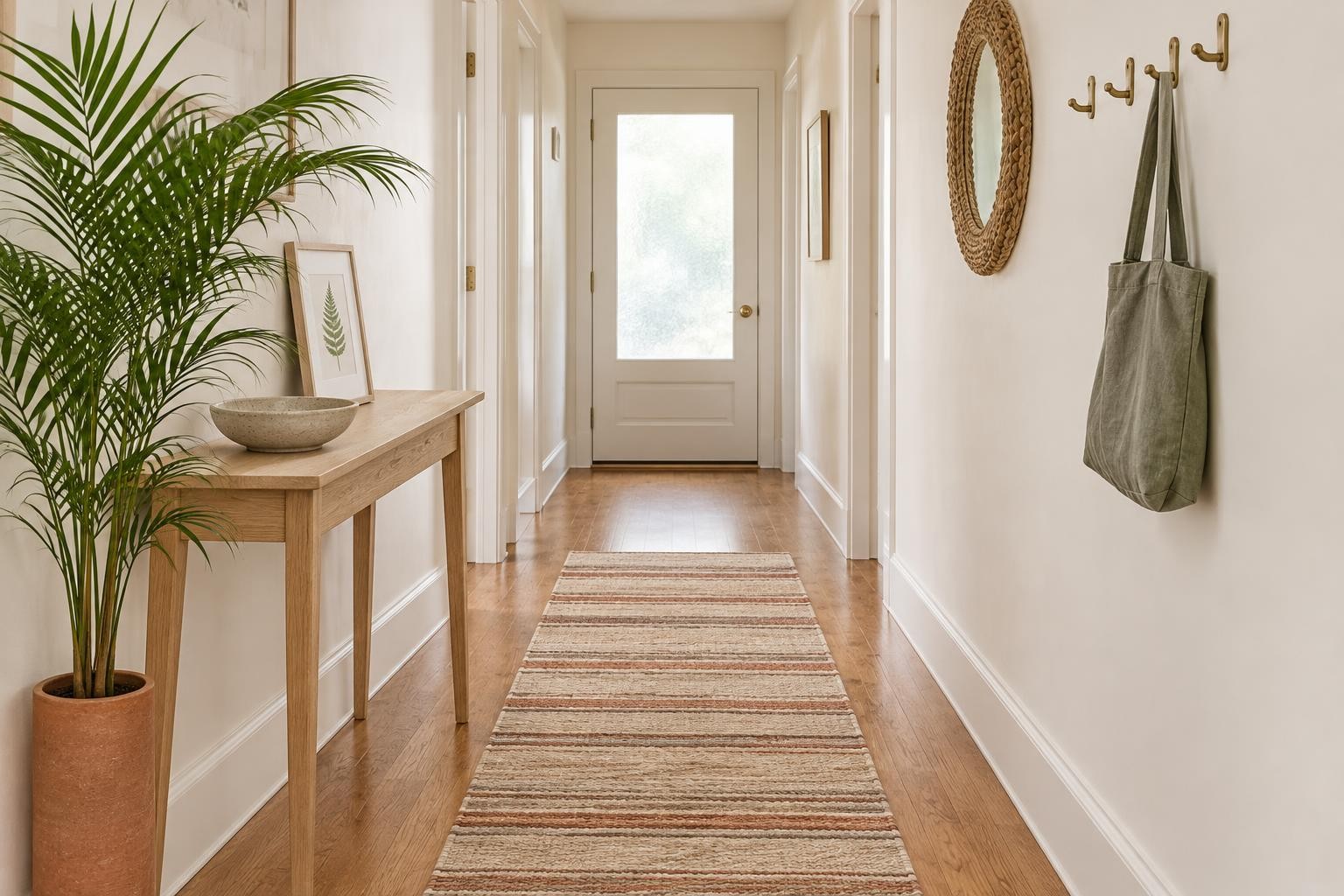
Need a slim vertical plant in a home with cats or dogs? A parlor palm gives you soft feathery fronds in a much smaller footprint than an areca or majesty palm, and it actually tolerates dimmer apartment corners without collapsing. The ASPCA lists Chamaedorea elegans as non-toxic to cats and dogs.
- Height & width: 3 to 5 ft tall; 18 to 24 in wide while young and tidy.
- Light: Low to medium indirect light (keep out of hot afternoon glass).
- Watering cue: Water when the top inch of mix dries out.
- Nursery tip: Growers pack dozens of tiny seedlings into one pot. Pick a pot with taller, more upright canes rather than a squat wide clump.
5. Slim Braided Money Tree (Pachira aquatica)
A braided money tree gives you a true indoor tree silhouette (bare sculpted trunk below, bright five-lobed canopy up high) while staying friendly for pets. ASPCA lists Pachira aquatica as non-toxic to cats and dogs, and NC State Extension recommends bright indirect light and well-drained soil.
- Height & width: 5 to 7 ft tall; 20 to 24 in canopy width when rotated and lightly pinched.
- Light: Bright indirect light; rotate weekly so stems do not lean sideways into the walkway.
- Honest check: Check just under the soil line when you bring it home and carefully snip off any nursery rubber band binding the base of the braided stems.
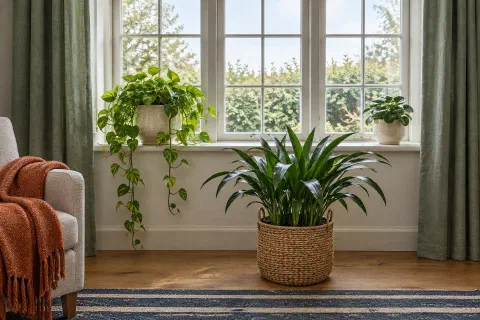
6. Pothos Trained on a Vertical Moss Pole (Epipremnum aureum)
This is my favorite budget secret for skinny apartment corners where light is weak. Instead of letting a golden or jade pothos trail down a shelf, guide three stems straight up a 4- to 5-foot stackable coir or moss pole inside a 10-inch pot. You get a lush, living green tower that never exceeds 16 inches wide.
- Height & width: 4 to 6 ft tall (set by your pole height); 14 to 18 in wide.
- Light: Low to bright indirect light (solid jade pothos keeps richest color in dimmer corners).
- Pet safety: Toxic to cats and dogs (insoluble calcium oxalates).
- Maintenance: Tuck stray side runners back against the pole with soft plant Velcro ties once a month.
7. Single-Stem Rubber Tree (Ficus elastica)
Most people picture a wide, bushy rubber tree, yet a single unbranched trunk trained straight up makes one of the sleekest narrow plants you can put beside warm wood furniture. Its thick glossy burgundy or dark-green leaves hold upright rather than sprawling horizontally.
- Height & width: 5 to 8 ft tall; 18 to 24 in wide as a single upright column.
- Light: Medium to bright indirect light (burgundy leaves need brighter light to stay deep).
- Watering cue: Let the top 2 inches dry between deep waterings, and keep away from cold drafts.
- Pet safety: Toxic to cats and dogs; sap can also irritate skin when pruning.
8. Columnar Cactus or African Milk Tree (Cereus / Euphorbia trigona)
If your narrow gap sits right against a scorching south-facing window where leafy tropicals fry, a true columnar cactus or upright African milk tree gives you 5 feet of living height in barely 12 inches of floor width.
- Height & width: 4 to 6 ft tall; 10 to 14 in wide.
- Light: Bright direct south or west sun (at least 4 to 6 hours daily).
- Safety caveat: Skip thorny cacti and Euphorbia (which oozes irritating milky sap) in narrow hallways, homes with small children, or anywhere a pet could brush against the stems.
How to Style Tall Narrow Plants Without Blocking Walkways
Putting a skinny plant in the wrong pot ruins the whole point. A flared belly basket eats up 6 extra inches of hallway space that a tall cylinder pot saves.
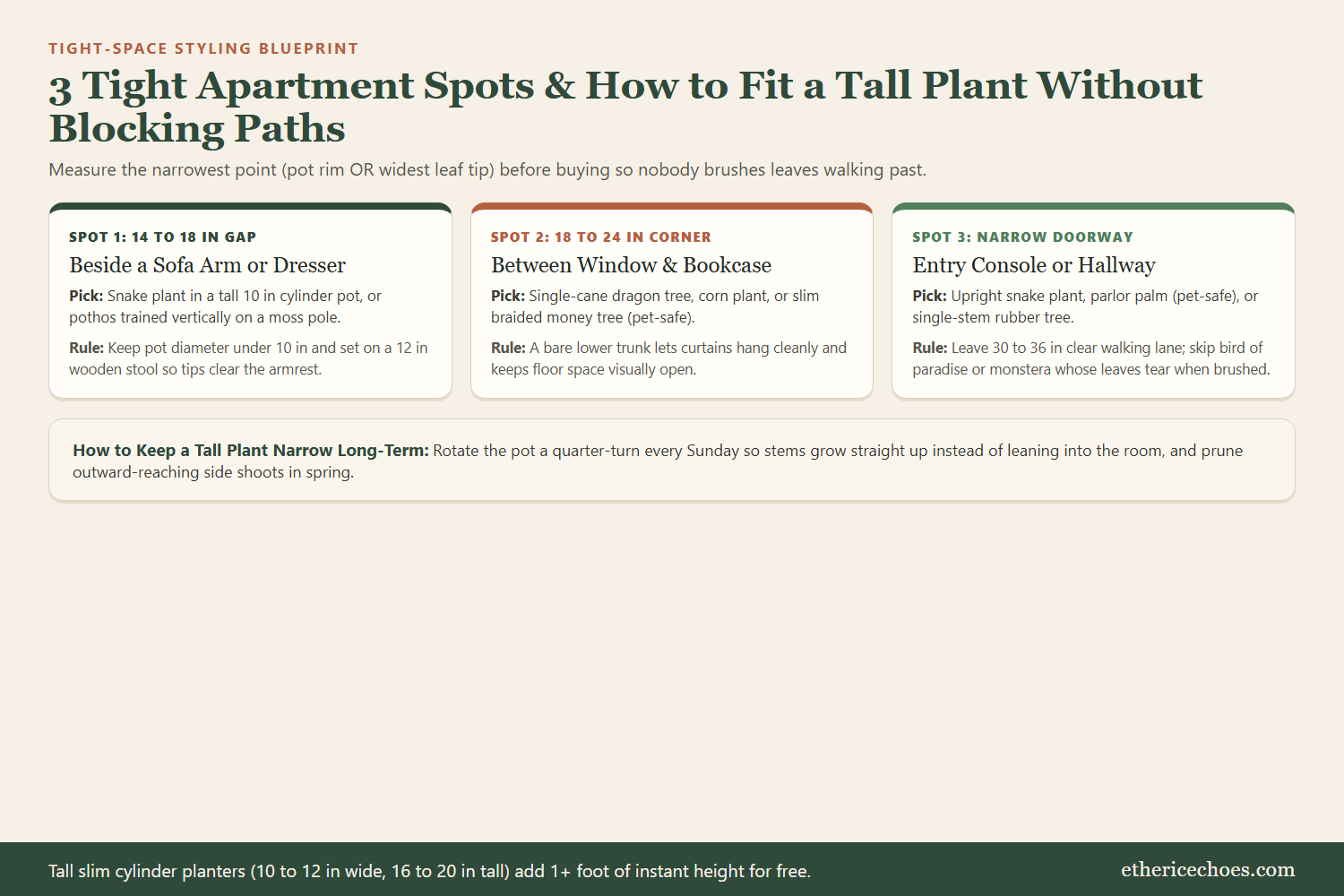
Here are the four habits we use to keep tall narrow plants looking crisp for years:
- Choose a tall, straight-sided cylinder planter: A 10- to 12-inch wide pot that stands 16 to 20 inches tall lifts a 3-foot snake plant straight past sofa-arm height while keeping the base footprint compact.
- Weight the bottom of tall narrow pots: Slim pots tip easily when bumped. Drop two clean river bricks or heavy pebbles in the bottom of the outer cachepot before sliding in the plastic nursery pot on its saucer.
- Rotate a quarter-turn every Sunday: Tall narrow plants turn crooked fast when they reach sideways toward a nearby window. A quick weekly turn keeps the trunk arrow-straight.
- Prune outward-reaching shoots in spring: If a dragon tree, rubber tree, or money tree sends one branch out into the doorway, snip it cleanly just above a leaf node in spring to keep the silhouette vertical.
Frequently Asked Questions About Tall Narrow Indoor Plants
What is the best tall skinny plant for a living room?
A single-cane dragon tree (Dracaena marginata) is the best all-around tall skinny living room plant because it reaches 6 feet while keeping a slim bare trunk down low. If your gap is narrower than 18 inches, pick an upright snake plant inside a tall cylinder planter.
What tall narrow plants are non-toxic to cats and dogs?
Parlor palm (Chamaedorea elegans) and braided money tree (Pachira aquatica) are both listed non-toxic by the ASPCA and stay tidy under 24 inches wide. Always verify the scientific name on the nursery tag before bringing a new pot home.
How tall should a narrow plant be under an 8-foot ceiling?
Aim for 5 to 6 feet tall including the pot. Leaving 18 to 24 inches of blank wall above the top leaf keeps a small room feeling open rather than cramped. For full ceiling-height math, see our tall indoor plants for living rooms guide.
Can I put a tall narrow plant in a dark hallway?
Only if the hallway receives measurable indirect daylight (enough to cast a faint midday shadow on white paper) and you pick a snake plant or parlor palm. In a windowless hallway, either add a slim warm-white decorative grow light or style a realistic faux olive tree.
Sources
- NC State Extension Plant Toolbox: Dracaena trifasciata (Snake Plant): soil drainage, light tolerance, and height specs.
- NC State Extension Plant Toolbox: Pachira aquatica (Money Tree): indoor light and watering guidelines.
- NC State Extension Plant Toolbox: Chamaedorea elegans (Parlor Palm): low-to-medium light tolerance and mature indoor size.
- ASPCA Toxic and Non-Toxic Plants Database: pet safety checks by botanical name.
- Clemson HGIC: Indoor Plants Light Requirements: indoor foot-candle bands and foliage responses.