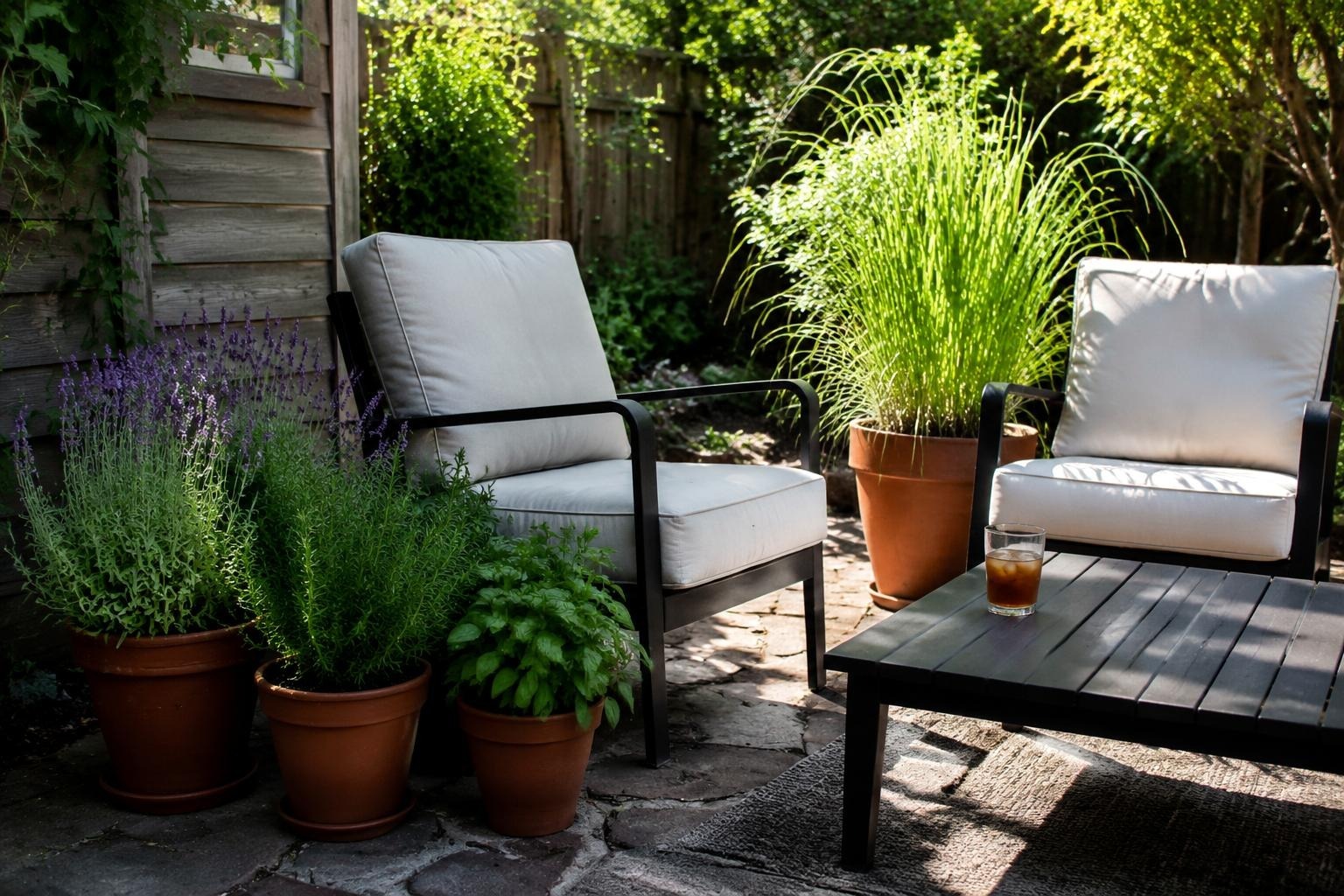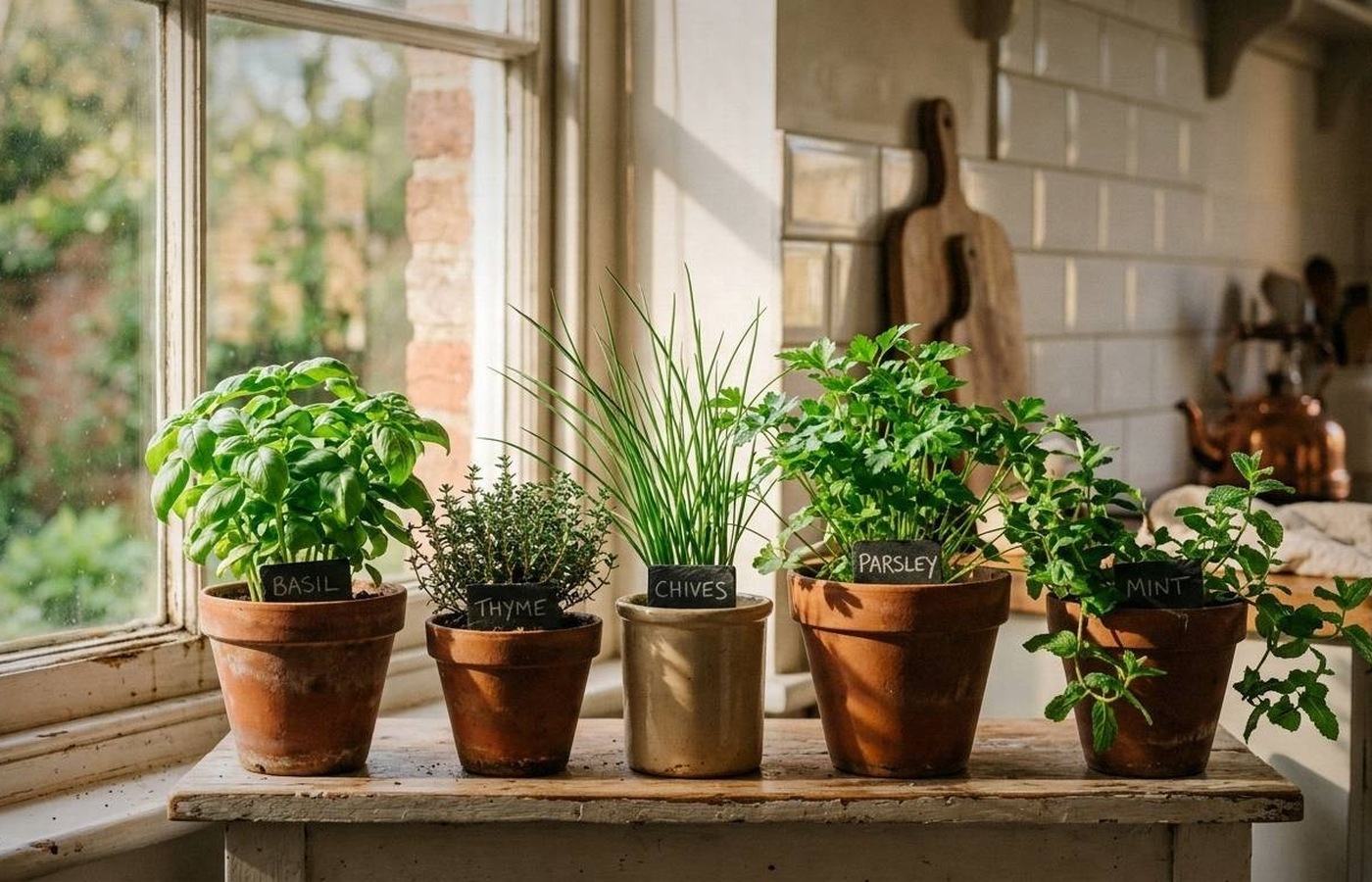
The best kitchen garden is sometimes three steps from the door.
I love a big garden bed in theory. In real life, I am usually making dinner with wet hands, a pan already warm, and five minutes before something needs herbs. That is why porch herb pots earn their space. They are close enough to use.
A few good pots can change the way summer dinners feel. Basil for tomatoes. Mint for iced tea. Chives for eggs. Thyme for chicken. Parsley for almost everything.
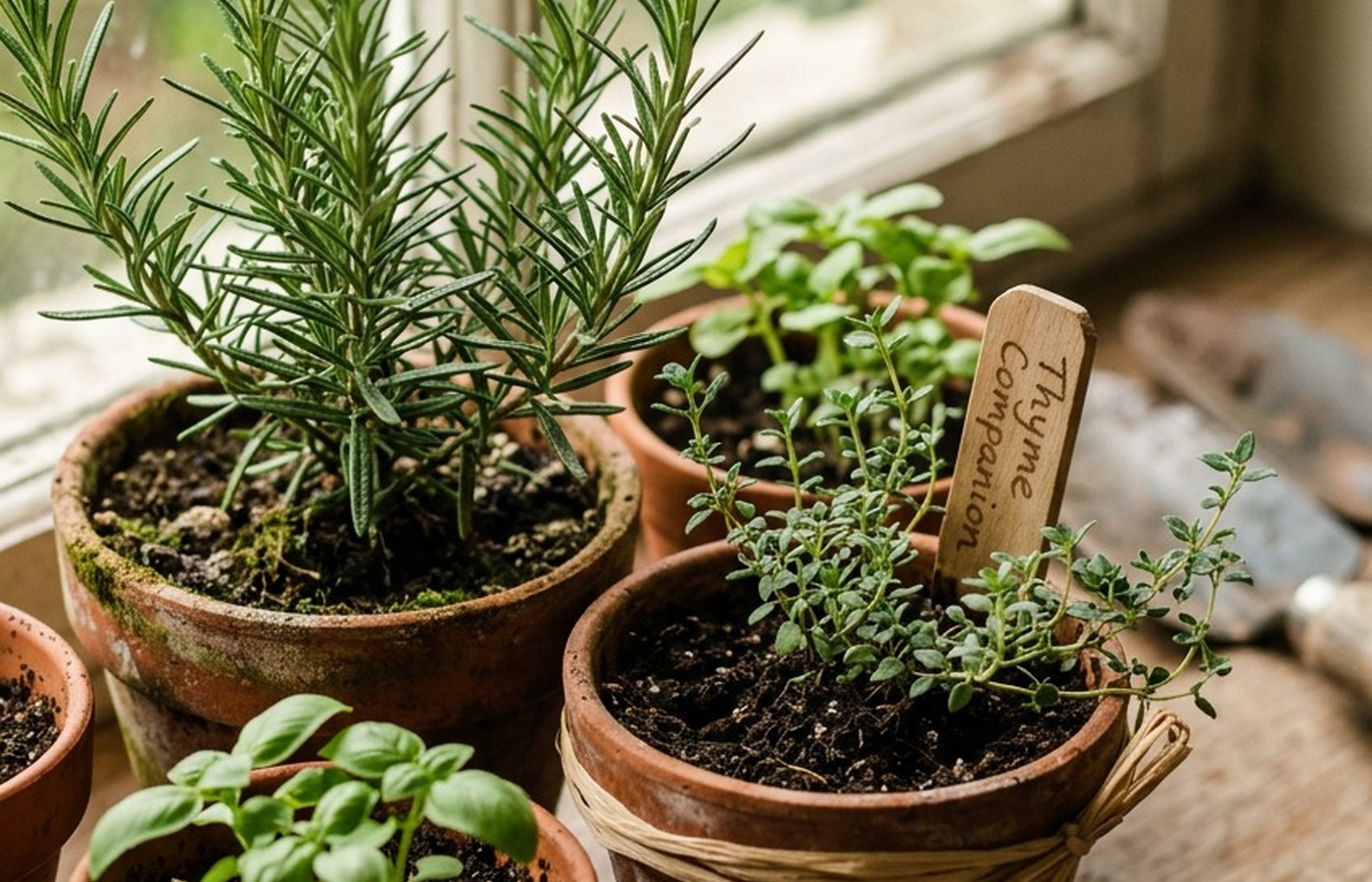
Keep the Herbs Near the Door
Put the pots where you will actually clip from them. Back steps, porch rail, sunny kitchen door, balcony ledge. If you have to put on shoes and walk across the yard, you will use them less.
Most herbs need at least four to six hours of sun. Basil and rosemary want the brightest spot. Parsley, chives, and mint tolerate a little more shade. If your porch gets morning sun and afternoon shade, you can still grow useful herbs.
Use containers with drainage holes. Herbs hate sitting in wet soil. A potting mix with compost is enough. Skip heavy garden soil in containers because it compacts and holds too much water.
The Five Pots I Would Plant
The tomato pot: basil, parsley, and a few trailing nasturtiums. Basil handles the heat, parsley fills the base, and nasturtiums spill over the edge with edible flowers.
The potato pot: rosemary, thyme, and chives. This one likes sun and drier soil. Clip rosemary for roasted potatoes, thyme for chicken, chives for anything that needs a mild onion bite.
The drink pot: mint alone. Always alone. Mint is pushy and will take over any mixed container. Put it in its own pot and cut it often for tea, lemonade, and fruit bowls.
The salad pot: parsley, dill, and chives. This one wants steady moisture and a little afternoon shade if your summers run hot.
The quiet pot: lavender and thyme. It is less about dinner and more about brushing past it when you step outside. Still useful, but mostly there because it smells like summer.
If you want more indoor options, this pairs well with a windowsill herb garden . Porch pots carry the warm months, windowsill jars carry the off-season.
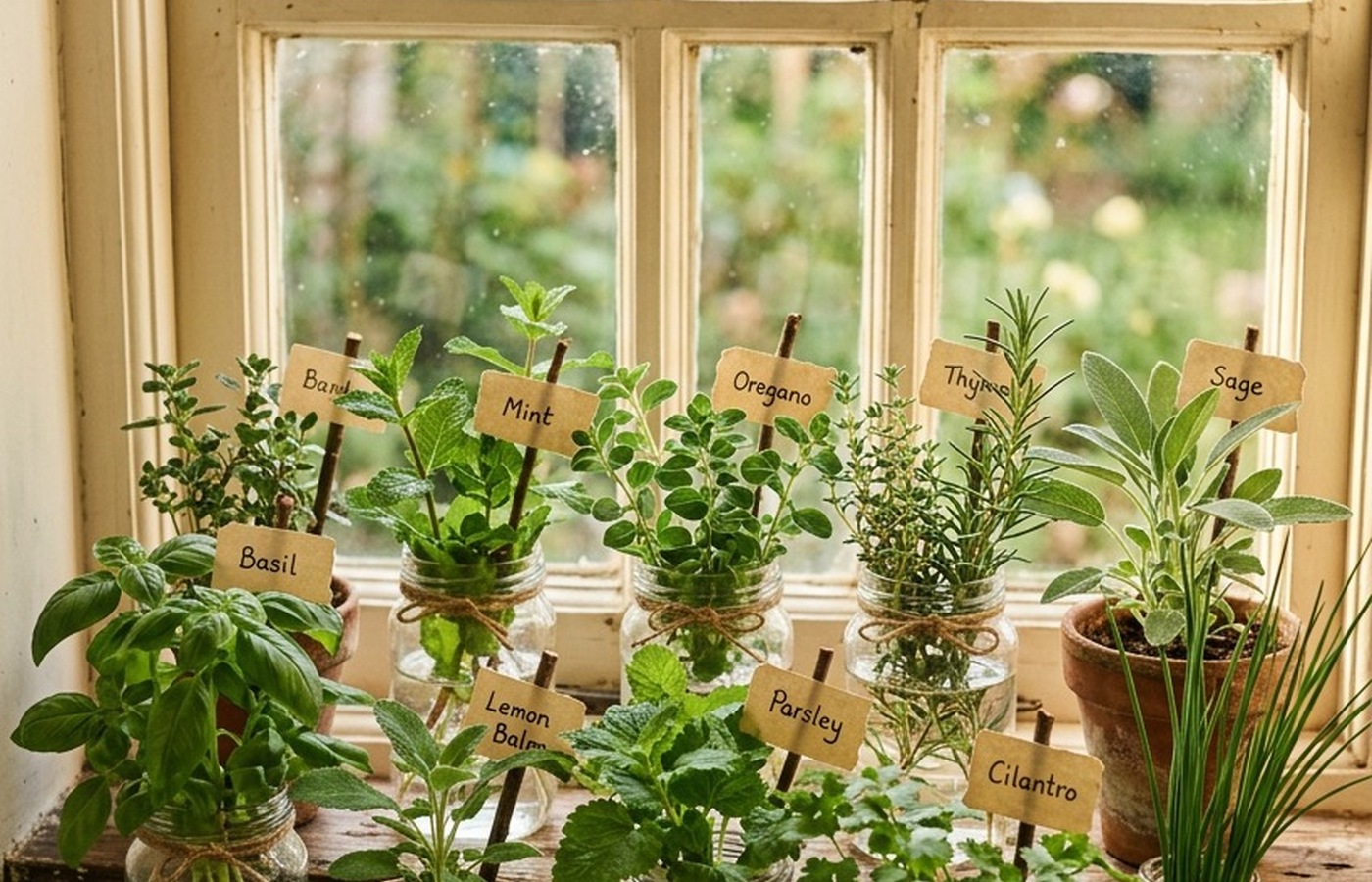
Harvest Before the Plants Get Leggy
Herbs get better when you cut them.
Pinch basil just above a pair of leaves. That makes it branch instead of grow into one tall stem. Cut chives near the base. Snip thyme and rosemary from soft green tips, not the woody old stems. Take parsley from the outside of the plant so the center keeps growing.
Do not wait until you need a huge handful. Tiny, regular cuts keep the pots full.
If basil starts to flower, pinch the flower buds off. Flowering changes the flavor and slows leaf growth. Dill is the exception. Let some of it flower if you want pollinators.
Water Like a Person Who Has Dinner to Make
Herb pots dry out faster than garden beds. In summer, check them every morning. Stick your finger into the soil. If the top inch is dry, water until it runs from the bottom.
Mint and parsley want more water. Rosemary and thyme want less. That is why the pairings matter. Do not put rosemary and mint in the same pot and expect both to be happy.
A saucer can help on a hot porch, but empty standing water after a storm. Mosquitoes do not need encouragement.
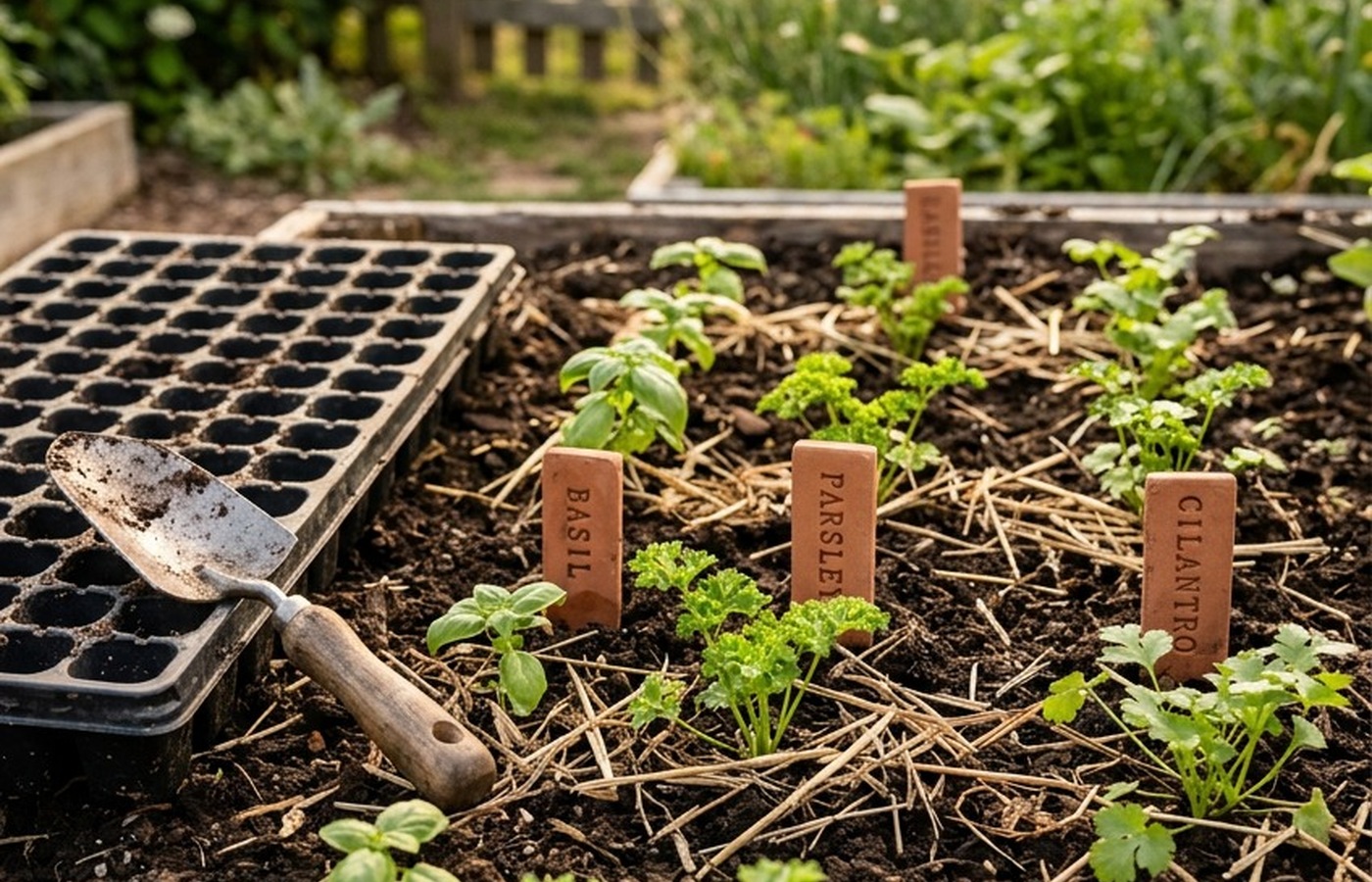
What to Cook From the Porch
Keep it simple.
Basil goes into tomato toast, pasta, eggs, and quick pesto. Chives go on baked potatoes, cottage cheese, scrambled eggs, and grilled corn. Mint goes into tea, watermelon, yogurt, and lemonade. Thyme goes into chicken, beans, mushrooms, and roasted carrots. Parsley wakes up almost anything that tastes a little flat.
You do not need chef energy for this. You need a pot close enough to clip from while the pan is still hot.
Make the Pots Look Good Too
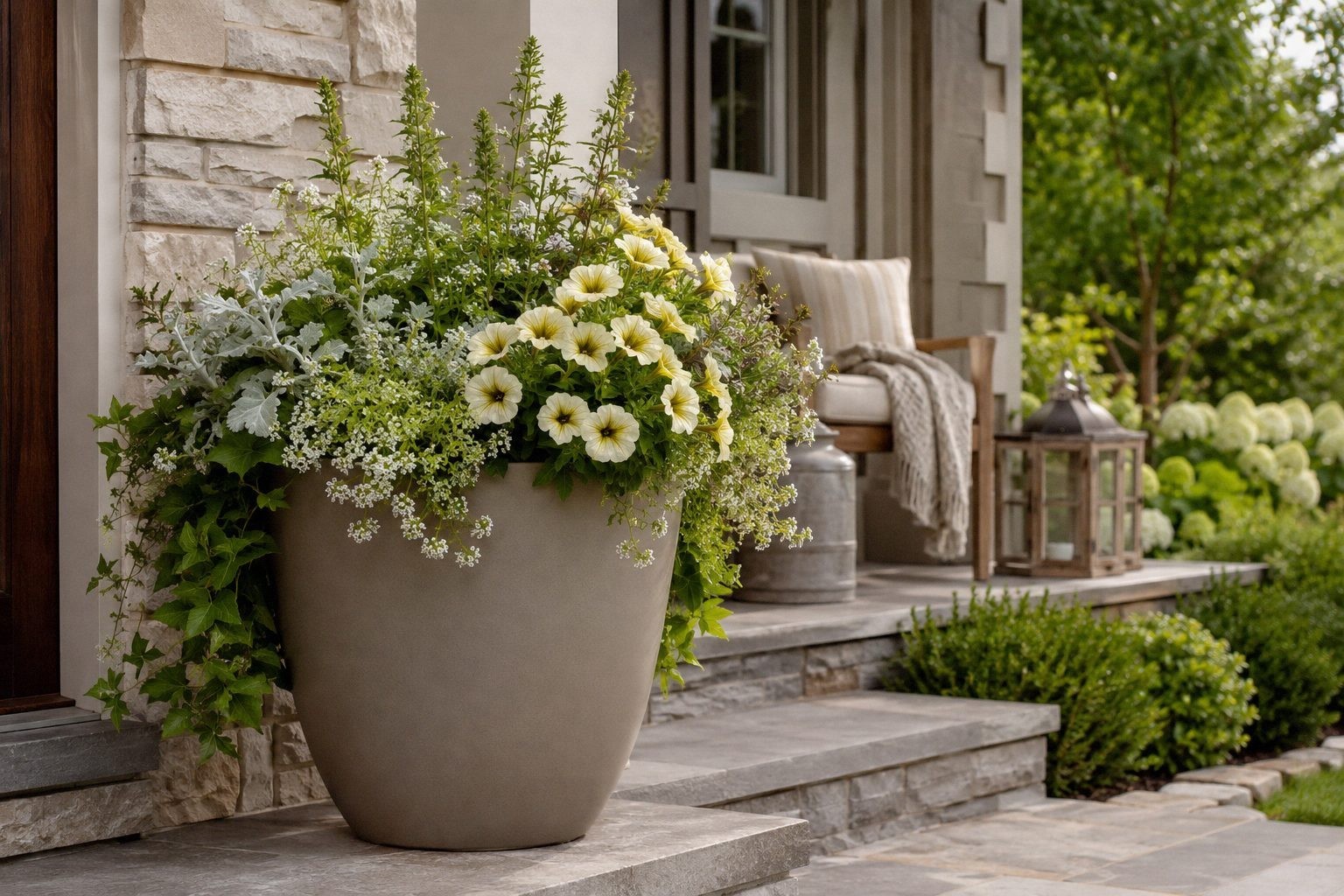
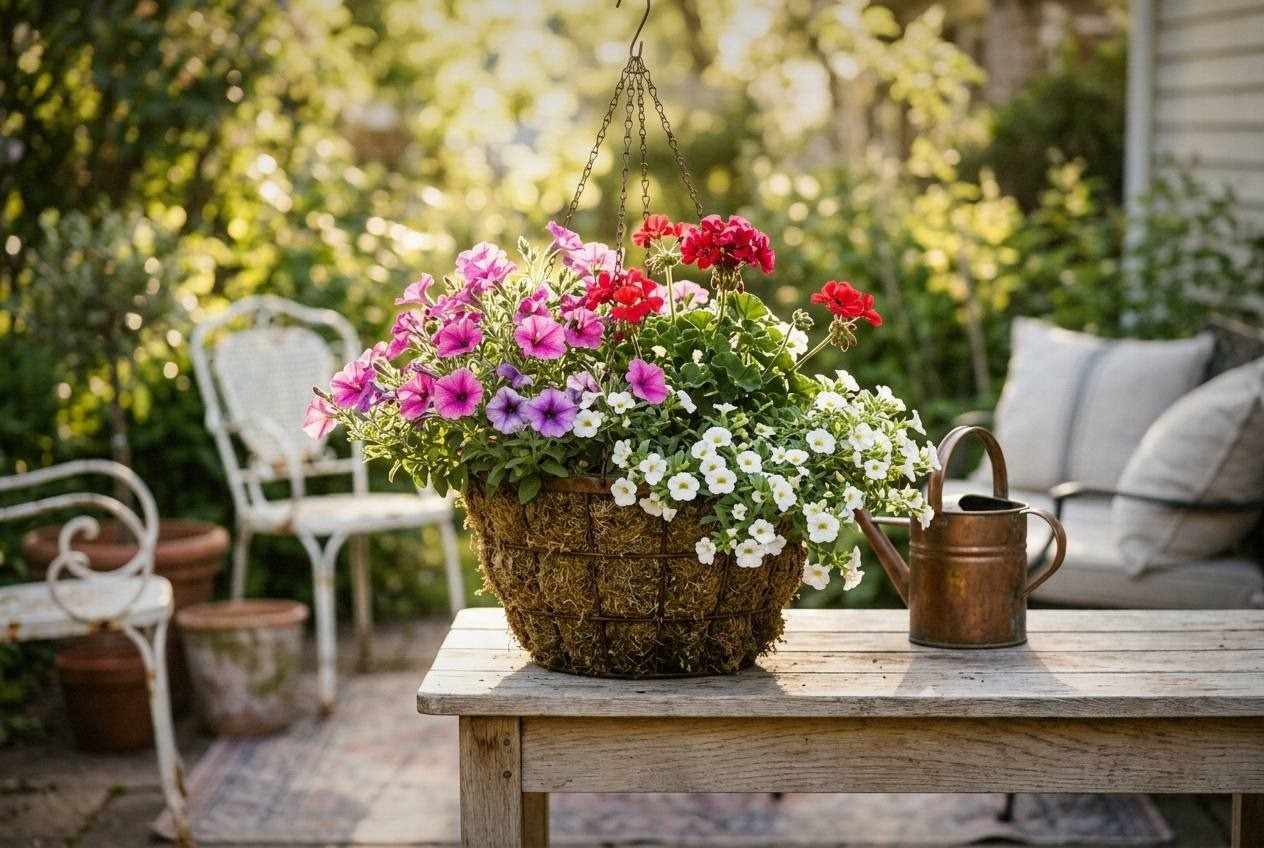
Herb pots can be useful and still look like they belong on the porch. Use matching containers if you want a tidy look, or mix terracotta and galvanized buckets if you like a softer cottage feeling.
Group them in a triangle instead of lining them up like soldiers. Put the tallest pot in back, the fullest pot in the middle, and the trailing pot in front.
This is seasonal home rhythm at its best: a small thing that makes daily life easier and prettier at the same time.