

A summer porch reads light because you removed things, not because you added them.
The pinned versions of summer porches are usually heavy: layered rugs, four kinds of pillows, three planters, a bench with a quilt, a chair with a throw, and a coffee table with a tray. They look good in a photograph and bad in the heat.
These six layouts strip the porch back to a working number of pieces. Each one fits a typical 6-by-12-foot covered porch. None require buying a full new set. Most start with what you already have, just edited.
Which Layout Fits Your Porch
| The porch you have | Start with this layout | The pieces it needs |
|---|---|---|
| A wide porch with a bench already on it | The Cream and Terracotta Layout | Cream textiles, 3 to 5 terracotta pots, one warm accent color |
| Long porch, mismatched seating | The Mixed Bench Layout | One 4-foot bench, two non-matching chairs, a low crate or table |
| Narrow porch, room for one chair | The Single Chair and Window Box Layout | One chair, one railing window box, a small side table |
| A porch that looks flat all summer | The Hanging Baskets and Floor Pots Layout | Two baskets, 2 to 3 floor pots, small herb pots at the base |
| A porch only used in daylight | The String Lights and Lanterns Layout | Two strands of warm-white lights, 2 to 3 lanterns |
| A porch you want to drink coffee on | The Lived-In Coffee Corner | One chair, one side table, a few books, one small plant |
1. The Cream and Terracotta Layout
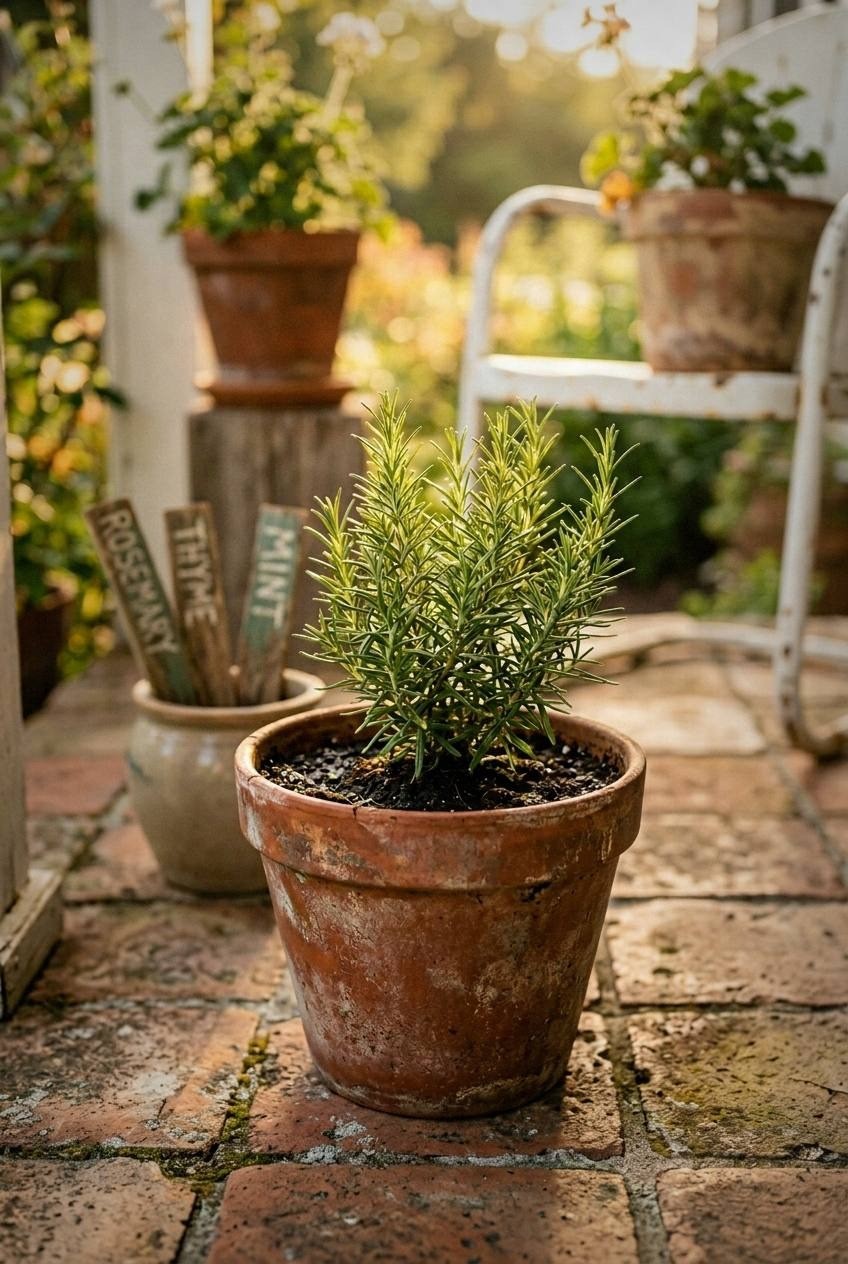
A small palette is what makes a summer porch read calm.
Start with cream as the base. A cream linen pillow on the bench, a cream-and-jute rug, a cream-painted small side table. Add terracotta as the second tone: 3 to 5 terracotta pots in graduated sizes against the porch railing. Pick one warm accent color from the planted material itself: red geranium, salmon dahlia, soft yellow nasturtium, or pink phlox.
That is the entire palette. Three colors, three textures. Cream textiles, terracotta clay, one living color.
Skip the seasonal pillow with the lemon print. Skip the welcome mat with the cursive font. The cream-and-terracotta layout works because it does not compete with the planted material.
2. The Mixed Bench Layout
A bench plus two chairs reads more lived-in than three matching chairs.
Pick a 4-foot wood bench against the back wall of the porch. Add two non-matching chairs facing it: one Adirondack, one painted wood, or one wicker plus one folding metal. The mismatch is the point. It makes the porch look found rather than purchased as a set.
Pull a small low table or wooden crate to the center as the surface for coffee, books, or a candle. The crate works because it can also hold a bag of soil or a watering can without looking out of place.
This layout fits four people for a casual evening, two people for the everyday morning, and one person reading at any time. The flexibility is what makes it work all summer.
3. The Single Chair and Window Box Layout
If the porch is narrow, one chair plus a window box does more visual work than two chairs.
Pick the corner of the porch with the best light at the time you actually use it. Set a single Adirondack or wicker chair there, angled toward the railing. Hang a window box on the railing in front of the chair, planted with a summer mix: trailing petunias, calibrachoa, and silver dichondra.
That mix wants real sun, so it only works if the railing actually gets the hours. Penn State Extension counts full sun as six or more hours of direct sun and part shade as two to four , which is the difference between a window box that cascades by July and one that sulks.
The chair plus window box reads complete. The eye does not look for a second chair because the planted box draws attention from the first.
A small side table or upturned wooden crate beside the chair holds the morning coffee. That is the whole setup.
4. The Hanging Baskets and Floor Pots Layout
The summer porch with the most visual life is the one with layered planted material at multiple heights.
At the top, hang two matching hanging baskets from the porch ceiling, each with the same plant combination. At eye height, place 2 to 3 large floor pots along the railing, each with one statement plant: a small hibiscus, a tall lavender, a fully bloomed mandevilla. At ground level, line up smaller terracotta pots with herbs along the bottom edge of the railing.
Three levels: hanging, mid, low. The eye reads layered without the porch feeling crowded.
For the seating, keep it simple: one bench or two chairs. When the planted material is doing the work, the furniture should not compete.
5. The String Lights and Lanterns Layout
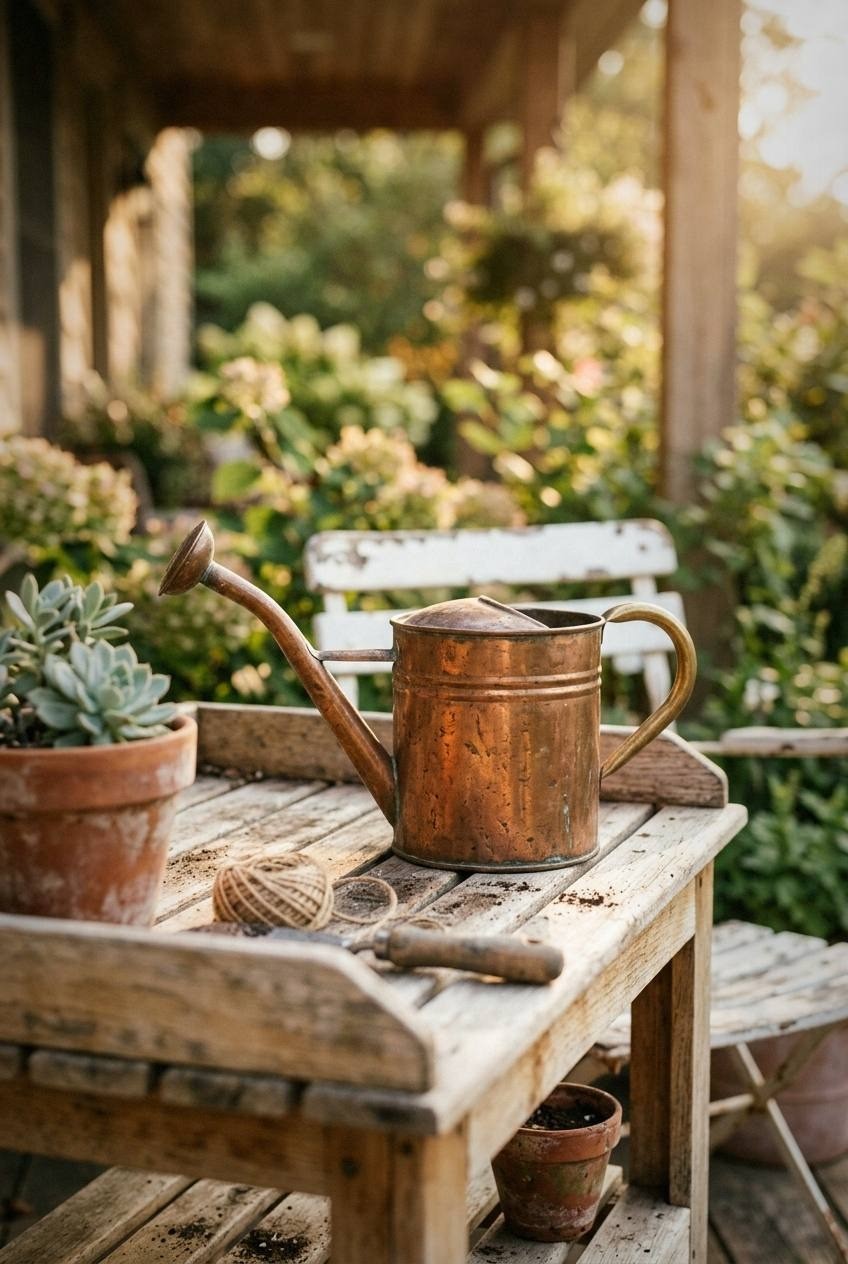
Summer porch evenings are the part most layouts miss.
String two strands of warm-white outdoor string lights along the porch ceiling or wrapped around posts. The light should be warm-white (around 2700K), not cool-white. Cool-white reads commercial. Warm-white reads home.
That is a measurable difference, not a mood. The DOE Federal Energy Management Program lists 2,700 K as warm, friendly, and personal, the band it ties to homes, and 4,100 K as cool, neat, and efficient, the band it ties to offices and showrooms, and it notes that a jump from one to the other is noticeable. So the DOE guidance on light bulb color temperature is the reason a cool-white strand on a porch feels like a waiting room.
Add 2 to 3 lanterns at floor or table level: one tall floor lantern beside a chair, one small lantern on the side table, one battery-powered candle in a glass cylinder on the railing. Each lantern is a small pool of light. Combined, the porch glows.
This layout does not change the daytime porch at all. It just adds an evening layer that makes the porch usable from 7pm to 10pm in summer.
6. The Lived-In Coffee Corner
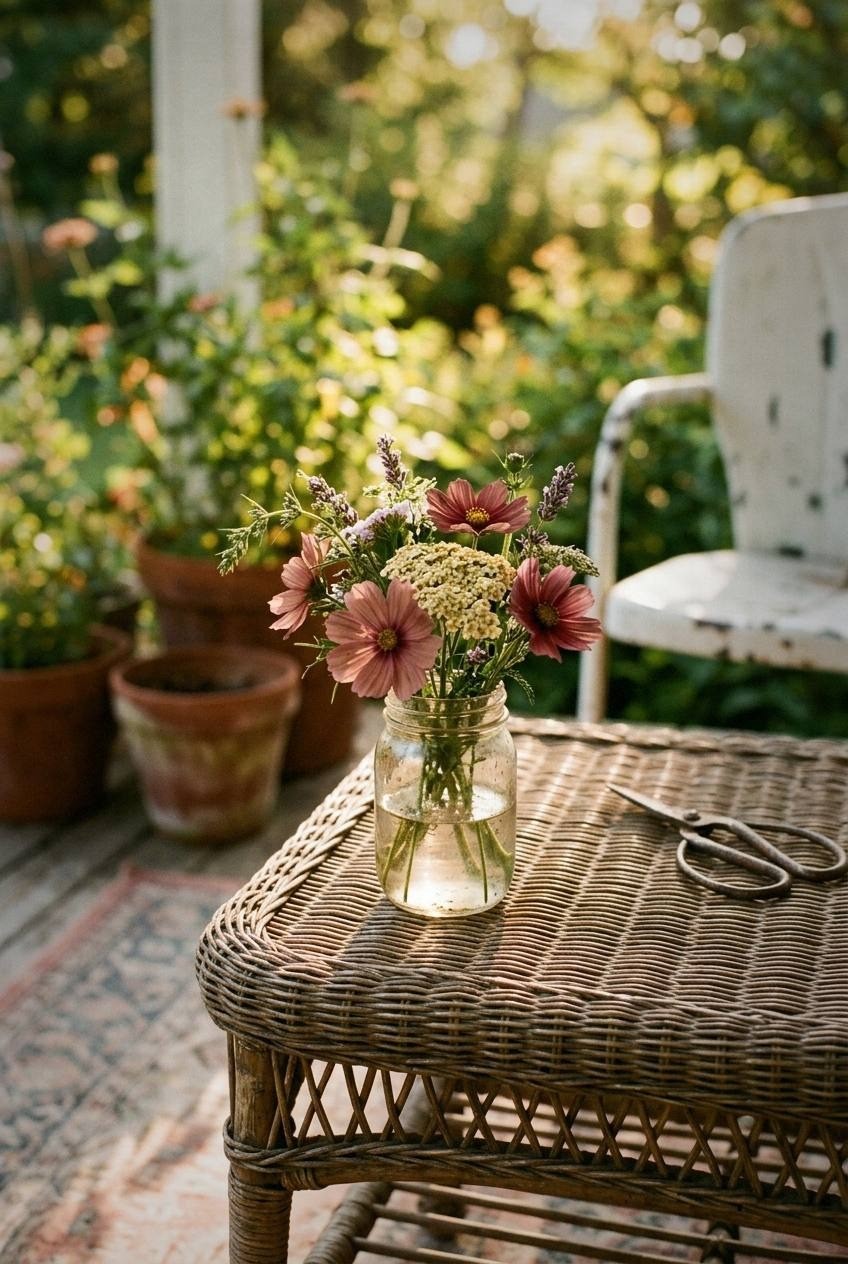
The summer porch that gets used the most is the one with one specific spot for a coffee.
Pick the corner of the porch closest to the kitchen door. Place a single chair there, a small side table next to it, a stack of 2 to 3 books on the table, and one small plant beside the books. A small fern, an English ivy, or a single trailing pothos.
The book pile is what makes this corner read lived-in. A clean side table with one coffee cup looks staged. A side table with books, a coffee cup, and a plant looks like someone actually drinks coffee here.
This is the one summer porch layout that gets better the longer it sits. The books move around. The plant grows. The chair softens. The summer porch becomes itself by August.
How to Set Up a Layout in Four Steps
- Pick the layout by the porch’s shape first, not by the pieces you already own.
- Empty the porch and put back only what the chosen layout calls for.
- Place the largest piece first, whether that is a bench, a chair, or the floor pots, then walk the path to check it still works.
- Add the light layer last, once the daytime arrangement already looks right without it.
What to Skip and What to Keep
Skip these, because they fight the planted material:
- The seasonal pillow with the lemon print.
- The welcome mat with the cursive font.
- A second rug layered over the first one.
- Any planter that repeats a color already on the porch.
Keep these, because they carry the whole look:
- One cream textile as the base.
- One terracotta tone across at least three pots.
- One living color, taken from the plants themselves.
- The chair you actually sit in.
Edit Down, Don’t Add
Most summer porches have too much on them by July. The layouts above each strip the porch to a working number of pieces.
Pick the layout closest to your porch’s geometry, then remove anything that does not fit it. The summer porch you actually sit on is the one with fewer things, not more.
What to Read Next
- Front porch planter ideas that look full all season is the planting half of the layout, for the porch that still looks thin after the furniture is set.
- Cheap pots that look expensive on a front porch covers the containers, which is where most summer porch budgets actually go.
- Flower container combinations that bloom all season gives you the pairings if the terracotta pots keep finishing early.
- Hanging baskets that make a plain porch look welcoming is the detail version of the layered layout above.
- Rainy porch ideas for days you still want to sit outside is the fix when windblown water reaches the chair, the cushions, or the floor.