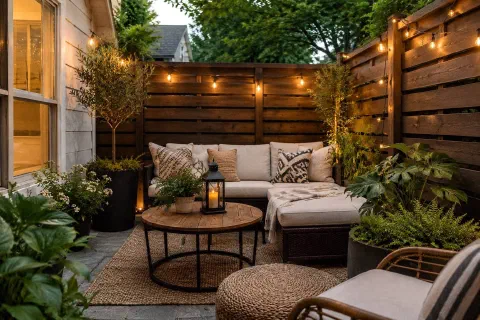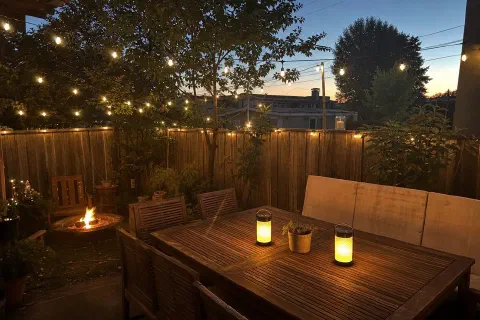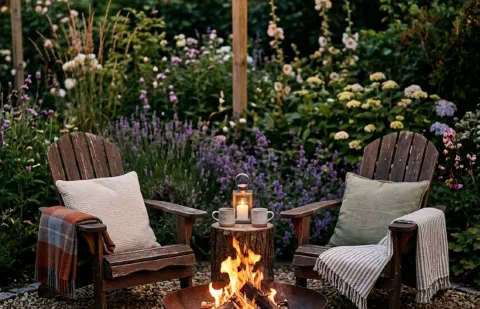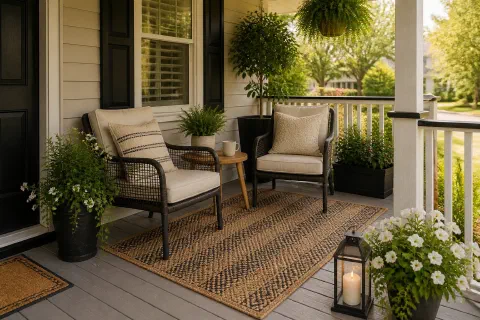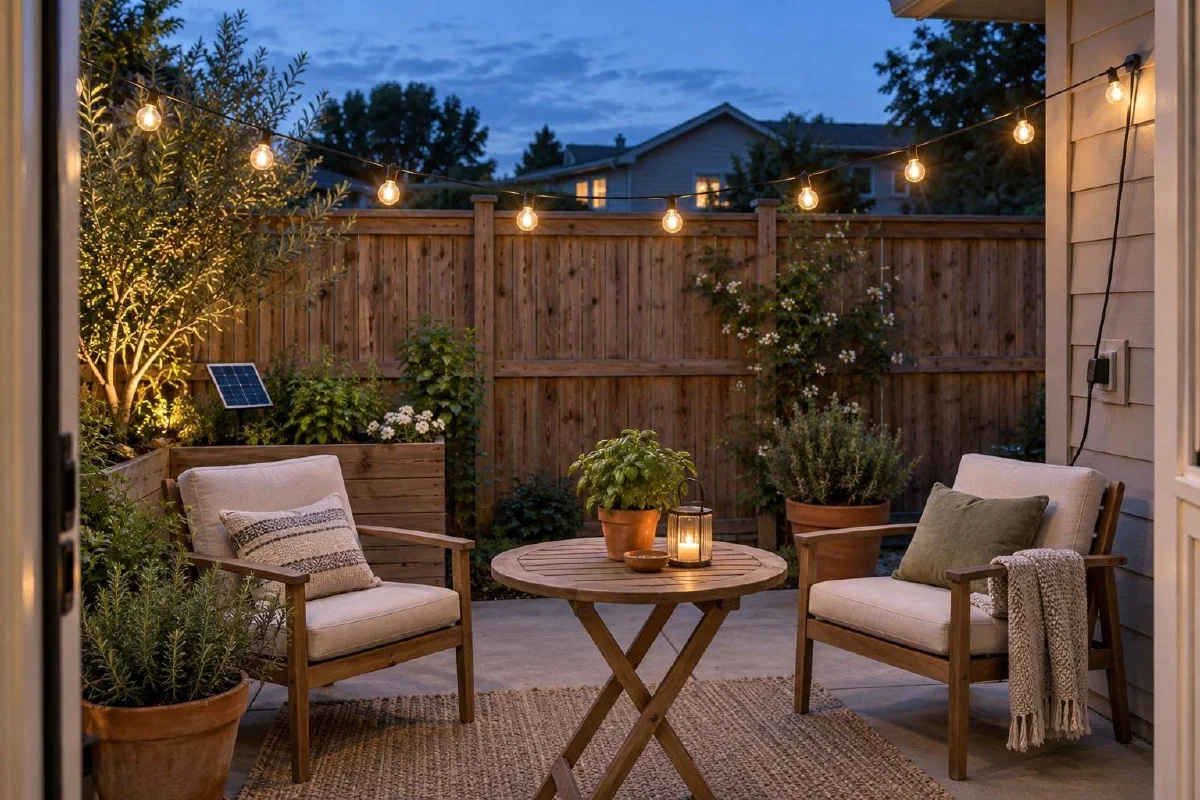
String lights get strange fast when they are treated like decoration instead of lighting.
One loose strand across the yard can look temporary. Three strands from random hooks can make the patio feel like a party setup that never got cleaned up. The goal is not to cover the whole backyard. It is to put warm light exactly where people sit, walk, or set down a glass.
You do not need a pergola for that. You need a few strong anchor points, a lower layer of light, and a shape that makes sense from the chair.
Jump to the power comparison , anchor choices without a pergola , or measuring the run .
Listings, ratings, review counts, and availability were checked on September 15, 2026 and can change.
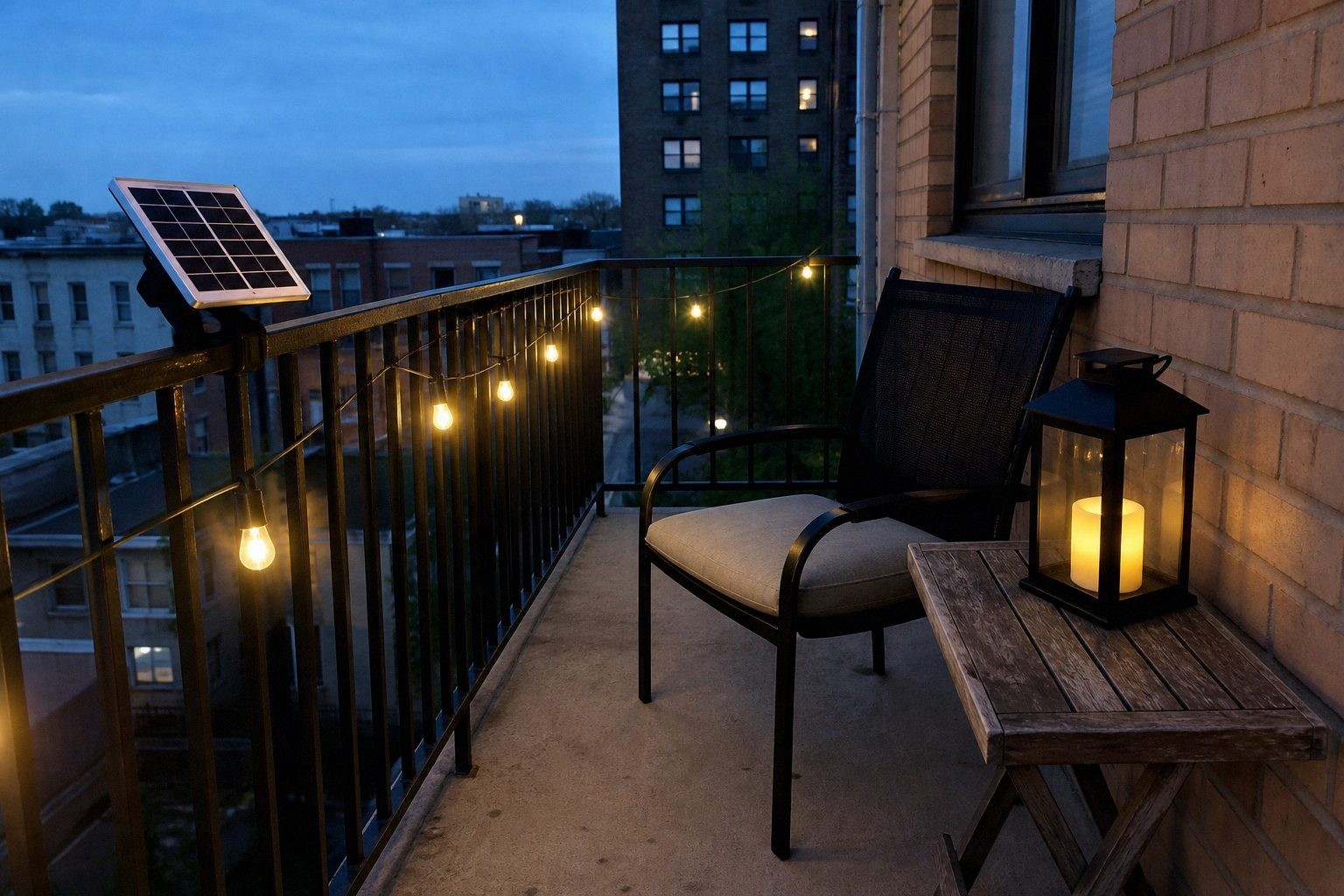
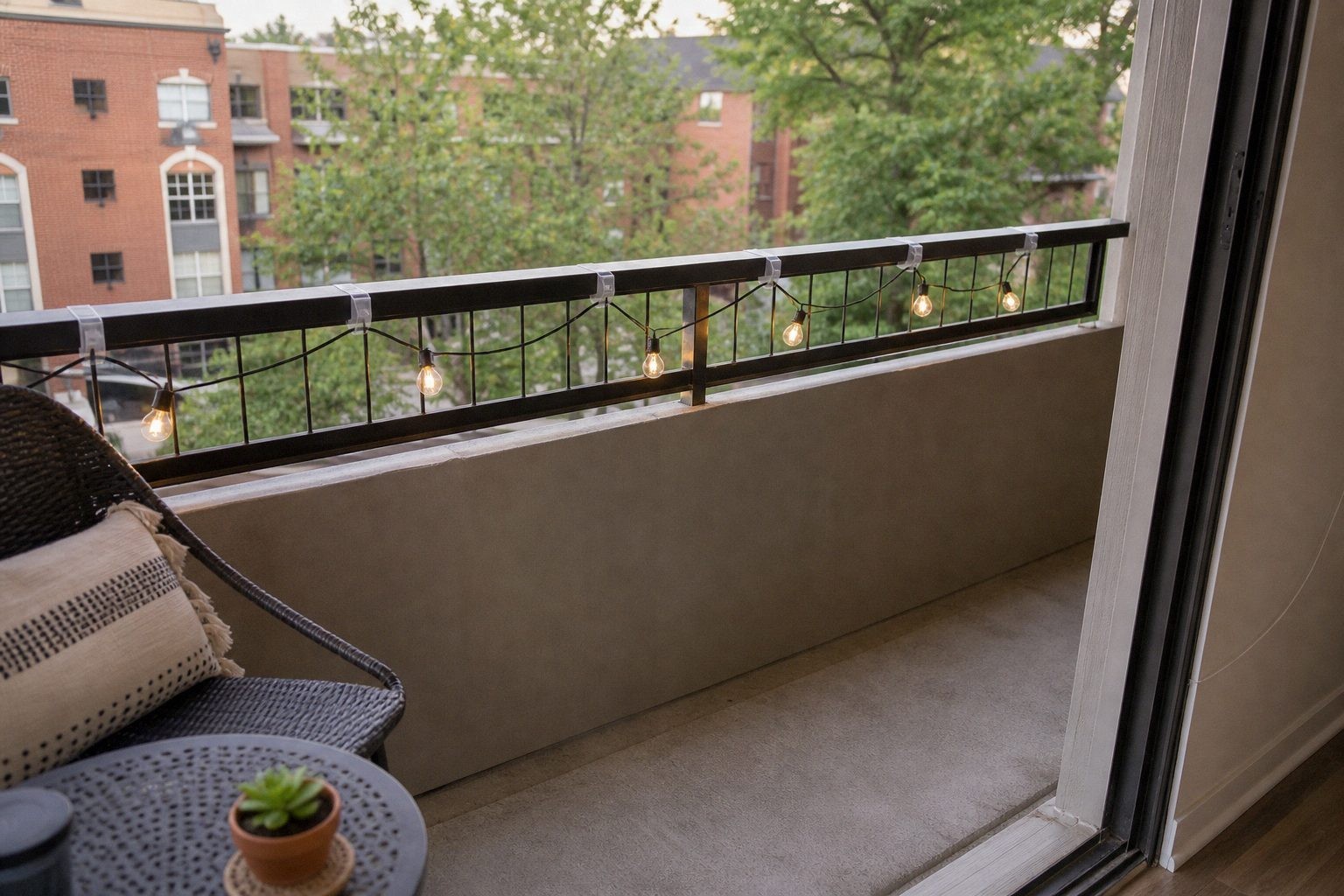
Compare power before buying a strand
| Your patio has… | Buy first | Why | Do not choose it if… |
|---|---|---|---|
| No outlet, but several hours of direct sun | A short solar strand | No extension-cord route and easy renter setup | The solar panel will sit in shade or you need dependable task light |
| A GFCI-protected outdoor outlet near the seating zone | A measured plug-in strand | More consistent brightness and runtime | The cord must cross a doorway or walking path |
| Only one small table and no safe overhead anchors | A rechargeable outdoor table lamp | Puts useful light where you sit without a hanging structure | You specifically want an overhead canopy effect |
Small patio string-light ideas start with the sitting spot
Do not start by asking where the lights can reach. Start with the place you actually want to use.
Most small patios only need one lit zone:
- two chairs and a table
- a bench against the fence
- a bistro table near the door
- a fire pit corner
- a narrow side patio that becomes a reading spot
Once the seating zone is clear, the string lights have a job. They frame that area. They do not have to cross the whole yard.
This is the same reason a budget patio looks better when the furniture has a clear shape. Lighting works the same way. A smaller, intentional glow almost always beats a big scattered one.
How to string lights on a patio with no pergola
If your patio has no pergola, trees, or porch ceiling, make your own anchor points.
| Anchor you can use | Check before buying lights |
|---|---|
| Fence posts you own | Confirm the posts are sound and the strand clears gates and walking routes. |
| Freestanding planter posts | Use supports and ballast rated by their maker for the span and wind exposure. |
| No permitted attachment point | Start with a rechargeable table lamp instead of forcing an overhead strand. |
For a rental, check the lease before drilling into a wall or fence. If you are lighting a balcony rail rather than spanning a patio, the no-drill balcony lighting guide compares rail placements and battery, solar, or plug-in power for holiday strands. Its rail methods are a different job from supporting an overhead patio span. The support, outlet, and cord route are separate decisions; the decorative electrical cord should not carry the span by itself.
The simplest version is a pair of tall posts set in properly weighted planters. Use containers and post supports designed for the load, follow the hardware instructions, and keep the lights above the occupied area without pulling the strand tight. Black or stained wood posts tend to disappear more than bright white PVC.
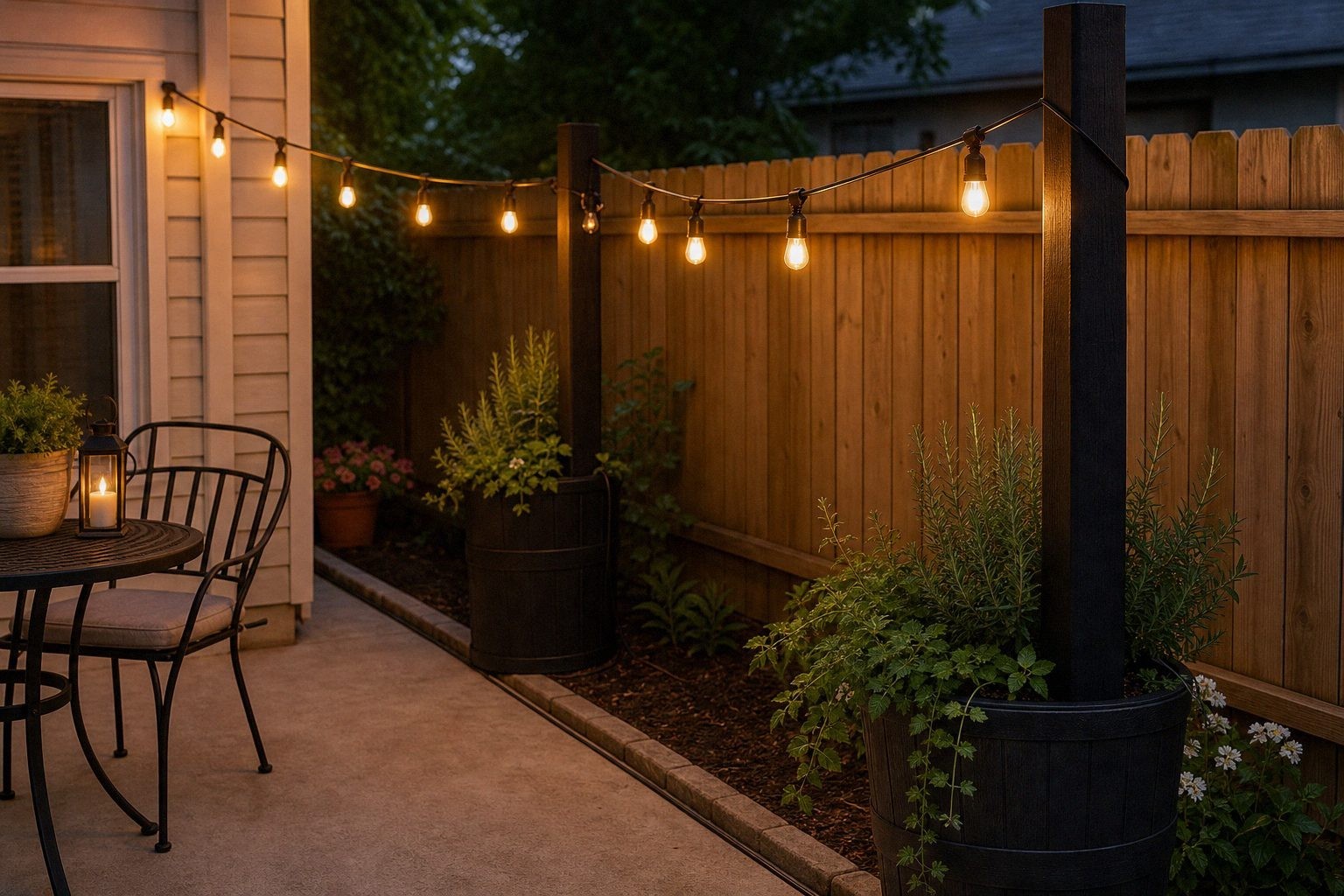
This works especially well for rental patios because the anchors can move. Just keep the planters heavy enough that wind will not turn them into a problem.
Do not let the decorative light cord carry its own long unsupported span. Use the support method required by the strand maker, and bring freestanding poles or loose strands down before high-wind weather. If a planter can rock when you pull lightly on the post, it is not a finished anchor.
For a softer look, let each planter do double duty. Add trailing thyme, rosemary, lavender, sweet potato vine, or a low annual around the base after the post is secure. The lights feel less like hardware when the bottom is planted.
Patio string-light layouts that do not look tangled
A fence is usually the easiest anchor you already own.
Run the lights from the house to the fence, from fence post to fence post, or in a shallow V over the seating area. Keep the line simple. If every strand changes direction, the patio starts looking tangled even before the sun goes down.
For a narrow patio, try one clean diagonal from the house to the far fence corner. For a square patio, try two parallel lines over the sitting area . For a fence-side bench, run one strand just above and slightly behind the seat so the glow lands on the wall and plants, not directly in your eyes.
For a small patio, these are the three layouts worth testing:
- One diagonal: the least hardware and the cleanest fit for a narrow rectangle.
- Two parallel runs: better coverage over a square dining or conversation zone.
- A shallow V: useful when the house provides one anchor and two posts or fence points provide the others.
Skip the dense zigzag unless the patio is wide enough to keep every low point clear of heads, doors, and the path back inside.
Warm bulbs matter here. Bright white bulbs can make a small backyard feel exposed. Soft white or warm white is usually better.
Keep the Lights Lower Than You Think
String lights do not have to be high enough to light the entire yard.
They just need to clear heads and doors. Lower light feels cozier because it belongs to the sitting area. When lights are hung too high, they start feeling like security lighting with prettier bulbs.
If the patio still feels flat after the string lights are up, do not add another overhead strand right away. Add one lower light instead:
- a lantern on the table
- a solar light tucked beside a pot
- a small lamp made for outdoor use
- a candle lantern on a step
- a warm path light near the chair leg
Layered light makes a patio feel used. One overhead strand alone can feel unfinished.
Which Kind of Light Does Which Job
Most patios end up with two or three of these rather than one. It helps to know what each is actually good at before buying more of the wrong one.
| Light | Power | Best for | Renter-friendly | Watch for |
|---|---|---|---|---|
| Overhead string lights | Plug-in | The main sitting zone, the one that sets the mood | Yes, with planter posts | Needs a reachable outlet and a cord route |
| Solar string lights | Solar | A fence line or a spot with no outlet nearby | Yes | Dimmer, and dies early on short winter days |
| Stake or path lights | Solar | The walk back to the door, edges of a bed | Yes | Panel has to sit in real sun, not pretty shade |
| Lanterns | Candle or LED | The table itself, a step, a low corner | Yes | Real flame needs somewhere it cannot tip |
| Rechargeable table lamp | Battery | A bistro table where no cord can reach | Yes | Runtime, so check hours per charge |
| Rail or clip lights | Battery or solar | Balcony railings and deck edges | Yes | Small pool of light, accent only |
What to check before you buy a strand
The specs that decide whether a strand looks warm or looks like a job site:
- Colour temperature. Look for roughly 2200K to 2700K. Anything higher reads blue and cold outdoors, which is the single most common reason a patio feels harsh at night.
- Shatterproof bulbs. Plastic rather than glass if the strand hangs anywhere near chairs, kids, or a door that slams.
- A weather rating on the box. Outdoor-rated connectors matter more than the bulbs. A strand sold as “indoor/outdoor” with no rating is an indoor strand.
- Length, plus about twenty percent. Measure the run from anchor to anchor, then add a fifth for the droop. A strand pulled tight to reach looks like a clothesline and stresses the sockets.
- Dimmable, if the budget allows. The difference between pleasant and glaring is usually brightness rather than placement.
Buy one good strand rather than three cheap ones. A single warm, properly hung line over the chairs does more than three strands crisscrossing a yard.
Measure the lit run, not the patio perimeter
Measure every anchor-to-anchor segment, add the lead from the plug or solar panel to the first bulb, then add the slack specified by the maker. Do not use a 55-foot strand just because the patio is 10 feet wide. Extra cable still needs a safe supported route; coiling it on the floor creates a mess and a trip problem.
The solar 27-foot strand above suits a short fence or one compact overhead run. The 55-foot plug-in strand makes more sense for two parallel runs or a larger seating zone. If your measured route is much shorter, buy a shorter outdoor-rated strand rather than hiding half of a long one.
Hide the Extension Cord Route
The cord is often what makes string lights look cheap.
Before you hang anything, decide how the power reaches the lights. Keep cords along an edge, behind a planter, under a bench, or clipped neatly along trim. Avoid running a cord across the main walking path, even if it is technically outdoor rated.
Plug outdoor lighting into a GFCI-protected receptacle, keep connections out of standing water, and follow the light maker’s connection and extension-cord instructions. NFPA’s decorating guidance also recommends replacing string lights with worn or broken cords and using products marked for outdoor use. UL Solutions explains the wet-location and outdoor-lighting certifications that help separate a patio product from an indoor decorative strand.
If you are using solar string lights, place the panel where it actually gets sun. A shaded panel on a pretty fence will not help you at dusk.
Battery and solar lights are useful for small accents, but plug-in lights are usually better for a main sitting zone. Pick based on how often you want to use the space, not just what is easiest to install in five minutes.
Make the Patio Look Good Before Nightfall
String lights cannot carry the whole scene in daylight.
If the patio looks bare at 3 p.m., it will still look bare at 8 p.m. Add one plant cluster, one table surface, and one clear sitting shape before you worry about more bulbs.
A good simple setup:
- two chairs angled toward each other
- one small table between them
- one large planter near the back corner
- one string light line overhead
- one lower lantern near the table
That is enough for a small patio.
The best string light patio does not scream “look at my lights.” It just makes the chair feel like the place you meant to end up.
Patio string-light questions people ask
What is the best way to hang string lights without a pergola?
Use existing structural points only when the owner and the light maker allow it, or create freestanding posts with bases designed and weighted for the span. A fence can carry one side, but do not attach to a neighbor’s fence, siding, gutters, or trim without permission. Keep the layout to one diagonal, two parallel runs, or a shallow V.
How high should patio string lights hang?
Follow the product and local clearance instructions and keep every low point safely above people, doors, and the walking path. The exact height depends on the strand, span, sag, mounting hardware, and site. Do not pull the wire tight merely to gain clearance.
Are solar or plug-in string lights better for a patio?
Plug-in lights are the more dependable choice when you have a protected outdoor outlet and a safe cord route. Solar lights solve the no-outlet problem, but the panel needs real direct sun and the output is usually ambient. Choose from the power conditions you have, not from the prettiest product photo.
How many feet of string lights do I need for a small patio?
Add the length of the actual anchor-to-anchor route, the unlit lead to the power source, and the slack required by the manufacturer. A single compact run may need about 20 to 30 feet; two runs can need substantially more. Measure the layout instead of buying by patio square footage.
What color temperature looks best outdoors?
Warm white in roughly the 2200K to 2700K range usually reads softer around seating than cool white. Brightness still matters, so use a dimmable outdoor-rated strand when glare is likely and place lower task light near the table rather than adding another overhead run.
More help with this project
- Compare weather ratings, power, and mounting options in this guide to the best outdoor patio speakers before adding sound to the seating area.
What to Read Next
- Cozy patio lighting ideas for tiny backyards covers lanterns, path lights, and low layers around the string-light zone.
- A two-chair tiny patio layout helps place the seats before measuring the strand.
- Balcony privacy ideas that do not look cheap handles the sightline problem without wrapping the whole outdoor space.
- Budget fire-pit ideas show where low path lighting belongs around an evening seating area.