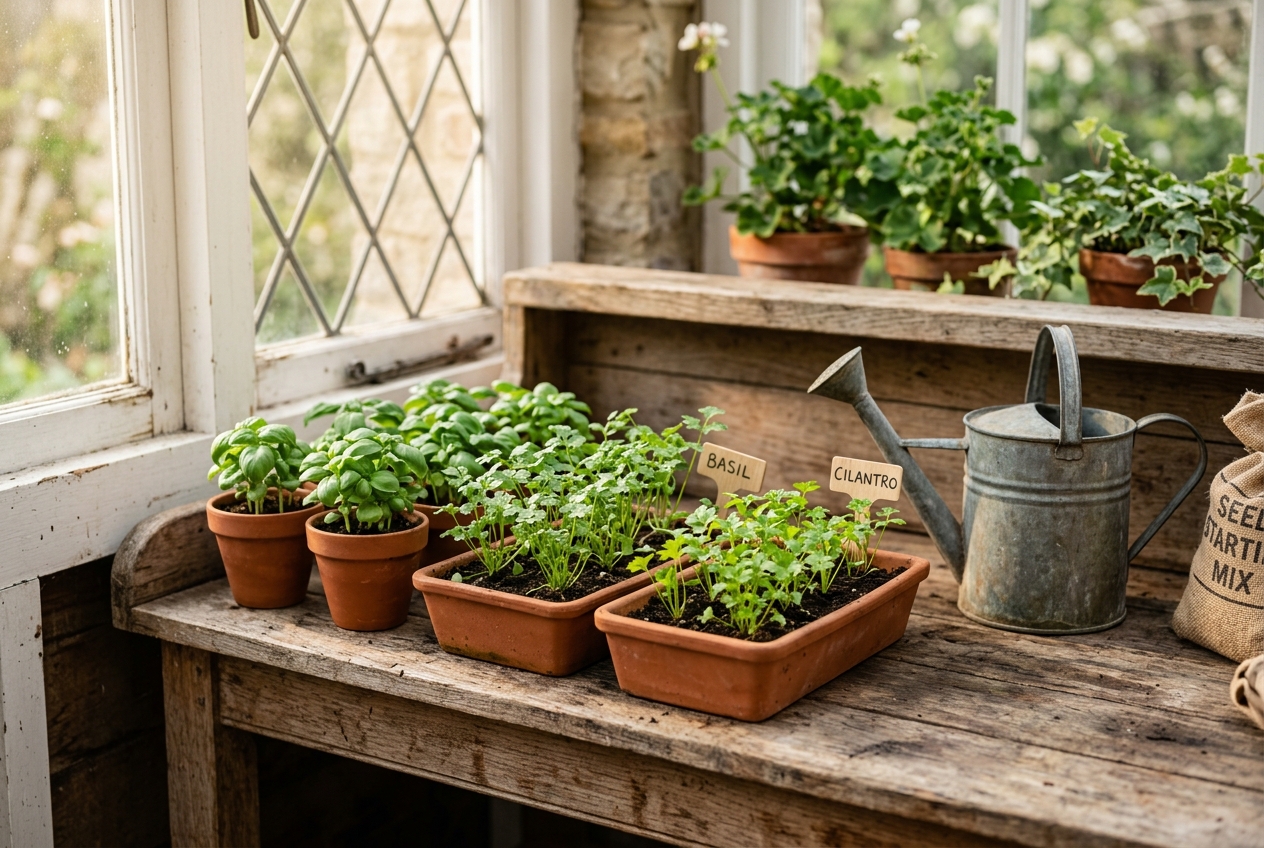
Start basil, parsley, and cilantro seeds indoors 8 weeks before your last frost date. Basil needs bottom heat (75-80°F) and germinates in 5-10 days. Parsley takes 14-21 days and doesn’t need heat. Most kitchen herbs transplant outdoors when soil hits 60°F, which is typically 2 weeks after your last frost in Zones 5-8.
What You Need
| Item | Specification | Cost |
|---|---|---|
| Seed starting mix | Sterile, soilless blend | $8-12 per bag |
| Seed trays | 72-cell or 50-cell flats | $3-5 each |
| Grow light | T5 fluorescent or LED, 2-4 feet | $25-60 |
| Heat mat (optional) | For basil and warm-season herbs | $20-30 |
| Seeds | Organic varieties | $2-4 per packet |
| Labels | Plastic or wood stakes | $5 per 100 |
Herb varieties that start well indoors:
- Basil (Genovese, Thai, lemon)
- Parsley (flat-leaf, curly)
- Cilantro
- Dill
- Thyme
- Oregano
- Sage
Skip rosemary. It takes 21+ days to germinate and grows slowly. Buy a 4-inch plant instead.
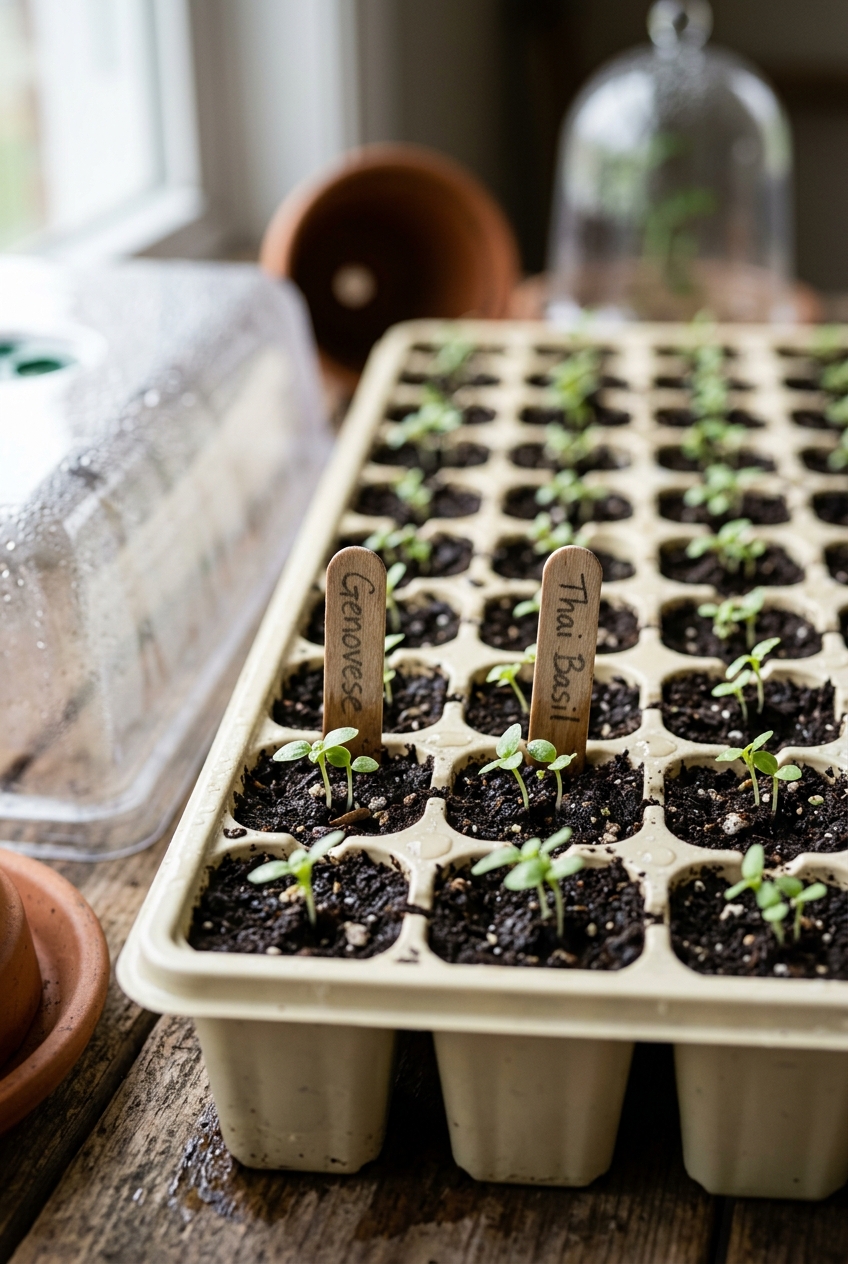
8-Week Timeline
This schedule assumes a May 15 last frost date (Zone 5-6). Adjust backward or forward based on your zone.
| Week | Task | Notes |
|---|---|---|
| Week 1 (March 20) | Start parsley, thyme, oregano | 1/4 inch deep, 65-70°F |
| Week 2 (March 27) | Start basil with heat mat | 1/4 inch deep, 75-80°F |
| Week 3 (April 3) | Start cilantro and dill | 1/2 inch deep, 60-70°F |
| Week 4 (April 10) | Thin seedlings, increase light | 14-16 hours daily |
| Week 5 (April 17) | Transplant to 3-inch pots | Basil and parsley only |
| Week 6 (April 24) | Begin hardening off | 2-3 hours outside, shade |
| Week 7 (May 1) | Extend outdoor time | Full sun by end of week |
| Week 8 (May 8) | Transplant outdoors | Soil temp 60°F+ |
Seed depth matters. Basil and parsley need light to germinate, so press seeds into the surface and barely cover. Cilantro and dill can go deeper (1/2 inch).
Quick Tip: Label everything. Basil seedlings look identical to other herbs for the first two weeks. Use a permanent marker on plastic stakes.
How to Do It
Step 1: Fill trays with seed starting mix. Moisten the mix before filling. It should feel like a wrung-out sponge. Pack cells loosely. Don’t compress.
Step 2: Sow seeds at the correct depth. Drop 2-3 seeds per cell. Cover basil and parsley with a thin sprinkle of mix. Cover cilantro and dill with 1/2 inch. Press down lightly.
Step 3: Cover trays with humidity domes. Clear plastic lids trap moisture. Remove them as soon as you see green. Basil sprouts in 5-10 days. Parsley takes 14-21 days.
Step 4: Position grow lights 2-3 inches above trays. Run lights 14-16 hours per day. Raise them as seedlings grow. If stems stretch and flop, lower the light.
Step 5: Water from the bottom. Set trays in a shallow pan of water. Let the mix wick moisture up for 10-15 minutes. Dump excess water. Top watering knocks over seedlings.
Step 6: Thin to one seedling per cell at Week 4. Snip extras with scissors. Don’t pull them out or you’ll disturb roots.
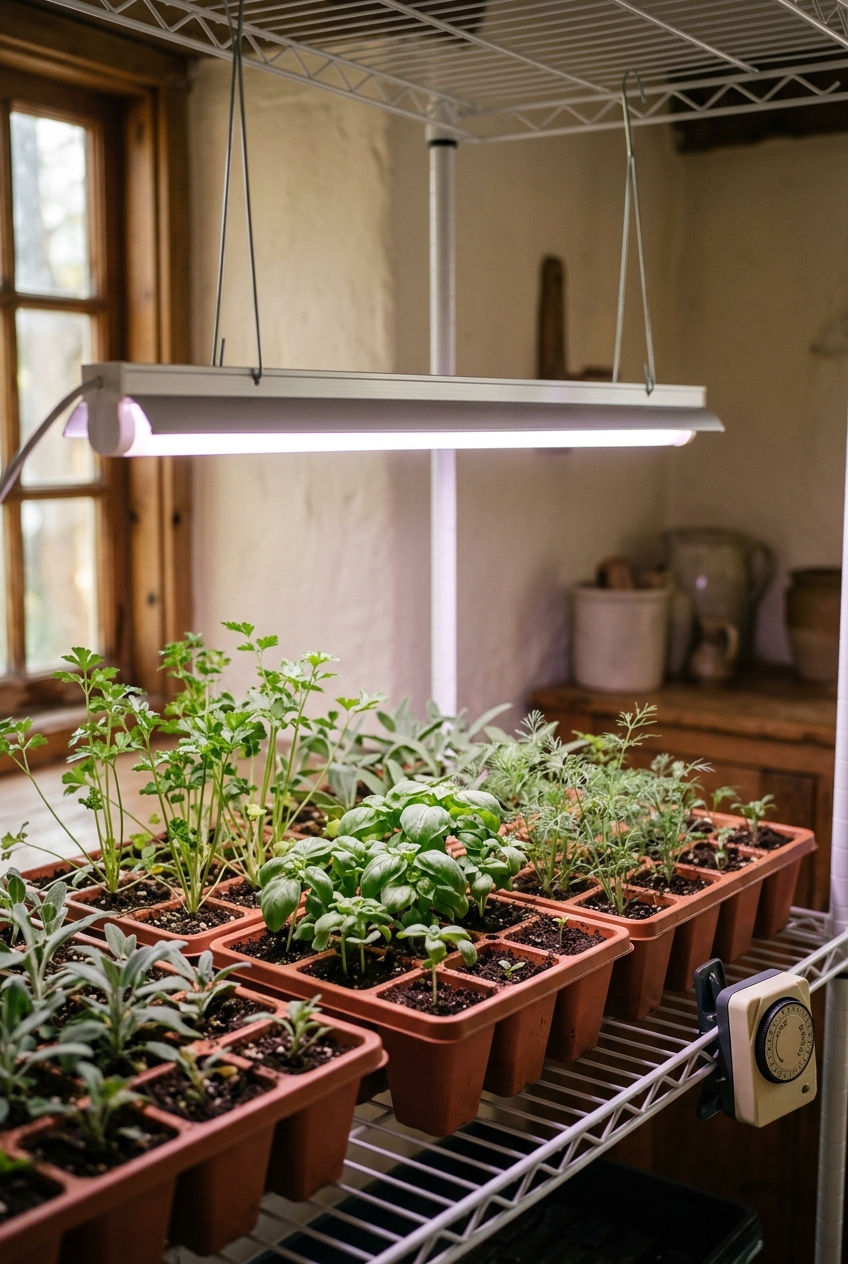
From my experience: I used to skip the thinning step and ended up with weak, leggy basil that flopped over the second I moved it outside. One strong seedling per cell always outperforms three crowded ones.
Step 7: Transplant basil and parsley to 3-inch pots at Week 5. These herbs benefit from more root space before going outside. Cilantro and dill transplant poorly, so leave them in cells until outdoor planting.
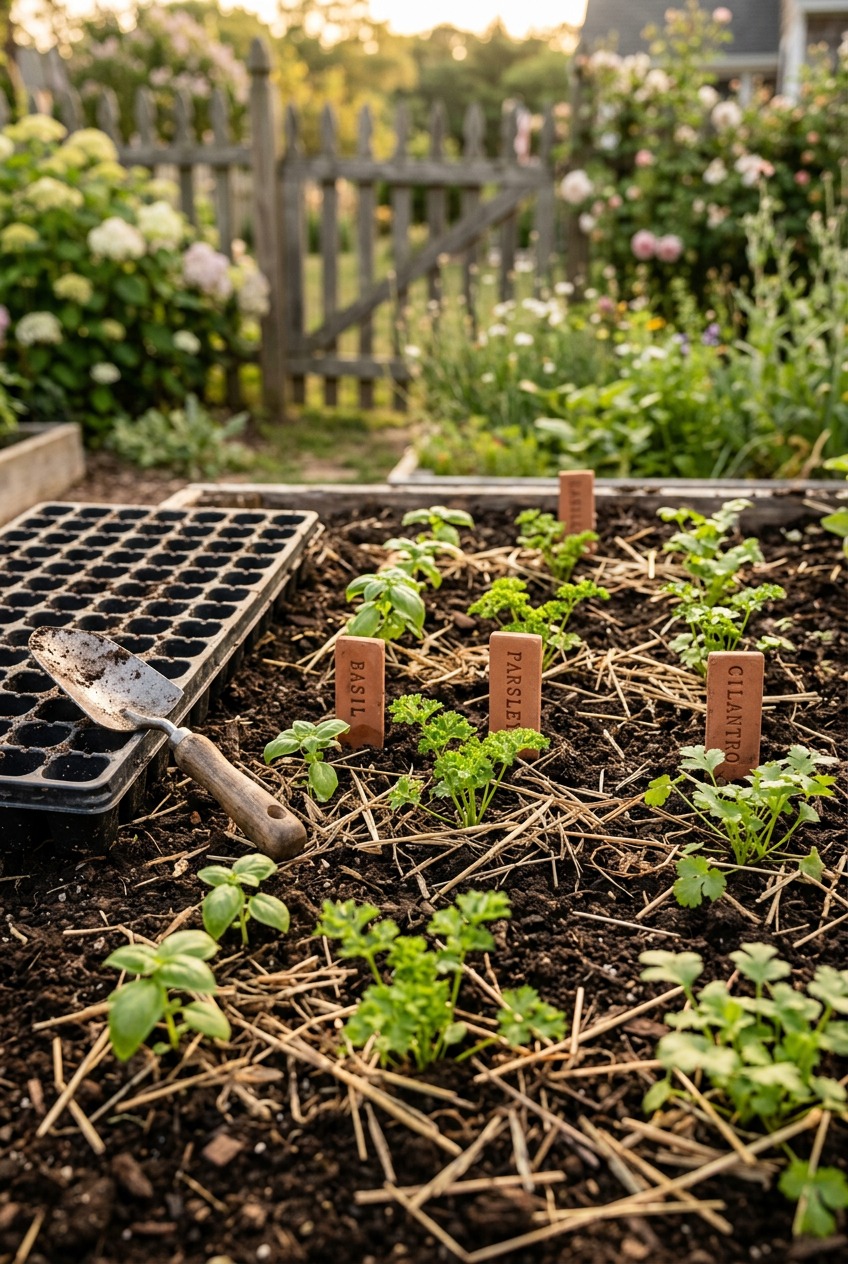
Step 8: Harden off for 7-10 days starting at Week 6. Move trays outside to a shaded spot for 2-3 hours on Day 1. Add 1-2 hours daily. By Day 7, they should handle full sun and overnight temps above 50°F.
What to Watch For
Damping off. Seedlings collapse at the soil line and die. Caused by overwatering and poor air circulation. Water only when the top of the mix feels dry. Run a small fan near the trays.
Leggy seedlings. Tall, thin stems that can’t support themselves. The light is too far away or running too few hours. Lower the fixture to 2-3 inches above the leaves. Increase light duration to 16 hours.
Slow germination. Parsley is notoriously slow. It can take 21 days. If nothing sprouts after 3 weeks, the seed is old or the mix dried out. Fresh parsley seed (less than 1 year old) germinates more reliably.
Make It Your Own
Zone 7-8: Start seeds 6 weeks before last frost instead of 8. Outdoor planting happens earlier, so indoor time is shorter.
Zone 4-5: Add 1-2 weeks to the timeline. Last frost dates run late May to early June. Start seeds in mid-March.
No grow light: A south-facing window works if you rotate trays daily and accept slower growth. Seedlings will stretch more. Start 2 weeks earlier to compensate.
Substitute seeds: Try lemon balm, chives, or summer savory. All start indoors well. Avoid mint (spreads aggressively, better from divisions) and rosemary (too slow).
Scale up: A standard 10x20 flat holds 72 cells. That’s enough for 6-8 herb varieties with extras to share. Two flats fit under a 2-foot T5 light fixture.
Before You Start
Budget $50-80 for first-year setup. Reusable trays, a grow light, and seed starting mix are the big expenses. Seed packets and heat mats are optional. After Year 1, you’ll only replace mix and seeds.
Check your last frost date. USDA zone maps show average dates, but your county extension office has more accurate local data. In Zone 5, last frost ranges from May 10-20 depending on elevation and proximity to water.
Basil is the only herb that truly needs heat. A seedling heat mat raises soil temperature to 75-80°F, which cuts germination time in half. Without heat, basil still sprouts but takes 14-18 days instead of 5-10. Parsley, cilantro, and dill germinate fine at room temperature (65-70°F).
FAQ
How deep should I plant basil seeds?
Press basil seeds into the surface of moist seed starting mix and cover with 1/8 inch of mix. Basil needs some light exposure to germinate. Seeds buried deeper than 1/4 inch often fail to sprout.
Can I start cilantro indoors or does it transplant poorly?
Cilantro transplants fine if you move it outdoors before the taproot coils in the cell (usually Week 6-7). Start it 5-6 weeks before last frost, not 8. Plant the entire cell plug without disturbing roots. Cilantro bolts fast in heat, so earlier outdoor planting gives you a longer harvest window.
Do I need a heat mat for all herbs?
No. Basil germinates faster and more reliably with bottom heat (75-80°F). Parsley, cilantro, dill, thyme, and oregano germinate well at room temperature (65-70°F). A heat mat is a nice-to-have for basil, not a requirement for other kitchen herbs.