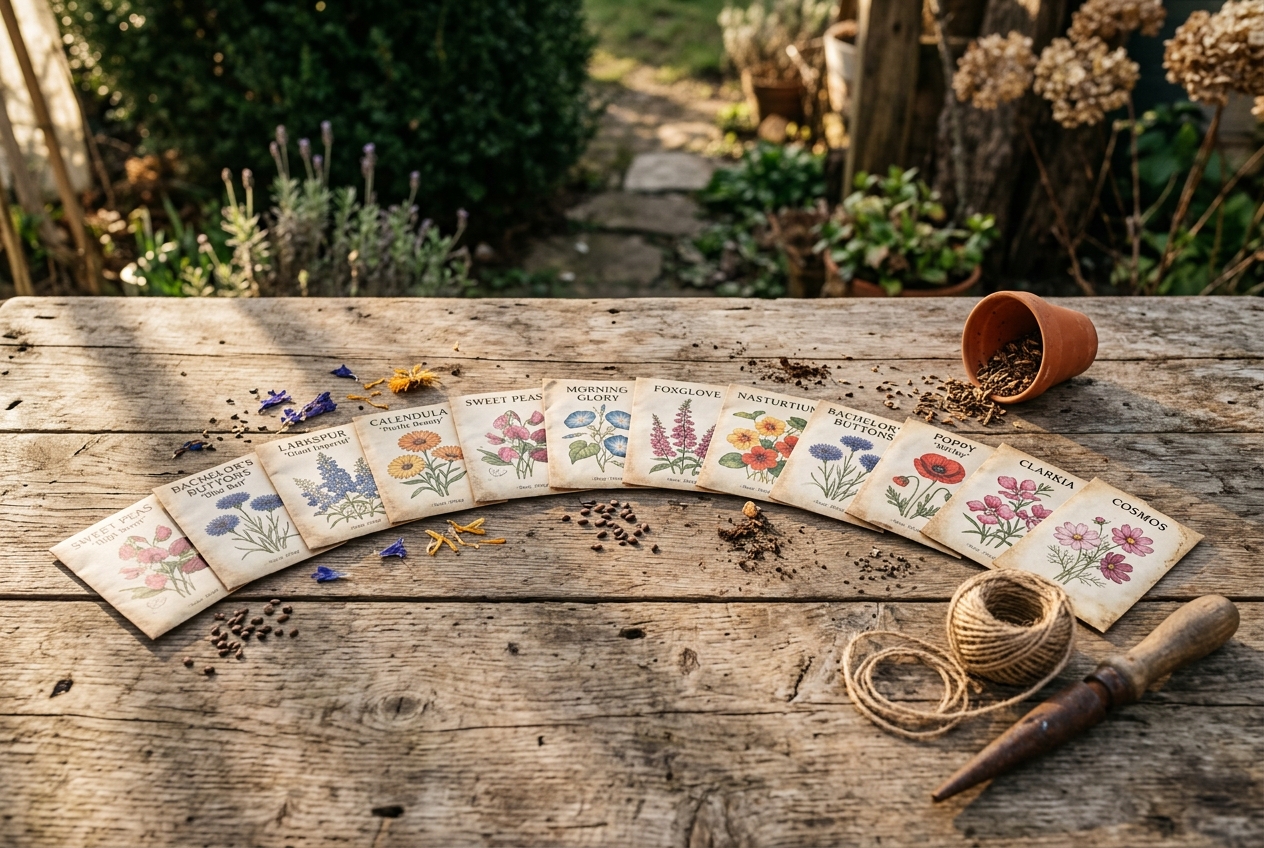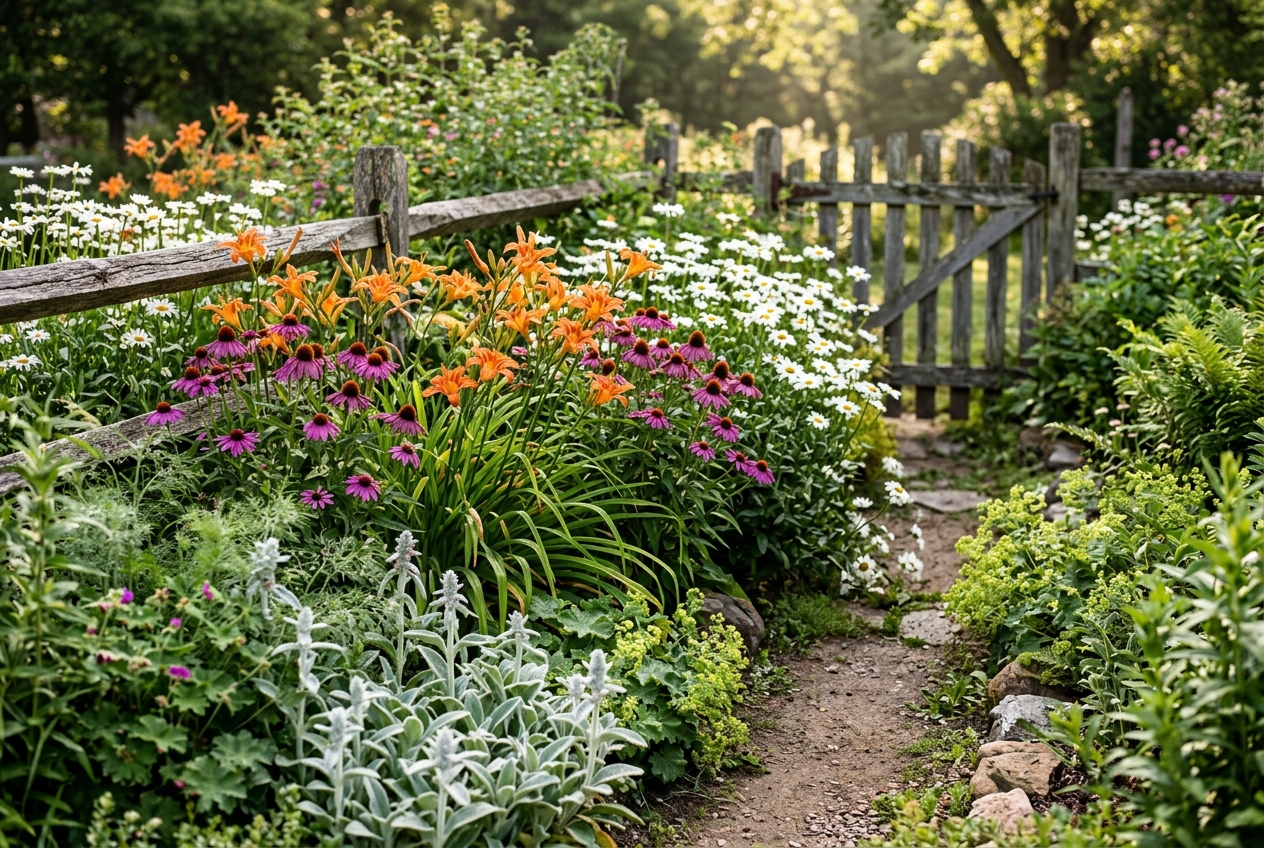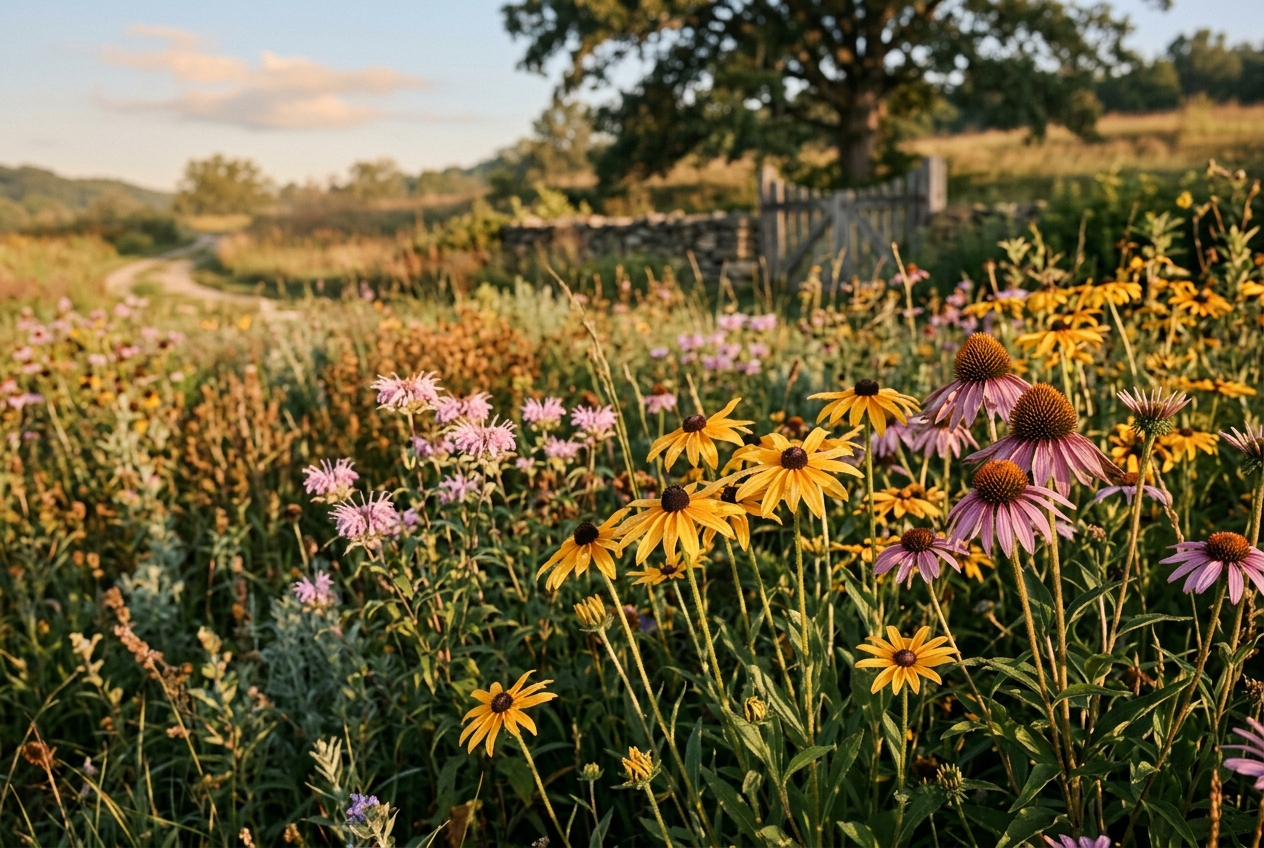
Direct sow wildflower seeds in early spring (March through May for zones 5-8) after the last frost date. Most native wildflower mixes germinate in 10 to 21 days and bloom within 60 to 90 days. A 1-ounce packet covers 100 to 200 square feet and costs $8 to $15. You’ll get the best results by choosing regional natives, clearing existing vegetation, and lightly raking seed into bare soil.
What You Need
| Item | Quantity | Cost Range | Notes |
|---|---|---|---|
| Native wildflower seed mix | 1 oz per 100-200 sq ft | $8-$15 per oz | Choose region-specific mixes (Midwest, Northeast, Pacific Northwest, etc.) |
| Garden rake | 1 | $12-$25 | Standard bow rake works |
| Watering can or hose with mist nozzle | 1 | $10-$30 | Fine spray prevents seed displacement |
| Cardboard or landscape fabric (optional) | As needed | $0-$20 | For smothering existing grass |
| Soil test kit (optional) | 1 | $10-$20 | Helpful if soil is compacted or clay-heavy |
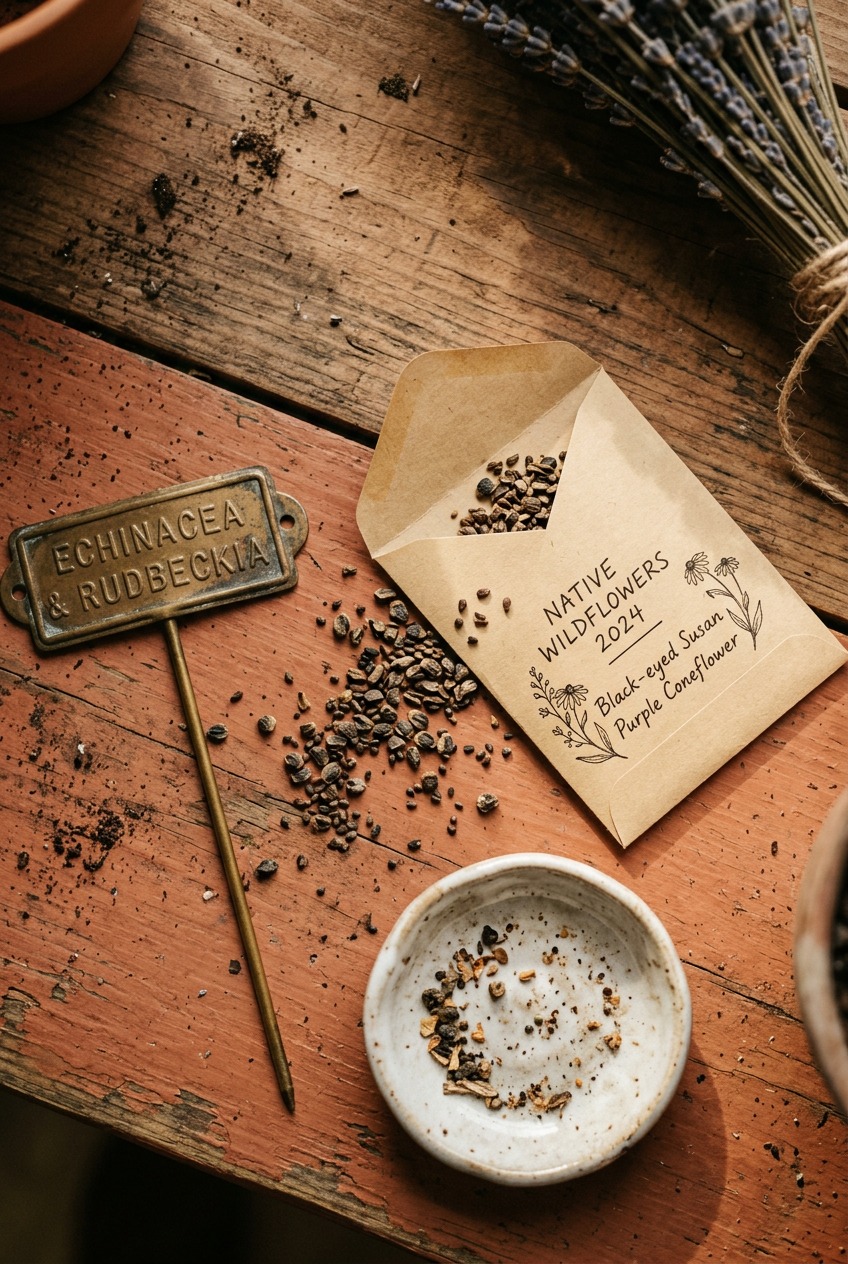
Look for seed mixes labeled by region and USDA zone. American Meadows, Prairie Moon Nursery, and Everwilde Farms sell zone-specific mixes. A “Northeast Native” mix for zones 4-7 typically includes Black-eyed Susan (Rudbeckia hirta), Purple Coneflower (Echinacea purpurea), and Wild Bergamot (Monarda fistulosa). West Coast mixes often feature California Poppy (Eschscholzia californica) and Lupine (Lupinus species).
How to Do It
Step 1: Pick Your Spot and Timing
Choose a location that gets at least 6 hours of direct sun. Most wildflowers tolerate partial shade but bloom less. Sow in early spring (after last frost) or fall (6 to 8 weeks before first frost). Spring sowing works in all zones. Fall sowing works best in zones 5 and colder, where seeds naturally stratify over winter.
Check your USDA zone’s average last frost date. For zone 6, that’s late April. For zone 8, it’s mid-March.
Step 2: Clear the Area
Remove existing grass and weeds. Three methods work:
- Smother method (6-8 weeks before planting): Lay cardboard or black plastic over the area. Weight it down. This kills grass without tilling.
- Scrape method (day of planting): Use a hoe or flat shovel to scrape off the top 1 to 2 inches of turf and roots. Rake smooth.
- Till method (if soil is compacted): Rototill or turn soil with a spade to 4 inches deep. Rake to break up clumps.
Bare soil is critical. Seeds need contact with soil, not grass thatch.
Step 3: Prep the Soil Surface
Rake the cleared area smooth. Break up any clumps larger than a golf ball. You want a firm seedbed, not loose or fluffy. Walk on it lightly to compact slightly, then rake one more time to create a fine top layer.
If your soil is heavy clay, mix in 1 inch of compost across the surface and rake it in. Sandy soil needs no amendment for wildflowers.
Quick Tip: Don’t add fertilizer. Native wildflowers grow in lean soil. Rich soil encourages weeds and makes flowers grow tall and floppy.
Step 4: Sow the Seed
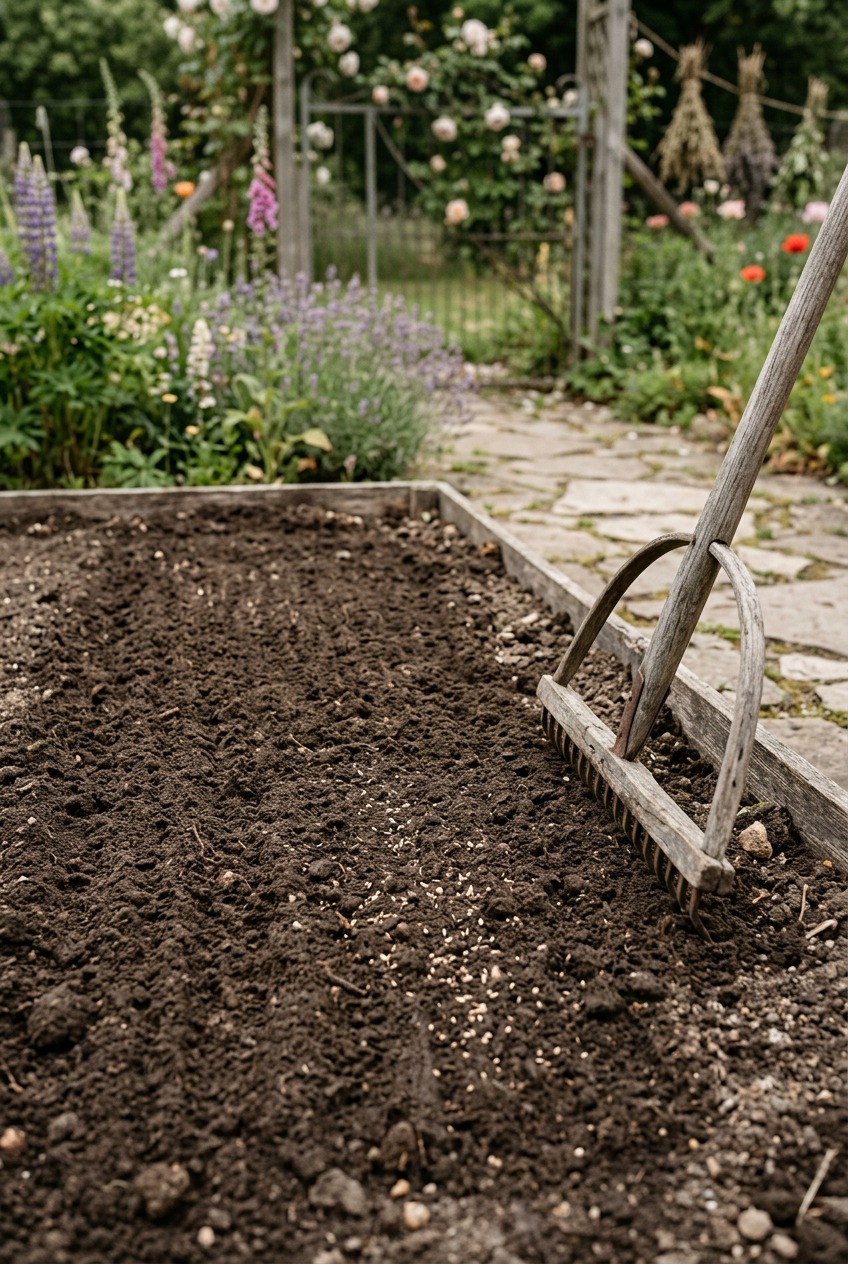
Most wildflower seed is tiny. Mix it with dry sand (4 parts sand to 1 part seed by volume) to help you see where you’ve sown. Broadcast by hand in two passes: walk north to south, then east to west. This ensures even coverage.
Aim for 5 to 10 seeds per square foot. That’s roughly 1 ounce per 150 square feet for most mixes.
After broadcasting, rake lightly to press seeds into the top 1/8 inch of soil. Many wildflower seeds need light to germinate, so don’t bury them. Just ensure contact.
Step 5: Water and Wait
Water immediately after sowing using a mist setting. Soak the top inch of soil. Keep the soil surface damp (not soggy) for the first 4 to 6 weeks. This usually means watering every 2 to 3 days if it doesn’t rain.
Once seedlings are 2 inches tall, reduce watering to once a week. After 8 weeks, most native wildflowers are drought-tolerant and need no supplemental water except in extreme heat.
What to Watch For
Weeds will sprout first. Grassy weeds germinate faster than wildflowers. If you see uniform rows of green shoots in the first week, those are probably weeds. Hand-pull them when small. Your wildflowers will have broader leaves and emerge more slowly.
Thin seedlings if overcrowded. If you see 20+ seedlings in a 6-inch area, thin to 5 or 6. Snip extras with scissors at soil level. Pulling disturbs roots.
Birds and rodents eat seed. If you notice seed disappearing, cover the area with a thin layer of straw (not hay, which has weed seeds) for the first 2 weeks. Remove it once seedlings emerge.
Make It Your Own
For shade (3-5 hours of sun): Use a woodland wildflower mix. Try Wild Columbine (Aquilegia canadensis), Virginia Bluebells (Mertensia virginica), and Woodland Phlox (Phlox divaricata) for zones 4-8.
For dry or sandy soil: Choose drought-tolerant species like Blanket Flower (Gaillardia aristata), Lanceleaf Coreopsis (Coreopsis lanceolata), and Mexican Hat (Ratibida columnifera). These thrive in zones 4-9 with minimal water.
For wet or clay soil: Plant Joe-Pye Weed (Eutrochium purpureum), Swamp Milkweed (Asclepias incarnata), and Cardinal Flower (Lobelia cardinalis). All tolerate soggy conditions in zones 3-8.
Scale down for a 4x4 bed: Use 1/4 ounce of seed. Follow the same steps. This size works well as a pollinator patch near a vegetable garden.
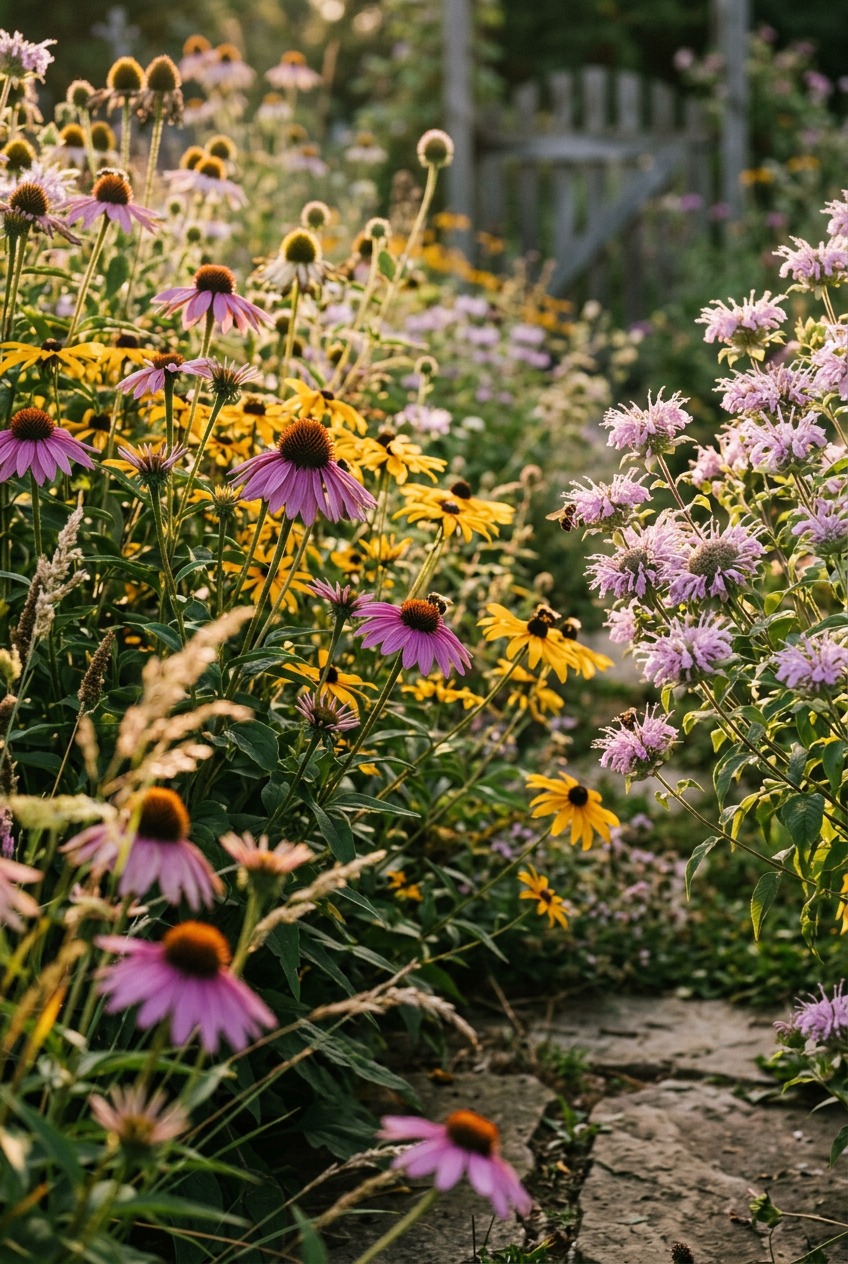
From my experience: I planted a 200-square-foot wildflower patch in zone 6b three springs ago. The first year, I got about 60% coverage and lots of Black-eyed Susans. By year two, the perennials filled in and I had continuous blooms from June through October. The biggest mistake I made was not weeding aggressively in the first month. Grass choked out a third of my seedlings before I caught it.
Before You Start
Budget $20 to $50 total for a 200-square-foot wildflower garden. That includes seed, a rake if you don’t own one, and water. No fertilizer, mulch, or ongoing costs.
Expect a full season for establishment. Spring-sown wildflowers bloom by mid to late summer the first year. Perennials (like Coneflower and Rudbeckia) bloom lightly year one, then heavily in year two and beyond. Annuals (like California Poppy and Cornflower) bloom fast but reseed for next year.
Check local regulations if planting near roadsides or public land. Some municipalities have rules about plant height or native vs. non-native species. Stick to native mixes to avoid issues.
FAQ
When is the best time to plant wildflower seeds?
Early spring after the last frost (March through May for zones 5-8) or fall 6 to 8 weeks before the first frost. Spring sowing works in all zones. Fall sowing is best for zones 5 and colder, where winter cold naturally stratifies seeds.
How long does it take wildflower seeds to germinate?
Most native wildflower seeds germinate in 10 to 21 days if soil stays damp and temperatures are between 55°F and 70°F. Annuals like Coreopsis and Cosmos germinate faster (7 to 14 days). Perennials like Echinacea and Rudbeckia take 14 to 21 days.
Do I need to till the soil before planting wildflowers?
No. Tilling is optional and only necessary if your soil is heavily compacted or clay-heavy. Scraping off existing grass and raking the surface smooth works for most sites. Tilling can bring up dormant weed seeds, so avoid it unless your soil is hard as concrete.
How much wildflower seed do I need per square foot?
Use 1 ounce of seed per 100 to 200 square feet, depending on the mix. That’s roughly 5 to 10 seeds per square foot. A 1-ounce packet from American Meadows or Prairie Moon Nursery costs $8 to $15 and covers a 10x15-foot area.
Will wildflowers come back every year?
Perennial wildflowers like Black-eyed Susan, Purple Coneflower, and Wild Bergamot come back every year and spread slowly. Annual wildflowers like California Poppy and Cornflower die after one season but reseed themselves if you let seed heads dry on the plant. A good native mix includes both types for continuous coverage.