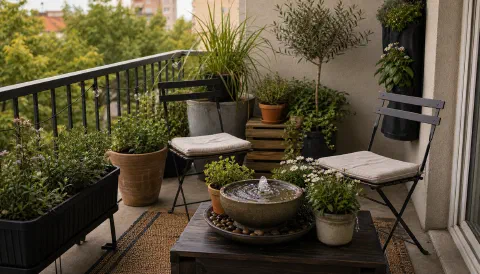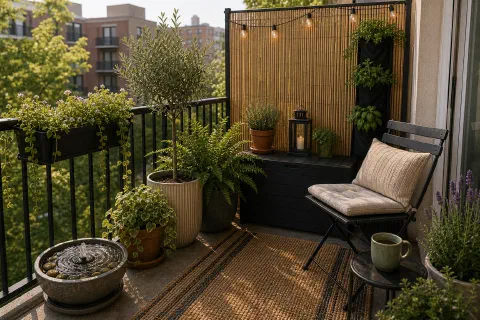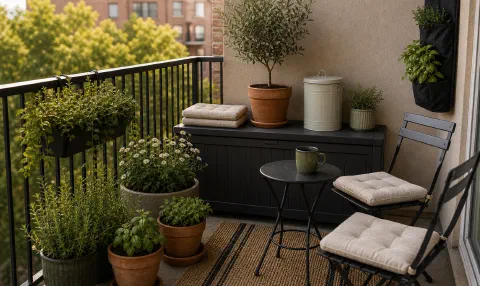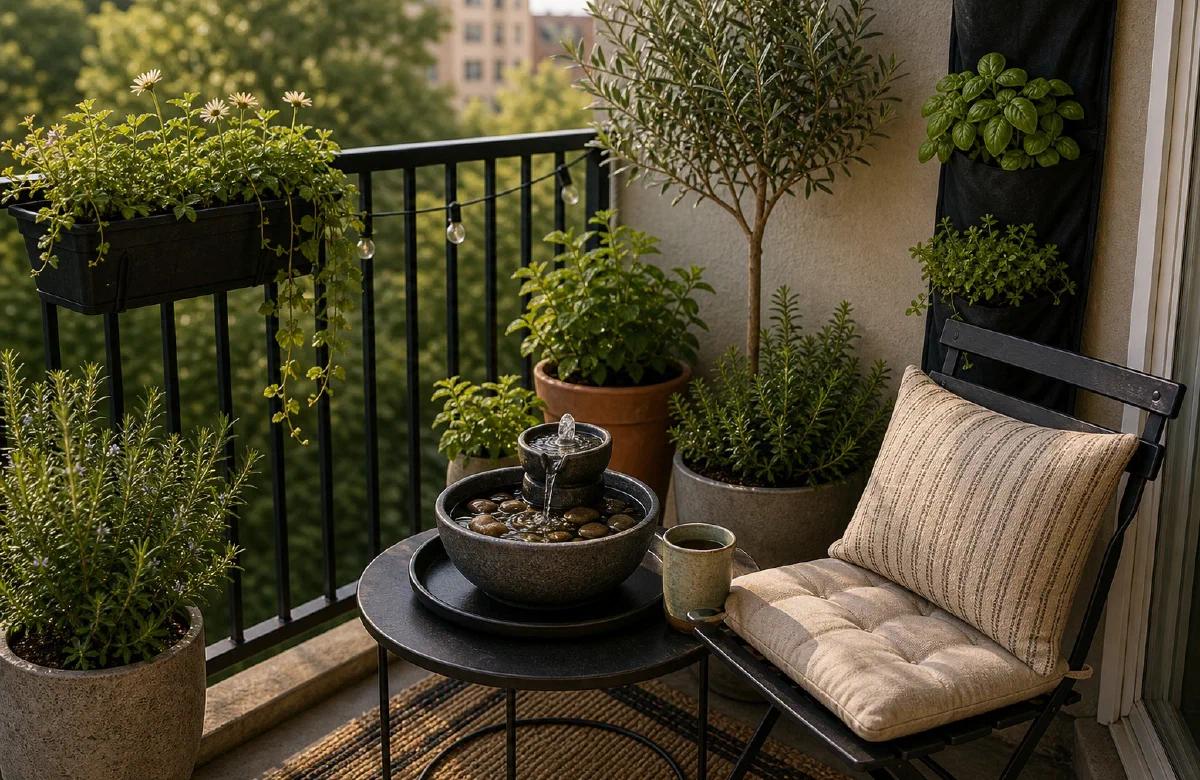
A solar fountain can be perfect for a small patio because it avoids cords and makes a plain corner feel alive. It can also become splashy, dry, or useless if the container is too shallow or the sun barely reaches it. The goal is not the biggest spray. It is a small moving-water setup you can actually maintain.
For small patios and balconies, pair a small solar pump with a wide, stable bowl or compact basin. Put it where it gets direct sun, control splash with a lower fountain head, refill often in heat, and clean it weekly so it stays peaceful instead of slimy.
The Container Matters More Than the Pump
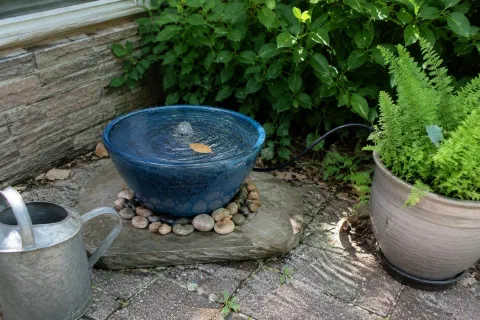
A tiny solar pump needs a stable home. Wide bowls, low ceramic basins, galvanized tubs, and heavy resin containers can work. Very shallow bowls splash out. Very deep containers hide the movement. Choose something you can lift when full enough to clean.
Solar Fountains Need Real Sun
Filtered balcony light may not be enough. Watch where direct sun hits for several hours before buying anything. If the balcony only gets morning shade, a plug-in tabletop fountain may be more reliable than solar. University of Maryland Extension’s container guidance uses the same balcony-light distinction: southern and western exposures are generally sunnier, while northern and eastern exposures are generally shadier. Treat that as a starting observation, then watch your actual balcony.
Control the Splash Before It Annoys You

Use the lowest fountain head, add smooth stones, and keep the water level high enough for the pump. If the fountain leaves the floor wet after ten minutes, change the head or container. Balcony fountains need restraint. Keep the pump and any cord away from standing water, and follow the equipment instructions for outdoor use.
Compare the Solar Fountain Setup
| Setup | Needs | Strength | Watch for |
|---|---|---|---|
| Solar pump in a bowl | Direct sun and a stable base | No cord across the balcony | Cloud cover, refill, and splash |
| Small solar basin | A wide container and room to clean | Calm movement in a corner | Full-container weight |
| Plug-in tabletop fountain | Outdoor-rated equipment and GFCI protection | More predictable in shade | Cord routing and outlet access |
The right choice depends on light first, then weight and cleanup. A fountain that only works in ideal sun is not a good fit for a shaded balcony.
Can It Work for Birds?
On a patio or lower balcony, a gentle solar bowl can attract birds if it is shallow and safe. On a high balcony, do not count on it. If birds are the goal, read the bird bath that changed my backyard for placement and depth basics.
Cleaning and care between refills
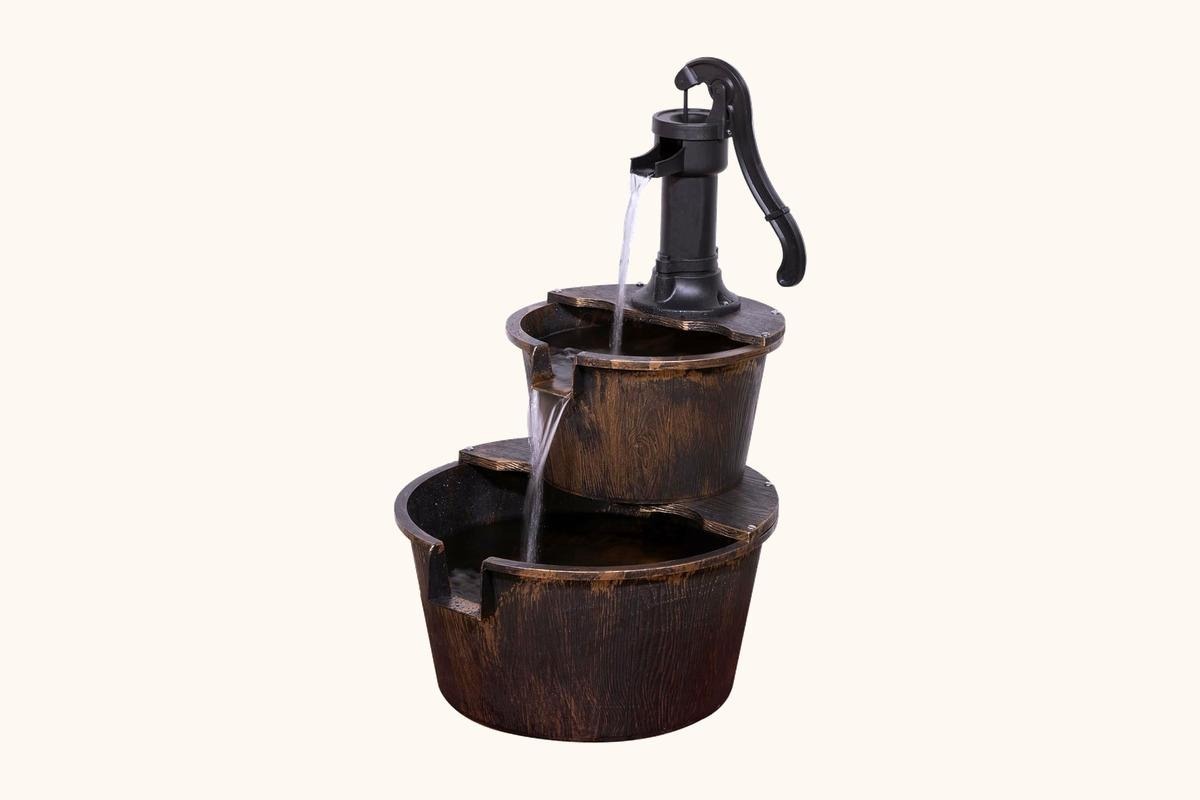
Small fountains get warm fast. Rinse the pump, scrub the bowl, and change water often. Do not let leaves, soil, or plant saucers create stagnant water around it. The mosquito advice in mosquito fixes for patios still applies. University of Maryland Extension’s container and salad-table guidance also recommends emptying saucers regularly and checking moisture rather than letting water sit.
Where a Solar Fountain Makes the Most Sense
Use one beside a chair, near a plant grouping, or in the corner you see from inside. It should add motion to a quiet spot, not dominate the whole patio.
Direct Sun Setup and Test a Solar Fountain
- Watch the balcony for direct sun and mark the spot that stays clear of the walking path.
- Set the shallow bowl on a stable, level surface and check that its full-container weight is reasonable to move.
- Start with the lowest fountain head, fill to the pump’s marked level, and run it for ten minutes.
- Wipe up any splash, then adjust the head or move the bowl before the first long use.
University of Maryland Extension also recommends drainage and saucers for containers, but a fountain’s basin is not a plant saucer. Empty and clean each separately so spilled water does not become standing water.
What I’d Buy First
- A wide shallow-to-medium bowl that will not tip.
- A solar pump with adjustable heads.
- Smooth stones to reduce splash.
- A refill and cleaning habit for hot days.
What to Read Next
- small water features for apartment balconies: compare solar, tabletop, and plug-in limits in one place.
- mosquito fixes for patios: keep the fountain area from collecting stray standing water.
- two-chair tiny patio layout: place the fountain without giving up the usable chair corner.
- a bird bath that changed my backyard: use it when shallow water and bird placement are the goal.