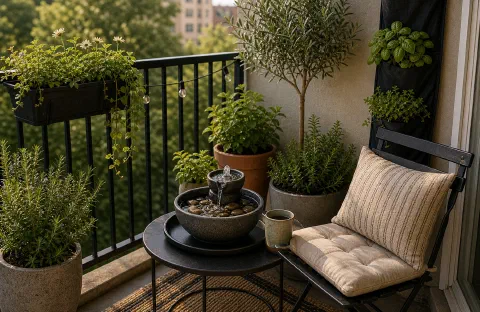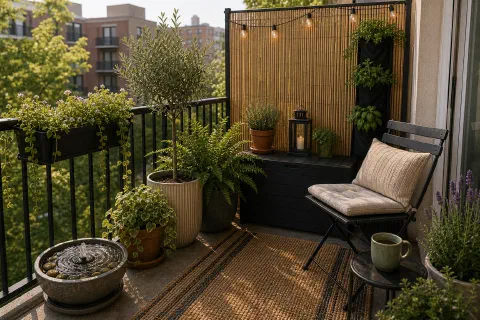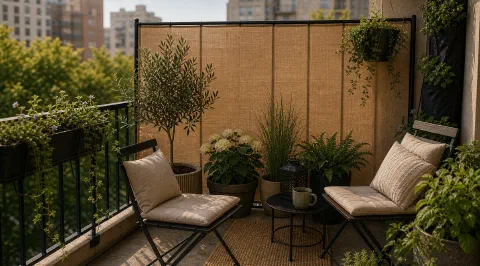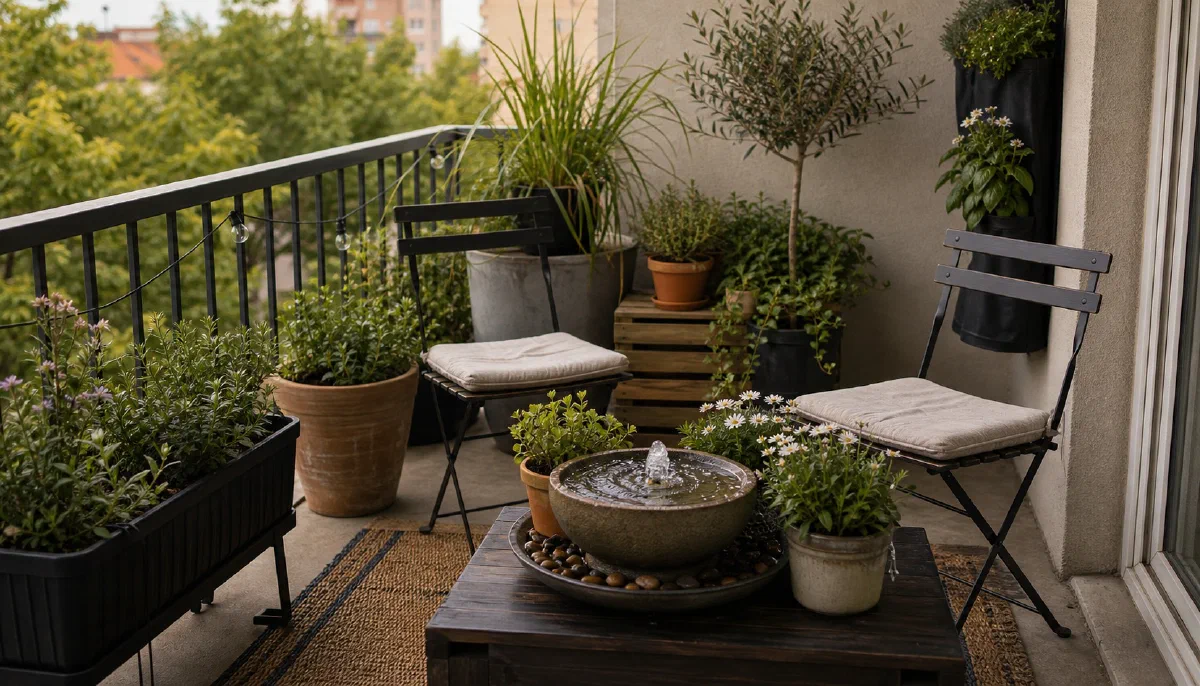
A little water sound can make a balcony feel less like leftover square footage and more like a place to pause. The trick is choosing a water feature that fits apartment life: quiet, light enough to move, easy to clean, and not annoying for the neighbor below.
Think tabletop bowl, small solar fountain, or compact plug-in basin, not a heavy stone feature that belongs in a courtyard. The best balcony water feature feels peaceful for ten minutes before work and still feels manageable when you have to clean it.
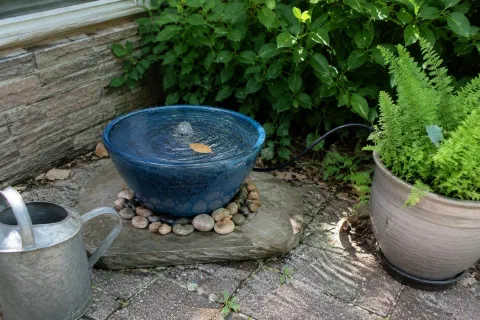
For an apartment balcony, use a lightweight tabletop fountain, a shallow bowl fountain with a small pump, or a compact solar fountain in a stable container. Keep it quiet, easy to empty, and mosquito-safe by changing water often and avoiding saucers that sit full for days.
The Three Water Features That Make Sense on a Balcony
The safest options are a tabletop fountain, a bowl fountain with a small pump, or a compact solar fountain in a wide container. All three can be emptied, moved, and cleaned without treating the balcony like a construction project. If you want the backyard version later, compare this with no-dig backyard water feature ideas .
Solar Fountain or Tabletop Fountain: Compare Options
| Option | Best fit | First check | Main watch-out |
|---|---|---|---|
| Tabletop fountain | A shaded chair corner | Pump access and sound | Indoor-only equipment |
| Solar fountain | A sunny balcony | Direct sun and stable base | Cloud cover and splash |
| Bowl with small pump | A flexible renter setup | Container weight and drainage nearby | Standing water and cleaning |
Choose the smallest option that gives you the sound you want. The container, water, and base all count toward the load, not just the pump.
For a plug-in option, use equipment and cords marked for outdoor use, a working GFCI-protected outdoor outlet, and the weather protection required by the product instructions. NFPA’s decorating guidance says to use outdoor cords, outlets, and lights that are weatherproof or marked for outdoor use, to replace anything with a worn or broken cord, and to hang lights with clips so the cords do not get damaged. Extension cords are for temporary use only.
Do the Quiet Test Before You Keep It
The sound should feel soft from the chair, not loud from the neighbor’s bedroom. Adjustable pumps matter because balcony acoustics can make water sound sharper than expected. If the fountain splashes outside the bowl after ten minutes, it is too strong or too shallow.
Container Weight and Standing Water Check
- Place the empty feature on a level surface away from the door, railing edge, and main walking path.
- Fill only as the instructions direct, then run it for ten minutes while you listen from the chair and check the floor below.
- Adjust the flow or fountain head until the water stays inside the basin.
- Empty the feature and inspect the pump, tray, and nearby saucers before you leave it in place.
This check catches sound, splash, and spill problems before they become a neighbor problem. It also keeps the setup renter-safe because nothing needs drilling or permanent mounting.
Weight, Leaks, and the Downstairs Neighbor Problem
Water is heavy. Use small containers, avoid oversized ceramic basins, and place the feature where you can see leaks quickly. University of Maryland Extension’s container guidance notes that moist balcony containers can weigh far more than their empty pots suggest. A rubber mat or tray under the fountain is practical, not fussy. Never assume a railing shelf or plant hook can hold a water-filled vessel; check the building rules and the hardware’s published limit first.
Keep It Mosquito-Safe Without Overthinking It

Moving water helps, but it is not a magic shield. The first three stages of a mosquito’s life happen in water, and the EPA notes the whole cycle can finish in as little as four days when conditions suit them. So empty and scrub small fountains weekly, keep plant saucers dry, and do not let a decorative bowl become a quiet nursery for mosquitoes. If trays are already a problem, use the standing-water advice in mosquito fixes for patios before buying a fountain.
Where to Put It So You Actually Notice It
Place the water feature close enough to hear from the chair, but not where knees, pets, or sliding doors will bump it. A corner table, sturdy plant stand, or low side table usually works better than the floor. Pair it with two plants and one chair, not a full resort scene.
What to Buy and What to Avoid
Buy adjustable flow, simple basins, easy access to the pump, and parts you can clean. Avoid mystery plug-in cords, tall splashy tiers, very heavy stone, and anything that requires permanent mounting. The calmer choice is usually the one you will keep clean.
Keep the Water Feature Clean
Empty and scrub the basin weekly, rinse the pump, and keep plant saucers dry. University of Maryland Extension’s container and salad-table guidance recommends emptying saucers regularly instead of letting water sit, which is a useful balcony habit even when the fountain is the feature you meant to maintain.
This article contains affiliate links. If you buy through them, Etheric Echoes may earn a commission at no extra cost to you. As an Amazon Associate I earn from qualifying purchases. Read the full disclosure.
What I’d Actually Buy
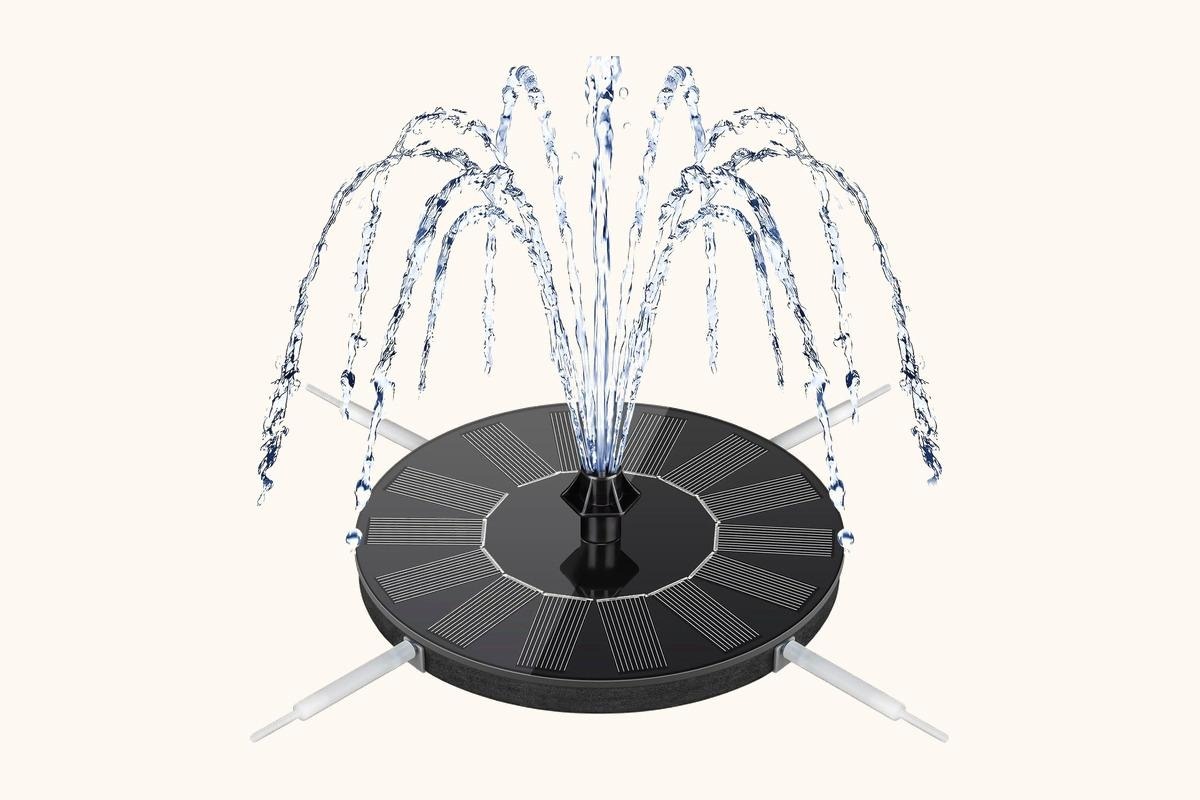
Start with the Mademax solar fountain pump (opens Amazon in a new tab) dropped into a bowl you already own. That is the whole renter version: no plumbing, no drilling, nothing that has to come with you.
Be honest about what it is. It averages under four stars across tens of thousands of reviews, and the tradeoffs show up often in reviews. Its flow can stop when direct sun disappears, and the intake needs regular rinsing. Rinse it weekly and site it in full afternoon sun and it is fine. Expect it to be quiet at dusk.
Skip the 27-inch barrel fountain (opens Amazon in a new tab) on a tight balcony. Its 18-by-16-inch footprint, corded pump, splash risk, and two-tier shape make it harder to place and move than a shallow bowl insert. Save that style for a patio with an outdoor outlet and more floor clearance.
What to Read Next
- solar fountain ideas for small patios : choose this route when the balcony gets reliable direct sun.
- container garden ideas for small patios : plan plants around the feature without crowding the floor.
- two-chair tiny patio layout : keep the sound near a usable seat and the door clear.
- mosquito fixes for patios : handle saucers and stray standing water alongside the fountain.