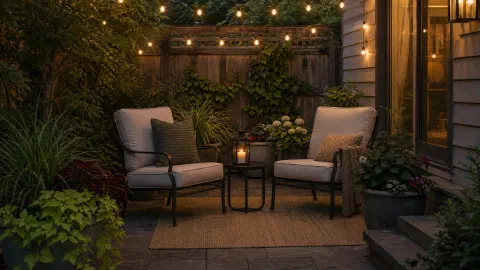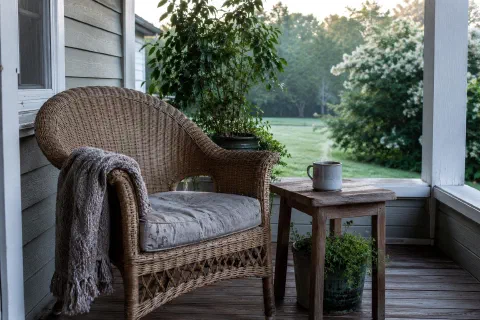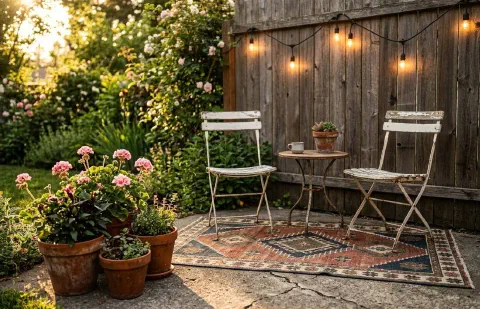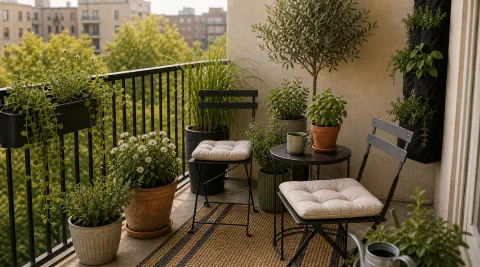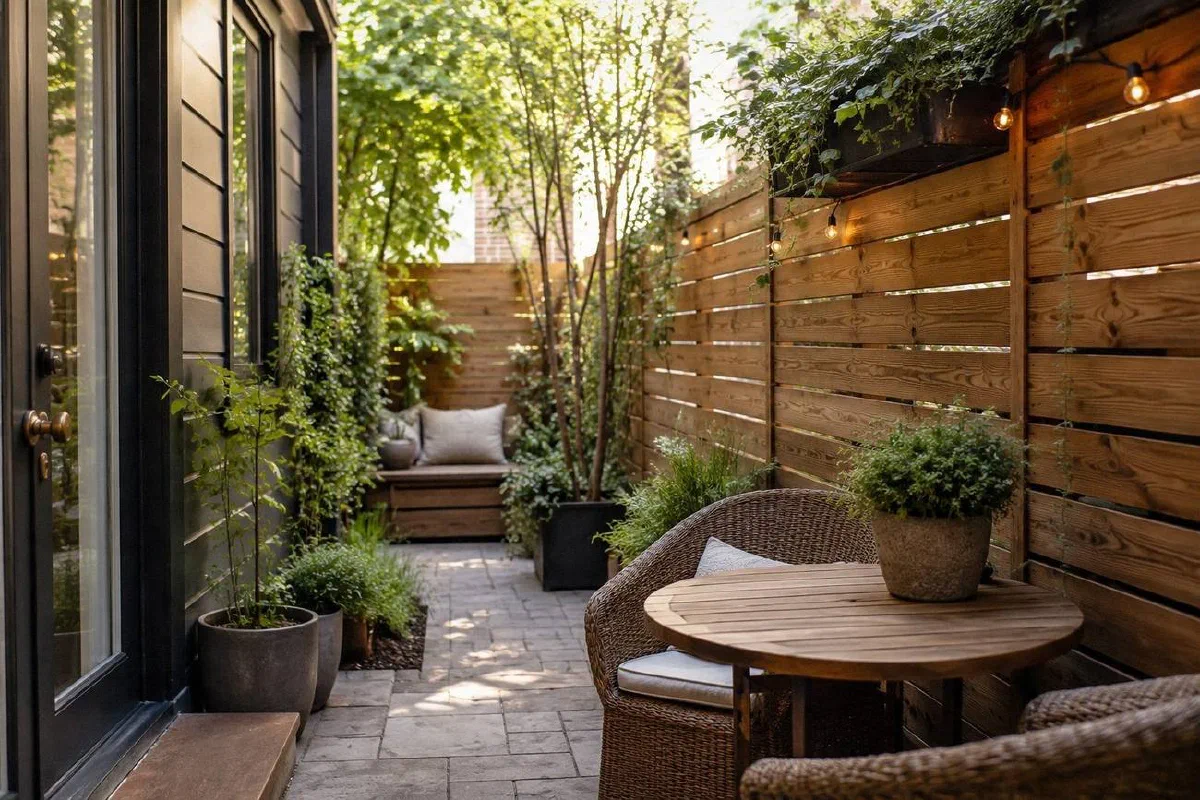
A small patio gets ruined fast by furniture that looked normal in the store. One oversized chair, one too-wide table, and suddenly there is nowhere to walk.
A tiny patio can still feel peaceful. It just needs fewer pieces, a clear path, and furniture that respects the shape of the space.
How Do You Make A Small Patio Work?
Fewer pieces, one clear path, and furniture that fits the shape you actually have. A cramped patio usually got that way by adding in the wrong order, so the fix is often one piece out rather than one cleverer piece in.
The order that makes it easier:
- Tape the footprint on the floor before you buy anything.
- Protect one walking path and treat it as fixed.
- Choose the seat, or the two seats, that still leave that path clear.
- Add plants and the smaller pieces last.
Tape The Furniture Footprint First
Before buying patio chairs, tape the size on the floor with painter’s tape. Add the table, planter, and door swing too.
Tape the space in front of the seat as well as the seat itself. The ADA standards use a clear floor space of 30 by 48 inches as the room one person needs to approach and use something, which is a fair size to leave in front of a chair you want to sit down in and get back out of.
This ten minute test prevents the most common small patio mistake: buying pieces that technically fit but make the patio annoying to use.
Keep One Clear Walking Path
Most cramped patios are missing a path. You should be able to step outside, reach the chair, and move back in without turning sideways around pots. Use 36 inches as a useful planning benchmark for a clear route, and allow more room where turning or your mobility needs require it. The ADA accessible-route guide specifies that width for accessible walking surfaces. This is a reference for planning a private patio, not a claim that one width certifies an entire residential layout as accessible.
If the path disappears, remove something. A patio you can move through will feel bigger than a patio packed with perfect furniture.
Use One Good Seat Instead Of A Set
A full outdoor set is not required. One comfortable chair with a small side table can be better than two chairs nobody can pull out.
If you do need two seats, choose lighter chairs, stools, or folding pieces that can move when the patio has to work harder.
Let Plants Soften The Edges
Use plants at the corners or along a wall instead of scattering pots everywhere. A tall narrow planter, one trailing pot, or a slim herb stand can soften the space without stealing the floor.
A corner is also the right place for sound. Solar fountain ideas for small patios and balconies covers the bowl-sized versions that cover street noise without needing a cord.
The goal is sanctuary, not storage. Every piece should help the patio feel easier to use.
Quick Setup Checklist
- You can walk out, reach the seat, and come back in without turning sideways
- The chair pulls out and pushes back without hitting a wall or a pot
- The door or gate swings clear of everything on the patio
- Every pot has a home at an edge or a corner, not in the middle of the floor
- There is somewhere to set a drink without moving anything else
Small patios do not fail because they are small. They fail because too many pieces compete for the same few feet.
Mistakes That Make a Small Patio Feel Smaller
- Buying the set because it was on sale. A two-seat set that fits a big deck is the single most common way a small patio stops working. Buy for the space you measured, not the price.
- Scattering pots instead of grouping them. Six pots spread around the edge eat six little pieces of floor. Three in one corner eat one.
- Blocking the door swing to gain a foot. Nothing on a patio is worth walking into a door every time you carry a mug out.
- Filling the middle. The open floor is the feature. A patio with a clear center reads bigger than the same patio with a table in it.
- Adding the small pieces first. Lamps, mats, and ornaments are the last ten percent. Get the seat and the path right, then decorate what is left.
What to Read Next
- Container garden ideas for small patios if you want fullness at the edges without giving up floor space.
- Flower container combinations that bloom all season for when the pots are placed but the color runs out by July.
- Cozy patio ideas for small spaces for seven other layouts to compare against this one.
- A weekend patio refresh with what you already own if you would rather rearrange than buy anything.
- String light patio ideas without a pergola for the evening layer, once the daytime layout is working.