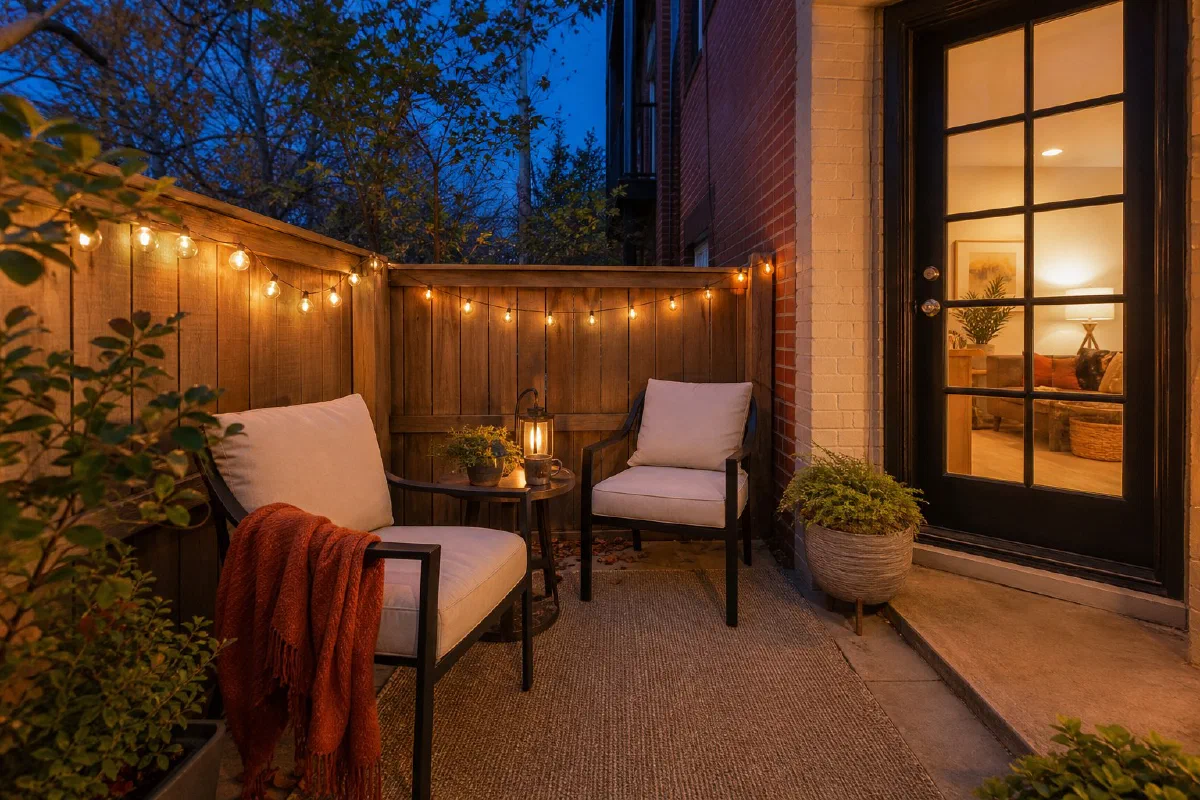
A small patio can feel pleasant at noon and strangely unfinished once the sun goes down. The chair is still there, but the corners disappear, the overhead light feels harsh, and every blanket seems to slide onto the damp floor.
The fix is not more fall decor. It is a simple evening setup built around where you sit, what you need to see, and what you can put away in five minutes.
Choose the evening and patio chair first
Before buying anything, picture one ordinary use. Maybe it is tea after dinner, ten quiet minutes while the dog is outside, or a Saturday conversation with one friend. That choice tells you what the patio needs.
| Evening use | Keep within reach | Light where | Skip |
|---|---|---|---|
| Quiet drink | Mug, book, small blanket | Beside and slightly behind the chair | A bright ceiling fixture as the only light |
| Conversation | Two seats and one shared surface | Low light between or behind the seats | A centerpiece that uses the whole table |
| Reading | Supportive chair, dry place for the book | Over the shoulder without glare | Decorative lights too dim to read by |
| Watching the yard | Warm layer, clear sightline | Path and step edges | Tall decor that blocks the view |
Choose one row as the main job. A tiny patio rarely handles four jobs well at the same time.
How to layer warm light without one bright blast
For a warmer-looking residential light, the U.S. Department of Energy describes 2700 K as warm and 3000 K as soft. That does not mean every bulb must match exactly. It gives you a useful starting range when a cold porch light makes fall colors look gray. The DOE also recommends directing outdoor light where it is needed and using only the amount needed in its principles for light at night.
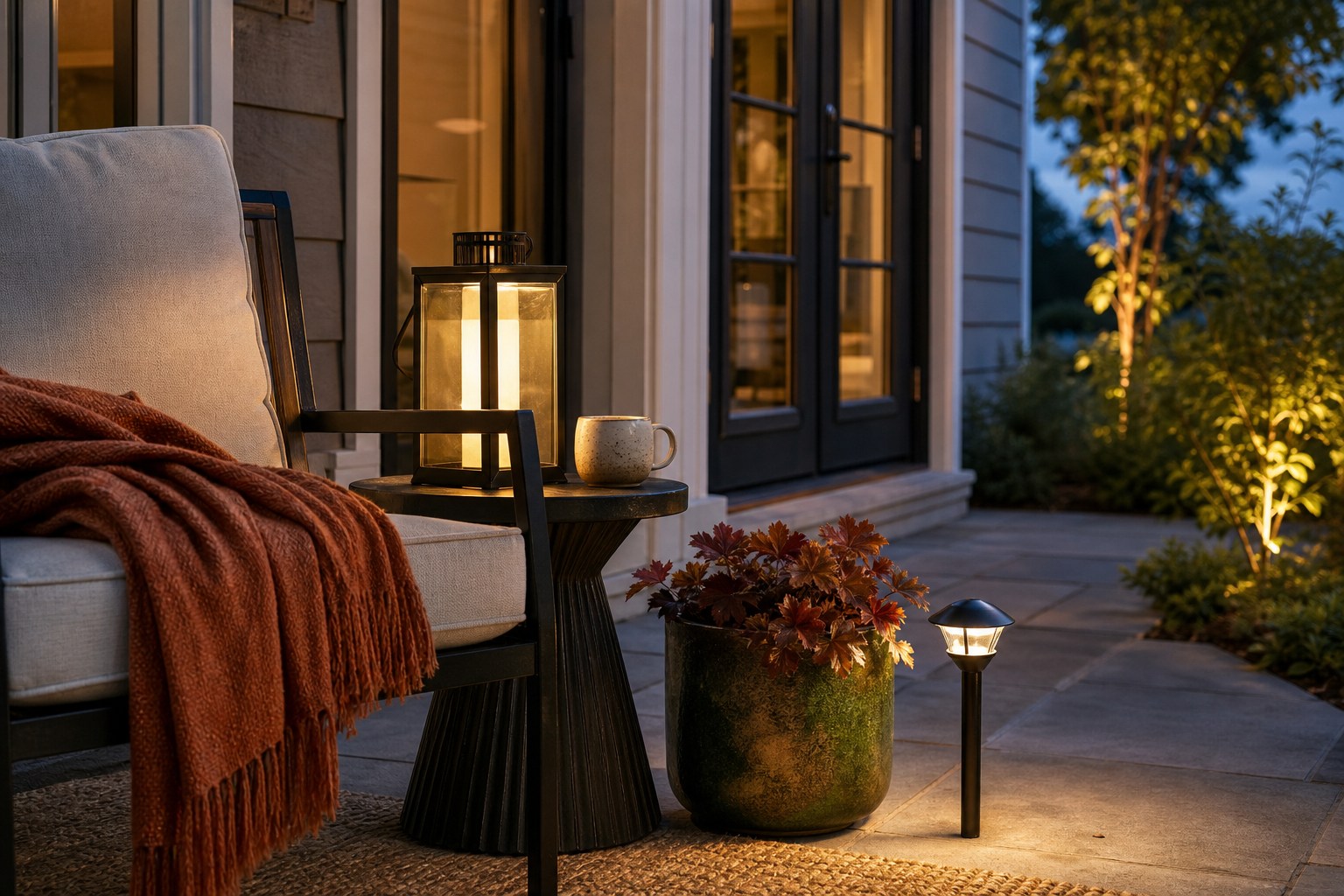
Use three small jobs instead of asking one fixture to do everything:
- a practical light at the door or step
- a softer light beside the chair
- a faint background glow along a wall, railing, or planter
Outdoor extension cord safety before you plug anything in
If you use a cord, do not improvise with an indoor extension cord. The U.S. Consumer Product Safety Commission says outdoor cords need the jacketed construction intended for outdoor use; its extension-cord guidance explains the observable safety features. Keep every connection out of the walking path and follow the light manufacturer’s limits.
Choose fall texture that can survive real weather
The best outdoor fall layer is the one you will use without worrying about it. A washable outdoor pillow, a compact knit throw (opens Amazon in a new tab)As an Amazon Associate, we earn from qualifying purchases. Full disclosure. that lives in a basket inside the door, and one sturdy planter usually beat a pile of delicate textiles.
Check these before leaving a soft item outside:
- The care label allows outdoor use or easy washing.
- The fabric can dry fully before the next evening.
- Wind cannot lift it over the railing or into the yard.
- There is a dry indoor landing spot within a few steps.
- The chair still has enough room for a person.
For color, let one deeper note do the seasonal work. Rust, tobacco brown, moss, burgundy, or warm plaid reads as fall without turning the patio into a themed display.
Open flame safety before you add a fire feature
On a small balcony or patio, a flame is not a decorative shortcut. Lease rules, local burn restrictions, overhead structures, wind, children, pets, and manufacturer clearances all matter. NFPA’s outdoor burning guidance keeps chimineas, patio torches, and personal fireplaces at least 10 feet from the home or anything that can burn, on a level surface that will not catch, and gives fire pots and torches a 3-foot safety zone around children and pets. Many small patios cannot provide that room.
The CPSC also warns against pooled-alcohol and similar liquid-fuel tabletop fire pits because of flame-jetting and pool-fire hazards. Read the current CPSC fire-pit alert before treating a tabletop flame as a harmless accessory.
When clearance is uncertain, warmth and glow are two separate jobs. Warm electric or battery lighting handles the glow, and a freestanding heater sized for the space handles the cold; propane and electric patio heaters compared for fall covers which one a small covered patio can actually take. Flameless tea lights (opens Amazon in a new tab)As an Amazon Associate, we earn from qualifying purchases. Full disclosure. on the table and battery fairy lights (opens Amazon in a new tab)As an Amazon Associate, we earn from qualifying purchases. Full disclosure. along a rail give you the glow without pretending a tight corner is a safe fire zone.
How to set it up in this order
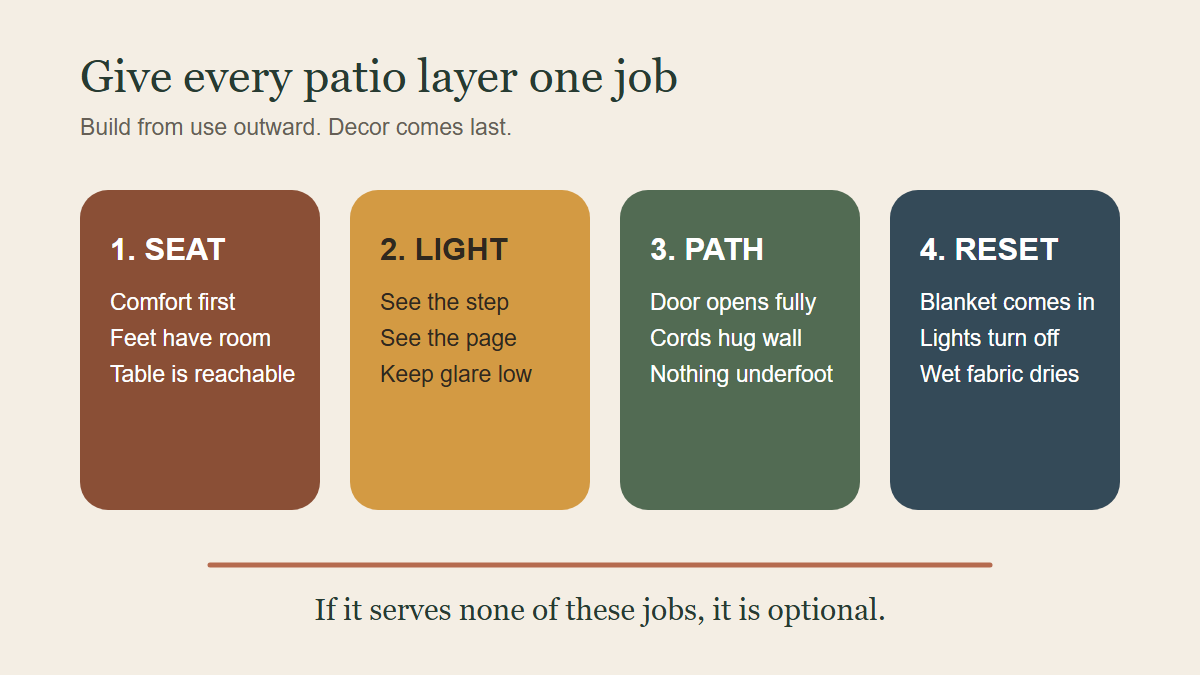
- Sit in the chair at the time you expect to use the patio.
- Clear the route from the door to the seat and any step edge.
- Add the practical door or step light first.
- Add one softer light close to the chair.
- Bring out one textile and one useful surface.
- Remove anything that blocks knees, feet, the door swing, or the view.
- Decide where the soft items go when the evening ends.
Keep it usable with a five-minute closing routine
Bring in the blanket, empty cups, turn off or collect battery lights, and check that no wet textile is folded into storage. The last person inside should be able to reset the patio without carrying six armloads.
That easy ending is what makes the space usable again tomorrow. A fall patio earns its charm by welcoming you outside, not by giving you another area to maintain.
What I’d Actually Buy
The chair you already own. Then light that does not need a flame, then one throw that comes back inside.
- Homemory 24-pack flameless tea lights (opens Amazon in a new tab)As an Amazon Associate, we earn from qualifying purchases. Full disclosure.. Put two on the table by the chair. The rest stay useful indoors after the patio season ends.
- 24-pack warm white fairy lights (opens Amazon in a new tab)As an Amazon Associate, we earn from qualifying purchases. Full disclosure.. Battery packs. Rail or planter, not the walking path.
- Bigacogo chunky knit throw, 40 by 60 (opens Amazon in a new tab)As an Amazon Associate, we earn from qualifying purchases. Full disclosure.. Keep it just inside the door so it never sits in dew.
Skip liquid-fuel tabletop fire pits on a small patio. The clearance is rarely there.
What to Read Next
- Budget fire pit ideas that make the backyard feel used helps you plan a larger, properly spaced fire area when the patio is too tight.
- Backyard lighting for soft summer evenings goes deeper on path, seating, and background light layers.
- Rainy porch ideas for days you still want to sit outside is useful when damp weather, not darkness, keeps pushing you indoors.
- A slow-morning coffee corner for a porch or small patio helps the same seat work before the evening begins.