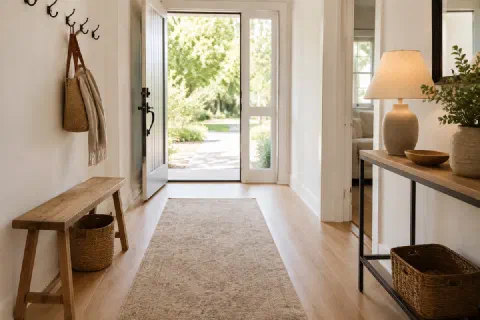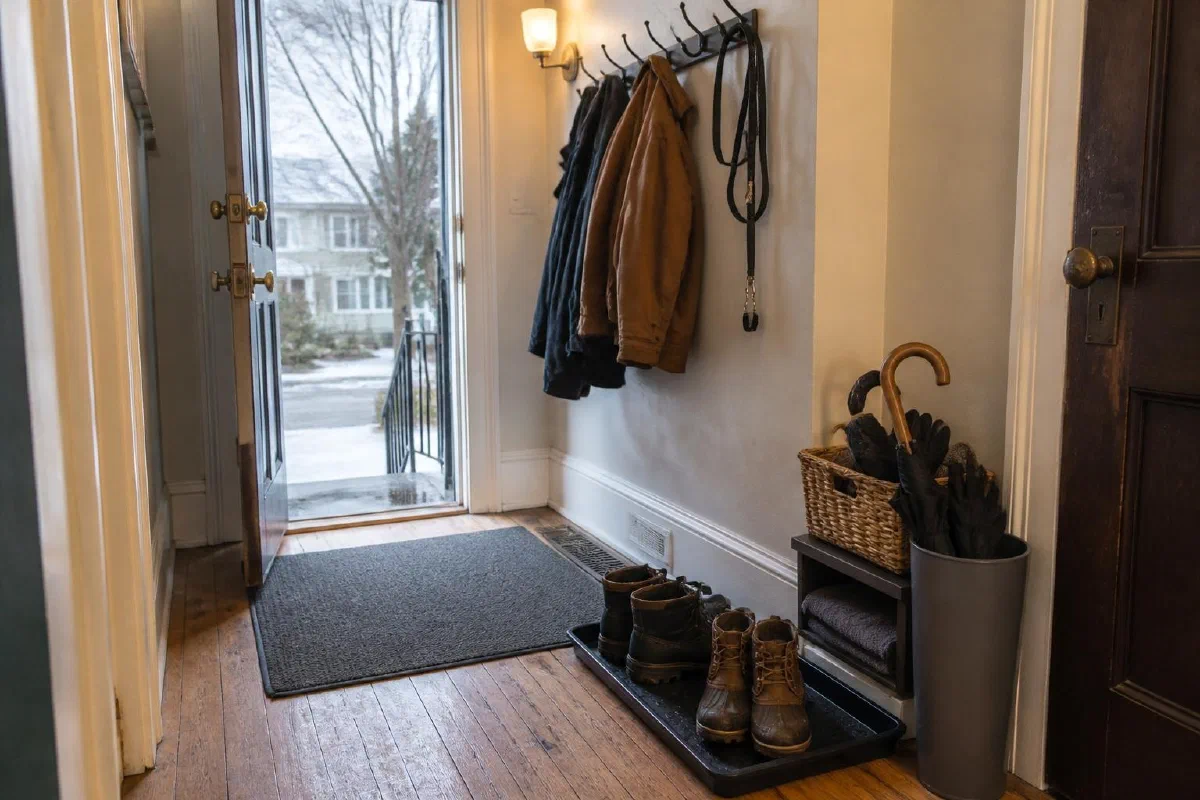
The first cold rain arrives, everyone steps inside at once, and suddenly the front door is fighting a pile of shoes. A small entryway does not need to become a miniature mudroom. It needs a short route for water, boots, coats, and the things people drop from their hands.
Start at the threshold and work inward. Catch grit outside, absorb moisture just inside, place a boot tray beside the walking line, and give dripping layers somewhere to hang. That order matters more than matching baskets or buying a bench.
Choose Your Entryway Fix First
| What goes wrong | First change to make | What not to add yet |
|---|---|---|
| Water reaches the floor | Two-stage mat setup | A fabric runner |
| Boots block the door | Low tray beside the path | A deep bench |
| Coats hit the door | Hooks beyond the swing | More hooks behind it |
| Gloves disappear | Ventilated wall pockets | One deep catchall basket |
| Dog gear drips everywhere | Towel hook and leash peg | A large open bin |
1. Stop Grit Outside and Water Just Inside
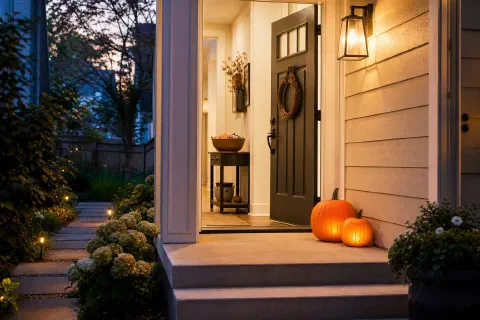
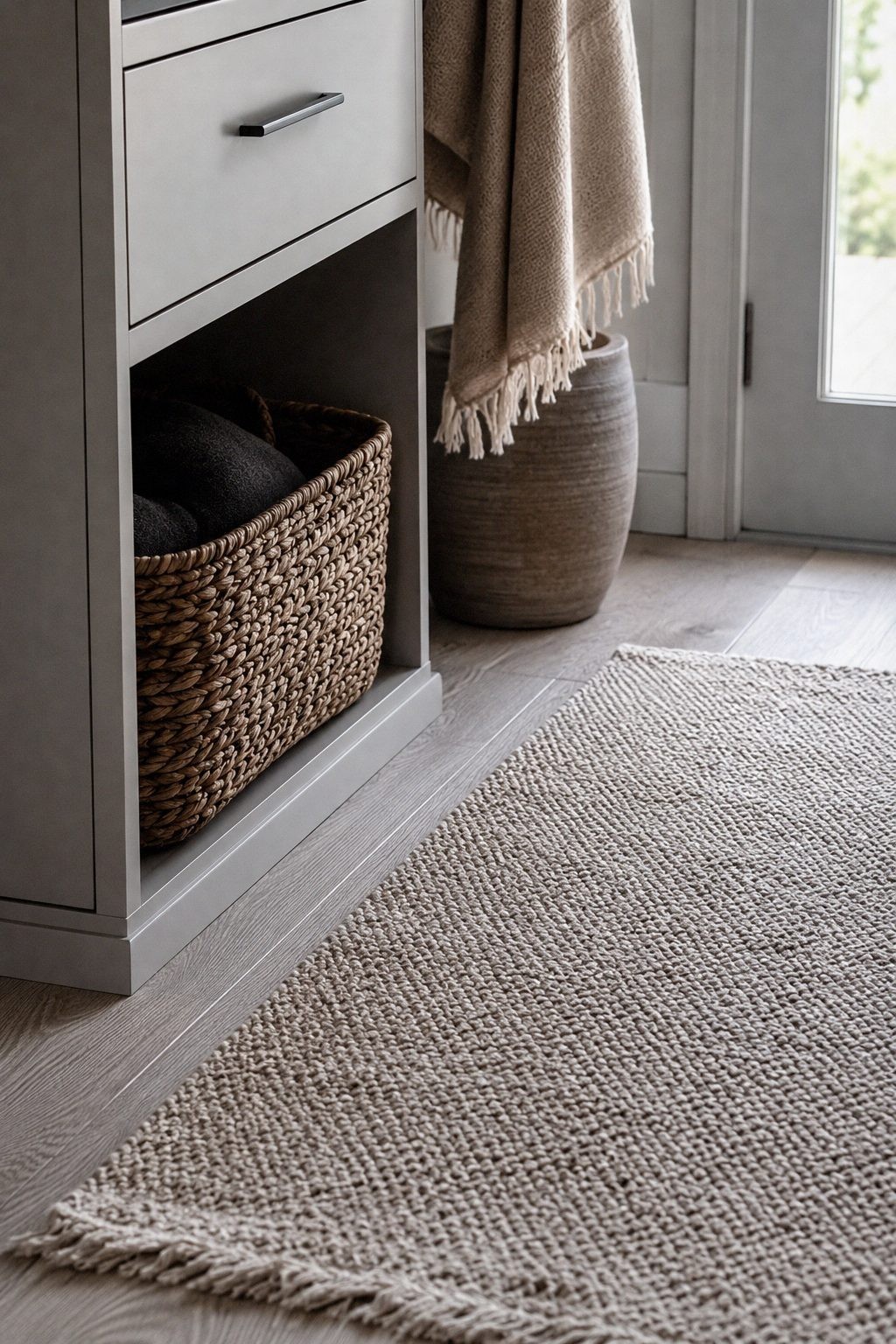
Use two different surfaces for two different jobs. An outdoor scraper mat loosens mud, leaves, and salt before they cross the threshold. A thin, absorbent indoor mat catches the water that remains. This works better than one thick decorative rug trying to do both.
Open the door fully before choosing the indoor absorbent mat. It should lie flat, clear the door, and stay out of the main turn into the hallway. Shake out the outside mat and stand the inside one up to dry after a soaking day. On wood floors, the National Wood Flooring Association recommends doormats and quick spill cleanup while avoiding excess moisture.
2. Put the Boot Tray Beside the Walking Line
The best boot tray location is not necessarily centered under a pretty row of hooks. It is the nearest dry spot people can reach without stepping around it. Place the tray parallel to a wall, console, or stair edge so the long side does not project into the path.
Choose a low tray that holds the wet pairs your household uses on an ordinary day, not every pair you own. A ridged insert lets water collect below the soles. Empty the tray before the next storm. If boots tip over, the tray is too crowded or too shallow for the footwear you wear.
3. Move Coat Hooks Beyond the Door Swing
Coats should not brush the door, cover the light switch, or narrow the place where someone stands to lock up. Tape paper rectangles to the wall where the hooks might go, hang a winter coat from each mark, and open the door. This cheap test shows the real depth of the setup before you drill anything.
Put the most-used coat hooks at an easy reach and reserve a higher one for a light tote. Skip the long peg rail if half of it lands behind the open door. Three useful hooks beat eight that collect old bags. Leave space between wet coats so air can move.
4. Give Keys and Mail a Shallow Landing Spot
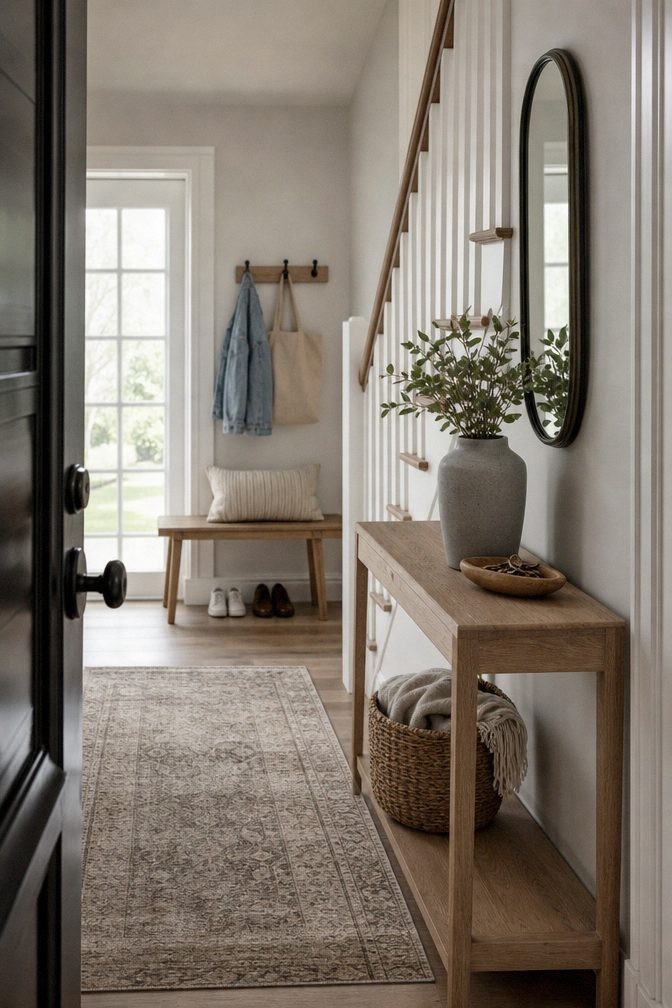
Wet-weather storage still has to coexist with the ordinary things that arrive through the door. A narrow ledge, wall pocket, or small tray gives keys, sunglasses, and outgoing mail one reliable landing spot. Mount it close enough to use naturally but away from dripping sleeves.
Keep this surface deliberately small. A full console often becomes another obstacle and a home for unopened mail. If the entry has no free wall, use a lidded box on the nearest shelf and keep only a key hook by the door. The landing spot should follow the way you enter, not force a new route.
5. Dry Gloves and Hats Vertically
A basket hides winter accessories, but it also lets wet gloves disappear under dry scarves. Use two or three ventilated wall pockets, a small wire basket, or clips mounted below the coat hooks. Give each person one pocket if that matches the household, or divide by job: gloves, hats, and dog-walk gear.
Do not toss dripping items into a closed container. Press out water with a towel, open the gloves, and leave damp pieces where air can reach them. The EPA advises drying wet materials within 24 to 48 hours as part of controlling moisture and mold. Drying matters more than a perfectly styled basket.
6. Add a Towel Hook for Dogs, Boots, and Spills
One washable hand towel near the door solves more problems than another storage bin. Use it to wipe dog paws, blot the mat, catch water from an umbrella, or dry the boot tray after emptying it. Hang it on a dedicated hook so nobody mistakes it for a clean kitchen towel.
Give a wet dog leash a separate peg instead of looping it over a coat. Keep waste-bag rolls in a small closed cup, not an open catchall. The towel, leash, and bags should be reachable while the door is closed and the dog is still under control.
7. Catch Umbrella Drips Without Blocking the Door
A tall umbrella stand can be awkward in a narrow hall, especially when it sits at the hinge side of the door. Try a slim waterproof container against the wall beyond the door swing, or hang compact umbrellas from a hook above a small drip dish. The container needs a removable base or an easy way to wipe it out.
Open umbrellas should dry somewhere with room around them, not across the entry floor. Shake them outside, bring them in closed, then move them to a bathroom, covered porch, or utility area if the entry is too tight. The front-door station only needs to contain the first drips.
8. Store Only the Shoes This Week Needs
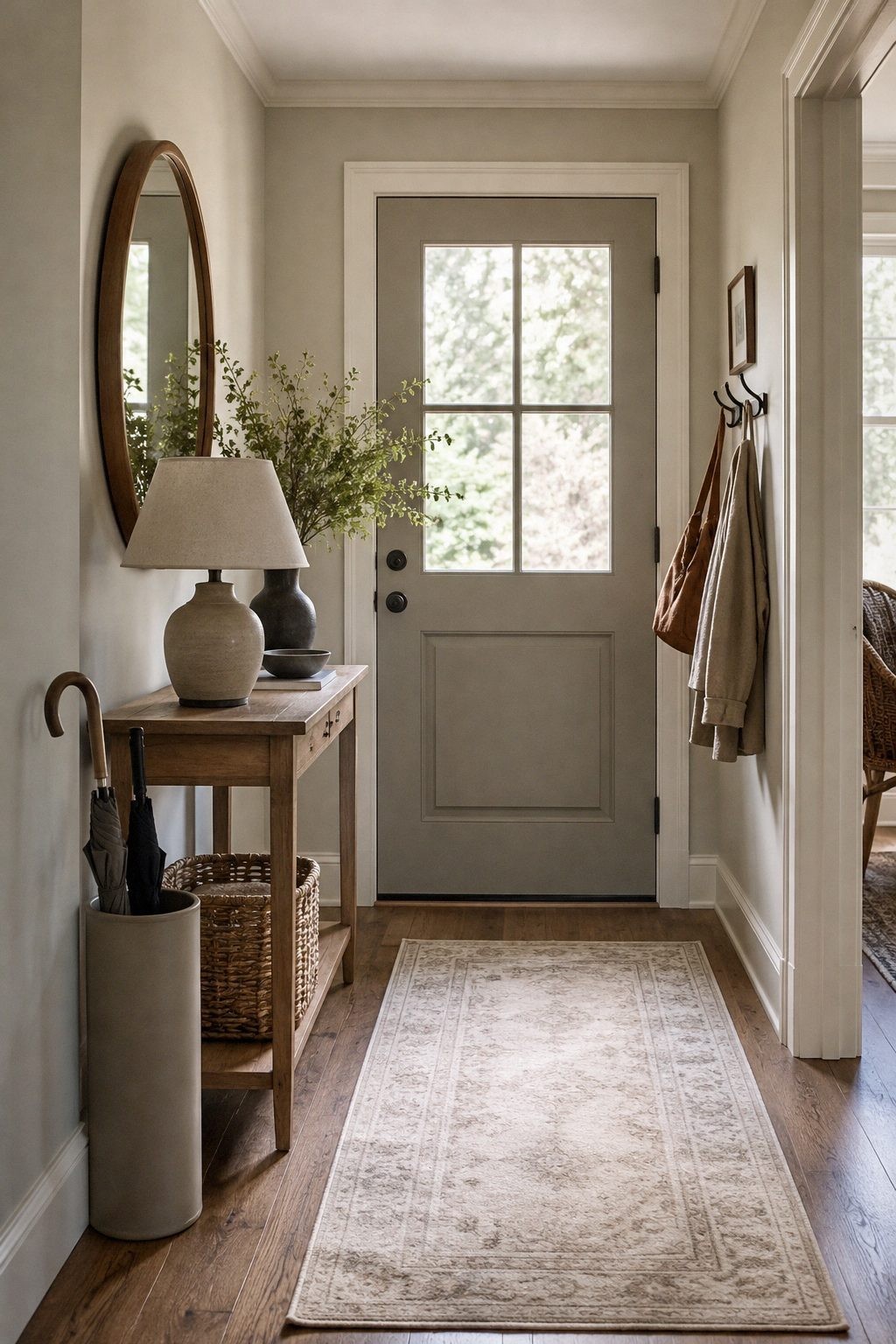
The entryway is a transfer point, not the household shoe closet. Give each person room for one or two active pairs and move the rest to bedroom closets or another storage area. A low rack works when shoes are mostly dry. A tray is better for snow boots and rain shoes. A narrow basket can hold slippers, but it should not become the place where damp footwear vanishes.
Set a weekly swap time that fits your routine. Return unused pairs and bring down the shoes the forecast calls for. This keeps the front door ready without a daily organizing project. It also makes the limit honest: if the tray fits four pairs, the system holds four pairs.
9. Use a Two-Minute Nightly Reset
Before bed, put keys back, move dry coats to their usual closets, empty standing water from the boot tray, and hang the indoor mat if it is still damp. Return stray shoes to their owners. This is less about keeping the entry photo-ready and more about making sure the door opens cleanly the next morning.
Keep an empty tote nearby for anything that belongs elsewhere. It prevents ten separate trips when scarves, packages, and papers wander into the zone. If the reset takes longer than two minutes, reduce what is allowed to live there. Fewer decisions beat more containers.
The Small-Entryway Setup Order
- Open the front door completely and mark its swing.
- Protect the floor with an outdoor scraper and thin indoor absorbent mat.
- Place the boot tray beside the clear walking line.
- Test coat depth with paper hook markers and a real winter coat.
- Add one shallow landing spot, ventilated glove storage, and a towel hook.
- Remove off-season shoes and anything that belongs in another room.
The finished entry does not need matching cabinetry. It needs a dry floor, an unobstructed door, and obvious places for the handful of things that arrive wet. When those three jobs are handled, even a narrow hall feels calmer on the messiest night of the week.
Related Reading for a Small Entryway
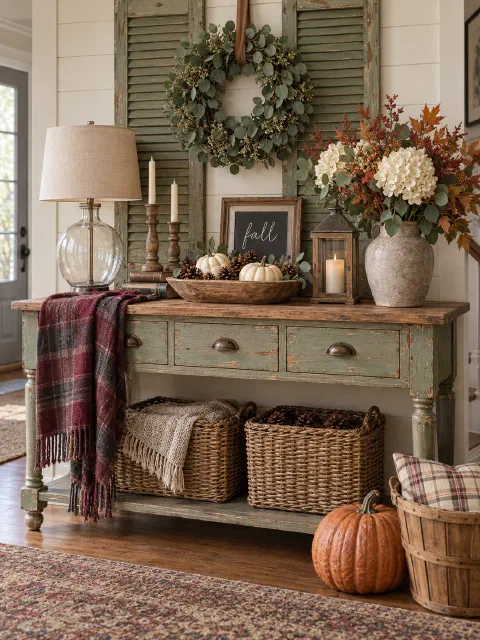
- Fall Entryway Decor for a Narrow Entry adds seasonal color without stealing the path you just cleared.
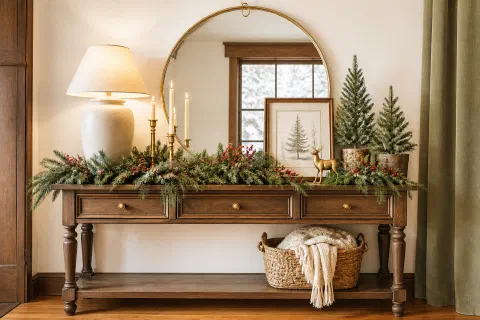
- Christmas Entryway Decor for a Narrow Entry keeps holiday greenery and lights outside the door swing.
- Blanket Storage Ideas That Hold Their Shape helps when cold-weather textiles start migrating toward the front door.
- 10 Things to Declutter When Your Home Feels Too Full gives the rest of the house the same practical reset.