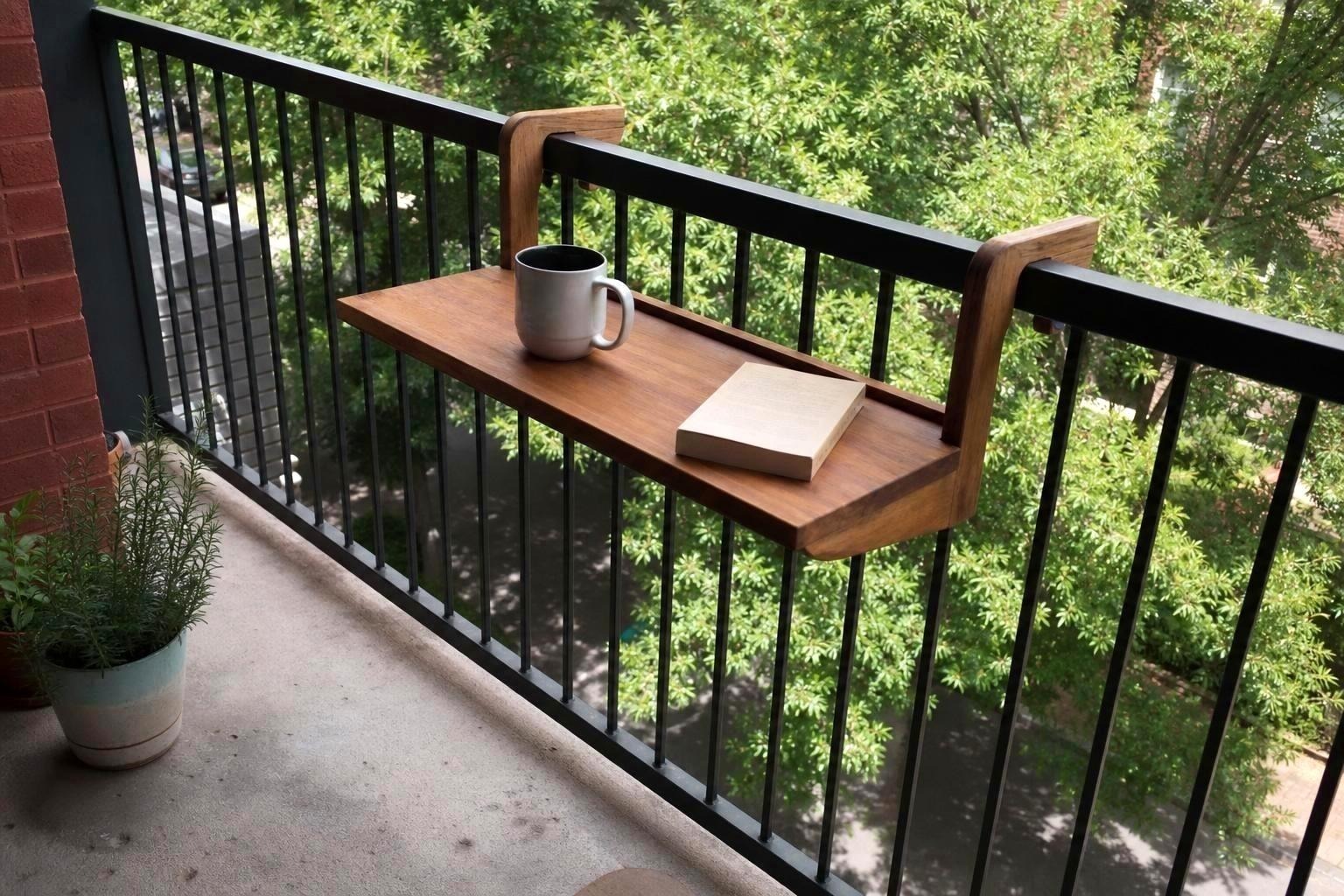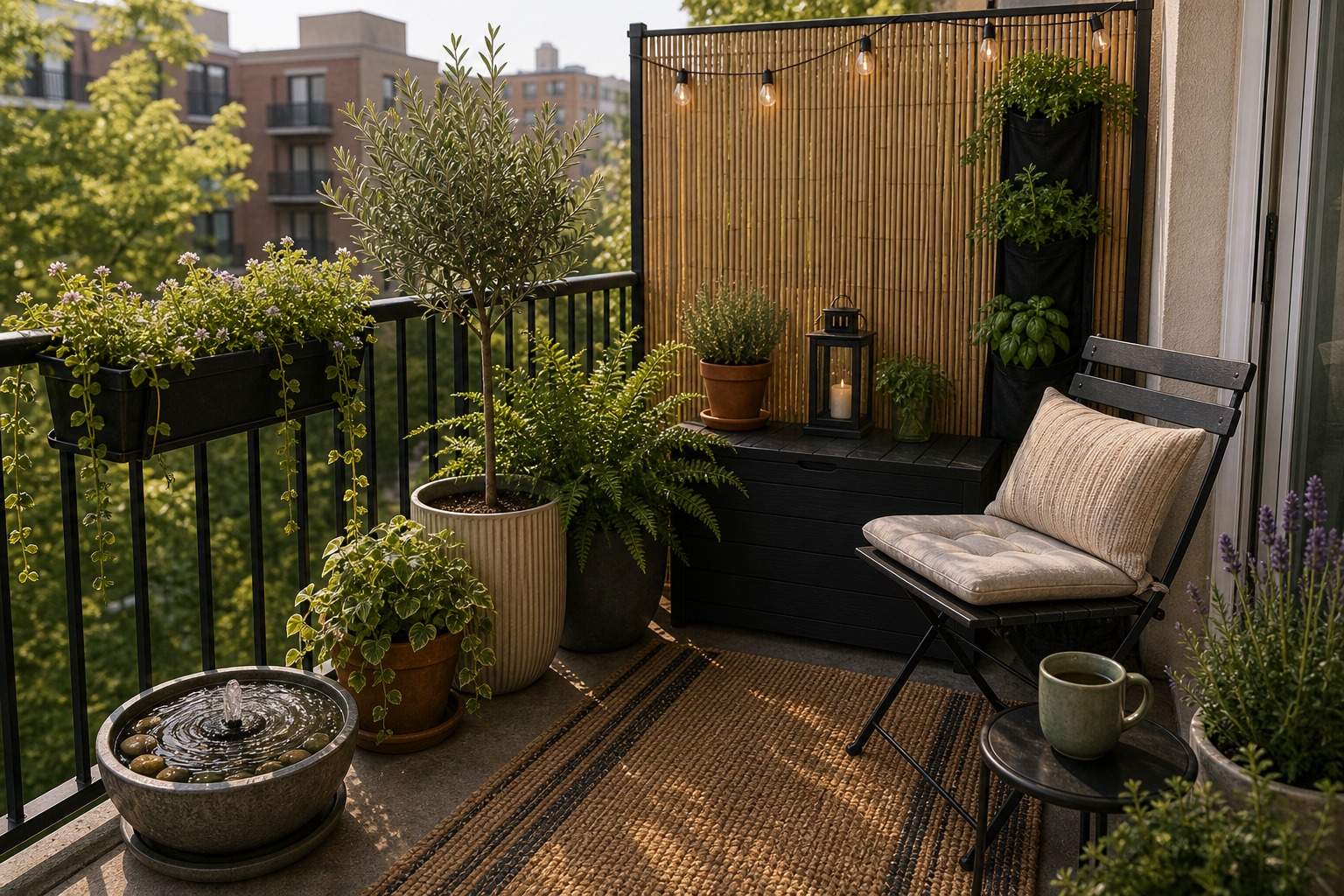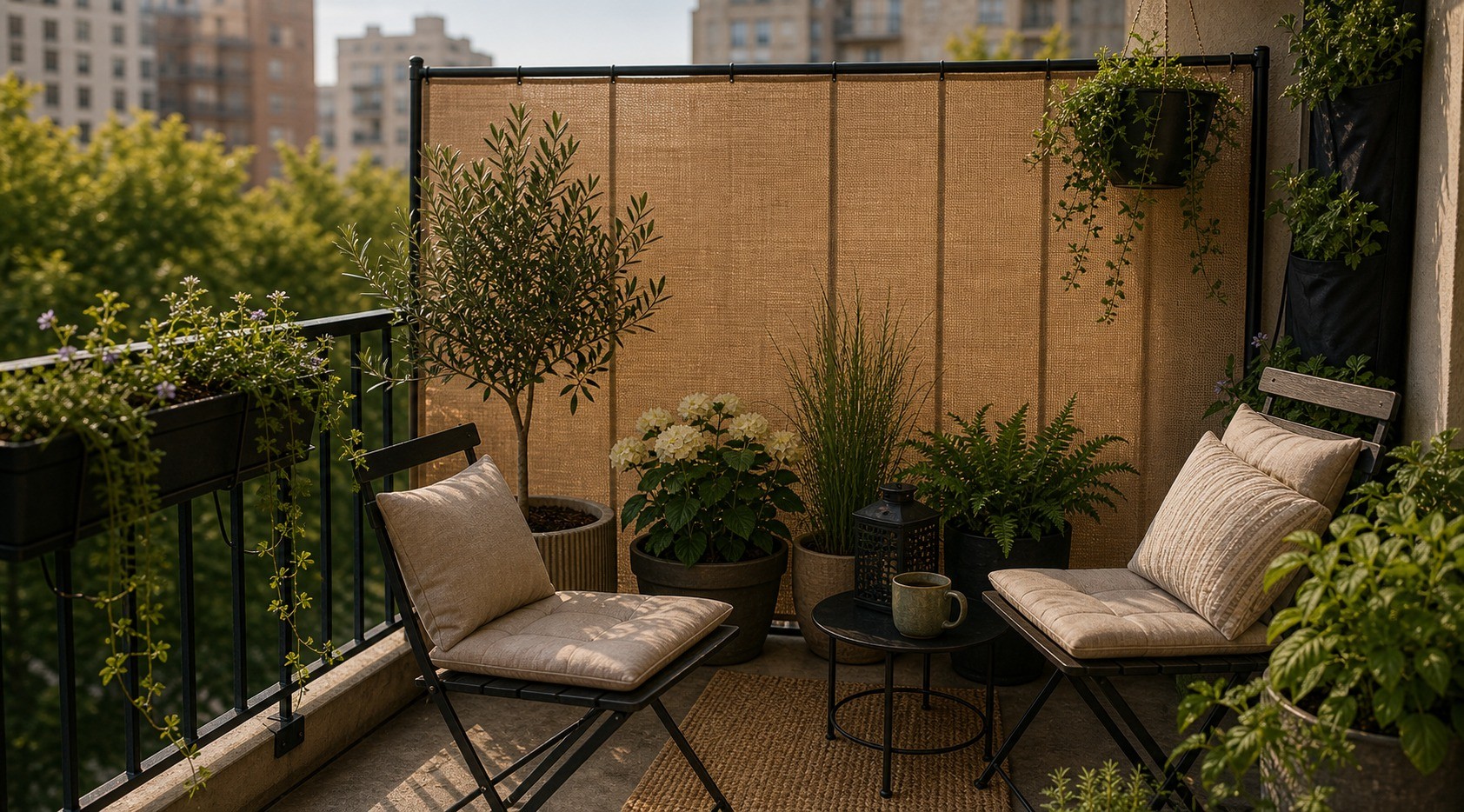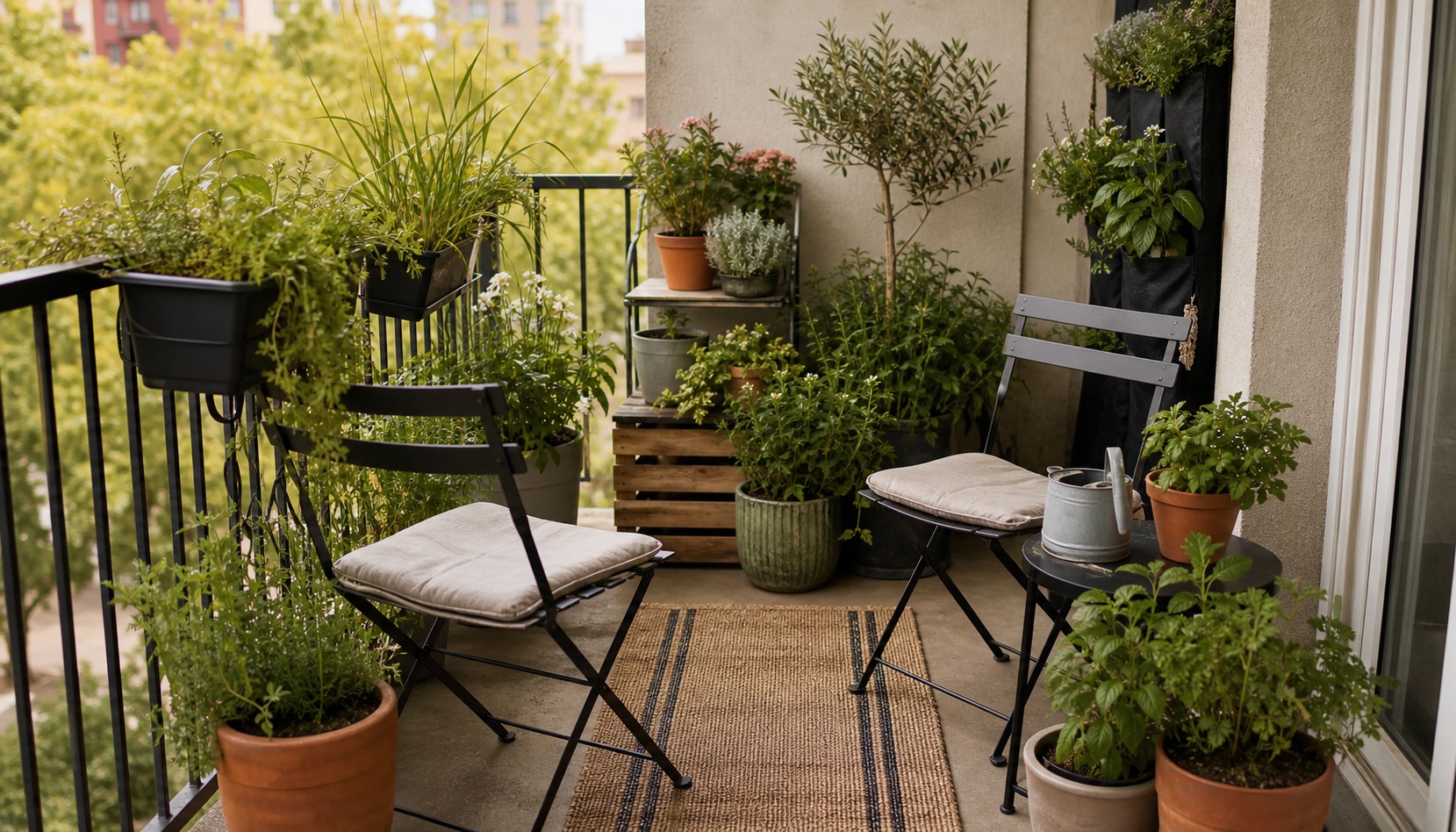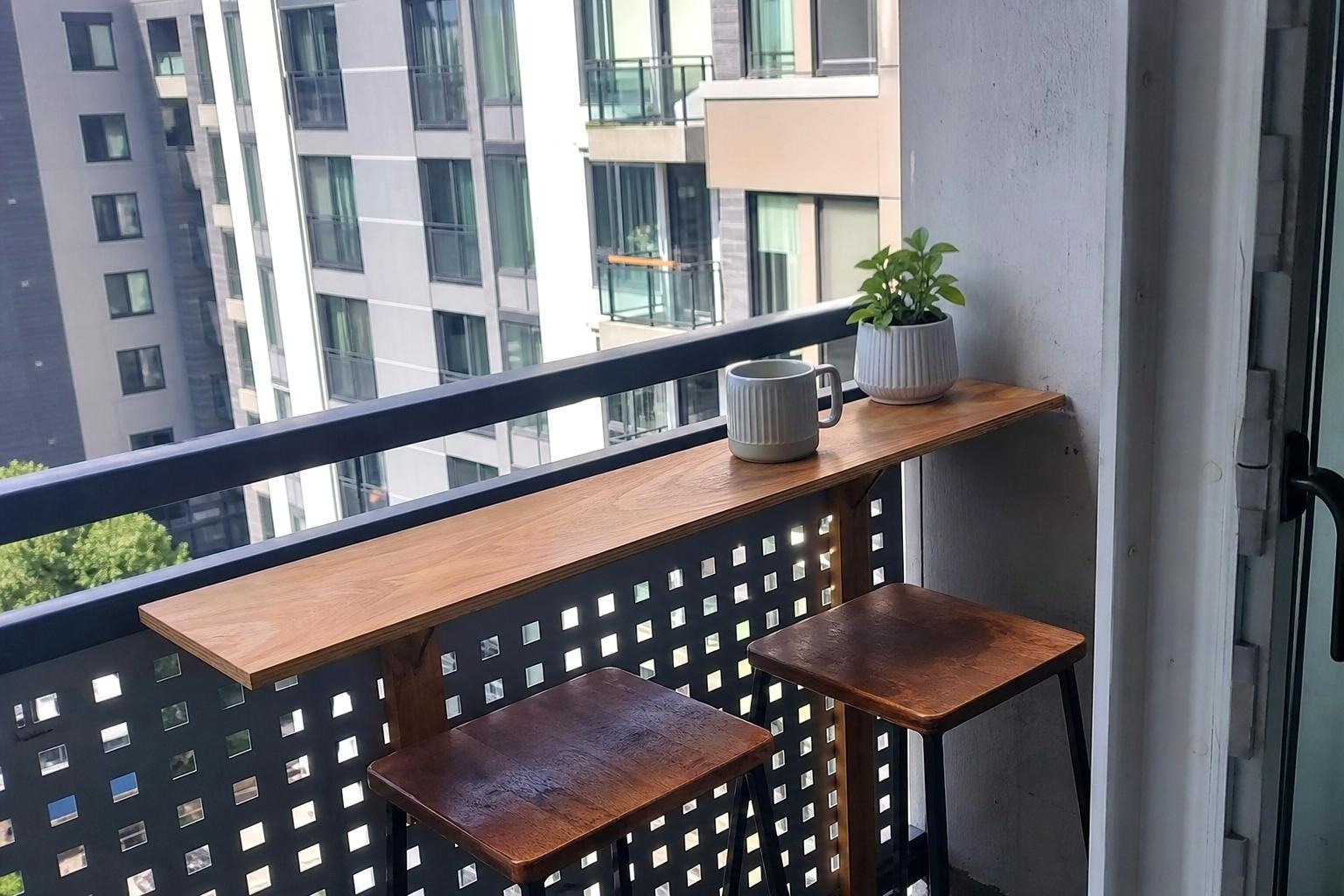
A balcony too narrow for a table is not too narrow for a bar. The trick is where the depth comes from. Instead of a table that eats the whole floor, a rail-height counter borrows depth from the railing itself, and a couple of narrow stools tuck in below it. You get a place to eat, work, or set a drink down without losing the walkway to the door.
Most of these small balcony bar ideas fail for one of three reasons: the counter is the wrong height for the stool, the stool blows off in wind, or nobody measured the guardrail before ordering a rail table that will not fit it. Fix those three things and a 3 by 6 foot balcony can hold a real bar.
Where the Depth Actually Comes From
A dining table needs floor space on every side. A rail-mounted setup only needs floor space on one side, because the counter itself sits over or against the railing. That is the whole reason this works on a balcony where a table never would. Depth comes from one of four places: a hook-on counter that clamps over the top rail, a wall-mounted drop-leaf table folded against the exterior wall, a clamp-on table gripped to the rail cap, or a narrow freestanding console pushed flush against the railing. None of them require the four-sided clearance a normal table does.
Choose Your Mount: Hook-On, Wall-Mounted, Clamp-On, or Freestanding
The mount decides how much of your balcony floor stays open. Compare them before you shop, not after a return.
| Mount type | Depth used | Best for | Watch for |
|---|---|---|---|
| Hook-on rail table | 12-18 in over the rail | Narrow rails, renters | Rail cap width and shape must match the hardware |
| Wall-mounted drop-leaf | Folds flat when not in use | Balconies with a solid exterior wall | Needs a stud or masonry anchor, not just drywall anchors |
| Clamp-on table | 10-16 in, gripped to rail | Tubular metal rails | Clamps loosen over a season; check them monthly |
| Freestanding narrow console | 12-20 in, sits on the floor | Balconies with a solid concrete or composite floor | Needs a weighted base or it walks in wind |
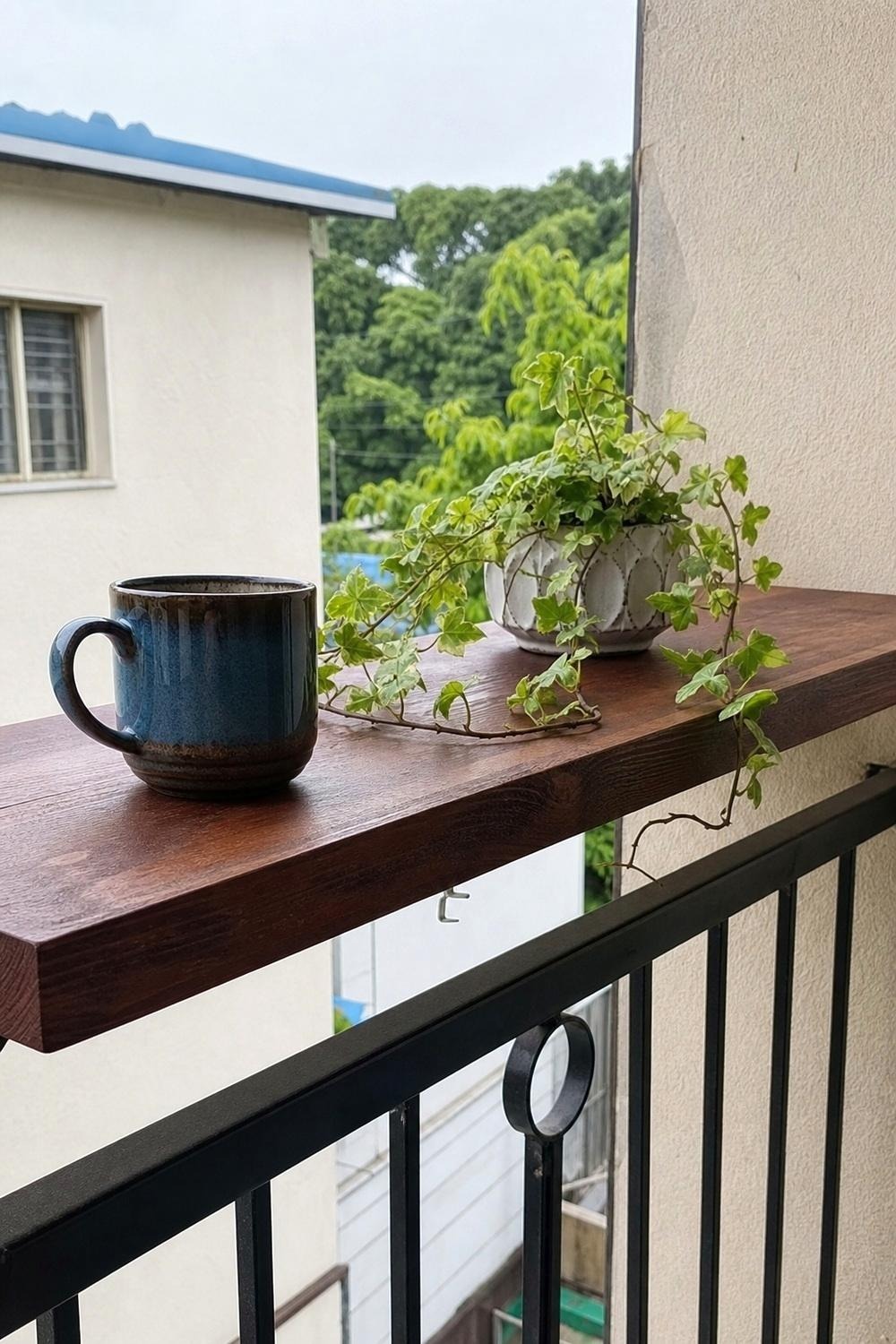
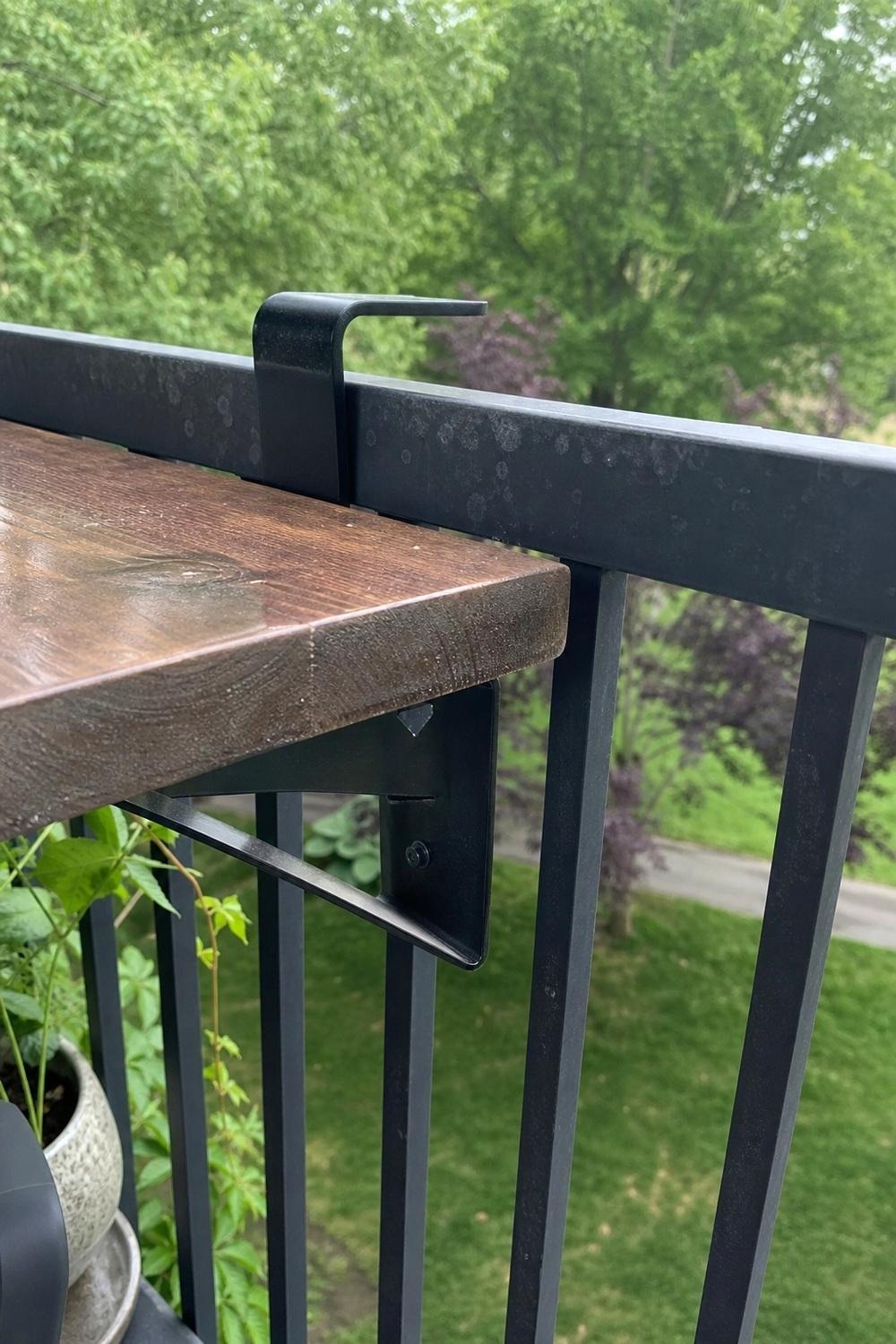
A hook-on rail table is the fastest fix for a renter, because it adds no holes and comes back off in minutes. A wall-mounted drop-leaf table gives up the least floor space day to day, since it folds flat against the wall when you are not using it. A clamp-on table works on the same rail styles as the hook-on version but grips the vertical rail instead of the top cap, which matters if your building uses a flat cap that a hook cannot close around. A freestanding console skips the railing hardware question altogether, but it needs a heavier base than it looks like it does, or the first gust knocks it over.
Match a Bar-Height Counter to the Right Stool
This is the step everyone skips, and it is the reason half the balcony bar photos online show someone perched with their knees at their chin. Counter height and stool height are a matched pair, not a guess.
- A bar-height counter, roughly 40 to 42 inches tall, pairs with a bar stool that has a seat height around 29 to 30 inches.
- A counter-height surface, roughly 34 to 36 inches tall, pairs with a counter-height stool with a seat around 24 to 26 inches.
- Leave 10 to 12 inches between the seat and the underside of the counter for knee room. That gap is what actually determines comfort, more than either number alone.
- Footrest height matters as much as seat height. A stool with a footrest set 7 to 10 inches below the seat keeps your legs from dangling, which is what makes a stool feel unstable even when it is not.
If the counter you already have does not match a standard, measure it and shop the stool to that exact number instead of trusting a listing that says “bar height” without a measurement.
Get the Guardrail Height Right Before You Order Anything
A hook-on or clamp-on counter has to physically fit your railing, and every balcony’s rail is not the same height. The International Residential Code sets a 36-inch minimum guard height for open-sided balconies, porches, and decks more than 30 inches above the ground, measured from the walking surface to the top of the rail, according to the code text cited by up.codes’ summary of the IRC guard requirements and confirmed in Routt County, Colorado’s adopted residential building code , which quotes the identical 36-inch requirement.
That 36 inches is a floor, not a fixed number. Older buildings, taller balconies, and different jurisdictions can land higher, so measure your own rail from the balcony floor to the top of the cap before you order a hook-on or clamp-on counter. A counter built for a 36-inch rail will not sit level, or will not clamp at all, on a rail that runs taller.
Measure twice: rail height from floor to cap, and rail cap width or tube diameter. Both numbers are printed on every hook-on and clamp-on product page, and both are the reason returns happen.
Weatherproof Materials That Actually Survive a Balcony
A balcony gets more direct sun, rain, and temperature swing than a covered porch. Material choice matters more here than it does indoors.
- Powder-coated steel frames resist rust better than raw or painted steel and hold up to repeated wet-dry cycles.
- Acacia slat tops are dense and naturally weather-resistant, and they age to a silver-gray patina instead of cracking the way untreated softwood does.
- Resin wicker or all-weather rope seats on a weatherproof stool shed water instead of holding it, unlike upholstered cushions left outside.
- Skip solid glass tabletops on a high balcony. Wind-driven debris and temperature shock are real risks, and a shattered glass top on an upper floor is a genuine hazard to whoever is below.
Wind Is Why Lightweight Setups Fail
A balcony several stories up gets wind a ground-floor patio never sees. This is the single biggest reason a Pinterest-pretty bar cart setup falls apart in a month.
- Anything under about 15 pounds per piece should be mounted, clamped, or weighted, not simply set down.
- Choose stools with a wide base or a stackable, low-profile design over tall, top-heavy ones.
- A hook-on or clamp-on counter is inherently more wind-stable than a freestanding piece, because it is attached to a fixed structure instead of resting on its own weight.
- Store loose items, like seat cushions, inside when you are not using the space. For everything else that needs a home between uses, see tiny balcony storage ideas for cushions, soil, and plant stuff .
Keep the Door Swing and Walkway Clear
Before you finalize a layout, open the balcony door all the way and walk through it with your arms full, the way you actually will with drinks or a laptop. A counter or stool that blocks that path gets moved constantly, which is the fastest way for a nice setup to become clutter. Leave at least 24 inches of clear walkway from the door to wherever you actually stand or sit. If the balcony also needs to hold plants, a balcony-railing table built to sit just below the top rail can share the same rail depth as a bar counter without doubling up on floor space.
Set Up a Small Balcony Bar in 5 Steps
- Measure the rail: height from the balcony floor to the top of the cap, and the cap’s width or the tube’s diameter.
- Measure the clear floor depth from the rail to the door swing, and subtract at least 24 inches for the walkway.
- Pick the mount that matches your rail and lease: hook-on for a quick, damage-free setup; wall-mounted drop-leaf if you have a solid exterior wall; clamp-on for tubular metal rails; freestanding only if the floor space allows it.
- Match the counter height to a stool height using the 40-42/29-30 or 34-36/24-26 pairing, and confirm 10 to 12 inches of knee clearance.
- Add one stable light source and one styling touch, like potted plants that fill in a bare balcony , then test the setup in real wind before calling it finished.
Mistakes That Make a Rail Bar Wobble or Blow Off
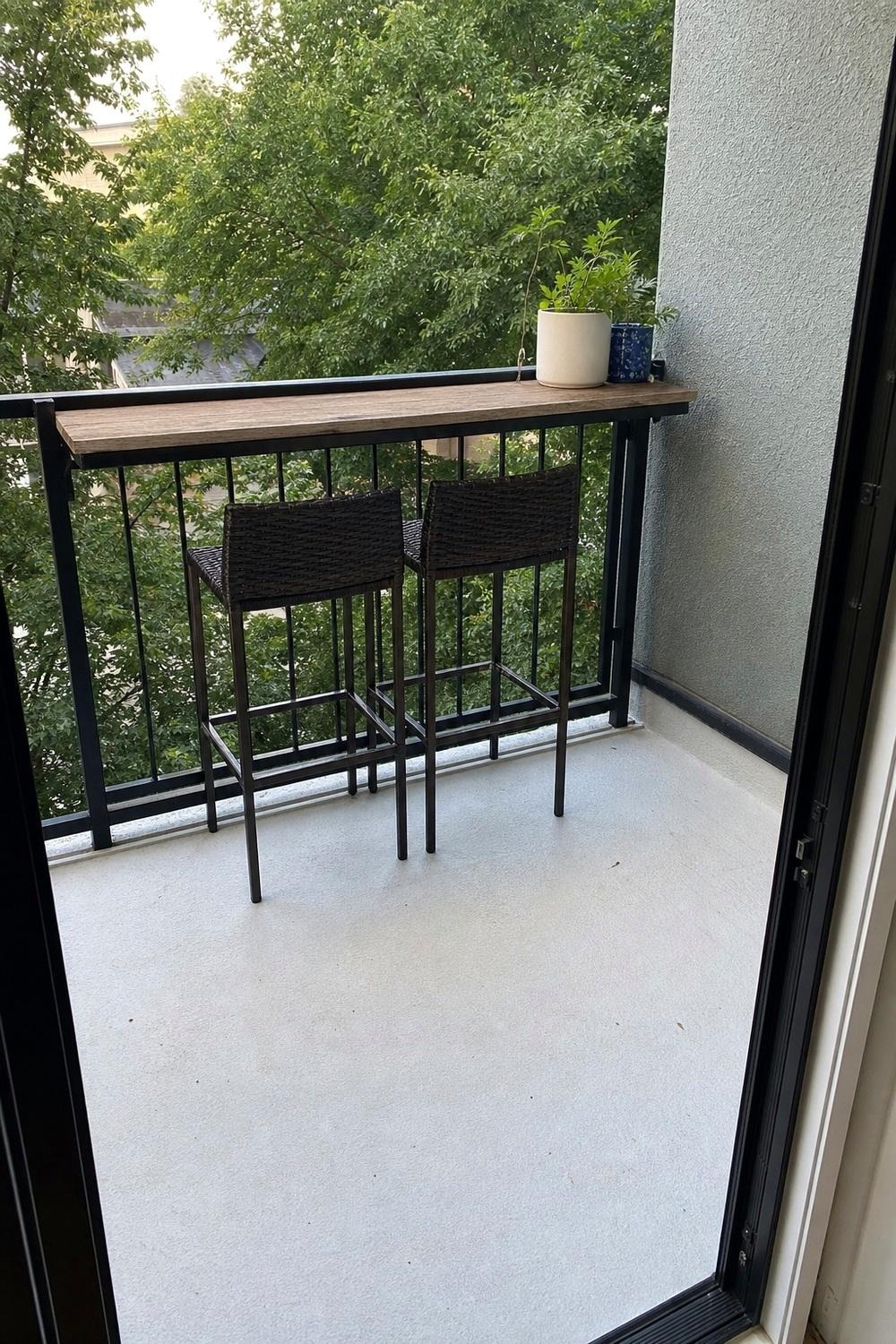
- Buying a hook-on counter before measuring the rail cap width. The most common return reason is a cap that is too wide, too narrow, or the wrong shape for the bracket.
- Choosing a stool by look instead of by seat height, which leaves knees jammed under the counter or feet dangling with no footrest.
- Skipping a weighted base on a freestanding console, then losing it to the first real gust.
- Placing the counter where it narrows the door swing, so it gets shoved aside within a week and never goes back.
- Assuming every balcony rail is 36 inches. Some run taller. A rail-mounted counter that does not match your actual rail either will not fit or will not sit level.
Keep a Weatherproof Bar Set Working All Season
- Wipe down acacia and powder-coated steel after rain instead of letting water sit in the grain or in bracket joints.
- Recheck clamp-on hardware monthly. Vibration and temperature swings loosen the grip faster than most people expect.
- Bring resin-wicker or rope-seat stools in during hard freezes if your climate gets them; the material handles rain fine but can crack in prolonged deep cold.
- Reapply a light coat of teak or acacia oil once a season if you want the wood to hold its color instead of going fully silver.
- If you added balcony privacy screening near the bar, check that it has not shifted the wind load on the whole corner. A screen changes how wind moves across a small balcony, and a setup that was stable before a screen went up may need re-checking after.