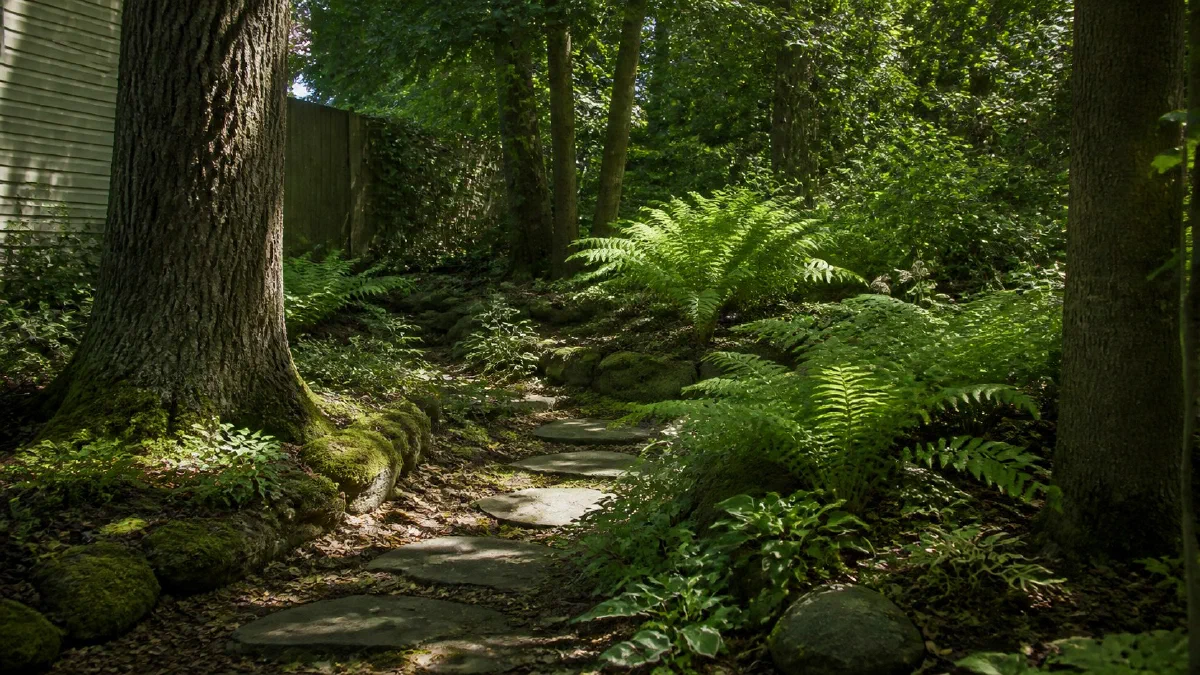
A shady backyard corner can feel like a problem you keep mowing around.
Grass thins out, soil stays damp, leaves collect, and the space never looks clean in the same way the sunny parts of the yard do. But shade can become the best part of the garden if you stop asking it to behave like lawn.
Moss, ferns, and stone work because they lean into what the corner already wants: cool light, soft texture, and a quieter pace.
Start by reading the corner
Before buying ferns or setting stones, watch the corner for a day.
Notice where the light lands in the morning and late afternoon. Check whether water sits after rain or drains within a few hours. Look for roots, compacted soil, low branches, and places where you naturally step through the area. A corner that still holds water the next day is asking for rain garden planting rather than a fern bed , and University of Minnesota Extension’s rule of thumb is that rain garden soil needs to soak up water within 48 hours. Slower than that and roots drown.
Most shady corners fall into one of three types:
| Corner type | What usually works |
|---|---|
| Damp and cool | Ferns, mossy stone, leaf mulch, stepping path |
| Dry shade under trees | Tough ferns, carex, epimedium, mulch, fewer thirsty plants |
| Muddy traffic corner | Stepping stones, gravel base, limited planting pockets |
This matters because moss and ferns love shade, but they do not all want the same soil. A damp corner can handle more lush planting. A dry corner under thirsty tree roots needs a tougher, slower plan.
Which light level is your corner, and what does that mean for planting?
Shade is a measured light level rather than a mood, so it helps to know which one you have. Penn State Extension puts shade at less than two hours of direct sun a day , part shade at two to four hours, part sun at four to six, and full sun at six or more. That is why a corner that reads as gloomy at noon can still scorch moss in a July afternoon, and why the same corner can be two different gardens depending on which side of the house it sits.
Make the path first
Even a tiny shade garden needs a path or edge. Without it, the corner can look like plants are simply surviving in leftovers.
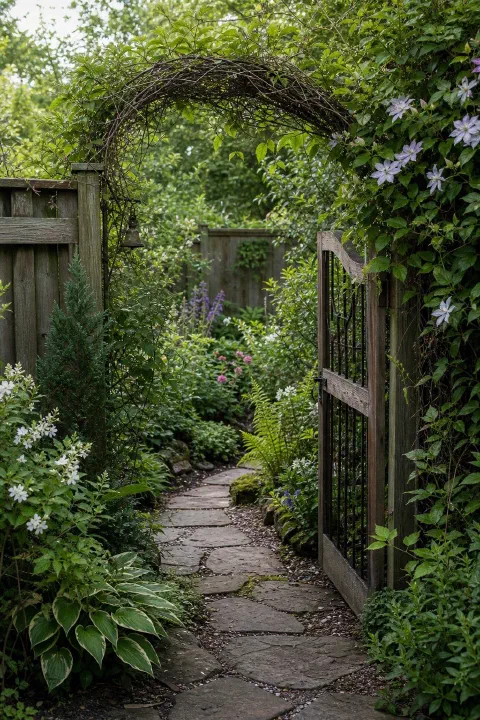
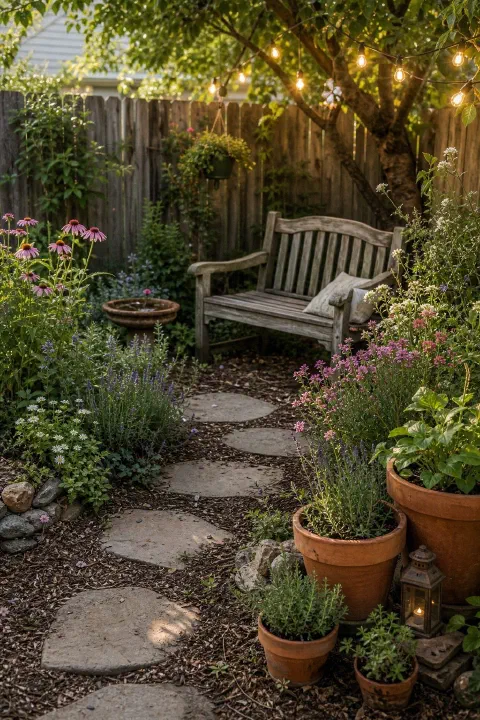
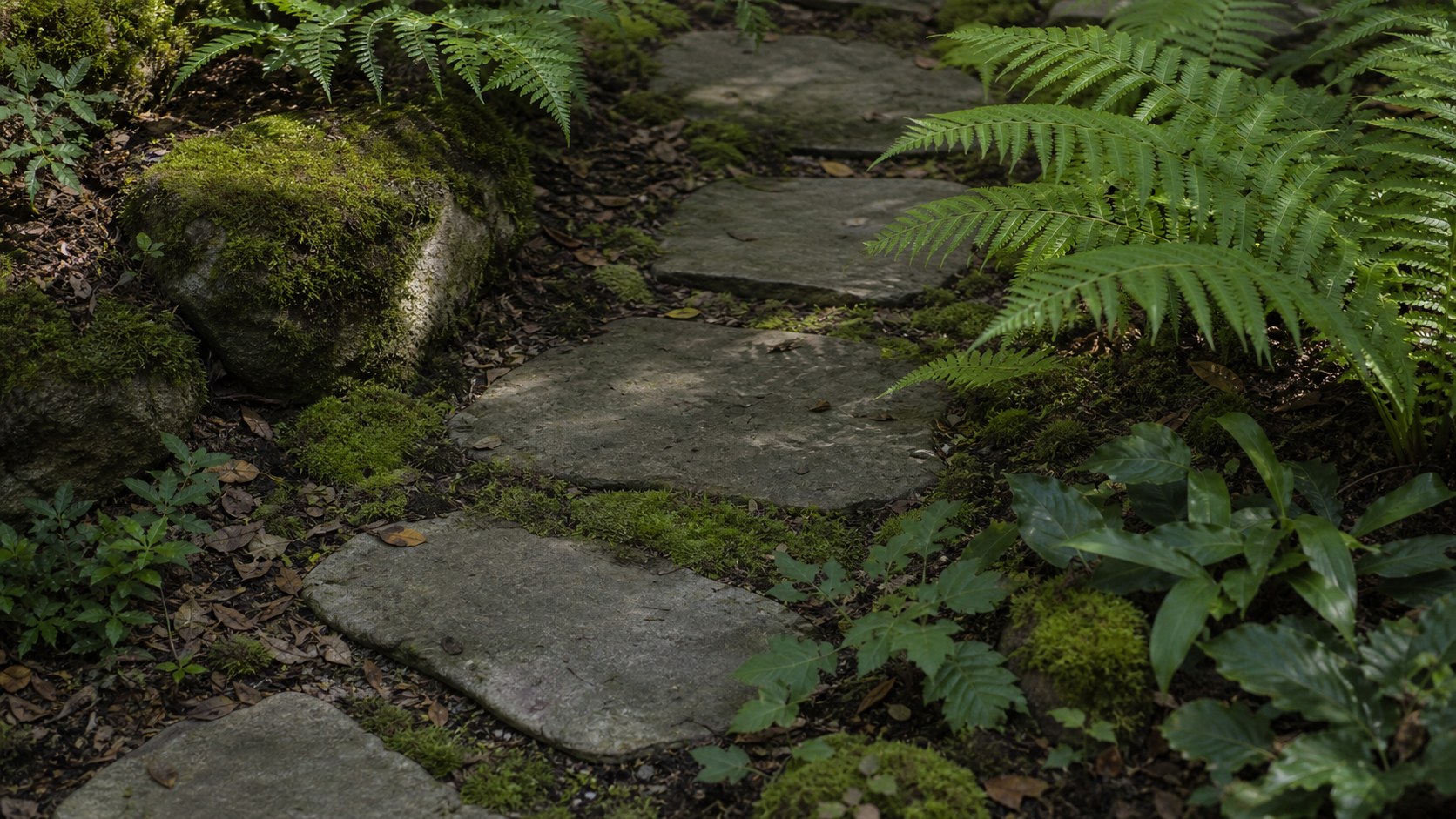
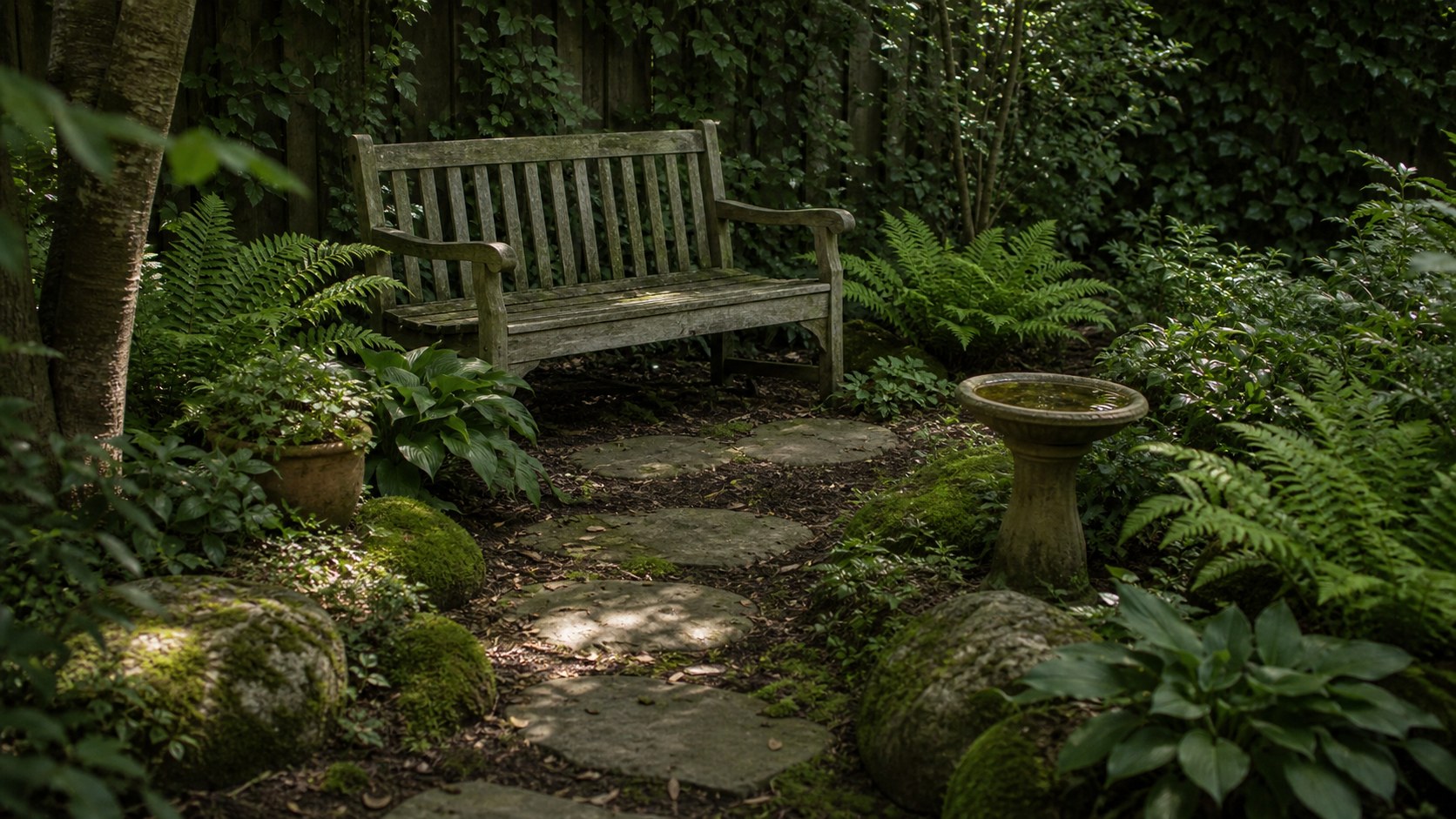
Use flat stones, irregular flagstone, reclaimed brick, or a short gravel path. The path does not have to go far. It can lead to a small bench, a bird bath, a large stone, or just a quiet turn through the corner.
Keep the path slightly raised if the area gets wet. Set stones so they do not wobble, and leave pockets between them where moss can settle naturally over time.
Use ferns as the main texture
Ferns are the easiest way to make shade feel lush without needing bright flowers.
Use them in small groups instead of dotting one plant here and there. Three of the same fern tucked around a stone looks more intentional than five different plants scattered across the corner.
Good fern choices depend on your climate, but these are common starting points:
- Christmas fern for dependable evergreen structure in many regions
- Lady fern for a softer, arching look
- Ostrich fern where there is room and consistent moisture
- Autumn fern for coppery new growth
- Japanese painted fern for silvery color in deep shade
If deer browse your yard, check local resistance before planting heavily. Fern performance changes by region and pressure.
Let moss be a finish, not the whole plan
Moss looks magical in photos, but it is not a quick carpet you can force anywhere.
It usually wants shade, moisture, compact mineral soil or stone, and very little foot traffic. If your corner already has moss, protect it. Remove weeds by hand, keep leaves from smothering it, and avoid heavy mulch on top.
If you do not have moss yet, use moss as an accent goal rather than the entire design. Set stones in the right conditions and let moss slowly colonize the cracks. In the meantime, leaf mulch, ferns, and low shade plants can carry the look.
Good companions for a moss-and-fern corner include:
- Carex for grassy texture
- Heuchera for low foliage color
- Wild ginger where it is appropriate to your region
- Foamflower in moist shade
- Hostas if deer are not a major issue
Keep the color palette quiet
This kind of corner works best when it does not fight the shade.
Use greens, gray stone, brown leaf mulch, and maybe one soft white or pale lavender bloom. Too many bright colors can make the corner feel busier and less restful.
The contrast should come from texture: glossy leaves, fine fern fronds, rough stone, soft moss, and dark mulch.
Add one reason to pause
A shady corner becomes a backyard sanctuary when there is a reason to linger.
That reason can be tiny. A stone bird bath, a small bench, a stump used as a side table, a ceramic water bowl, or one lantern can be enough. The point is not to decorate the corner heavily. It is to tell the eye this place has a purpose.
Avoid adding too many objects. Shade gardens already have plenty of detail. One useful focal point is stronger than a collection of garden ornaments. Choose garden decor that can weather outdoors without making the corner look like a craft display.
Maintain it like a woodland edge
A moss, fern, and stone corner should not need constant fuss, but it does need the right kind of care.
Pull weeds while they are small. Keep heavy leaves from matting over moss. Water new ferns through their first season. Refresh leaf mulch lightly instead of piling bark too high around crowns. Reset stones if freeze-thaw or wet soil makes them shift.
The goal is not a spotless garden. The goal is a corner that looks calm, cool, and cared for.
Once you stop fighting the shade, the whole space gets easier.
What to Read Next
- Turn the shade planting into a backyard secret garden with a clear entrance, one seat, and a view worth hiding.
- Read the corner of my yard nobody wanted for the version of this project that starts with soggy ground and a bench you already own.
- Check deer-resistant shade plants first if deer keep pruning your ferns before you get to enjoy them.
- Go to shade perennials that flower when you want bloom in this corner, not only foliage.