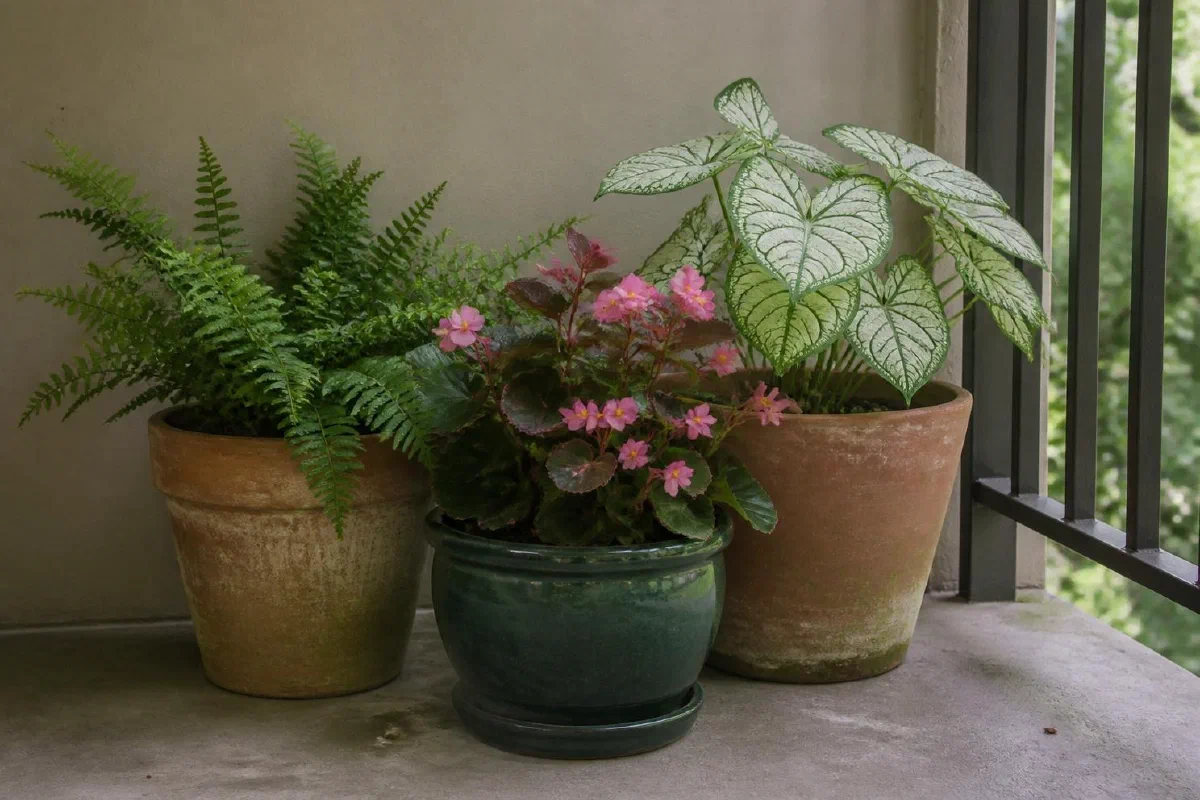
A north-facing balcony gets no direct sun at all. A spot under a stair, behind a building, or on the shaded side of a fence gets a couple of hours at best. A hot, bright balcony has the opposite problem: containers can need protection from harsh afternoon sun without losing the morning light plants still use.
That is not a death sentence for a container. It just rules out most of what the garden centre puts at the front of the display in May, all of which wants six hours of sun.
Balcony plant shade without drilling: the immediate answer
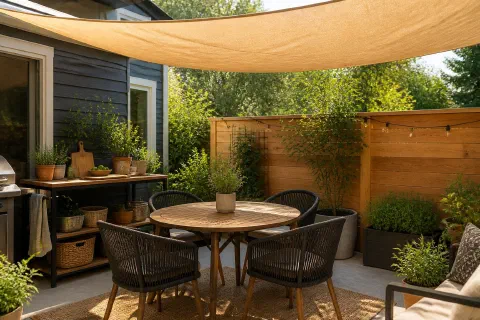
If the containers are wilting in hot afternoon sun, start with temporary shade that does not depend on holes in the building. A freestanding screen or a properly secured shade cloth can work when the lease and building rules allow it. The University of Maryland Extension gives 30 to 40% shade cloth from about 1 to 5 p.m. as one example for reducing heat stress while keeping morning sun; it is not a universal setting for every plant or balcony. Secure any fabric for the wind your balcony actually gets, keep the door and fire-escape route clear, and never attach a load to a railing or facade unless the property rules and the hardware instructions explicitly allow it.
Then check the plant label and the potting mix. A shade cloth will not fix a plant that needs full sun, and a north-facing balcony needs shade-tolerant plants rather than a sun screen. Ask Extension’s balcony-garden guidance also recommends checking the top 1 to 2 inches of mix before watering during hot weather and using drainage holes.
For a second perspective on balcony containers, University of Maryland Extension’s balcony-garden response notes that many vegetables need about six hours of sun, leafy greens prefer cooler conditions, and plants in the same container should share similar light and moisture needs.
| Balcony condition | First move | Do not assume |
|---|---|---|
| Hot afternoon sun | Temporary afternoon shade, secured for local wind | One shade percentage suits every plant |
| North-facing or deep shade | Shade-tolerant plants and a pot with drainage | A sun screen will add missing light |
| Windy exposure | Smaller, stable containers and a sheltered position | Fabric or tall plants can be left loose |
Balcony shade care and maintenance
After adding temporary shade, check the containers at the same time each day for one week:
- Look at leaves and stems for heat stress, scorch, or stretching toward light.
- Test the top 1 to 2 inches of potting mix before watering rather than following a fixed schedule.
- Check that fabric, screens, and pots remain stable after wind or rain.
- Recheck the door, railing, and fire-escape route before leaving the setup in place.
This small check catches a poor light match or a loose temporary screen before it becomes a bigger balcony problem.
First, Work Out Which Shade You Have
The word covers three very different situations, and the plant that thrives in one sulks in another.
- Part shade. Three to six hours of sun, usually morning. The easiest by far. Almost everything below works.
- Dappled shade. Light coming through a tree canopy all day. Bright but never direct. Excellent for foliage.
- Full shade. Under two hours of direct sun. North-facing balconies, deep side returns, under a deck. The shortlist is real but short.
Spend one Saturday actually watching the spot. People routinely describe a place as full shade when it gets three hours of hard afternoon sun, then wonder why the ferns scorched.
The Annuals That Carry a Shade Pot
These are the ones that fill a container in a single season and get pulled at frost.
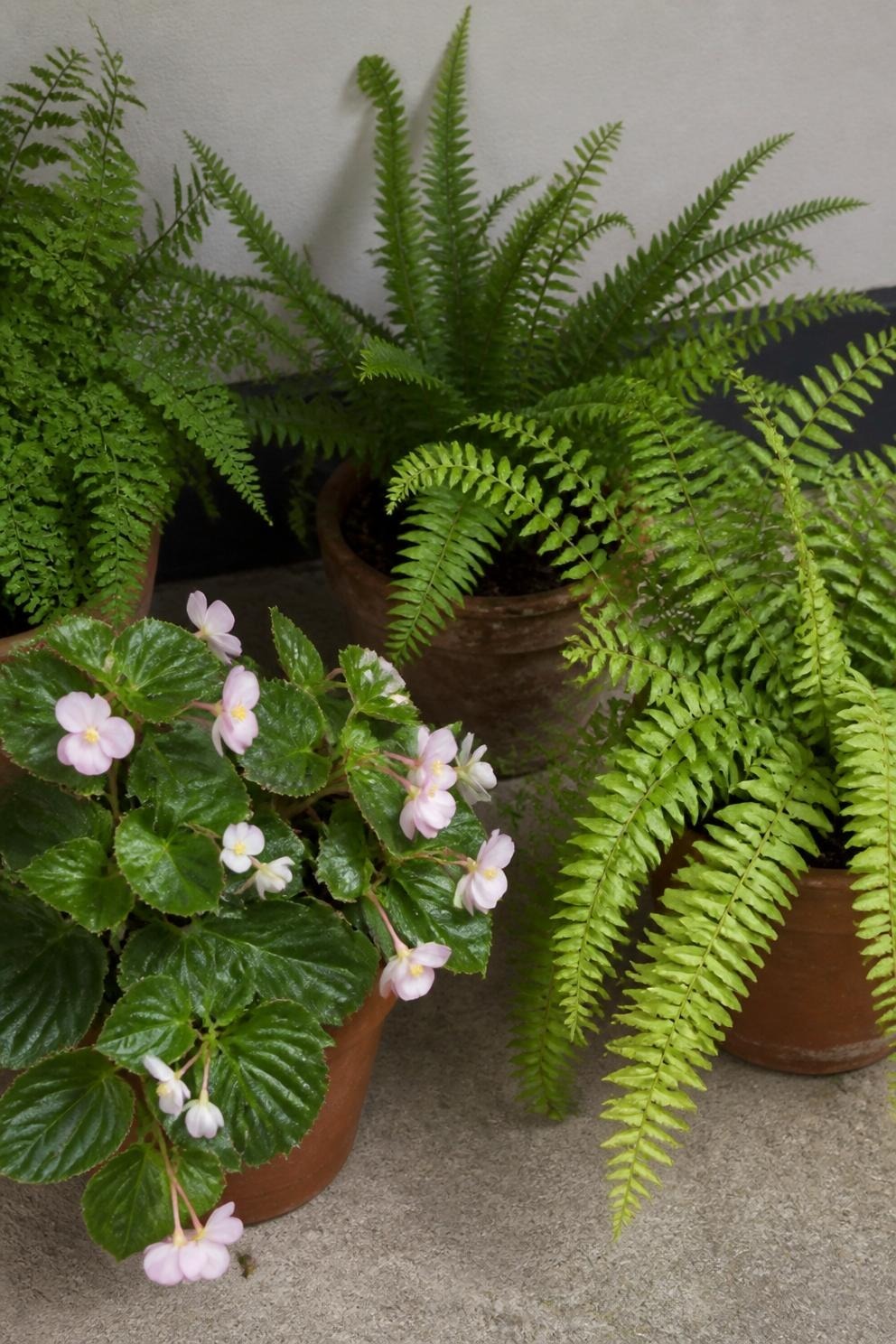
Begonia
The most reliable shade container plant there is.
- Wax begonia is the small bedding type, six to twelve inches, endless small flowers, tolerates neglect.
- Dragon wing begonia is the one to buy for a real display. Two feet or more by August, arching red or pink flowers, glossy leaves, and it keeps going in heat when other things quit.
- Tuberous begonia has the enormous rose-like flowers. Fussier. Wants dappled shade and consistent moisture, and it hates being waterlogged.
Caladium
Grown for leaves, not flowers, and the leaves are better than most flowers. Big arrow-shaped foliage in white, pink, red and green combinations that genuinely brighten a dark corner.
Tender. Tubers go in once soil is properly warm, around 65F, and they sulk if planted cold. In zones 9 and up they overwinter in the ground. Everywhere else, either treat them as annual or lift the tubers and store them dry.
Coleus
Enormous range of leaf colour, fast, and more forgiving of sun than its reputation suggests. Pinch the growing tips every couple of weeks or it goes leggy and flowers, and the flowers are not the point.
Torenia
The wishbone flower. Small trumpet flowers in blue, purple and pink, trailing enough to soften a pot edge. One of the few shade annuals that genuinely flowers heavily in full shade.
Fuchsia
The classic hanging basket for a shaded porch. Pendant flowers all summer. It wants cool and moist, and it is the first thing to collapse in a hot dry week, so it suits a north-facing spot better than most.
Impatiens
Still the fastest colour for deep shade. Worth knowing two things: downy mildew wiped out standard bedding impatiens in many regions, so buy a mildew-resistant series such as Imara, or switch to New Guinea impatiens, which Clemson HGIC lists as more tolerant of the disease . And deer eat them readily if that applies to you, which is worth checking against our list of deer resistant shade plants before you buy.
Perennials That Live in Pots
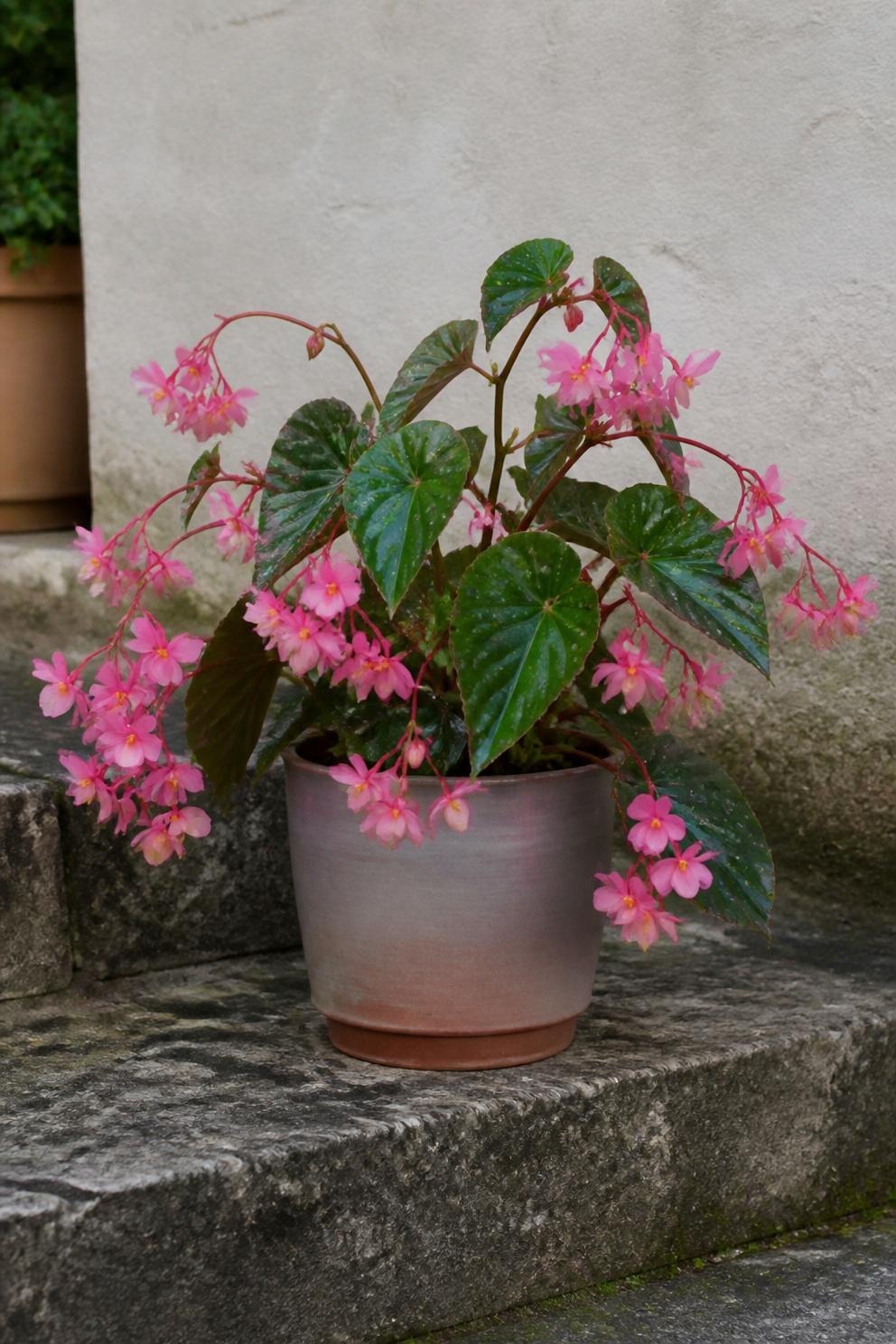
These come back, which changes the maths on what a pot is worth. Most of them work in a bed too, and the flowering ones are here .
- Heuchera, coral bells, zones 4 to 9. Grown for foliage in amber, lime, plum and near-black. Evergreen in milder zones. The single best perennial for a shade container.
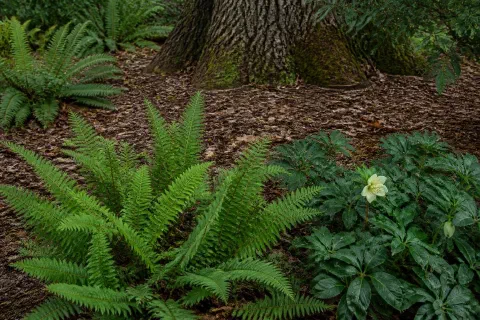
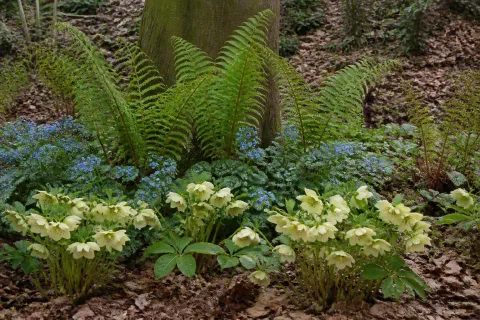
- Ferns. Japanese painted fern (zones 4 to 9) for silver and burgundy, autumn fern (zones 5 to 9) for coppery new growth. Both stay a sensible size in a pot.
- Hosta, zones 3 to 9. Genuinely excellent in containers, and a pot is the one place you can grow one where deer are a problem. Miniature varieties suit a small pot better than the giants.
- Hakonechloa, Japanese forest grass, zones 5 to 9. Arches over a pot edge better than anything else. Slow, so buy the biggest one you can.
- Creeping jenny, Lysimachia nummularia, zones 3 to 9. Chartreuse trailing groundcover that lifts a dark grouping. Aggressive in a bed, perfect confined to a pot.
Overwintering a Perennial in a Pot
A pot is a harsher place than the ground, because roots sit above the frost line and freeze from all sides. The working rule is that a container plant survives about two zones colder than its rating.
So a heuchera rated to zone 4 behaves like a zone 6 plant in a pot. In zone 5, either move the pot against the house wall, sink it in the ground for winter, or group pots together and pile leaves around them.
The Watering Mistake
Shade containers are killed by overwatering far more often than by drought. It is the single most common failure.
The logic feels backwards until you say it out loud: a pot in shade loses far less water to evaporation and transpiration than the same pot in sun, so the same watering schedule that keeps a sunny pot alive drowns a shaded one. Roots sit wet, oxygen runs out, and the plant collapses from what looks like drought because the damaged roots cannot take up water.
Put a finger two inches into the compost. If it is damp, do not water. That is the whole method, and it beats any schedule.
Drainage matters more here than anywhere. Every pot needs a hole. Gravel in the base does not improve drainage, it raises the saturated zone, which is the opposite of what you want.
Pot Size and What Goes In It
- Under 10 inches dries and freezes too fast for anything perennial. Fine for annuals.
- 12 to 14 inches is the sensible default. One heuchera plus two trailers, or three annuals.
- 16 inches and up is where a fern or hosta stops needing repotting every year.
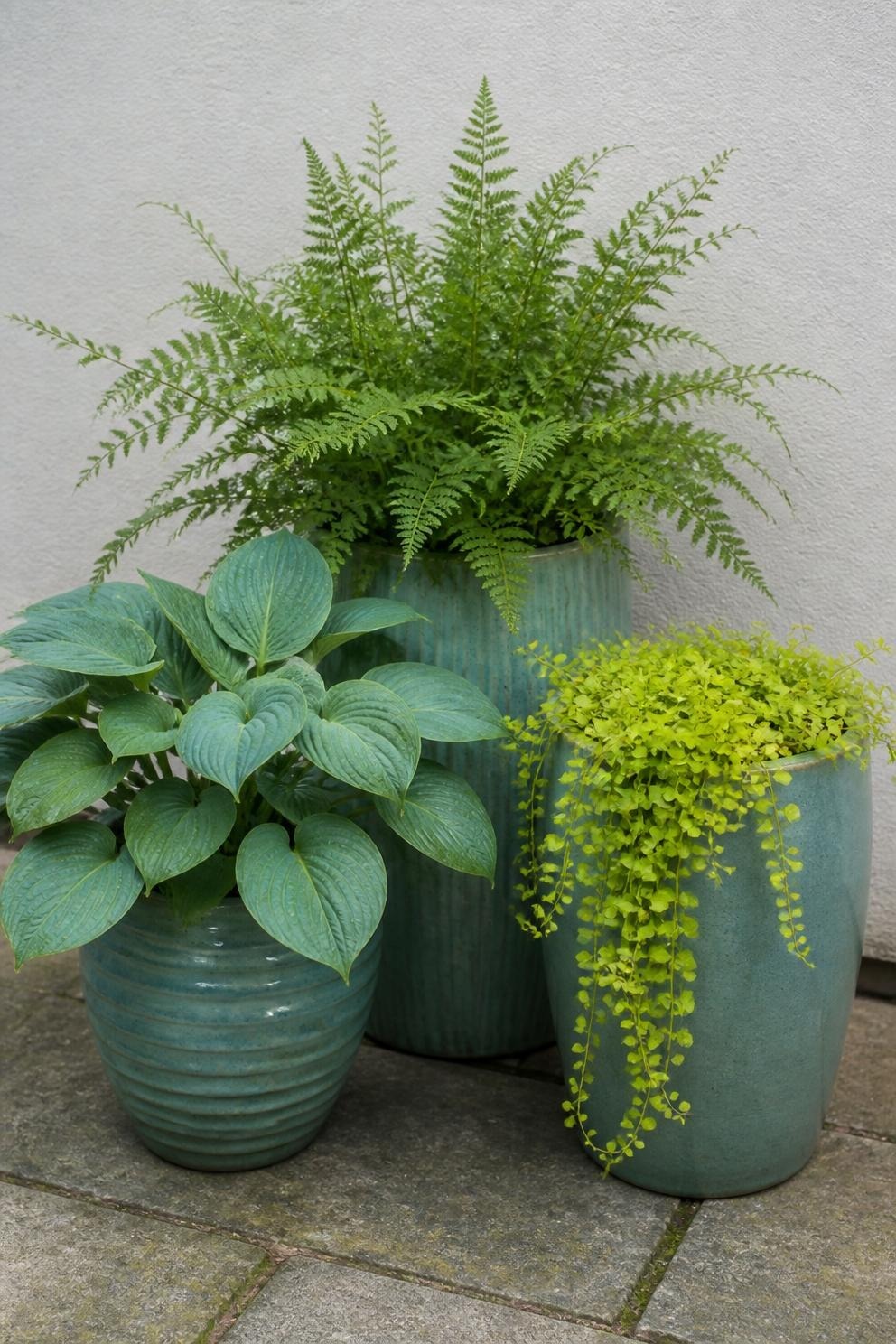
Skip the old thriller, filler, spiller formula in shade. It was written for sun containers with big flowering focal points. In shade, contrast leaf shape and colour instead: one big bold leaf like caladium or hosta, one fine texture like a fern, one trailer like creeping jenny.
Feeding
Container compost is exhausted in about six weeks. After that the plant is living on whatever you give it.
Foliage plants in shade need less than flowering plants in sun, so a half-strength liquid feed every two weeks through summer is plenty. Stop feeding perennials by late summer so growth hardens off before frost.
What to take to the garden center
Bring the plant label, the pot’s inside diameter and depth, and a photo of the balcony at the hottest part of the afternoon. Choose container potting mix rather than garden soil, which compacts in a pot. Check that the container has drainage holes and a stable footprint for the wind exposure. A self-watering reservoir can help a container that dries quickly, but it is a poor fix for a shaded pot that already stays wet.
Start with one correctly sized pot and one plant whose light requirement matches the balcony. That small test tells you more than buying an entire grouping before you know how the spot behaves.
FAQ
What is the easiest shade container plant for a beginner?
Dragon wing begonia. It flowers all season, tolerates missed watering, and still looks good in August when tuberous begonias have given up.
Can I grow anything edible in full shade?
Leafy things, slowly. Lettuce, spinach, mint, chives and parsley manage in three or four hours of light. Anything that fruits, tomatoes, peppers, cucumbers, needs real sun and will not produce.
Why are my shade container plants leggy?
Reaching for light. Pinch coleus and begonias back regularly, turn the pot a quarter turn every week or two, and accept that in genuine full shade some stretch is normal.
Do shade containers need less water than sunny ones?
Yes, usually much less, and this is the thing that kills them. Test the compost with a finger rather than watering on a schedule.
Will a north-facing balcony grow flowers at all?
Yes. Begonias, torenia, impatiens and fuchsia all flower in full shade. What you will not get is the sun-loving display of petunias and geraniums, so lean into foliage and treat the flowers as a bonus.
When do I plant caladium?
Once the soil is reliably around 65F, which is later than most people think, often early June in the north. Planted into cold compost the tubers sit and rot rather than sprout.
What to Read Next
- Apartment balcony garden ideas that do not need a yard : start with the chair, containers, light, and renter-safe floor plan.
- Potted plants for an apartment balcony that still feels bare : choose anchor, filler, and trailing roles after checking light.
- Balcony privacy pieces renters can remove : compare removable privacy approaches without turning them into universal shade claims.
- Balcony flooring ideas renters can undo : keep floor and water-management constraints in view.