The standard advice for a shade garden is to give up on flowers and plant foliage. It is not wrong exactly, foliage does more work in shade than anywhere else, but it is lazier than it needs to be.
Shade perennials flower. They just do it on a different schedule than sun perennials, weighted heavily toward spring, because woodland plants evolved to bloom before the canopy closes over them.
Plant with that in mind and a shade bed has something out from February to September. If you want the whole bed drawn out rather than a plant list, five fall flower-bed plans for sun, shade, and small yards includes a shade plan.
Why Shade Flowers Early
Most shade perennials are woodland plants. In a wood, the light arrives in March and April, before the trees leaf out, and then largely disappears until autumn.
Everything about a woodland perennial is built around that window: bloom fast, set seed, then either go dormant or coast on low light through summer.
Two things follow from this, and they explain most shade garden disappointment:
- Spring is when a shade bed peaks. If it looks best in April and quiet in July, it is working correctly.
- Summer bloomers in shade are the exception, so the few that exist are worth building the bed around.
Late Winter, February and March
Hellebore
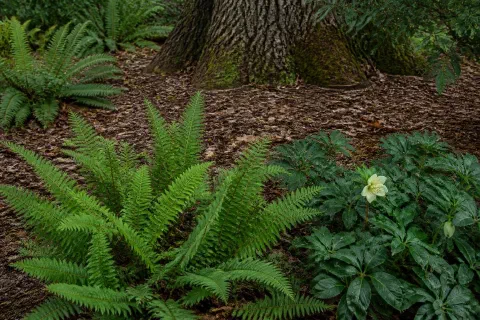
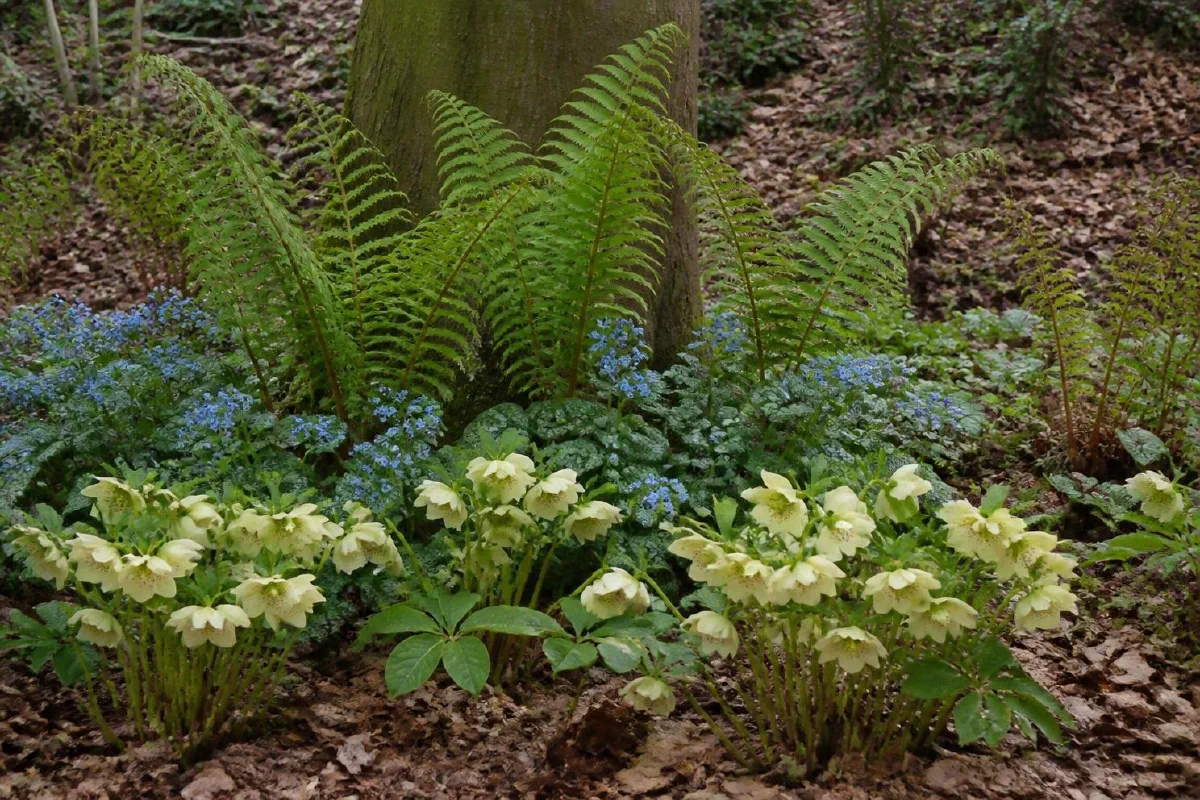
Helleborus, zones 4 to 9. The earliest thing in the garden and the reason to walk outside in February. Nodding cups in white, cream, plum, green and near-black, held over leathery evergreen leaves.
Cut last year’s foliage off in late winter or the flowers hide behind tired leaves. Long-lived, essentially permanent, and the flowers hold on the plant for weeks because it is too cold for them to go over.
Snowdrop
Galanthus, zones 3 to 8. A bulb rather than a perennial in the strict sense, but it lives in the same bed and comes back forever.
Buy them in the green, in growth, rather than as dry bulbs in autumn. Dry snowdrop bulbs establish badly.
Early Spring, March and April
Lungwort
Pulmonaria, zones 3 to 8. Pink buds opening to blue on the same stem, over spotted bristly leaves.
One of the first things bees find in spring. Cut it back hard after flowering and it produces a fresh mound of foliage that holds until autumn.
Bleeding Heart
Lamprocapnos spectabilis, zones 3 to 9. Arching stems hung with pink or white lockets. Nothing else in a shade bed looks like it.
It goes fully dormant by midsummer, which catches people out. Clemson HGIC’s shade perennial list pairs it with ferns and hostas for exactly that reason . Plant a fern or a hosta beside it to fill the hole it leaves.
Brunnera
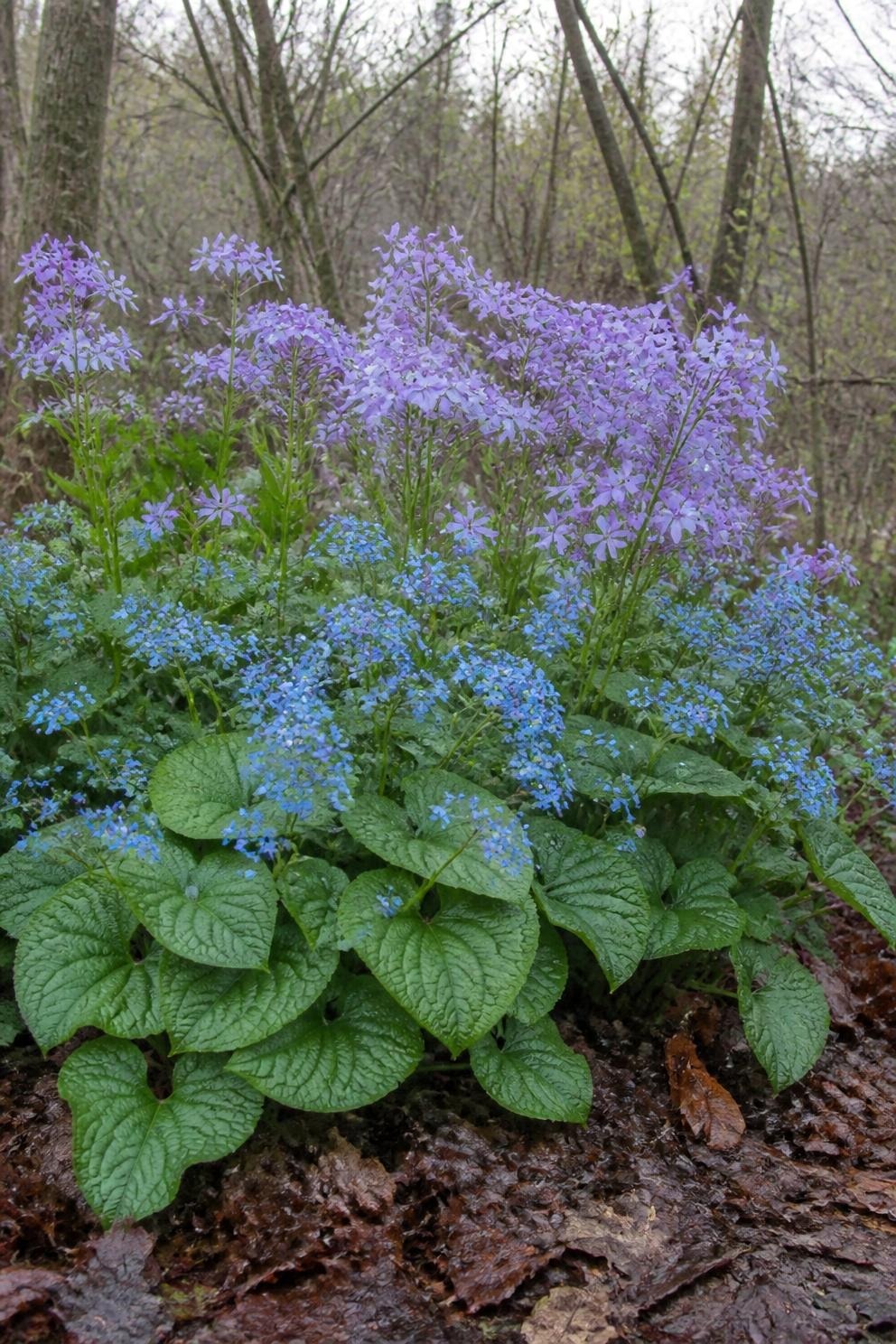
Brunnera macrophylla, zones 3 to 8. Clouds of tiny blue flowers on wiry stems, exactly like forget-me-nots, over big heart-shaped leaves.
The silver-leaved forms such as Jack Frost keep earning their place long after the flowers finish, which makes it one of the best value plants on this list.
Woodland Phlox
Phlox divaricata, zones 3 to 8. Fragrant blue-lilac flowers about a foot tall, native to eastern woodlands.
Genuinely scented, which very little in a shade bed is. Plant it near a path.
Virginia Bluebells
Mertensia virginica, zones 3 to 8. Pink buds opening sky blue, in drifts, native.
Fully dormant by early July. Treat it like bleeding heart and plant something beside it that fills in.
Late Spring, May
Foamflower
Tiarella, zones 4 to 9. Bottlebrush spikes of white or soft pink over lobed leaves that are often marked dark along the veins. Native, low, well behaved.
Solomon’s Seal
Polygonatum, zones 3 to 8. Arching stems with small white bells hanging in a row underneath. The variegated form lights a dark corner and turns clear yellow in autumn.
Barrenwort
Epimedium, zones 5 to 9. Sprays of small spurred flowers, and the plant that solves dry shade under a tree.
Shear the old leaves in late winter, because the flowers are small and get lost in tatty foliage. Slow to settle, then permanent.
Columbine
Aquilegia, zones 3 to 8. Spurred flowers in almost every colour, happy in part shade. Short-lived as an individual plant but it self-seeds freely, so a patch persists.
Summer, June through August
This is the thin part of the year, and these are the plants that carry it.
Astilbe
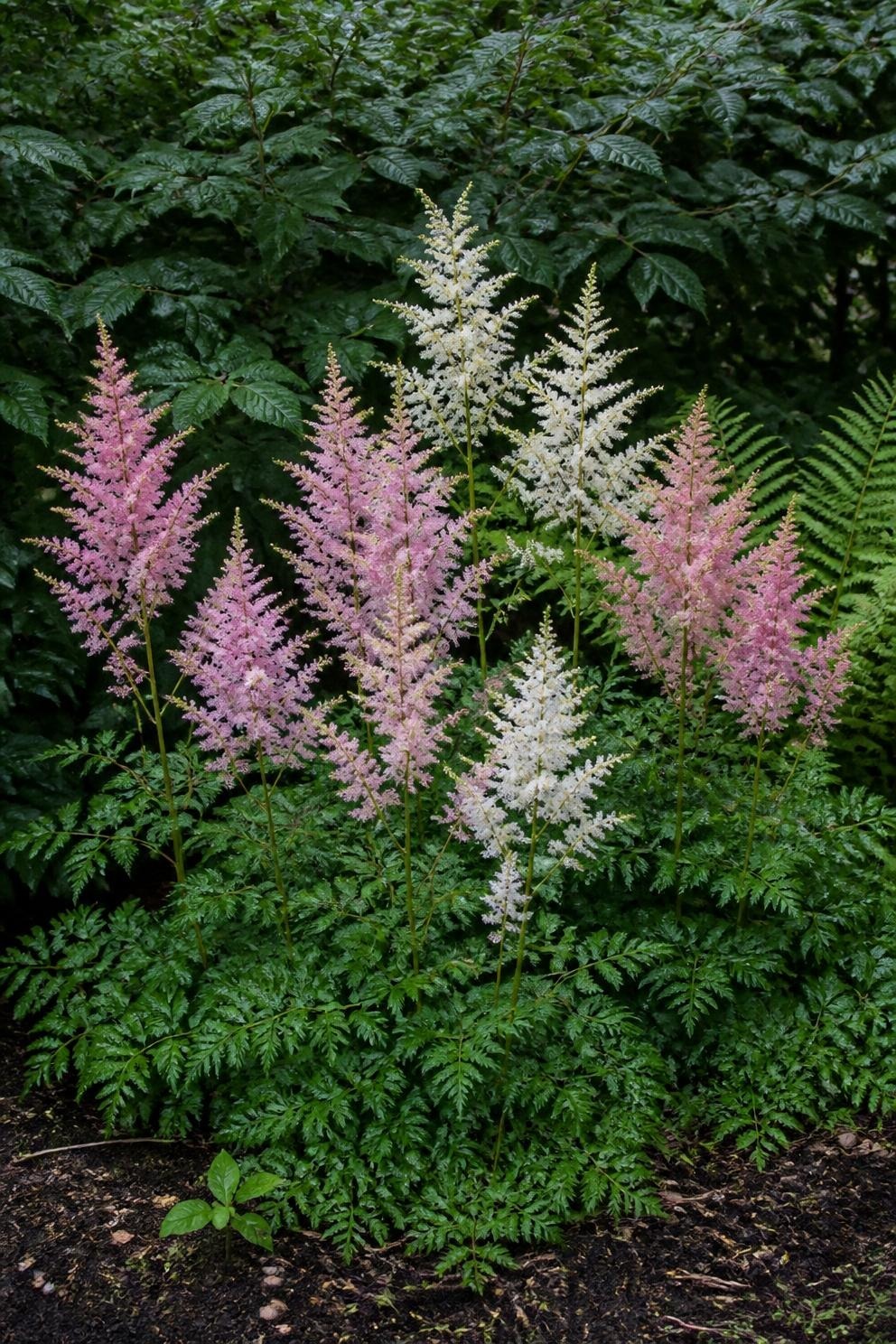
Zones 3 to 8. Feathery plumes in white, pink, red and lilac over ferny foliage. The main summer flower for shade, and worth planting in a group rather than singly.
The condition it will not forgive is dry soil. In consistently moist shade it is superb. On a dry site it crisps at the edges and no amount of feeding fixes it.
Hosta
Zones 3 to 9. Grown for leaves, but the flowers are real, and on the fragrant varieties bred from Hosta plantaginea they are genuinely worth having near a door in August.
Coral Bells
Heuchera, zones 4 to 9. Grown for foliage, though the wiry stems of small bells last for weeks and draw hummingbirds.
Ligularia
Zones 4 to 8. Tall yellow or orange daisies, or spires in the Ligularia stenocephala forms, over big bold leaves.
It wilts dramatically on any hot afternoon and recovers overnight. Alarming the first time. It needs damp soil and it is the closest thing to a large, loud flower that shade offers.
Hardy Begonia
Begonia grandis, zones 6 to 9. Pink flowers from midsummer into autumn over leaves with red undersides. Later to appear in spring than almost anything, so mark where it is.
Late Summer and Autumn, September
Toad Lily
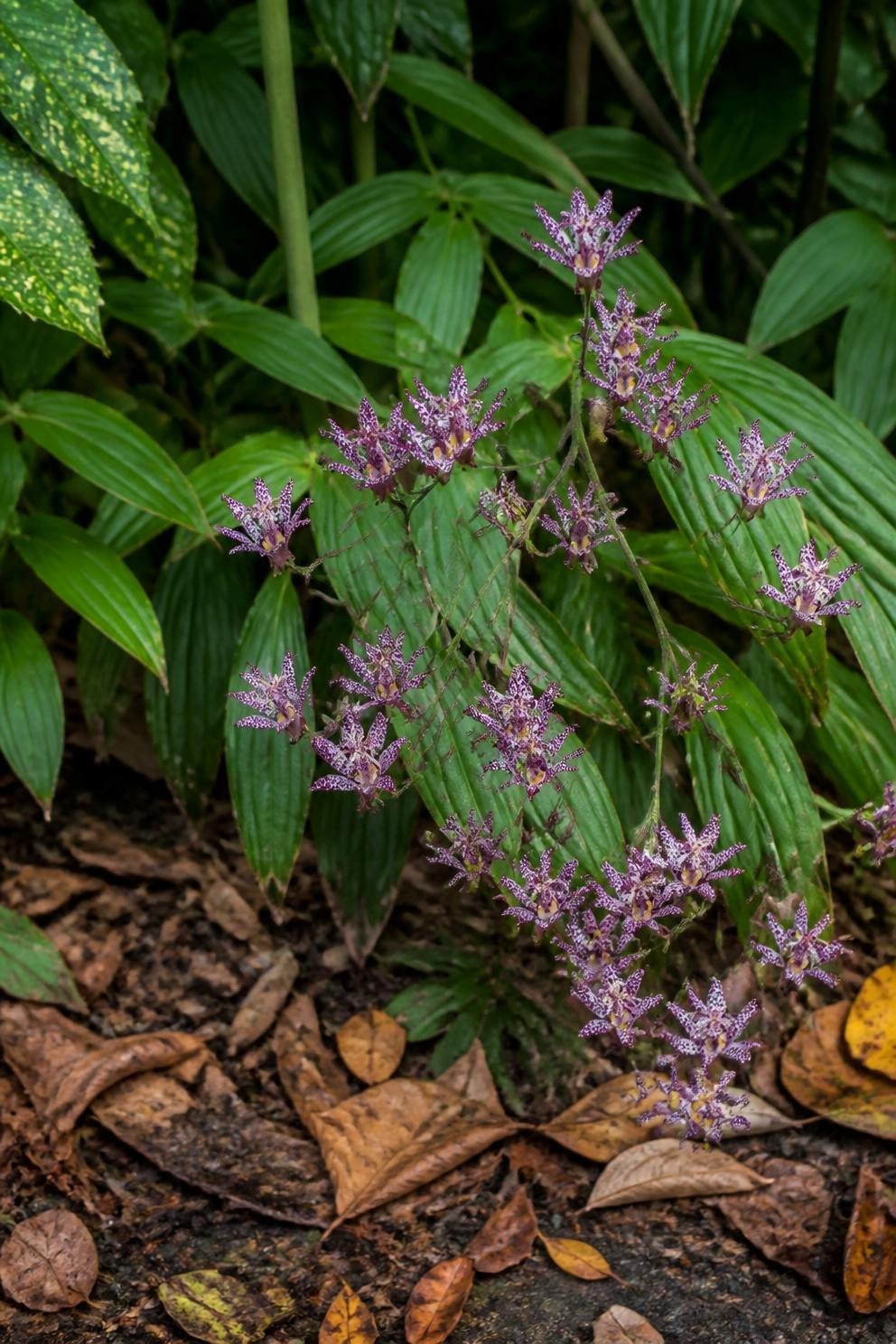
Tricyrtis, zones 4 to 9. Small orchid-like flowers, heavily spotted purple on white, on arching stems in September when nothing else in the shade bed is doing anything.
Plant it at the front or beside a path. The flowers are intricate and small, and from six feet away you will miss them entirely.
Japanese Anemone
Zones 4 to 8. Tall stems of pink or white saucers from late August into October. Tolerates part shade well.
It spreads by runners once settled, so give it room or plan to pull some out each year.
Building the Bed So Something Is Always Out
The trap is buying everything in one visit to the garden centre in May, which produces a bed that peaks for three weeks and does nothing else.
A workable structure for one shade border:
- Hellebores at the front, for February and March, and evergreen leaves the rest of the year.
- Brunnera and lungwort behind them, for April, with foliage that holds all summer.
- A group of astilbe in the moistest part, for June and July.
- Ferns through the middle as the constant, and to cover the holes bleeding heart and bluebells leave.
- Toad lily or Japanese anemone at the back, for September.
That is five purchases and roughly eight months of something happening.
Soil Is the Part People Skip
Dry shade and moist shade are different gardens. Most shade under a mature tree is dry shade, because the tree takes the water first, and that is why beds under maples fail so often.
| Moist shade | Dry shade | |
|---|---|---|
| What the soil does | Stays damp through summer | Dries out, because the tree takes the water first |
| Plants that cope | Astilbe, ligularia, bleeding heart, hosta | Epimedium, Solomon’s seal, wild ginger, hellebore, Christmas fern |
| What to add | Compost and a summer mulch | Two inches of compost each autumn, left on the surface |
If deer come through the garden, cross-check the list above against our deer resistant shade plants guide first. Hosta and bleeding heart are the two here most likely to be eaten.
Improving dry shade is mostly about organic matter and patience. Two inches of compost on the surface every autumn, left for worms to take down, does more over three years than digging ever will. Digging under a mature tree cuts the feeder roots you are trying to plant among.
How to Plant a Shade Perennial
Autumn is the better season for most shade perennials. Soil is still warm, air is cooler, and roots grow into moist ground through winter rather than fighting summer heat. Spring works too, and it is the only real option for anything sold in growth like snowdrops.
Whichever season you pick, the planting is the same six steps.
- Water the pot an hour before. A dry root ball sheds water instead of taking it up.
- Dig the hole as deep as the pot and twice as wide. A shade perennial settles at the level it was growing, so the crown ends up at the surface rather than buried.
- Tease the roots out. A root ball that has been circling the pot keeps circling in the ground.
- Soak it in. Fill the hole, firm once with your foot, then water until the ground stops taking it.
- Mulch, and keep it off the crown. Two inches of compost or leaf mould, pulled back from the stems, is what keeps a crown dry through winter.
- Plan to water the first summer. That is the price of spring planting, and the reason autumn is easier.
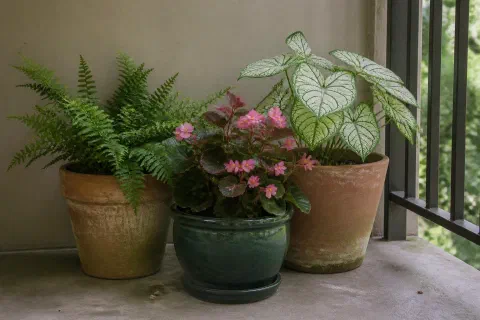
No bed to plant into? Most of these grow well in pots, and shade plants for containers covers the sizes and the watering.
Care Through the First Year
There is not much to do, and the little there is matters most in the first twelve months.
- Water in dry spells through the first summer. After that, most of these look after themselves, with the dry-shade plants still grateful for help in a drought.
- Leave the autumn leaves where they fall. A layer of leaves over a woodland bed is free mulch and the closest thing to what these plants get in a wood. Pull it back off the crowns in late winter if it has packed down.
- Cut back at the right moment. Lungwort and brunnera get cut hard straight after flowering for a fresh flush of leaves. Hellebore and epimedium foliage comes off in late winter, before the flowers, not after.
- Divide the spreaders in early spring. Japanese anemone, and brunnera in good soil, will travel further than you planned. Lift and split them while the new shoots are still short.
- Expect dormancy, not death. Bleeding heart and Virginia bluebells are gone by midsummer. That is the plant working correctly. Mark the spot so you do not plant on top of it in August.
Mistakes That Leave a Shade Bed Bare in July
The failures in a shade border are predictable, and most of them are decided before the plants go in.
- Buying the whole bed in one May visit. You get three weeks of bloom in June and nothing else. The season-by-season structure above exists to prevent exactly that.
- Planting astilbe or ligularia in dry shade. Both want soil that never dries out. On a dry site they crisp at the edges and feeding does not bring them back.
- Digging compost into the root zone under a tree. You cut the feeder roots you are trying to plant among, and the tree loses more than the bed gains. Compost goes on the surface and the worms take it down.
- Cutting hellebore foliage at the wrong time. The flowers rise through last year’s leaves. The leaves come off in late winter before the buds lift, and cutting later either hides the flowers or costs you a season of evergreen cover.
- Reading a bare July as a dead bed. Woodland plants go dormant on purpose. Check whether the plant is dormant or dead before you dig anything up.
FAQ
What is the longest flowering shade perennial?
Astilbe holds plumes for several weeks, and the plumes stay presentable brown afterwards. For sheer duration, heuchera flowers over a longer window, though the flowers are small.
Will anything flower in full shade?
Yes. Hellebore, epimedium, Solomon’s seal, foamflower and toad lily all bloom in genuine full shade. The flowering gets sparser as light drops, but it does not stop.
Why does my shade garden look dead in July?
Because it is behaving like a wood. Spring ephemerals such as bleeding heart and Virginia bluebells go dormant on purpose. Interplant with ferns and hostas so something green covers the gaps.
What flowers in dry shade under a tree?
Epimedium first, then Solomon’s seal, hellebore and wild ginger. Astilbe and ligularia will not manage it, whatever the label says.
How much sun is part shade?
Penn State Extension’s light bands put part sun at four to six hours of direct sun a day and part shade at two to four, with full shade under two. Morning sun is worth more than afternoon sun to a shade plant, so three hours of hot western light will scorch things that are perfectly happy in five hours of eastern morning light.
Do I need to deadhead shade perennials?
Mostly no. Cutting lungwort and brunnera back hard after flowering gives a fresh mound of foliage, which is worth doing. Leave hellebore seed heads if you want seedlings, and leave the rest alone.
What to Read Next
- Shade plants for containers is the version of this for a balcony or a shaded step rather than a bed.
- Deer resistant shade plants is worth a look before you buy, since hosta and bleeding heart are the first two to go.
- Five fall flower bed plans draws a whole bed out instead of listing plants, and one of the five is a shade plan.