One marigold plant produces 300+ seeds. A single zinnia can give you 200. If you’re buying seed packets every spring, you’re spending money you don’t need to spend. These eight annuals are perfect for beginners because they produce reliable seeds, require no special equipment, and actually want to go to seed. You’ll harvest more than you can use.
What Makes a Flower Easy for Seed Saving
Not all annuals cooperate. The best ones for beginners share three traits: they produce mature seeds before frost in zones 5-9, the seeds are large enough to handle without tweezers, and they don’t cross-pollinate with every plant in the neighborhood.
Avoid hybrids marked F1 on the packet. Those seeds won’t grow true to the parent plant. Look for heirloom or open-pollinated varieties. Baker Creek, Botanical Interests, and Seed Savers Exchange sell reliable strains.
The 8 Easiest Annuals for Seed Saving
| Flower | Seeds per Plant | Days to Seed Maturity | Harvest Method |
|---|---|---|---|
| Marigolds | 300-400 | 60-70 days | Pull dry seed heads |
| Zinnias | 150-200 | 50-60 days | Pluck dried centers |
| Cosmos | 200-300 | 70-80 days | Shake into paper bag |
| Sunflowers | 500-2000 | 80-100 days | Cut heads when backs turn yellow |
| Calendula | 200-250 | 60-70 days | Collect curved seeds |
| Morning Glory | 100-150 | 90-100 days | Pick brown pods before they split |
| Four O’Clocks | 50-75 | 70-90 days | Gather black seeds from base |
| Nigella | 300-400 | 60-70 days | Wait for balloon pods to dry |
1. Marigolds (Tagetes)
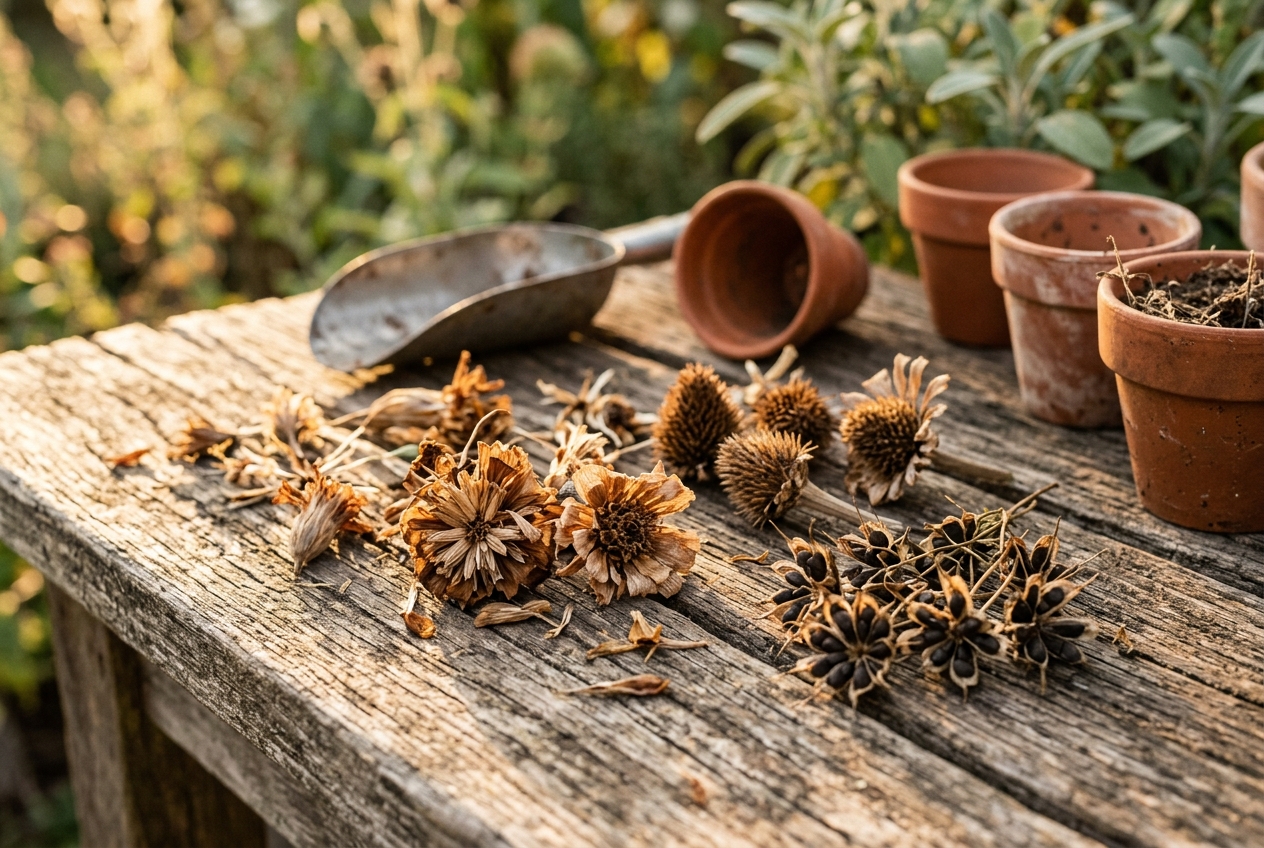
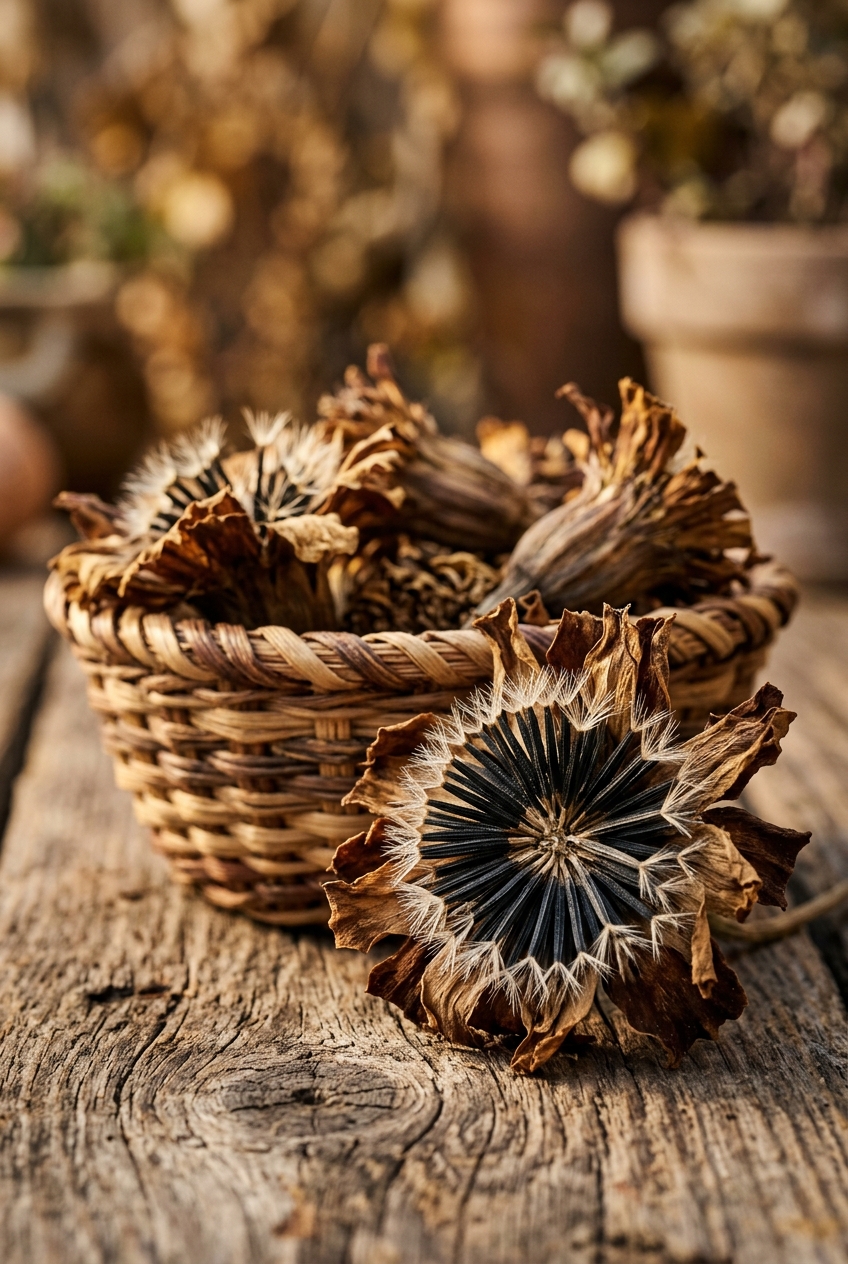
French marigolds mature faster than African types. ‘Naughty Marietta’ and ‘Disco Orange’ both set seed in 60 days from transplant. Let the flower heads turn completely brown and papery. The seeds look like tiny black needles with white tufts. One packet ($2.50) becomes a lifetime supply.
2. Zinnias (Zinnia elegans)
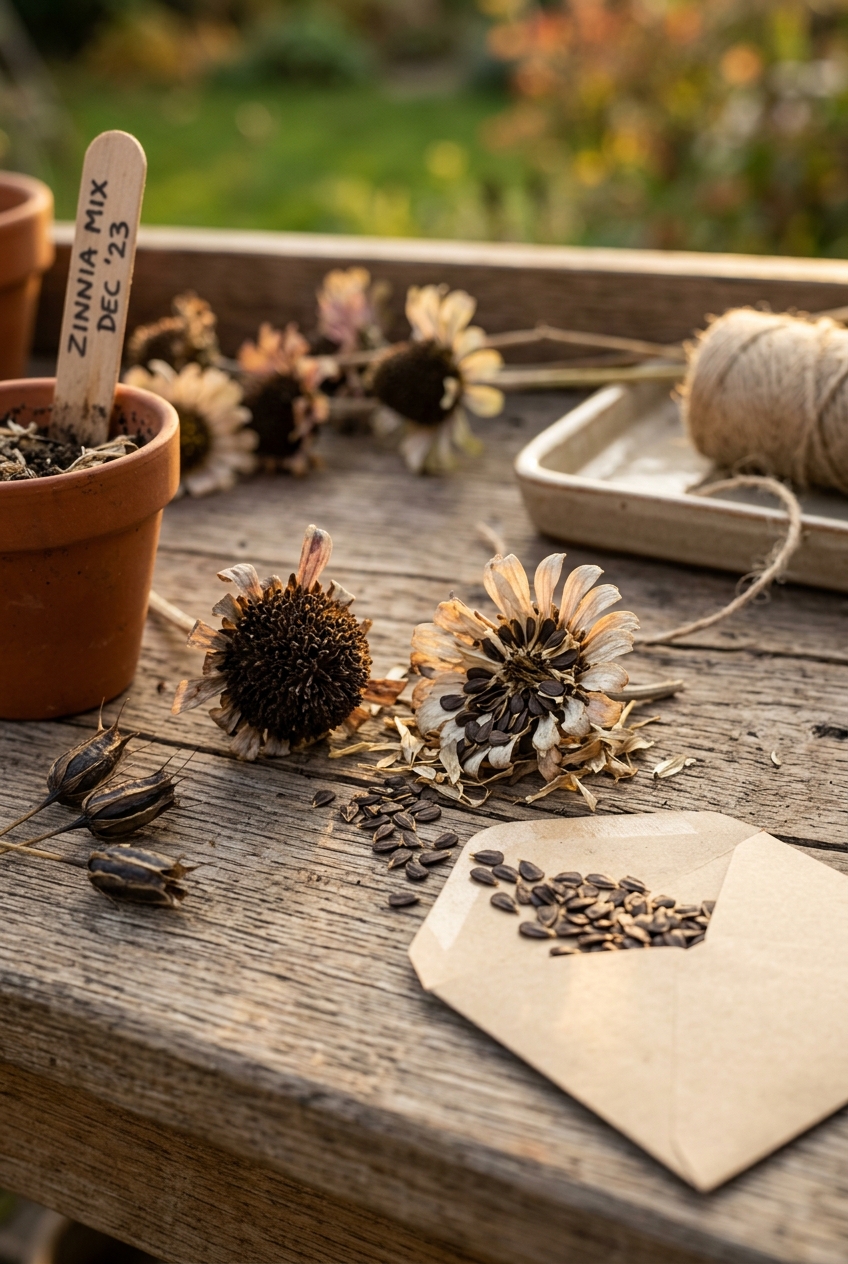
‘Cut and Come Again’ and ‘Benary’s Giant’ are workhorses. The seeds hide in the cone center. When the petals drop and the center dries to brown, pull it apart. You’ll find flat, arrow-shaped seeds. Store them in a paper envelope. They stay viable for 5+ years.
3. Cosmos (Cosmos bipinnatus)
Cosmos practically fling seeds at you. ‘Sensation Mix’ and ‘Purity’ self-sow so aggressively you’ll be giving away seedlings. The seeds are long, dark brown, and pointed. Shake dried flower heads into a paper bag. Plant them 1/4 inch deep next spring.
From my experience: I started with one $3 packet of ‘Sensation Mix’ cosmos in 2019. I haven’t bought cosmos seeds since. I now have three full jars and give away seeds to neighbors every fall.
4. Sunflowers (Helianthus annuus)
‘Autumn Beauty’ and ‘Lemon Queen’ produce hundreds of seeds per head. Cut the head when the back turns from green to yellow-brown. Hang it upside down in a paper bag for two weeks. The seeds will drop out. Chipmunks and squirrels will try to beat you to them.
5. Calendula (Calendula officinalis)
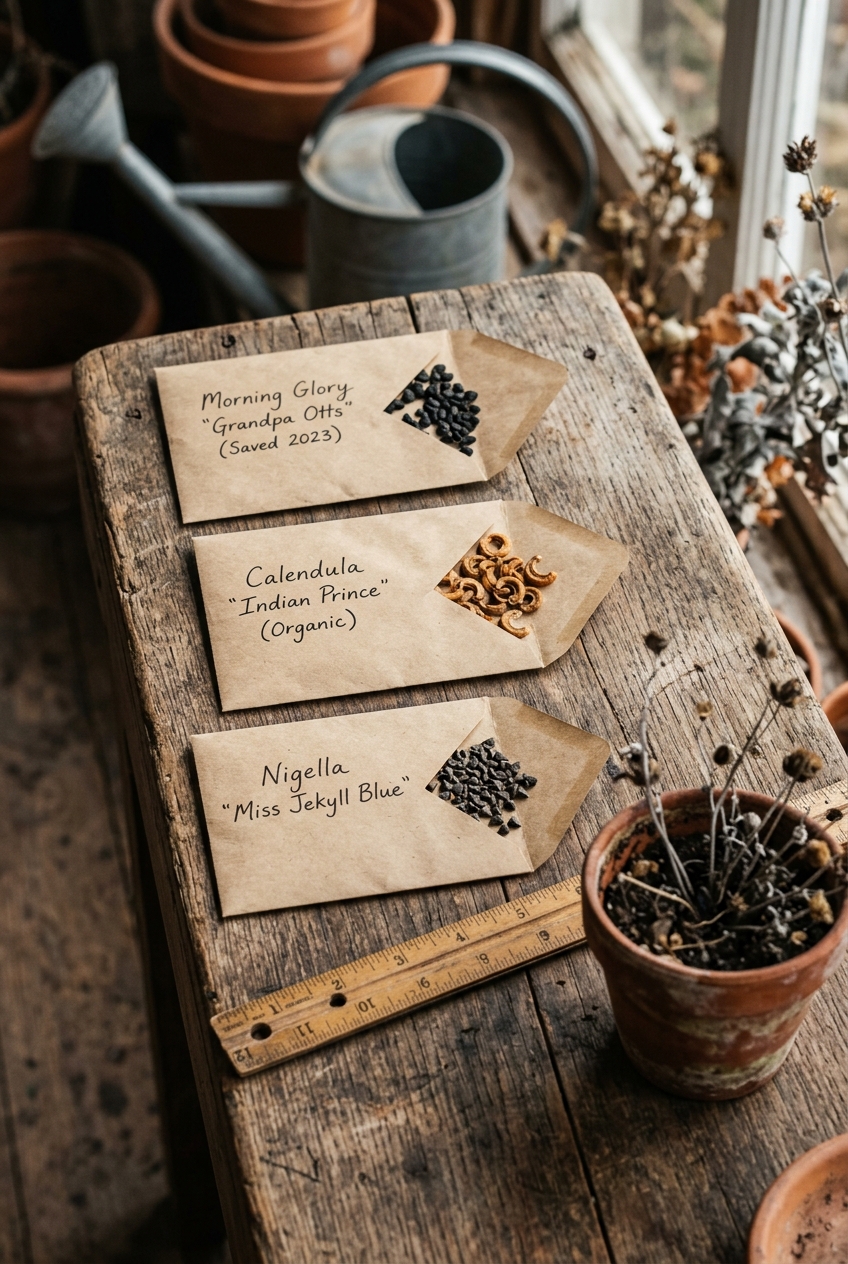
The seeds look like dried caterpillars, curved and ridged. ‘Resina’ and ‘Alpha’ set seed reliably in zones 5-8. Let the flower heads dry on the plant until they’re crispy. Each head produces 20-30 seeds. Calendula self-sows in mild climates.
6. Morning Glory (Ipomoea purpurea)
‘Grandpa Ott’s’ is the classic seed-saver variety. The round seed pods form where flowers were. They turn brown and papery. Collect them before they split open and scatter seeds everywhere. Each pod holds 3-6 black seeds the size of peppercorns.
Quick Tip: Morning glory seeds have a hard coat. Nick them with a file or soak overnight before planting to improve germination from 40% to 85%.
7. Four O’Clocks (Mirabilis jalapa)
These form hard, black seeds at the base of spent flowers. ‘Kaleidoscope Mix’ produces seeds that grow into plants with multiple flower colors. The seeds are the size of peas. They drop to the ground when ripe, so check daily or spread a sheet underneath.
8. Nigella (Nigella damascena)
‘Miss Jekyll’ forms balloon-like pods striped in burgundy and green. Wait until they’re completely dry and rattle when shaken. Each pod holds 50+ tiny black seeds. Nigella self-sows but isn’t invasive. The pods also work in dried arrangements.
How to Harvest and Store Seeds
Timing matters more than technique. Seeds need to fully mature on the plant. Harvest on a dry day, never after rain or morning dew. Wet seeds mold in storage.
Spread seeds on newspaper or paper plates for 1-2 weeks in a dry room. Stir them daily. When they snap instead of bend, they’re dry enough. Store in paper envelopes, not plastic bags. Label with plant name and harvest date.
Keep envelopes in a cool, dark, dry place. A closet works better than a basement. Most annual flower seeds stay viable for 2-5 years. Test old seeds by planting 10 in a damp paper towel. If 7+ sprout in a week, the batch is still good.
What to Watch For
Hybrid seeds won’t grow true. If your packet says F1, save those seeds for crafts, not planting. The offspring will revert to parent traits and look nothing like the original.
Cross-pollination happens with cosmos, zinnias, and morning glories if you grow multiple varieties close together. The seeds will still grow, but colors and forms might surprise you. Some gardeners like the mystery. If you want exact replicas, grow one variety per species or space them 100+ feet apart.
Moldy seeds are garbage. If you see any white fuzz or smell must during drying, toss the batch. One moldy seed can contaminate the whole envelope.
Make It Your Own
Start with two or three species your first year. Marigolds and zinnias are nearly foolproof. Once you’ve got the rhythm down, add cosmos and sunflowers.
Save seeds from your best-performing plants. Skip the runts and the ones that got aphids. You’re creating your own locally adapted strain over time.
If you’re in zone 8 or warmer, direct-sow calendula and nigella in fall for spring flowers. In zones 5-6, wait until after last frost. Four o’clocks and morning glories need warm soil, 65°F minimum.
Trade seeds with neighbors or through Seed Savers Exchange. You’ll get new varieties without spending money and connect with other gardeners.
Before You Start
One packet of open-pollinated seeds costs $2-4 and can supply you for years. Calculate what you spend on annuals each spring. Most gardeners buy 5-10 packets at $3 each. That’s $15-30 you’ll save next year.
Seed saving takes about 15 minutes per harvest session. You’ll spend more time deciding where to plant all the extras than you will collecting seeds.
Expect to learn by doing. Not every harvest will be perfect. Some seeds won’t germinate as well as fresh commercial stock. But a 70% germination rate from free seeds beats 90% from seeds you paid for.
FAQ
How long do saved flower seeds stay good?
Most annual flower seeds stay viable for 2-5 years when stored in paper envelopes in a cool, dry, dark place. Zinnias and marigolds last 4-5 years. Cosmos and sunflowers stay good for 3-4 years. Morning glories can last 5+ years due to their hard seed coat. Test older seeds by sprouting 10 on damp paper towels before planting your whole batch.
Can I save seeds from grocery store bouquet flowers?
Sometimes. Sunflowers and zinnias from bouquets might produce viable seeds if they’re open-pollinated varieties, but most commercial cut flowers are hybrids bred for vase life, not seed production. The seeds either won’t form or won’t grow true to the parent. Better to buy one packet of heirloom seeds and save from those.
Do I need to let flowers die on the plant to get seeds?
Yes. Seeds need time to fully mature after the flower fades. This takes 3-8 weeks depending on the species. The plant redirects energy from making new flowers to ripening seeds. If you deadhead for continuous blooms, stop 6-8 weeks before first frost and let some flowers go to seed. You can still cut fresh flowers from other stems.