Every renter decor list promises an easy upgrade and then goes quiet on the one question that actually matters: will this cost you your security deposit? Most articles just hand you the same eight or ten ideas with no verdict attached, so you’re stuck guessing which ones are genuinely reversible and which ones are a stripped wall or a stuck-down floor waiting to happen.
This guide gives every idea a plain verdict, safe, safe with a condition, or risky, based on what the product actually does to a wall or a floor, not on how it looks in a photo. A few of these renter decor ideas are copied onto every list on the internet as risk-free when they aren’t. One depends entirely on a detail almost nobody checks first: your paint’s finish.
Check your lease before you stick, hang, or drill anything. What counts as normal wear and tear versus tenant-caused damage is set by your state and your specific lease, not by a blog post, so rules vary by state and by landlord.
Which Renter Decor Ideas Are Actually Safe
Here’s the short version before the details.
| Renter decor idea | What it actually does to the wall or floor | Verdict |
|---|---|---|
| Switch plate and outlet covers | Original hardware goes back on exactly as it was | Safe |
| Cabinet knobs and drawer pulls | Original knobs return; new holes only if screw spacing doesn’t match | Safe |
| Peel-and-stick wallpaper | Pulls paint on flat or matte finishes, releases clean on cured satin or semi-gloss | Risky, test first |
| Adhesive strips and removable hooks | Grips smooth paint well, fails on a textured wall | Usually safe on smooth walls |
| Leaning mirrors and art | No holes, as long as tall pieces are anchored against tipping | Safe |
| Tension rods for curtains | No holes, but can dent soft drywall if overtightened | Safe |
| Interlocking deck tiles or rugs | Protects the floor if it can still dry underneath | Safe |
| Peel-and-stick floor tile or backsplash | Adhesive can fail in heat and bond to old vinyl | Risky |
How to Test Any Adhesive Before You Commit
Skip this step and you’re gambling with your security deposit. Run it and you know within two weeks whether an adhesive product is safe for your exact wall.
- Pick a hidden test spot: inside a closet, behind a door, or low on a wall behind furniture.
- Apply a small piece of the actual product you plan to use, not a different brand or a different strip weight.
- Press it firmly for the full time the packaging recommends, and leave it alone.
- Wait at least two weeks. A wall that hasn’t fully cured, or a fresh coat of paint under 30 days old, is more likely to release its top layer no matter what finish it is.
- Peel it slowly, pulling down and back against itself rather than straight out from the wall.
- Check the patch. If any paint or drywall texture comes with it, that product fails on this wall, full stop.
The 8 Renter Decor Ideas, Ranked by Deposit Risk
Each idea below gets the same test: what it physically does to the surface, and an honest verdict you can act on.
1. Switch Plate Covers and Outlet Covers
A switch plate cover swap is about as close to zero risk as renter decor gets. You unscrew the builder-grade white plate, save it and its screws in a labeled bag, and screw on a brass, wood, or matte black one instead. At move-out, the original goes back on in under a minute.
Verdict: safe. The only rule is to actually keep the originals somewhere you’ll find them again.
2. Cabinet Knobs and Drawer Pulls
Same logic as switch plates: unscrew the builder hardware, keep it, install your own. The one detail that trips people up is screw hole spacing, the distance between the two mounting holes on a pull, or the single center hole on a knob. Buy hardware that matches your existing spacing exactly, or you’ll end up drilling a second set of holes that the landlord will notice even after you put the original pulls back on.
Verdict: safe, as long as the spacing matches. Measure before you order.
3. Peel-and-Stick Wallpaper
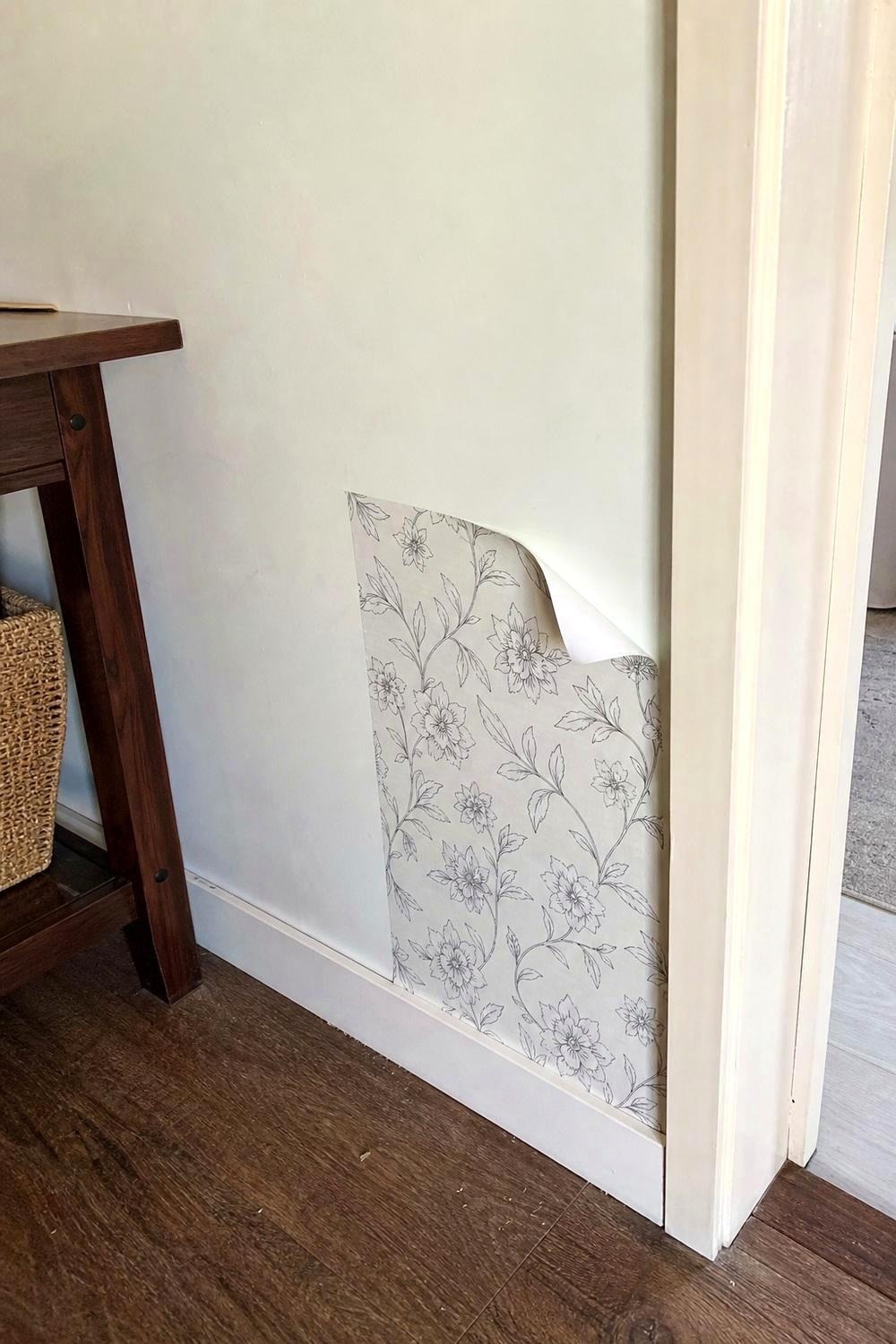
This is the one nearly every list gets wrong. Peel-and-stick wallpaper is marketed as fully removable, and on the right wall it is. On the wrong wall, it takes a layer of paint with it when you pull it down.
The real variable is matte vs satin paint finish. Flat and matte paint is porous and softer, so the wallpaper’s adhesive bonds into the paint itself instead of just to the surface, and removal often pulls that top layer off in sheets. A cured satin or semi-gloss finish is harder and less porous, so the same wallpaper usually releases clean. Fresh paint under about 30 days old hasn’t fully cured no matter what finish it is, which makes any adhesive product riskier during that window.
Before you commit to a full wall, run the adhesive test above on a small hidden patch and leave it up for two weeks. If it comes off clean, you’re likely dealing with a satin or semi-gloss wall and can move forward. If it takes paint with it, skip the wallpaper on that wall entirely and look for texture instead, our guide to earthy textures for a small apartment covers ways to get the same warmth without adhesive.
Verdict: risky, with a condition. Test first, and only commit on a wall that passes.
4. Adhesive Strips and Removable Hooks
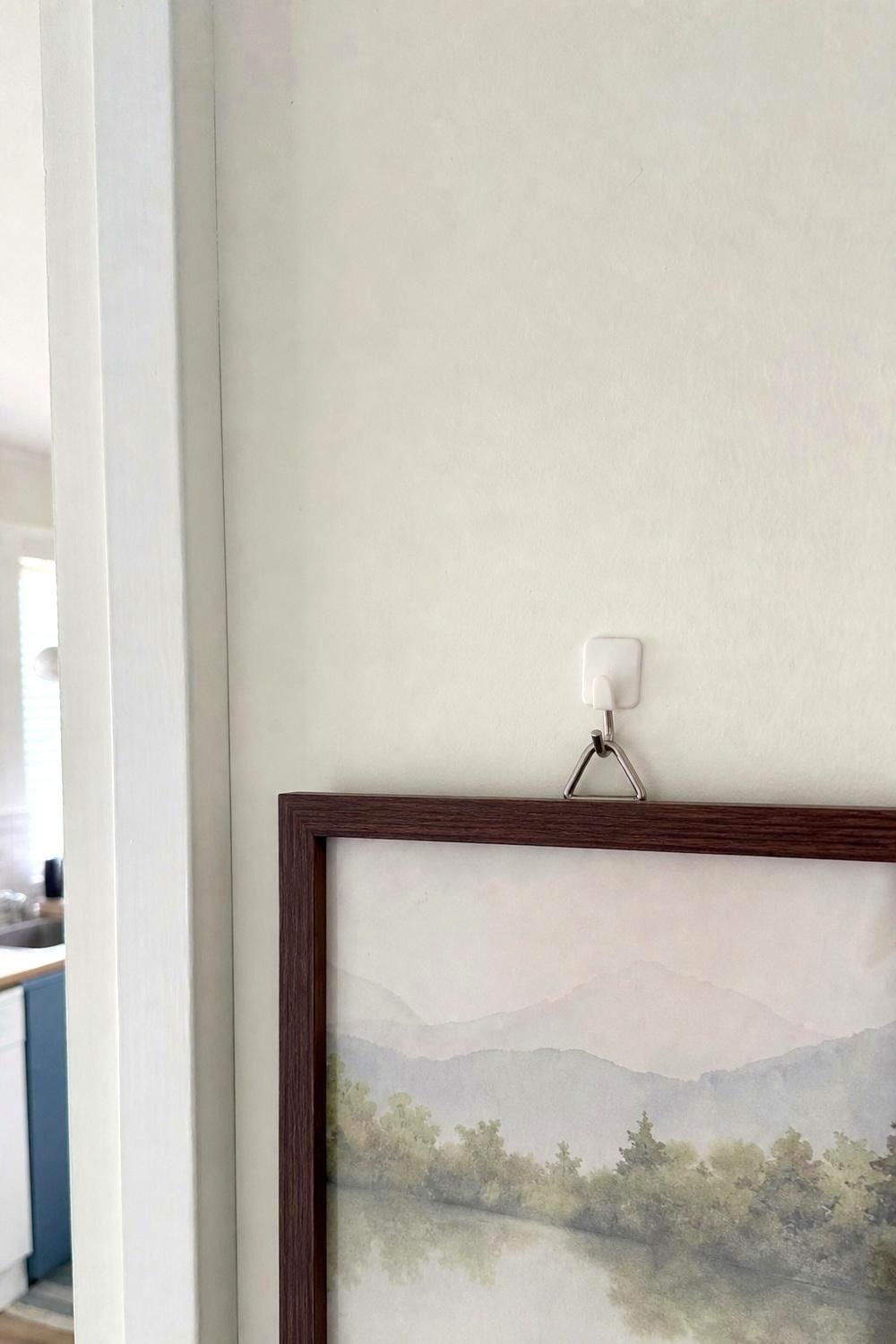
An adhesive wall hook or strip is the most common rental decor purchase, and also the most misplaced. These products are rated for smooth, painted drywall. On a textured wall, orange peel, knockdown, or the bumpier plaster common in older buildings, the strip only grips the raised high points instead of the full surface. That means it holds far less weight than the package promises, and when it eventually fails, it can pull paint or a bit of texture off with it.
Weight limits are real and printed for a reason. A strip rated for a pound of picture frame will not hold a two-pound mirror safely for long, regardless of the wall.
Verdict: usually safe on smooth painted walls, risky on texture. Run your finger over the spot first. If you can feel a pattern instead of a flat surface, skip the adhesive route.
5. Leaning Mirrors and Art Instead of Hanging
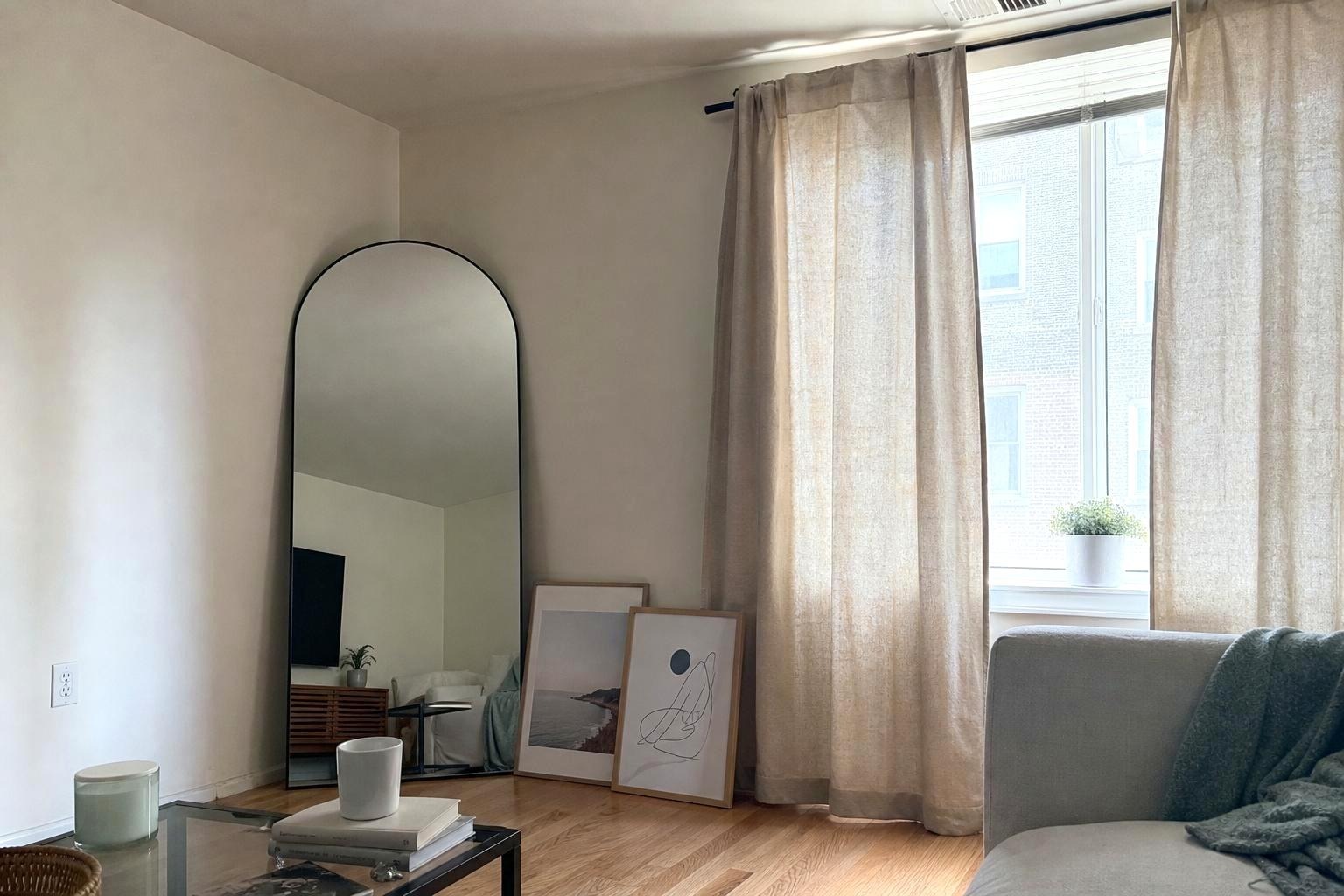
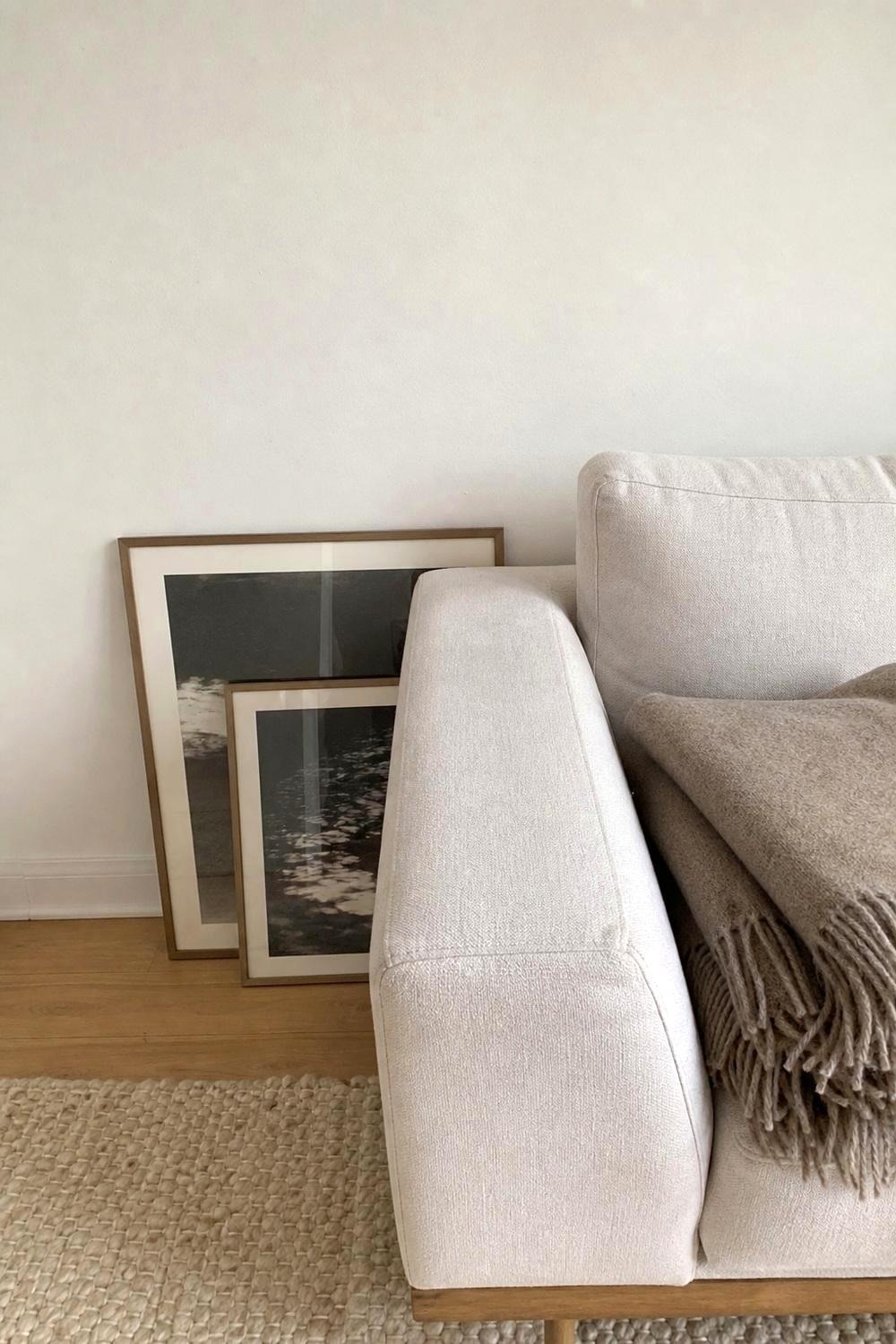
Leaning a mirror or a framed print against the wall instead of hanging it avoids the whole adhesive-versus-nail question. It also tends to look more relaxed than a gallery wall, which is why it shows up so often in small apartment living room ideas for renters .
The one real safety issue has nothing to do with your deposit: a tall, heavy piece leaning unsecured can tip forward. Anchor anything above waist height with a small museum putty dot or a discreet strap so it can’t slide or fall, especially in a home with kids or pets moving through the room.
Verdict: safe. Anchor tall pieces against tipping and there’s nothing here for a landlord to flag.
6. Tension Rods for Curtains and Room Division
A tension rod holds curtains, a room divider, or a closet curtain purely through spring pressure against the two walls or door frame it sits inside, no screws, no brackets, no holes. It comes down as fast as it went up.
The one thing to watch is overtightening. Cranking a tension rod far past what it needs to stay in place puts steady pressure on the wall or frame, and over months that pressure can leave a small dent or indentation in soft drywall, especially at the exact point the rod’s rubber cap touches. Tighten it until it stops slipping, not as far as the mechanism will physically allow.
Verdict: safe. No holes, and dents from overtightening are easy to avoid once you know to stop at “snug.”
7. Interlocking Deck Tiles or Rugs Over Bad Flooring
A worn, stained, or ugly rental floor, especially on a balcony or patio, is one of the more stressful things to inherit from a previous tenant. Interlocking deck tiles or a simple outdoor rug lay directly over the existing surface with no adhesive and no fasteners, and they lift back up in one afternoon. For balcony-specific layout options, our guide to renter-safe balcony flooring walks through sizing and drainage in more detail.
The condition that matters here is drainage and airflow. If the tiles or a thick rug trap moisture against concrete that doesn’t get a chance to dry, especially outdoors after rain, you can end up with mildew staining underneath that’s worse than what you started with. Lift and check underneath every few weeks in a wet climate.
Verdict: safe, as long as the floor underneath can still dry out.
8. Peel-and-Stick Floor Tile or Backsplash
This is the other idea that gets recommended more casually than it deserves. Peel-and-stick floor tile and backsplash products use a stronger adhesive than wall strips because they need to resist foot traffic or splashes, and that adhesive behaves badly under two common rental conditions: summer heat near windows or on a sun-exposed balcony, where it can soften and shift, and old vinyl flooring, where it can bond into the existing surface instead of sitting on top of it. Getting a bonded tile back up cleanly, without pulling up the original vinyl underneath, is genuinely difficult.
Verdict: risky. If you try it anyway, test a single tile in the exact spot and exact sun exposure it will live in, not a shaded corner, and plan on some residue no matter how careful you are.
Mistakes That Turn a Safe Renter Decor Idea Risky
Every idea above can move from safe to risky through a handful of repeatable mistakes:
- Skipping the patch test because you’re in a hurry, and finding out on move-out day that it fails.
- Sticking anything to fresh paint under 30 days old, before it has fully cured.
- Ignoring a textured wall and trusting the weight rating printed for smooth drywall.
- Overtightening a tension rod instead of stopping at snug.
- Leaving peel-and-stick floor tile in direct summer sun on a balcony, where the adhesive softens.
- Buying replacement hardware without measuring the original screw hole spacing first.
- Losing the bag of original switch plates, knobs, or pulls between move-in and move-out.
Caring for Renter-Friendly Wall and Floor Treatments
A little upkeep keeps a safe idea safe. Check adhesive strips and hooks every few months, especially through a hot summer or a humid stretch, since heat and moisture are what make a properly rated strip fail early. Re-tighten a tension rod occasionally rather than cranking it once and leaving it, and lift interlocking tiles or a heavy rug a couple of times a season to confirm the floor underneath is dry and clean.
Security deposits generally cover damage beyond ordinary use, not the aging that happens from simply living in a space, according to consumer housing resources from UC Berkeley Student Legal Services and University of Illinois Student Legal Services . Neither source promises a specific outcome for any individual lease, since normal wear and tear definitions and deduction rules are set at the state and local level and vary by landlord, which is exactly why the test-first approach in this guide matters more than any list of “renter-safe” labels.
Before You Move Out: A Quick Deposit-Safe Checklist
- Remove adhesive strips and hooks slowly, pulling down and back rather than straight off the wall.
- Reinstall every original switch plate cover, knob, and drawer pull from your labeled bags.
- Check whether your lease allows small nail holes to go unpatched, and patch them if it doesn’t say so.
- Lift and reset any deck tiles or rugs so the floor underneath is dry before your final walkthrough.
- Photograph every room before you hand back keys, in case a deduction gets disputed later.
- Re-read your lease’s security deposit and normal wear and tear language one more time before you start packing, not after.