An indigo-and-cream quilt above a plain sofa can do the work of a whole gallery wall. From the doorway you see a field of blue. From the armchair underneath you can pick out the crooked seams, a square of nearly black cloth and the little stitches that hold it all together. That change in scale is part of what makes a quilt worth hanging.
Quilt Wall Hanging Ideas for a Cozy Living Room

A blue quilt spread out on a bed lets you see the pattern as a whole before picturing it on the wall.
Start with the part of the quilt you find yourself looking at longest. It might be one bright block, a faded border or the shapes made by stitching through a single color. Each suggests a different kind of living room.
An indigo quilt above a plain sofa
Against an oatmeal sofa, a blue patchwork can feel as easy as a pair of old jeans. Let one darker blue run into the room on a lamp base or the cover of a book. Leave the other cushions alone. The patches already give you plenty of blues, especially in daylight.
A whole-cloth quilt has a quieter effect. If the face and the thread are much the same color, stand to one side to see the little shadows along the stitching. A warm ivory wall and a plain wooden table suit that kind of detail. A washable modern quilt that usually lives on a bed can lend you the look for a season. The cozy bedding gallery shows how differently color and stitching read when a textile has space around it.
A small floral quilt in the corner by the chair
A wall hanging the size of a small picture can have more presence beside a chair than it would across a wide sofa. Try a red-and-cream basket block above a little oak table, with one red flower in a jam jar below it. Or let a soft green and lilac floral sit over a stack of books. The book spines give the fabric a crisp edge to play against.
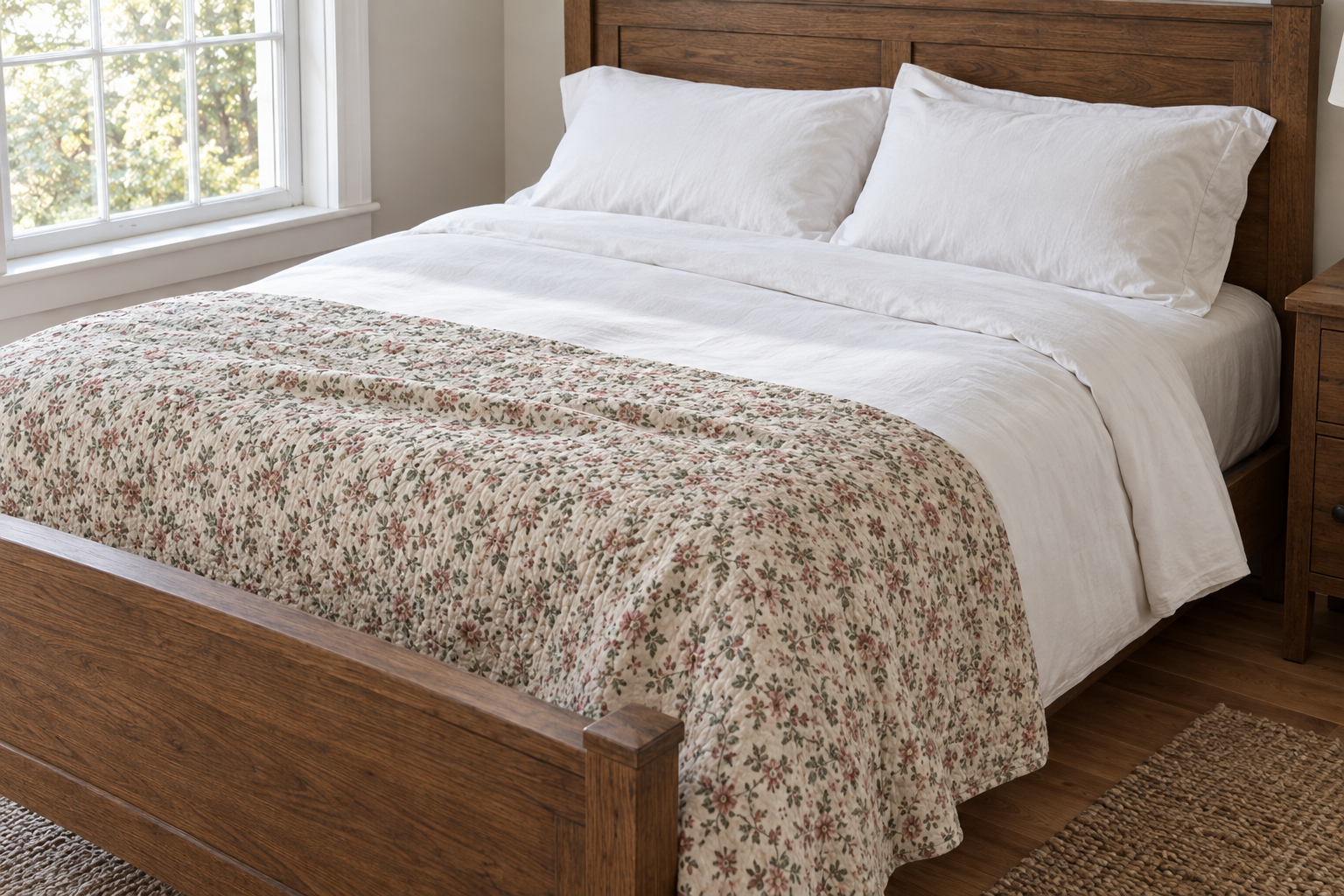
For a less symmetrical arrangement, keep the textile on the chair side of the corner and put a lamp on the other side. The little quilt belongs to the person sitting there. It can be something you notice close up rather than immediately from the door.
A family quilt with the maker’s photograph
At a 1980 exhibition at the Alexandria Museum in Louisiana, the curators showed photographs of quiltmakers alongside their quilts. It’s an idea that translates beautifully to a living room. Pair a sound quilt with a small photograph of its maker, or frame a copy of a handwritten note that mentions the cloth. If nobody remembers every detail, write down the part you do know. The Louisiana Quilt Documentation Project’s exhibition history.
Some quilts hold a picture of a place as well as the hand of the person who made them. Around 1938, artist Clementine Hunter pieced buildings from Melrose Plantation in cotton on heavy feed sack paper. If a family quilt shows a house or a tree, a photograph of that place could be its companion on the wall. Hunter’s wall hanging in the Louisiana State Museum collection.
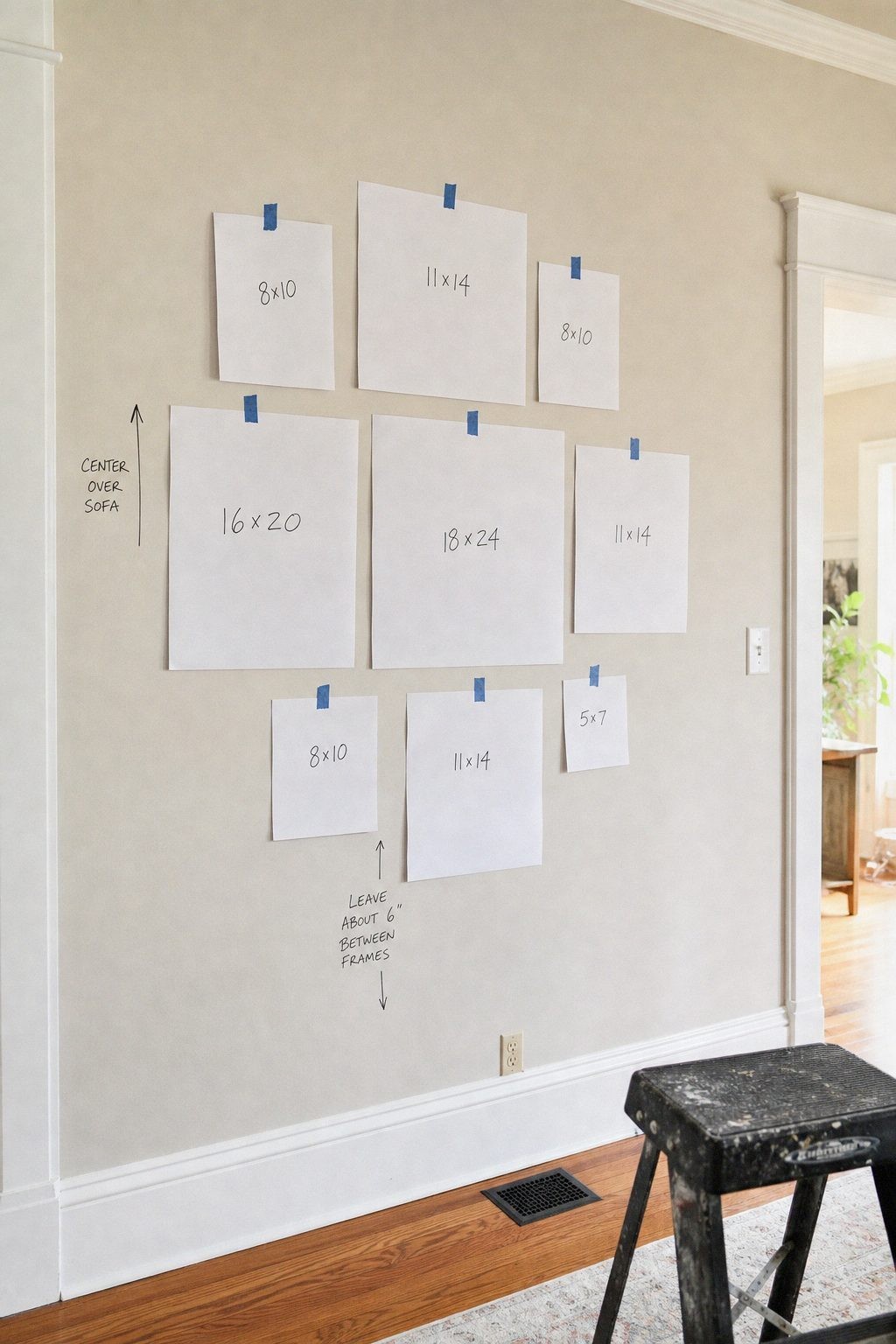
If your quilt is too fragile to hang, photograph a favorite block while it’s lying flat. Hang the print with the family photo and keep the cloth supported. A grouping of two can be enough, especially when both pieces have a story. See the gallery wall arrangements for other ways to put unlike pieces together.
A seasonal quilt you can look forward to seeing again
A pale yellow star looks lovely when the first daffodils come into the house. A deep red one can bring a little life to a dark wall when the lamps go on early. A wall can hold a quilt in spring and a landscape print in summer. There’s pleasure in getting a favorite piece out again.
Give a hanging quilt a rest at least every six months, sooner if the fabric starts to pull. A worn heirloom is happiest supported flat, away from direct sun. Nebraska Extension’s illustrated quilt care guide.