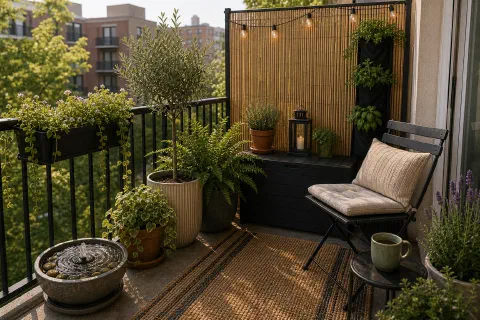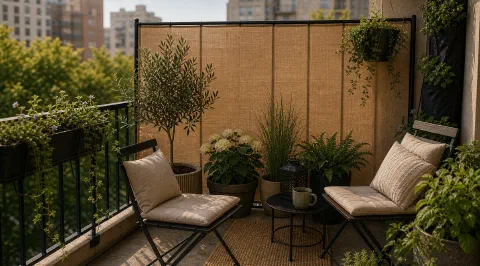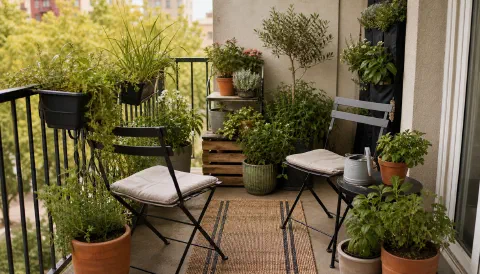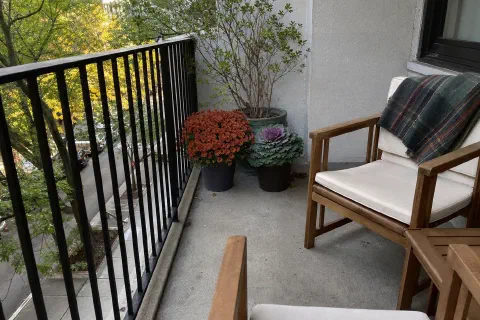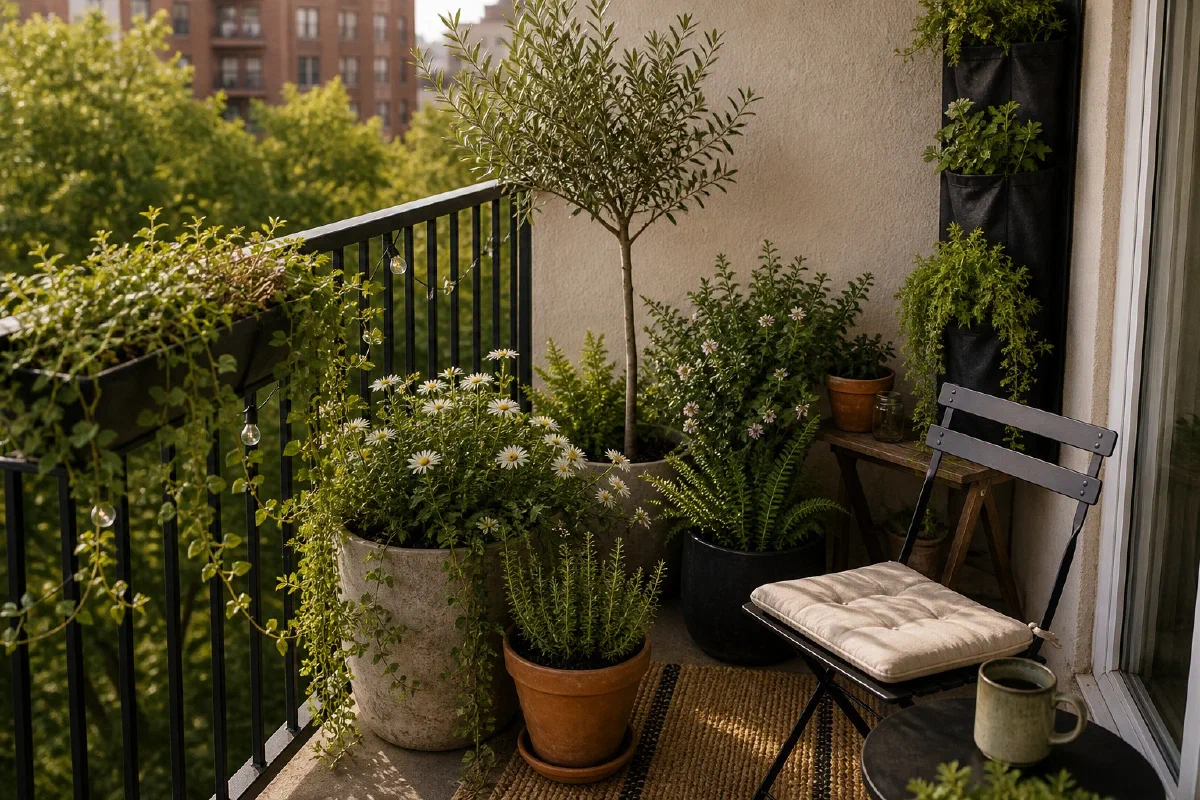
A bare balcony can make every plant look lonely. One pot by the door helps, but it rarely changes the space. The balcony starts to feel alive when the plants have height, repetition, and a job: soften the railing, add color near the chair, or make the view from inside less empty.
For a bare apartment balcony, start with three plant roles: one tall anchor plant, two medium filler pots, and one trailing or blooming plant. Match them to the balcony’s real light, use bigger containers than you think, and group pots so the space feels planted instead of sprinkled.
Give Every Pot a Job
Think anchor, filler, and softener. The anchor gives height. The filler makes the balcony look planted. The softener trails, blooms, or spills over an edge. That simple mix works better than buying six cute little pots with no relationship to each other.
Plants for a Hot Sunny Balcony
For strong sun, look at rosemary, lavender, dwarf zinnias, lantana, calibrachoa, salvia, sedum, and compact ornamental grasses. For a small pot on a hot rail, huernia is the succulent that earns a second look when it blooms. Hot balconies dry out fast, so container size matters. University of Minnesota Extension cautions that houseplants moved outdoors can scorch in direct afternoon sun and that outdoor pots dry faster, so begin with morning or filtered light and watch the moisture. If soil keeps turning dusty by dinner, use the watering fixes in container soil that dries out too fast .
Plants for a Shady or North-Facing Balcony
For lower light, try ferns, pothos, caladium, coleus, impatiens, begonias, or peace lily if the balcony is protected. Shade does not mean no plants; it means leaf texture matters more than constant flowers. University of Georgia Cooperative Extension’s container guidance separates sun, part-shade, and shade choices and notes that containers give apartment gardeners a flexible way to grow. Match the plant to the light you have rather than trying to make a shade balcony perform like a sunny one.
Use Fewer Bigger Pots
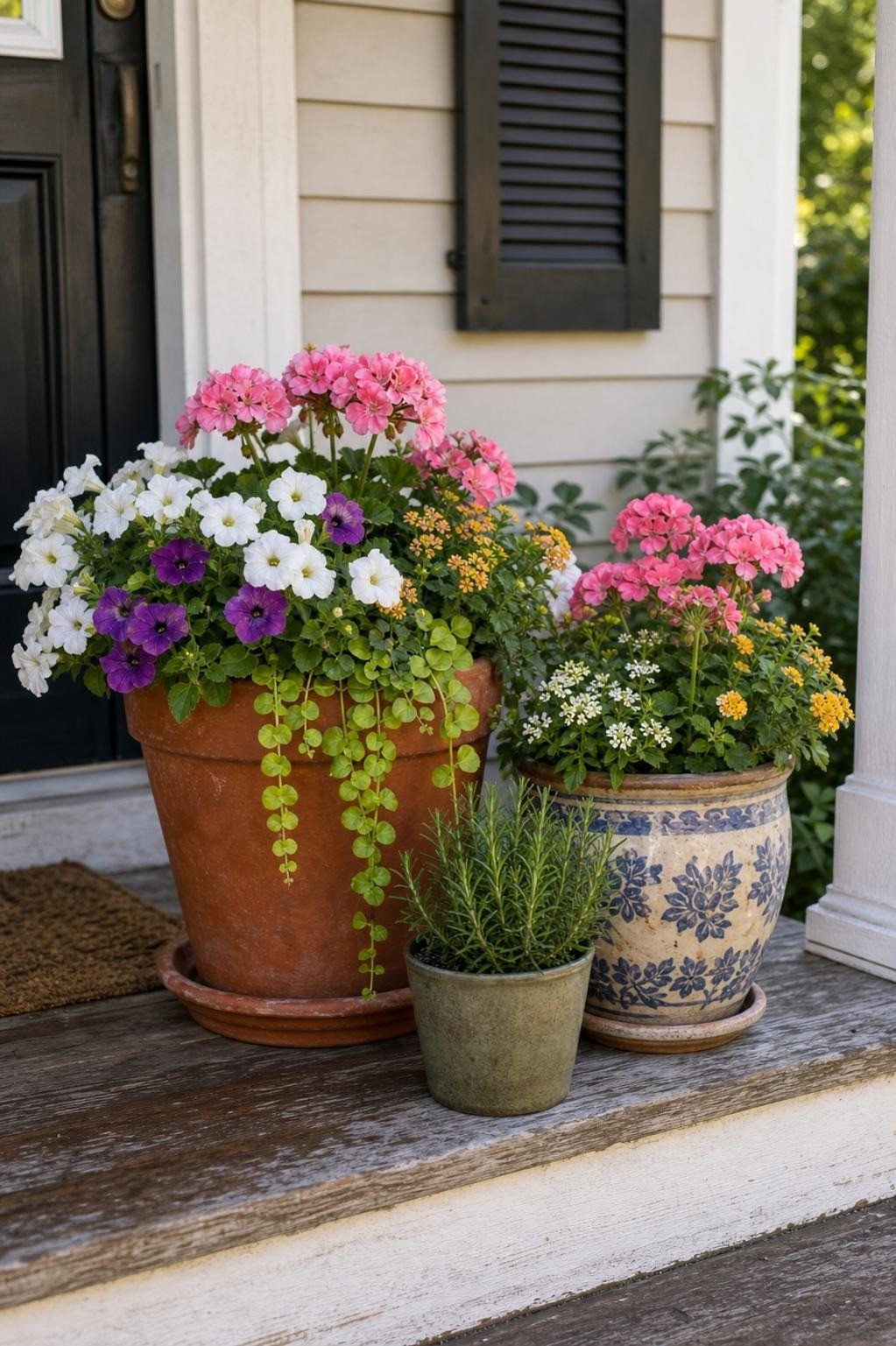
A balcony full of tiny pots can look busy and still feel empty. Two or three medium containers usually look better and are easier to water. Bigger pots can give roots more room in heat, but they also add weight and are harder to move. NC State Extension’s container guidance says drainage holes are necessary and the container should match the plant’s growth requirements. On a balcony, pair the pot size with the building’s rules, a saucer or other drip-control plan, and a route you can move safely.
Arrange Plants for the View From Inside
Stand in the room and look out. Put the tallest plant where it changes that view. Then layer the medium pots where your eye lands. The balcony is part of the apartment even when you are inside, so design for the doorway too.
A Simple Combo That Works in Many Rentals
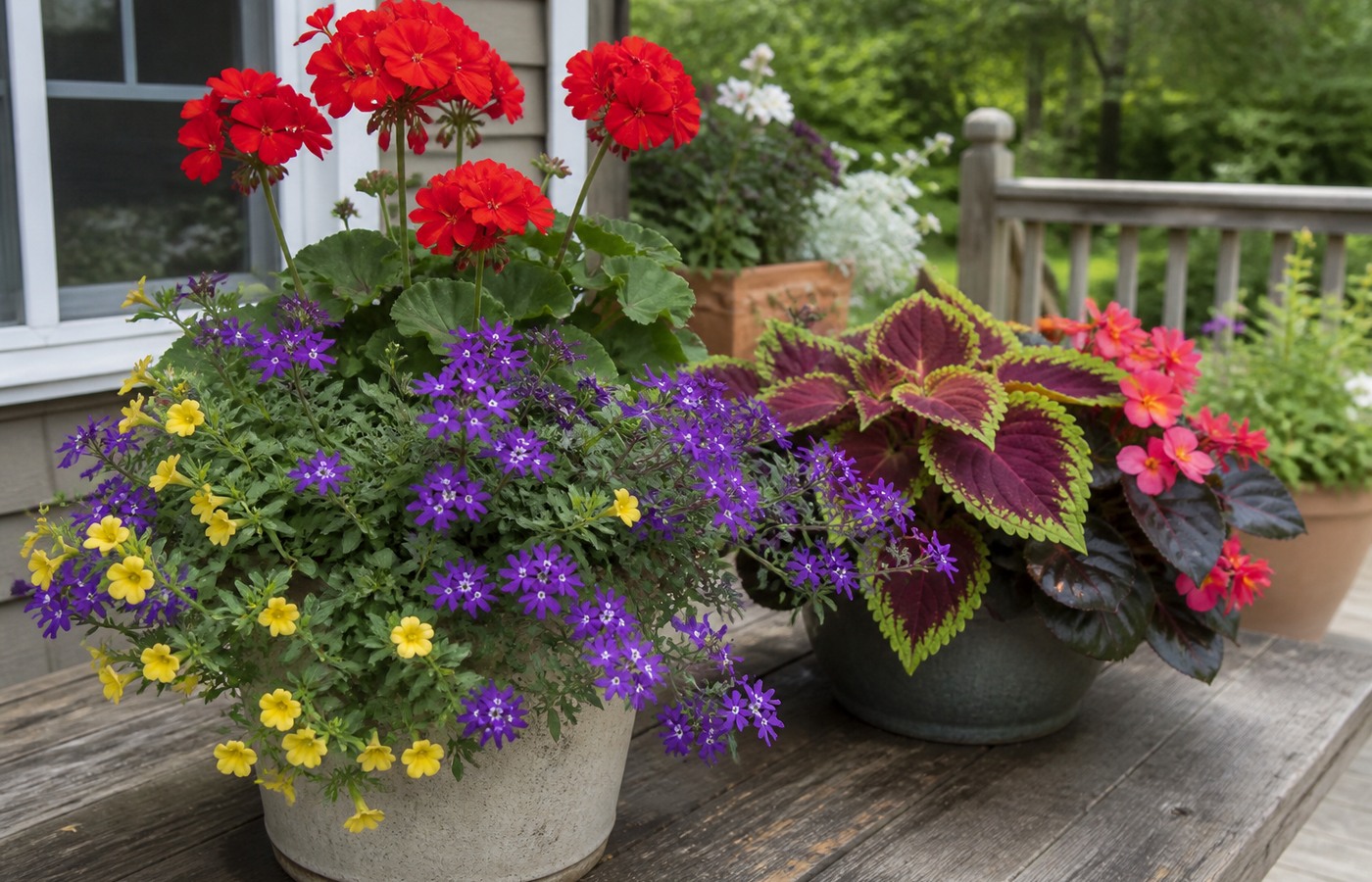
Try a tall rosemary or grass, a medium pot of coleus or zinnias, and a trailing sweet potato vine or pothos. Keep the containers similar so the plants do the talking. For more container structure, pair this with container garden ideas for small patios .
Sunny Balcony Setup Sequence
- Stand inside the apartment and note where the balcony receives direct sun, reflected light, or shade.
- Measure the space beside the door, the railing, and the chair before choosing the anchor pot.
- Choose a container with a drainage hole and a saucer or drip-control plan. Oregon State University Extension recommends potting mix instead of soil dug from the ground and explains why larger containers can be easier to keep evenly moist.
- Place the tallest plant where it improves the view without closing the route to the door.
- Water and observe for one week before filling the remaining gaps. Move a plant that scorches, wilts, or blocks the chair rather than buying another one.
Container size, weight, and drainage rules
- Heat and wind: An exposed corner can dry out faster than a protected one. Choose the plant and container together, then check moisture instead of trusting a fixed calendar.
- Weight: A large, wet container is harder to move than an empty one. Follow the building’s balcony rules and keep a safe route for moving it.
- Drips: Drainage protects roots, but runoff should not fall on a neighbor or sit in a full saucer. Empty the saucer after watering.
- Season: A plant that suits summer may need a different light level or indoor place when temperatures change. Plan where it can move before buying a large container.
What I’d Buy First
- One tall anchor plant for height.
- Two medium pots in the same color family.
- A trailing plant or blooming pot for softness.
- A moisture check routine for hot balconies.
What to Read Next
- Container garden ideas for small patios shows how to combine height, filler, and trailing plants in a small footprint.
- Container soil that dries out too fast helps diagnose dusty soil before you add another pot.
- Balcony privacy ideas that do not look cheap follows the planting decision when the bare railing is the real problem.
- Small water features for an apartment balcony adds sound and movement without turning the plant layout into a crowd.
- Apartment balcony garden ideas that do not need a yard gives the wider layout and first-weekend order for the whole outdoor corner.