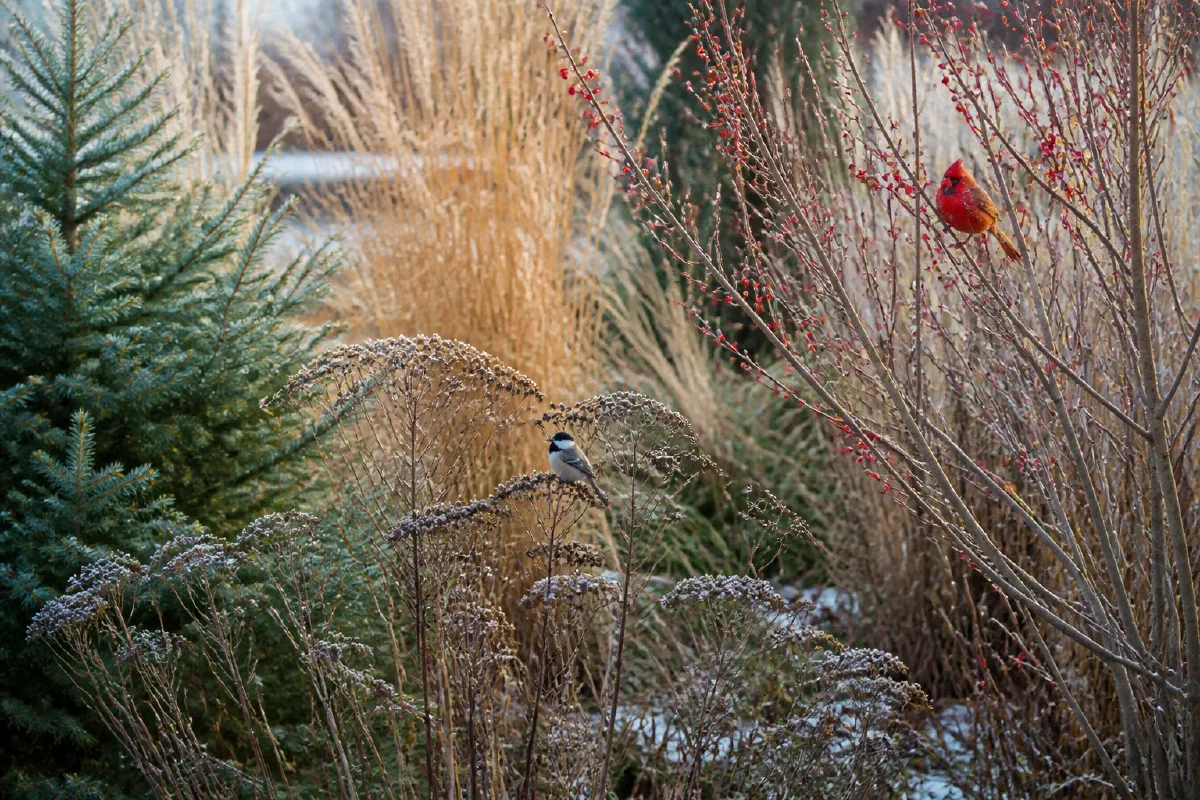
Bushes with berries for birds can do two jobs at once: feed robins, bluebirds, waxwings, and thrushes while carrying red, blue, white, or dark fruit after the flower beds have gone quiet. That list of fruit eaters is not a guess. Project FeederWatch names mockingbirds, catbirds, bluebirds, robins, and waxwings as the species most likely to feed on fruit. Winterberry gives the clearest red-against-snow effect. Viburnums add blue-black fruit and a broad shrub shape. Sumac holds sculptural red clusters into late winter, though it spreads. Eastern redcedar adds blue berry-like cones and evergreen shelter in one vertical plant.
Choose the plant for its mature size, soil, regional fit, fruit timing, and role in the view. Then layer in seed heads and evergreen cover so the border still looks intentional after the berries are gone.
The Best Berry Plants for a Fall and Winter Backyard
| Plant | Fall and winter look | Birds often served | Landscape role and tradeoff |
|---|---|---|---|
| Winterberry holly | Bare gray stems covered in red fruit | Waxwings, robins, bluebirds | A strong focal shrub for wet or part-shade sites; female plants need a compatible male pollinator nearby |
| Arrowwood or nannyberry viburnum | Blue-black fruit with a full, rounded shrub form | Thrushes, robins, waxwings | Useful for a mixed hedge; allow for an eight- to twelve-foot mature spread unless the chosen cultivar stays smaller |
| Staghorn sumac | Upright red fruit clusters that can persist into late winter | Bluebirds and robins later in winter | Striking on a slope or property edge, but root suckers make it a poor fit beside a small path or foundation |
| Red-osier dogwood | White fruit, red stems, and a twiggy winter silhouette | Woodpeckers and thrushes | Suits wet ground and can form sheltering thickets; fruit is often taken earlier than winterberry or sumac |
| Eastern redcedar | Blue berry-like cones against evergreen foliage | Waxwings, robins, bluebirds | A year-round vertical anchor with food and shelter; give it room and keep it away from tight foundation beds |
| Hawthorn | Red pomes on a small tree after frost | Waxwings and thrushes | Beautiful where its branching can be seen from a window; long thorns rule it out beside play areas and narrow paths |
For a small yard, use one vertical evergreen or small tree, two berry shrubs that fruit at different times, and a lower layer of grasses or perennials. That is a design starting point, not a wildlife guarantee. Local conditions, pollination, surrounding habitat, and the birds already present will decide what gets used.
Why Native Plants Support Natural Foraging
Native plants scatter food across the garden, letting birds move and feed the way they evolved to. Once established, a stand of native grasses and a winterberry holly require far less intervention than feeders that need regular cleaning and refilling.
Native plants also support the insects that chickadees and woodpeckers hunt in bark crevices during winter. When you plant species that co-evolved with local wildlife, you’re feeding birds with both visible seeds and berries and the invertebrate populations those plants sustain.
Seed-Producing Native Plants for Finches and Sparrows
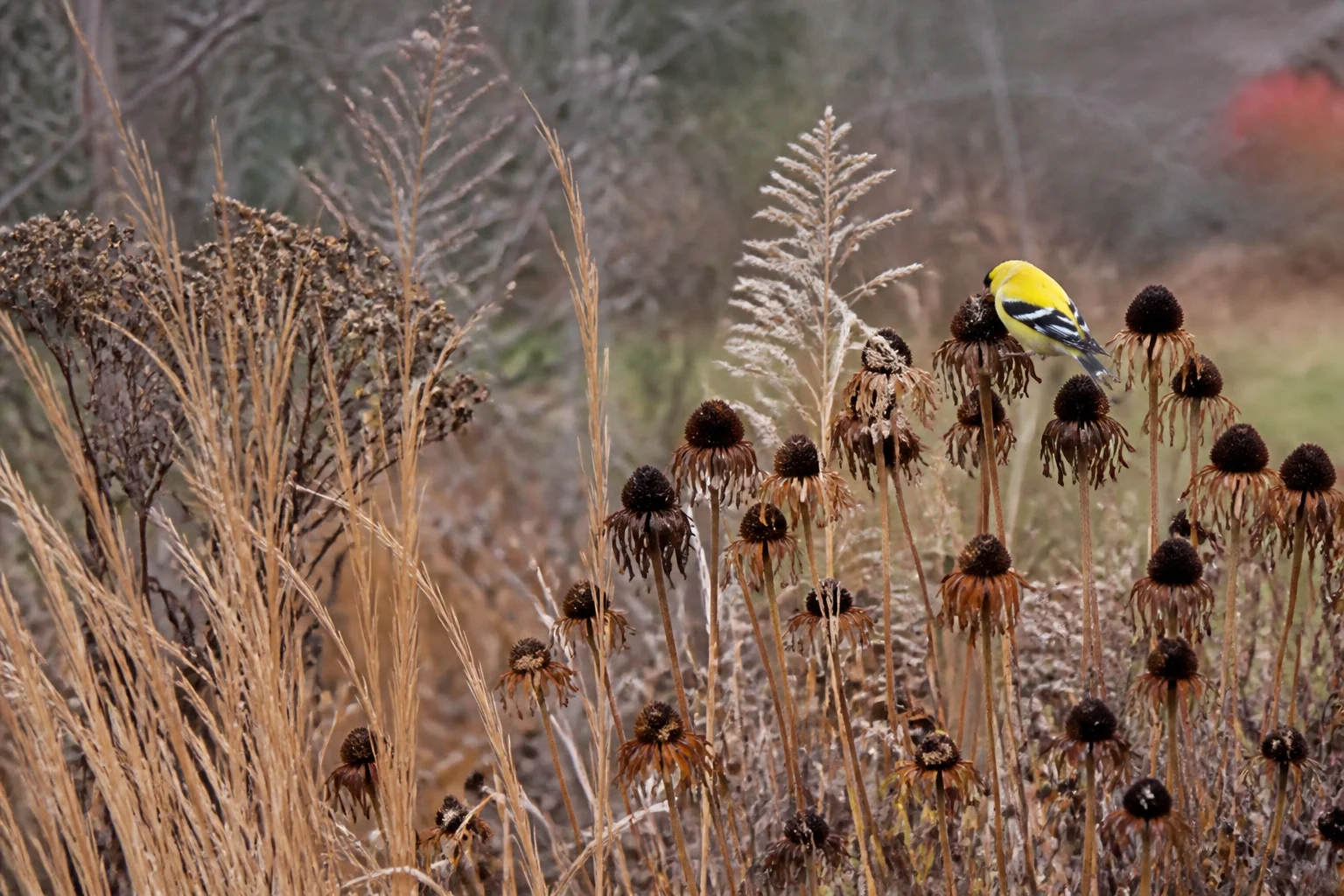
Finches and sparrows spend fall and winter working over dried flower heads and grass plumes, extracting seeds too small for larger birds to bother with. These plants typically need full sun and well-drained soil, and leaving the spent stems standing until spring instead of cutting them back in October helps birds access the seeds.
Perennials That Hold Seed Through Winter
Wild sunflowers in the Helianthus genus produce seed heads that goldfinches visit from November through January in many regions. Black-eyed Susans (Rudbeckia hirta) form smaller cones that sparrows strip methodically, one seed at a time. Both self-sow if you let a few seeds fall, filling in gaps without replanting.
Asters and other members of the Asteraceae family bloom late and set seed as migration peaks. New England aster and aromatic aster produce numerous tiny seeds per plant, and their dried stems can stay rigid under snow. Bergamots (Monarda species) offer tubular seed heads that chickadees pry apart for the small black seeds inside.
Native Grasses for Continuous Seed Supply
Native grasses can hold seed longer than many herbaceous perennials. Little bluestem turns copper-orange in fall and may keep its seed through February in some climates. Switchgrass stands tall with airy seed plumes that finches and juncos visit in flocks.
Plant grasses in drifts of at least three to create enough seed mass to attract birds. A single clump provides less food value.
| Plant | Seed Availability | Primary Birds | Light Needs |
|---|---|---|---|
| Wild sunflower (Helianthus) | Fall through winter | Goldfinches, chickadees | Full sun |
| Black-eyed Susan (Rudbeckia hirta) | Fall through winter | Sparrows, finches | Full sun |
| Little bluestem grass | Fall through late winter | Juncos, sparrows | Full sun |
| Switchgrass | Fall through late winter | Finches, juncos | Full sun |
| New England aster | Fall through winter | Goldfinches, chickadees | Full sun to part shade |
| Bergamot (Monarda) | Fall into winter | Chickadees, finches | Full sun to part shade |
Berry-Producing Shrubs for Thrushes and Waxwings
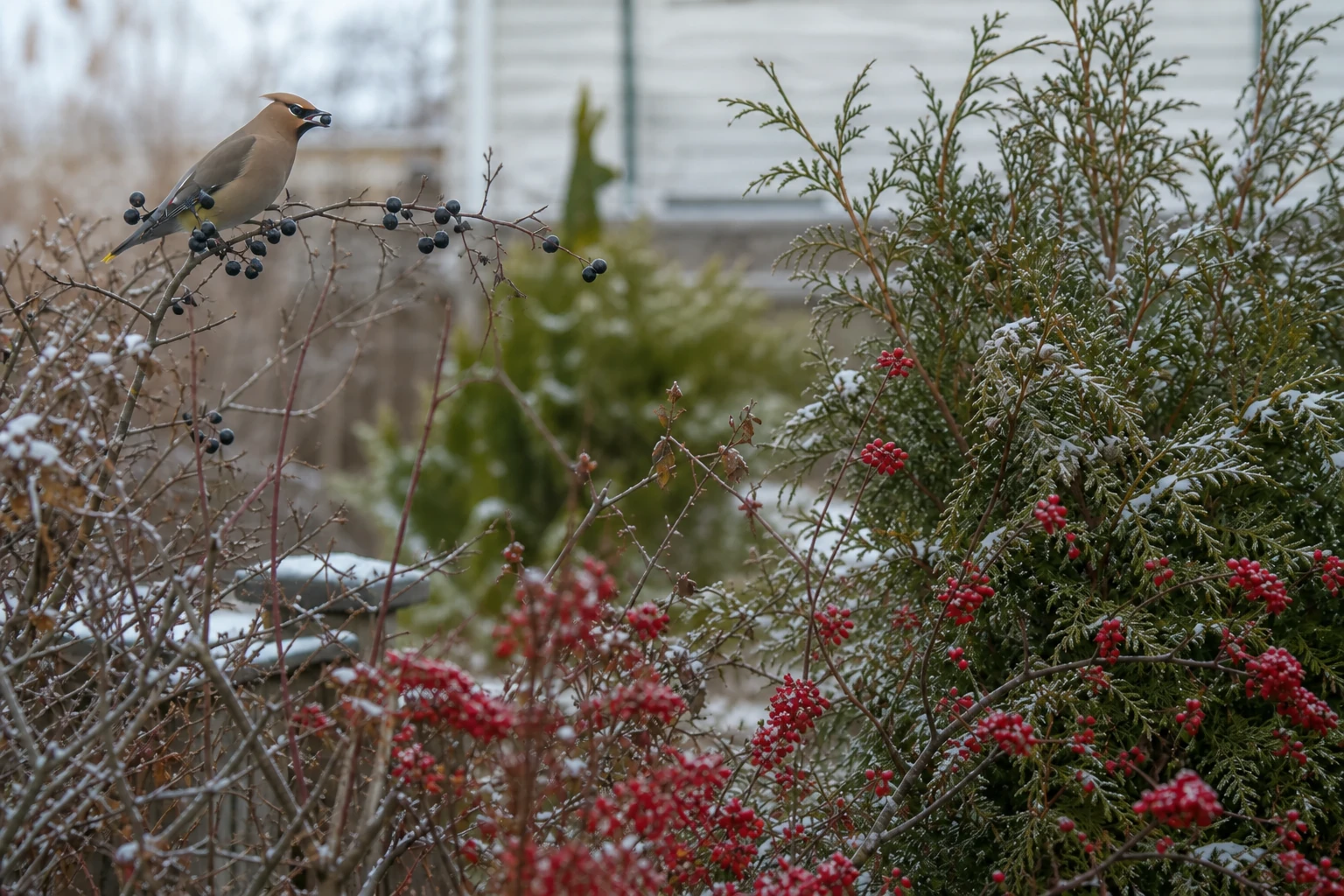
Shrubs that hold berries into January can feed robins, bluebirds, cedar waxwings, and mockingbirds when insects disappear and the ground freezes. Many berry-producing species need cross-pollination , so plant at least two cultivars of the same species within reasonable proximity of each other, or the flowers may not set fruit.
Winterberry Holly for Long-Lasting Color
Winterberry holly (Ilex verticillata) loses its leaves in fall, leaving branches covered in bright red berries that can glow against snow. The fruit may persist until February unless a flock of waxwings strips it in a single afternoon. Plant one male for every three to five females ; only females produce berries, but they need a male nearby to pollinate.
Winterberry tolerates wet soil and part shade, making it useful in low spots where other shrubs may struggle.
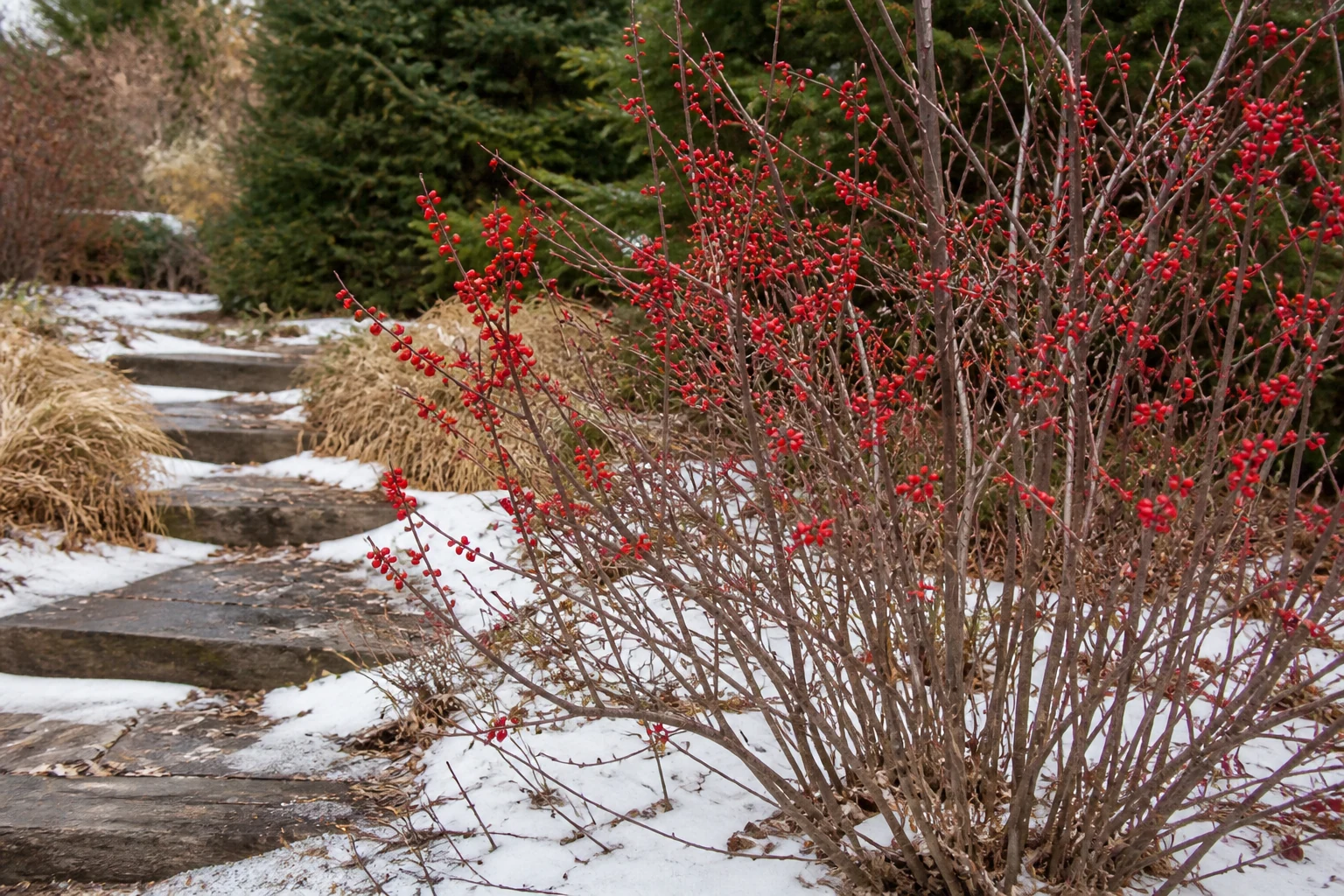
Viburnums for Sustained Berry Production
Viburnums produce clusters of blue, red, or black berries depending on the species. Arrowwood viburnum (Viburnum dentatum) fruits in early fall, and the dark blue berries can last through November in some regions. Nannyberry viburnum may hold fruit longer, sometimes into January, and thrushes often prefer its sweeter taste.
Both can grow eight to twelve feet tall and wide depending on site conditions, so they need space or annual pruning.
Sumacs and Dogwoods for Late-Winter Food
Sumacs (Rhus species) form upright clusters of fuzzy red drupes that look like velvet cones. The fruit ripens in late summer but can stay on the plant all winter because it’s tart enough that birds often ignore it until better options run out. By late winter, bluebirds and robins may finally work over the clusters.
Staghorn sumac spreads by root suckers and can take over a small yard if you don’t mow around it. Dogwoods (Cornus species) fruit in late summer, and most species are stripped clean by mid-fall in many areas.
Red-osier dogwood (Cornus sericea) produces white berries that woodpeckers and thrushes often eat quickly. Gray dogwood may hold its fruit a bit longer, into early winter. Both tolerate wet soil and can spread into thickets that also provide shelter.
Berry and Fruit-Producing Trees and Vines
Trees and vines add vertical feeding zones that shrubs can’t provide. Woodpeckers, nuthatches, and brown creepers forage on trunks and high branches, while ground-feeding sparrows clean up fallen fruit below.
Eastern Redcedar for Food and Shelter
Eastern redcedar (Juniperus virginiana) is technically a juniper, not a cedar, and it produces blue berry-like cones that waxwings, robins, and bluebirds eat in late winter. The fruit ripens in fall but may become more palatable after a few freeze-thaw cycles break down bitter compounds. Redcedar grows in poor, dry soil where other trees struggle, and its dense evergreen foliage shelters roosting birds on windy nights.
Hawthorns and Virginia Creeper
Hawthorns (Crataegus species) hold small red fruits called pomes that soften and sweeten after frost. Waxwings and thrushes may strip the trees in January and February. Hawthorn thorns are long and sharp, which makes the tree a safe nesting site in spring but difficult to prune or plant near paths.
Virginia creeper (Parthenocissus quinquefolia) is a native vine that climbs fences, arbors, and tree trunks. It produces small blue-black berries in fall that woodpeckers, flickers, and thrushes often eat quickly. The vine turns scarlet in October, then drops its leaves to reveal clusters of fruit on bare stems.
| Plant | Fruit Type | Persistence | Primary Birds |
|---|---|---|---|
| Winterberry holly | Red berries | Fall into late winter | Waxwings, robins, bluebirds |
| Arrowwood viburnum | Blue-black berries | Fall into early winter | Thrushes, robins |
| Nannyberry viburnum | Blue-black berries | Fall into mid-winter | Thrushes, waxwings |
| Staghorn sumac | Red drupes | Late summer through late winter | Bluebirds, robins (late winter) |
| Red-osier dogwood | White berries | Late summer into fall | Woodpeckers, thrushes |
| Eastern redcedar | Blue cones | Fall through late winter | Waxwings, robins, bluebirds |
| Hawthorn | Red pomes | Fall through late winter | Waxwings, thrushes |
| Virginia creeper | Blue-black berries | Fall into early winter | Woodpeckers, flickers, thrushes |
Shelter and Roosting Plants for Cold Nights
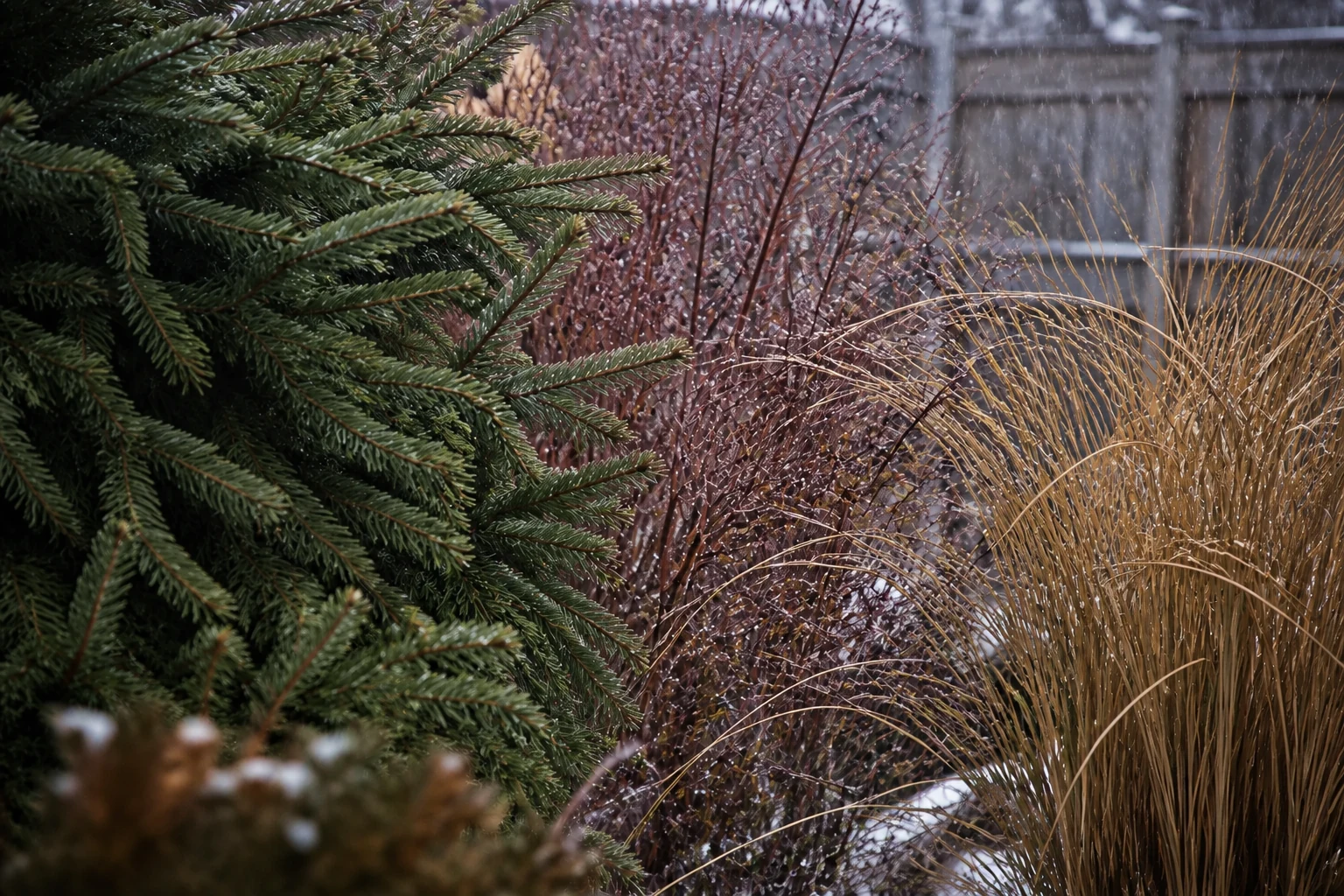
Birds need dense cover to escape wind, sleet, and predators. Evergreens and thicket-forming shrubs create microclimates that can be warmer than the surrounding air, and their branches block snow from piling up on roosting birds.
Evergreen Conifers for Maximum Protection
Eastern redcedar appears in both the food and shelter categories because it does both jobs well. A mature tree with branches to the ground can shelter multiple small birds on a January night. Chickadees, juncos, and sparrows press into the interior foliage where wind can’t reach them.
Other native conifers include white pine, which grows large but provides excellent cover if you have space, and American holly, which holds its spiny evergreen leaves and red berries through winter. Holly needs acidic soil and doesn’t tolerate road salt or compacted clay.
Thicket-Forming Shrubs
Shrubs that form thickets, like red-osier dogwood and arrowwood viburnum, create shelter even after they drop their leaves. The dense tangle of stems breaks the wind and hides birds from hawks. Sumac thickets serve the same purpose and also provide late-winter food.
Seasonal Availability Calendar
Different plants produce food at different times, and a yard that supports birds all winter needs species that stagger their availability. Early-ripening berries feed migrants in early fall. Late-persisting seeds and fruits can sustain residents through late winter.
Fall: September and October
September brings the first wave of dogwood and viburnum berries, which migrating thrushes may strip quickly. Wild sunflowers and black-eyed Susans set seed, and finches start working the heads. October sees sumac and Virginia creeper fruit ripen, though birds often ignore sumac until later.
Grasses cure and hold their seed, and asters finish blooming.
Early to Mid-Winter: November Through January
November through January is when persistence matters. Winterberry holly, nannyberry viburnum, and hawthorn can hold fruit through this period in many regions. Grasses and perennial seed heads stand under snow, and finches dig through drifts to reach them.
Eastern redcedar cones may become more palatable after repeated freezing.
Late Winter: February and March
February and March are often the hardest months. Most berries are gone, and only the least palatable resources remain. Sumac finally gets attention from bluebirds and robins.
Switchgrass and little bluestem may still hold some seed if the winter has been mild. This is when supplemental feeding can genuinely help, filling the gap until insects and fresh growth return in April.
Matching Plants to Yard Size and Conditions
A small yard can’t fit a thicket of sumac or a large white pine, but it can support birds with careful plant selection. Focus on compact shrubs like winterberry holly and arrowwood viburnum, which you can prune to six feet. Plant a single Eastern redcedar as a vertical accent and shelter hub.
Use native grasses and perennials in borders and foundation beds, leaving the seed heads standing .
Shady Yards and Limited Sun
Shady yards limit your options because most seed-producing plants need full sun. Viburnums tolerate part shade and can still fruit reliably. Red-osier dogwood grows in shade and wet soil, making it useful under trees or near downspouts.
Asters and bergamots handle part shade better than sunflowers or grasses.
Container Gardening for Renters
Renters and condo owners can grow native plants in large containers. Switchgrass and little bluestem adapt to pots if you use a container at least sixteen inches deep. Compact viburnum cultivars stay small enough for a half-whiskey barrel.
Even a single potted grass or perennial left standing through winter feeds finches and adds texture to a porch or balcony.
Planting and Care That Keeps Fruit Coming
Once the plants are chosen, most of the work is timing: get them in the ground at the right moment, keep the crown dry, and leave the stems alone until spring.
Planting Time, Mulch, and Water
Install native plants in fall or early spring when roots establish before heat or cold stress them. Mulch with shredded leaves or wood chips to retain moisture, but keep mulch a few inches away from stems to prevent rot. Water new plants regularly their first season; after that, many natives tolerate drought.
Leave Seed Heads Standing Until Spring
The single most important maintenance task is leaving seed heads and dried stems standing until spring . Cutting back perennials in fall removes the food and shelter birds depend on. Wait until you see new green growth pushing up in spring, then cut old stems to the ground and compost them.
Pruning for Fruit Production
Pruning time and fruiting wood vary by species. Before cutting a berrying shrub, check local extension guidance for that plant and remove only what blocks access, is damaged, or needs correction. Do not deadhead flowers you intend to leave for seed.
Let sunflowers, asters, and black-eyed Susans go to seed naturally. The dried heads look sculptural under snow, and goldfinches will perch on them through winter.
Mistakes That Cost You Berries
Most of the ways a berry border fails are decided on planting day, not in January.
- Planting a single winterberry and waiting for fruit. Only the females berry, and they need a compatible male within range. One male for every three to five females is the usual ratio.
- Cutting the perennials down in October. Those seed heads are the winter food supply. Wait until new growth shows in spring.
- Planting one clump of grass. Grasses want to be in drifts of at least three before the seed mass is worth a bird’s trip.
- Piling mulch up against the stems. A few inches of clearance keeps the crown dry and stops rot.
- Putting sumac or hawthorn beside a path or a play area. Sumac runs by root suckers and hawthorn carries long thorns.
- Buying a cultivar labeled sterile or non-fruiting. It will look right in the nursery and feed nothing.
How to Decide How Many Plants You Need
There is no reliable plant count that guarantees winter food. Yard size, mature plant size, fruiting requirements, local bird populations, and the surrounding neighborhood all matter. Start with several different food types that fit the available space, then watch which resources last and where gaps appear.
Scaling Up for Larger Properties
Larger properties can support more diversity. Some berrying shrubs require or benefit from a compatible pollination partner, so check the species and cultivar requirements before buying. A mixed hedgerow can extend the season when each chosen plant is locally appropriate and fruits at a different time.
Add an understory of grasses and perennials in front of the shrubs. If space is tight, prioritize plants that serve multiple roles.
Supplemental Support Beyond Plants
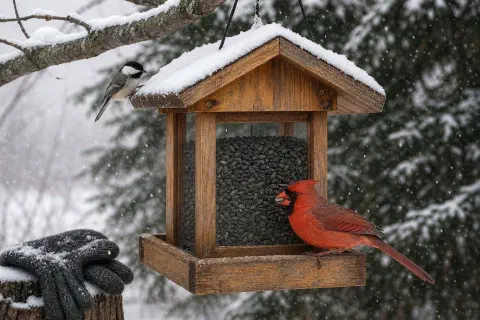
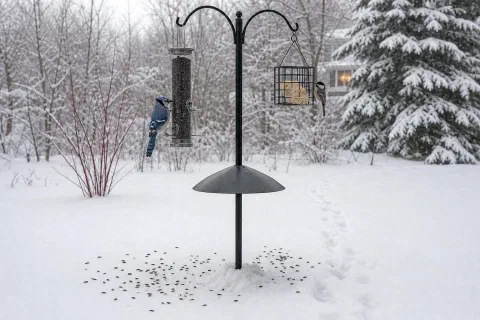
Native plants and feeders serve different roles, and neither creates a complete food supply by itself. If you add a feeder, choose food suited to local birds, discard wet or spoiled seed, and follow Project FeederWatch’s feeder cleaning guidance , which calls for washing feeders with warm water and dish soap every week or two, and more often in wet weather or heavy use.
Water and Emergency Shelter
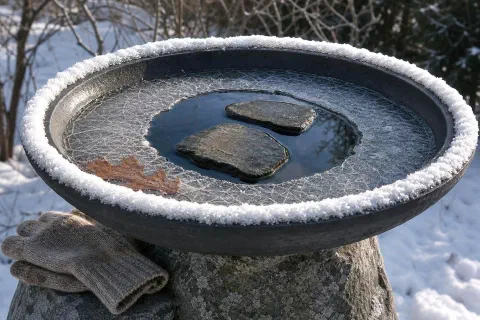
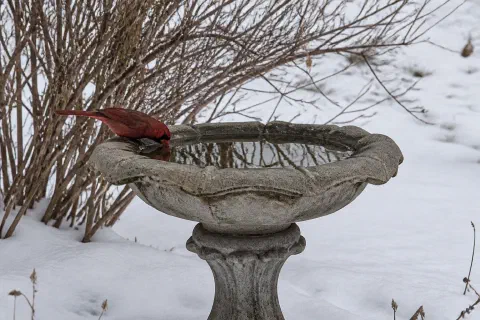
Open water may also be scarce during freezes. Use a heated birdbath only according to its electrical and cleaning instructions, and keep the basin shallow and easy to service. Replace dirty water and clean the bath whenever debris or contamination appears.
Frequently Asked Questions
Which native plants produce berries that last through winter?
Winterberry holly, nannyberry viburnum, hawthorn, and Eastern redcedar can hold fruit into January and February in many regions. Sumac persists longest but birds often avoid it until other food is gone. Plant several species to ensure continuous availability as some are stripped earlier than others.
Do I need to leave perennial seed heads standing for birds?
Yes. Cutting back asters, sunflowers, black-eyed Susans, and grasses in fall removes the seeds finches and sparrows eat through winter. Leave stems standing until spring when new growth emerges, then cut and compost the old material.
What birds eat seeds versus berries in fall and winter?
Finches, sparrows, juncos, and chickadees eat seeds from grasses and perennials. Robins, bluebirds, waxwings, thrushes, and mockingbirds eat berries from shrubs and trees. Woodpeckers eat both, plus the insects they find in bark and dead wood.
Can native plants replace bird feeders in winter?
Native plants add natural food and cover, while a maintained feeder adds a concentrated food source. Whether to feed is a separate choice; if you do, keep the feeder and the ground below it clean and respond to local disease advisories.
Which native plants offer both food and shelter?
Eastern redcedar provides berries and dense evergreen cover. Viburnums and dogwoods produce fruit and can form thickets that block wind. Sumac offers late-winter berries and sheltering thickets.
How do I choose native plants appropriate for my region?
Check Audubon’s local native-plant database for species native to your zip code. Contact your local university extension service or native plant society for additional guidance. Avoid cultivars labeled as sterile or non-fruiting, which won’t feed birds. Buy from nurseries that specify regional ecotypes rather than generic native stock.
Building a Yard That Works All Season
A bird-friendly yard layers plants at different heights and staggers their fruiting times so something is often available. Start with a few shrubs and grasses, leave the seed heads standing your first winter, and watch which birds show up. Add more of what they use and edit out what they ignore.
You may see chickadees pulling seeds from dried flower heads, waxwings visiting winter fruit, or sparrows scratching beneath shrubs. Those observations tell you more than a universal plant-count formula and can guide what you add next.
What to Read Next
- Plants Hummingbirds Visit Every Day shifts the same bird-first planting idea into the warm-season flower layer.
- Heated Bird Baths for Winter covers the missing cold-weather water source once berries and seed heads are in place.
- 7 Bird Bath Setups Songbirds Actually Use helps the water feature fit the landscape instead of looking like a separate add-on.