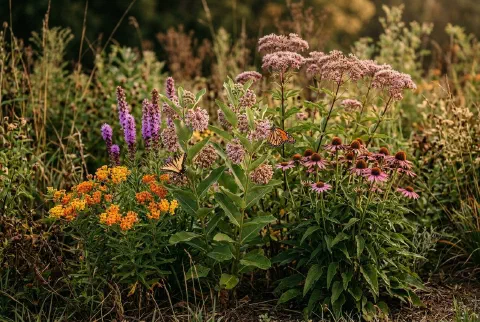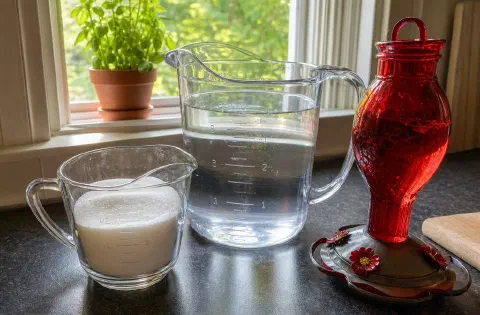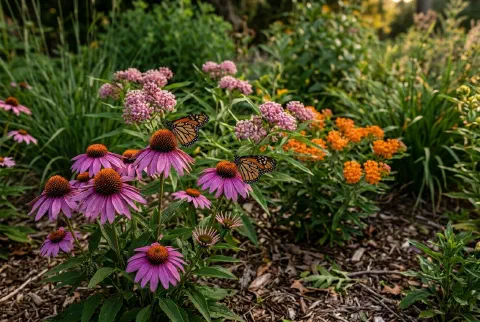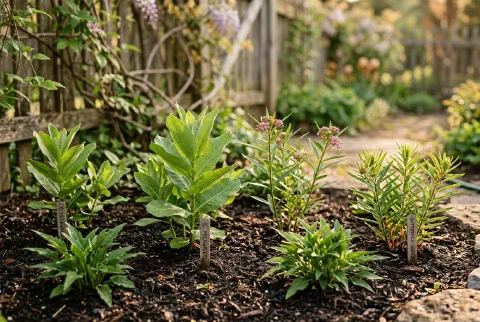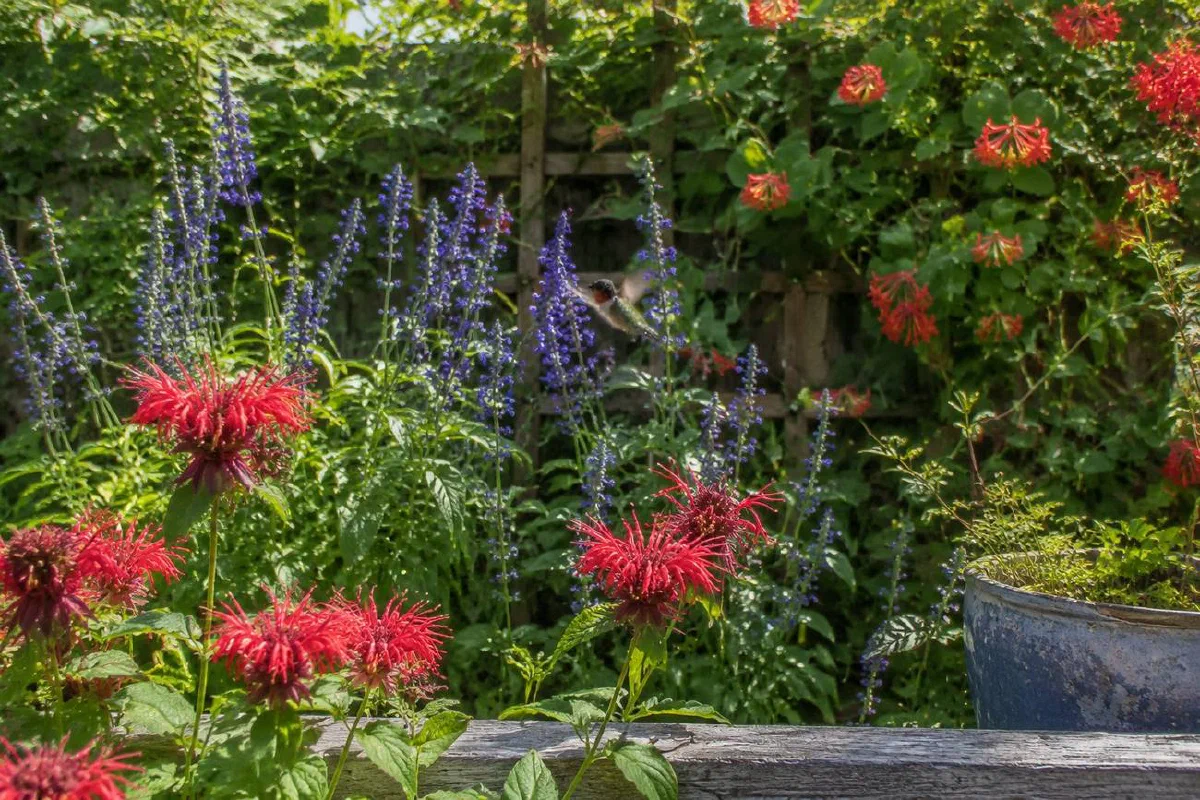
A hummingbird feeder gets traffic for a week and then quiet. A hummingbird garden gets traffic every morning, all season. Run both if you like, with plain 4:1 nectar and a real cleaning schedule , but the plants are what keep them coming back.
The difference is biology. A feeder offers sugar water; a flower offers nectar, pollen, and the small insects hummingbirds also eat. A flower also fits the natural foraging pattern hummingbirds evolved with: a few sips from one flower, a flight to the next, all morning and all evening. A garden of the right plants gives a hummingbird a real reason to live nearby, not just visit.
These nine plants are the most-studied, most-reliable hummingbird flowers across North America. Each one has been documented in research as a top hummingbird draw. Plant three or four of them and a backyard becomes a working hummingbird station within one season.
The Nine at a Glance
| Plant | Bloom window | Flower shape | Color |
|---|---|---|---|
| Bee Balm (Monarda) | July to August | Tubular | Red, pink, purple |
| Salvia ‘Black and Blue’ | June to October | Tubular | Cobalt blue |
| Cardinal Flower (Lobelia cardinalis) | July to August | Tubular | Scarlet |
| Coral Honeysuckle (Lonicera sempervirens) | May to September | Tubular | Coral, red |
| Trumpet Vine (Campsis radicans) | July to September | Trumpet | Orange-red |
| Penstemon (Beardtongue) | May to July | Tubular | Pink, red, purple, white |
| Cuphea (Cigar Plant) | May to frost | Tubular | Orange and yellow |
| Wave Petunias | May through frost | Tubular | Pink, purple, red |
| Zinnia | 8 weeks after sowing | Open, not tubular | Red, orange |
Read the bloom column as a schedule. Cardinal flower and penstemon carry early summer, bee balm and trumpet vine take midsummer, and salvia, cuphea, and petunias run to frost.
1. Bee Balm (Monarda)
Bee balm is the perennial most consistently named in hummingbird research as a top draw.
Tubular red, pink, or purple flowers in shaggy clusters, 3-4 feet tall, blooming July into August. Zones 3-9. The ‘Jacob Cline’ cultivar (deep red) is the most powerful hummingbird magnet. ‘Raspberry Wine’ (pink) is the next most reliable. Full sun to part shade, average to moist soil.
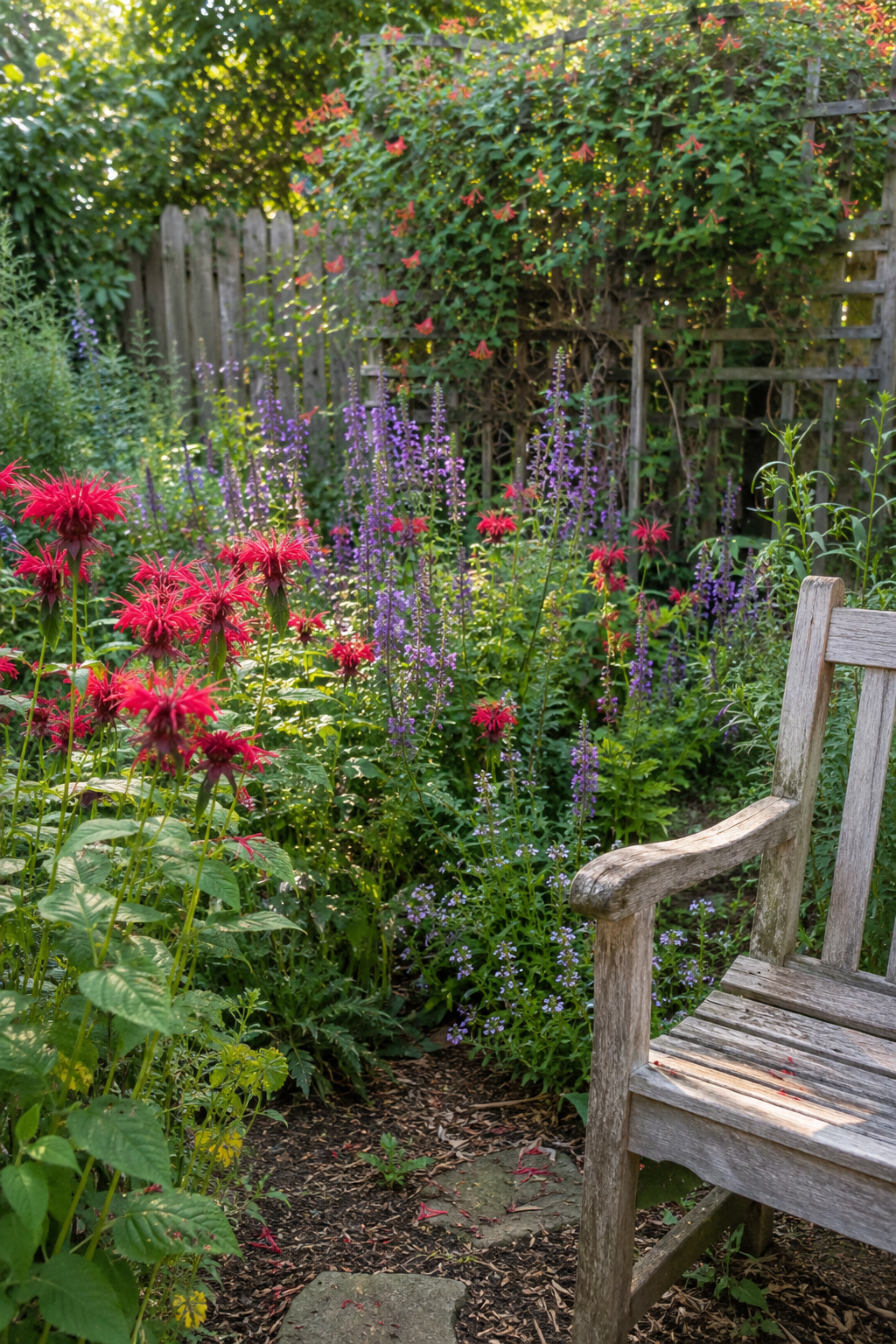
Plant in groups of three or more for maximum visibility to hummingbirds. The flower shape is built for a hummingbird beak, tubular, with nectar at the base.
Mildew is the one issue with bee balm. Pick a mildew-resistant cultivar and give the plant good air circulation. The Wildflower Center’s Monarda didyma entry notes that the species is susceptible to powdery mildew and names ‘Jacob Cline’ among the resistant cultivars.
2. Salvia ‘Black and Blue’
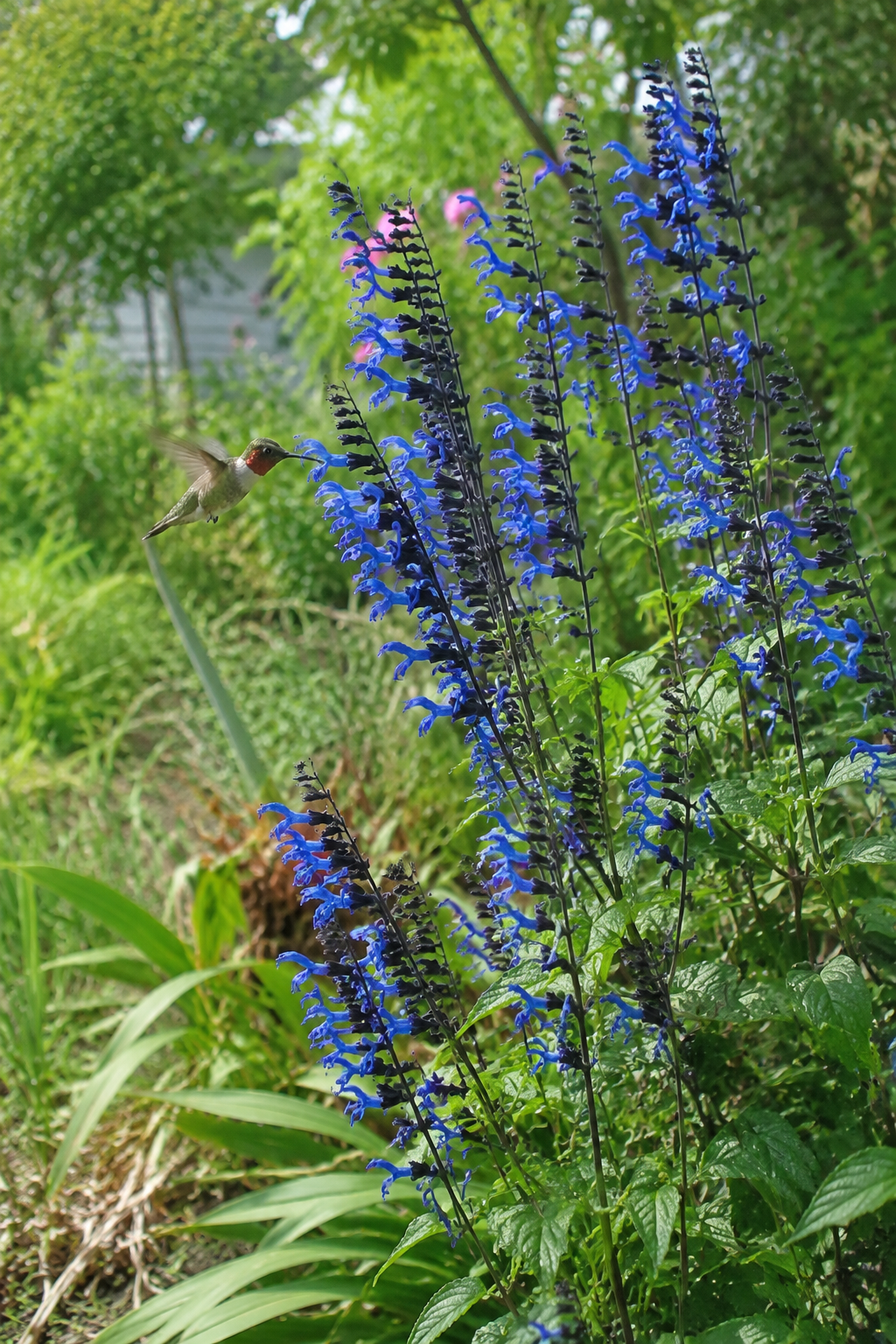
Salvia guaranitica ‘Black and Blue’ is the single best hummingbird annual sold at most garden centers.
Cobalt-blue tubular flowers with near-black calyxes, 3-4 feet tall, blooming continuously from June into October. Hummingbirds visit it from sunrise to sunset. Annual in zones 6 and colder, tender perennial zone 7+, where it returns each spring from the roots.
Full sun. Average water. No deadheading needed. One plant of ‘Black and Blue’ in a backyard will be visited dozens of times a day by mid-summer.
Pineapple sage (Salvia elegans) and Lady in Red salvia (Salvia coccinea) are the next two best salvias for hummingbirds.
3. Cardinal Flower (Lobelia cardinalis)
Cardinal flower is the brilliant red native perennial that hummingbirds visit specifically because of its color and tubular shape.
Two to four feet tall, spikes of scarlet tubular flowers in July and August. Zones 3-9. Native to wet meadows and stream banks, so it wants more water than most perennials, average to moist soil, part sun to full sun. Plant near a downspout, a low spot, or a regularly-watered bed.
Cardinal flower is the plant ornithologists name when asked what to plant for hummingbirds. The red color and the shape together are nearly hummingbird-specific.
4. Coral Honeysuckle (Lonicera sempervirens)
Coral honeysuckle is the native trumpet-shaped honeysuckle vine that doesn’t become invasive like its Japanese cousin.
Clusters of slender coral or red tubular flowers from May through September. Climbs 10-15 feet on a trellis, fence, or porch post. Zones 4-9. Full sun preferred. Drought-tolerant once established.
The ‘Major Wheeler’ cultivar is the most reliable for heavy bloom. Plant against a south-facing wall for fastest growth. Coral honeysuckle attracts hummingbirds from sunrise; a vine on a porch column becomes a daily sighting point within one year of planting.
5. Trumpet Vine (Campsis radicans)
Trumpet vine is the loud cousin of coral honeysuckle, bigger, faster, and more aggressive.
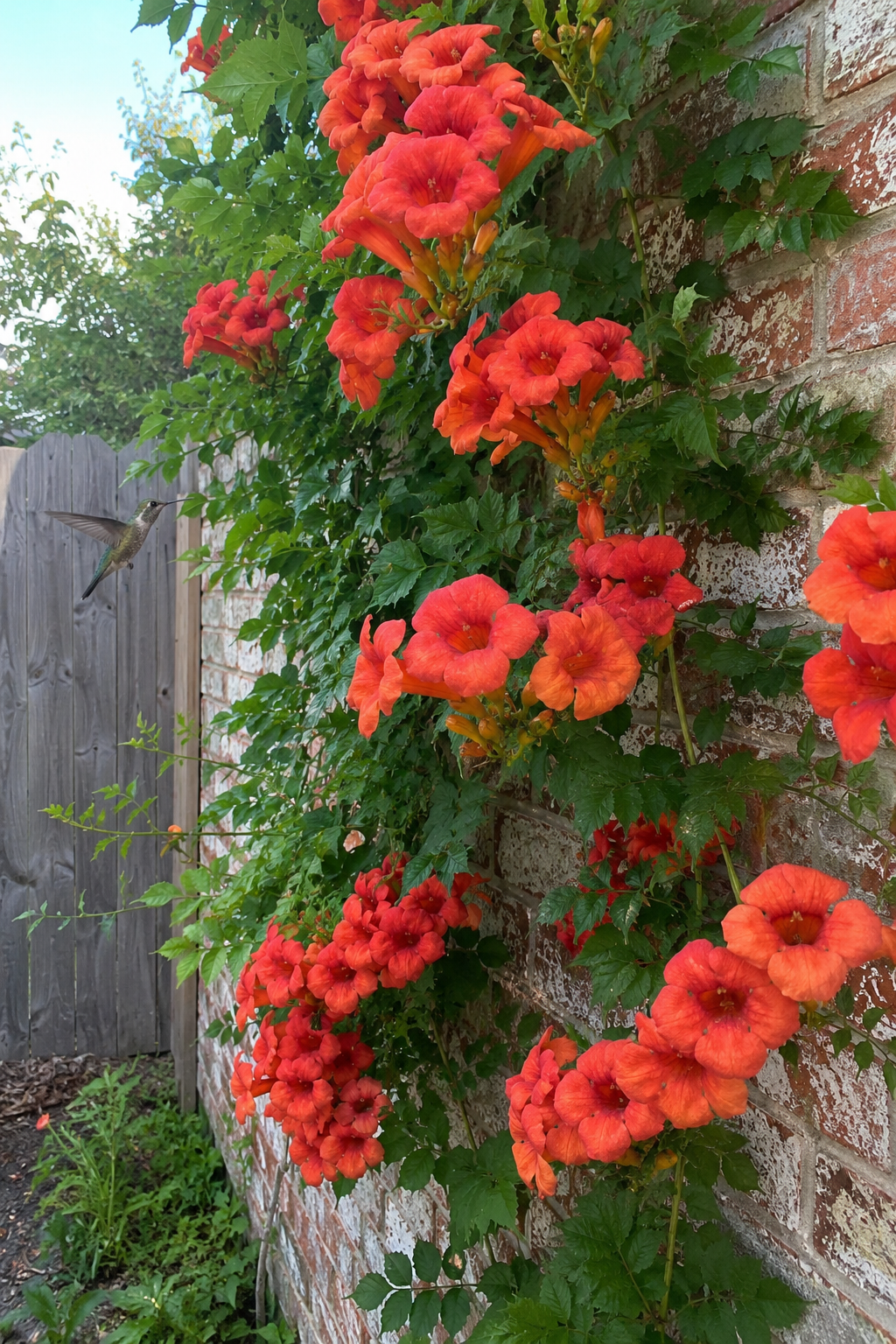
Large orange-red trumpet flowers in clusters, July through September. Zones 4-9. Climbs 20-40 feet up a sturdy support; will pull down a flimsy trellis or rot a wood fence in time. Drought-tolerant. Full sun.
Plant trumpet vine on an iron arbor, a brick wall, or a sturdy pergola, not on a wood fence or a shutter. Pruning is essential to keep it manageable; cut back hard in late winter. The reward is dozens of hummingbird visits a day in mid-summer.
The ‘Madame Galen’ cultivar is the most ornamental and slightly less aggressive than the species.
6. Penstemon (Beardtongue)
Penstemon is the under-recognized native perennial hummingbird workhorse.
Spikes of tubular flowers in pink, red, purple, or white, 2-4 feet tall, blooming May through July. Zones 3-9 depending on species. Native to American prairies and Western mountains. Drought-tolerant, full sun, well-drained soil.
Penstemon barbatus (the Western beardtongue) has the strongest hummingbird draw because of its red color and elongated flower shape. Penstemon ‘Husker Red’ is the cold-hardy white-flowered cultivar. Either does well in a sunny perennial bed.
7. Cuphea (Cigar Plant)
Cuphea is the under-the-radar annual that draws hummingbirds for the entire season.
Small bright-orange and yellow tubular flowers (the “cigar” shape gives it the name), blooming continuously from May to frost. The plant stays around 2 feet tall and 2 feet wide, perfect for a porch container or a sunny border. Annual in most zones; tender perennial zone 9+.
Cuphea is the plant most experienced hummingbird gardeners recommend after Salvia ‘Black and Blue’. Bat-faced cuphea (Cuphea llavea) with its purple-and-red flowers is the most ornamental variation.
Full sun, average water, no deadheading. One cuphea in a porch container will be visited dozens of times a day by August.
8. Wave Petunias
Wave petunias (the spreading petunia from any garden center) are the surprise on the hummingbird plant list.
The tubular flower shape and the bright pink, purple, and red colors attract hummingbirds consistently. A hanging basket of Wave petunias on a porch becomes a hummingbird visit station within a few weeks. Annual in most zones, blooming May through frost.
This is the plant to use for hummingbird traffic on a porch with no garden bed, a basket of pink Wave petunias hung from a porch hook is enough to attract visitors.
9. Zinnia
Zinnias are not the obvious hummingbird plant, but they’re the easiest annual to grow from seed and they do attract hummingbirds, particularly the red and orange varieties.
The ‘Profusion’ series stays compact (12-18 inches) and blooms continuously. ‘State Fair’ and ‘Giant Cactus’ types grow tall (3-4 feet) and produce larger flowers. Both attract hummingbirds and butterflies.
Direct-sow zinnia seeds after last frost in full sun. They germinate in a week and bloom in 8 weeks. A 4x6 patch of zinnias gives a backyard hummingbirds, butterflies, and cut flowers all summer for the cost of a $2-$4 seed packet.
How to Build a Hummingbird Garden
A few rules for actually attracting hummingbirds, not just planting the right flowers:
- Plant in groups, not singles. A single salvia plant is a sip. A group of five salvia plants is a foraging station. Hummingbirds need a critical mass of flowers to make the trip worth it, and the USDA Forest Service pollinator guidance gives the same instruction: plant in clumps rather than single plants so pollinators can find them and use them.
- Cluster the plants near a clear sight line. Hummingbirds scout from elevated perches. A flowering bed at the edge of an open patio or near a porch attracts more traffic than a bed buried in the back of the yard.
- Include staggered bloom times. A garden that blooms June, July, August, and September retains hummingbirds longer than a garden that blooms June only. Cardinal flower (July-August), coral honeysuckle (May-September), and Salvia ‘Black and Blue’ (June-October) together cover the whole season.
- Add a water source. A small fountain, a bird bath with a dripper, or even a misting hose attracts hummingbirds for bathing. The water plus the flowers turns a garden into a sanctuary.
- Skip the pesticides. Hummingbirds also eat small insects, gnats, aphids, spiders. Pesticides eliminate that food source. A pesticide-free yard is a hummingbird-friendly yard.
What These Nine Have in Common
Eight of nine have tubular flower shapes. Six of nine are red, pink, or orange. Seven of nine evolved in the Americas alongside hummingbirds, which is why hummingbirds recognize them so reliably. Plant three or four from this list, group them visibly, and the hummingbird visits start within weeks.
Do Hummingbirds Only Visit Red Flowers?
No. Red is the strongest single cue, and most of the flowers hummingbird gardeners swear by are red or orange, but color is a signal rather than a requirement. The cobalt-blue Salvia ‘Black and Blue’ this article ranks first is the clearest proof in the list. Hummingbirds are working for a tubular flower with nectar at the base, which is why shape and bloom time matter as much as color does. The same logic runs in reverse at a feeder: the USDA Forest Service’s advice is to put something red on the feeder and leave the liquid clear.
Which Three to Plant First
Three plants make a working hummingbird garden. Which three depends on the space you have.
- Full sun and room for a vine: Salvia ‘Black and Blue’, trumpet vine, and zinnia.
- Part shade or a wet spot: cardinal flower, bee balm, and coral honeysuckle.
- A porch with no bed at all: Wave petunias in a hanging basket, cuphea in a pot by the door, and salvia in the largest container you own.
- One plant only: Salvia ‘Black and Blue’. It blooms June into October and needs no deadheading.
Whichever three you pick, put them in the ground in this order.
- Start with the biggest plant. A vine or a shrub-sized bee balm clump goes in first, because moving it later costs you a season.
- Group the rest in threes. One plant is a sip. Three in a clump is a place worth flying to.
- Leave a clear sight line. Keep the clump at the edge of an open patio or near a porch rail, where hummingbirds can scout it from a perch.
- Set the water last. A bird bath or small fountain finishes the garden and gives hummingbirds a reason to stay between sips.
What Goes Wrong and How to Avoid It
- Trumpet vine on the wrong support. It climbs 20 to 40 feet and will pull down a flimsy trellis or rot a wood fence. Give it iron, brick, or a sturdy pergola, and cut it back hard in late winter.
- Bee balm mildew. The species is prone to powdery mildew. Pick a resistant cultivar and leave room for air to move around the plant.
- Cardinal flower in dry soil. It is a stream-bank plant. Put it near a downspout or a low spot, or plan on watering it.
- Pesticides. Hummingbirds eat small insects as well as nectar, so spraying takes away part of the food supply.
FAQ
What is the single best hummingbird plant?
Salvia ‘Black and Blue’ for annual draw, Bee Balm ‘Jacob Cline’ for perennial draw. Both have research backing as top hummingbird attractants in North America.
Do hummingbirds prefer feeders or flowers?
Both, but flowers offer more complete nutrition (nectar plus pollen plus insects). A backyard with both flowers and one feeder retains hummingbirds longer than a feeder alone.
When do hummingbirds arrive in spring?
Ruby-throated hummingbirds (the most common species in the eastern US) arrive in late March in the Gulf states and progressively north through April and May, reaching the northern tier by late May.
What to Read Next
- Homemade Hummingbird Nectar, 4 to 1 : the feeder half of the same project, with the ratio, the dye question, and a cleaning schedule that holds up in July.
- Bird Bath Placement Mistakes : where to put the water source this garden still needs.
- Native Plants for Wildlife Habitat : regional natives that keep nectar coming after these nine finish blooming.
- Backyard Wildlife Habitat Ideas : the shrubs and cover hummingbirds use between feeding trips.