
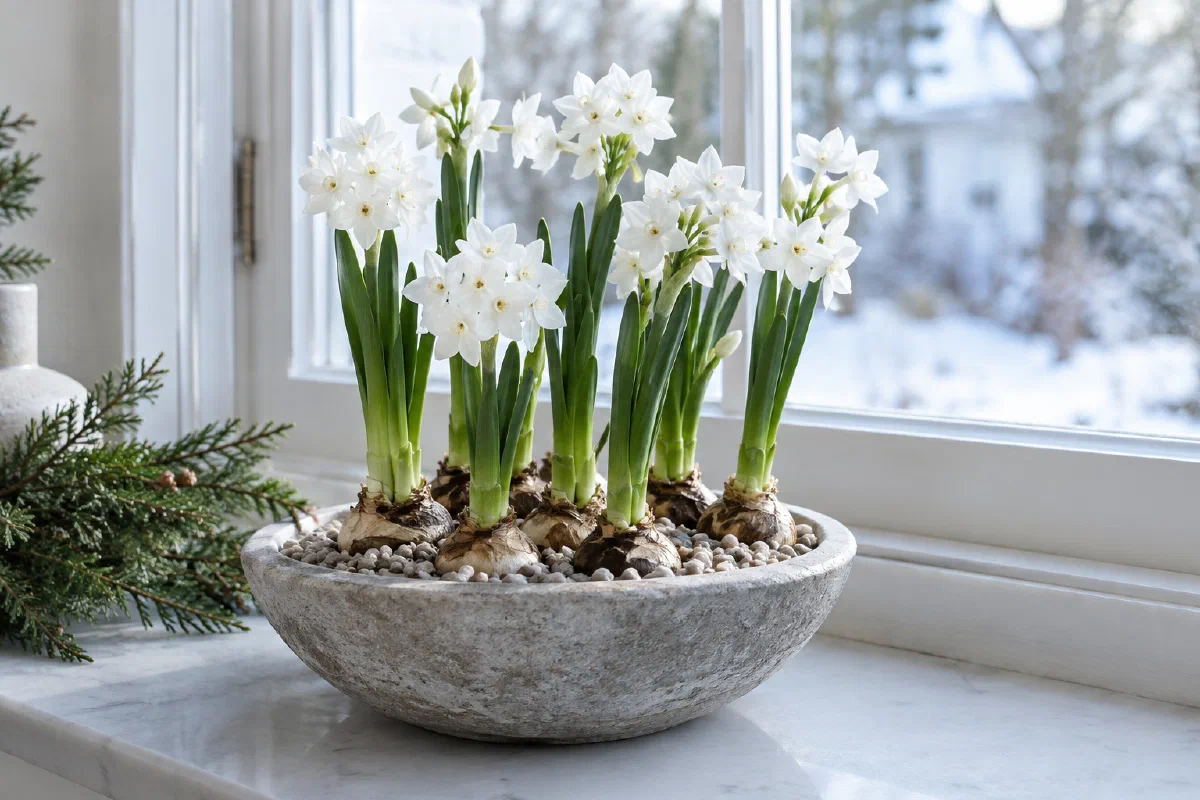
Plant paperwhites 4 to 6 weeks before you want them in bloom. For Christmas Day, that means about November 12 to 27, and planting by November 15 leaves a little margin. Start much earlier and the flowers can be finished before the table is set. Start later and you are looking at a bowl of green shoots when guests arrive.
Anyone can grow paperwhites in a bowl. Plant the bulbs in soil or washed gravel, add water only to the base of the bulbs, and give the shoots the brightest light you have. A cool room keeps the stems shorter. If the bowl still flops, stake it or use the measured alcohol method below.
Paperwhites are a narcissus plant, a type of daffodil, and each stem carries a cluster of small, fragrant white flowers. They are not winter hardy in most homes’ outdoor conditions, and the bulbs and plant are toxic to dogs, cats, and horses, so choose a display spot pets cannot reach. The ASPCA lists Narcissus, including paper whites, as toxic.
How long do paperwhites take to bloom?
Four to six weeks after planting is the range Illinois Extension gives, and University of Missouri Extension says the same. Gardeners say you force paperwhites when you grow them indoors out of season, and they are the forcing bulb that skips the cold: Iowa State notes they do not need the cold storage that tulips, daffodils, hyacinths and crocuses do.
Treat the range as a planning target for how long paperwhites take to bloom. Cornell’s Flower Bulb Research Program says the flowers usually open within two to three weeks of planting, so a warm, bright bowl can run ahead of the calendar. Iowa State adds that the yellow ‘Grand Soleil d’Or’ takes one to two weeks longer than the white varieties.
When to plant paperwhites for Christmas
Count back from the date you actually want flowers. The middle column runs from six weeks back to four weeks back.
| Flowers wanted | Plant between | Good to know |
|---|---|---|
| December 1 | October 20 to November 3 | A warm room can open them days early, so lean to the later date there |
| December 15 | November 3 to November 17 | Check for shoots every few days from the second week |
| December 24 to 25 | November 12 to November 27 | Plant by November 15 for margin; a second bowl a week or two later covers a slow one |
| New Year’s Day | November 20 to December 4 | Start one bowl at each end of the window |
House of Hawthornes, a home-garden blog that search results often cite, gives the same answer in plainer dates: plant November 1 to 15 for Christmas Day, with November 25 as the latest, and mid to late October for flowers in early December. Both fit inside the 4 to 6 week count, and neither asks for anything fancy, even if indoor gardening is new to you.
Lean toward the earlier date in a cool room or a dim window, and the later date in a warm, bright one.
The best insurance is succession planting. Start one bowl, then a second 10 days to two weeks later. Illinois Extension suggests a new planting every 10 days for continuous bloom, and Missouri suggests two-week intervals. A staggered pair looks better than one overgrown bowl that missed the table.
Iowa State Extension’s paperwhite forcing instructions use a shallow container, washed gravel or stones, and water kept at the base of the bulbs. Illinois Extension also notes that paperwhites can be grown in soil or pebbles and that a cool location can help with lanky growth.
What month do paperwhites bloom?
The month after you plant the paperwhite bulbs, give or take. Bulbs set out in late October flower from late November into early December, mid-November bulbs flower around Christmas, and bulbs planted in early December flower in January. There is no fixed bloom month. The planting date sets it.
Why do people plant paperwhites for Christmas?
Because they skip the cold. A tulip or hyacinth needs weeks in a chilled spot before it will flower indoors. Paperwhite narcissus bulbs do not, so a bulb bought in early November can be in bloom for December. Planting paperwhites for Christmas is mostly a matter of counting weeks. Four to six weeks from bowl to flower is also about the length of the run-up to Christmas.
Fragrance is the catch, and paperwhite varieties differ. Illinois Extension says ‘Ziva,’ the most widely grown variety, can smell strongly musky, and names ‘Inbal,’ ‘Wintersun’ and ‘Grand Soleil d’Or’ as milder choices.
Set up a shallow bowl with washed gravel
A paperwhite bowl is a small project, not a vase of cut flowers. The bulbs need room for roots and a container that will not tip when the foliage rises. A sunny window and a cool room are the two display conditions to plan before you plant.
Use these supplies to force paperwhites in a bowl:
- a shallow, clear bowl or watertight cachepot with no drainage holes, wide enough for four to six bulbs;
- at least 1 to 2 inches of washed gravel, pebbles, marbles, glass beads, or clean stones in the bottom;
- firm narcissus bulbs with no soft spots, mold, or bruising, and the biggest ones you can find, since larger bulbs generally give more flowers;
- water to add only until it touches the bottom of the bulbs;
- a saucer or tray under any pot with drainage.
Set the bulbs pointed side up and about an inch apart. Add stones between them so the bulbs cannot roll as the roots develop, and leave the tips exposed. The water should touch the bottom of the bulbs, not cover them. None of the Illinois, Iowa State or Missouri instructions call for soaking the bulbs first; they go straight onto the stones or into soil.
After planting, Illinois Extension suggests a cool spot, 50 to 60 degrees Fahrenheit, for a week or two to encourage roots. Iowa State uses a cool, dark spot at 45 to 50 degrees for two to three weeks, until the shoots are about 3 inches tall. Count either one inside the four to six weeks, then move the bowl to the brightest window.
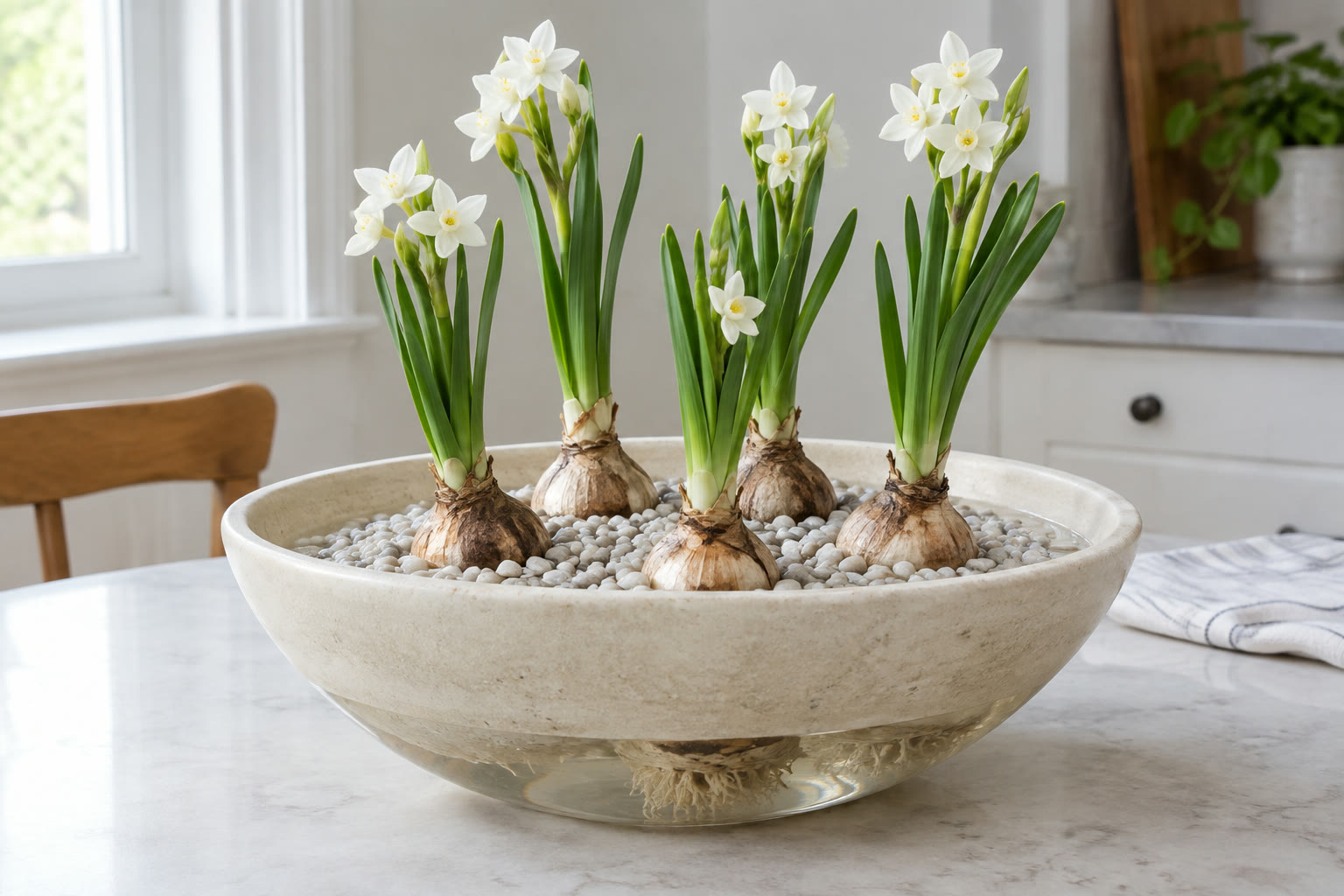
Do not place the bowl on a radiator, above a stove, or in a draft that swings from hot to cold. A stable windowsill or console a few feet from a bright window is easier to monitor and less likely to be knocked over.
A tall clear glass vase also works, as long as it is glass so light reaches the roots. A tall stoneware vase does not.
Paperwhites in soil or in water
Both work. In soil, fill a pot about two-thirds full of potting soil, set the bulbs on it, and cover them so only the tips show. Water well, let it drain, and keep the soil moist. University of Missouri Extension says bulbs in potting mix are easier to care for and topple less than bulbs in gravel and water.
In a pebble bowl you check the water level every day, and the top-heavy stems are the ones that flop. Choose gravel for the look and for watching the roots grow, and soil if you want the least fuss.
Give paperwhites a sunny window and cool room
Floppy stems usually begin with stretched leaf and stem growth. Put the bowl in the brightest window available once the shoots emerge, with as much sunlight as the room allows. Illinois Extension recommends as much light as possible and temperatures in the 60s Fahrenheit to help prevent lanky growth. Iowa State moves the bowl to a sunny window at 60 to 70 degrees once the shoots are 3 inches tall.
Turn the bowl a quarter turn every day or two so one side does not lean toward the window. If the window is very cold at night, move the bowl back from the glass rather than letting the roots freeze. If the room is warm all day, use a bright guest room, enclosed porch, or other cool indoor spot that remains above freezing.
When the flower heads open, move the bowl away from direct midday sun and heat. That slows the rush to finish and keeps the flowers useful for the holiday meal rather than only for the photograph.
Four ways to keep stems from flopping
Paperwhites often reach 18 to 20 inches, which is why Iowa State Extension says they often need staking. Work from the least fussy fix to the more involved one.
- Start with a cool, bright location. Light and cooler temperatures address the growth pattern before the stems get tall.
- Pack the stones around the bulbs. The stones do not shorten a stem, but they stop a loose bulb from shifting as the roots push.
- Add a simple support. A thin plant stake, twig, or small ring can hold the stems without hiding the flowers. Tie loosely with soft twine so the stalks are not pinched.
- Use the alcohol solution only after shoots are 1 to 2 inches tall. In Cornell’s tests, stems ended up a third to a half shorter, with flowers of the same size, fragrance, and staying power. Start the bulbs in plain water. Once the shoot is 1 to 2 inches long, pour the water off and refill with a 4% to 6% alcohol solution. For 70% rubbing alcohol, use one part alcohol to eleven parts water. For 40% spirits such as gin or vodka, use one part spirit to seven parts water. Illinois Extension repeats the mixing guidance, and Cornell’s original write-up has the research. Never use beer or wine because the sugar can encourage mold and bacteria, and do not make the solution stronger.
The alcohol method is optional. A well-lit, cool bowl with a small ring support is a calmer choice if children or pets could reach the display, and it avoids turning a plant-care project into a measuring exercise.
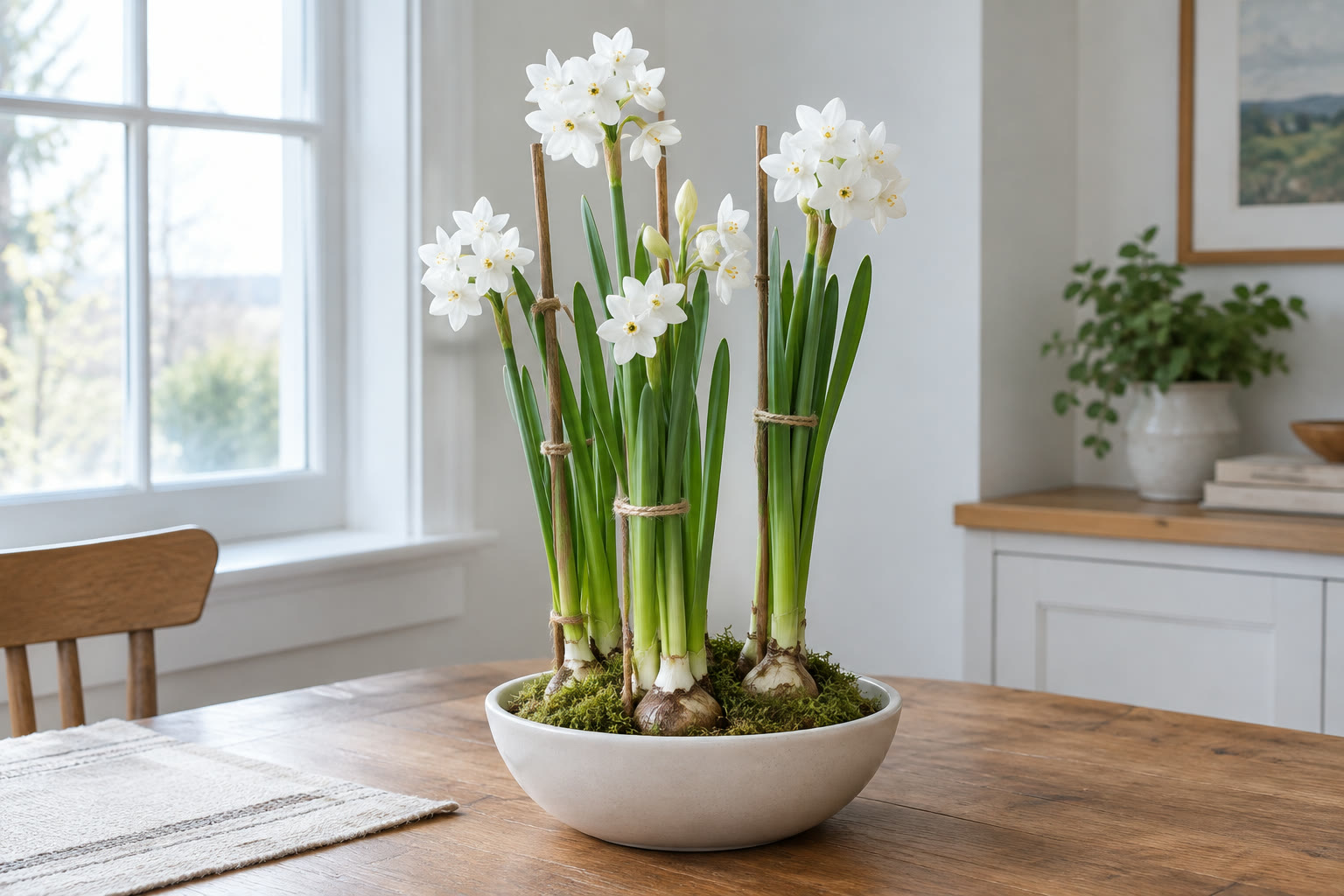
Choose a Display Size for the Room You Have
The same bulbs can look intentional in a small apartment or a larger entry if the container matches the place.
- Windowsill bowl: use three to five bulbs in a low neutral bowl. Keep the opening and any nearby window latch clear. This is the best choice for a small kitchen or apartment windowsill.
- Table bowl: use five to seven bulbs in a heavier ceramic bowl on a tray. Leave space around the bowl for plates and hands. A few plain evergreen cuttings nearby are enough; extra ornaments make the roots and white flowers disappear.
- Entry or mantel bowl: use two matching low bowls rather than one oversized bowl. Place them at different depths so the entry still has a place to drop keys and the mantel does not become top-heavy.
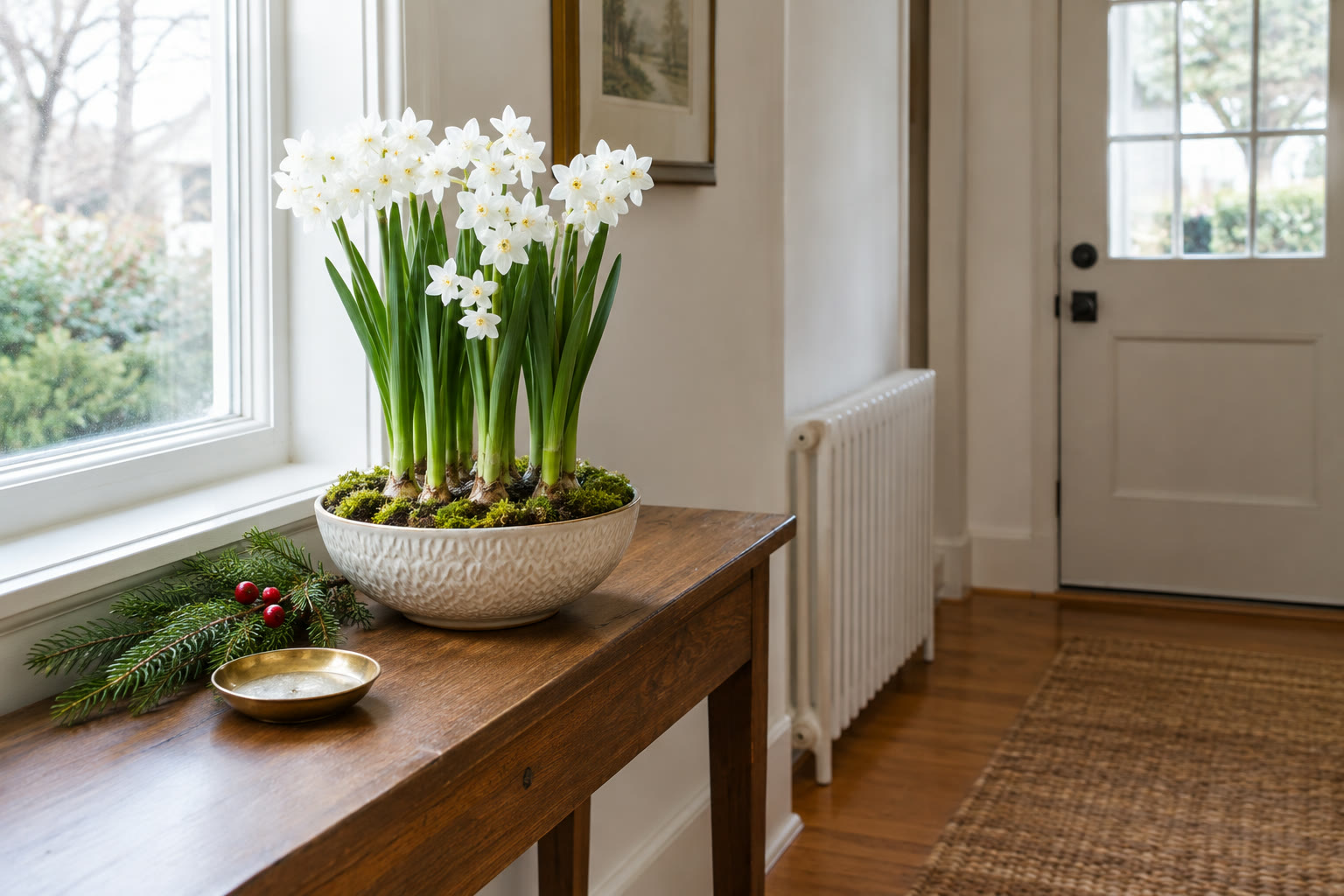
Watering and pet safety
In a pebble bowl, check the water level every day while roots establish. Keep water at the base of the bulbs. In soil, water when the surface begins to dry, then let excess drain. Never leave a planted container standing in a saucer of water.
Keep the bowl and loose bulbs away from pets. The ASPCA’s narcissus entry identifies the bulbs as the most poisonous part and lists vomiting, diarrhea, tremors, and other signs after ingestion. If a pet chews a bulb or develops symptoms, contact a veterinarian or animal poison service promptly.
What to do with paperwhites after they bloom
The flowers last about two to three weeks once they open, and the foliage stays presentable for a few more, according to Garden Design. Cut the spent flower stalks if you want the bowl tidy.
Can you keep the bulbs in the pot for another round? Not reliably. Iowa State says forced paperwhites cannot be forced again and are not winter hardy outdoors, and Missouri says they are normally discarded after the blooms fade. Garden Design notes that a rebloom indoors is possible but usually not worth the fuss. Compost or discard the bulbs, clean the bowl, and buy fresh bulbs next fall.
What to Read Next
- Christmas planter ideas for indoors and outside includes a low paperwhite bowl plus eight porch, balcony, window-box, and table designs.
- Winter home decor after the tree comes down helps place paperwhites in a room after the holiday color is gone.
- Indoor Christmas greenery that lasts covers the cut greenery that pairs well with a living bulb bowl.
- Christmas hostess gift ideas for every kind of invite explains when a planted bulb is a useful gift and when it creates a chore.
- Cozy Christmas living room ideas on a budget has more low-buy ways to make a seasonal room feel warm.
- Amaryllis flower arrangements for Christmas shows eight ways to display potted and cut stems.