A no-dig backyard water feature uses an above-ground basin and a recirculating pump, so it can add moving water without excavating a pond. Choose a level, load-bearing base, a reachable pump and a basin you can empty. Check outdoor electrical requirements and refill access before buying parts. A bowl bubbler is a useful small trial; a stacked-pot or hidden-reservoir build needs more planning.
No-Dig Backyard Water Feature Ideas for a Weekend Corner
Last updated:
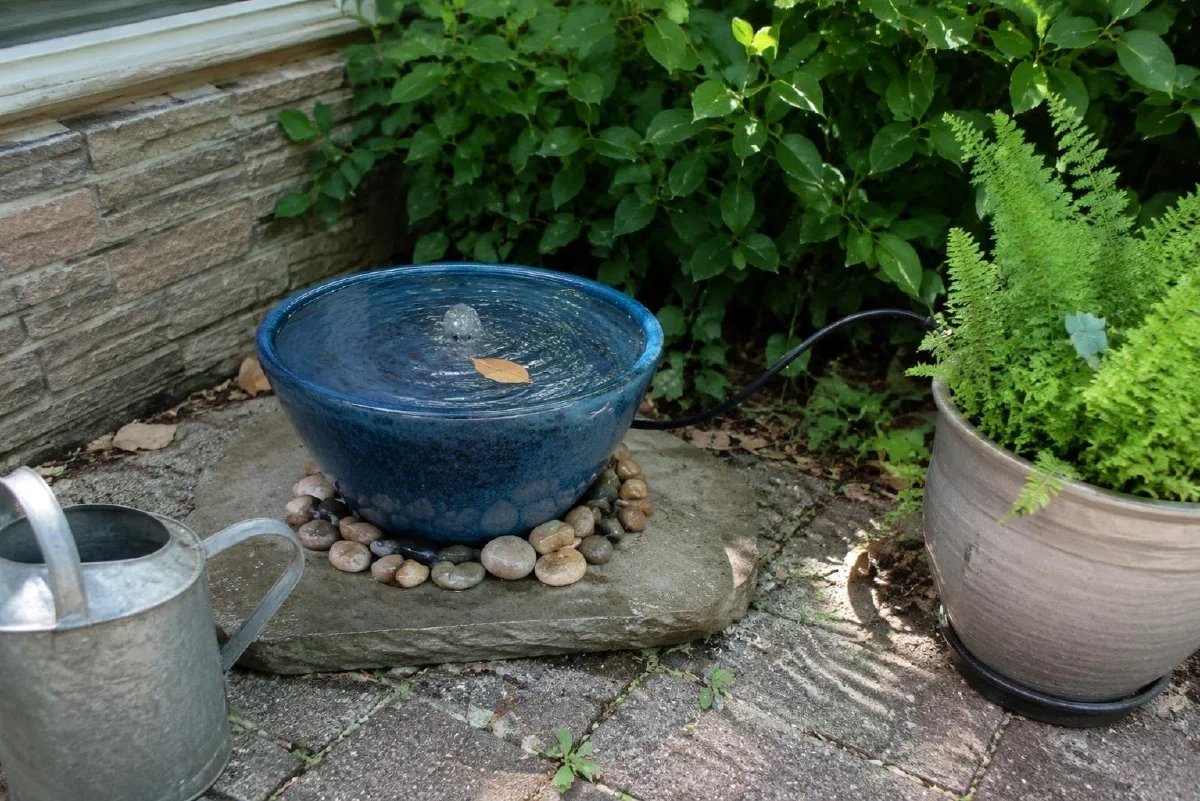
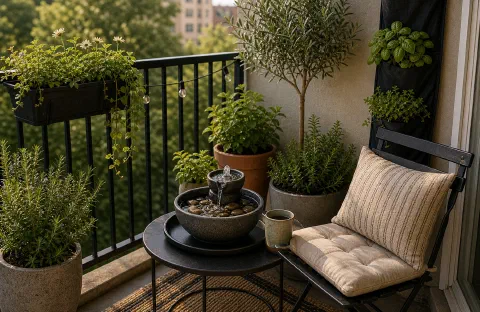
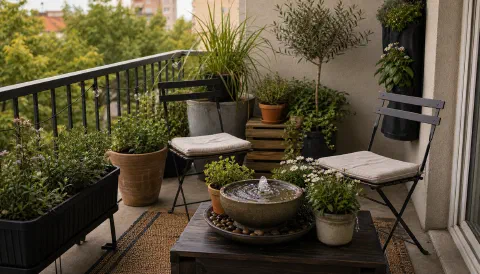
Illustrative scene, not a photograph of the linked products.
The water recirculates, but evaporation and splash still require top-ups. Keep the feature visible from a place you use so a low water level is easier to notice.
Can you build a pond without digging?
Yes. There are three no-dig ways: fill a watertight container such as a half barrel or tub, set a stock tank on a level base, or build a raised wood frame and line it with pond liner. A bubbling fountain in a bowl or pot is the smallest version and needs only a pump.
Compare six no-dig builds
| Build | Materials | Power | Best for |
|---|---|---|---|
| Single-bowl bubbler | Watertight bowl or glazed pot, pump, smooth stones, silicone sealant for any hole | Floating solar fountain (2 to 3.5 W) or a plug-in pump | A patio corner and a first try |
| Stacked-pot fountain | Supported pots, tubing, seals, a collecting basin | Plug-in pump | Height and sound in a small footprint |
| Hidden reservoir fountain | Reservoir, load-rated cover or grate, pump access | Plug-in pump | Bubbling stones with no visible basin |
| Container pond (half barrel or tub) | Watertight container, liner if it leaks, stones for a ramp, up to 5 plants (RHS) | Optional solar bubble fountain | A small wildlife pond |
| Stock tank pond | 100 to 300 gallon tank, pump of 150 to 400 GPH, bricks or pots for plant shelves (Urban Lotus Project) | Plug-in pump on a GFCI outlet | A real planted pond in a weekend |
| Raised frame pond | 2x6 pressure-treated boards, steel corner brackets, pond liner, furring strips (Hawk Hill) | Optional pump | A larger pond, on any ground |
The first three are fountains. The last three are ponds.
How to make a no-dig water feature in a weekend: materials and 6 steps
This is the bowl or tub build, the quickest of the six. Gardening Know How says any container can become a micropond as long as it is watertight.
Materials: a watertight bowl, glazed pot or tub; exterior silicone sealant suited to submersion; a floating solar fountain or a small submersible pump; a few large smooth stones; water, ideally rainwater; and, if you want plants, up to five small pond plants.
- Pick the spot. The RHS wants a place you can see easily with some sun but not all day, since the water warms and evaporates fast in full sun.
- Set the container down before you fill it. Water weighs about 8.3 pounds a gallon (Urban Lotus Project), so a 20 gallon tub holds roughly 166 pounds of water. Check it sits level.
- Test for leaks. Fill it with water. Gardening Know How says drainage holes and small damage are easy to fix with silicone sealant labeled for submersion. Let the sealant cure and refill.
- Fill with rainwater if you can. The RHS says tap water carries nutrients that encourage algae.
- Add the fountain. A floating solar fountain needs no plumbing or outlet, and Gardening Know How notes the moving water discourages mosquitoes, which prefer still water. For a plug-in pump, choose by flow at your lift using the pump section below.
- Add stones and plants. Stack large stones as a ramp so wildlife can climb out (RHS), and set 3 to 5 small plants. Hide the pump cord and tubing behind the stones.
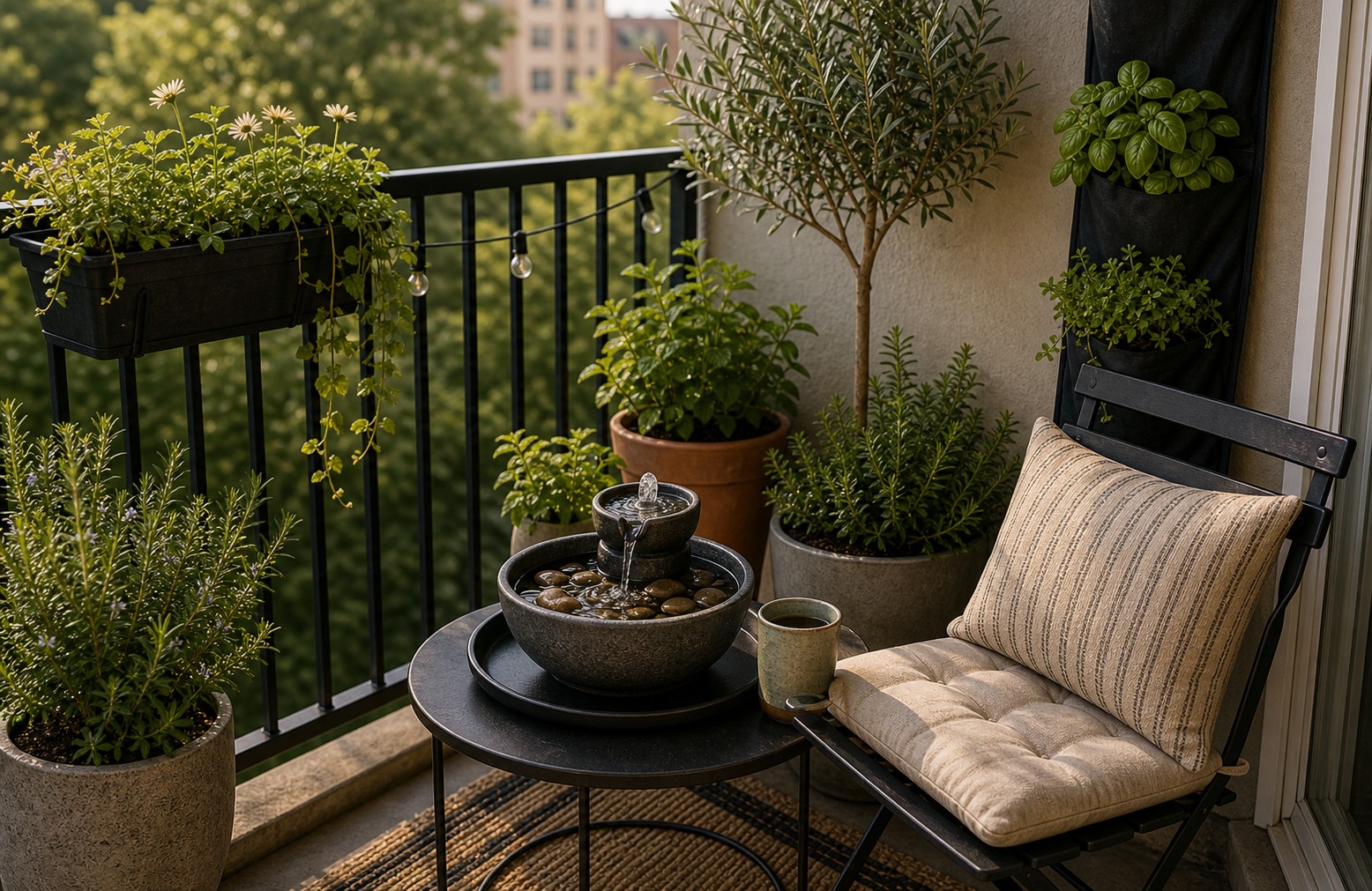
For a larger build, the stock tank takes the same six steps with two additions. Set the tank dead level, and build plant shelves inside with stacked bricks or upturned pots: marginal plants sit 2 to 6 inches below the surface and water lilies 12 to 18 inches down. Size the pump to turn the water over about once an hour, so a 150 gallon tank wants a pump rated around 150 to 200 GPH at its working lift (Urban Lotus Project). Let it run one to two weeks before adding fish.
Container pond steps: half barrel, tub or stock tank
These are the RHS steps for a container pond, with the Urban Lotus Project notes for a stock tank.
- Choose the container. A reclaimed sink, half barrel, large tub or stock tank. Use a pond liner if it is not watertight.
- Prepare the site and base. Pick the position first, because it is hard to move once filled. A deck or patio base must be level and load rated.
- Add liner and water. Fill with rainwater, and with a stock tank treat tap water with a dechlorinator before adding plants.
- Add wildlife access and plants. Build a ramp of stones, bricks or logs. Three to five plants is usually enough for a mini pond, mixing floating and upright plants. Floating plants such as water lettuce or frogbit shade the surface, and the Urban Lotus Project aims for 40 to 60 percent cover.
- Let nature come. The RHS says not to add pondlife or frogspawn from elsewhere, since you could introduce disease or invasive weeds.
Galvanized stock tanks can leach zinc when new, so rinse them well and let them weather, or add a liner. Black plastic tanks do not have that problem.
Raised frame pond on any ground
Hawk Hill built a no-dig pond on rocky, uneven ground. Screw a frame of pressure-treated 2x6 boards together with strong steel corner brackets, and use shims to level the top. Spread pond liner over the frame with at least 3 feet of overhang on each side, then fill about a third of the way with a hose to weigh it down and work out the folds. Keep filling, adjusting shims as the water shows any slope. With the pond full, trim the liner to a 6 to 10 inch overhang and pin it under furring strips with a screw every 12 inches.
Do not assume a general-purpose grate can support a boulder or stacked pots. Use components designed for the weight and arrangement. A filled feature may be too heavy to move safely; drain it before relocating it and follow the component instructions.
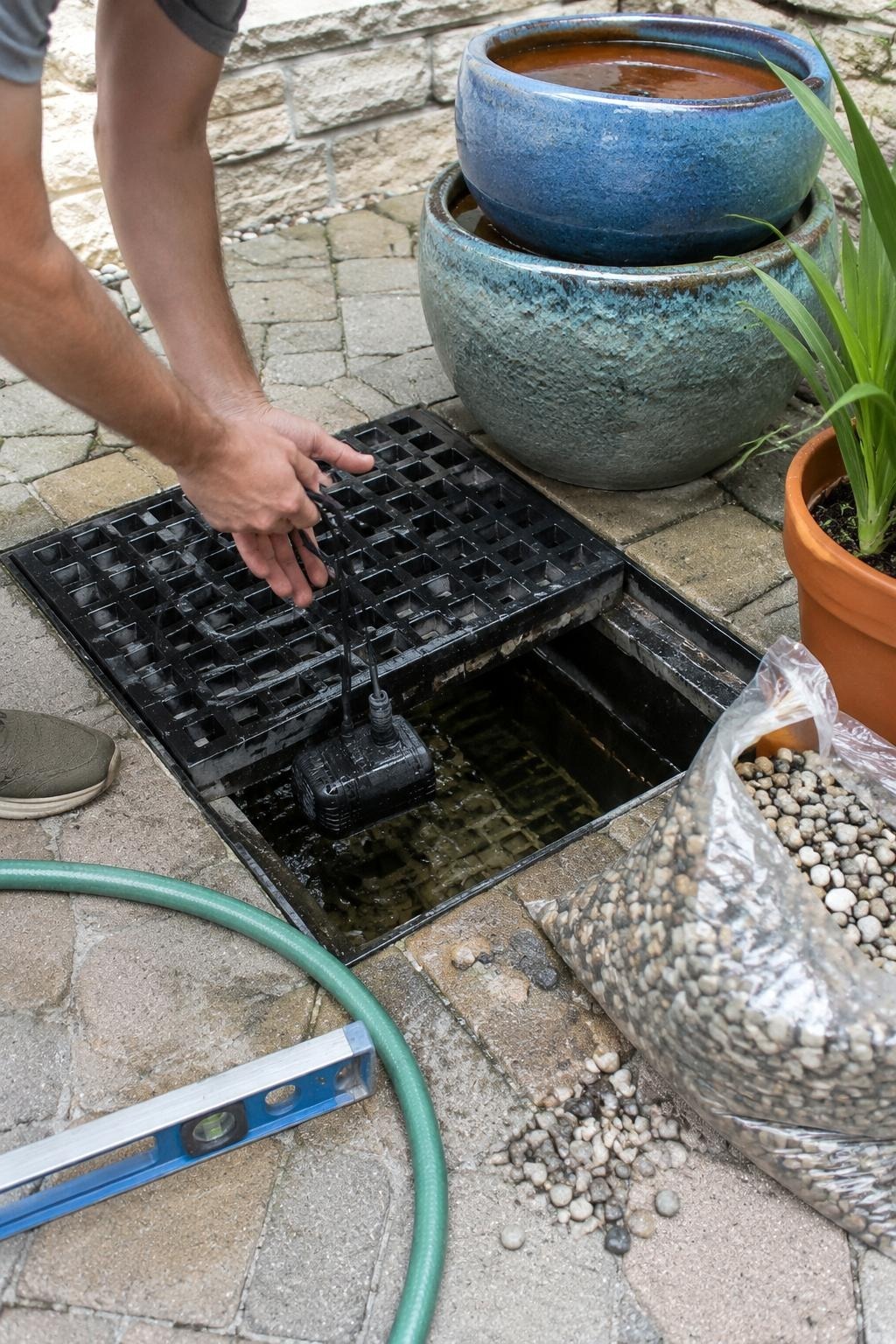
Choose the pump by flow at the required lift
Gallons per hour describes flow, while lift or head describes how high the pump moves water. Maximum figures are not the flow you will get at your spill point. Tubing, bends and height affect delivery; use the maker’s flow curve and installation instructions.
Measure from the pump to the spill point and record the tubing size. Check minimum submersion, power, cord length and whether outdoor use is permitted. A larger headline GPH number can produce too much splash for a small bowl.
| Exact pump | What to check for your build |
|---|---|
| DOMICA 90 GPH mini pump, AC-powered (opens Amazon in a new tab)As an Amazon Associate, we earn from qualifying purchases. Full disclosure. | Compare delivered flow and working lift for a small bowl, plus minimum water level and permitted use |
| CWKJ 400 GPH pump (opens Amazon in a new tab)As an Amazon Associate, we earn from qualifying purchases. Full disclosure. | The listing gives a 6.56-foot maximum lift and 6.5-foot power cord; neither establishes the working flow or a safe cable route |
| VIVOSUN 800 GPH pump, green (opens Amazon in a new tab)As an Amazon Associate, we earn from qualifying purchases. Full disclosure. | The listing gives a 10-foot maximum lift. Confirm that the flow can suit your basin rather than overshooting its edge |
All three were in stock on Amazon on October 11, 2026. These are different capacities to compare with the build, not price tiers. The retailer’s pond or fountain wording does not replace the product’s outdoor-use and electrical instructions. If the supplied instructions do not permit your installation, choose an appropriate complete outdoor fountain or another approved pump.
Plan power before arranging the basin
Run a plug-in pump from a GFCI-protected outdoor outlet, which the Urban Lotus Project says to do with any water feature. Follow the pump’s instructions for connections and any permitted extension cord, keep connections away from standing water, and keep cords out of walking routes.
Switch off and disconnect power as instructed before accessing the pump. Submersible does not mean the plug, connection or every surrounding component can be submerged.
A solar pump avoids the outlet. Gardening Know How lists floating solar fountains from under 2 W for a bird bath up to 3.5 W with a detachable panel on a 9.8 foot cord. A solar fountain without a battery only runs while the sun shines on the panel, so pair it with a rain chain, which sends rainwater into the container on wet days.
Test stability and splash before hiding parts
Place the empty basin on a suitable level base and check for rocking. Confirm that the surface can support the filled weight. A balcony needs particular attention to load, drainage and permission; the apartment-balcony water-feature guide covers a smaller starting point.
Fill and test the pump according to its instructions. Adjust flow and the spill arrangement while you can reach the parts. Keep decorative stones secure without blocking the intake. Do not run a pump dry or lift a heavy filled basin to level it.
Listen from your normal seat and inspect the surrounding ground for splash. A higher spill can change sound and increase loss; tune it to the basin rather than a promised distance or sound level. Keep the feature away from walking edges and places children or pets can access water or unstable parts.
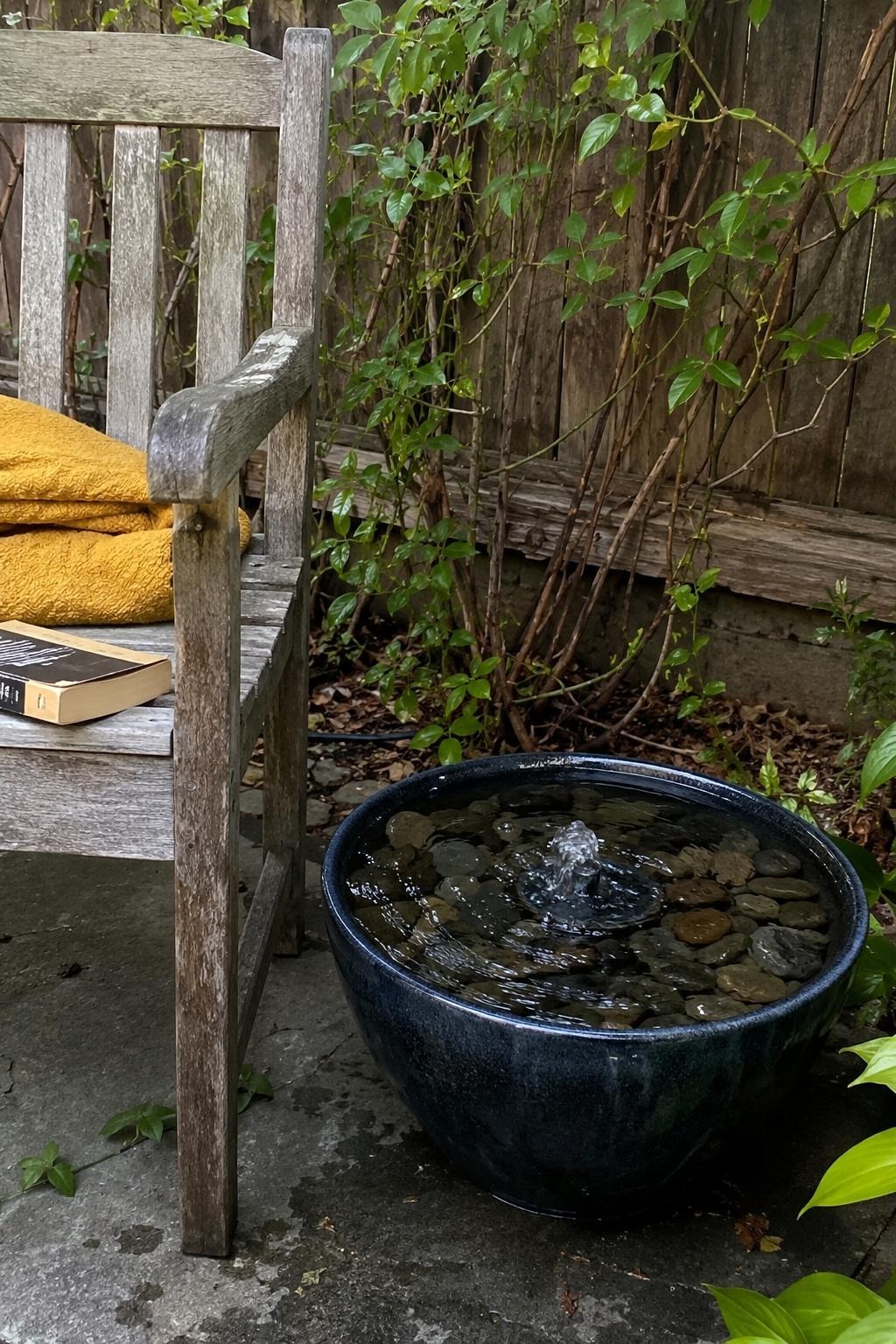
Make access part of the design
You need to check water level, remove debris and clean the pump on the manufacturer’s schedule. Small bowls can lose water quickly in heat or wind, so inspect the actual level rather than relying on a weekly reminder alone.
Leave enough room to remove the intake and reach the tubing without lifting every decorative piece. A cover that conceals the pump completely may make a minor blockage a difficult job.
Follow the instructions for cleaning, permitted additives and winter storage. The RHS aftercare list for a container pond is short: top up the water, especially in hot weather, scoop out algae if it takes over, cut off dying leaves before they fall in, and consider a mini bubble fountain to oxygenate the water. Do not add treatments unless they are labeled for your exact setup.
Small water freezes fast. The Urban Lotus Project warns that a 100 to 200 gallon tank can freeze through in a cold climate, and recommends zone 6 and colder gardeners move fish indoors for winter. Hawk Hill says an above-ground pond freezes faster than an in-ground one, yet its fish survived zone 6 winters below 10 degrees F with a pump circulating and a 100 gallon trough sunk in the pond for insulation. Drain and store a pump when its maker says to.
Buy and build in a useful order
- Choose the basin location, stable base and permitted power route.
- Measure the spill height, tubing needs and filled weight.
- Confirm compatible components and access for care.
- Test flow, sound and splash before concealing the pump.
- Keep a refill and cleaning routine based on the actual conditions.
What plants can I put in a small water feature?
For a mini pond the RHS suggests mini waterlily ‘Pygmaea Helvola’, water forget-me-not, corkscrew rush, lesser spearwort and arum lily, three to five plants. In a raised pond, Hawk Hill grew watercress, which likes cool, moving water, and creeping Jenny, which tolerates being submerged.
How deep does a no-dig pond need to be?
Depth is set by the plants. The Garden Glove puts a dug decorative pond without fish at 12 to 18 inches, and a container only needs to match that. Inside a stock tank, marginal plants sit 2 to 6 inches below the surface and water lilies 12 to 18 inches down, using stacked bricks or upturned pots as shelves (Urban Lotus Project). A tank holds 50 to 300 gallons, and 150 to 200 gallons is the sweet spot for most backyards.
What is the cheapest way to make a pond?
Reuse a watertight container you already own. Gardening Know How says any container works if it holds water, and silicone sealant fixes small holes. A solar fountain or a few plants completes it.
How do you look after a small water feature?
Top up the water often in hot weather, scoop out algae, trim dead leaves before they fall in, and clean the pump on the maker’s schedule.
Does it need permanent plumbing?
Usually not for the small recirculating builds described here. You fill the basin and replace water lost to splash or evaporation. Position it where that refill work is manageable.
Can a water feature work without a pump?
Yes. A still bowl needs no pump but makes no sound, and mosquitoes prefer still water. A floating solar fountain adds movement with no plumbing and no outlet, and the water stays moving in daylight. The bird-bath guide offers a separate shallow-water setup.
Should the pump run all the time?
Use the maker’s operating instructions, minimum water level and temperature limits. Turn it off for maintenance as instructed. A low basin, blocked intake or freezing condition needs attention before operation continues.
Will it attract birds or pests?
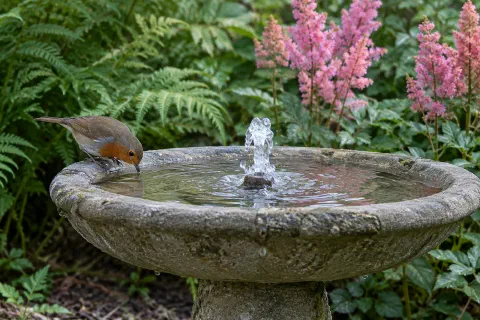
Yes, wildlife finds a pond quickly. The RHS says spring is the best time to make a container pond because the plants settle fast and wildlife soon finds it, and a ramp of stones lets frogs and other animals climb out. Keep the water clean, and use the separate bird-bath depth guidance if you want birds to bathe there.
For the rest of the corner, compare backyard oasis layouts and shade planting with moss, ferns and stone.
Sources
- RHS: how to make a wildlife container pond: container pond materials, steps, plants and aftercare.
- Urban Lotus Project: how to make a stock tank pond: tank sizes, pump sizing, plant shelf depths and winter.
- Hawk Hill: no-dig DIY pond: raised frame build and winter notes.
- The Garden Glove: backyard pond on a budget: pond depth for a decorative pond.
- Gardening Know How: 10 DIY solar fountain water features: container ponds, solar fountain wattage and rain chains.