March planting gets native perennials established before peak pollinator activity in late spring. Eight species covered here bloom April through June, supporting mason bees, early butterflies, and migrating hummingbirds. Direct-seed options cut costs to $3-5 per plant versus $12-18 for nursery stock.
What You Need
| Item | Specifics | Cost |
|---|---|---|
| Native seed packets | Species listed below, 50-100 seeds each | $3-6 per packet |
| Nursery plugs (alternative) | 2-3 inch pots, locally sourced when possible | $8-15 each |
| Compost | 2 cubic feet per 25 square feet bed | $8-12 per bag |
| Mulch | Shredded hardwood bark, 2 inch layer | $5 per cubic foot |
| Soil thermometer | Digital probe style | $12-18 |
| Row cover (optional) | Floating, for frost protection | $15-25 per 10x20 ft |
Source seed from regional suppliers. Prairie Moon Nursery and American Meadows stock zone-appropriate genetics. Avoid big-box “wildflower mixes” that contain non-native cultivars.
When to Plant by Zone
| USDA Zone | Soil Temp | Safe Planting Window |
|---|---|---|
| 5 | 45-50°F | March 20-April 5 |
| 6 | 50-55°F | March 10-25 |
| 7 | 55-60°F | March 1-15 |
| 8 | 60°F+ | Late February-March 10 |
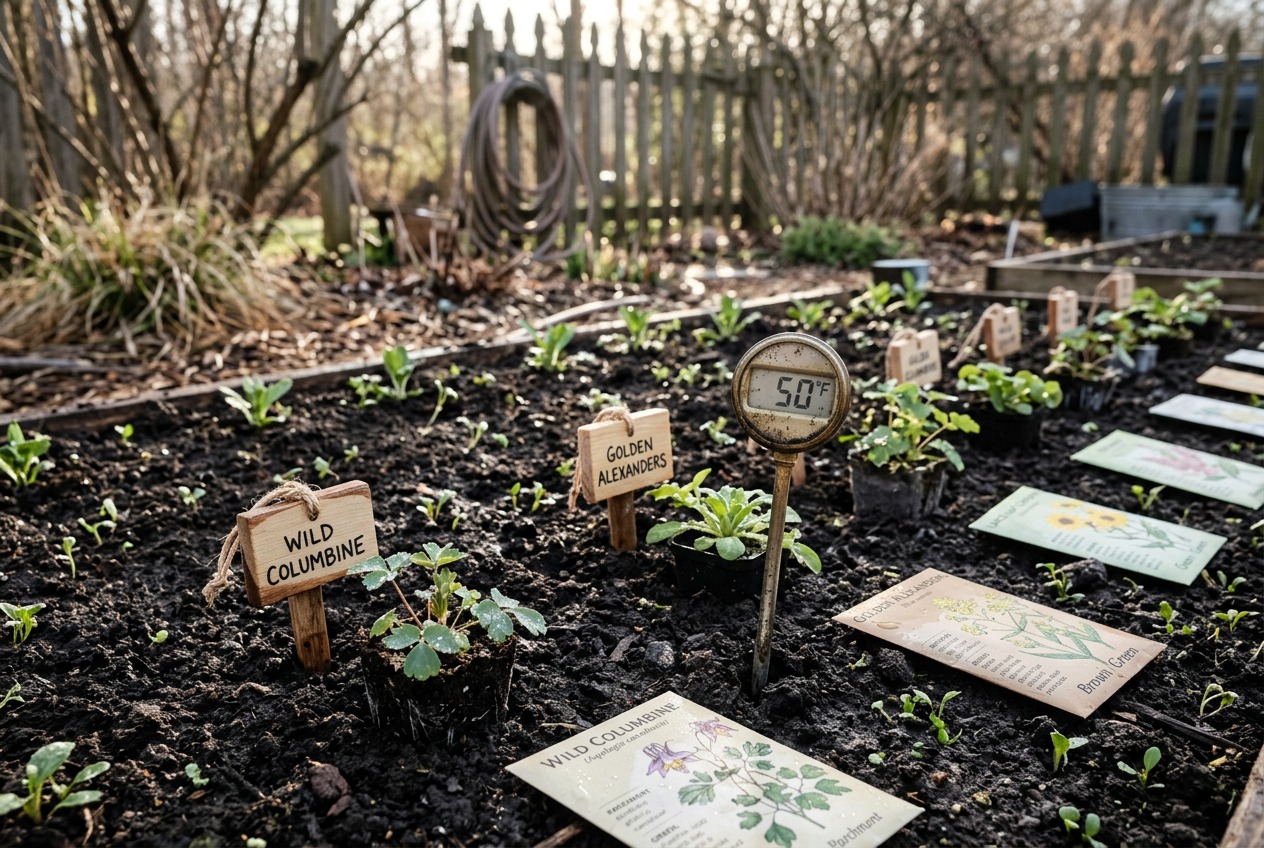
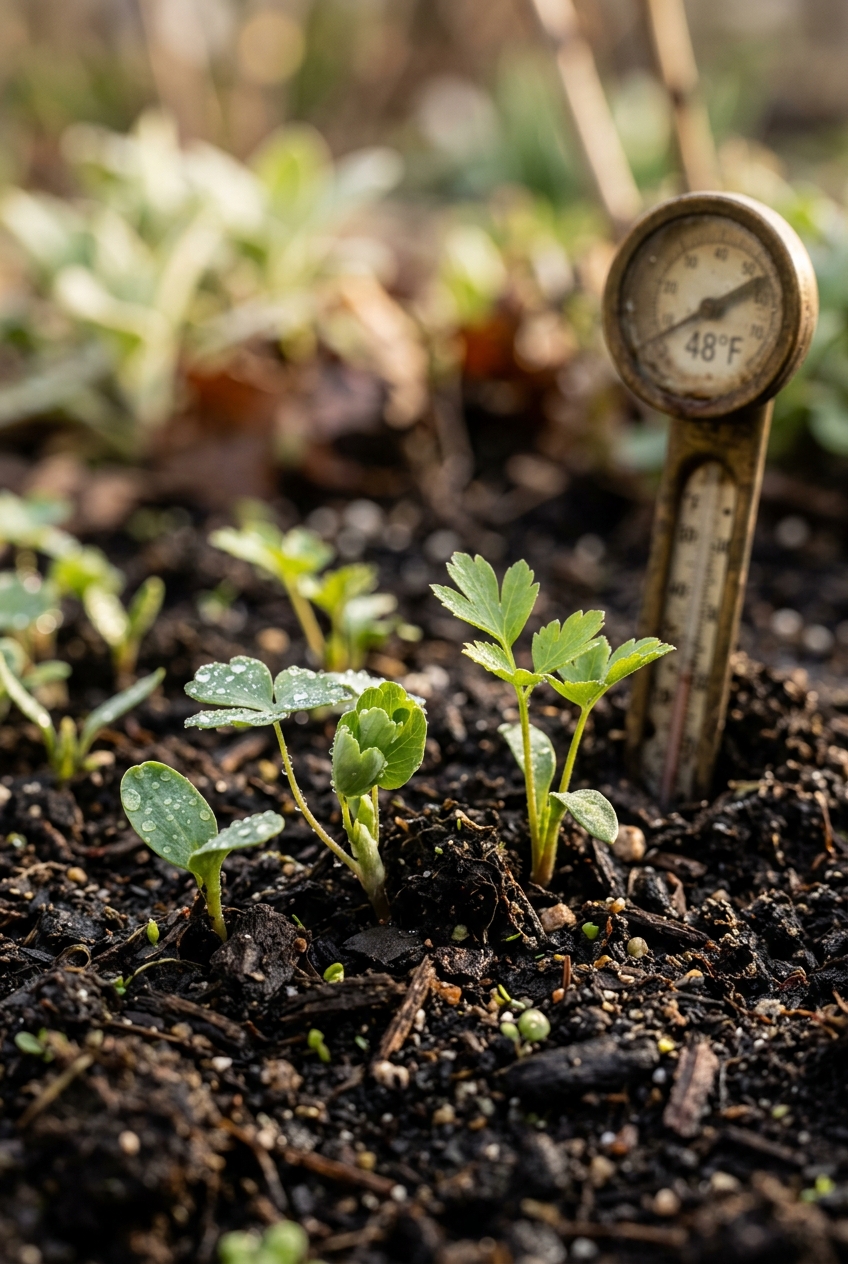
Check soil temperature at 4 inches depth, 9am. Three consecutive days at target temp means safe planting. Frost after planting won’t kill established roots, but row cover protects new growth.
8 Species to Plant Now
Early Bloomers (April-May)
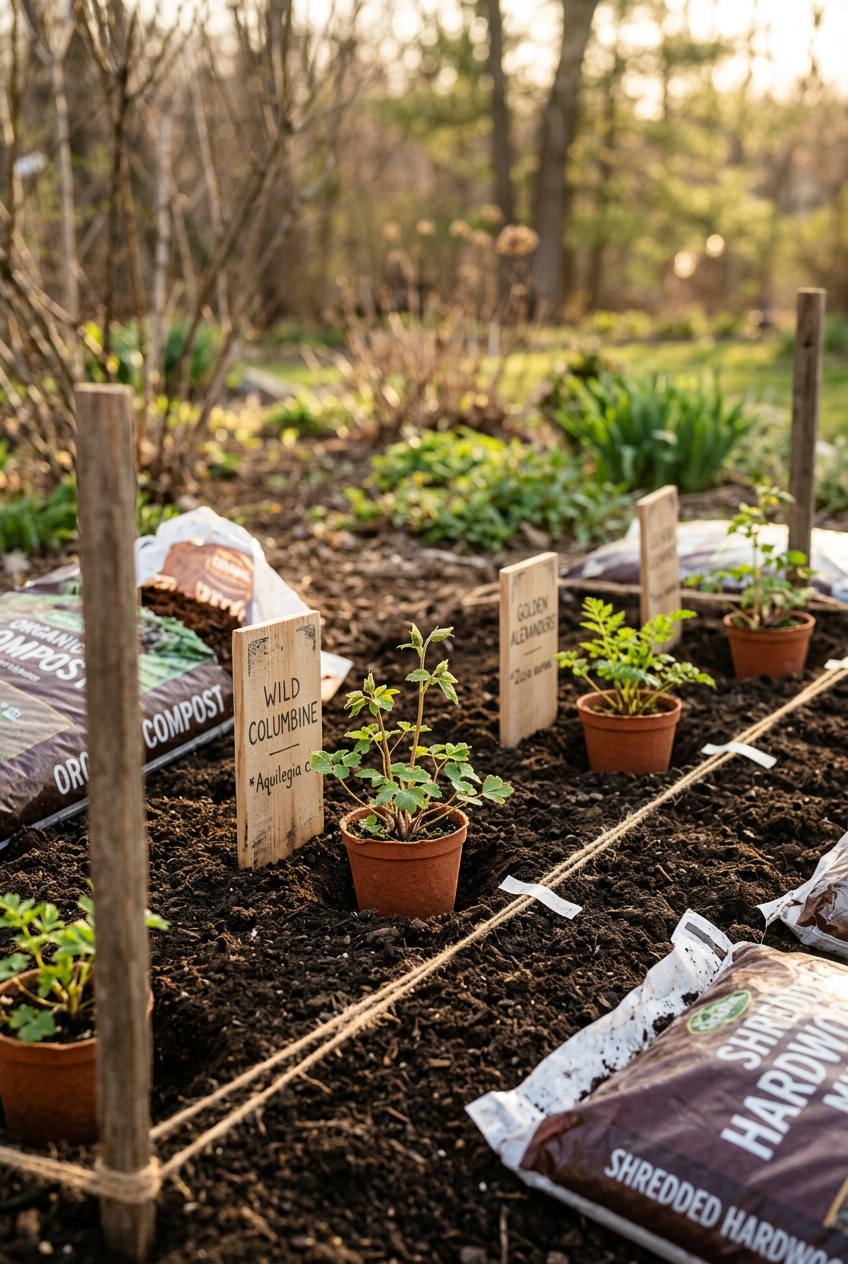
Wild Columbine (Aquilegia canadensis) Zones 3-8. Red and yellow tubular flowers. Hummingbirds hit these first after migration. Direct seed in March or plant 4 inch nursery pots. Space 12 inches apart. Grows 18-24 inches tall. Tolerates part shade. Self-seeds moderately.
Wild Geranium (Geranium maculatum) Zones 4-8. Pink to lavender blooms. Native bees, especially Andrena mining bees, use this heavily. Direct seed or plugs. Space 15 inches. Reaches 18 inches. Prefers dappled shade but adapts to full sun with consistent moisture.
Golden Alexanders (Zizia aurea) Zones 4-8. Yellow umbel flowers. Host plant for black swallowtail caterpillars. Direct seed or 3 inch pots. Space 18 inches. Grows 24-30 inches. Full sun to part shade. Blooms late April through May.
Mid-Spring Bloomers (May-June)
Lanceleaf Coreopsis (Coreopsis lanceolata) Zones 4-9. Bright yellow daisies. Attracts small native bees and flower flies. Direct seed heavily, thin to 12 inch spacing. Reaches 18-24 inches. Full sun. Blooms for 4-6 weeks. Cut back after first flush for rebloom.
Smooth Penstemon (Penstemon digitalis) Zones 3-8. White tubular flowers with pink tinge. Bumblebees and mason bees work these hard. Plant nursery plugs or direct seed. Space 15 inches. Grows 30-36 inches. Full sun to light shade. Deer resistant.
Wild Lupine (Lupinus perennis) Zones 3-8. Blue-purple spikes. Critical host plant for Karner blue butterfly (endangered in some regions). Direct seed after stratification or buy pre-chilled seed. Space 18 inches. Reaches 24 inches. Requires well-drained, slightly acidic soil. Full sun.
Quick Tip: Lupine seed needs 30 days cold stratification. If you missed that window, buy nursery plants this year and collect seed in July for next March.
Foxglove Beardtongue (Penstemon digitalis) Zones 4-8. White to pale pink tubes. Specialist bees in the genus Osmia use these. Nursery plugs establish faster than seed. Space 18 inches. Grows 36-48 inches. Full sun. Tolerates clay soil better than most natives.
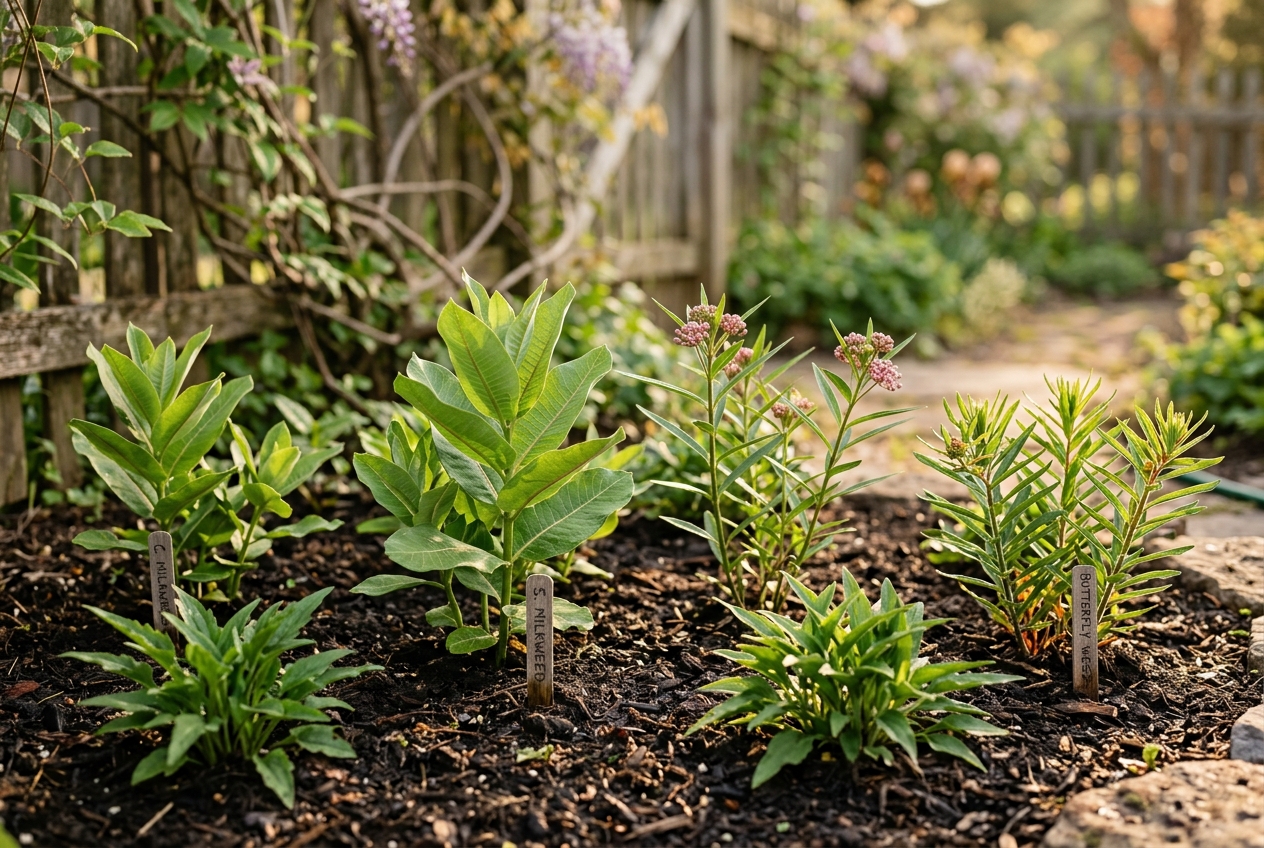
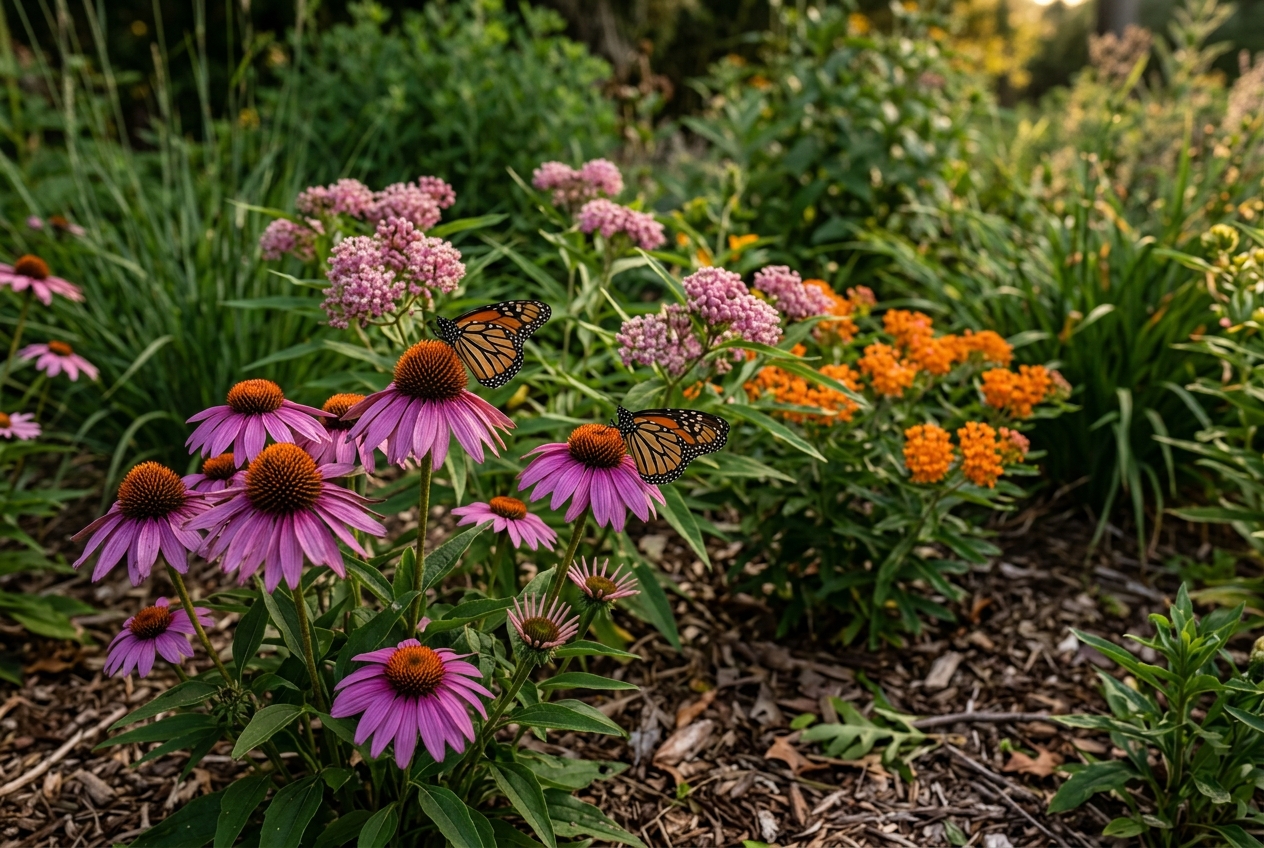
Butterfly Weed (Asclepias tuberosa) Zones 3-9. Orange flower clusters. Monarch host plant and nectar source for 20+ butterfly species. Difficult to transplant due to taproot. Direct seed only. Space 18 inches. Reaches 24-30 inches. Full sun, drought tolerant once established. Takes 2-3 years to bloom from seed.
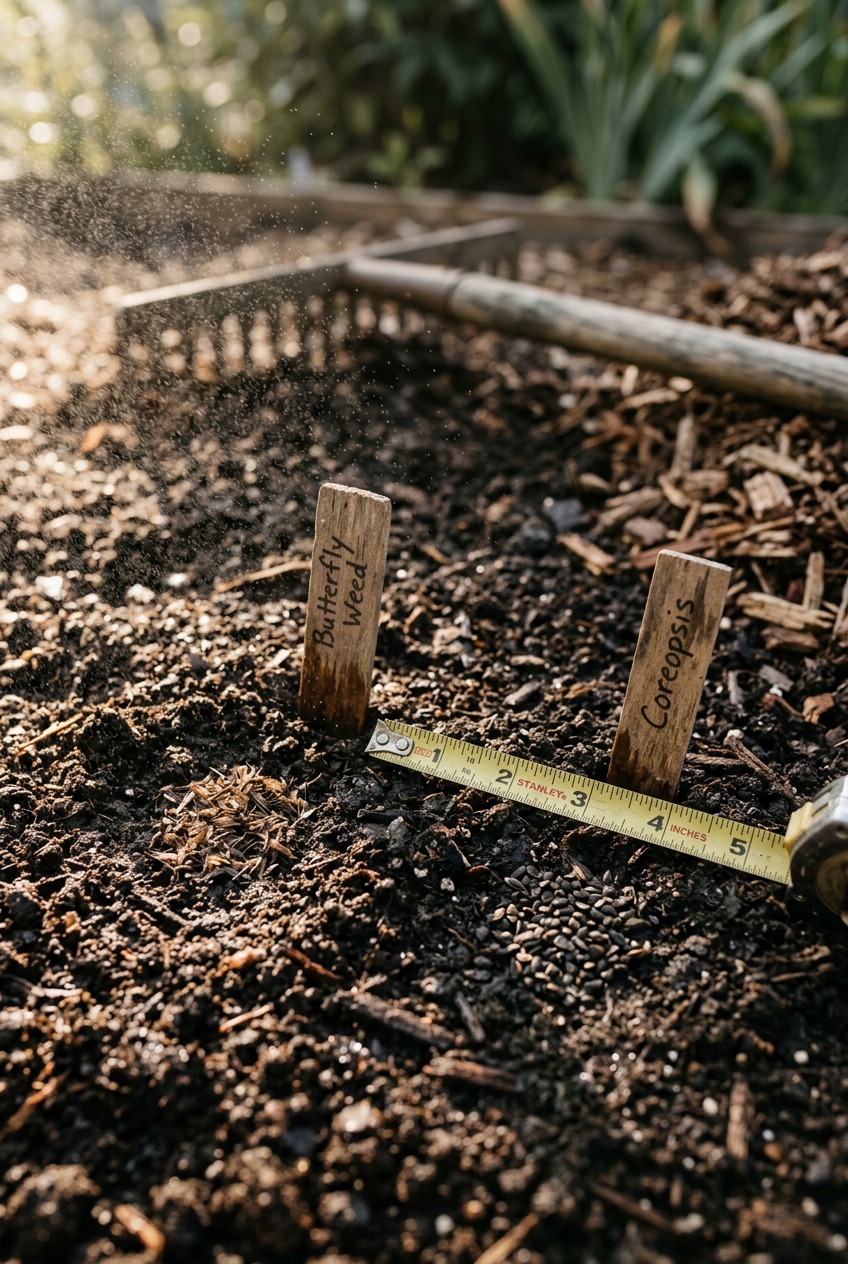
From my experience: I planted butterfly weed plugs my first year and lost 60% of them. Switched to direct seeding in March and germination hit 80%. The taproot hates disturbance. Seed is cheaper anyway, $4 per packet versus $14 per plug.
Planting Method
For Direct Seeding:
- Rake soil smooth after mixing in 1 inch compost layer.
- Mark rows or grid with stakes and string.
- Press seeds into soil surface. Most native perennials need light to germinate.
- Water with fine mist. Do not bury seeds.
- Keep soil surface moist for 14-21 days.
- Thin seedlings to final spacing when they reach 2 inches tall.
For Nursery Plugs:
- Dig hole 1.5x the root ball width.
- Set plant at same depth it grew in the pot.
- Backfill with native soil, no amendments in the hole.
- Water thoroughly, creating a soil-to-root contact.
- Mulch 2 inches deep, keeping mulch 3 inches away from stems.
Water new plantings every 3 days for the first month if rainfall is under 1 inch per week. After that, native perennials tolerate dry spells.
What to Watch For
Damping Off: Seedlings collapse at soil line. Caused by overwatering and poor air circulation. Water in morning only. Thin seedlings early.
Slow Germination: Native perennials take 14-30 days to sprout. Some species, like butterfly weed, are erratic germinators. Don’t give up until 35 days have passed.
Rabbit Damage: Young columbine and lupine are rabbit candy. Use chicken wire cloches for the first 6 weeks, or plant extra and accept 20-30% loss.
Make It Your Own
Shade Garden Version: Substitute wild ginger (Asarum canadense) and Virginia bluebells (Mertensia virginica) for the full-sun species. Both support early pollinators and tolerate dry shade under maples.
Clay Soil Adaptation: Add New England aster (Symphyotrichum novae-angliae) and swamp milkweed (Asclepias incarnata). Both handle heavy, wet soil better than butterfly weed or lupine.
Budget Approach: Direct seed everything. One packet of each species costs $32 total and covers 150 square feet at proper spacing. Equivalent nursery plugs would run $180-240.
Zone 9-10 Alternative: Substitute scarlet sage (Salvia coccinea), standing cypress (Ipomopsis rubra), and lanceleaf tickseed (Coreopsis lanceolata, which grows year-round in warm zones). March is late-season planting in Zone 9+. Aim for February.
Before You Start
Timing matters more than perfect soil. Native perennials adapt to average garden soil but need specific temperature windows for root establishment. A soil thermometer ($15) prevents guessing.
First-year growth is all roots. Most native perennials spend year one building root systems. Expect minimal top growth and few or no flowers. Year two brings full blooms.
Weed pressure is highest in year one. Mulch heavily and hand-pull weekly for the first season. Once natives fill in, they outcompete most weeds.
FAQ
Can I plant these species in fall instead of March?
Yes, but fall planting (September-October) works better for species with long taproots like butterfly weed and lupine. March planting gives spring bloomers like columbine and wild geranium a head start before their natural bloom period. Both windows work. Fall gives you more time to source seed.
How many plants do I need for a 10x10 foot pollinator bed?
Space plants 12-18 inches apart depending on mature size. A 10x10 bed holds 30-40 plants at 15 inch spacing. Mix species for continuous bloom. Use 5-6 plants per species for visual impact. Eight species at 5 plants each equals 40 total plants, which fits a 100 square foot bed.
Will these plants spread and take over my garden?
Wild geranium and golden alexanders self-seed moderately but are easy to pull. Coreopsis spreads by rhizomes but stays in a 2-3 foot clump. Butterfly weed and lupine have taproots and don’t spread. None are aggressive like mint or bamboo. Divide clumping species every 4-5 years to control size.